
alveoli gills AP Biology Gas Exchange Respiratory Systems
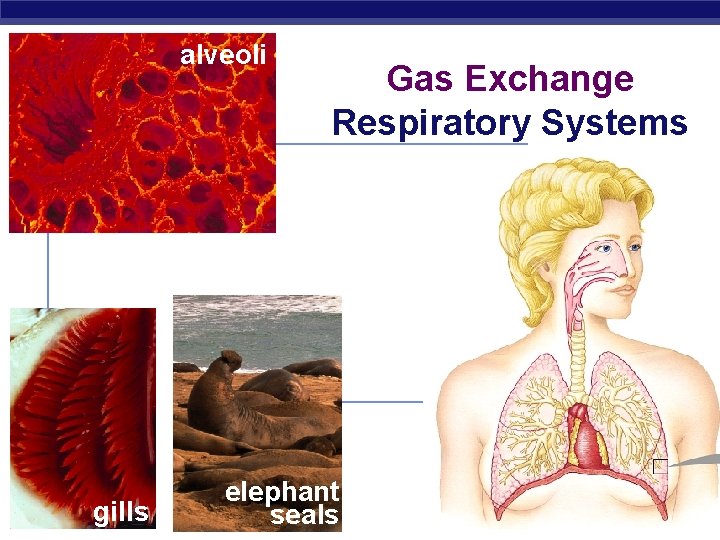
alveoli gills AP Biology Gas Exchange Respiratory Systems elephant seals 2008 -2009
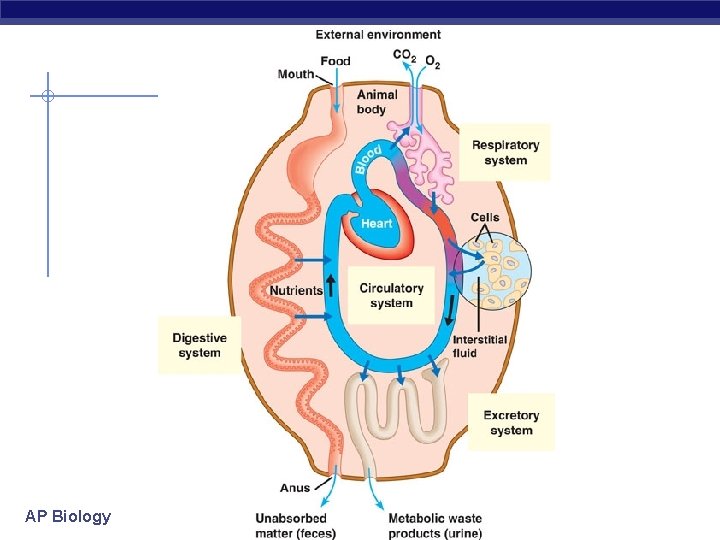
AP Biology
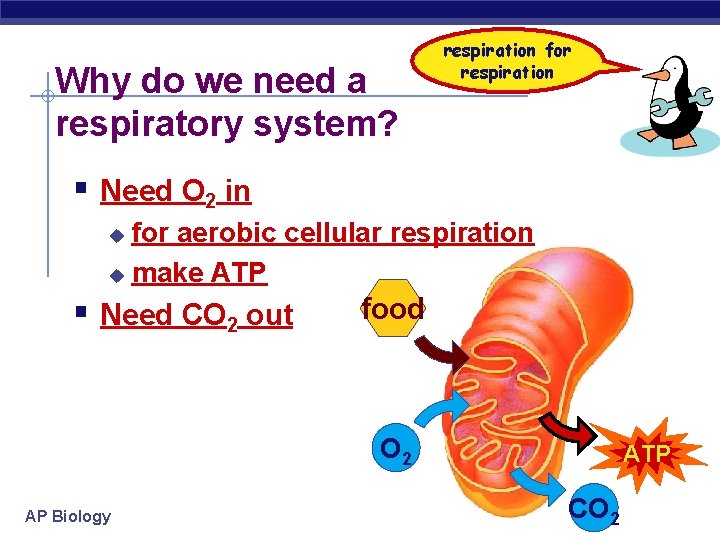
Why do we need a respiratory system? respiration for respiration § Need O 2 in for aerobic cellular respiration u make ATP u § Need CO 2 out food O 2 AP Biology ATP CO 2
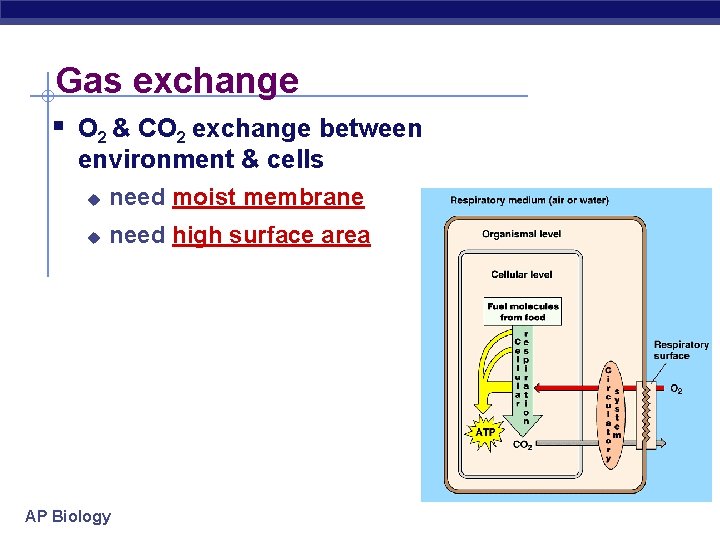
Gas exchange § O 2 & CO 2 exchange between environment & cells u need moist membrane u need high surface area AP Biology
Optimizing gas exchange § Why high surface area? maximizing rate of gas exchange u CO 2 & O 2 move across cell membrane by diffusion u § rate of diffusion proportional to surface area § Why moist membranes? moisture maintains cell membrane structure u gases diffuse only dissolved in water u AP Biology
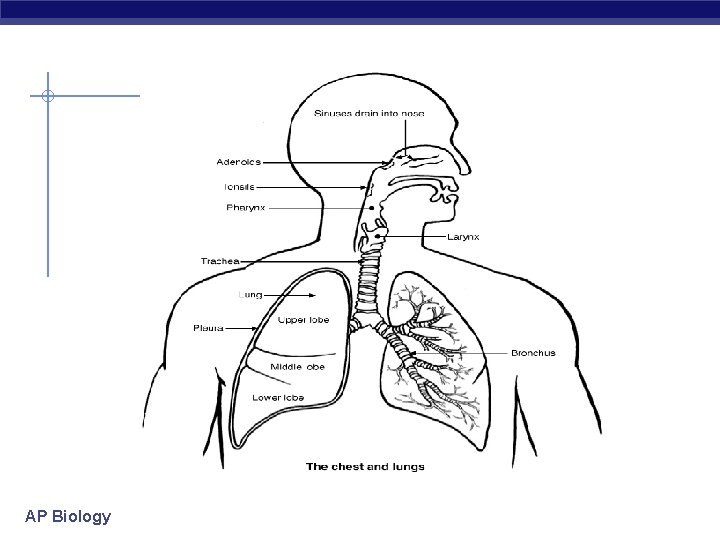
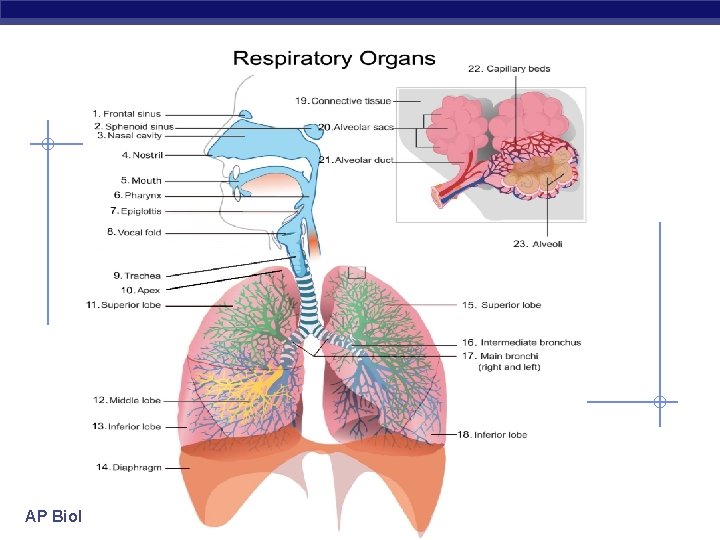
The Human has 2 lungs The right lung is divided into 3 lobes The left lung is divided into 2 lobes Each lung is covered by a pleural membrane The membrane secretes fluid that allows the lungs to move smoothly. AP Biology
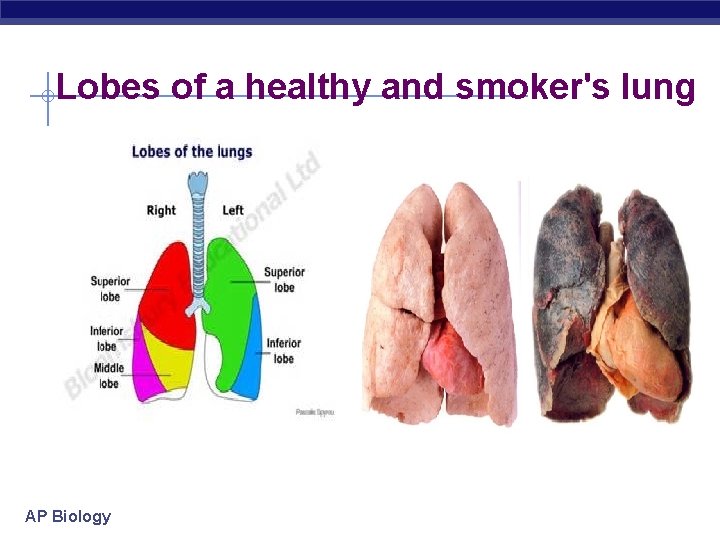
Lobes of a healthy and smoker's lung Your text here AP Biology
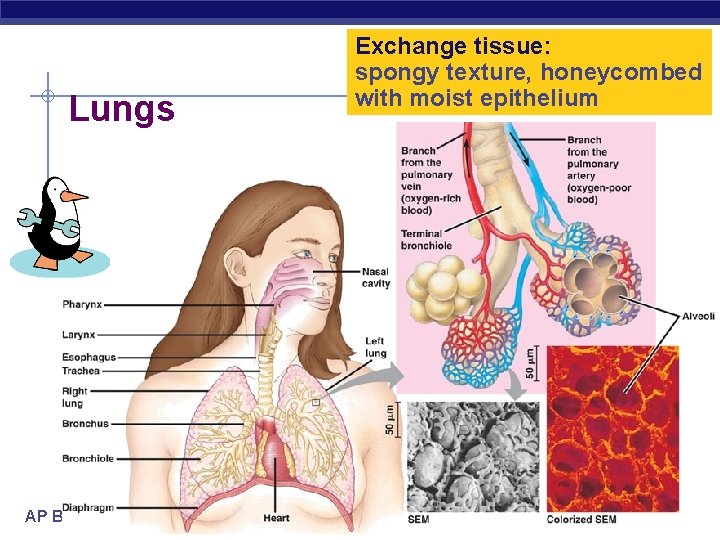
Lungs AP Biology Exchange tissue: spongy texture, honeycombed with moist epithelium
AP Biology
AP Biology
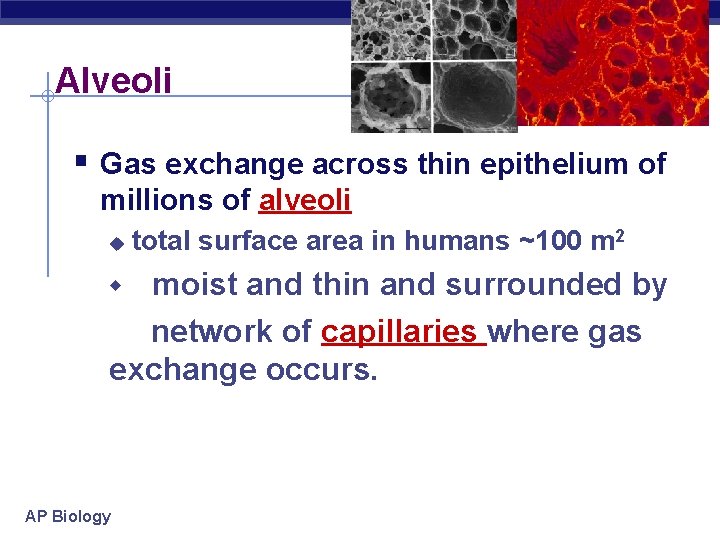
Alveoli § Gas exchange across thin epithelium of millions of alveoli u total surface area in humans ~100 m 2 u moist and thin and surrounded by network of capillaries where gas exchange occurs. AP Biology
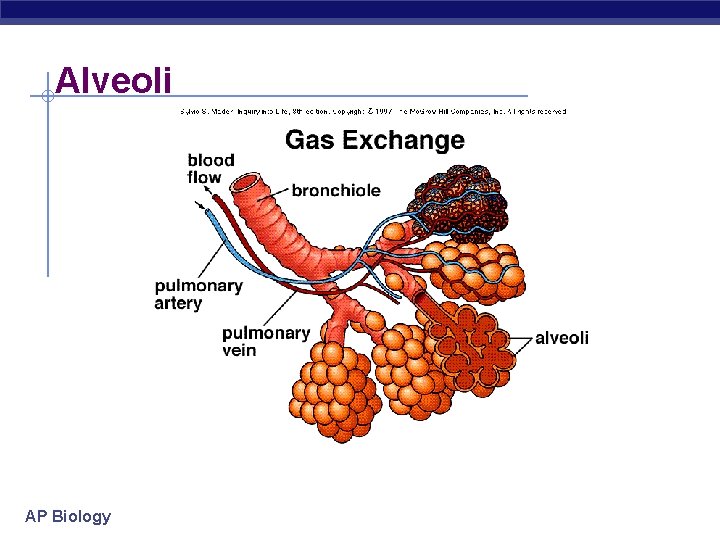
Alveoli AP Biology
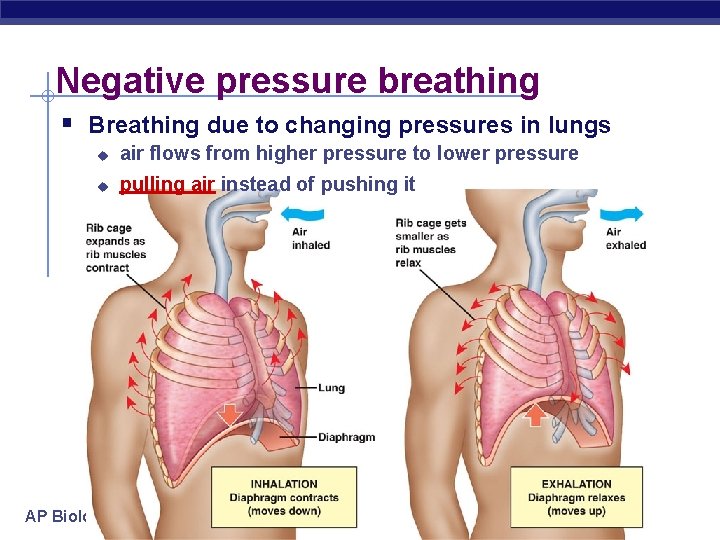
Negative pressure breathing § Breathing due to changing pressures in lungs u air flows from higher pressure to lower pressure u pulling air instead of pushing it AP Biology
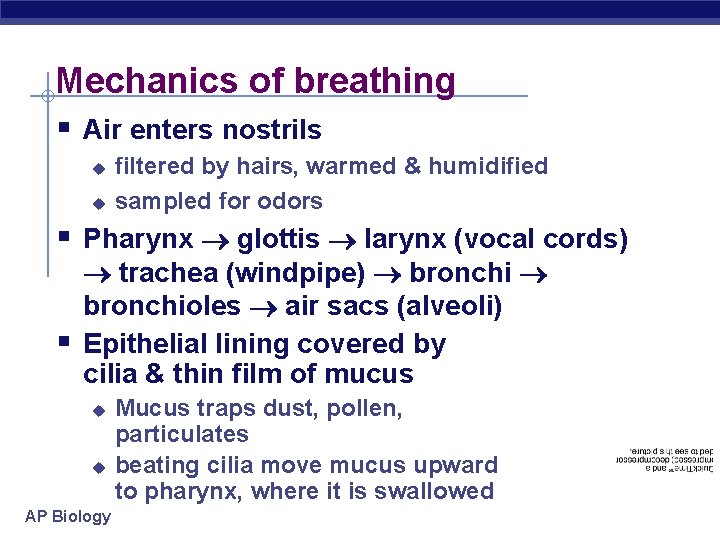
Mechanics of breathing § Air enters nostrils u u filtered by hairs, warmed & humidified sampled for odors § Pharynx glottis larynx (vocal cords) § trachea (windpipe) bronchioles air sacs (alveoli) Epithelial lining covered by cilia & thin film of mucus u u AP Biology Mucus traps dust, pollen, particulates beating cilia move mucus upward to pharynx, where it is swallowed
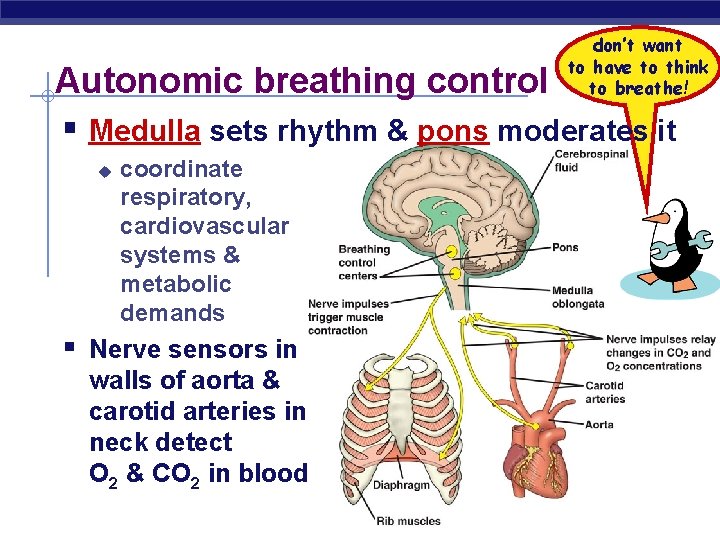
don’t want to have to think to breathe! Autonomic breathing control § Medulla sets rhythm & pons moderates it u coordinate respiratory, cardiovascular systems & metabolic demands § Nerve sensors in walls of aorta & carotid arteries in neck detect O 2 & CO 2 in blood AP Biology
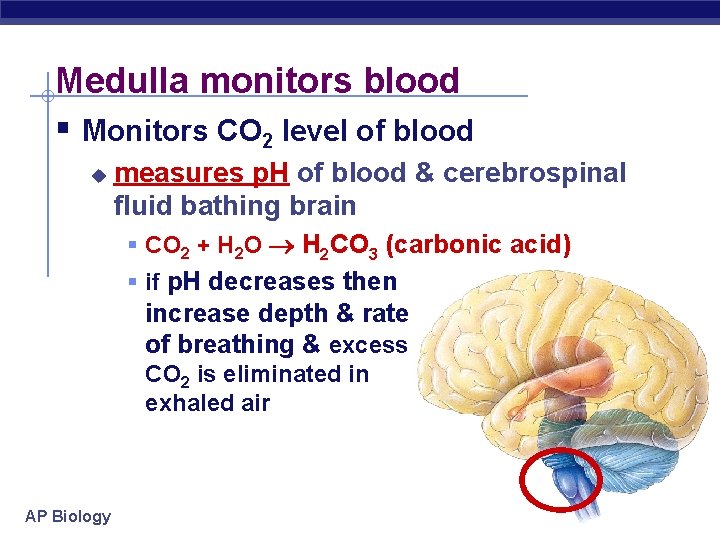
Medulla monitors blood § Monitors CO 2 level of blood u measures p. H of blood & cerebrospinal fluid bathing brain § CO 2 + H 2 O H 2 CO 3 (carbonic acid) § if p. H decreases then increase depth & rate of breathing & excess CO 2 is eliminated in exhaled air AP Biology
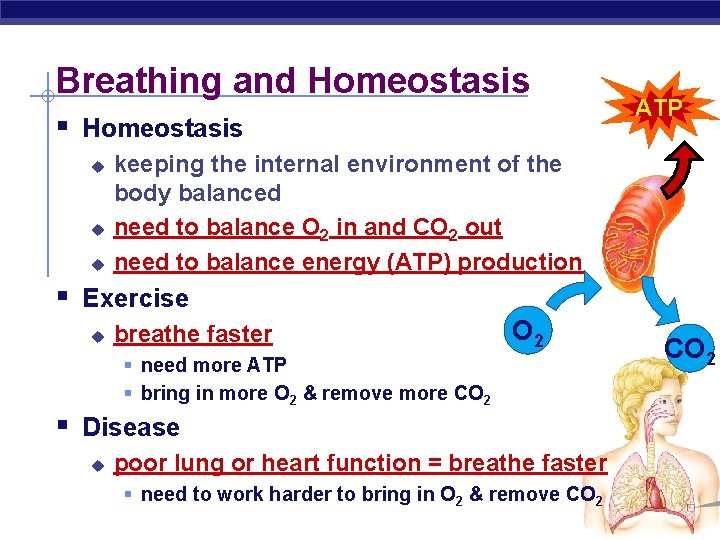
Breathing and Homeostasis § Homeostasis u u u ATP keeping the internal environment of the body balanced need to balance O 2 in and CO 2 out need to balance energy (ATP) production § Exercise u breathe faster O 2 § need more ATP § bring in more O 2 & remove more CO 2 § Disease u AP Biology poor lung or heart function = breathe faster § need to work harder to bring in O 2 & remove CO 2
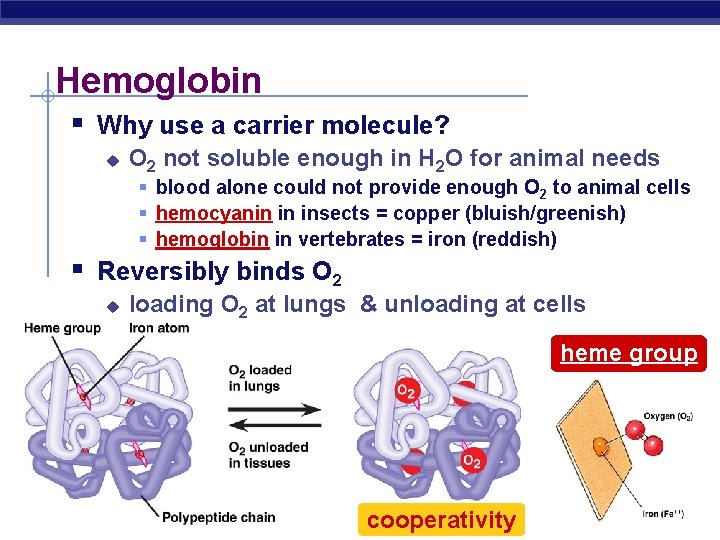
Hemoglobin § Why use a carrier molecule? u O 2 not soluble enough in H 2 O for animal needs § blood alone could not provide enough O 2 to animal cells § hemocyanin in insects = copper (bluish/greenish) § hemoglobin in vertebrates = iron (reddish) § Reversibly binds O 2 u loading O 2 at lungs & unloading at cells heme group AP Biology cooperativity
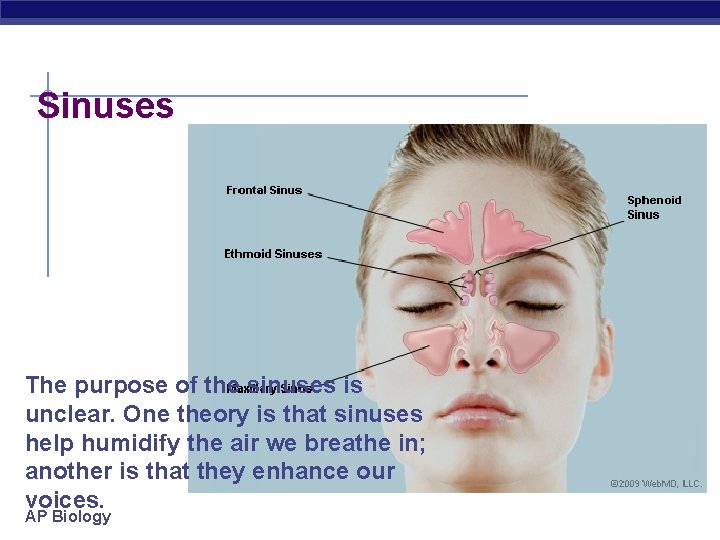
Sinuses The purpose of the sinuses is unclear. One theory is that sinuses help humidify the air we breathe in; another is that they enhance our voices. AP Biology
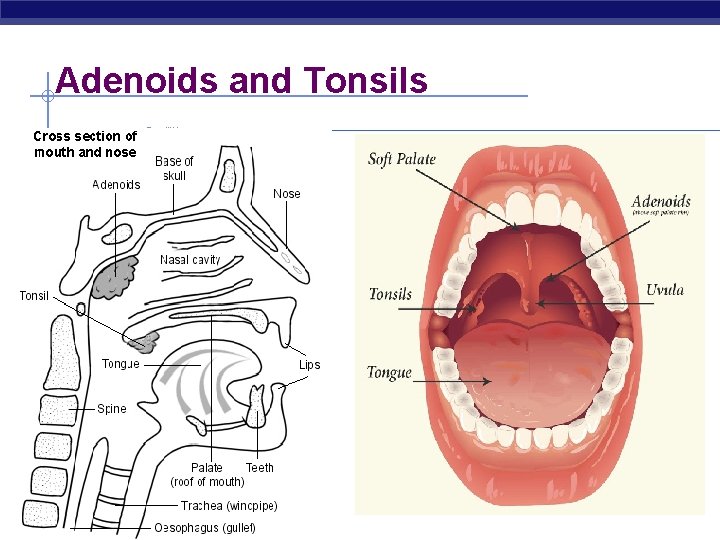
Adenoids and Tonsils Related articles • Tonsillitis • Why Wasn't I Prescribed Antibiotics? • Sore Throat Adenoids AP Biology
Adenoids and tonsils § Part of the Immune system § Adenoids shrink upon adulthood § White blood cells circulate through the § adenoids and tonsils and other lymphoid tissue, reacting to foreign invaders Both can be removed if many infections AP Biology
Disorders of the Respiratory System § Asthma- breathing is impaired caused by inhalation of allergens causes allergic reactions. The bronchiole tubes narrow(constriction), which prevents oxygen from entering lungs § Pneumonia- Acute inflammation of lungs caused by bacteria or a virus. The alveoli fill up with fluid and gas exchange decreases. High fever, chills, headache and cough § Lung Cancer- uncontrolled growth of cells causing tumors. AP Biology
§ COPD-chronic obstructive pulmonary disease § There are 2 forms: § Bronchitis- inflammation of the lining of the mucus membranes of the bronchial tubes. The bronchioles secrete too much mucus and cilia cannot clear the passages. § Emphysema- disease where alveoli walls break down. The lungs become less elastic and the amount of air they can hold decreases. There is no cure, but can be treated. Damage is permanent. Causes- pollution, smoking, age. AP Biology
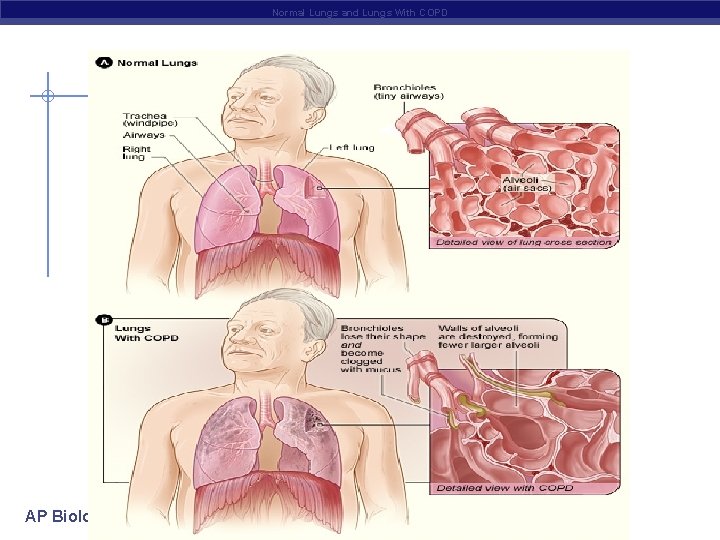
Normal Lungs and Lungs With COPD AP Biology
Diseases of the Respiratory System § Cystic Fibrosis- Hereditary disorder where mucus builds up in the bronchioles. Gas exchange is impaired. The pancreas also does not produce digestive enzymes. Child must inherit one gene from each parent. The parent with one gene is just a carrier. § https: //www. youtube. com/user/cysticfib rosisusa 6 min AP Biology
Bozeman Biology § http: //www. youtube. com/watch? v=Mr. Db i. KQOtl. U&list=PLCC 2 DB 523 BA 8 BCB 53 § https: //www. youtube. com/watch? v=9 M Dn 5 Ggyxy. U 10 min steve tyler § AP Biology
- Slides: 26