
Alveolar bone Alveolar process Is the portion of
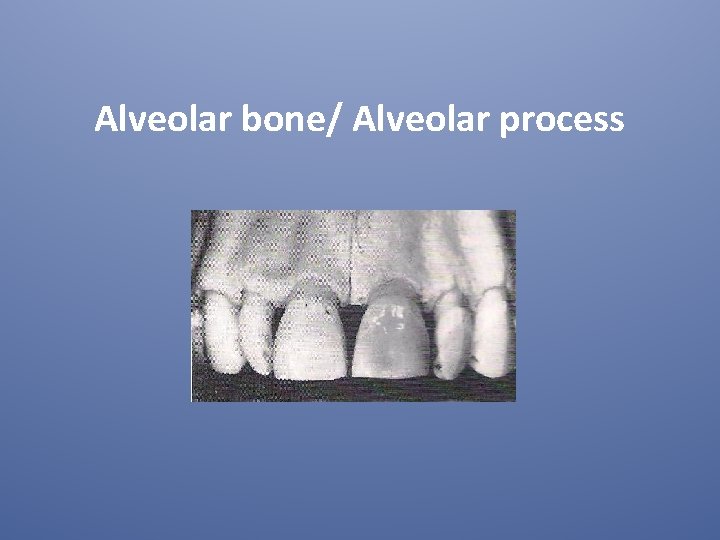
Alveolar bone/ Alveolar process
Is the portion of maxilla and mandible that forms and supports the tooth socket (alveoli). It forms when tooth erupts to provide the osseous attachment to the forming PDL; It disappears gradually after tooth is lost.
Development The alveolar bone begins to first form by an intramembranous ossification with in the ectomesenchyme surrounding the developing tooth. This first formed bone is called as woven bone is less organized and is replaced with more organized lamellar one.
When a deciduous tooth is shed, its alveolar bone is resorbed. The succedaneous permanent tooth moves in to place, developing its own alveolar bone from its own dental follicle. Mandibular basal bone begins mineralization at the exit of mental nerve from mental foramen. Maxillary basal bone begins at the exit of infraorbital nerve from infraorbital foramen
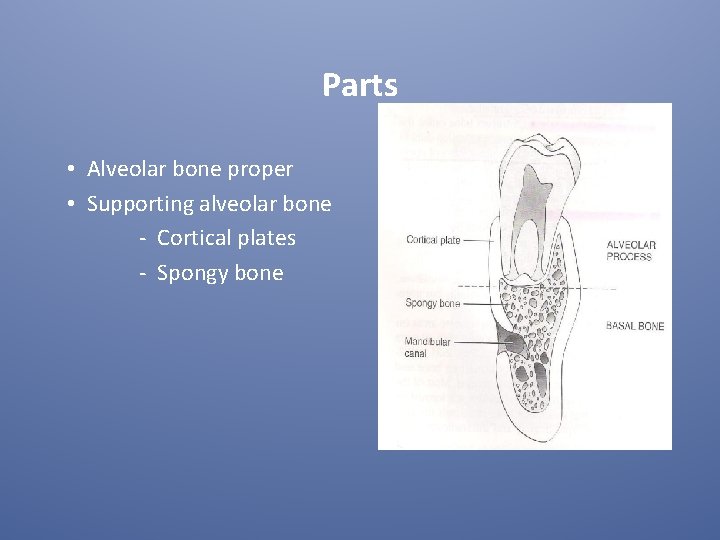
Parts • Alveolar bone proper • Supporting alveolar bone - Cortical plates - Spongy bone
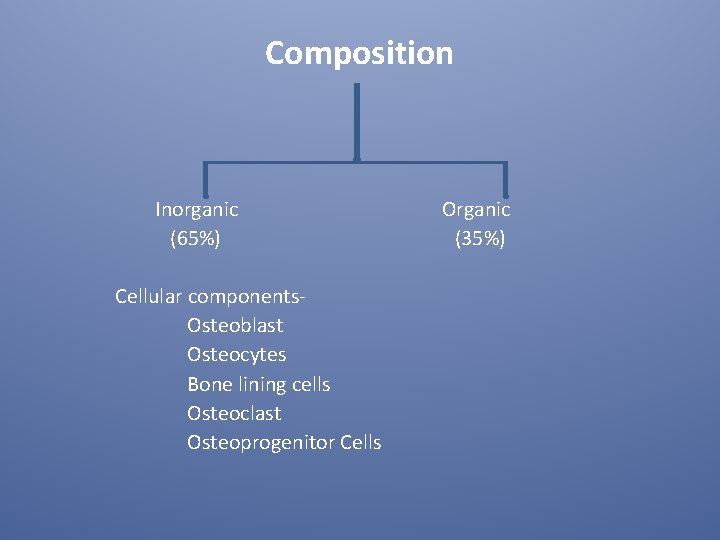
Composition Inorganic (65%) Cellular components. Osteoblast Osteocytes Bone lining cells Osteoclast Osteoprogenitor Cells Organic (35%)
Periosteum The tissue covering the outer surface of bone is called periosteum. Consists of two layers- inner layer - outer layer
Endosteum Tissue lining the internal bone cavities is called as endosteum. Made up of single layer of osteoblast and small amount of connective tissue.
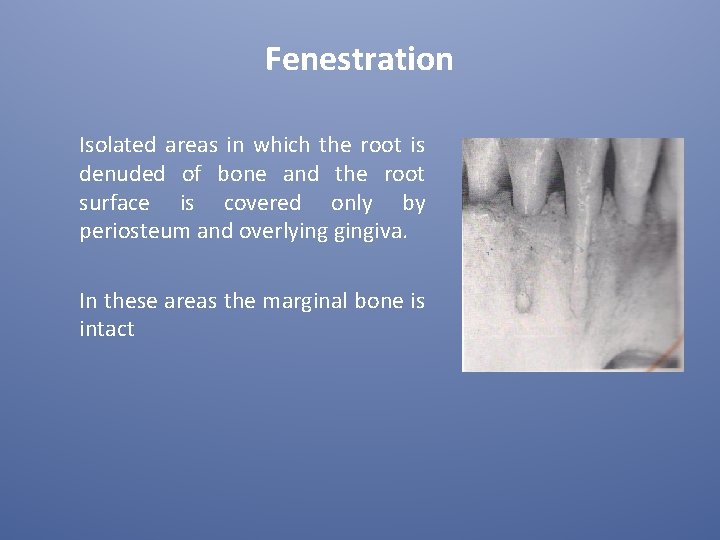
Fenestration Isolated areas in which the root is denuded of bone and the root surface is covered only by periosteum and overlying gingiva. In these areas the marginal bone is intact

Dehiscence When the denuded areas extend through the marginal bone, the defect is called as dehiscence.
1. The inactive osteoblasts are(a) (b) (c) (d) Osteocytes Osteoclasts Osteoprogenitor cells Bone lining cells
2. The term lamina dura refers to the radiographic image of (a) (b) (c) (d) Periodontal ligament space Cortical plates Cancellous bone Alveolar crest
3. Following is true about osteoclast except (a) Mononucleated cells (b) having branching processes (c) Derived from circulating monocytes (d) found in Howship’s lacunae blood cells
4. Main type of collagen in bone and ligament are respectively (a) Type I and type II (b)Type II and type I (c) Type II in both (d) Type I in both
5. The enzyme closely associated with the new bone formation is (a) (b) (c) (d) Acid phosphatase Alkaline phosphatase Succinic dehydrogenase Both A and B

THANK YOU
- Slides: 16