
ALTERNATIVE METABOLIC PATHWAYS SBI 4 U Biology Glucose
ALTERNATIVE METABOLIC PATHWAYS SBI 4 U Biology
Glucose Metabolism Cells rely primarily on the Glycolytic Pathway for most ATP. Carbs other than glucose need minimal modification before entering this pathway. Alternate pathways deal with either: • Lack of Oxygen • Lack of Glucose • Too much Glucose
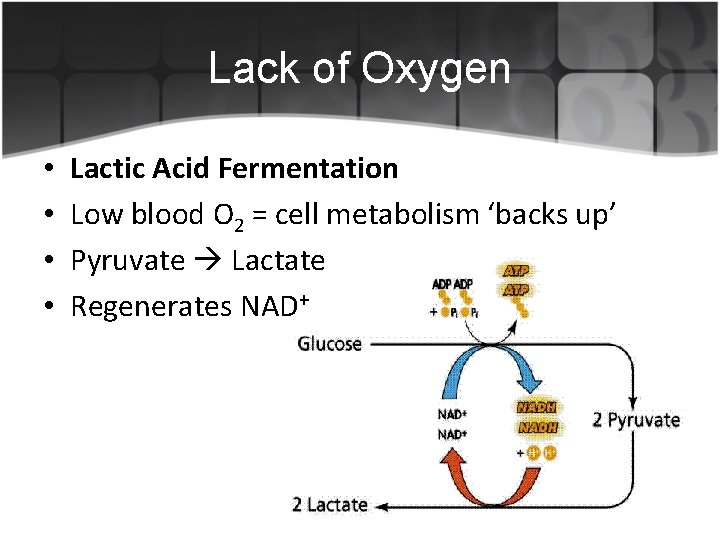
Lack of Oxygen • • Lactic Acid Fermentation Low blood O 2 = cell metabolism ‘backs up’ Pyruvate Lactate Regenerates NAD+
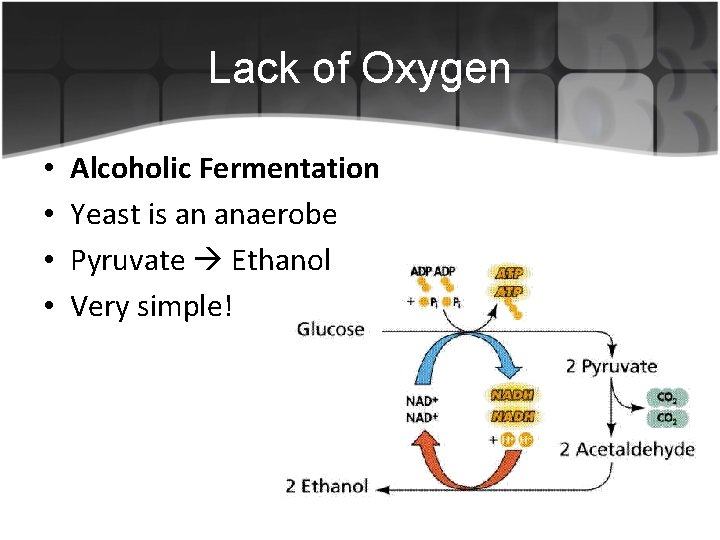
Lack of Oxygen • • Alcoholic Fermentation Yeast is an anaerobe Pyruvate Ethanol Very simple!
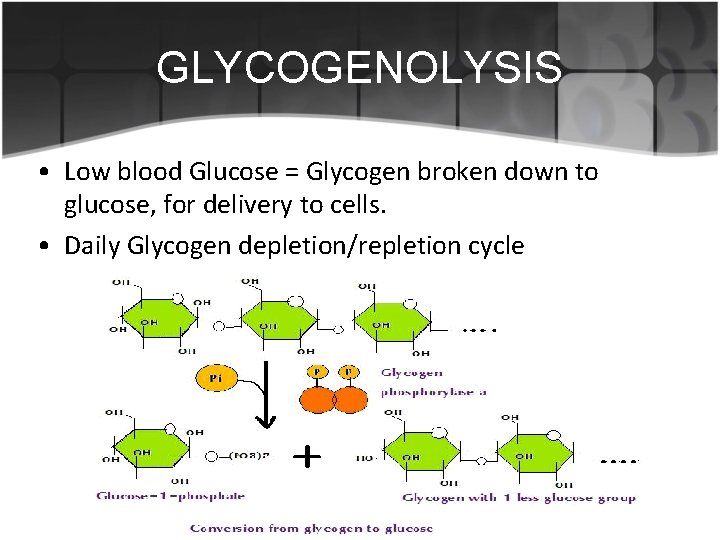
GLYCOGENOLYSIS • Low blood Glucose = Glycogen broken down to glucose, for delivery to cells. • Daily Glycogen depletion/repletion cycle
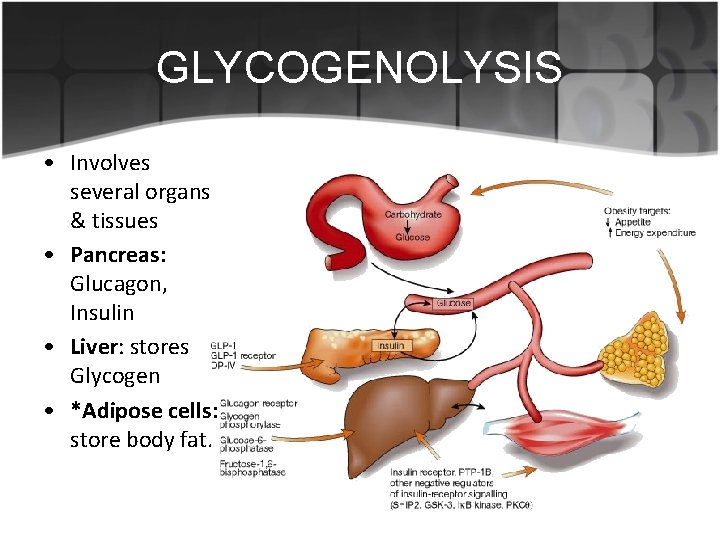
GLYCOGENOLYSIS • Involves several organs & tissues • Pancreas: Glucagon, Insulin • Liver: stores Glycogen • *Adipose cells: store body fat.
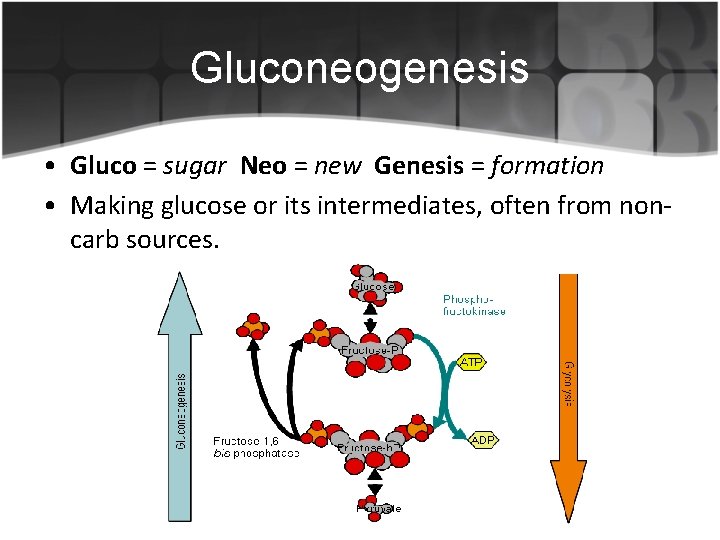
Gluconeogenesis • Gluco = sugar Neo = new Genesis = formation • Making glucose or its intermediates, often from noncarb sources.
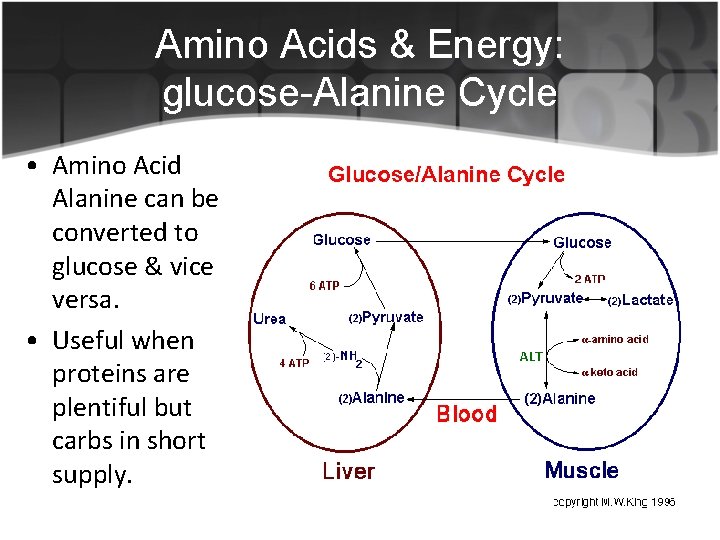
Amino Acids & Energy: glucose-Alanine Cycle • Amino Acid Alanine can be converted to glucose & vice versa. • Useful when proteins are plentiful but carbs in short supply.
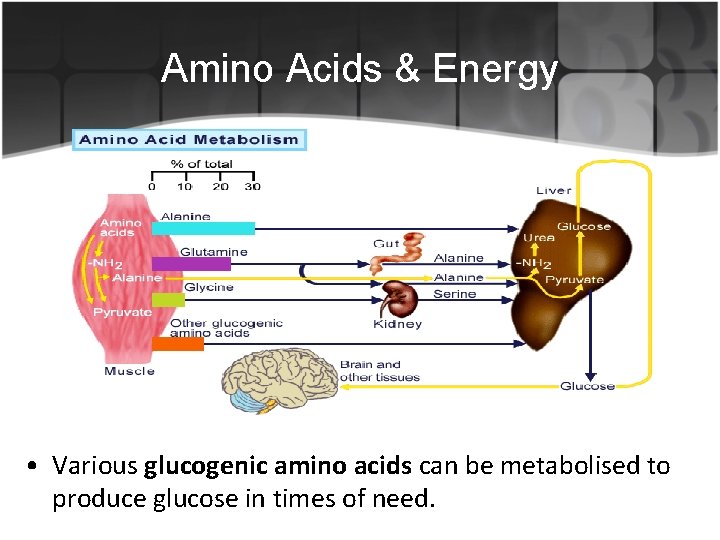
Amino Acids & Energy • Various glucogenic amino acids can be metabolised to produce glucose in times of need.
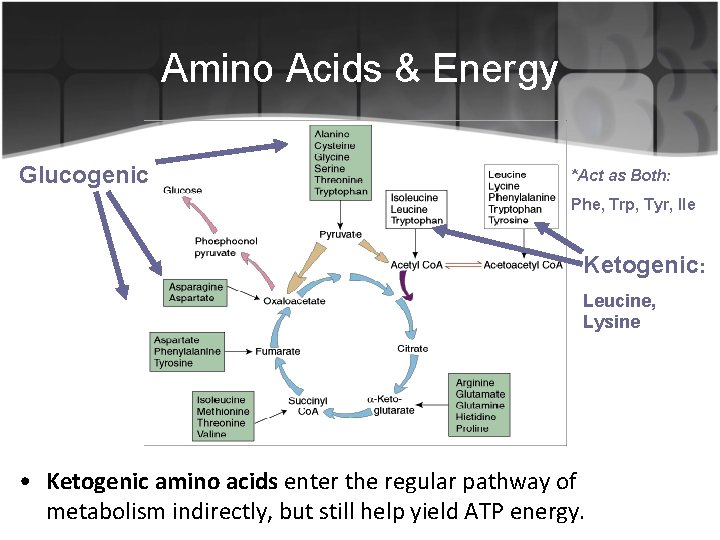
Amino Acids & Energy Glucogenic *Act as Both: Phe, Trp, Tyr, Ile Ketogenic: Leucine, Lysine • Ketogenic amino acids enter the regular pathway of metabolism indirectly, but still help yield ATP energy.
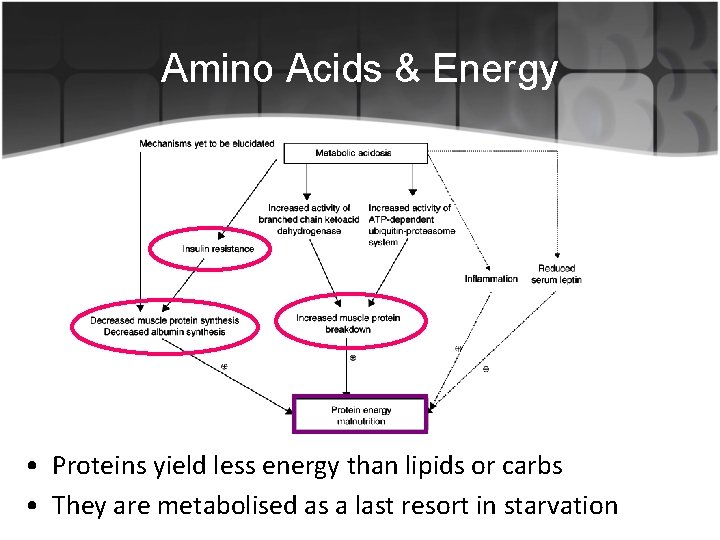
Amino Acids & Energy • Proteins yield less energy than lipids or carbs • They are metabolised as a last resort in starvation
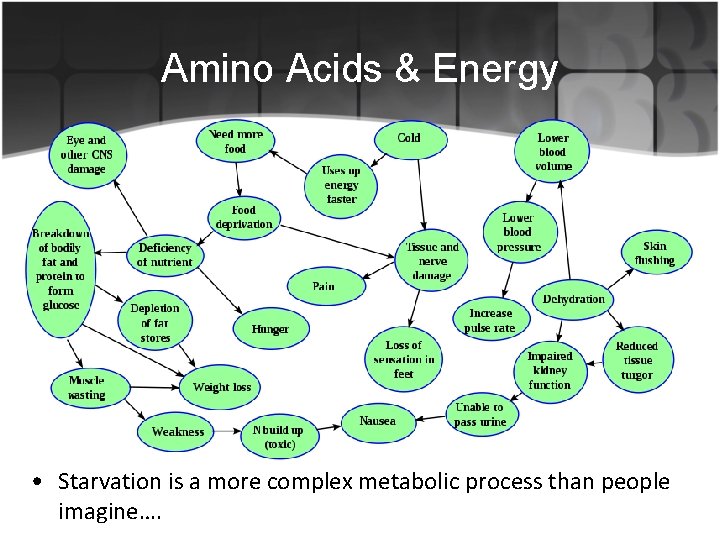
Amino Acids & Energy • Starvation is a more complex metabolic process than people imagine….
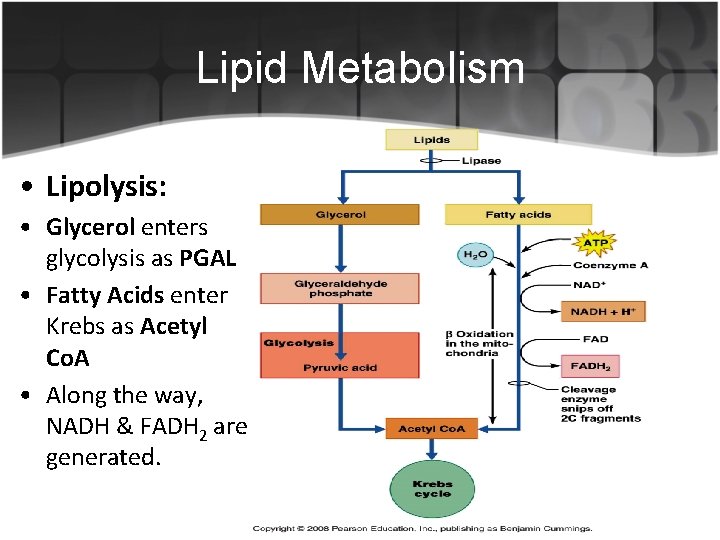
Lipid Metabolism • Lipolysis: • Glycerol enters glycolysis as PGAL • Fatty Acids enter Krebs as Acetyl Co. A • Along the way, NADH & FADH 2 are generated.
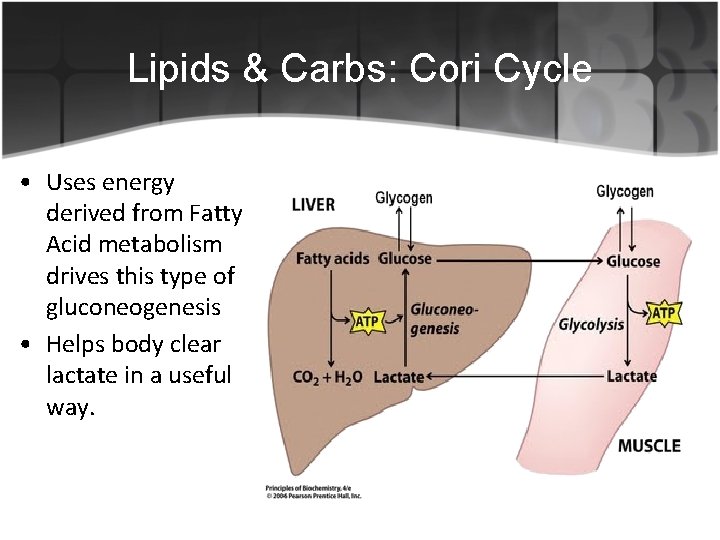
Lipids & Carbs: Cori Cycle • Uses energy derived from Fatty Acid metabolism drives this type of gluconeogenesis • Helps body clear lactate in a useful way.
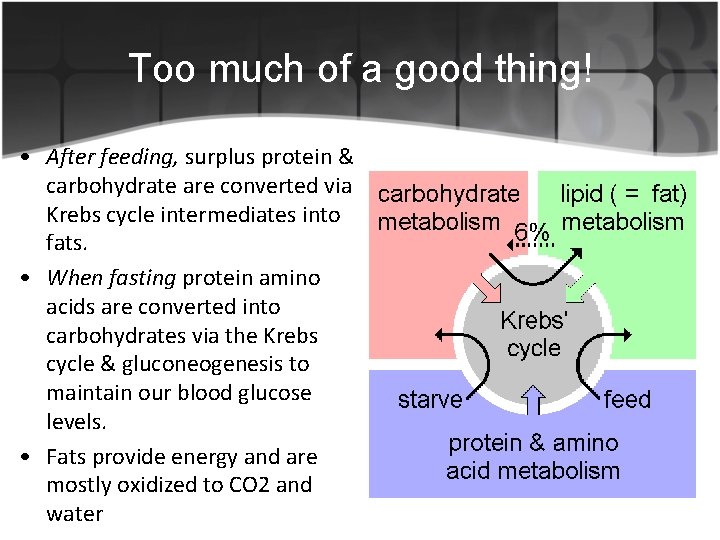
Too much of a good thing! • After feeding, surplus protein & carbohydrate are converted via Krebs cycle intermediates into fats. • When fasting protein amino acids are converted into carbohydrates via the Krebs cycle & gluconeogenesis to maintain our blood glucose levels. • Fats provide energy and are mostly oxidized to CO 2 and water
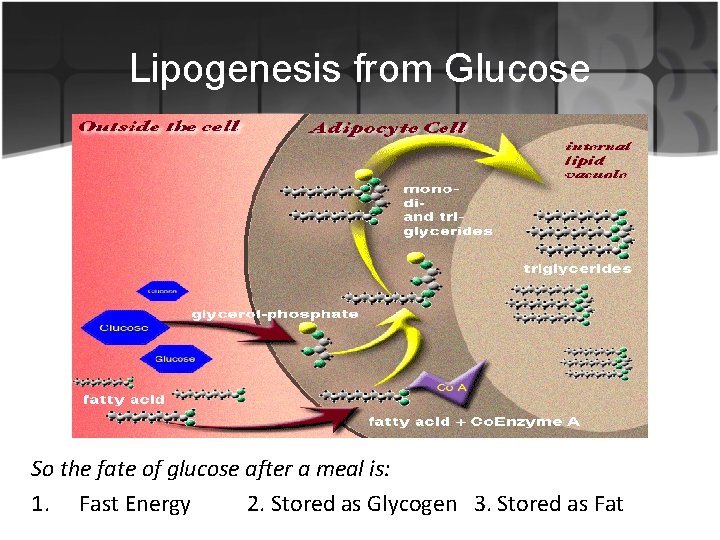
Lipogenesis from Glucose So the fate of glucose after a meal is: 1. Fast Energy 2. Stored as Glycogen 3. Stored as Fat
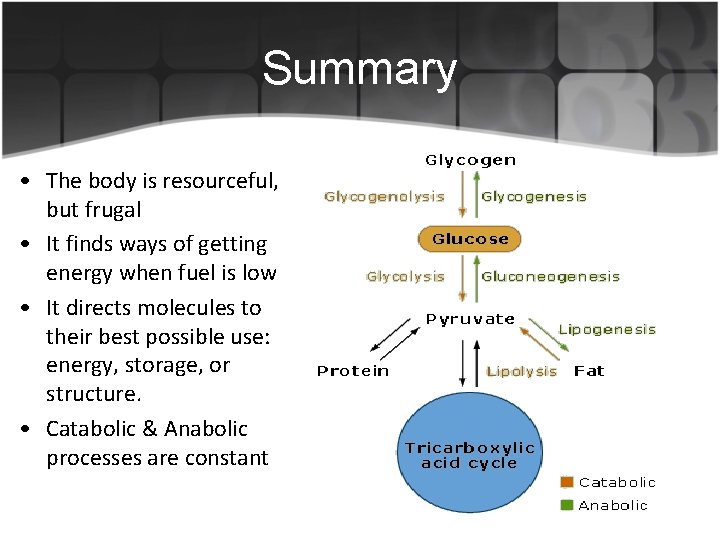
Summary • The body is resourceful, but frugal • It finds ways of getting energy when fuel is low • It directs molecules to their best possible use: energy, storage, or structure. • Catabolic & Anabolic processes are constant
- Slides: 17