
Alternative Computing Technologies CS 8803 ACT Spring 2014



![Transistor scaling model From 45 nm to 8 nm [Dennard, 1974] [ITRS, 2010] [VLSI-DAT,](https://slidetodoc.com/presentation_image/021bd7d1e95d2bbcc9fd7f929f035660/image-35.jpg "Transistor scaling model From 45 nm to 8 nm [Dennard, 1974] [ITRS, 2010] [VLSI-DAT,")


- Slides: 55
Alternative Computing Technologies CS 8803 ACT Spring 2014 Hadi Esmaeilzadeh hadi@cc. gatech. edu Georgia Institute of Technology
Hadi Esmaeilzadeh From Khoy, Iran 2
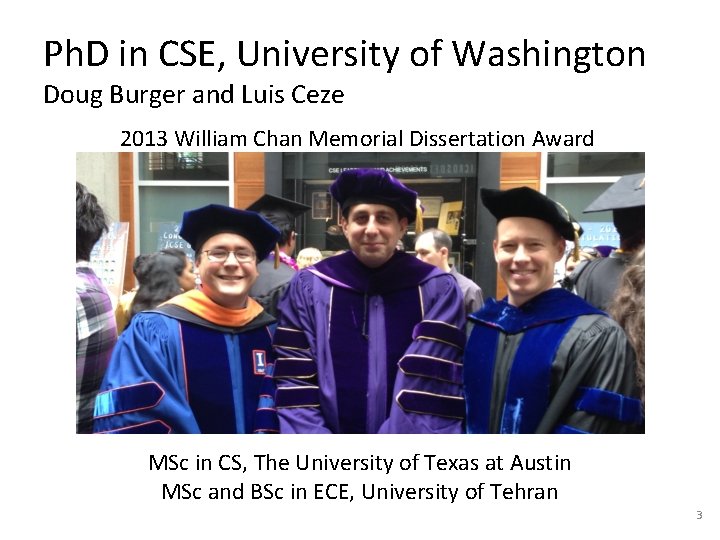
Ph. D in CSE, University of Washington Doug Burger and Luis Ceze 2013 William Chan Memorial Dissertation Award MSc in CS, The University of Texas at Austin MSc and BSc in ECE, University of Tehran 3
Research: ACT Lab Alternative Computing Technologies § General-purpose approximate computing § Bridging neuromorphic and von Neumann models of computing § Analog computing § System design for online machine learning § System design for perpetual devices 4
Agenda 1. Who is Hadi 2. Course organization 3. Why alternative computing technologies 1. How we became and industry of new possibilities 2. Why we might become an industry of replacement 4. Possible alternative computing technologies 5. Quiz # 1 5
Objective § Explore cutting-edge research on new and alternative paradigms of computing § Empower you with higher order critical thinking § Improve your technical writing and speaking § Innovate in alternative computing technologies 6
Format § Seminar course – Reading papers – Critiquing and discussing the papers – Brainstorming about new ideas – Developing new technologies § Mostly your presentations – I will only lecture three times 7
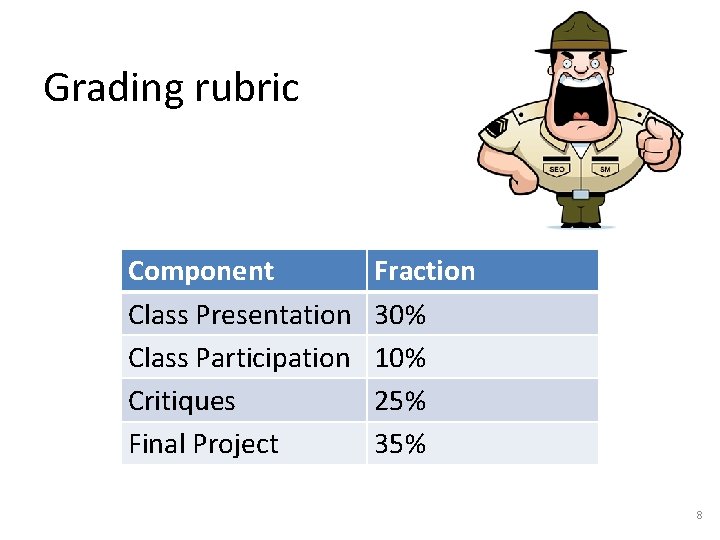
Grading rubric Component Class Presentation Class Participation Critiques Final Project Fraction 30% 10% 25% 35% 8
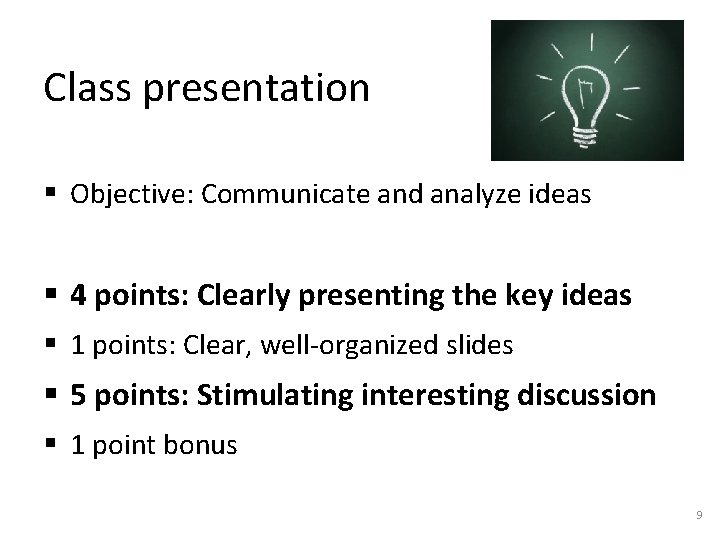
Class presentation § Objective: Communicate and analyze ideas § 4 points: Clearly presenting the key ideas § 1 points: Clear, well-organized slides § 5 points: Stimulating interesting discussion § 1 point bonus 9
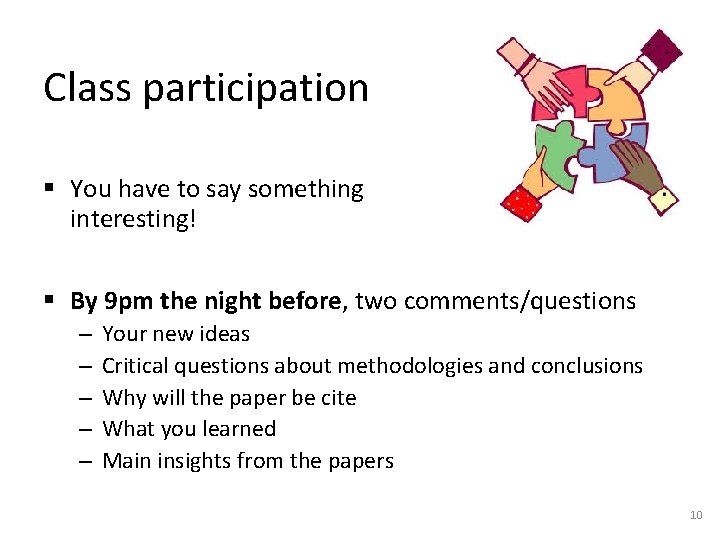
Class participation § You have to say something interesting! § By 9 pm the night before, two comments/questions – – – Your new ideas Critical questions about methodologies and conclusions Why will the paper be cite What you learned Main insights from the papers 10
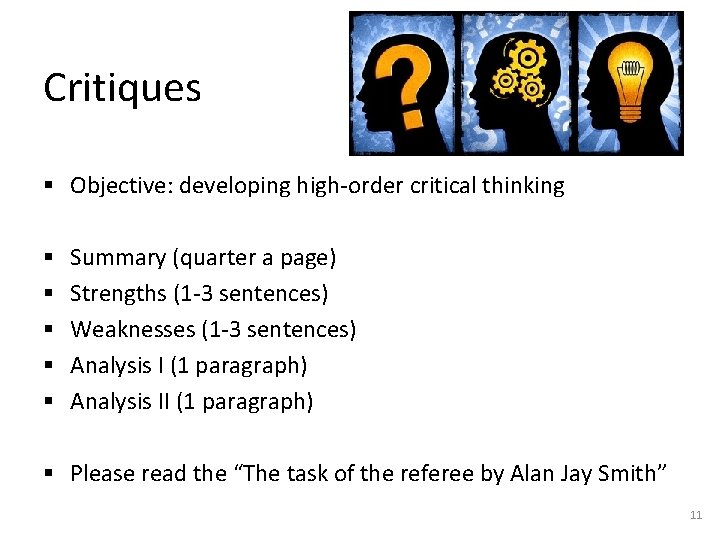
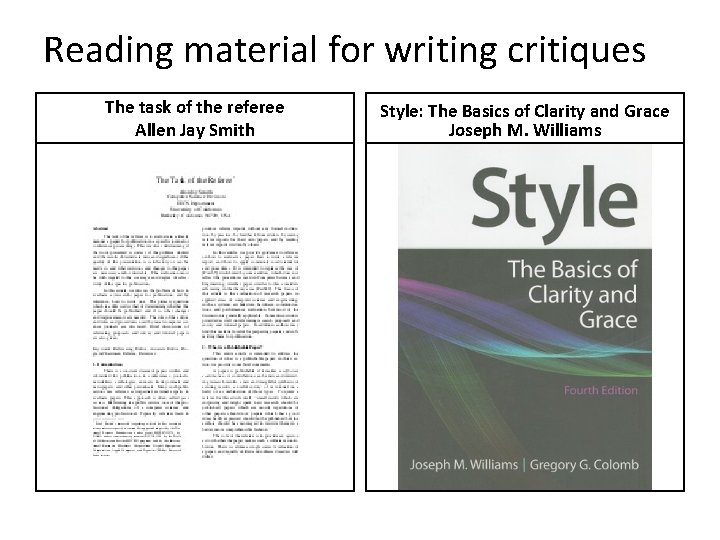
Critiques § Objective: developing high-order critical thinking § § § Summary (quarter a page) Strengths (1 -3 sentences) Weaknesses (1 -3 sentences) Analysis I (1 paragraph) Analysis II (1 paragraph) § Please read the “The task of the referee by Alan Jay Smith” 11
Reading material for writing critiques The task of the referee Allen Jay Smith Style: The Basics of Clarity and Grace Joseph M. Williams
Final project § Groups of two § Options – – Implementing a new idea Extending an existing paper Re-implement a paper Survey at least ten papers § Evaluation – Implementation – Writing – Oral presentation 13
Prerequisites § Understand a subset of – VLSI Circuits – Computer architecture – Programming Languages – Machine learning § Do – Programming 14
Agenda 1. Who Hadi is 2. Course organization 3. Why alternative computing technologies 1. How we became and industry of new possibilities 2. Why we might become and industry of replacement 4. Possible alternative computing technologies 5. Quiz # 1 15
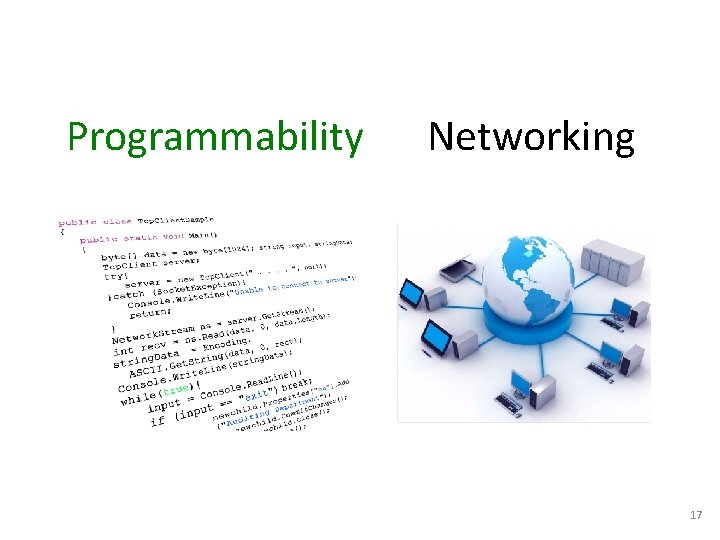
What has made computing pervasive? What is the backbone of computing industry? 16
Programmability Networking 17
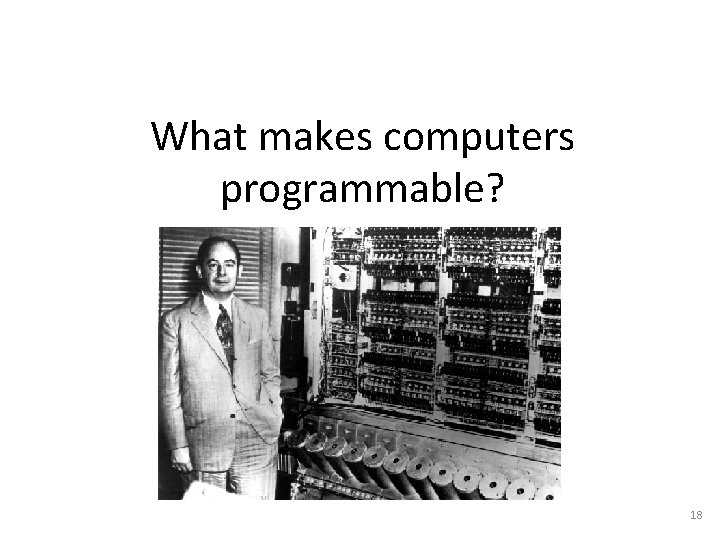
What makes computers programmable? 18
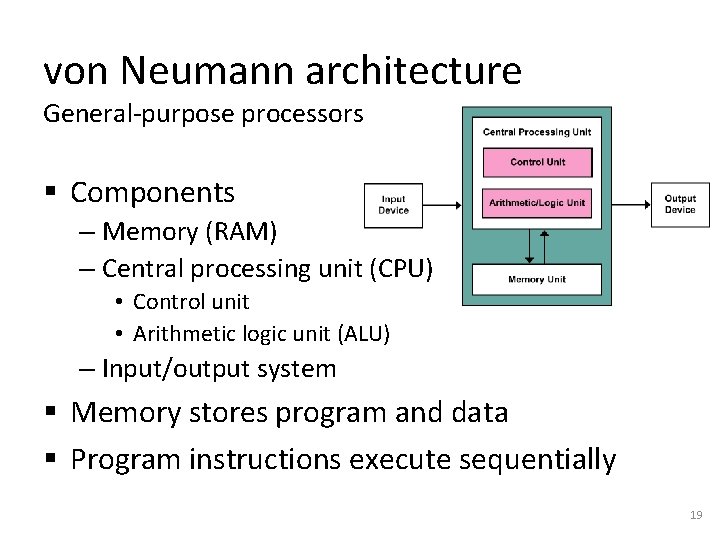
von Neumann architecture General-purpose processors § Components – Memory (RAM) – Central processing unit (CPU) • Control unit • Arithmetic logic unit (ALU) – Input/output system § Memory stores program and data § Program instructions execute sequentially 19
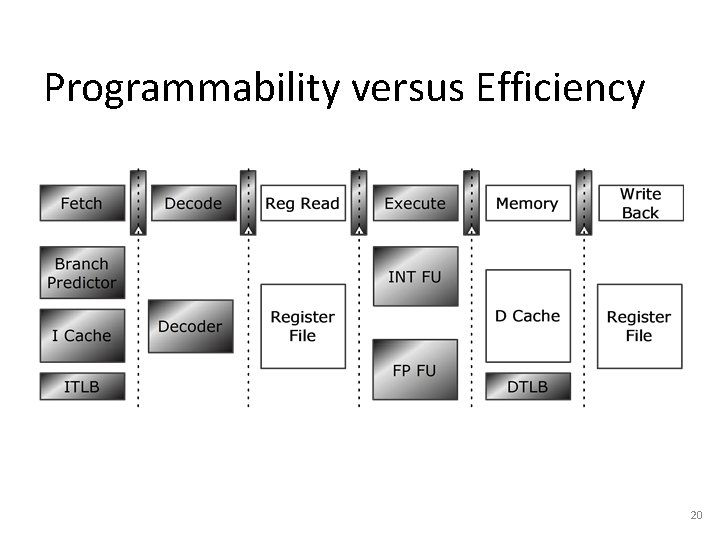
Programmability versus Efficiency 20
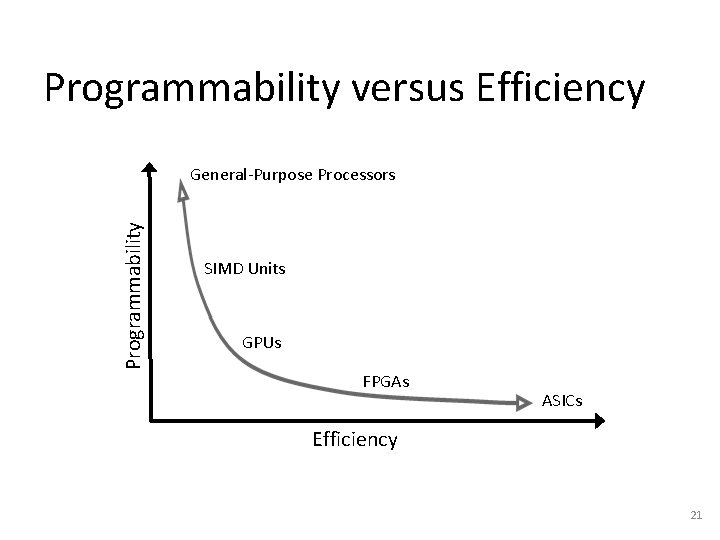
Programmability versus Efficiency Programmability General-Purpose Processors SIMD Units GPUs FPGAs ASICs Efficiency 21
What is the difference between the computing industry and the paper towel industry? 22
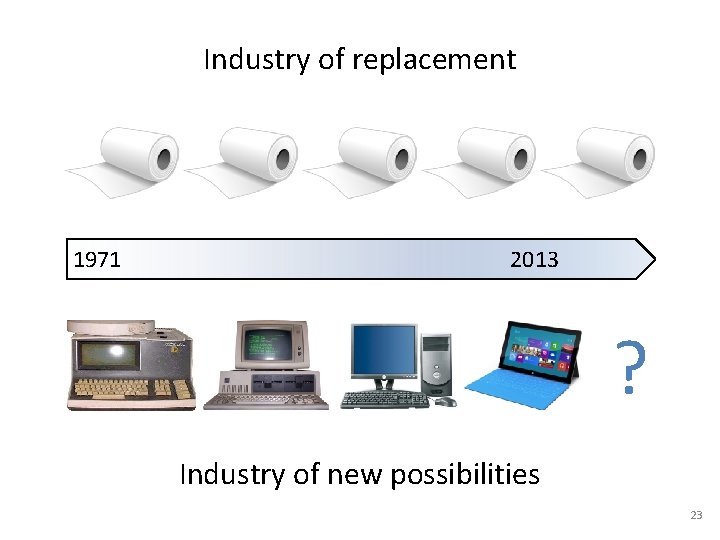
Industry of replacement 1971 2013 ? Industry of new possibilities 23
Can we continue being an industry of new possibilities? Personalized healthcare Virtual reality Real-time translators 24
Agenda 1. Who Hadi is 2. Course organization 3. Why alternative computing technologies 1. How we became and industry of new possibilities 2. Why we might become and industry of replacement 4. Possible alternative computing technologies 5. Quiz # 1 25
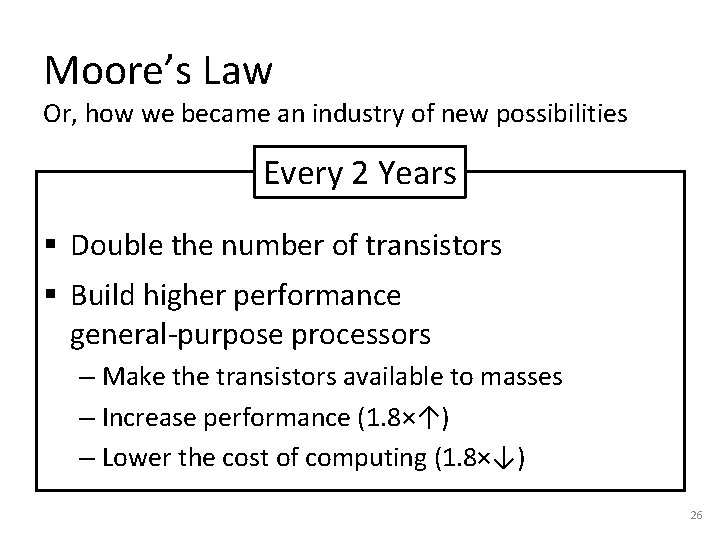
Moore’s Law Or, how we became an industry of new possibilities Every 2 Years § Double the number of transistors § Build higher performance general-purpose processors – Make the transistors available to masses – Increase performance (1. 8×↑) – Lower the cost of computing (1. 8×↓) 26
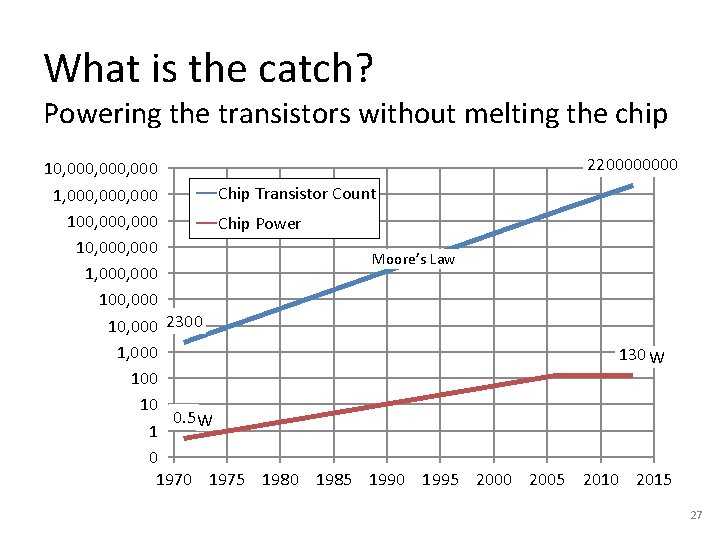
What is the catch? Powering the transistors without melting the chip 220000 10, 000, 000 Chip Transistor Count 1, 000, 000 100, 000 Chip Power 10, 000 Moore’s Law 1, 000 100, 000 10, 000 2300 1, 000 130 W 100 10 0. 5 W 1 0 1975 1980 1985 1990 1995 2000 2005 2010 2015 27
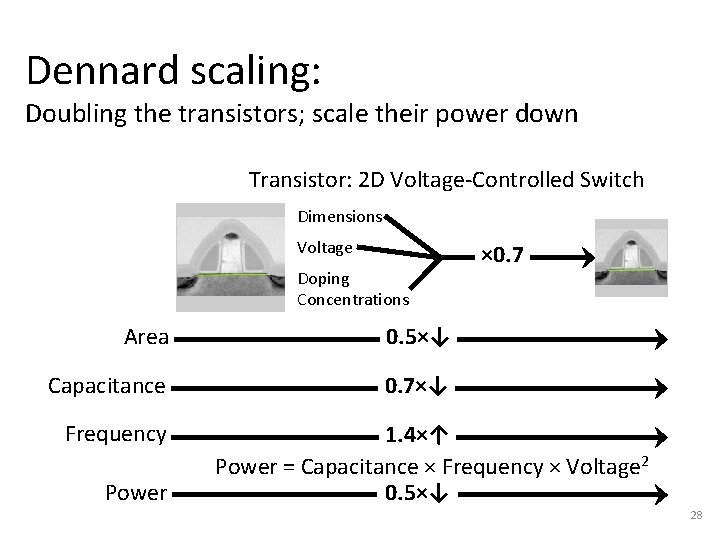
Dennard scaling: Doubling the transistors; scale their power down Transistor: 2 D Voltage-Controlled Switch Dimensions Voltage Doping Concentrations Area 0. 5×↓ Capacitance 0. 7×↓ Frequency Power × 0. 7 1. 4×↑ Power = Capacitance × Frequency × Voltage 2 0. 5×↓ 28
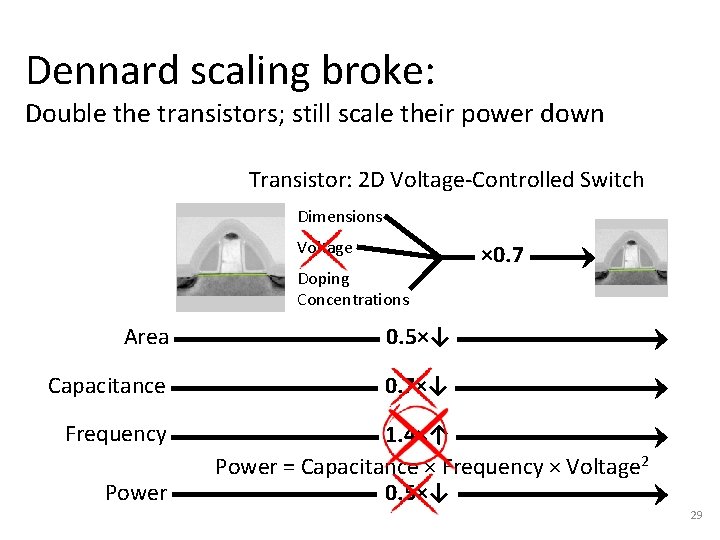
Dennard scaling broke: Double the transistors; still scale their power down Transistor: 2 D Voltage-Controlled Switch Dimensions Voltage Doping Concentrations Area 0. 5×↓ Capacitance 0. 7×↓ Frequency Power × 0. 7 1. 4×↑ Power = Capacitance × Frequency × Voltage 2 0. 5×↓ 29
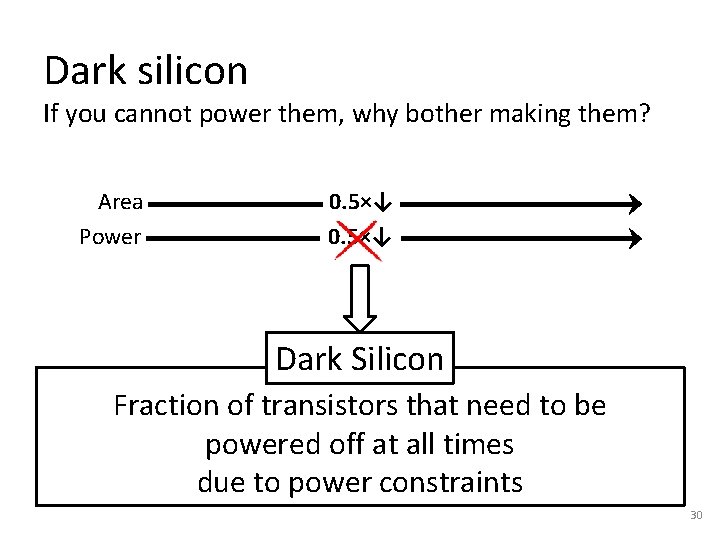
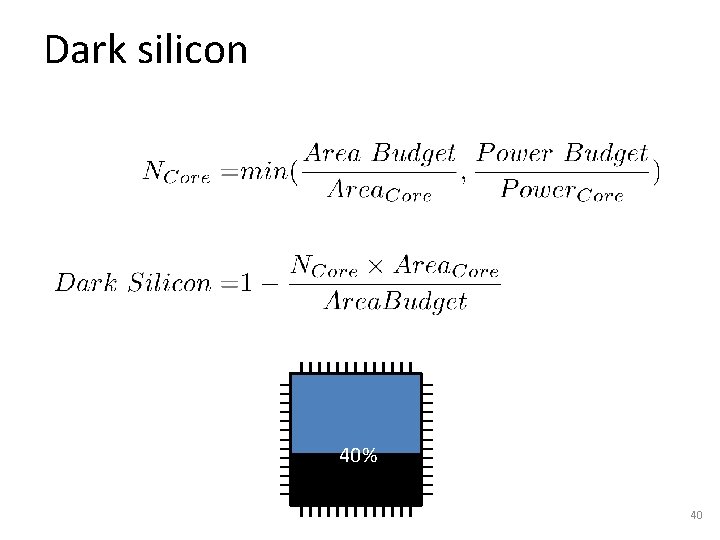
Dark silicon If you cannot power them, why bother making them? Area Power 0. 5×↓ Dark Silicon Fraction of transistors that need to be powered off at all times due to power constraints 30
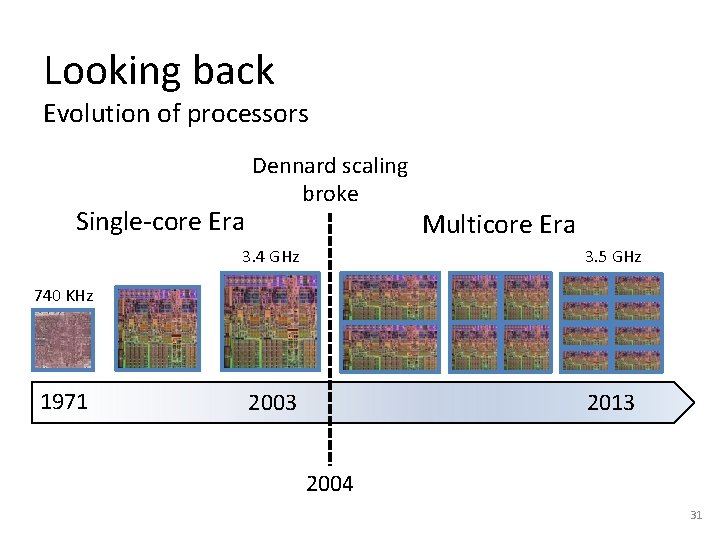
Looking back Evolution of processors Single-core Era Dennard scaling broke Multicore Era 3. 4 GHz 3. 5 GHz 2003 2013 740 KHz 1971 2004 31
Are multicores a long-term solution or just a stopgap? 32
Agenda 1. Who Hadi is 2. Course organization 3. Why alternative computing technologies 1. How we became and industry of new possibilities 2. Why we might become an industry of replacement 4. Possible alternative computing technologies 5. Quiz # 1 33
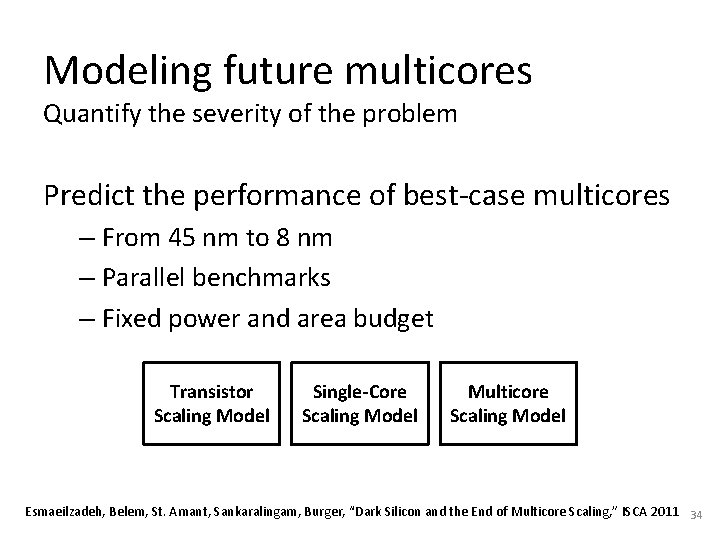
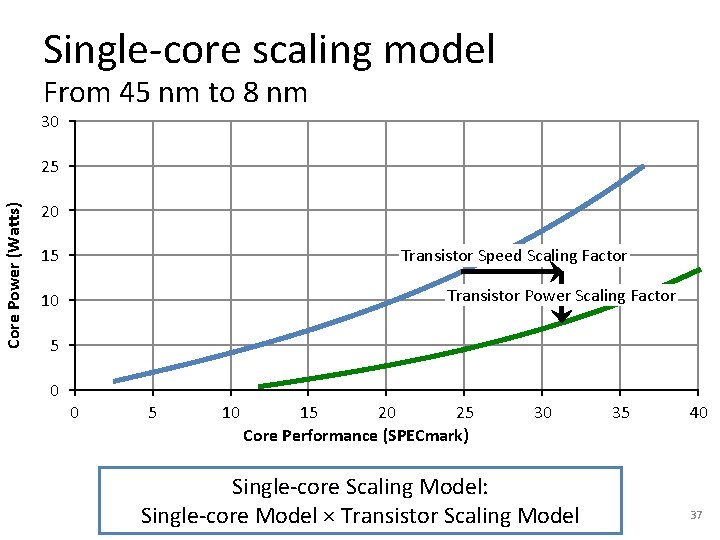
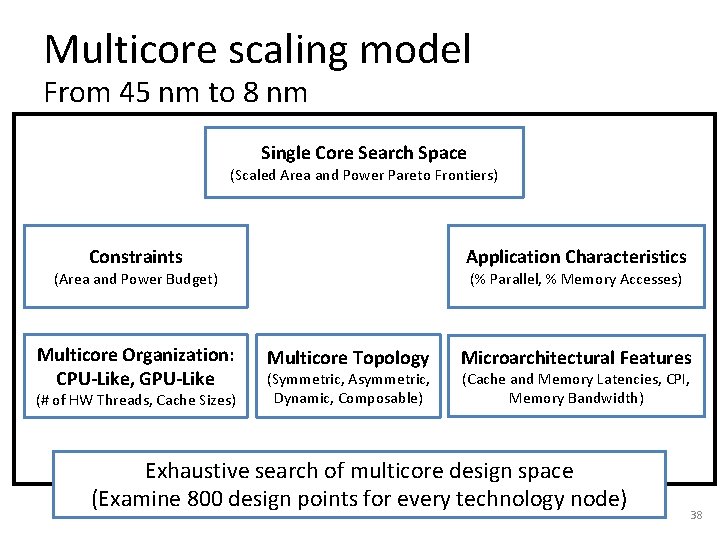
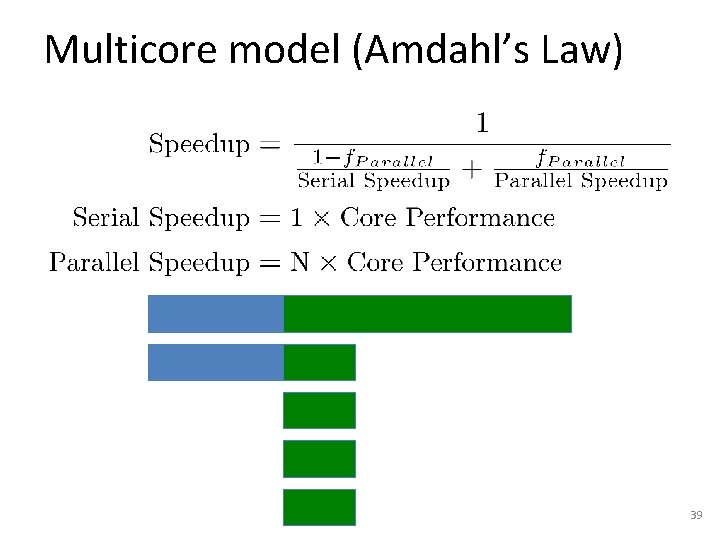
Modeling future multicores Quantify the severity of the problem Predict the performance of best-case multicores – From 45 nm to 8 nm – Parallel benchmarks – Fixed power and area budget Transistor Scaling Model Single-Core Scaling Model Multicore Scaling Model Esmaeilzadeh, Belem, St. Amant, Sankaralingam, Burger, “Dark Silicon and the End of Multicore Scaling, ” ISCA 2011 34
Transistor scaling model From 45 nm to 8 nm [Dennard, 1974] [ITRS, 2010] [VLSI-DAT, 2010] Historical Scaling Optimistic Scaling Model Conservative Scaling Model Area 32× ↓ Power 32× ↓ 8. 3× ↓ 4. 5× ↓ Speed 5. 7× ↑ 3. 9× ↑ 1. 3× ↑ 35
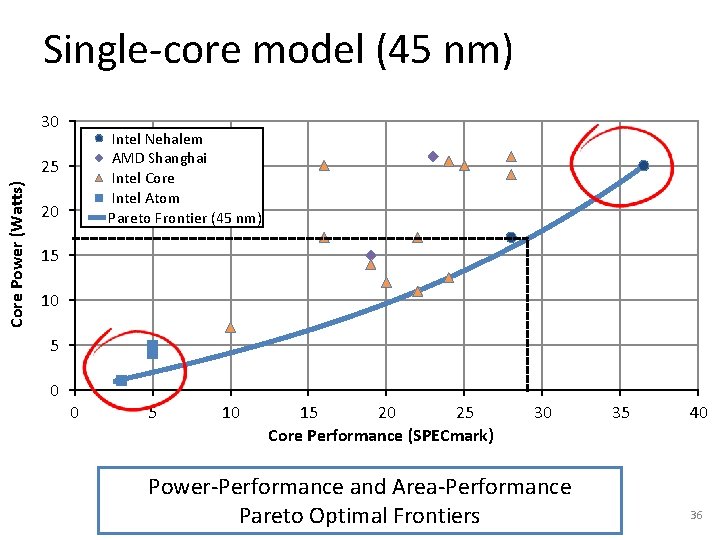
Single-core model (45 nm) 30 Intel Nehalem AMD Shanghai Intel Core Intel Atom Pareto Frontier (45 nm) Core Power (Watts) 25 20 15 10 5 0 0 5 10 15 20 25 Core Performance (SPECmark) 30 Power-Performance and Area-Performance Pareto Optimal Frontiers 35 40 36
Single-core scaling model From 45 nm to 8 nm 30 Core Power (Watts) 25 20 Transistor Speed Scaling Factor 15 Transistor Power Scaling Factor 10 5 0 0 5 10 15 20 25 Core Performance (SPECmark) 30 Single-core Scaling Model: Single-core Model × Transistor Scaling Model 35 40 37
Multicore scaling model From 45 nm to 8 nm Single Core Search Space (Scaled Area and Power Pareto Frontiers) Constraints Application Characteristics (Area and Power Budget) Multicore Organization: CPU-Like, GPU-Like (# of HW Threads, Cache Sizes) (% Parallel, % Memory Accesses) Multicore Topology (Symmetric, Asymmetric, Dynamic, Composable) Microarchitectural Features (Cache and Memory Latencies, CPI, Memory Bandwidth) Exhaustive search of multicore design space (Examine 800 design points for every technology node) 38
Multicore model (Amdahl’s Law) 39
Dark silicon 40% 40
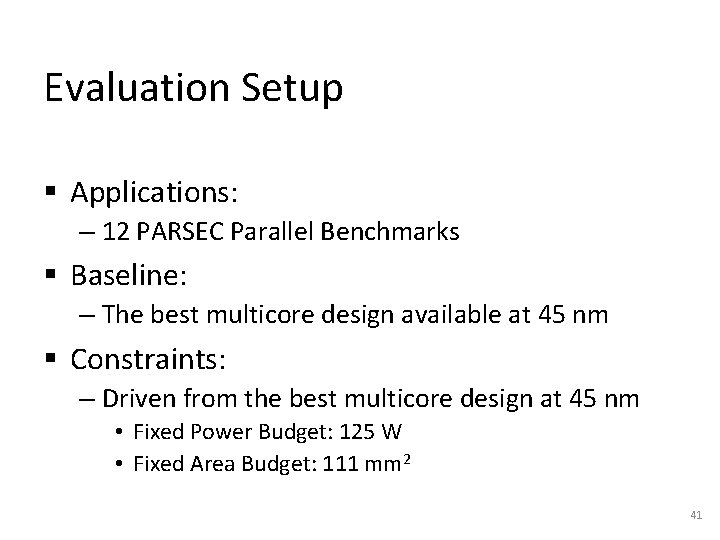
Evaluation Setup § Applications: – 12 PARSEC Parallel Benchmarks § Baseline: – The best multicore design available at 45 nm § Constraints: – Driven from the best multicore design at 45 nm • Fixed Power Budget: 125 W • Fixed Area Budget: 111 mm 2 41
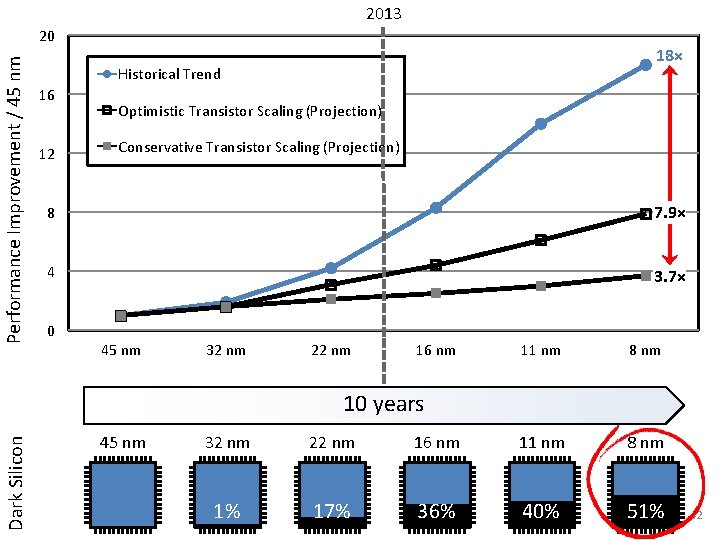
2013 Performance Improvement / 45 nm 20 18× Historical Trend 16 12 Optimistic Transistor Scaling (Projection) Conservative Transistor Scaling (Projection) 8 7. 9× 4 3. 7× 0 45 nm 32 nm 22 nm 16 nm 11 nm 8 nm Dark Silicon 10 years 45 nm 32 nm 22 nm 16 nm 11 nm 8 nm 1% 17% 36% 40% 51% 42
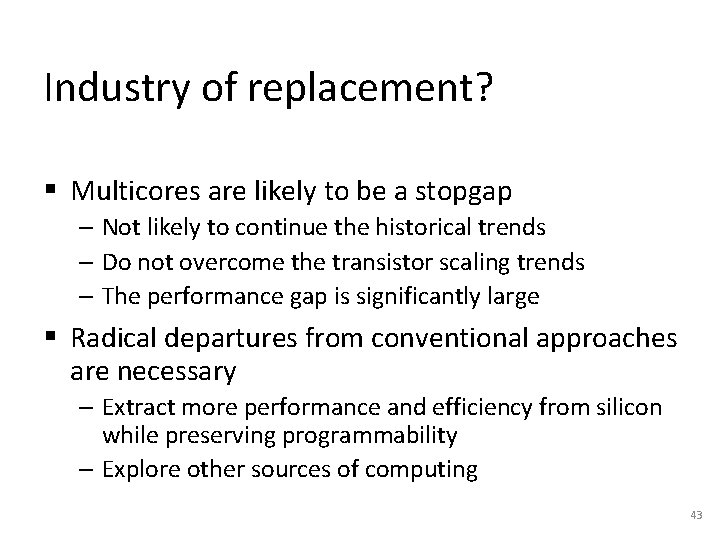
Industry of replacement? § Multicores are likely to be a stopgap – Not likely to continue the historical trends – Do not overcome the transistor scaling trends – The performance gap is significantly large § Radical departures from conventional approaches are necessary – Extract more performance and efficiency from silicon while preserving programmability – Explore other sources of computing 43
Agenda 1. Who Hadi is 2. Course organization 3. Why alternative computing technologies 1. How we became and industry of new possibilities 2. Why we might become and industry of replacement 4. Possible alternative computing technologies 5. Quiz # 1 44
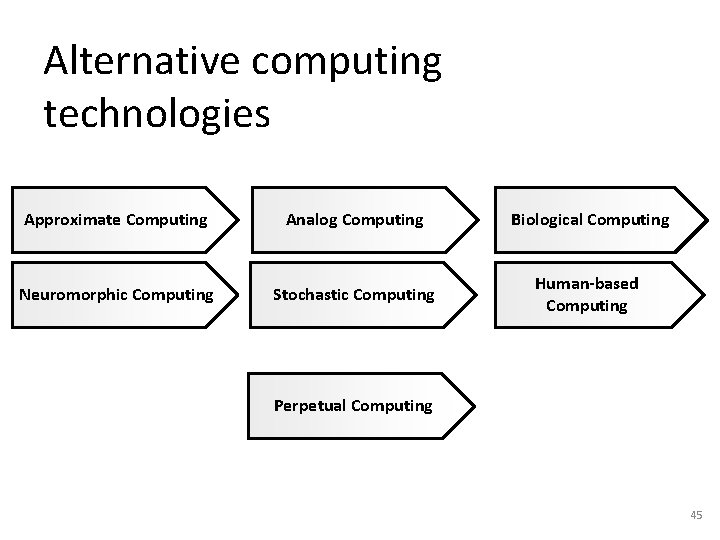
Alternative computing technologies Approximate Computing Analog Computing Biological Computing Neuromorphic Computing Stochastic Computing Human-based Computing Perpetual Computing 45
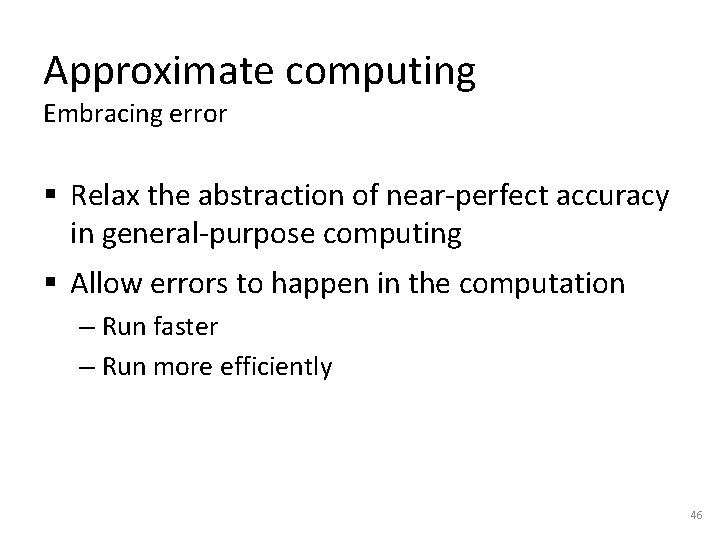
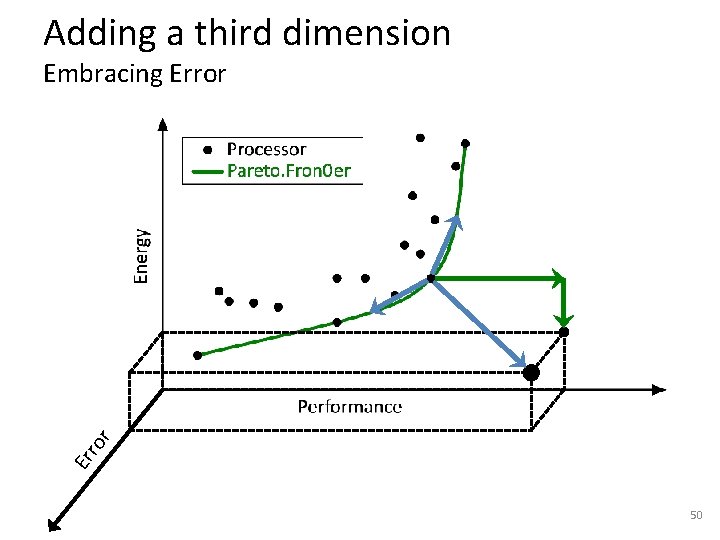
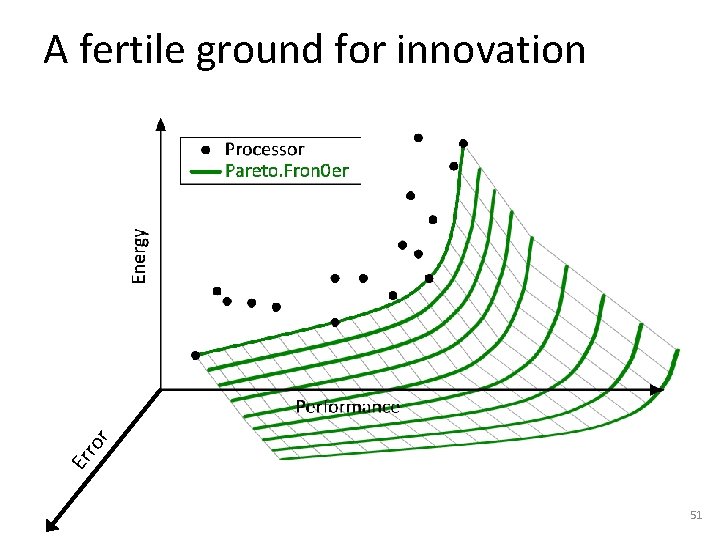
Approximate computing Embracing error § Relax the abstraction of near-perfect accuracy in general-purpose computing § Allow errors to happen in the computation – Run faster – Run more efficiently 46
47
New landscape of computing Personalized and targeted computing 48
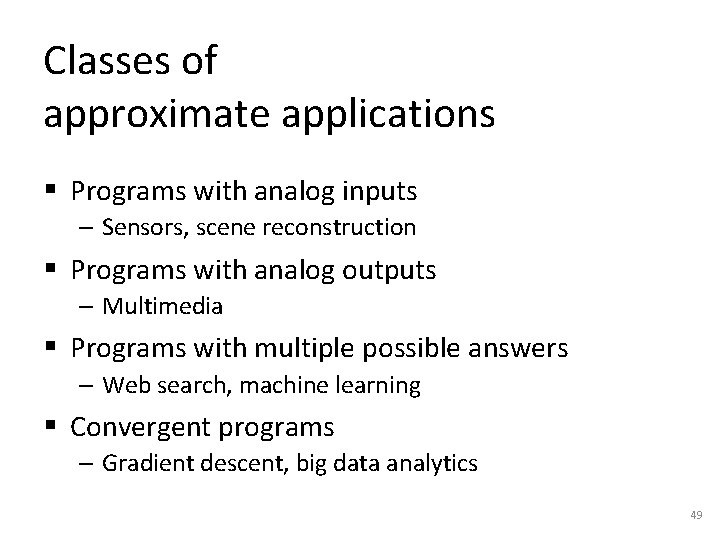
Classes of approximate applications § Programs with analog inputs – Sensors, scene reconstruction § Programs with analog outputs – Multimedia § Programs with multiple possible answers – Web search, machine learning § Convergent programs – Gradient descent, big data analytics 49
Adding a third dimension Er ro r Embracing Error 50
Er ro r A fertile ground for innovation 51
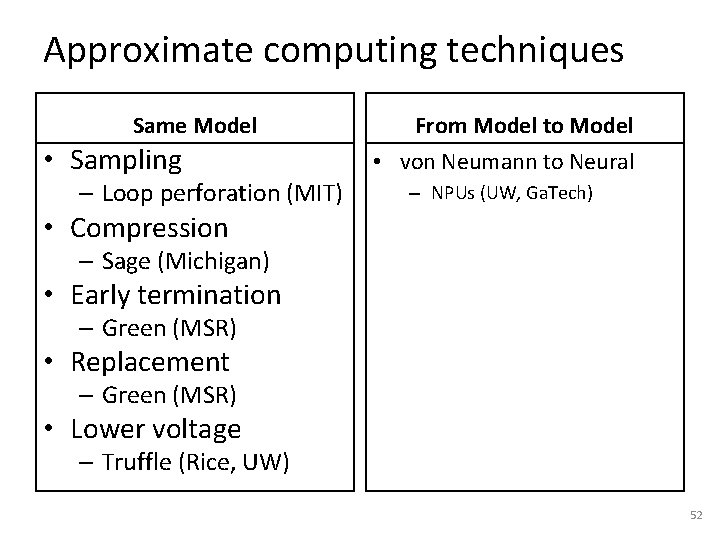
Approximate computing techniques Same Model • Sampling – Loop perforation (MIT) From Model to Model • von Neumann to Neural – NPUs (UW, Ga. Tech) • Compression – Sage (Michigan) • Early termination – Green (MSR) • Replacement – Green (MSR) • Lower voltage – Truffle (Rice, UW) 52
Analog Computing with Physics http: //youtu. be/d. Ay. Di 1 aa 40 E 53
Agenda 1. Who Hadi is 2. Course organization 3. Why alternative computing technologies 1. How we became and industry of new possibilities 2. Why we might become an industry of replacement 4. Possible alternative computing technologies 5. Quiz # 1 54
55