
Altered States of Consciousness Objectives Describe the research
Altered States of Consciousness
Objectives § Describe the research related to sleep and dreams. § List and discus sleep disorders.
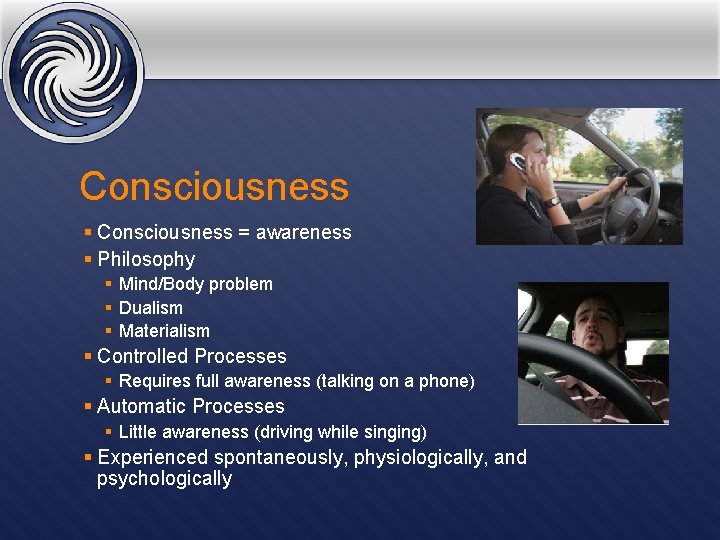
Consciousness § Consciousness = awareness § Philosophy § Mind/Body problem § Dualism § Materialism § Controlled Processes § Requires full awareness (talking on a phone) § Automatic Processes § Little awareness (driving while singing) § Experienced spontaneously, physiologically, and psychologically

Pre-Conscious § Daydreaming § Requires a low level of awareness, fantasizing – serve a purpose § (getting a haircut)
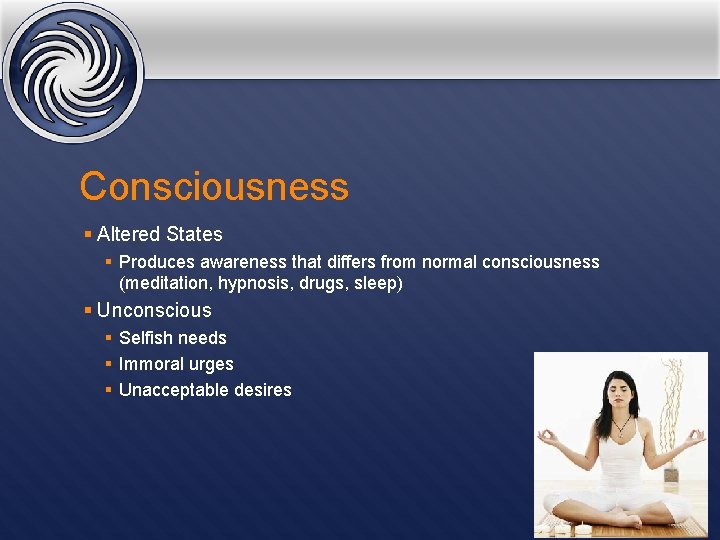
Consciousness § Altered States § Produces awareness that differs from normal consciousness (meditation, hypnosis, drugs, sleep) § Unconscious § Selfish needs § Immoral urges § Unacceptable desires
The Proof § Experiments demonstrate existence of levels § Priming = quick response § Mere-exposure effect = not consciously remember stimuli (Déjà vu)
Hypnosis § Increased suggestability to changes in behavior § History § § § Anton Mesmer = passing magnets James Braid = coins term “hypnosis” Jean Charcot = hysterical condition Hippolyte Bernheim = result of suggestion Clark Hull = first hypnosis lab Used as psychological intervention, WWI/WWII
Hypnotic Ability § Openness to suggestion is key, expectancy § Correlates = fantasy, imagination § Effects § Inaccurate memories § Relaxed reflection § Posthypnotic amnesia
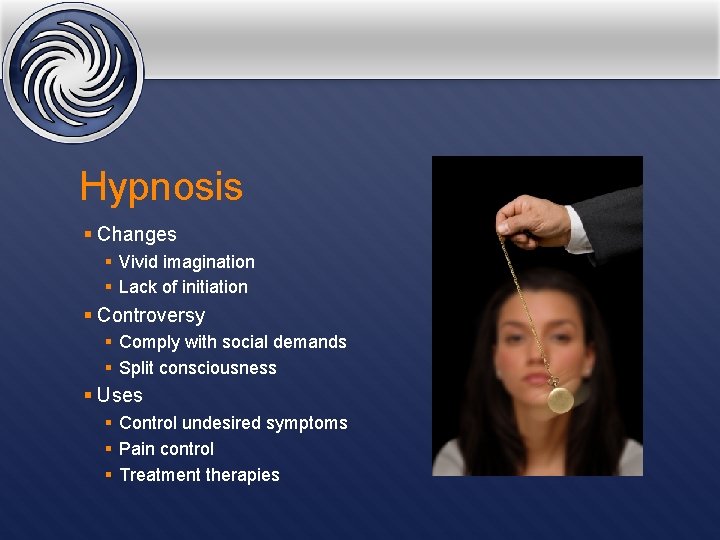
Hypnosis § Changes § Vivid imagination § Lack of initiation § Controversy § Comply with social demands § Split consciousness § Uses § Control undesired symptoms § Pain control § Treatment therapies
Meditation § Designed to create an altered state, characterized by inner peace and tranquility § Physiological effects § Slow breathing, heart rate, lower muscle tension, lower blood pressure, lower oxygen consumption § Correlates § Reduced anxiety levels § Reduced insomnia § Improved self-esteem
Sleep § Characteristics § § Patterns follow circadian rhythm (biological clock) Avg. 4 -6, 90 -minute cycles of NREM/REM Need for sleep (Infants = 20 hrs. ) (Adults = 6 hrs. ) 40 -50% of sleep takes place in Stage 2
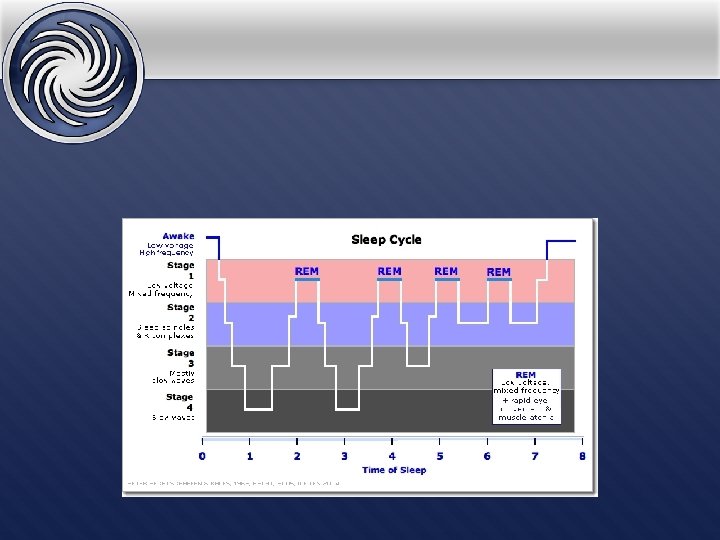
Stages of Sleep § Stage 1: slow pulse, relaxed muscles (drifting) § Stage 2: sleep spindles, heart rate decreases § Stage 3: sleep for 30 -45 minutes § Stage 4: deepest sleep § REM Sleep: the dream stage § The Hypnic jerk – common in sleep deprived people, during early stage – muscles misinterpret signals from RAS (relax)
Dreaming § Lucid dreaming – directing your own dreams § Freud § Dreams fulfill desires § Activation Synthesis theory § Random neural firings § Info Processing theory § Review problems faced during waking hours
Sleep Disorders § Insomnia – unable to sleep § Narcolepsy – suddenly fall asleep § Sleep apnea – briefly stop breathing § Nightmares/night terrors – screaming, confusion § Sleep walking/talking – linked to stress, fatigue
- Slides: 15