
Altered Mental Status Coma and Reduced GCS Emergencies
- Slides: 19
Altered Mental Status Coma and Reduced GCS Emergencies Franko Haller, Medical English VI franko@me. com December 2010 Mentor: A. Žmegač Horvat
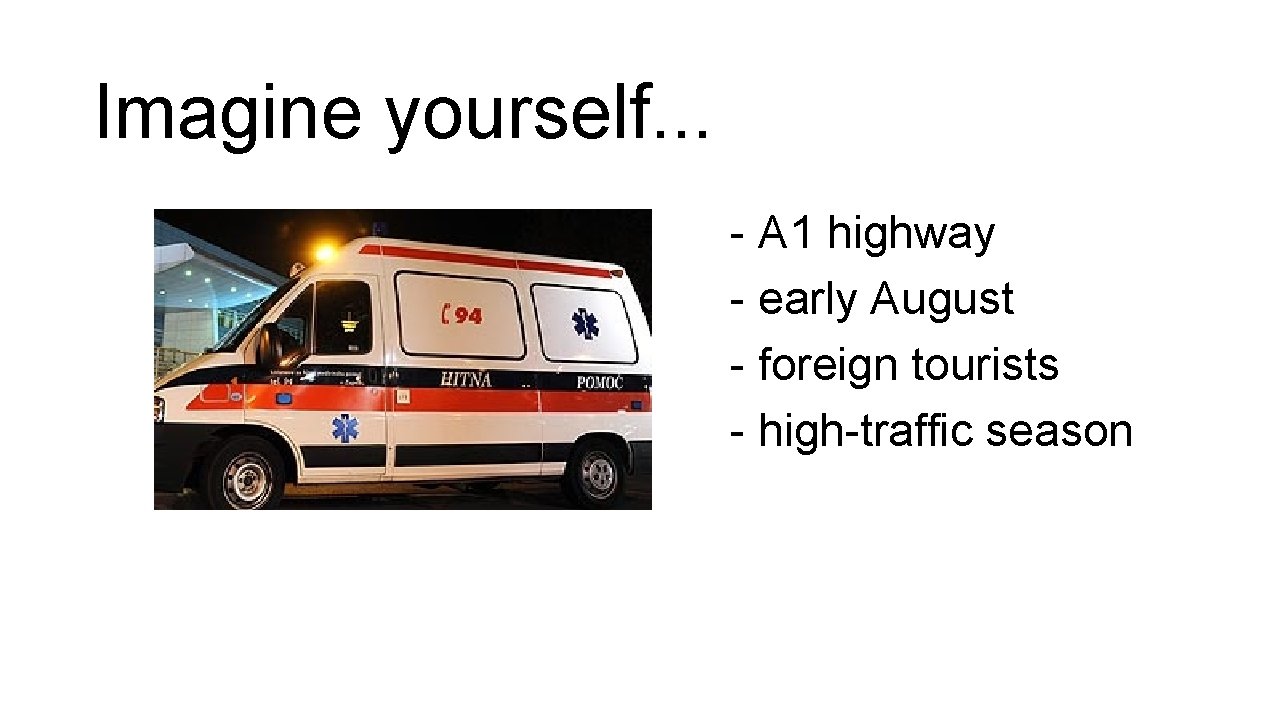
Imagine yourself. . . - A 1 highway - early August - foreign tourists - high-traffic season
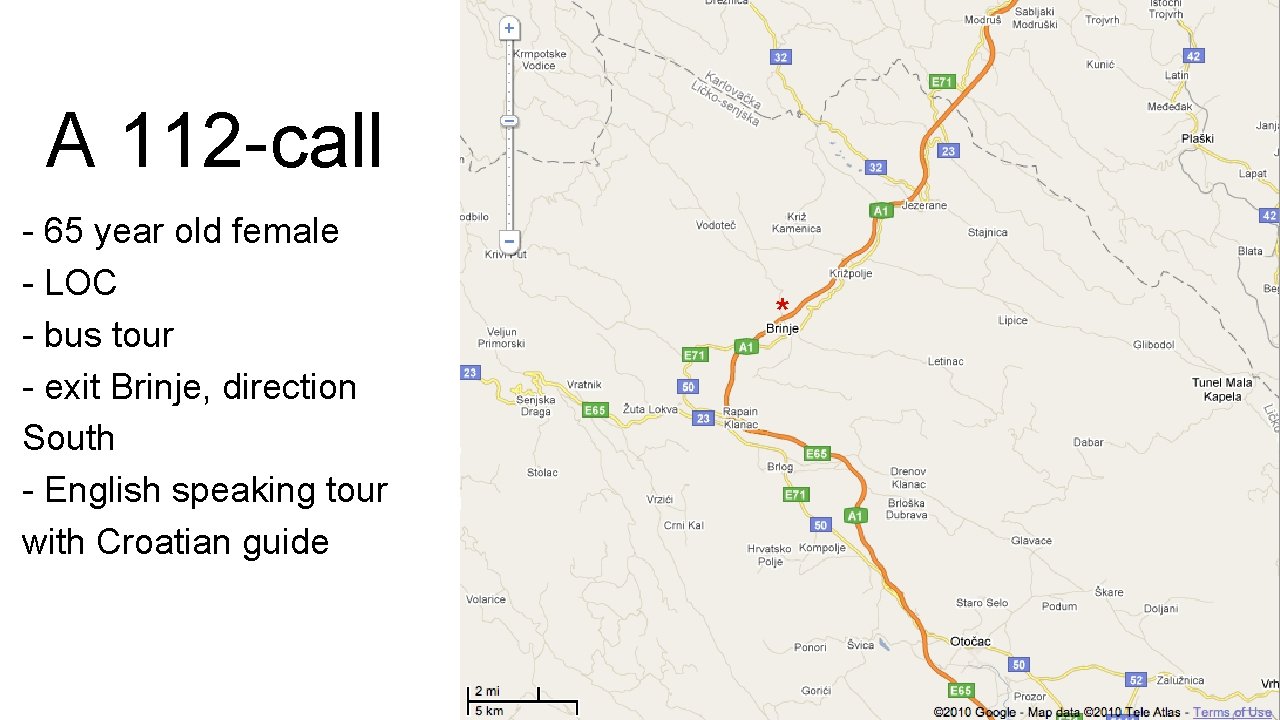
A 112 -call - 65 year old female - LOC - bus tour - exit Brinje, direction South - English speaking tour with Croatian guide *
What can you expect? - 65 year old female - LOC - bus tour - exit Brinje - English speaking tour with Croatian guide ALMOST anything!
How to approach the patient? D DANGER
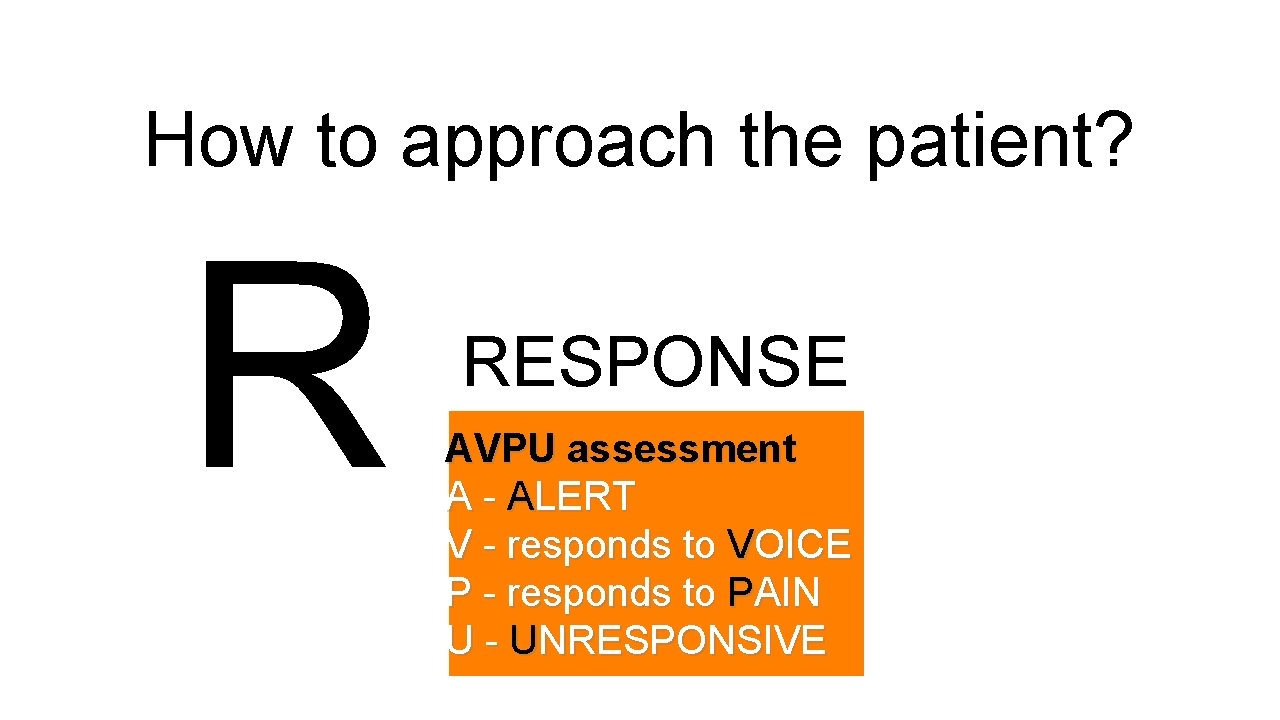
How to approach the patient? R RESPONSE AVPU assessment A - ALERT V - responds to VOICE P - responds to PAIN U - UNRESPONSIVE
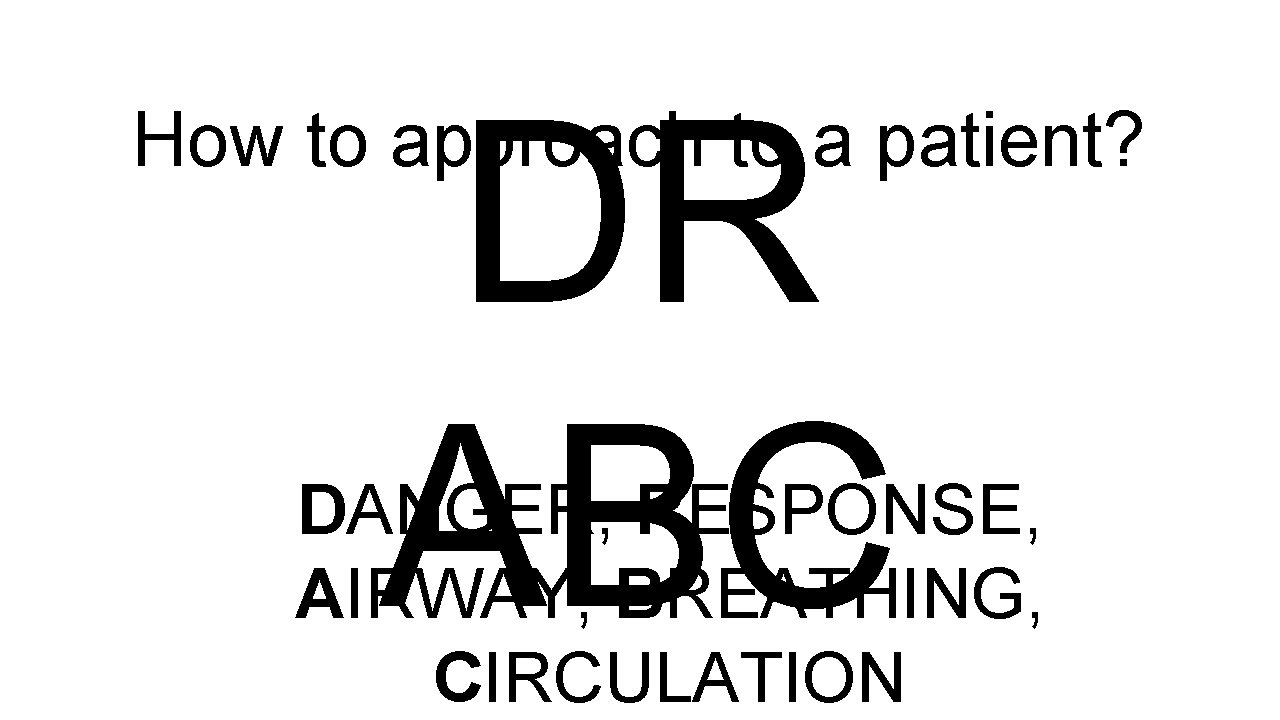
DR ABC How to approach to a patient? DANGER, RESPONSE, AIRWAY, BREATHING, CIRCULATION
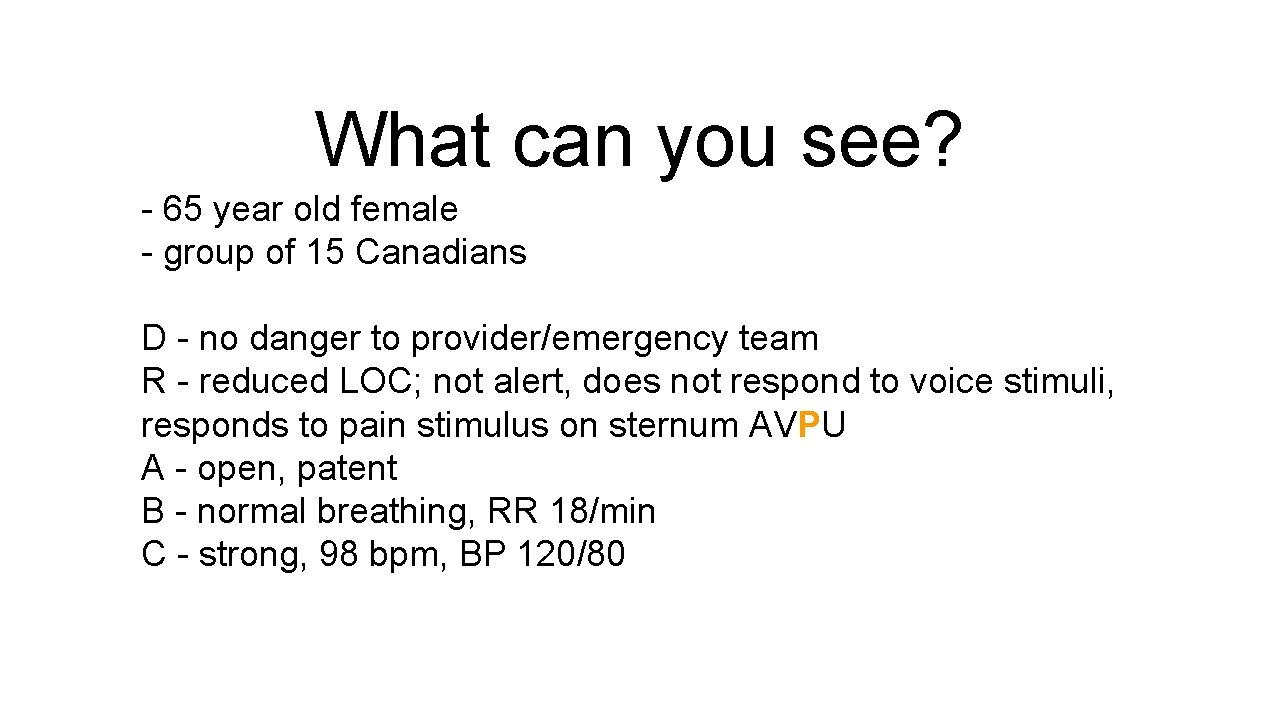
What can you see? - 65 year old female - group of 15 Canadians D - no danger to provider/emergency team R - reduced LOC; not alert, does not respond to voice stimuli, responds to pain stimulus on sternum AVPU A - open, patent B - normal breathing, RR 18/min C - strong, 98 bpm, BP 120/80
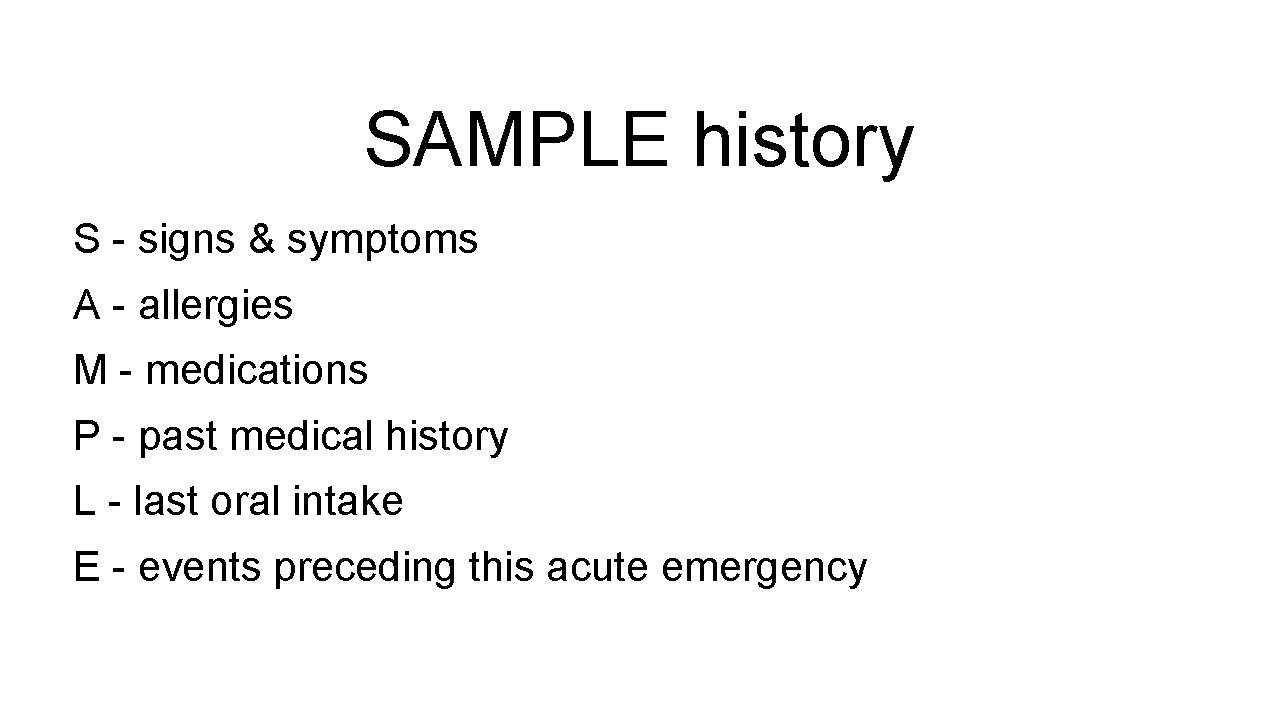
SAMPLE history S - signs & symptoms A - allergies M - medications P - past medical history L - last oral intake E - events preceding this acute emergency
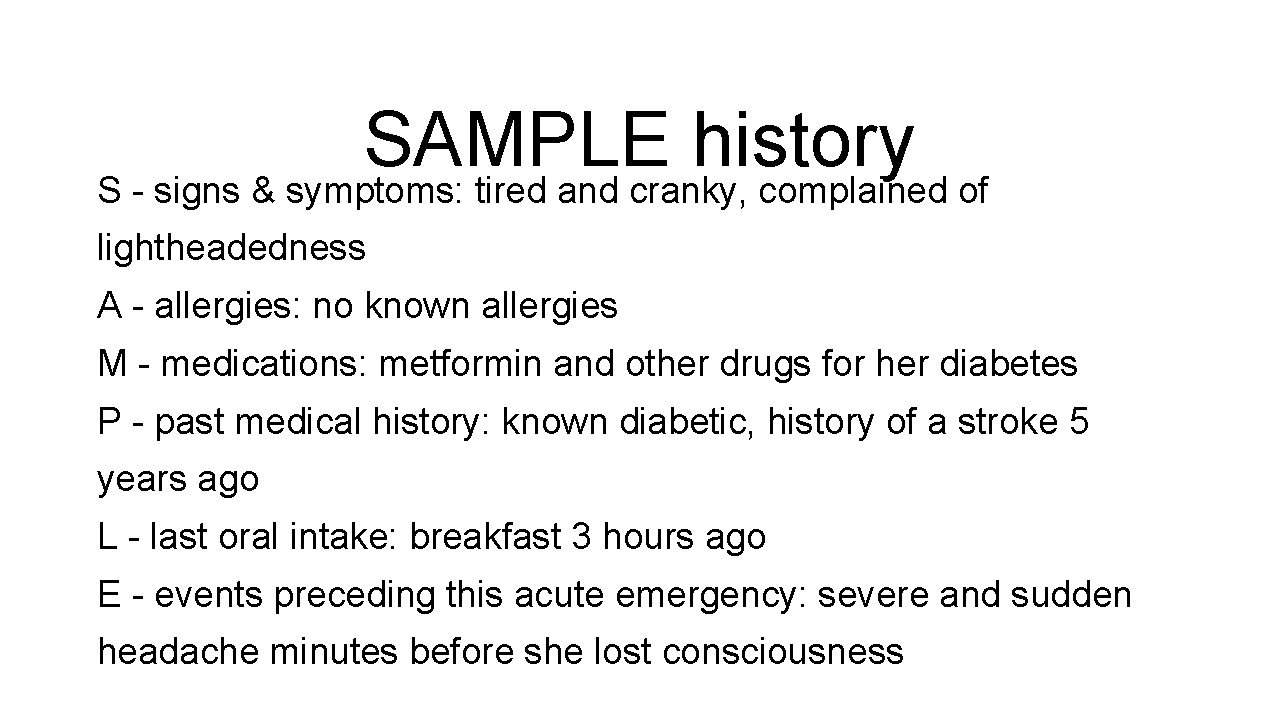
SAMPLE history S - signs & symptoms: tired and cranky, complained of lightheadedness A - allergies: no known allergies M - medications: metformin and other drugs for her diabetes P - past medical history: known diabetic, history of a stroke 5 years ago L - last oral intake: breakfast 3 hours ago E - events preceding this acute emergency: severe and sudden headache minutes before she lost consciousness
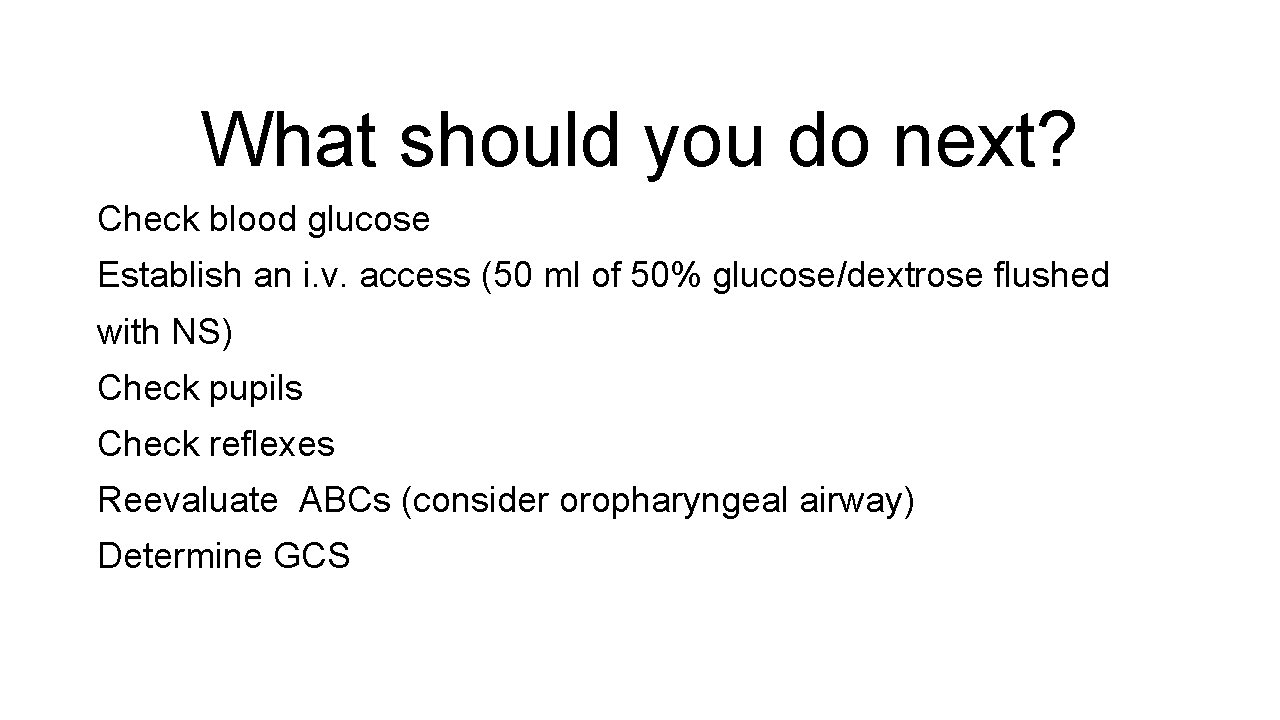
What should you do next? Check blood glucose Establish an i. v. access (50 ml of 50% glucose/dextrose flushed with NS) Check pupils Check reflexes Reevaluate ABCs (consider oropharyngeal airway) Determine GCS
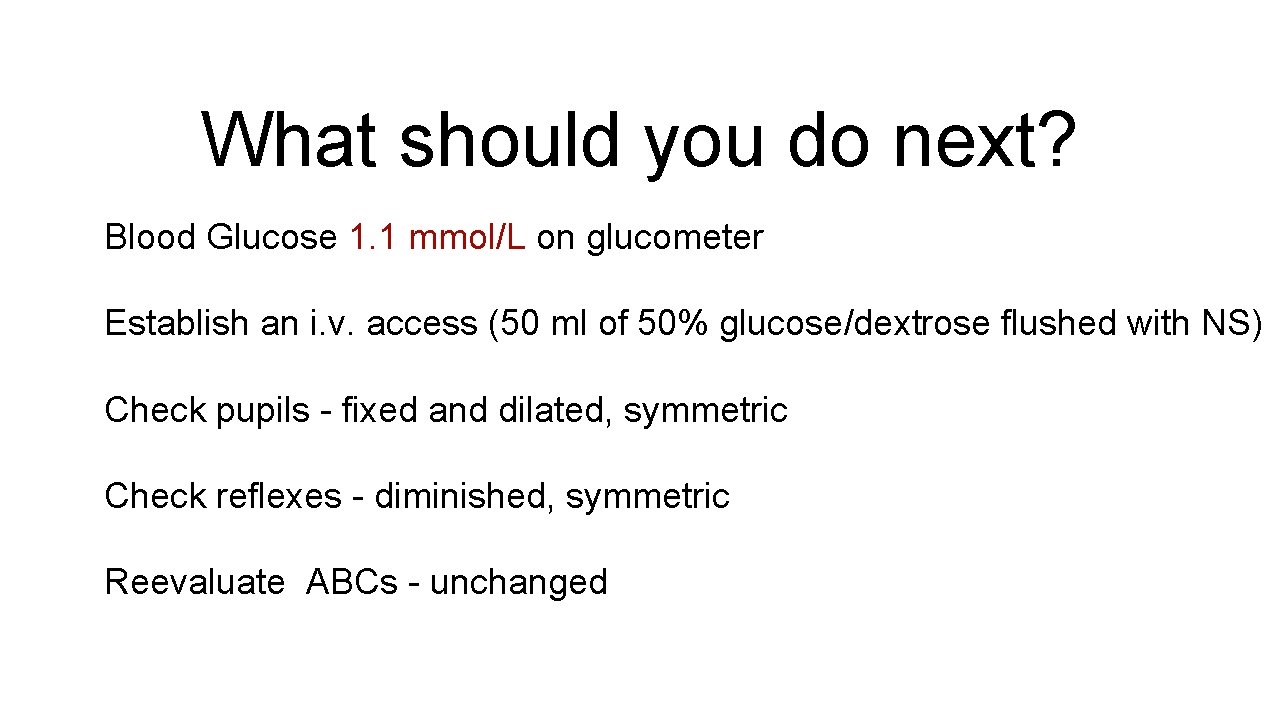
What should you do next? Blood Glucose 1. 1 mmol/L on glucometer Establish an i. v. access (50 ml of 50% glucose/dextrose flushed with NS) Check pupils - fixed and dilated, symmetric Check reflexes - diminished, symmetric Reevaluate ABCs - unchanged
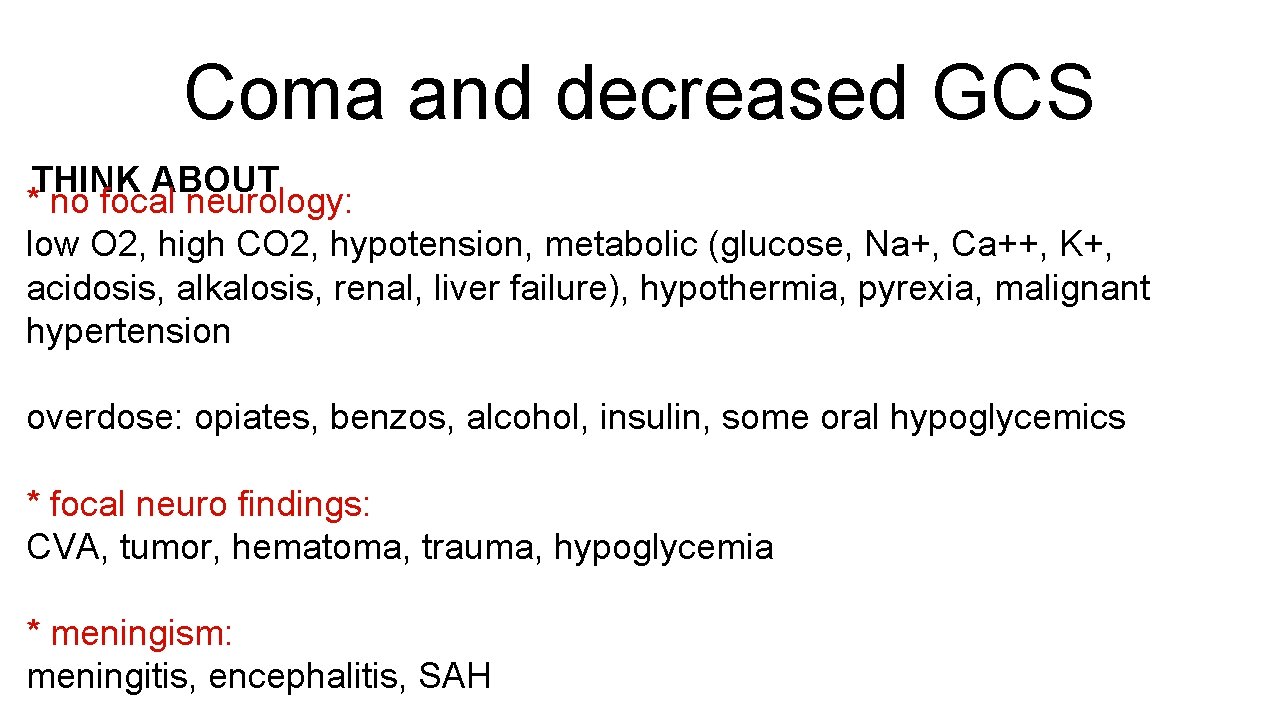
Coma and decreased GCS THINK ABOUT * no focal neurology: low O 2, high CO 2, hypotension, metabolic (glucose, Na+, Ca++, K+, acidosis, alkalosis, renal, liver failure), hypothermia, pyrexia, malignant hypertension overdose: opiates, benzos, alcohol, insulin, some oral hypoglycemics * focal neuro findings: CVA, tumor, hematoma, trauma, hypoglycemia * meningism: meningitis, encephalitis, SAH
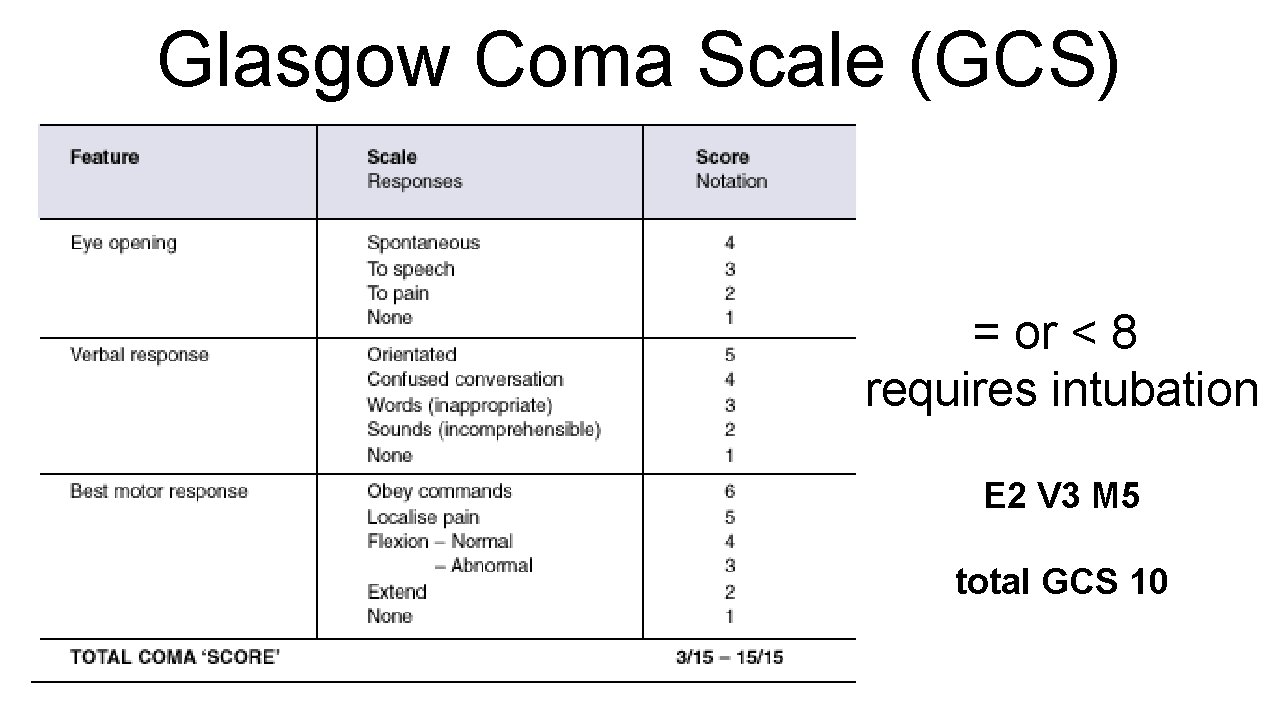
Glasgow Coma Scale (GCS) = or < 8 requires intubation E 2 V 3 M 5 total GCS 10
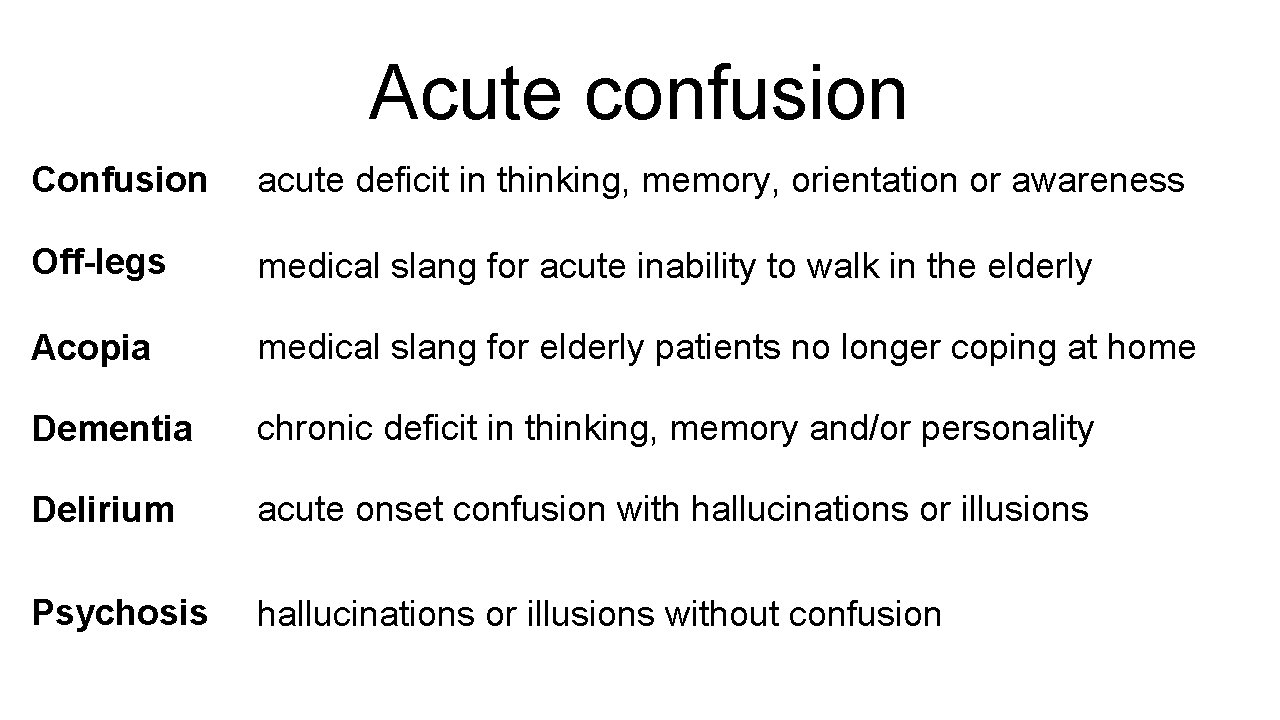
Acute confusion Confusion acute deficit in thinking, memory, orientation or awareness Off-legs medical slang for acute inability to walk in the elderly Acopia medical slang for elderly patients no longer coping at home Dementia chronic deficit in thinking, memory and/or personality Delirium acute onset confusion with hallucinations or illusions Psychosis hallucinations or illusions without confusion
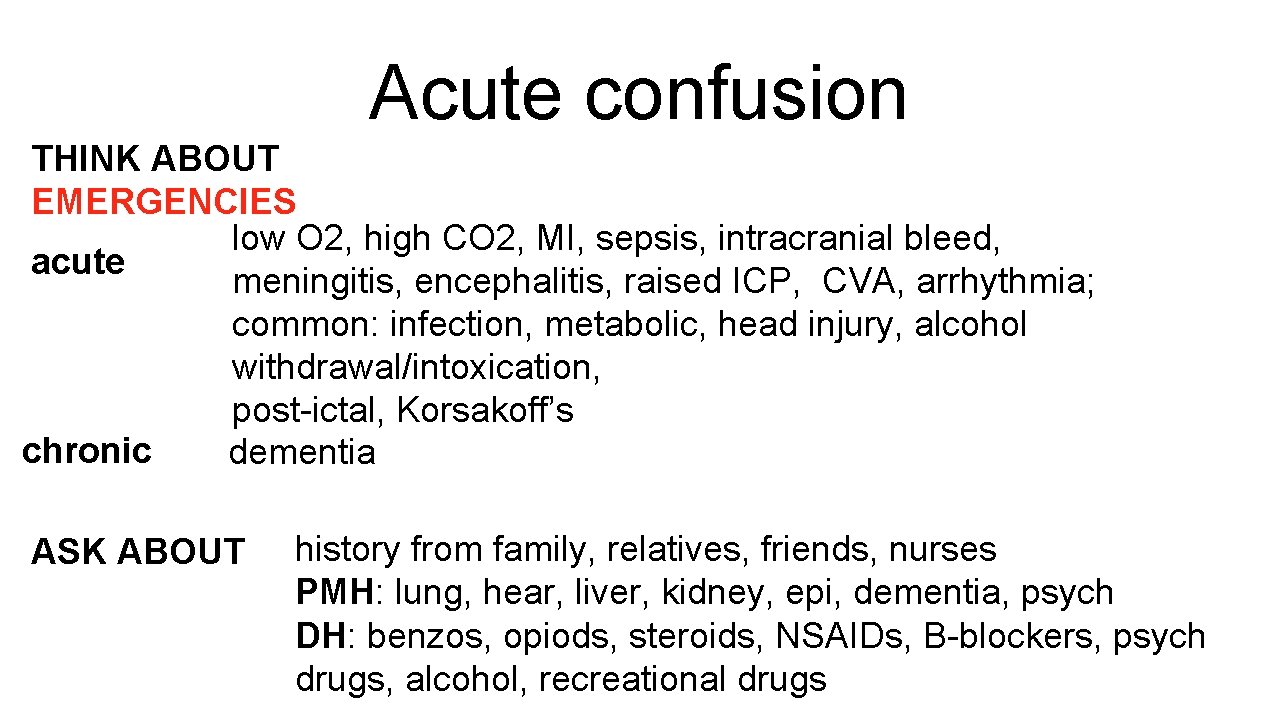
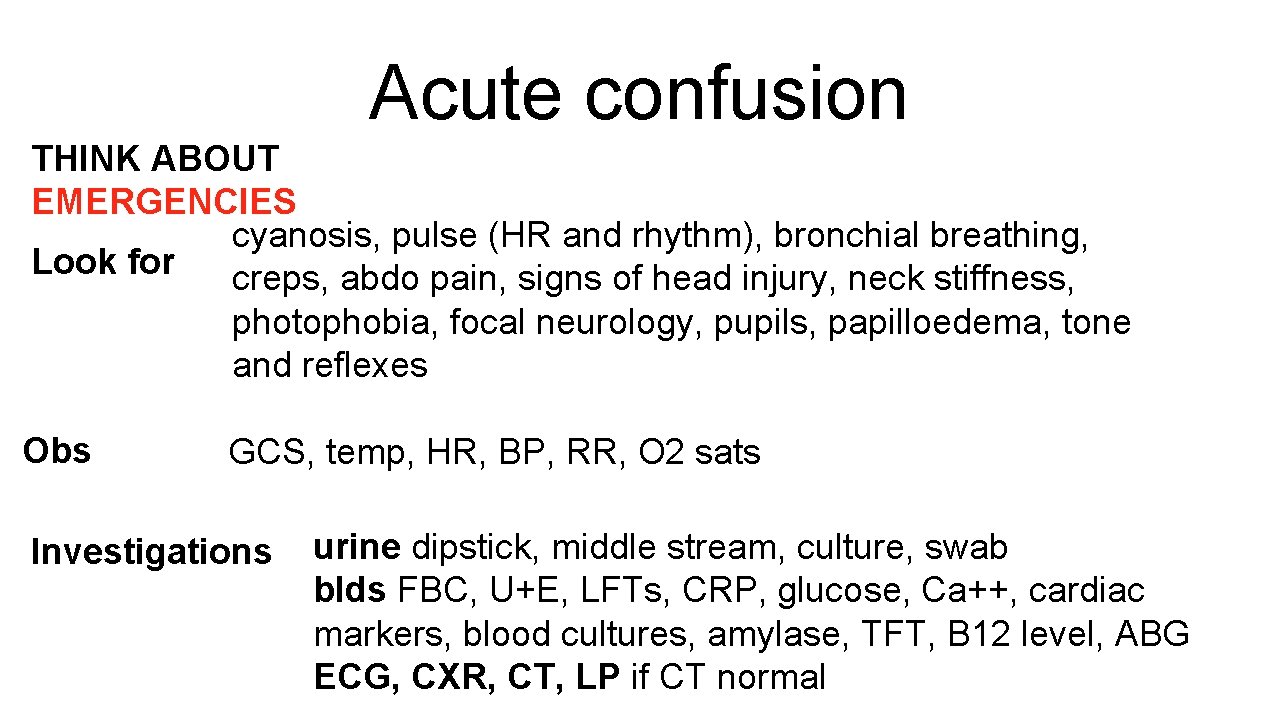
Acute confusion THINK ABOUT EMERGENCIES low O 2, high CO 2, MI, sepsis, intracranial bleed, acute meningitis, encephalitis, raised ICP, CVA, arrhythmia; common: infection, metabolic, head injury, alcohol withdrawal/intoxication, post-ictal, Korsakoff’s chronic dementia ASK ABOUT history from family, relatives, friends, nurses PMH: lung, hear, liver, kidney, epi, dementia, psych DH: benzos, opiods, steroids, NSAIDs, B-blockers, psych drugs, alcohol, recreational drugs
Acute confusion THINK ABOUT EMERGENCIES cyanosis, pulse (HR and rhythm), bronchial breathing, Look for creps, abdo pain, signs of head injury, neck stiffness, photophobia, focal neurology, pupils, papilloedema, tone and reflexes Obs GCS, temp, HR, BP, RR, O 2 sats Investigations urine dipstick, middle stream, culture, swab blds FBC, U+E, LFTs, CRP, glucose, Ca++, cardiac markers, blood cultures, amylase, TFT, B 12 level, ABG ECG, CXR, CT, LP if CT normal
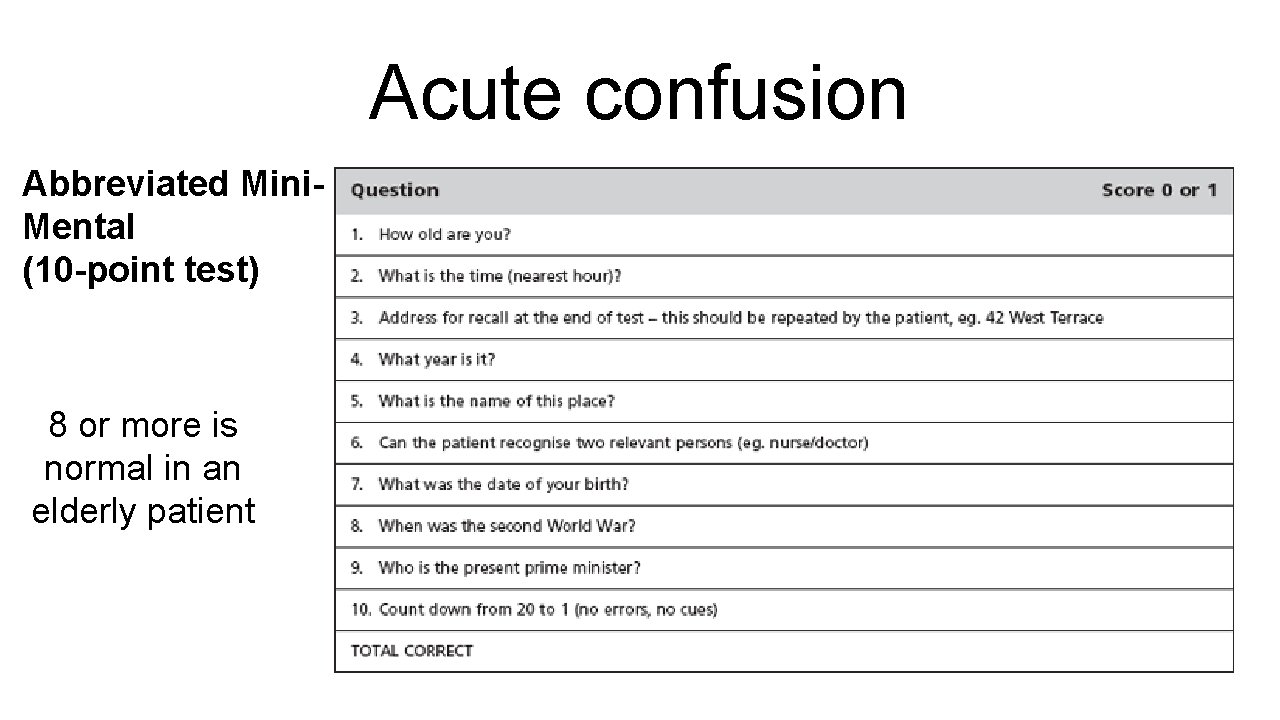
Acute confusion Abbreviated Mini. Mental (10 -point test) 8 or more is normal in an elderly patient
Thank you for your attention Literature: 1. Oxford Handbook for The Foundation Programme; Hurley, Dawson, Sanders, 2 nd E, Oxford University Press, 2008 2. Oxford Cases in Medicine and Surgery; Guiding Your Through Diagnosis; Farne, Norris, Smith, Oxford University Press, 2010