
Alterations in the Nervous System Nursing Diagnosis Interventions

- Slides: 14
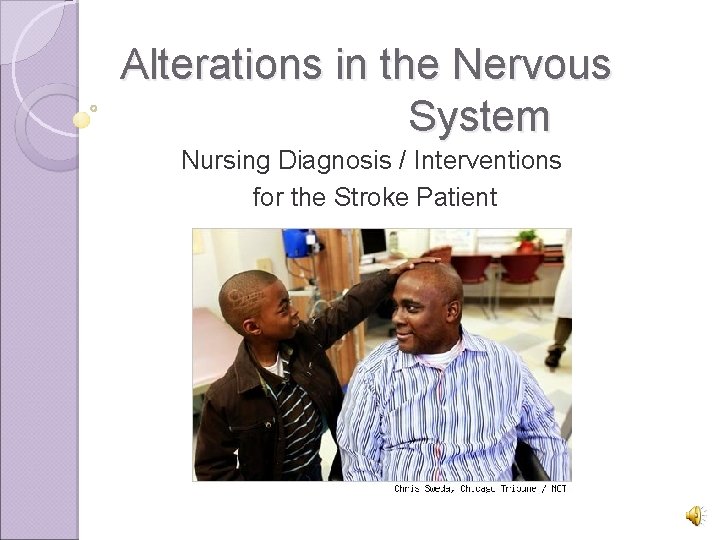
Alterations in the Nervous System Nursing Diagnosis / Interventions for the Stroke Patient
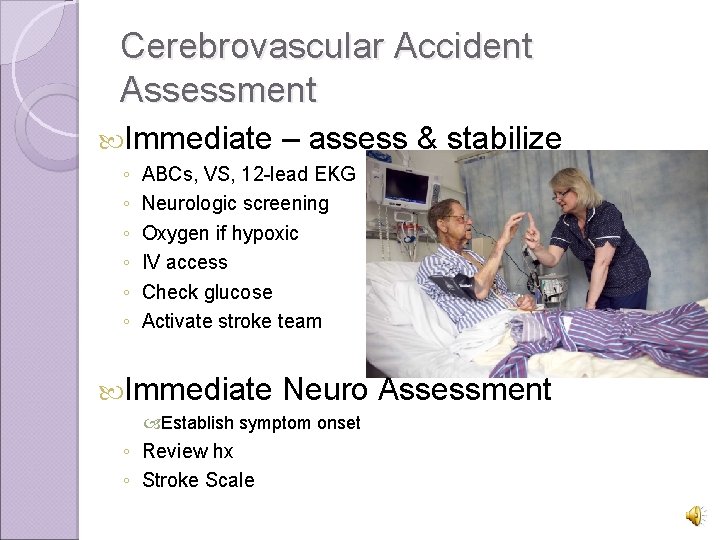
Cerebrovascular Accident Assessment Immediate ◦ ◦ ◦ – assess & stabilize ABCs, VS, 12 -lead EKG Neurologic screening Oxygen if hypoxic IV access Check glucose Activate stroke team Immediate Neuro Assessment Establish symptom onset ◦ Review hx ◦ Stroke Scale
Cerebrovascular Accident Nursing Goals • • • Maintain stable body functions Minimize complications of stroke Maximize communication abilities Maintain adequate nutrition Attain maximum physical functioning Maintain effective personal & family coping
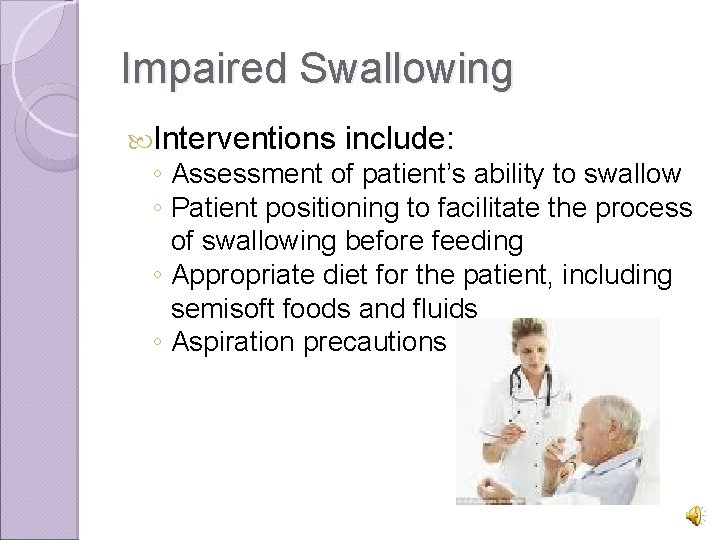
Impaired Swallowing Interventions include: ◦ Assessment of patient’s ability to swallow ◦ Patient positioning to facilitate the process of swallowing before feeding ◦ Appropriate diet for the patient, including semisoft foods and fluids ◦ Aspiration precautions
Disturbed Sensory Perception Interventions include: ◦ Right hemisphere damage: problems with visual-perceptual or spatial-perceptual tasks -ADLs -Ambulation ◦ Left hemispheric damage: problems with memory deficits and ability to carry out simple tasks
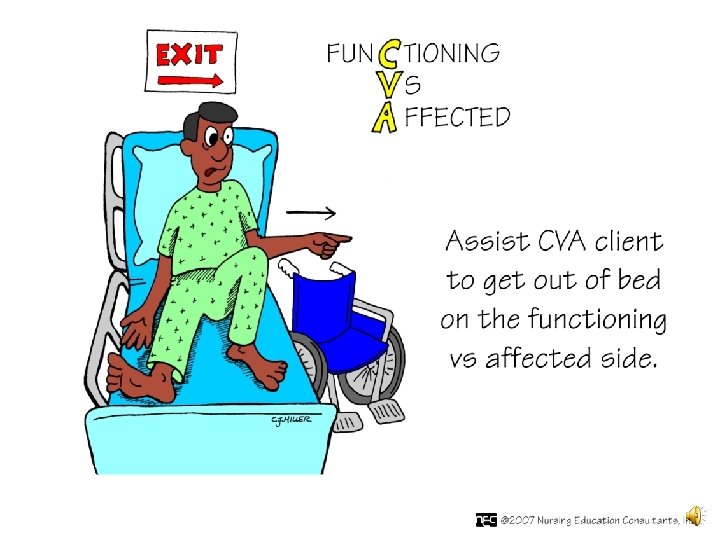
Unilateral Neglect This syndrome is most commonly seen with right cerebral stroke Teach patient to: ◦ Observe safety measures ◦ Touch and use both sides of the body ◦ Use scanning technique ( turn head from side to side) to expand the visual field
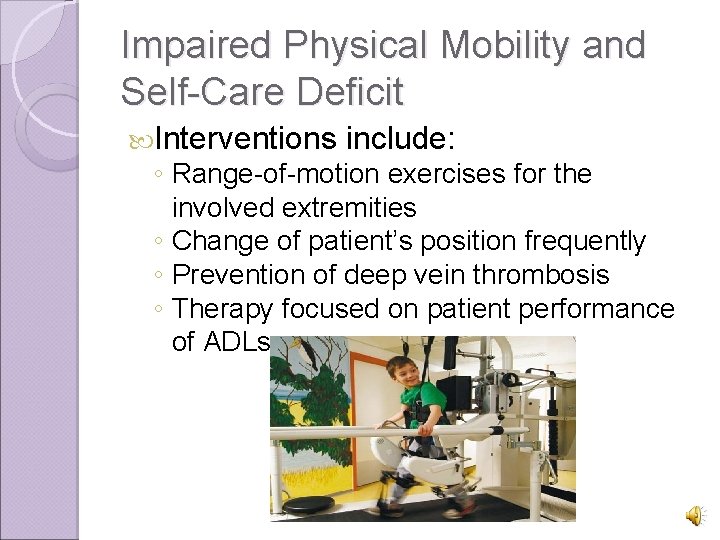
Impaired Physical Mobility and Self-Care Deficit Interventions include: ◦ Range-of-motion exercises for the involved extremities ◦ Change of patient’s position frequently ◦ Prevention of deep vein thrombosis ◦ Therapy focused on patient performance of ADLs
Impaired Verbal Communication Language or speech problems r/t damage to the dominant hemisphere Expressive aphasia (Broca’s area) frontal lobe area Receptive aphasia (Wernicke’s or sensory) temporoparietal area
Urinary and Bowel Incontinence Altered level of consciousness may cause incontinence or impaired innervation or an inability to communicate Develop a bladder and bowel training program Meds: stool softeners
Cerebrovascular Accident Acute Phase v Assess: Frequently to assess CVA evolution Neuro : -Glascow Coma Scale (mental status, LOC, pupillary response, extremity movement, strength, sensation) -ICP -Communication—speaking & understanding; sensory-perceptual alterations CV: -cardiac monitoring (VS, PO, ) -hemodynamic monitoring
Cerebrovascular Accident Acute Phase Continued Resp: - assess airway/air exchange -check for aspiration GI: -swallowing (gag reflex) - bowel sounds, constipation GU : urinary continence Integumentary : -skin integrity, hygiene Coping : - individual and family
Cerebrovascular Accident Acute Phase v. Nsg Action: v. Supportive Care v. Respiratory – spans from intubation to breathing on own v. Musculoskeletal -- Positioning – side-to-side; HOB elevated; PROM exercise; splints; shoes/footboard v. GI – enteral feedings initially v. GU – foley catheter v. Skin – preventive care v. Meds: anti platelet
Cerebrovascular Accident Acute Phase v. Patient Education: v. Clear explanations for all care/treatments v. Focus on improvements—regained abilities v. Include family