
ALTERATION OF THE CENTRAL NERVOUS SYSTEM TREATMENT OF
- Slides: 10
ALTERATION OF THE CENTRAL NERVOUS SYSTEM TREATMENT OF SEIZURES
Nonsurgical Management Antiepileptic drugs (AEDs) Importance of compliance Health teaching
Drug Therapy Evaluate most current blood level of medication, if appropriate. Be aware of drug-drug and drug-food interactions. Maintain therapeutic blood levels for maximal effectiveness.
Acute Seizure Management Lorazepam (Ativan) Diazepam (Valium) Diastat (Valium rectal gel) IV phenytoin or fosphenytoin (Dilantin)
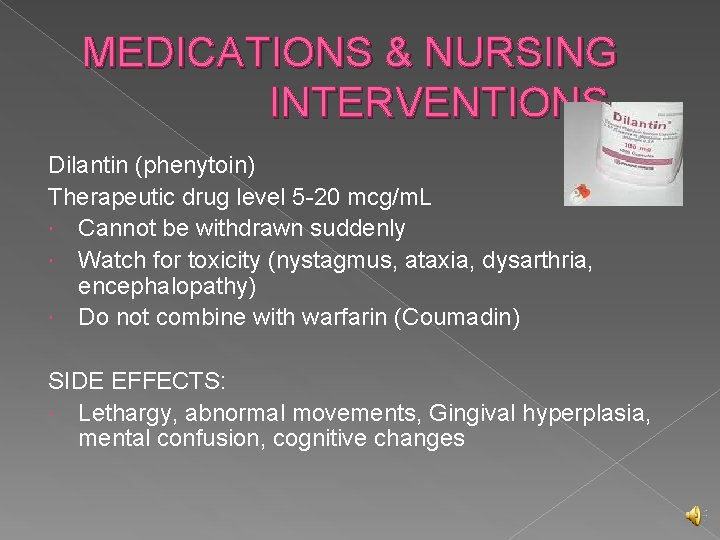
MEDICATIONS & NURSING INTERVENTIONS Dilantin (phenytoin) Therapeutic drug level 5 -20 mcg/m. L Cannot be withdrawn suddenly Watch for toxicity (nystagmus, ataxia, dysarthria, encephalopathy) Do not combine with warfarin (Coumadin) SIDE EFFECTS: Lethargy, abnormal movements, Gingival hyperplasia, mental confusion, cognitive changes
MEDICATIONS & NURSING INTERVENTIONS Carbamazepine (Tegretol): expensive, monitor h/a, diplopia, CBC Valproic acid (Depakene): effects liver, causes tremors, alopecia, N/V. -Monitor CBC, PTT, AST Gabapentin (Neurotonin): wgt gain monitor dizziness, ataxia, fatigue
MEDICATIONS & NURSING IMPLICATIONS Clonazepam (Klonopin): drowsiness, palpitations, monitor liver function Levetiracetam (Keppra): somnolence, monitor renal function Oxcarbazepine (Trileptal): tremor, loss of coordination, monitor for hyponatremia
MEDICATIONS & NURSING IMPLICATIONS Phenobarbitol (Luminal): overdose can be fatal; monitor for sedation, cognitive impairment Topiramate (Topamax): monitor fatigue, anorexia, depression, ataxia
Status Epilepticus Medical emergency Prolonged seizures or repeated seizures over the course of 30 minutes Establish an airway ABGs IV push lorazepam, diazepam; rectal diazepam Loading dose IV phenytoin
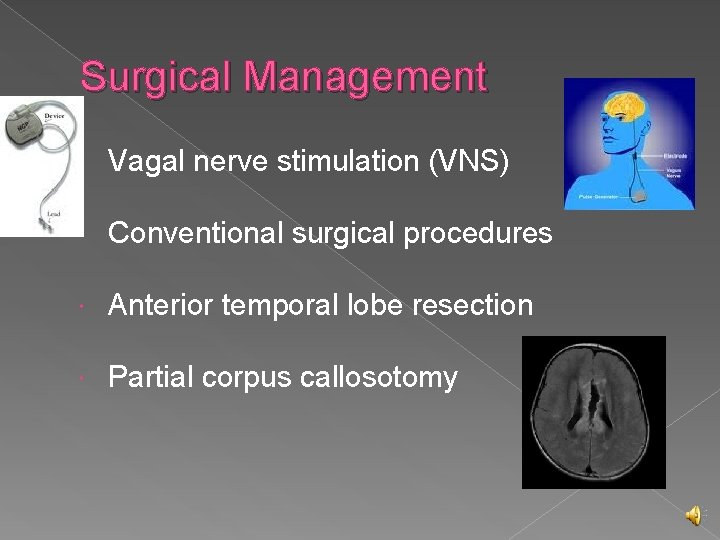
Surgical Management Vagal nerve stimulation (VNS) Conventional surgical procedures Anterior temporal lobe resection Partial corpus callosotomy