
Alpine Vegetation patterns of biodiversity and response to
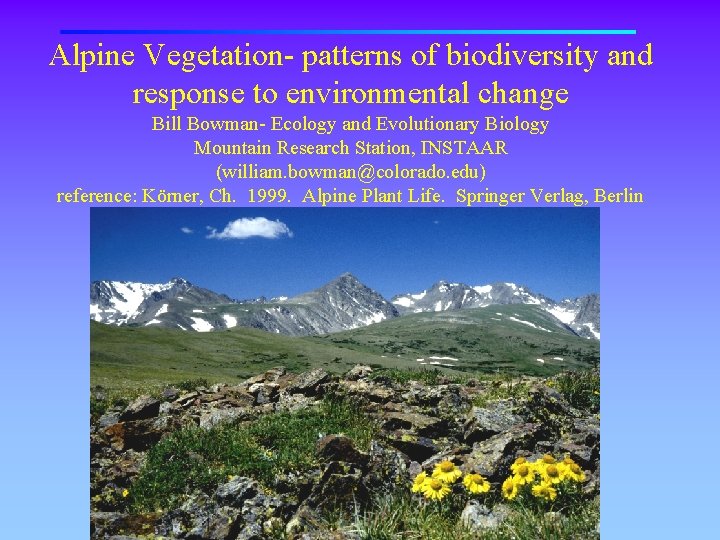
Alpine Vegetation- patterns of biodiversity and response to environmental change Bill Bowman- Ecology and Evolutionary Biology Mountain Research Station, INSTAAR (william. bowman@colorado. edu) reference: Körner, Ch. 1999. Alpine Plant Life. Springer Verlag, Berlin
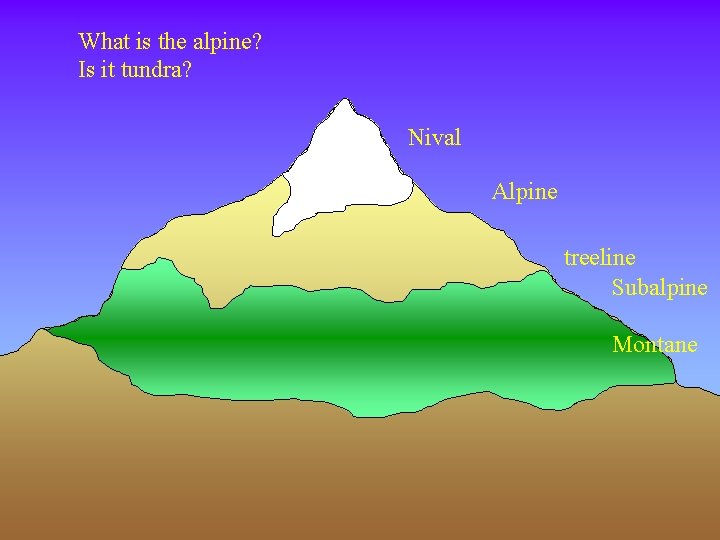
What is the alpine? Is it tundra? Nival Alpine treeline Subalpine Montane
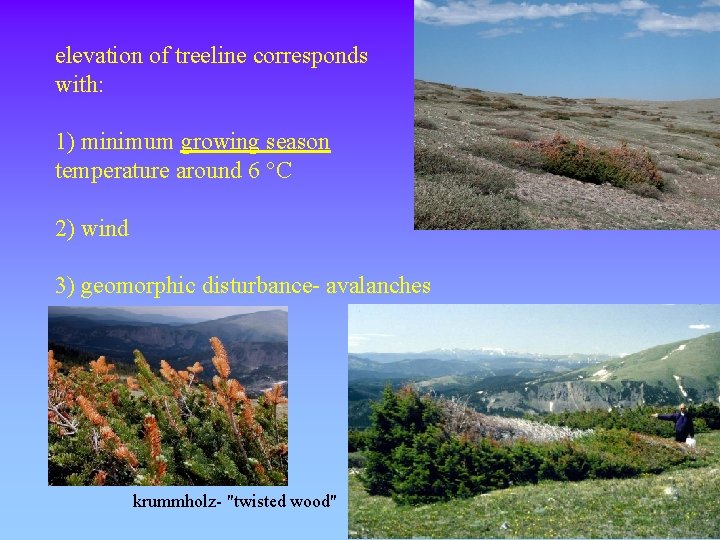
elevation of treeline corresponds with: 1) minimum growing season temperature around 6 °C 2) wind 3) geomorphic disturbance- avalanches krummholz- "twisted wood"
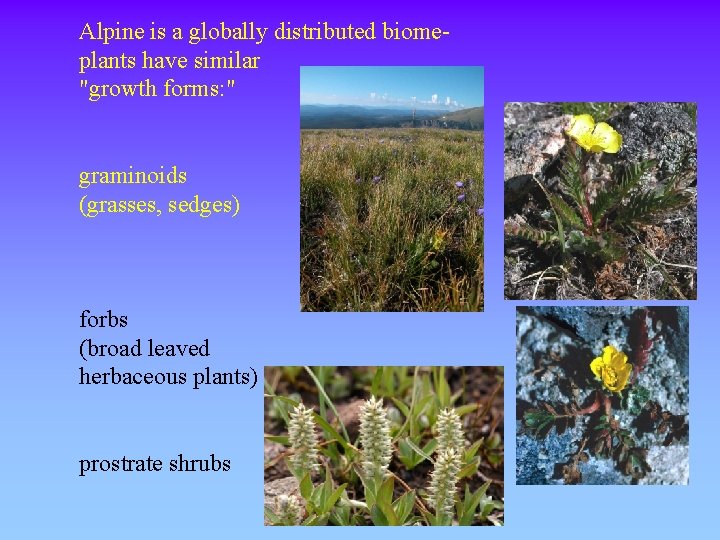
Alpine is a globally distributed biomeplants have similar "growth forms: " graminoids (grasses, sedges) forbs (broad leaved herbaceous plants) prostrate shrubs
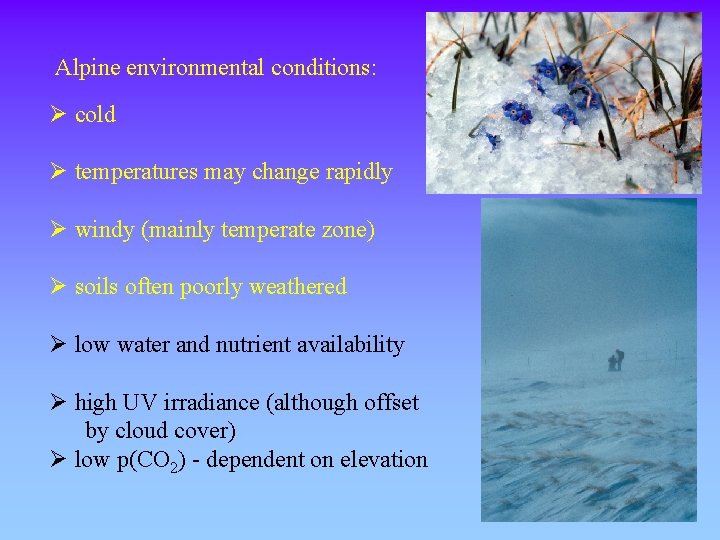
Alpine environmental conditions: Ø cold Ø temperatures may change rapidly Ø windy (mainly temperate zone) Ø soils often poorly weathered Ø low water and nutrient availability Ø high UV irradiance (although offset by cloud cover) Ø low p(CO 2) - dependent on elevation
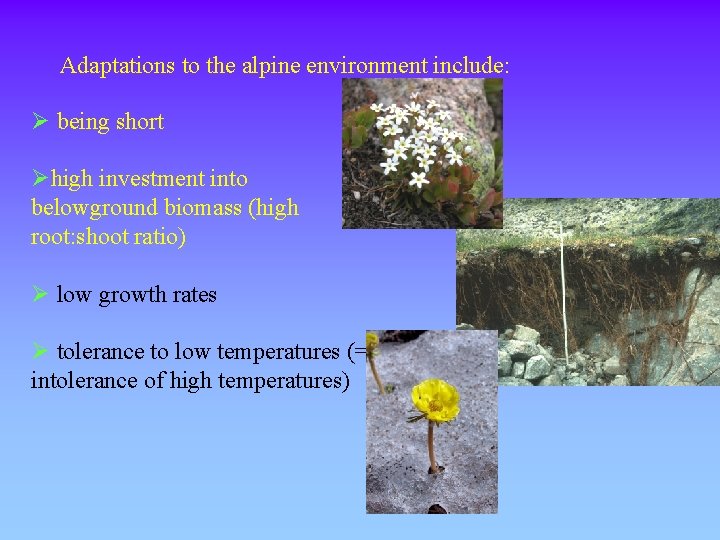
Adaptations to the alpine environment include: Ø being short Øhigh investment into belowground biomass (high root: shoot ratio) Ø low growth rates Ø tolerance to low temperatures (= intolerance of high temperatures)
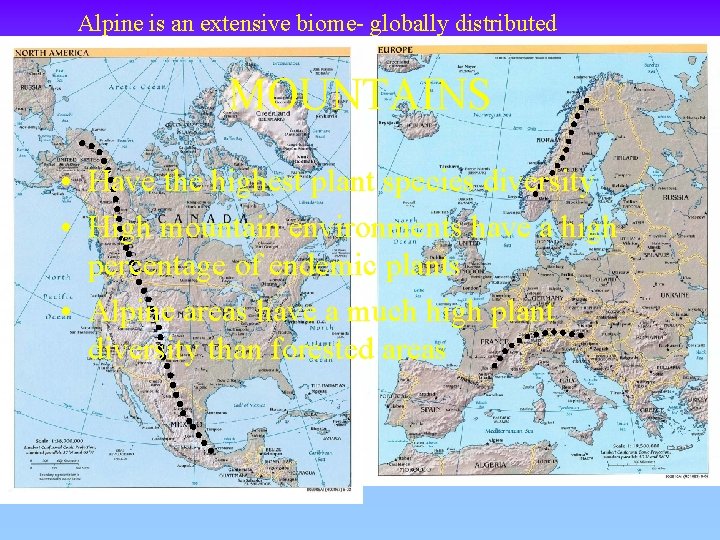
Alpine is an extensive biome- globally distributed MOUNTAINS • Have the highest plant species diversity • High mountain environments have a high percentage of endemic plants • Alpine areas have a much high plant diversity than forested areas
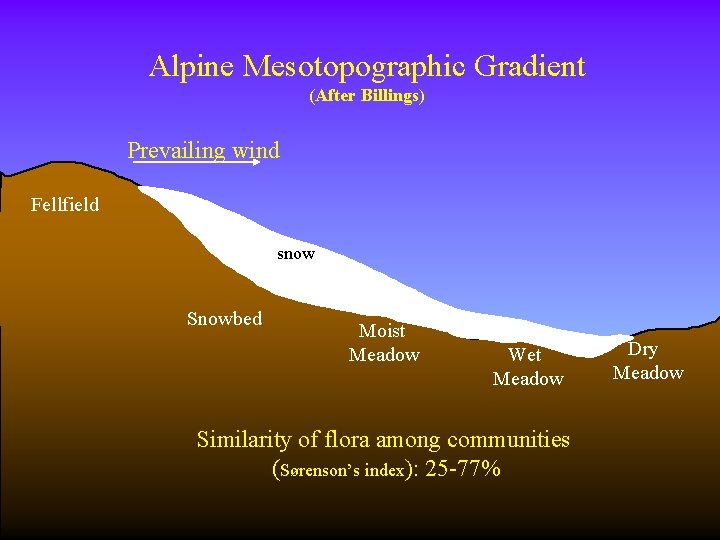
Alpine Mesotopographic Gradient (After Billings) Prevailing wind Fellfield snow Snowbed Moist Meadow Wet Meadow Similarity of flora among communities (Sørenson’s index): 25 -77% Dry Meadow
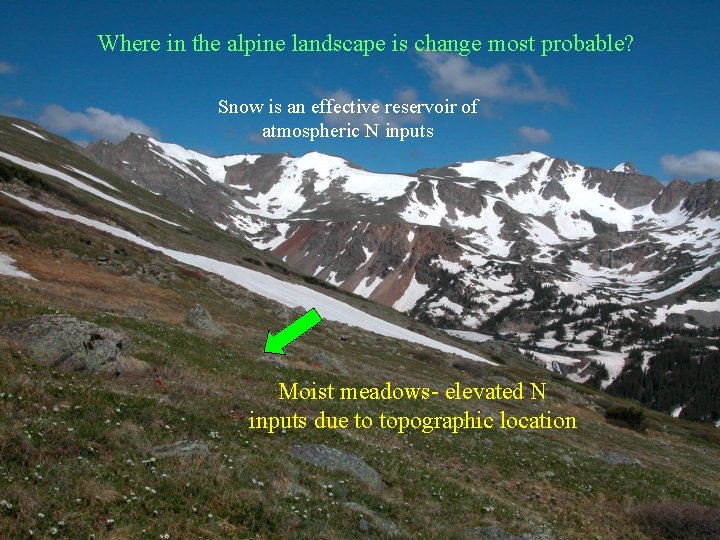
Where in the alpine landscape is change most probable? Snow is an effective reservoir of atmospheric N inputs Moist meadows- elevated N inputs due to topographic location
- Slides: 9