
Alpine Vegetation Dry and Boggy Katherine Rodriguez Vegetation
Alpine Vegetation: Dry and Boggy Katherine Rodriguez Vegetation Ecology EBIO 4100 – 573 Summer 2015 Mountain Research Station, University of Colorado, Boulder
Introduction �Do shared species in wet and dry alpine tundra vegetation differ in abundance by percent cover and individual stalks? Does species richness differ between boggy and dry alpine tundra vegetation zones? �“Plant species richness decreased in microsites that emerge very late from the snow” (Stanton, Rejmanek, Galen, 1994).
Hypothesis �H 0: The percent cover and number of individual stalks for shared species in wet and dry alpine tundra remains the same. �H 1: The percent cover for shared species in wet and dry alpine tundra is significantly different. �H 2: The number of stems for shared species in wet and dry alpine tundra is significantly different.
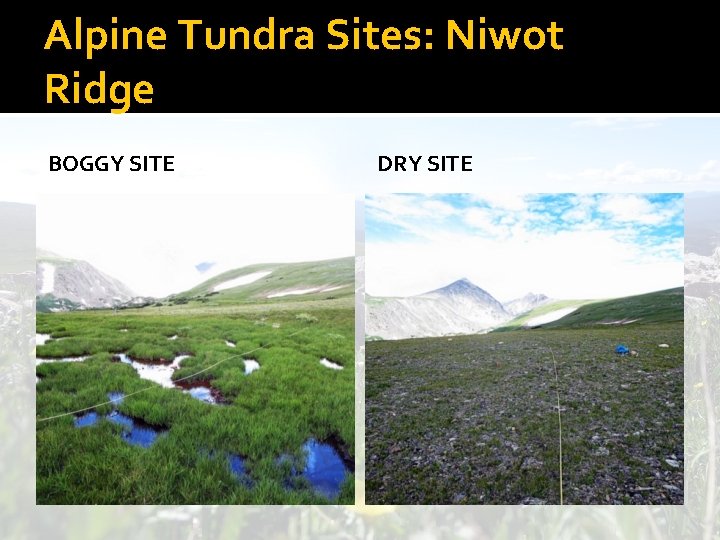
Alpine Tundra Sites: Niwot Ridge BOGGY SITE DRY SITE

Methods �Sites: Niwot Ridge, Alpine Tundra Three boggy Three dry �Daubenmire Method: Number of individual species (number of stems) Percent cover per individual specie �Number of plots: Five random plots per site
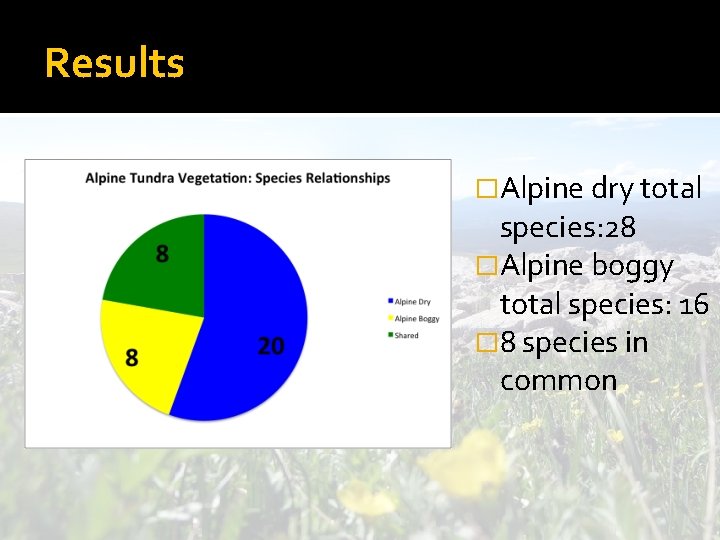
Results �Alpine dry total species: 28 �Alpine boggy total species: 16 � 8 species in common
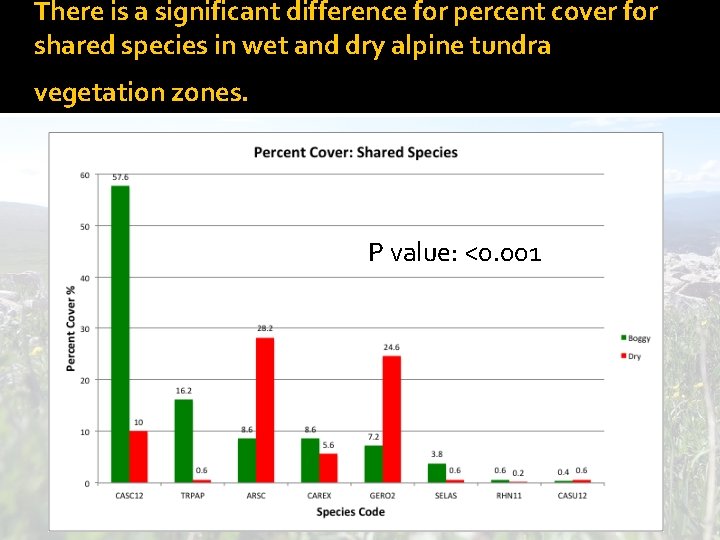
There is a significant difference for percent cover for shared species in wet and dry alpine tundra vegetation zones. P value: <0. 001
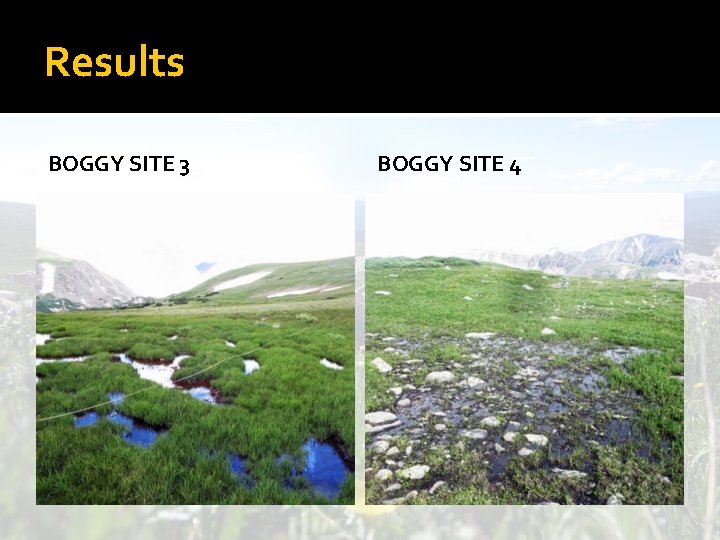
Results BOGGY SITE 3 BOGGY SITE 4
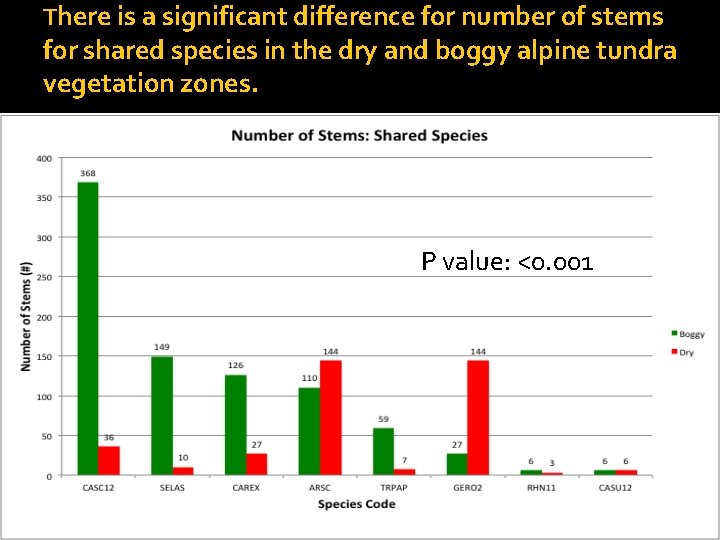
There is a significant difference for number of stems for shared species in the dry and boggy alpine tundra vegetation zones. P value: <0. 001
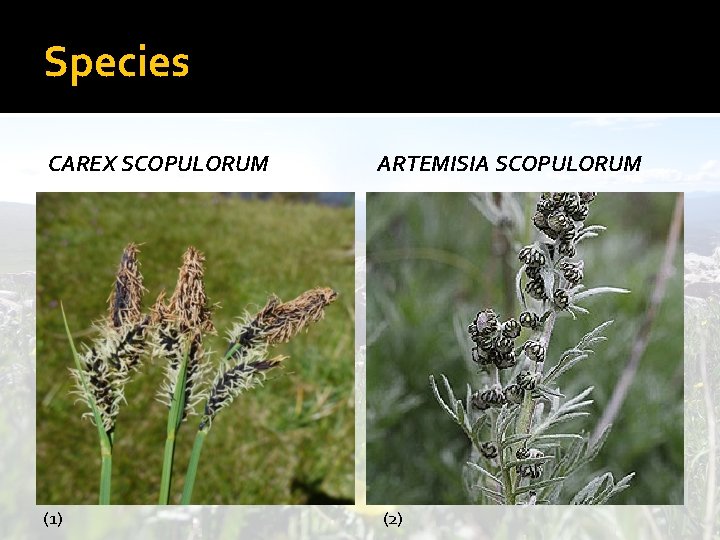
Species CAREX SCOPULORUM ARTEMISIA SCOPULORUM (1) (2)
Discussion �The quantity of unique individual species doubled at the dry alpine tundra zones. Soil development �The average for percent cover for shared species was higher at the boggy alpine tundra zones. �Future studies: Carex scopulorum ▪ Dominant ▪ Aggressive competitor? Soil analysis
Conclusion �Snowmelt duration Large factor regarding vegetation in the alpine tundra. �Boggy zones influence vegetation. Abundance Diversity Dominant species �Further analysis
References � � � Theodose, Theresa A. , and William D. Bowman. "Nutrient availability, plant abundance, and species diversity in two alpine tundra communities. " Ecology 78. 6 (1997): 1861 -1872. Billings, W. Dwight, and L. C. Bliss. "An alpine snowbank environment and its effects on vegetation, plant development, and productivity. " Ecology (1959): 388 -397. Stanton, M. L. , M. Rejmanek, and C. Galen. "Changes in vegetation and soil fertility along a predictable snowmelt gradient in the Mosquito Range, Colorado, USA. " Arctic and Alpine Research (1994): 364 -374. Ackerfield, Jennifer. . Flora of Colorado. Fort Worth, TX: BRIT, 2015. Print. Mueller-Dombois, Dieter, and Heinz Ellenberg. Aims and Methods of Vegetation Ecology. New York: Wiley, 1974. Print. Weber, William A. , and Ronald C. Wittmann. Colorado Flora: Eastern Slope. Boulder, CO: U of Colorado, 2012. Print.
- Slides: 13