
Alpha 21264 Microarchitecture Kenneth Conley 6 893 91400
- Slides: 9
Alpha 21264 Microarchitecture Kenneth Conley 6. 893 9/14/00
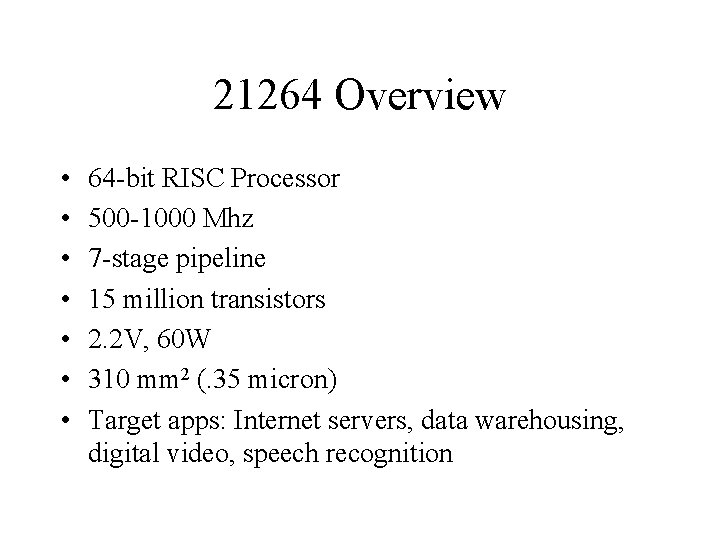
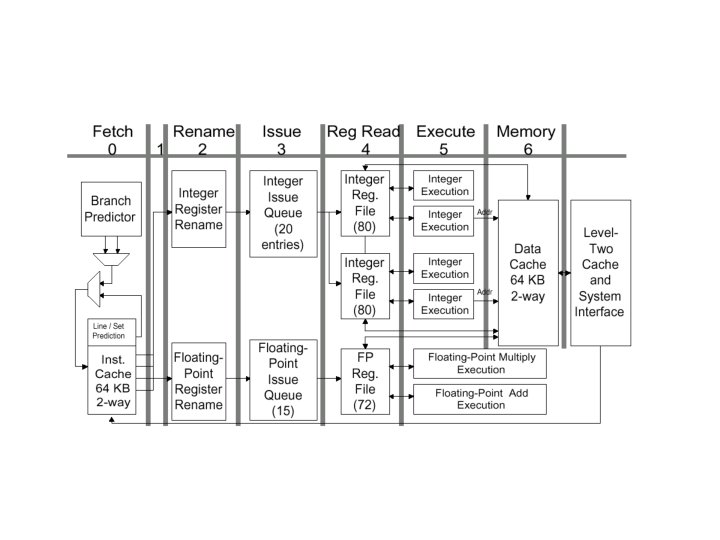
21264 Overview • • 64 -bit RISC Processor 500 -1000 Mhz 7 -stage pipeline 15 million transistors 2. 2 V, 60 W 310 mm 2 (. 35 micron) Target apps: Internet servers, data warehousing, digital video, speech recognition
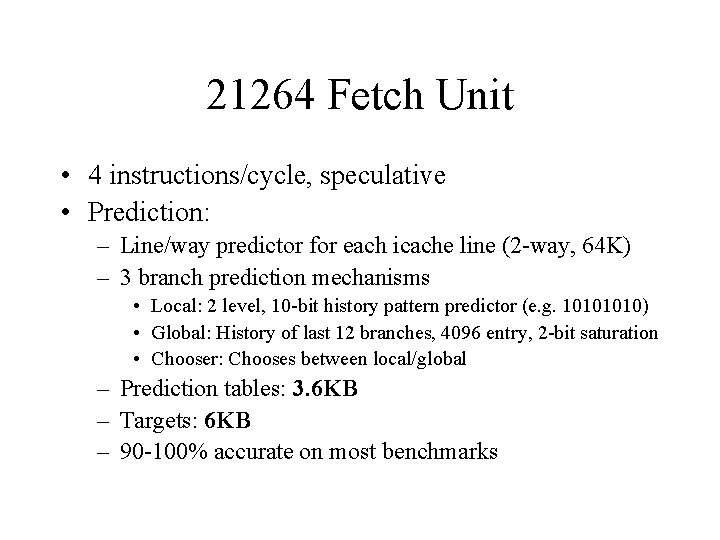
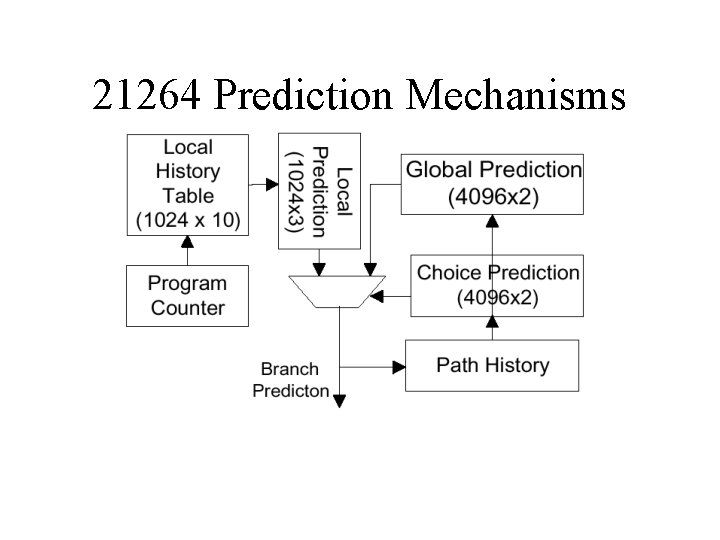
21264 Fetch Unit • 4 instructions/cycle, speculative • Prediction: – Line/way predictor for each icache line (2 -way, 64 K) – 3 branch prediction mechanisms • Local: 2 level, 10 -bit history pattern predictor (e. g. 1010) • Global: History of last 12 branches, 4096 entry, 2 -bit saturation • Chooser: Chooses between local/global – Prediction tables: 3. 6 KB – Targets: 6 KB – 90 -100% accurate on most benchmarks
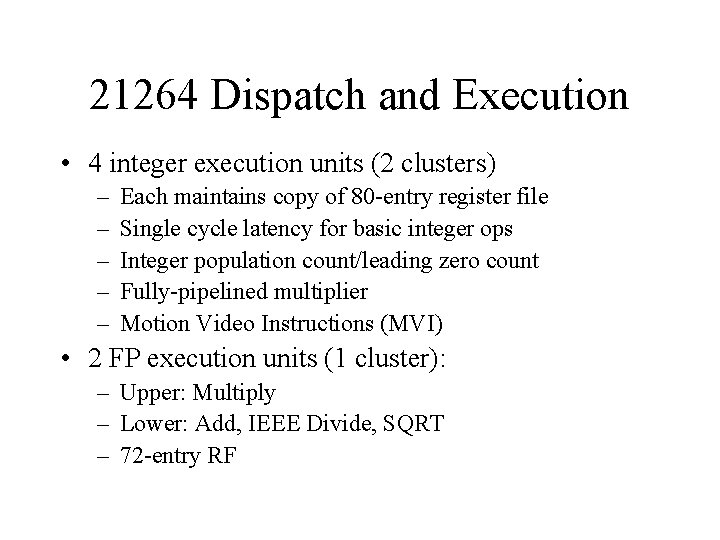
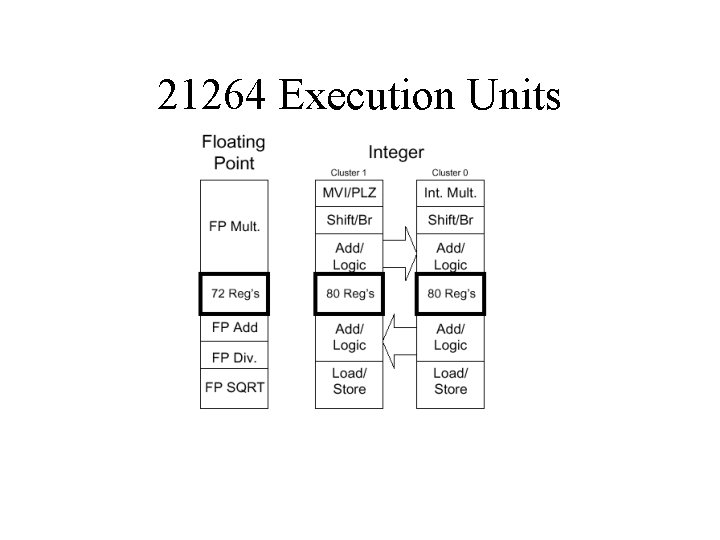
21264 Dispatch and Execution • 4 integer execution units (2 clusters) – – – Each maintains copy of 80 -entry register file Single cycle latency for basic integer ops Integer population count/leading zero count Fully-pipelined multiplier Motion Video Instructions (MVI) • 2 FP execution units (1 cluster): – Upper: Multiply – Lower: Add, IEEE Divide, SQRT – 72 -entry RF
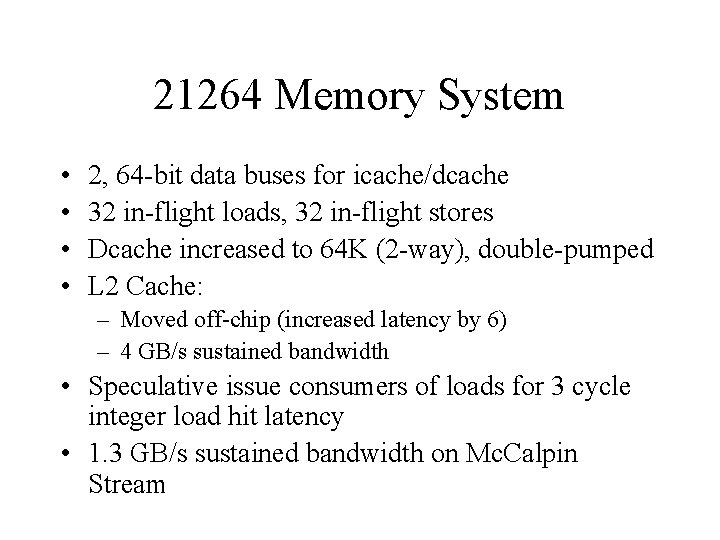
21264 Memory System • • 2, 64 -bit data buses for icache/dcache 32 in-flight loads, 32 in-flight stores Dcache increased to 64 K (2 -way), double-pumped L 2 Cache: – Moved off-chip (increased latency by 6) – 4 GB/s sustained bandwidth • Speculative issue consumers of loads for 3 cycle integer load hit latency • 1. 3 GB/s sustained bandwidth on Mc. Calpin Stream
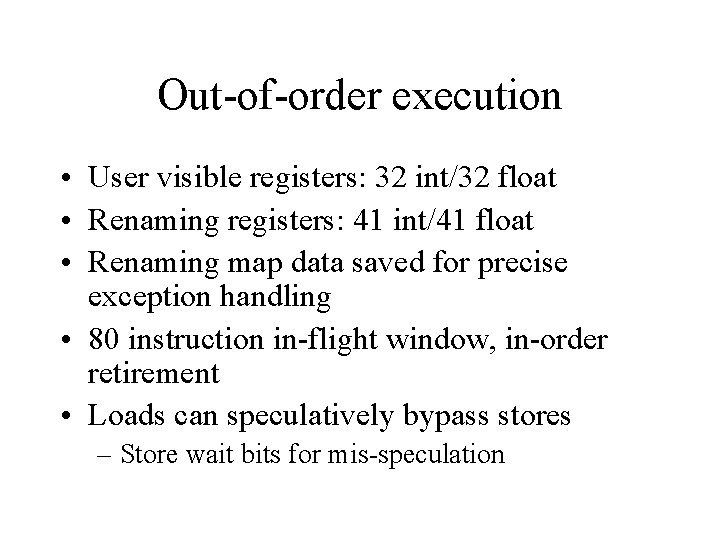
Out-of-order execution • User visible registers: 32 int/32 float • Renaming registers: 41 int/41 float • Renaming map data saved for precise exception handling • 80 instruction in-flight window, in-order retirement • Loads can speculatively bypass stores – Store wait bits for mis-speculation
21264 Prediction Mechanisms
21264 Execution Units