
Alloy yield strength modeling with Mat Calc rel



- Slides: 91
Alloy yield strength modeling with Mat. Calc (rel. 5. 61. 0057) P. Warczok
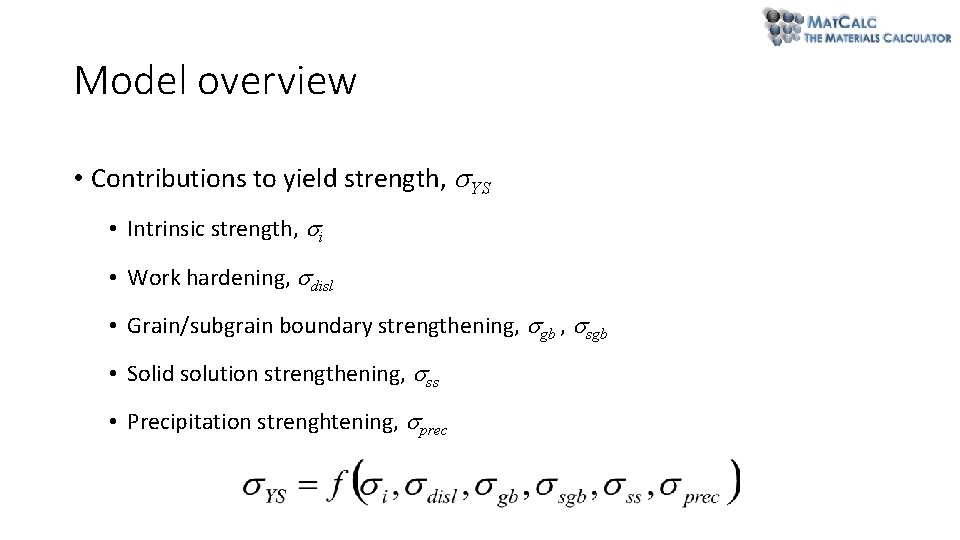
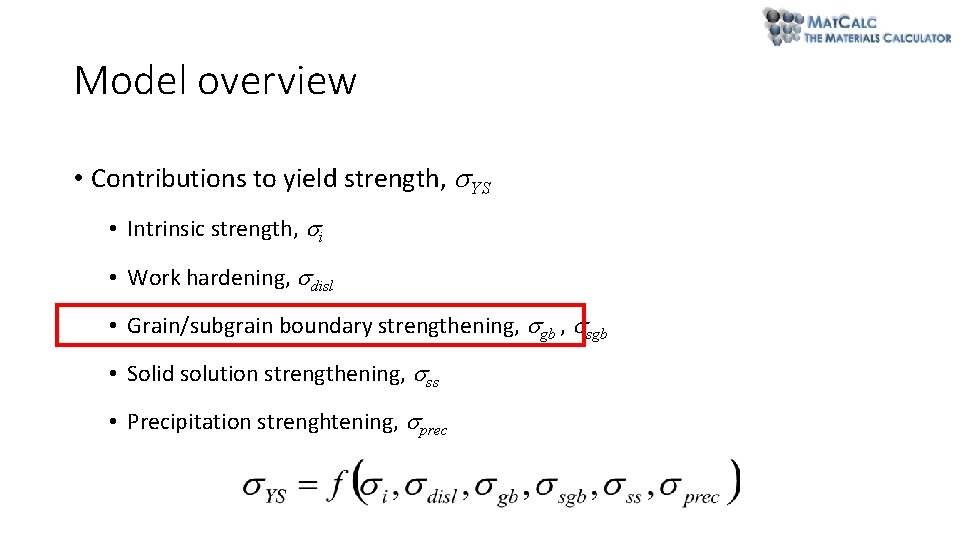
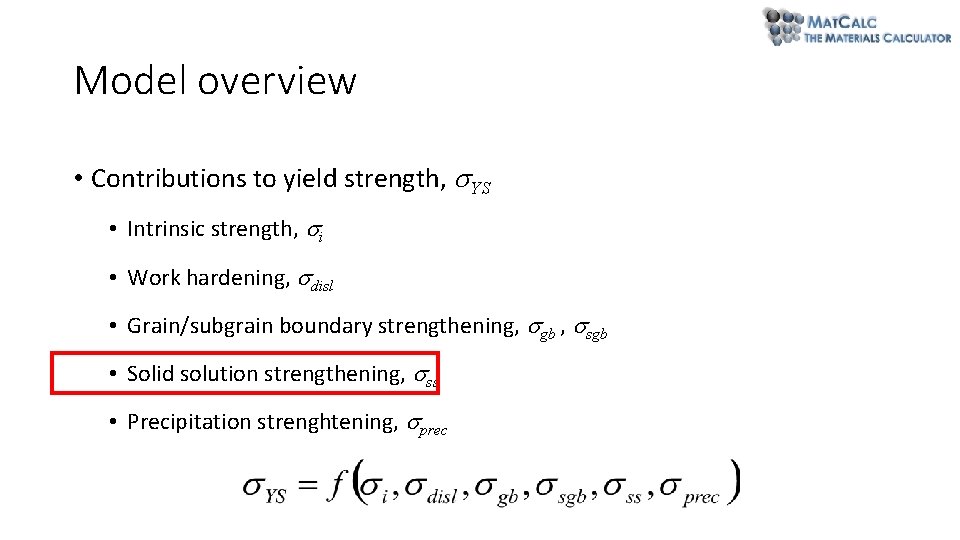
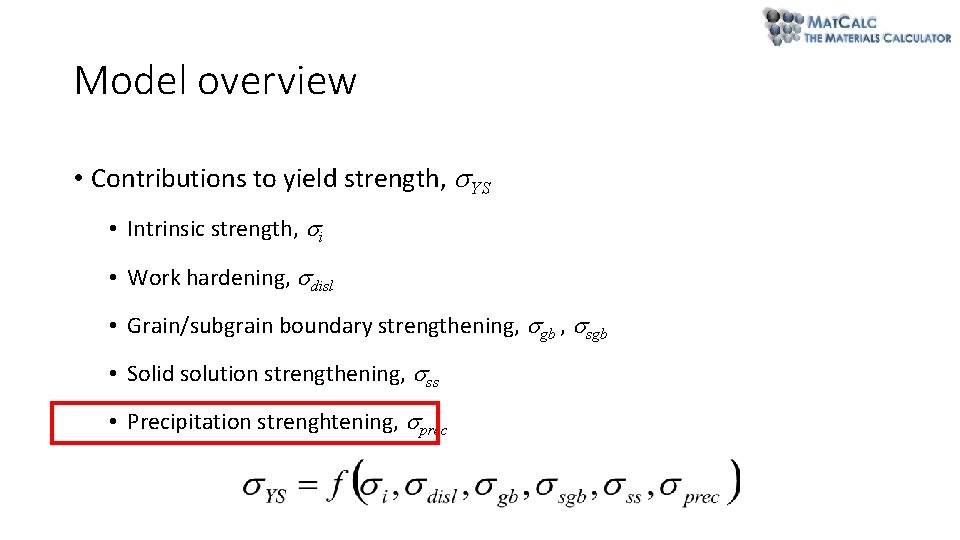
Model overview • Contributions to yield strength, YS • Intrinsic strength, i • Work hardening, disl • Grain/subgrain boundary strengthening, gb , sgb • Solid solution strengthening, ss • Precipitation strenghtening, prec
Model overview • Contributions to yield strength, YS • Intrinsic strength, i • Work hardening, disl • Grain/subgrain boundary strengthening, gb , sgb • Solid solution strengthening, ss • Precipitation strenghtening, prec
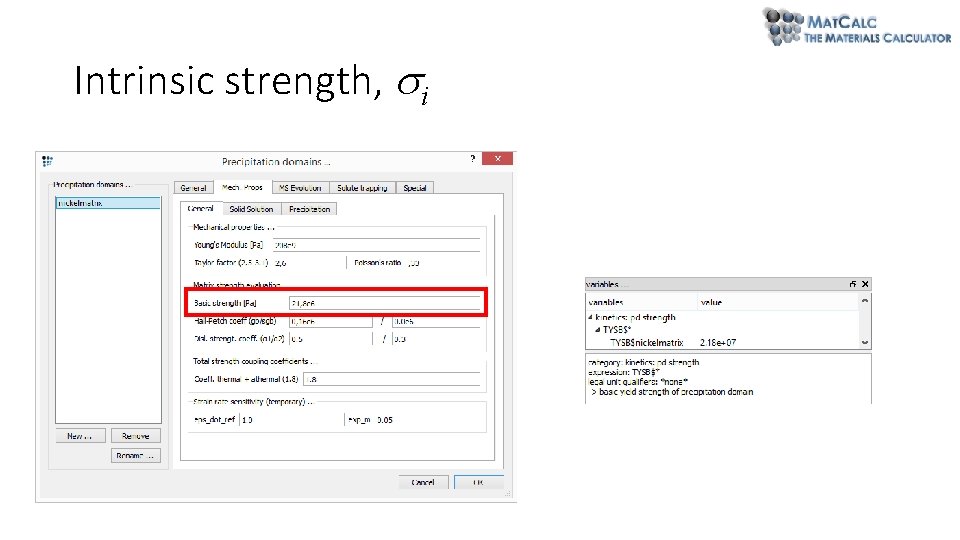
Intrinsic strength, i
Model overview • Contributions to yield strength, YS • Intrinsic strength, i • Work hardening, disl • Grain/subgrain boundary strengthening, gb , sgb • Solid solution strengthening, ss • Precipitation strenghtening, prec
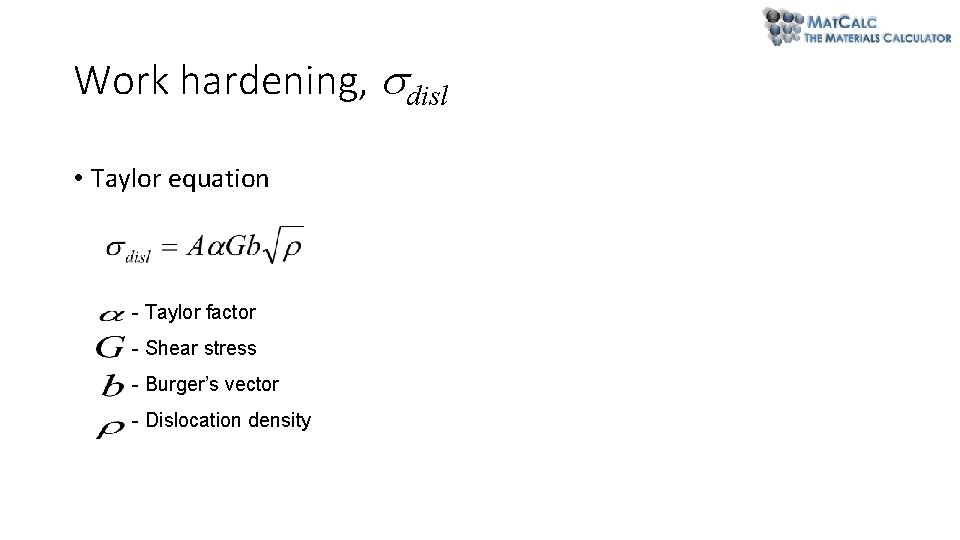
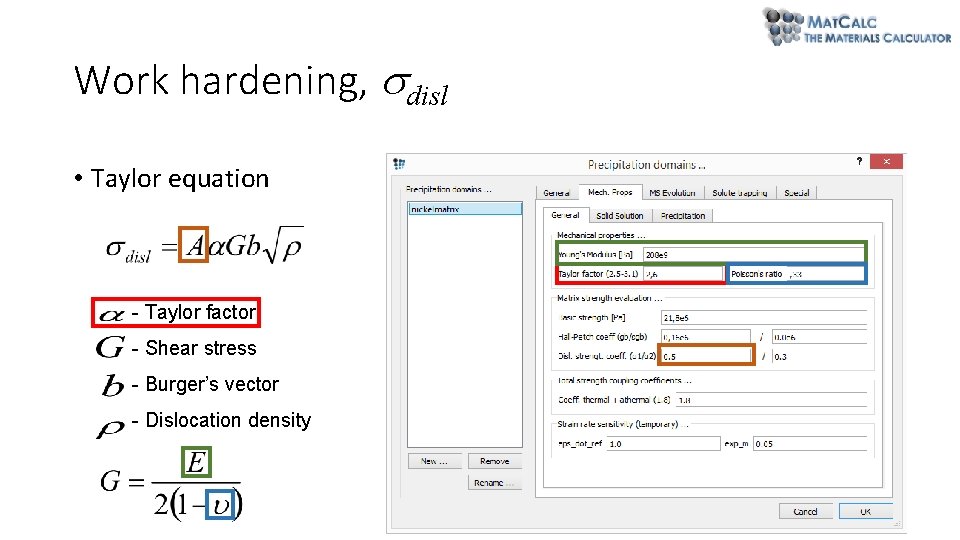
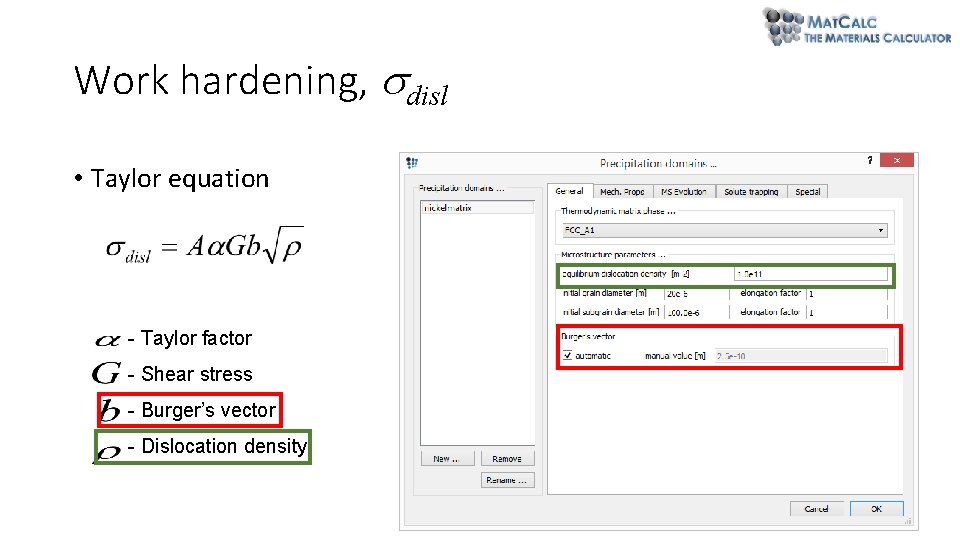
Work hardening, disl • Taylor equation - Taylor factor - Shear stress - Burger’s vector - Dislocation density
Work hardening, disl • Taylor equation - Taylor factor - Shear stress - Burger’s vector - Dislocation density
Work hardening, disl • Taylor equation - Taylor factor - Shear stress - Burger’s vector - Dislocation density
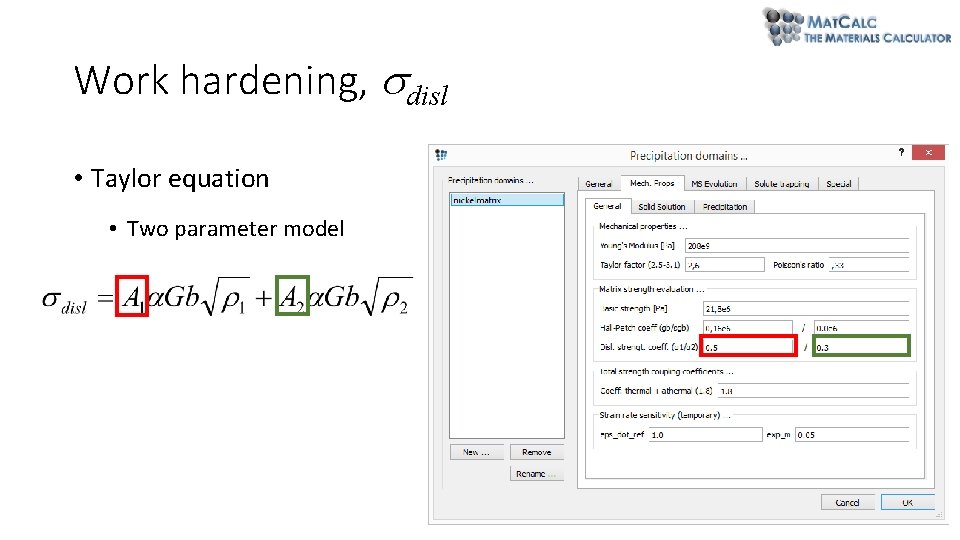
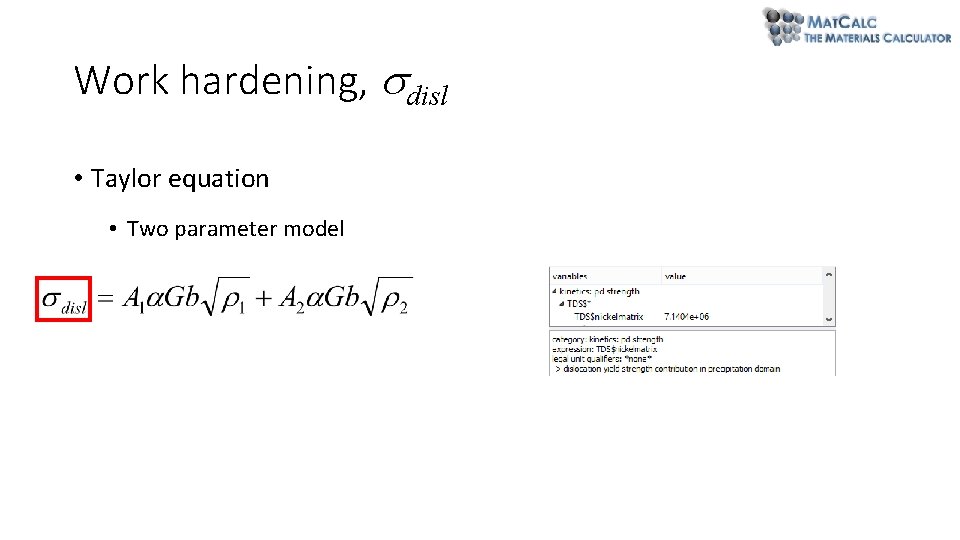
Work hardening, disl • Taylor equation • Two parameter model
Work hardening, disl • Taylor equation • Two parameter model
Model overview • Contributions to yield strength, YS • Intrinsic strength, i • Work hardening, disl • Grain/subgrain boundary strengthening, gb , sgb • Solid solution strengthening, ss • Precipitation strenghtening, prec
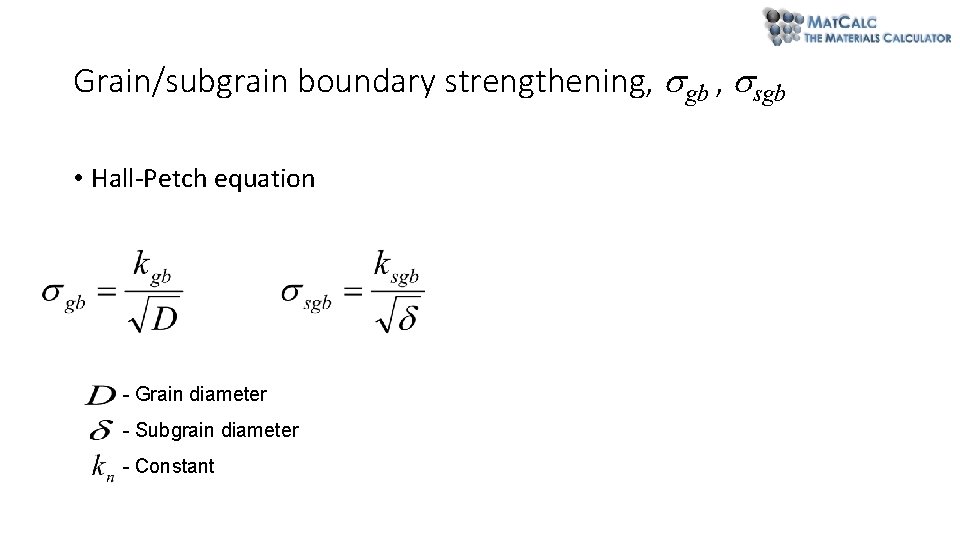
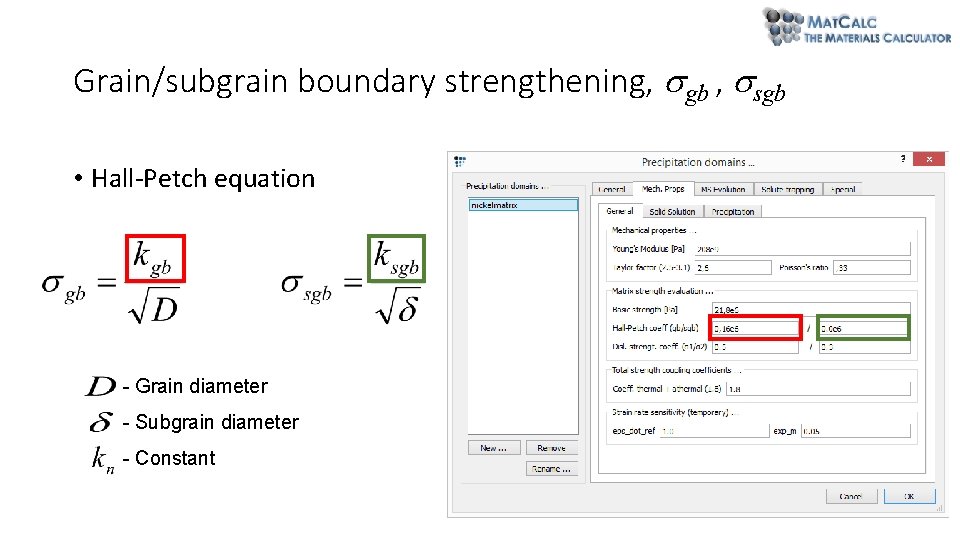
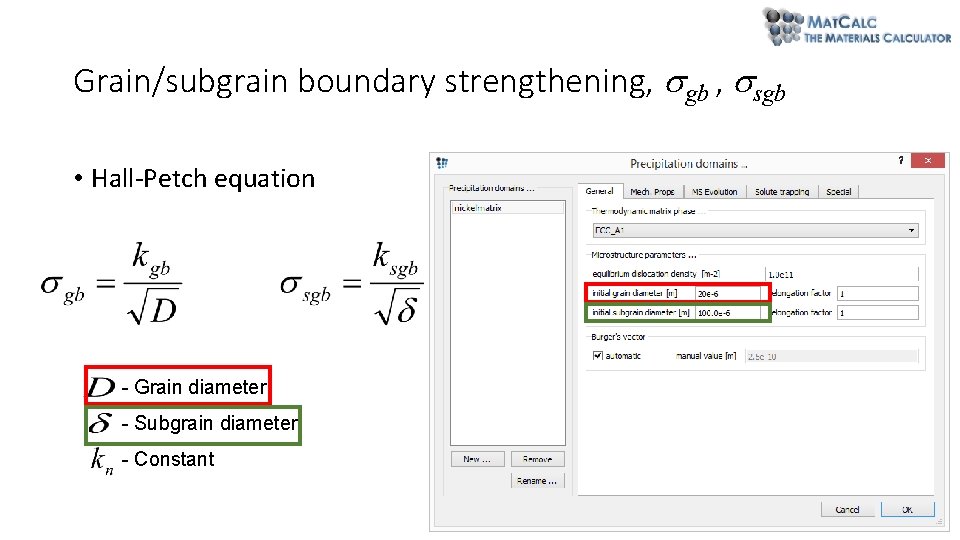
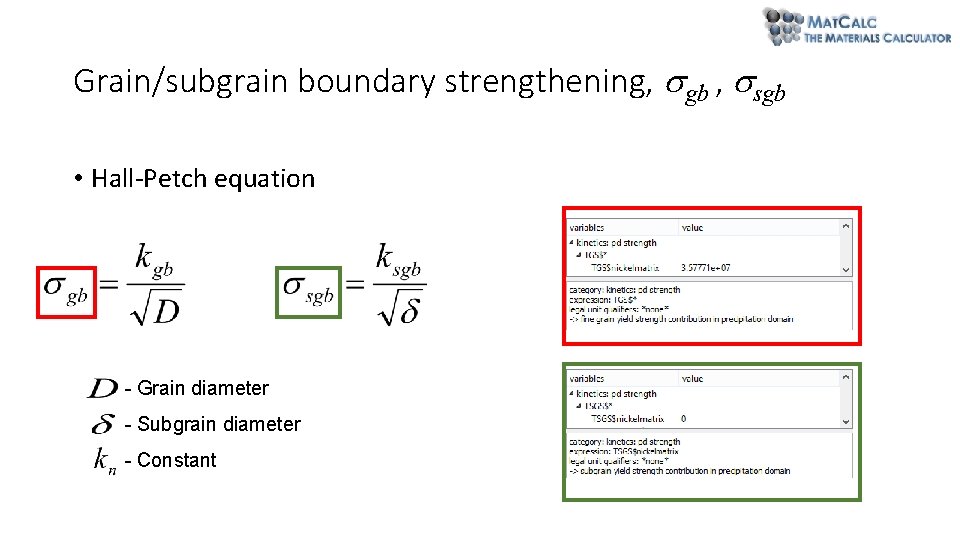
Grain/subgrain boundary strengthening, gb , sgb • Hall-Petch equation - Grain diameter - Subgrain diameter - Constant
Grain/subgrain boundary strengthening, gb , sgb • Hall-Petch equation - Grain diameter - Subgrain diameter - Constant
Grain/subgrain boundary strengthening, gb , sgb • Hall-Petch equation - Grain diameter - Subgrain diameter - Constant
Grain/subgrain boundary strengthening, gb , sgb • Hall-Petch equation - Grain diameter - Subgrain diameter - Constant
Model overview • Contributions to yield strength, YS • Intrinsic strength, i • Work hardening, disl • Grain/subgrain boundary strengthening, gb , sgb • Solid solution strengthening, ss • Precipitation strenghtening, prec
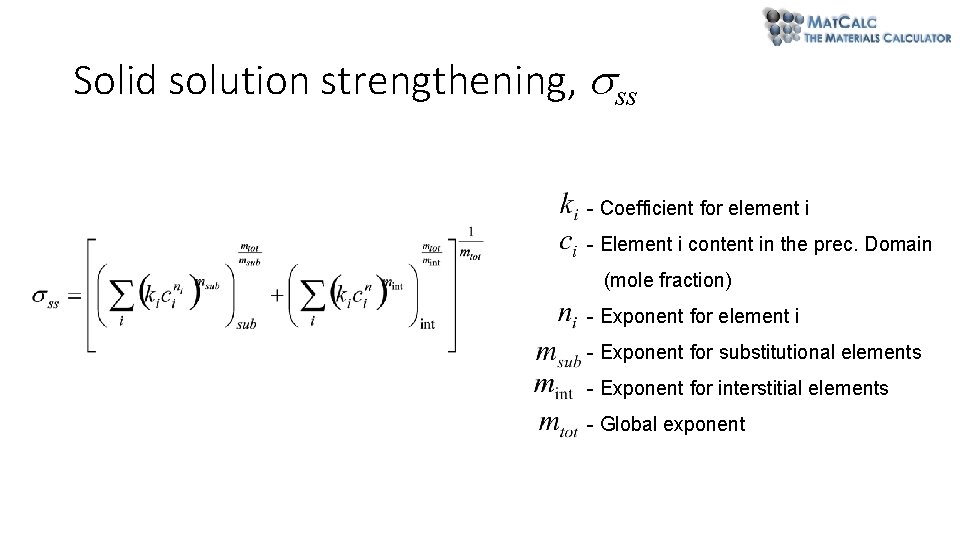
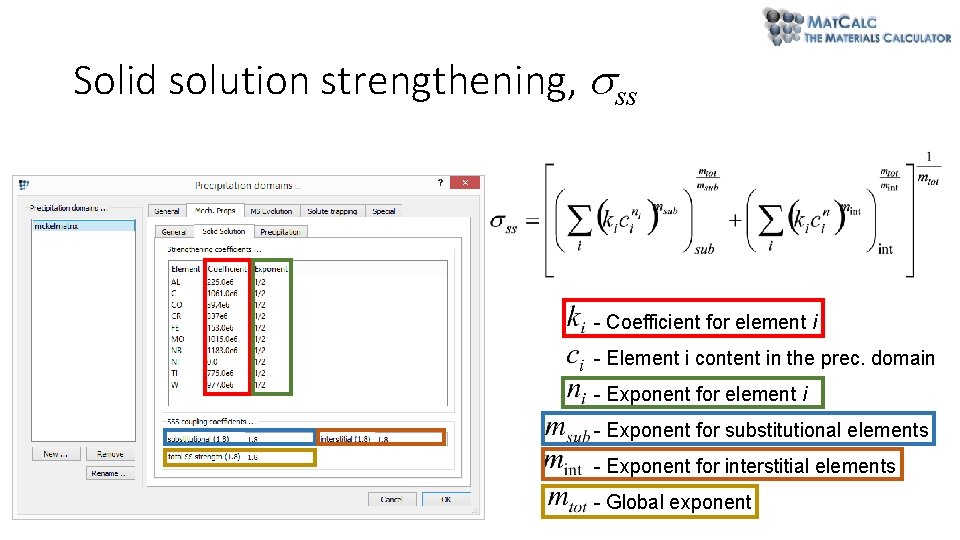
Solid solution strengthening, ss - Coefficient for element i - Element i content in the prec. Domain (mole fraction) - Exponent for element i - Exponent for substitutional elements - Exponent for interstitial elements - Global exponent
Solid solution strengthening, ss - Coefficient for element i - Element i content in the prec. domain - Exponent for element i - Exponent for substitutional elements - Exponent for interstitial elements - Global exponent
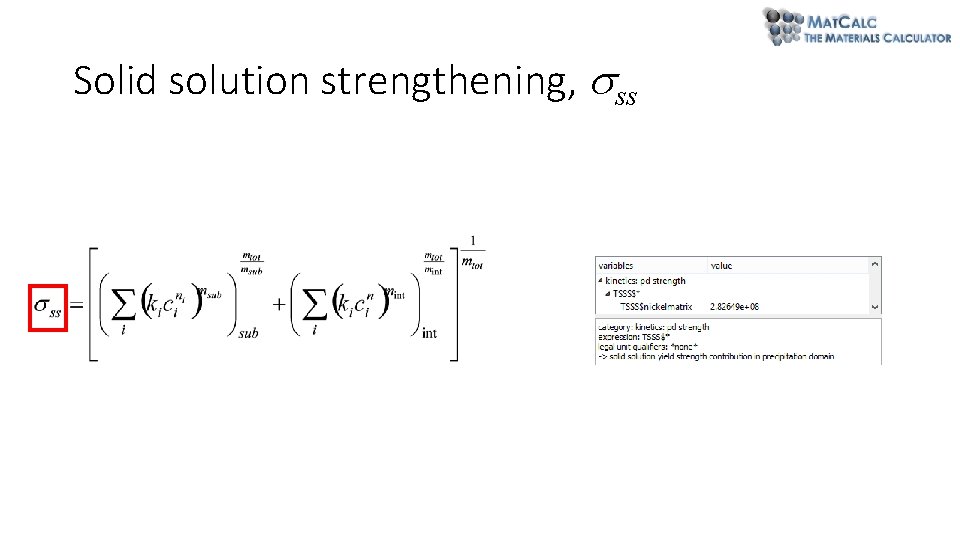
Solid solution strengthening, ss
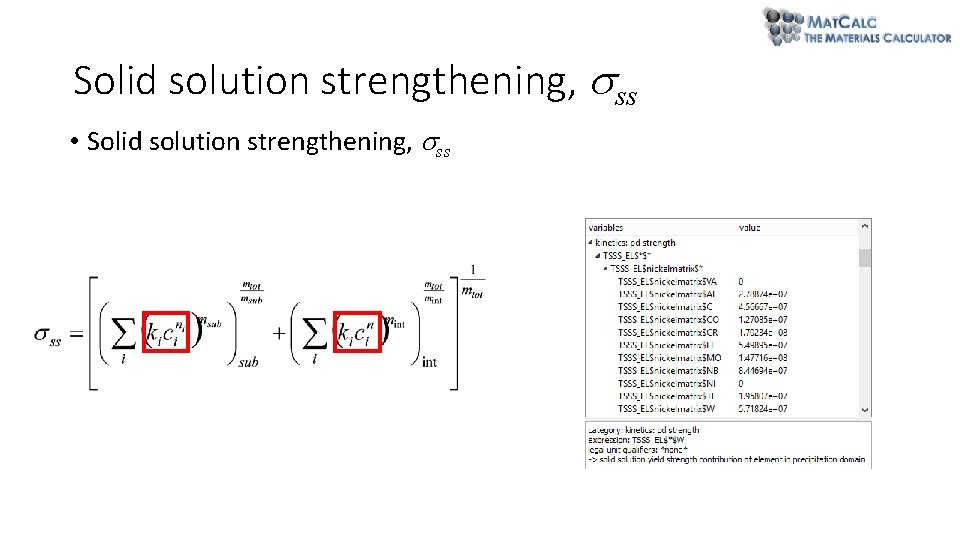
Solid solution strengthening, ss • Solid solution strengthening, ss
Model overview • Contributions to yield strength, YS • Intrinsic strength, i • Work hardening, disl • Grain/subgrain boundary strengthening, gb , sgb • Solid solution strengthening, ss • Precipitation strenghtening, prec
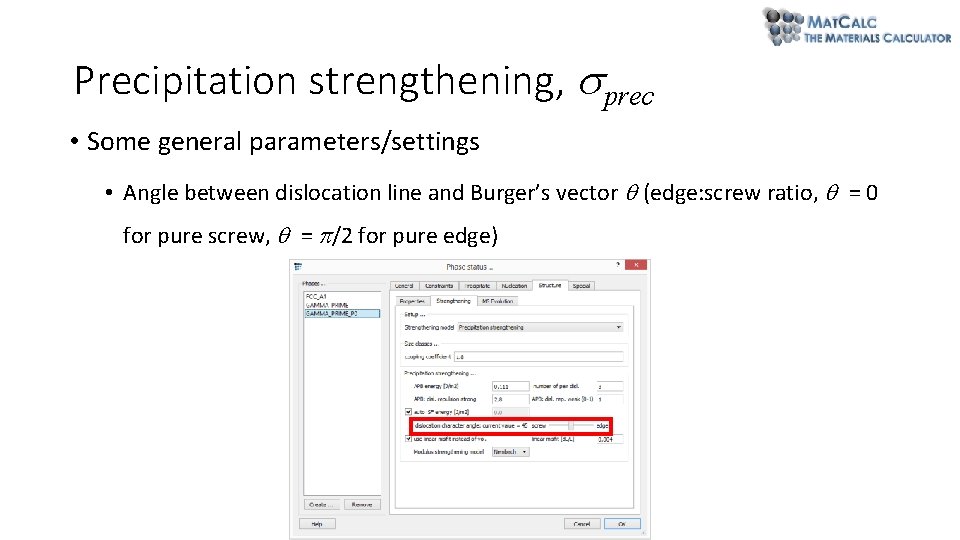
Precipitation strengthening, prec • Some general parameters/settings • Angle between dislocation line and Burger’s vector (edge: screw ratio, = 0 for pure screw, = /2 for pure edge)
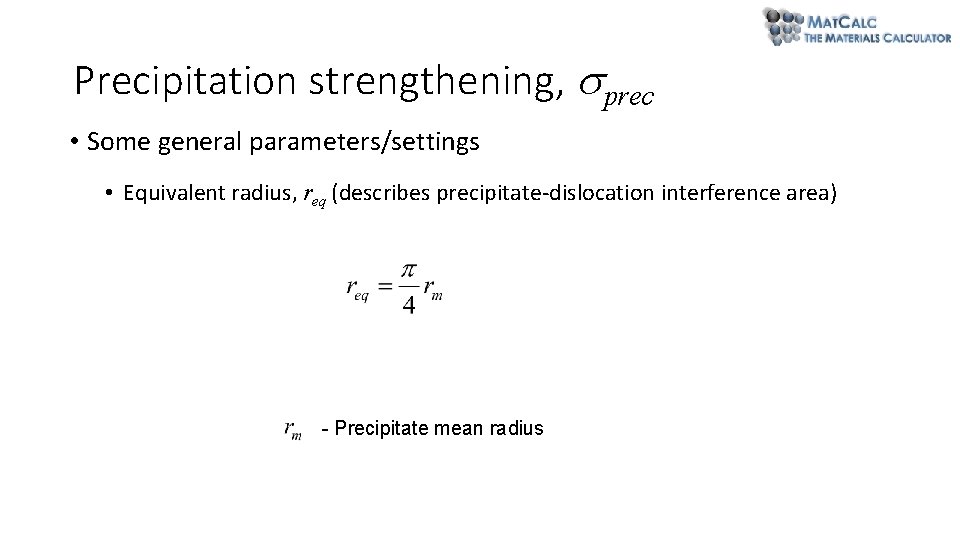
Precipitation strengthening, prec • Some general parameters/settings • Equivalent radius, req (describes precipitate-dislocation interference area) - Precipitate mean radius
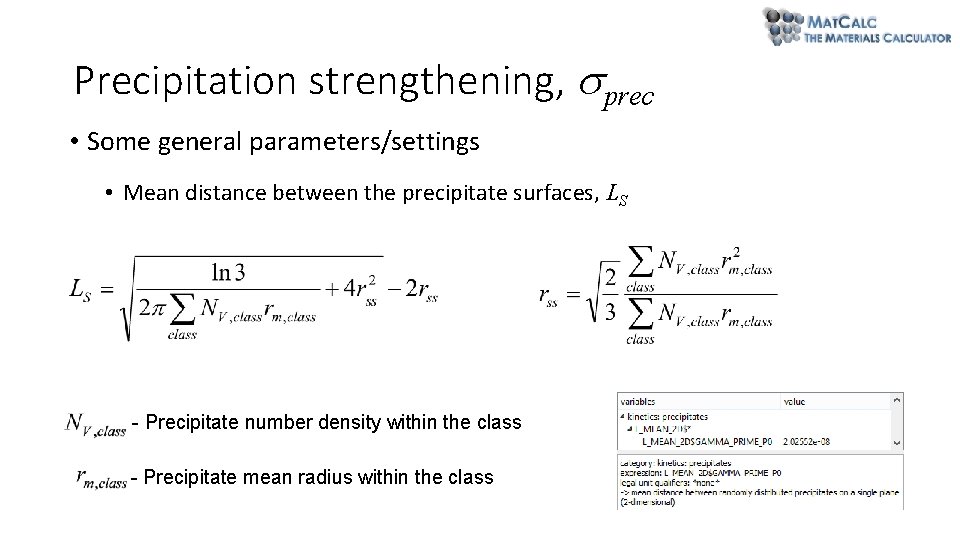
Precipitation strengthening, prec • Some general parameters/settings • Mean distance between the precipitate surfaces, LS - Precipitate number density within the class - Precipitate mean radius within the class
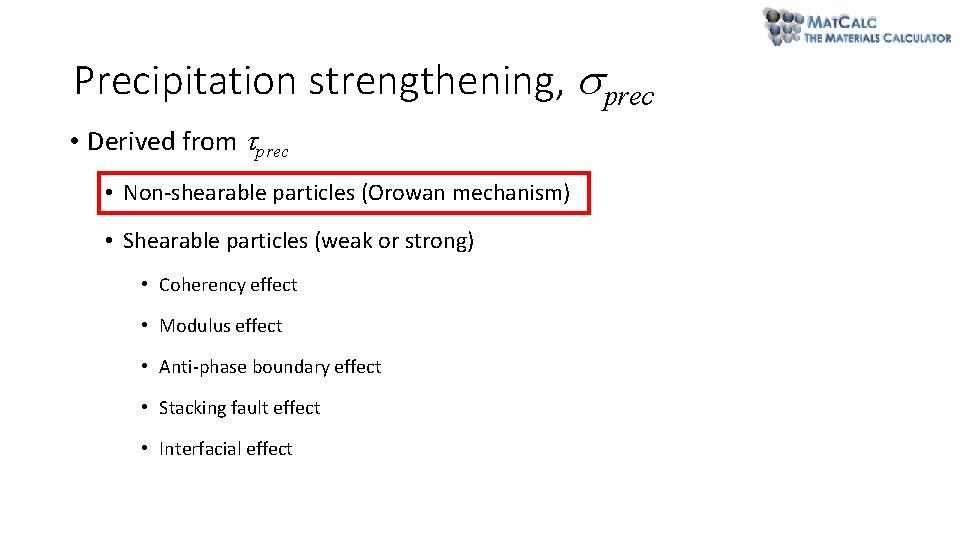
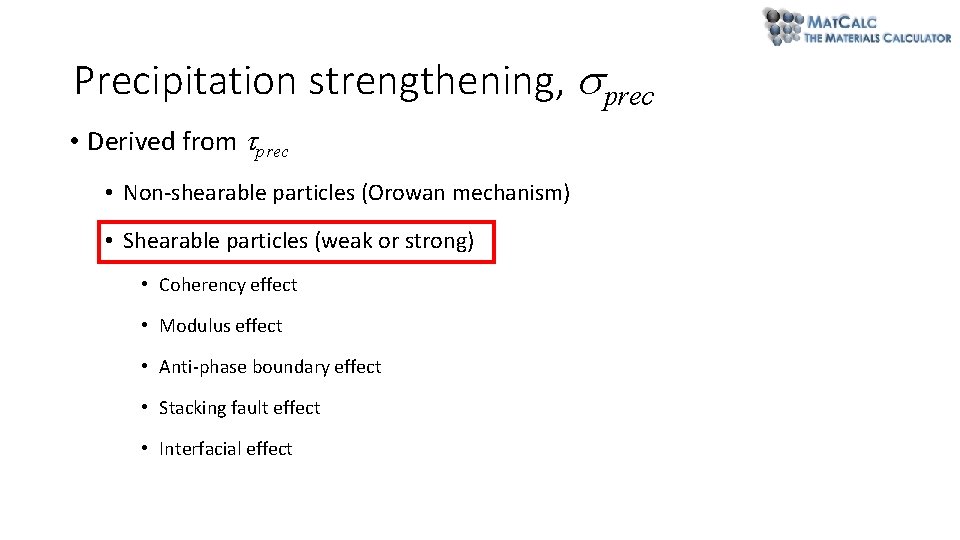
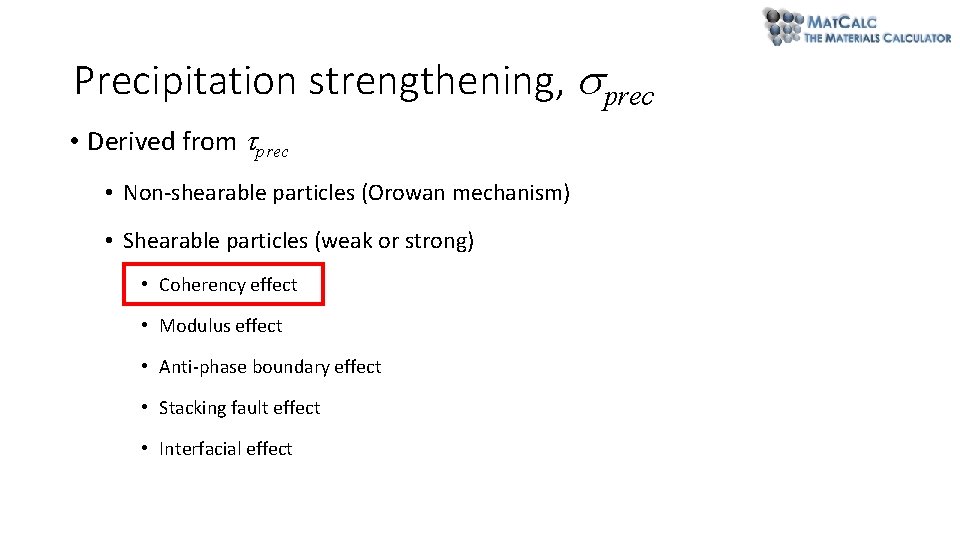
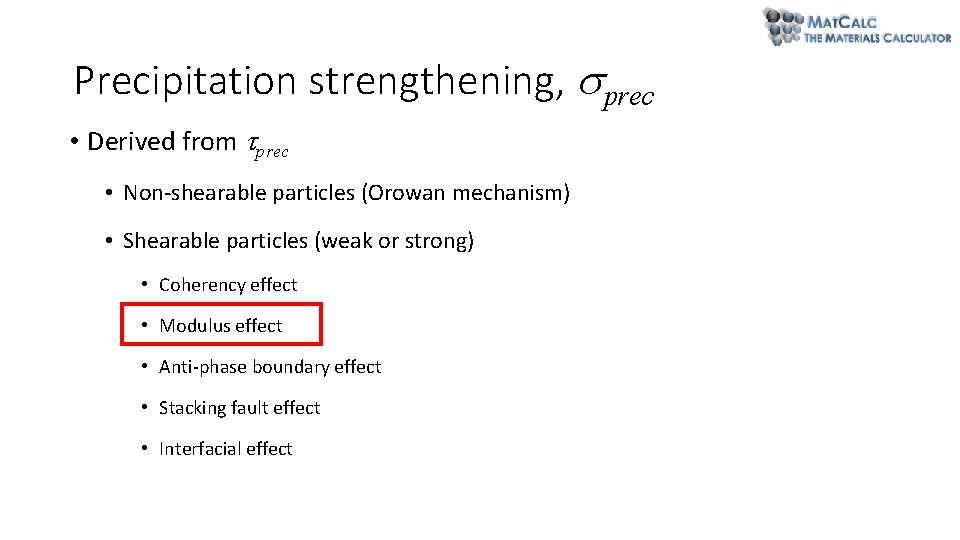
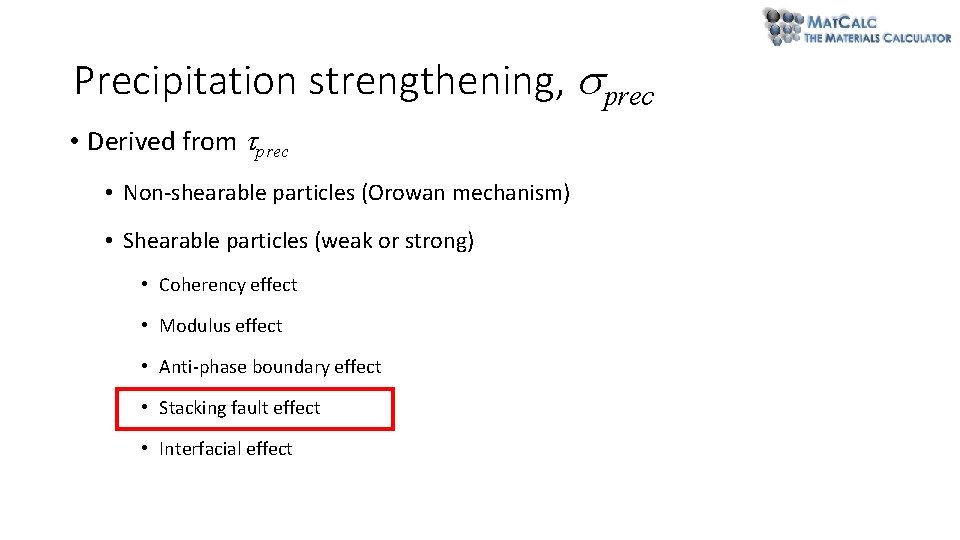
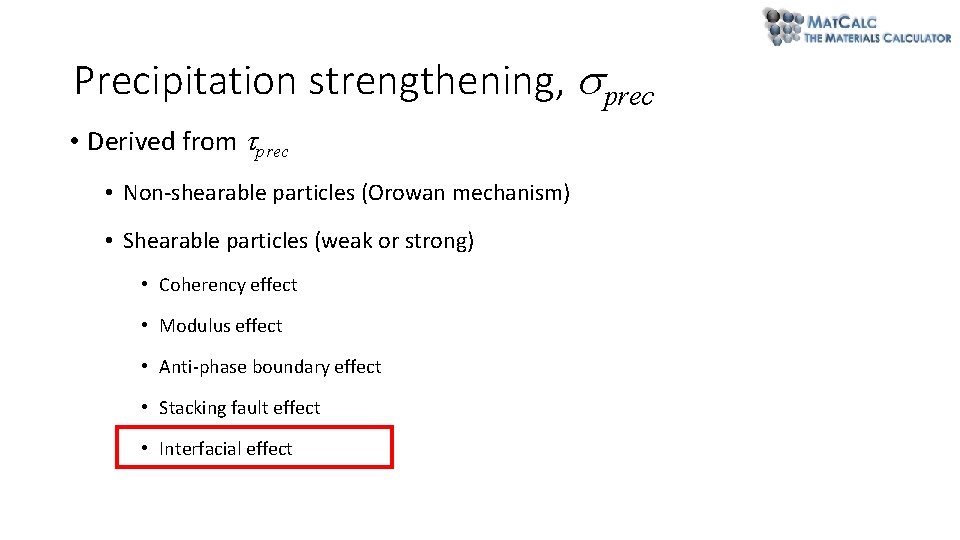
Precipitation strengthening, prec • Derived from prec • Non-shearable particles (Orowan mechanism) • Shearable particles (weak or strong) • Coherency effect • Modulus effect • Anti-phase boundary effect • Stacking fault effect • Interfacial effect
Precipitation strengthening, prec • Derived from prec • Non-shearable particles (Orowan mechanism) • Shearable particles (weak or strong) • Coherency effect • Modulus effect • Anti-phase boundary effect • Stacking fault effect • Interfacial effect
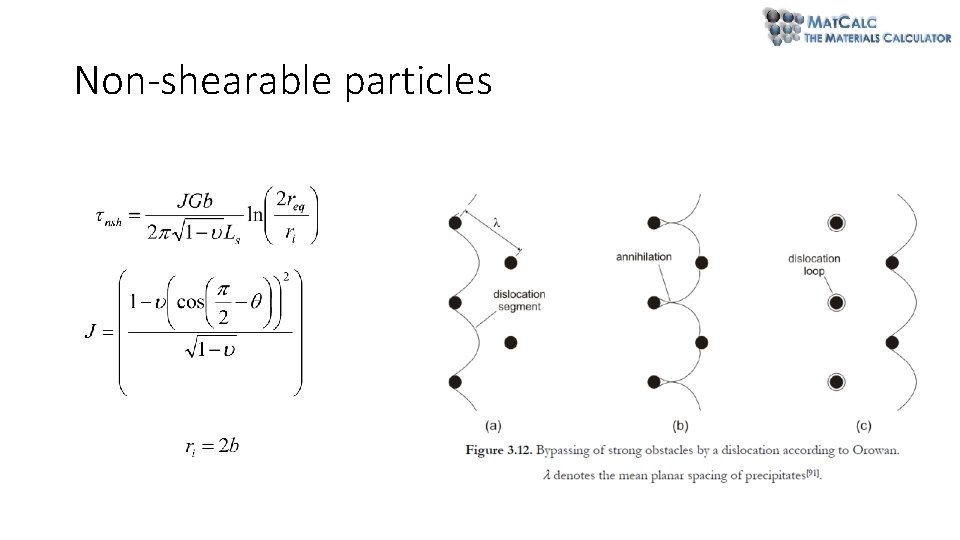
Non-shearable particles
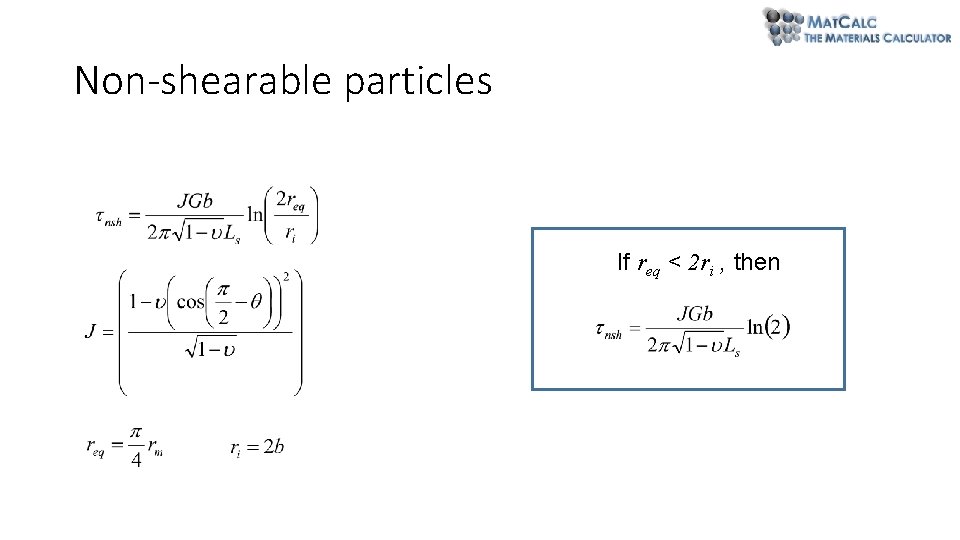
Non-shearable particles If req < 2 ri , then
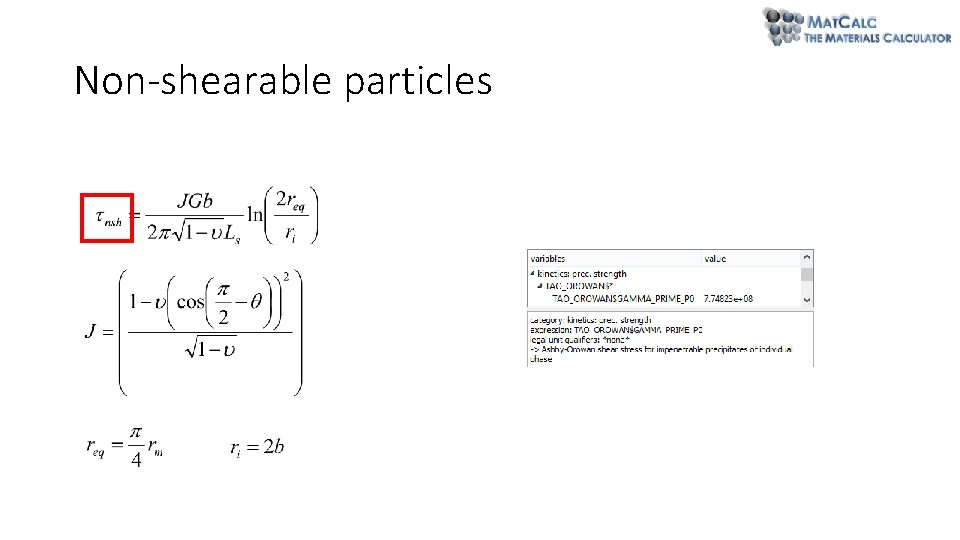
Non-shearable particles
Precipitation strengthening, prec • Derived from prec • Non-shearable particles (Orowan mechanism) • Shearable particles (weak or strong) • Coherency effect • Modulus effect • Anti-phase boundary effect • Stacking fault effect • Interfacial effect
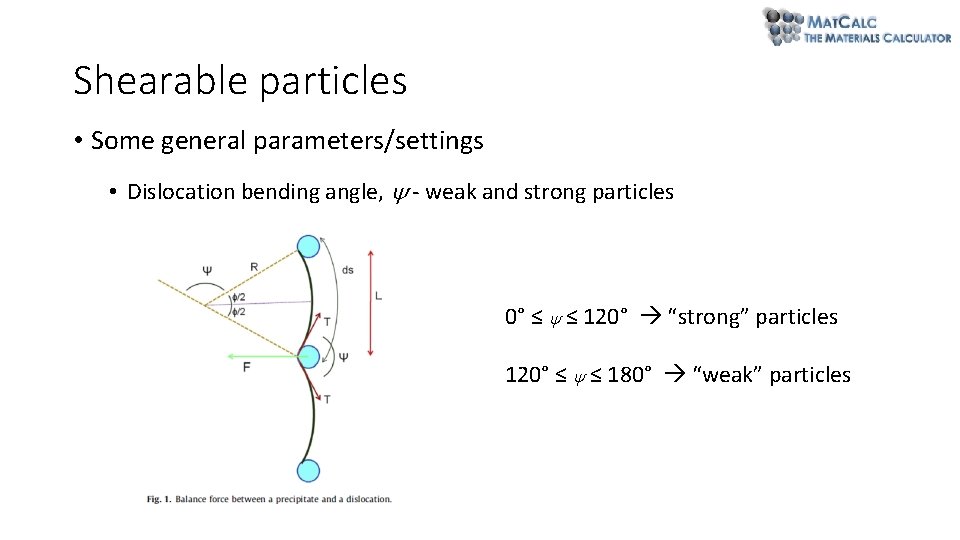
Shearable particles • Some general parameters/settings • Dislocation bending angle, - weak and strong particles 0° ≤ ≤ 120° “strong” particles 120° ≤ ≤ 180° “weak” particles
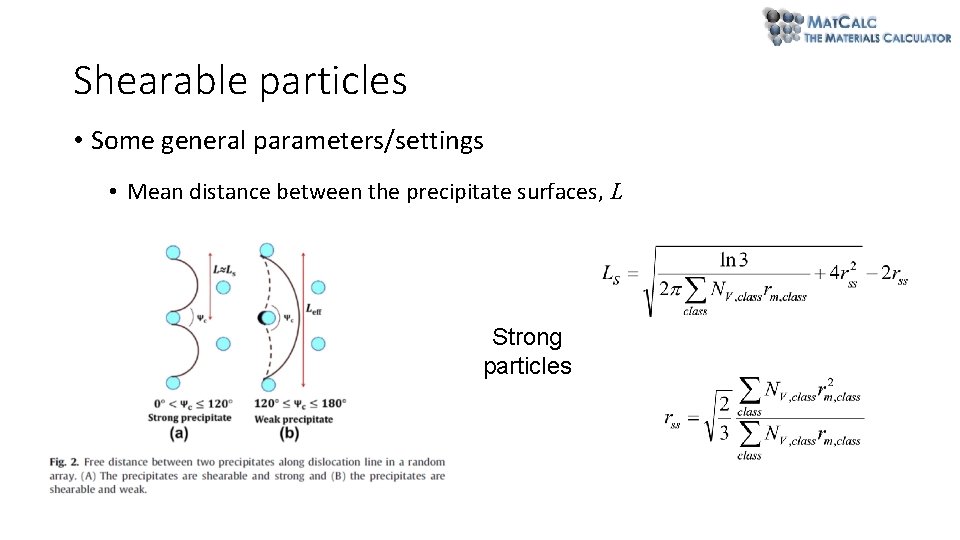
Shearable particles • Some general parameters/settings • Mean distance between the precipitate surfaces, L Strong particles
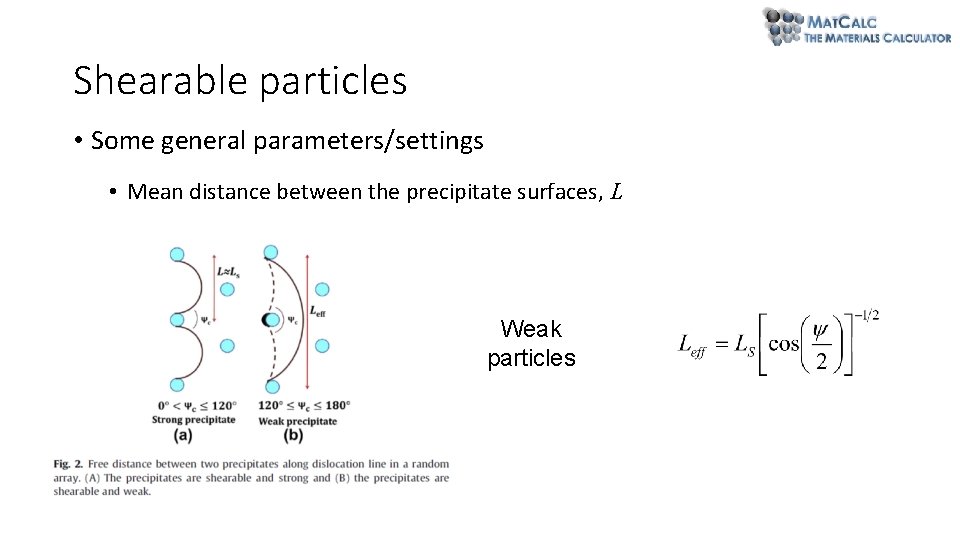
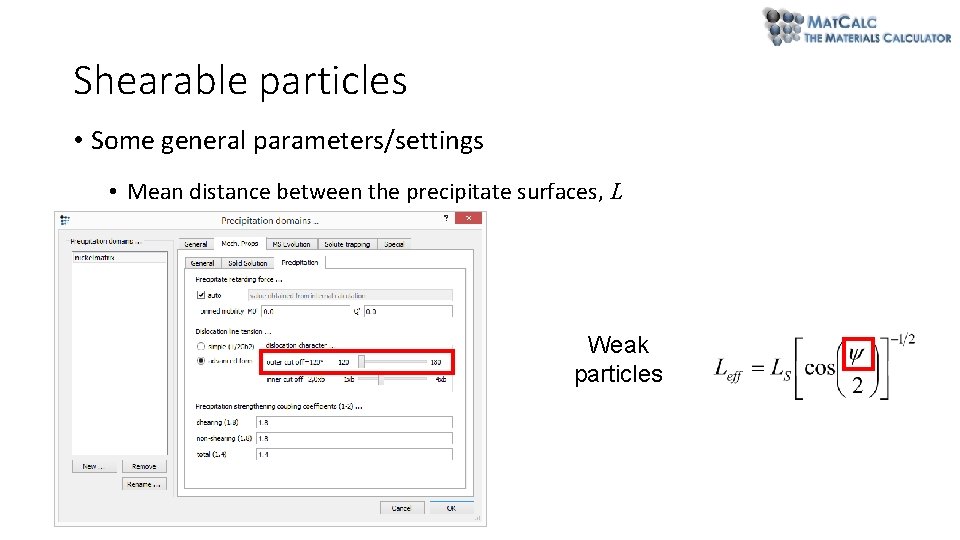
Shearable particles • Some general parameters/settings • Mean distance between the precipitate surfaces, L Weak particles
Shearable particles • Some general parameters/settings • Mean distance between the precipitate surfaces, L Weak particles
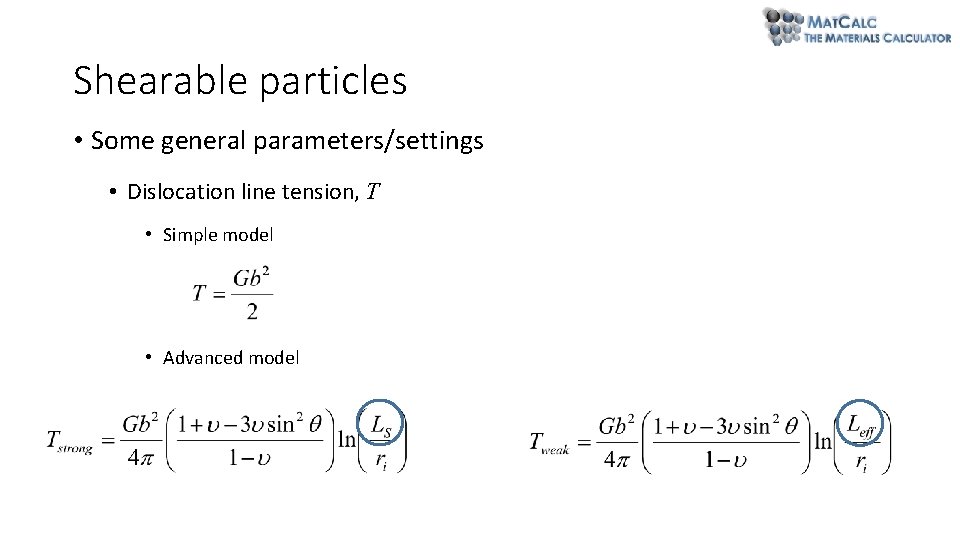
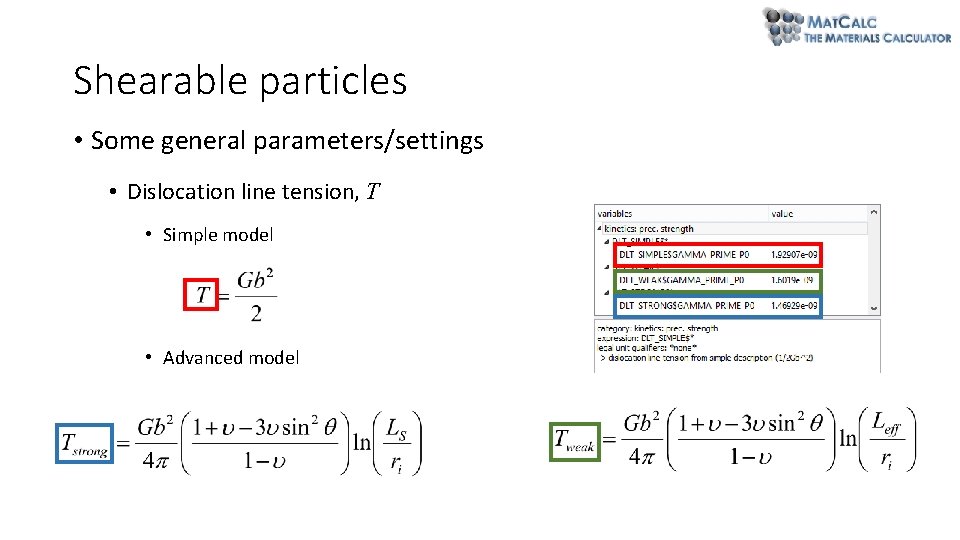
Shearable particles • Some general parameters/settings • Dislocation line tension, T • Simple model • Advanced model
Shearable particles • Some general parameters/settings • Dislocation line tension, T • Simple model • Advanced model
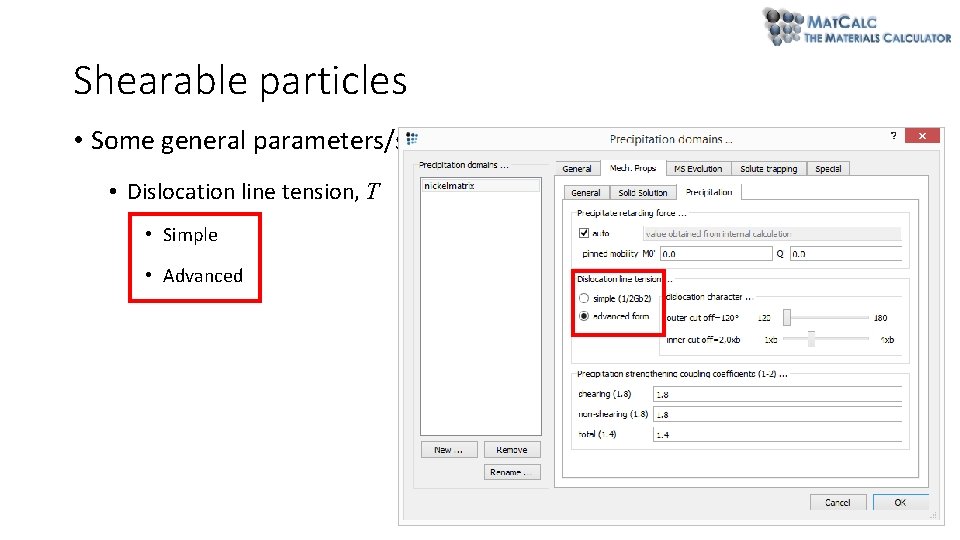
Shearable particles • Some general parameters/settings • Dislocation line tension, T • Simple • Advanced
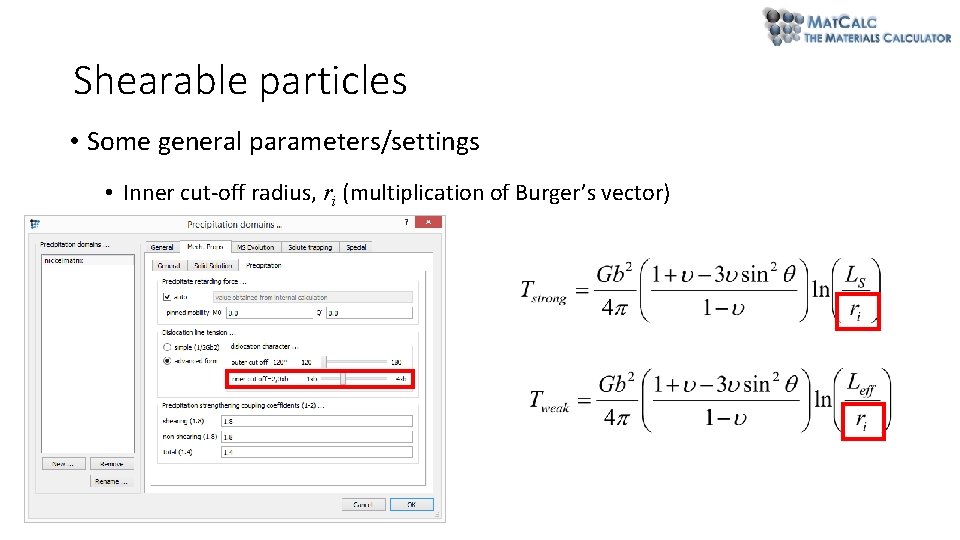
Shearable particles • Some general parameters/settings • Inner cut-off radius, ri (multiplication of Burger’s vector)
Precipitation strengthening, prec • Derived from prec • Non-shearable particles (Orowan mechanism) • Shearable particles (weak or strong) • Coherency effect • Modulus effect • Anti-phase boundary effect • Stacking fault effect • Interfacial effect
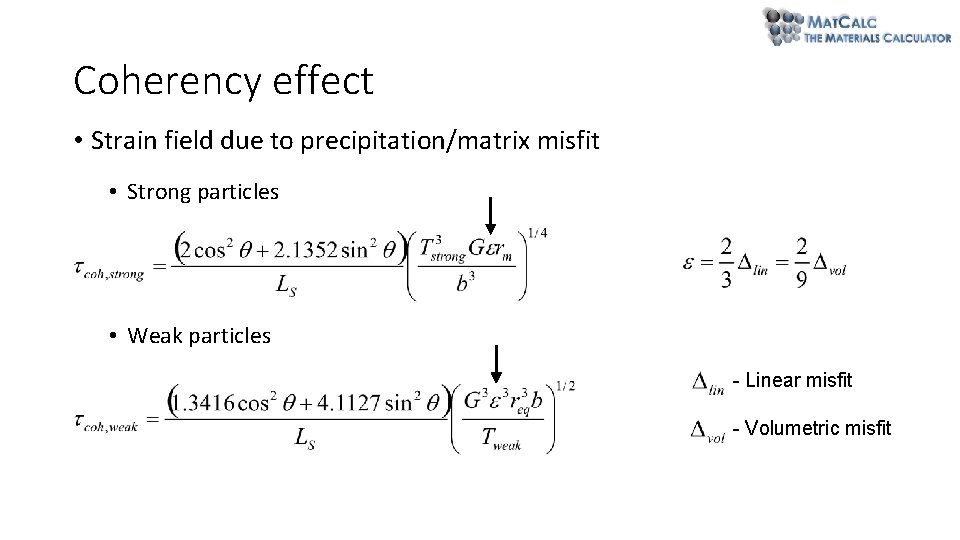
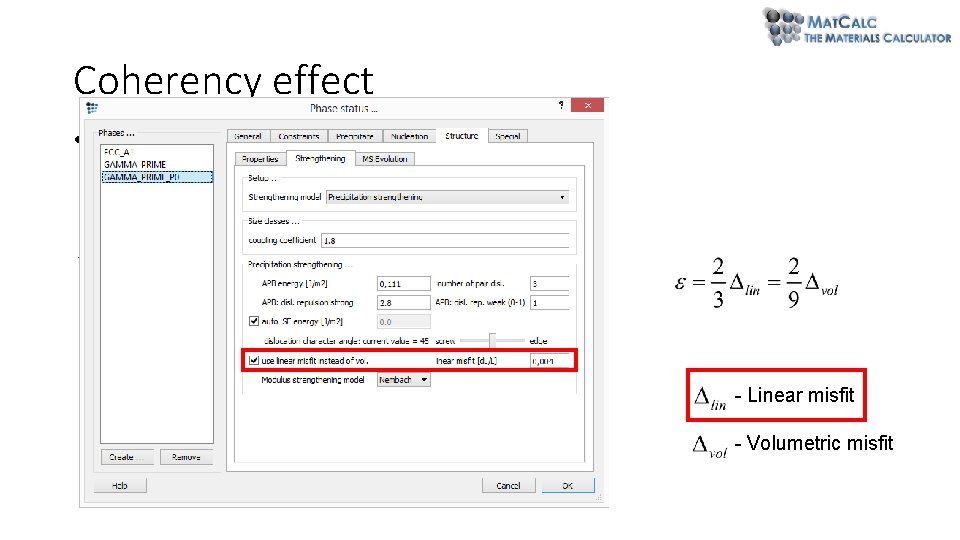
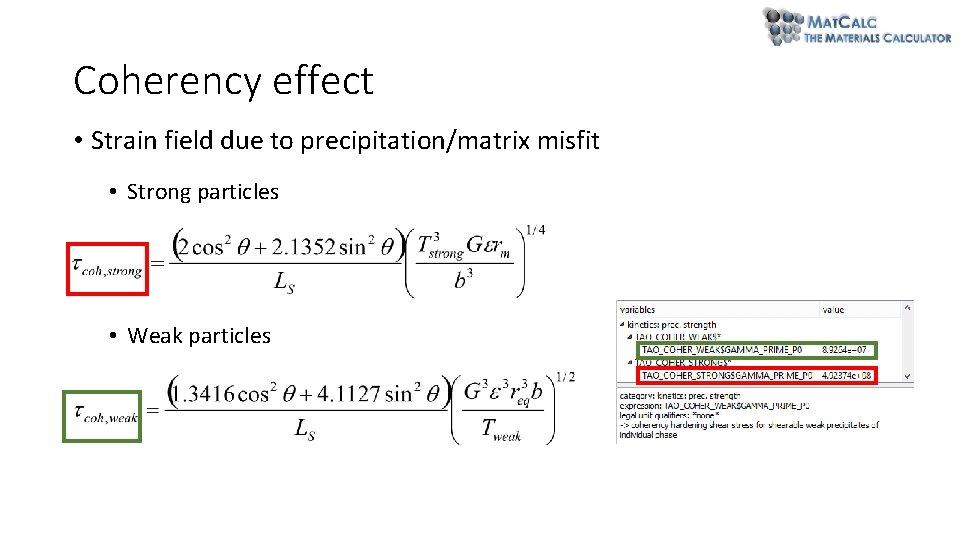
Coherency effect • Strain field due to precipitation/matrix misfit • Strong particles • Weak particles - Linear misfit - Volumetric misfit
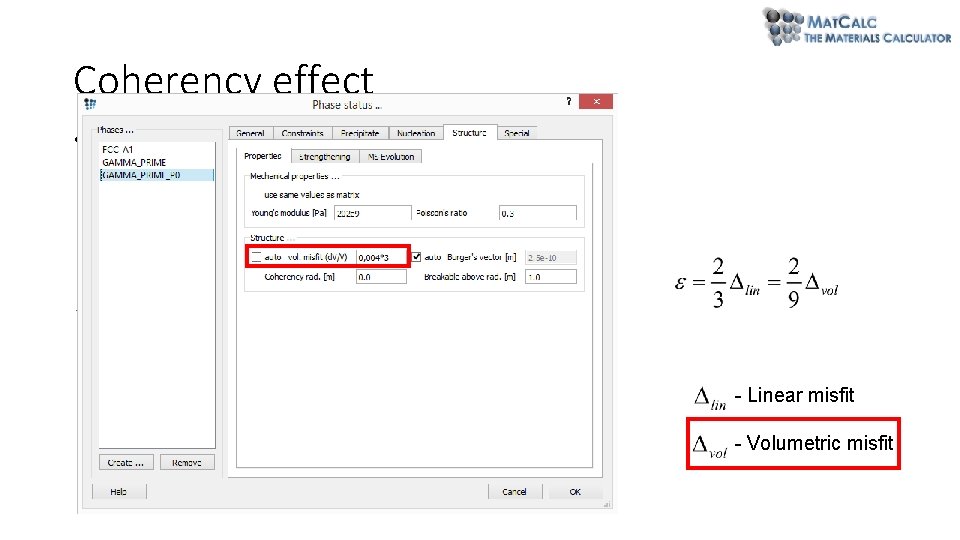
Coherency effect • Shearable particles – Coherency effect • Strain field due to precipitation/matrix misfit • Strong particles • Weak particles - Linear misfit - Volumetric misfit
Coherency effect • Strain field due to precipitation/matrix misfit • Strong particles • Weak particles - Linear misfit - Volumetric misfit
Coherency effect • Strain field due to precipitation/matrix misfit • Strong particles • Weak particles
Precipitation strengthening, prec • Derived from prec • Non-shearable particles (Orowan mechanism) • Shearable particles (weak or strong) • Coherency effect • Modulus effect • Anti-phase boundary effect • Stacking fault effect • Interfacial effect
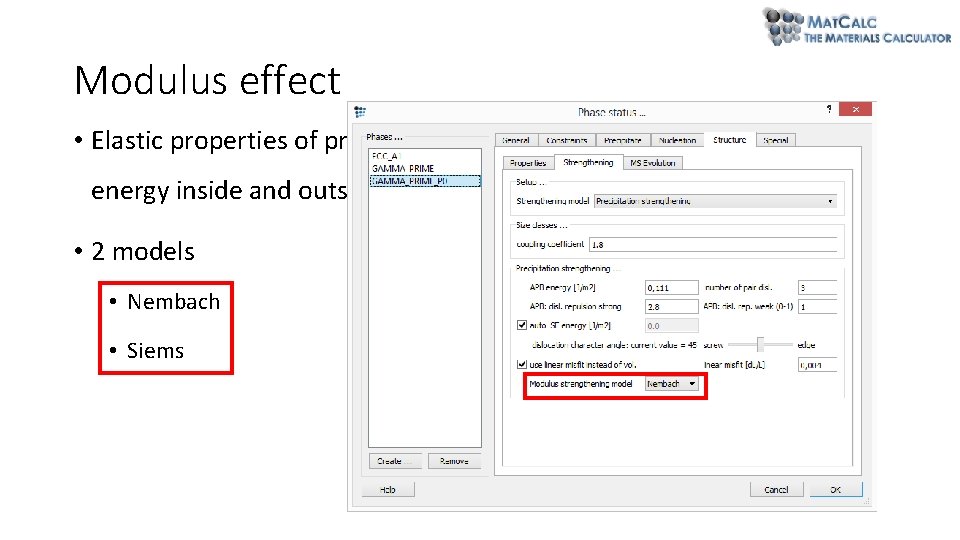
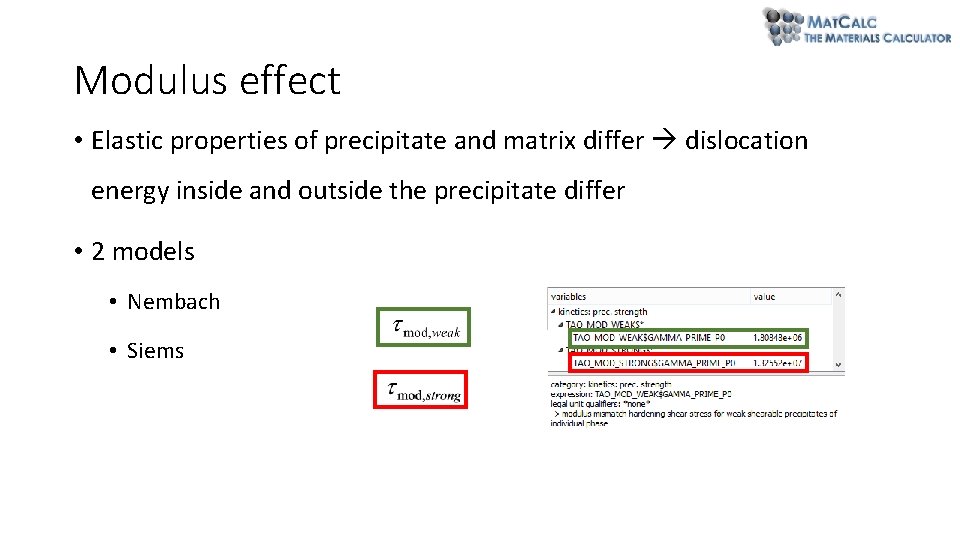
Modulus effect • Elastic properties of precipitate and matrix differ dislocation energy inside and outside the precipitate differ • 2 models • Nembach • Siems
Modulus effect • Elastic properties of precipitate and matrix differ dislocation energy inside and outside the precipitate differ • 2 models • Nembach • Siems
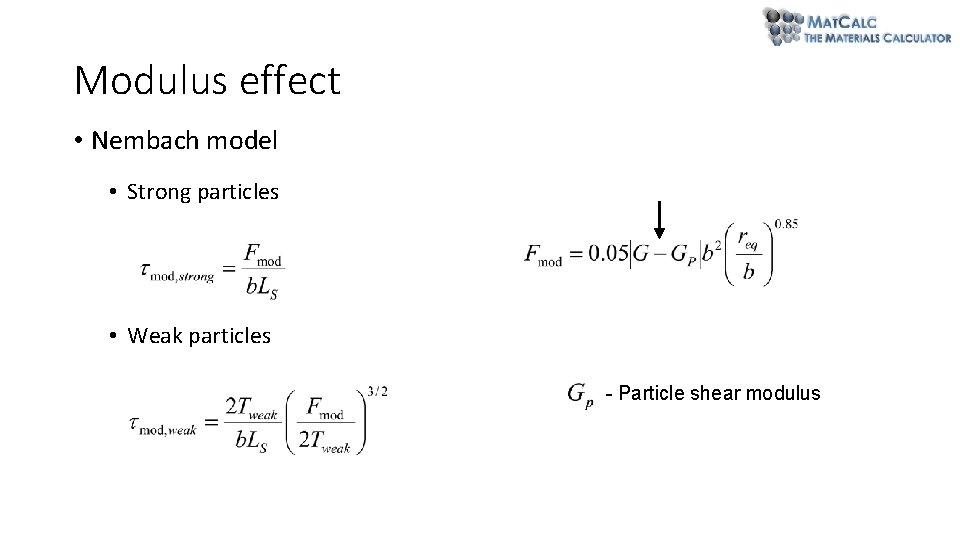
Modulus effect • Nembach model • Strong particles • Weak particles - Particle shear modulus
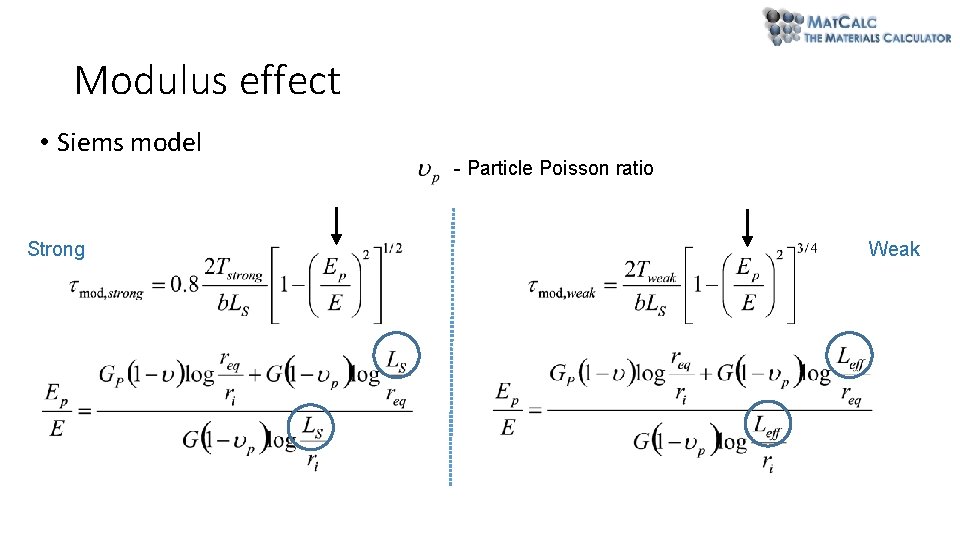
Modulus effect • Siems model Strong - Particle Poisson ratio Weak
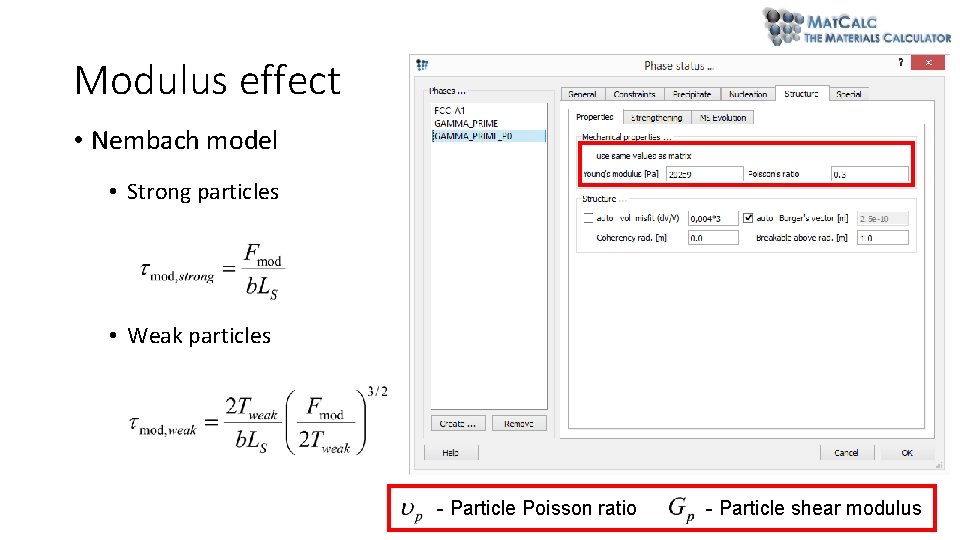
Modulus effect • Nembach model • Strong particles • Weak particles - Particle shear modulus - Particle Poisson ratio - Particle shear modulus
Modulus effect • Elastic properties of precipitate and matrix differ dislocation energy inside and outside the precipitate differ • 2 models • Nembach • Siems
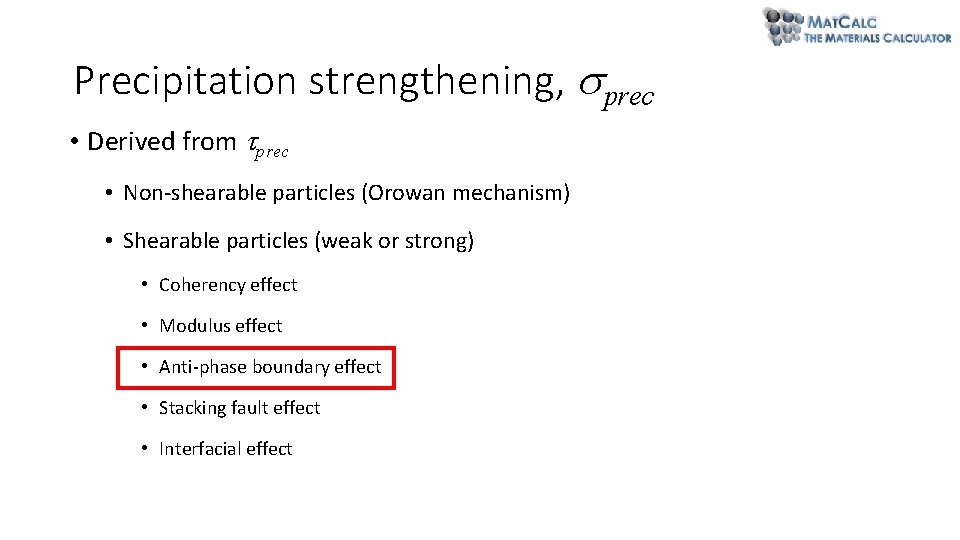
Precipitation strengthening, prec • Derived from prec • Non-shearable particles (Orowan mechanism) • Shearable particles (weak or strong) • Coherency effect • Modulus effect • Anti-phase boundary effect • Stacking fault effect • Interfacial effect
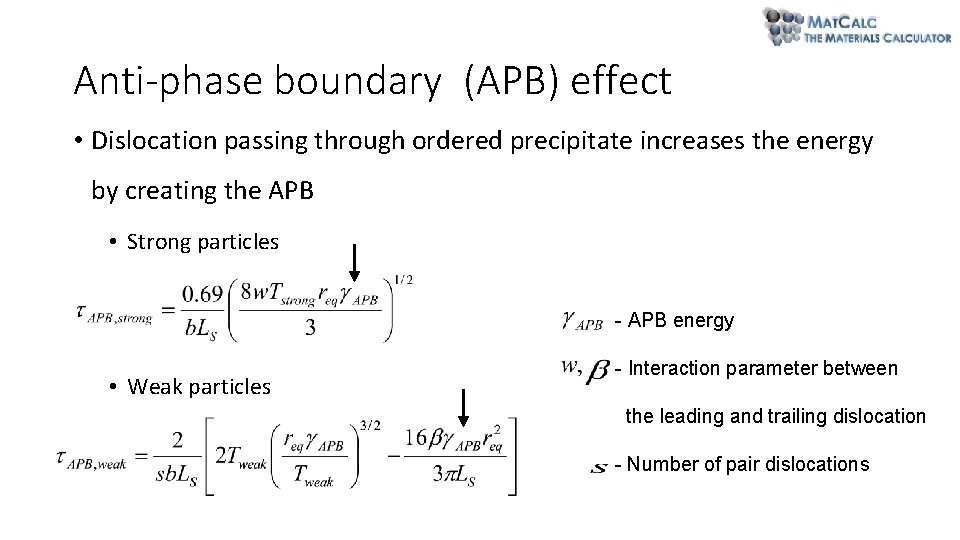
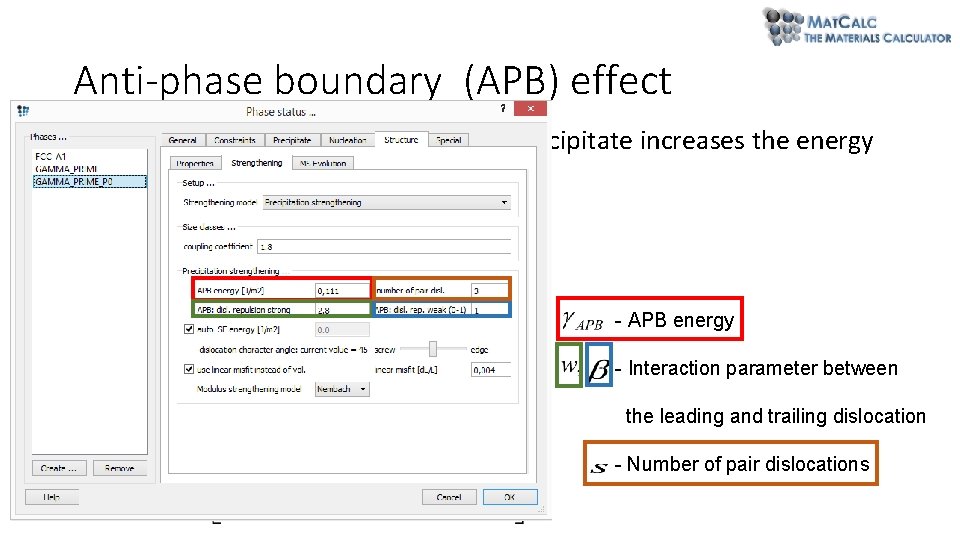
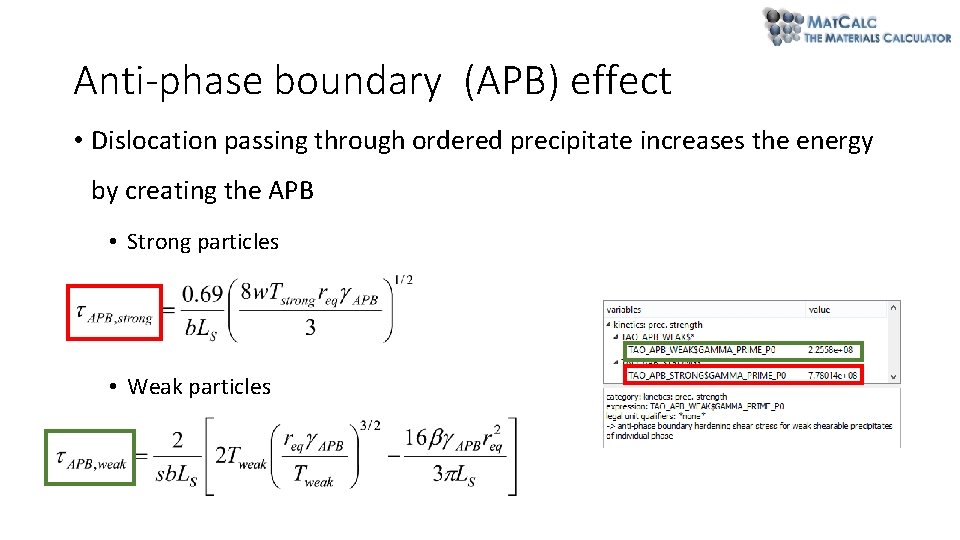
Anti-phase boundary (APB) effect • Dislocation passing through ordered precipitate increases the energy by creating the APB • Strong particles - APB energy • Weak particles - Interaction parameter between the leading and trailing dislocation - Number of pair dislocations
Anti-phase boundary (APB) effect • Dislocation passing through ordered precipitate increases the energy by creating the APB • Strong particles - APB energy • Weak particles - Interaction parameter between the leading and trailing dislocation - Number of pair dislocations
Anti-phase boundary (APB) effect • Dislocation passing through ordered precipitate increases the energy by creating the APB • Strong particles • Weak particles
Precipitation strengthening, prec • Derived from prec • Non-shearable particles (Orowan mechanism) • Shearable particles (weak or strong) • Coherency effect • Modulus effect • Anti-phase boundary effect • Stacking fault effect • Interfacial effect
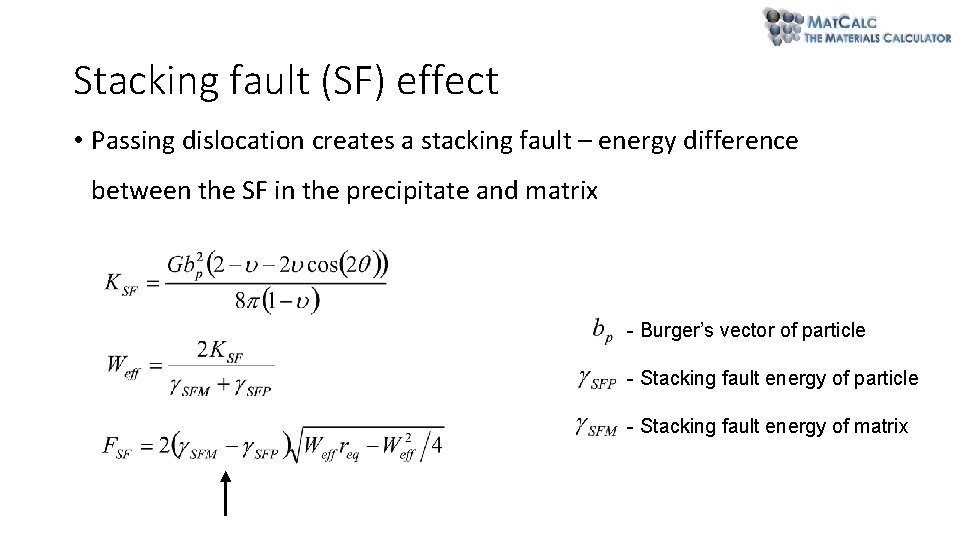
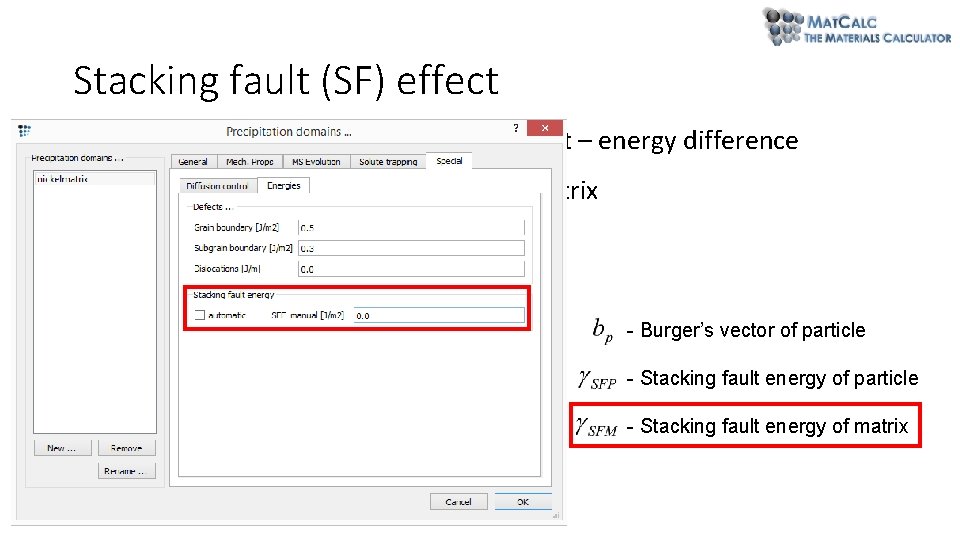
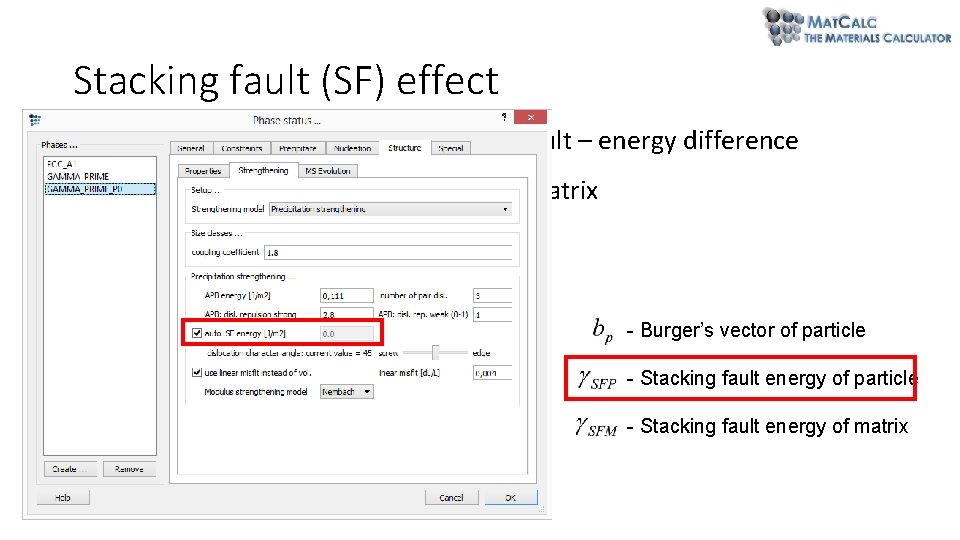
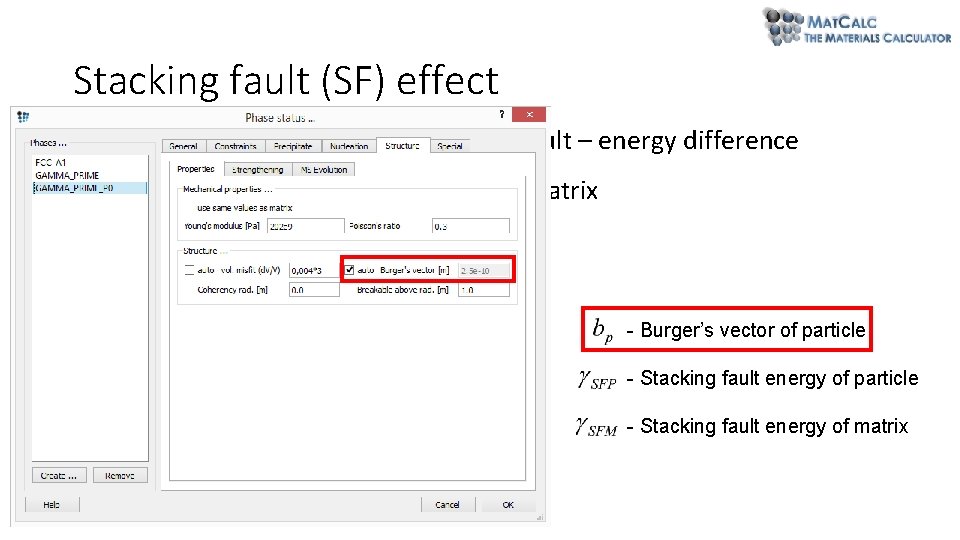
Stacking fault (SF) effect • Passing dislocation creates a stacking fault – energy difference between the SF in the precipitate and matrix - Burger’s vector of particle - Stacking fault energy of matrix
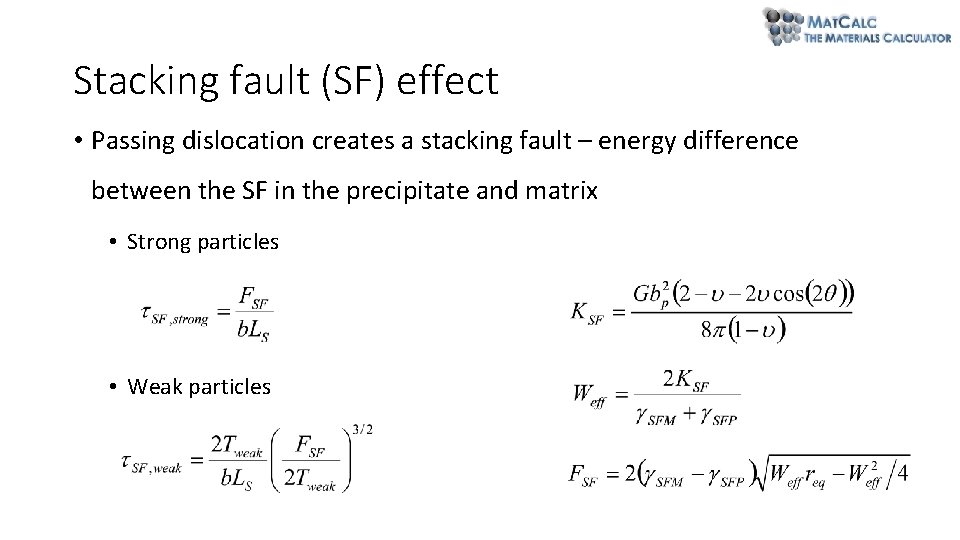
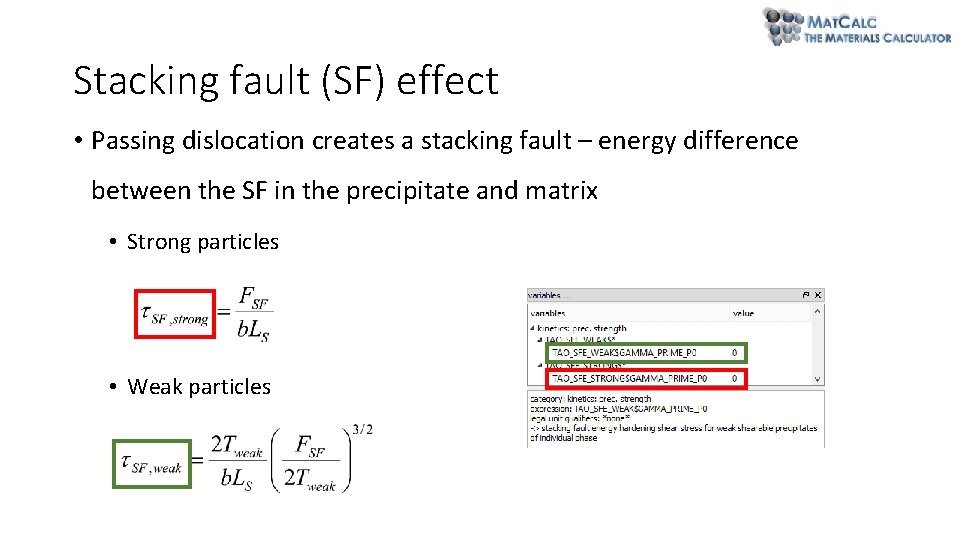
Stacking fault (SF) effect • Passing dislocation creates a stacking fault – energy difference between the SF in the precipitate and matrix • Strong particles • Weak particles
Stacking fault (SF) effect • Passing dislocation creates a stacking fault – energy difference between the SF in the precipitate and matrix - Burger’s vector of particle - Stacking fault energy of matrix
Stacking fault (SF) effect • Passing dislocation creates a stacking fault – energy difference between the SF in the precipitate and matrix - Burger’s vector of particle - Stacking fault energy of matrix
Stacking fault (SF) effect • Passing dislocation creates a stacking fault – energy difference between the SF in the precipitate and matrix - Burger’s vector of particle - Stacking fault energy of matrix
Stacking fault (SF) effect • Passing dislocation creates a stacking fault – energy difference between the SF in the precipitate and matrix • Strong particles • Weak particles
Precipitation strengthening, prec • Derived from prec • Non-shearable particles (Orowan mechanism) • Shearable particles (weak or strong) • Coherency effect • Modulus effect • Anti-phase boundary effect • Stacking fault effect • Interfacial effect
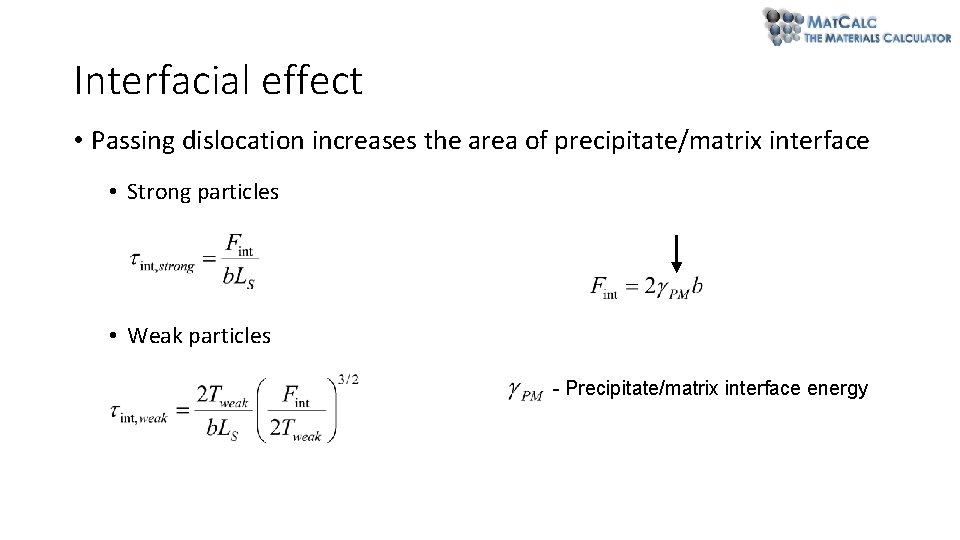
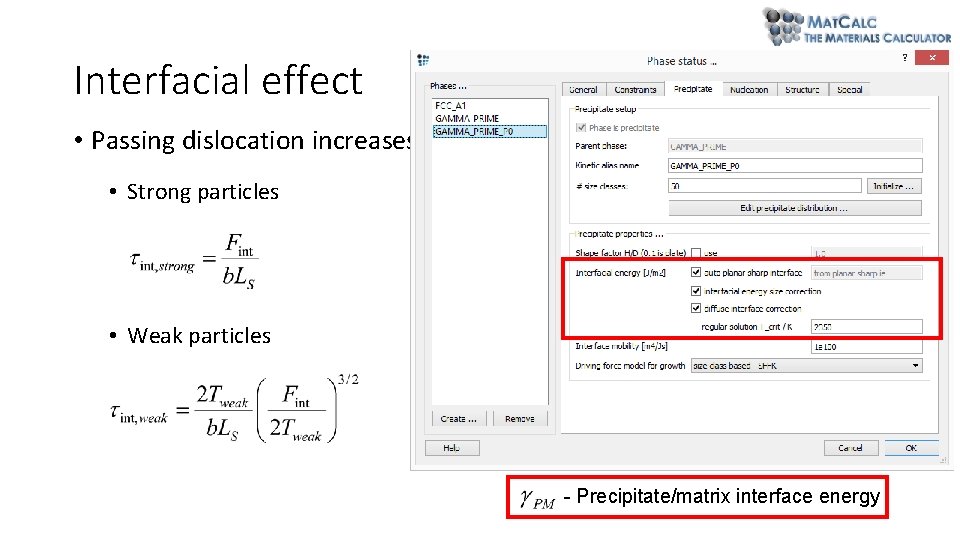
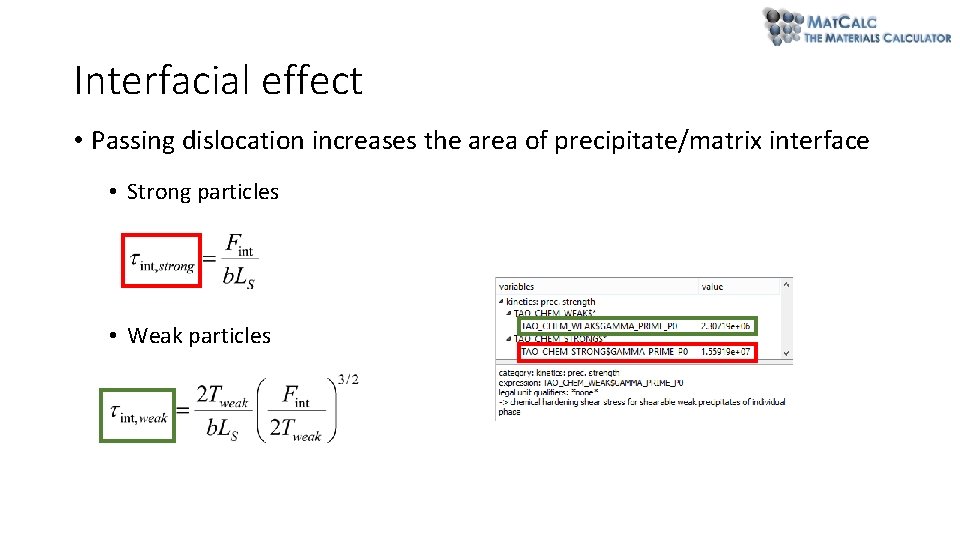
Interfacial effect • Passing dislocation increases the area of precipitate/matrix interface • Strong particles • Weak particles - Precipitate/matrix interface energy
Interfacial effect • Passing dislocation increases the area of precipitate/matrix interface • Strong particles • Weak particles - Precipitate/matrix interface energy
Interfacial effect • Passing dislocation increases the area of precipitate/matrix interface • Strong particles • Weak particles
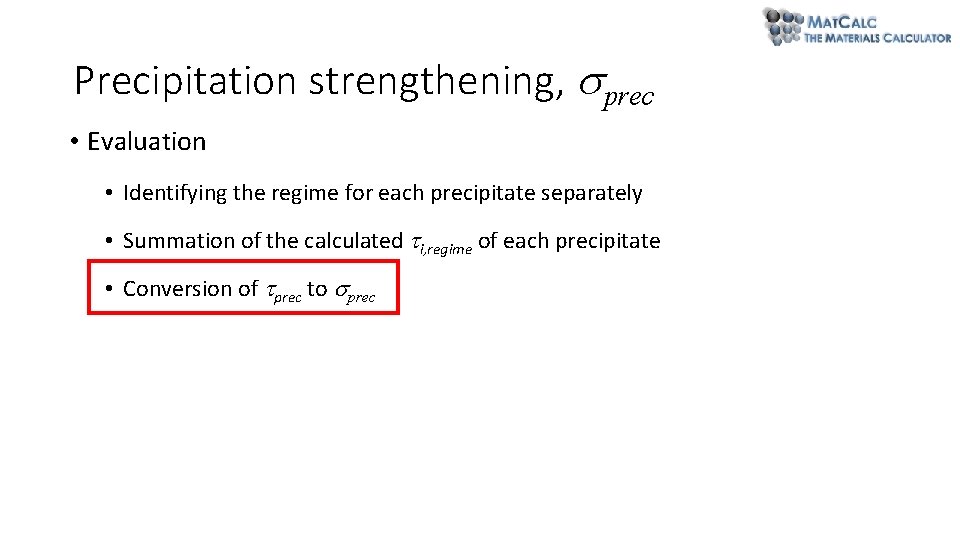
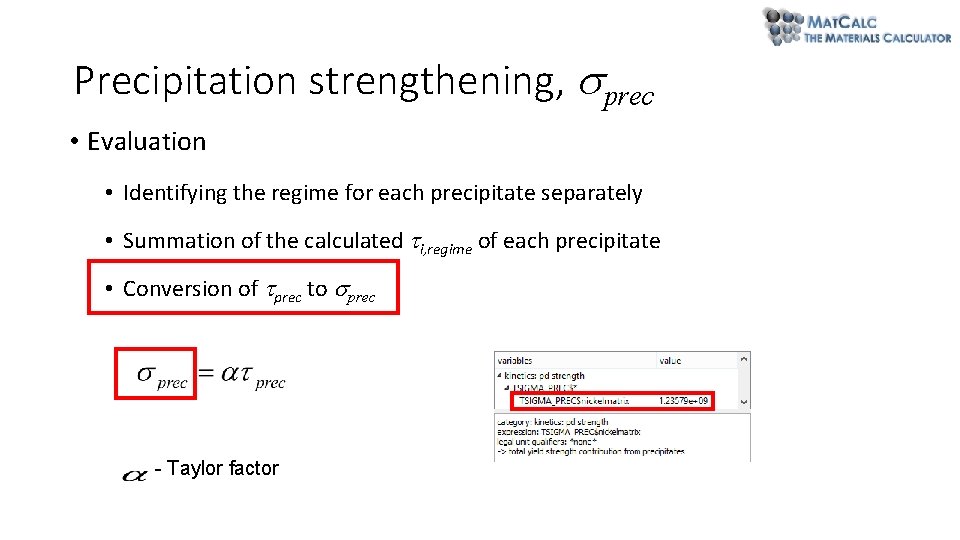
Precipitation strengthening, prec • Evaluation • Identifying the regime for each precipitate separately • Summation of the calculated regime of each precipitate • Conversion of prec to prec
Precipitation strengthening, prec • Evaluation • Identifying the regime for each precipitate separately • Summation of the calculated i, regime of each precipitate • Conversion of prec to prec
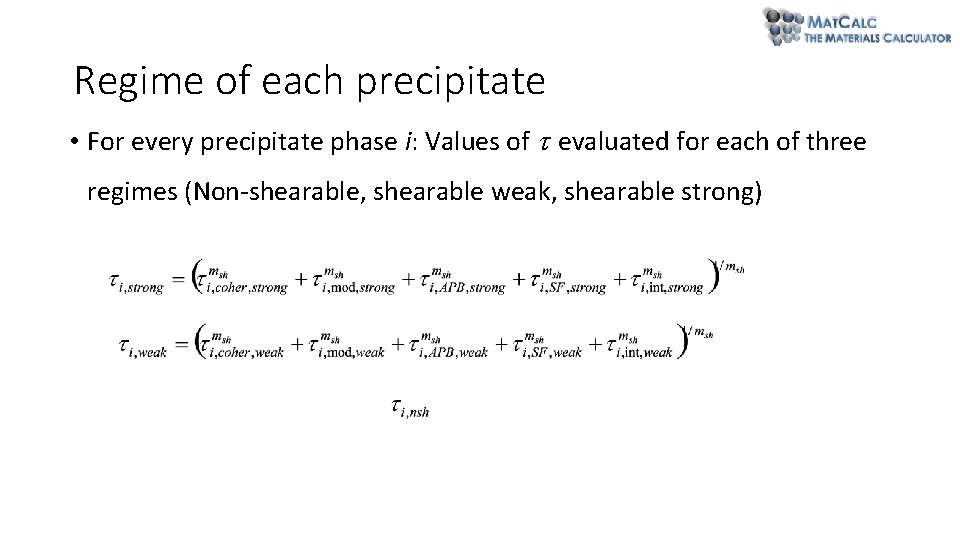
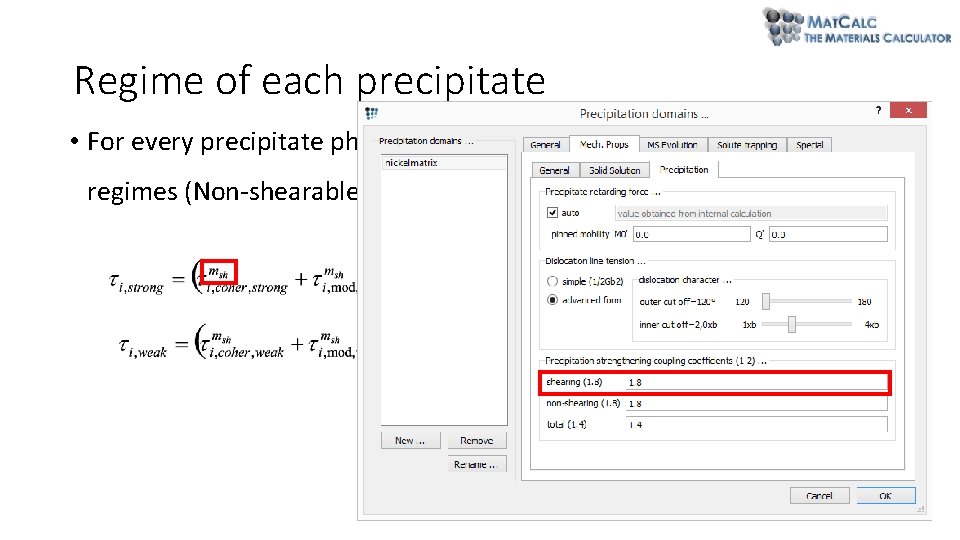
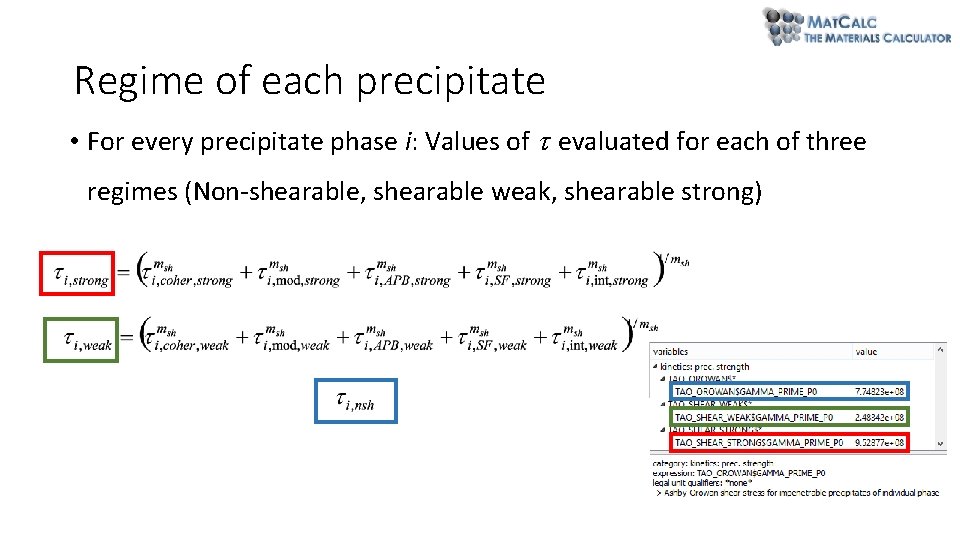
Regime of each precipitate • For every precipitate phase i: Values of evaluated for each of three regimes (Non-shearable, shearable weak, shearable strong)
Regime of each precipitate • For every precipitate phase i: Values of evaluated for each of three regimes (Non-shearable, shearable weak, shearable strong)
Regime of each precipitate • For every precipitate phase i: Values of evaluated for each of three regimes (Non-shearable, shearable weak, shearable strong)
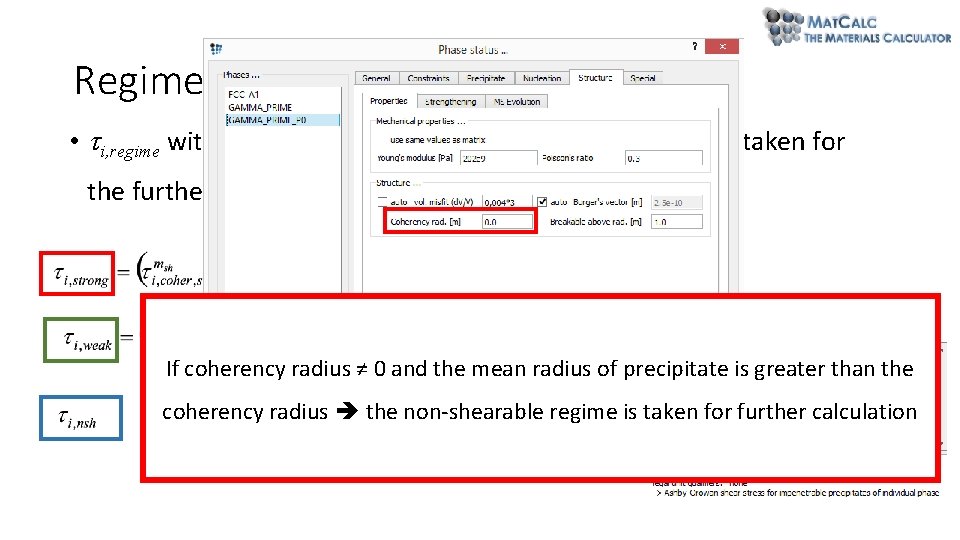
Regime of each precipitate • i, regime with the lowest value for the precipitate phase i is taken for the further operations If coherency radius ≠ 0 and the mean radius of precipitate is greater than the coherency radius the non-shearable regime is taken for further calculation
Precipitation strengthening, prec • Evaluation • Identifying the regime for each precipitate separately • Summation of the calculated i, regime of each precipitate • Conversion of prec to prec
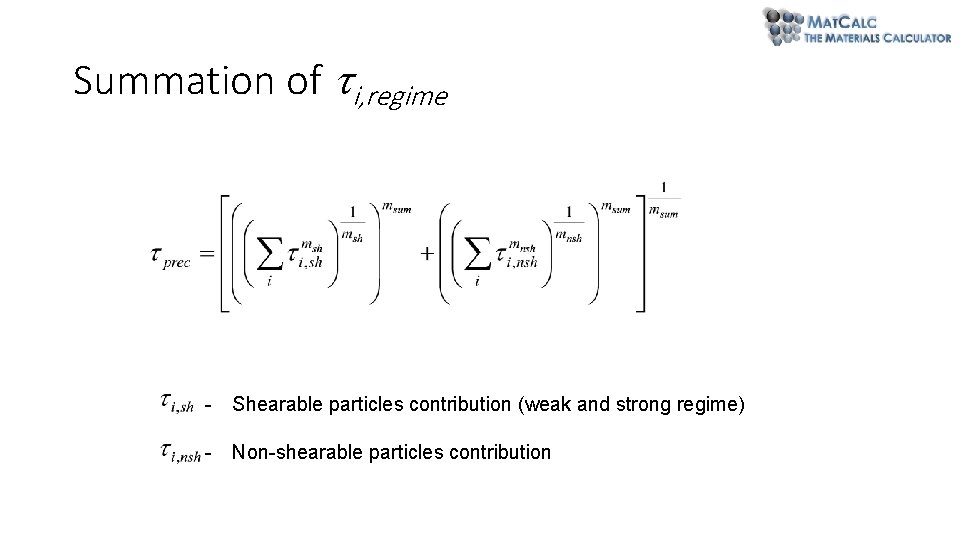
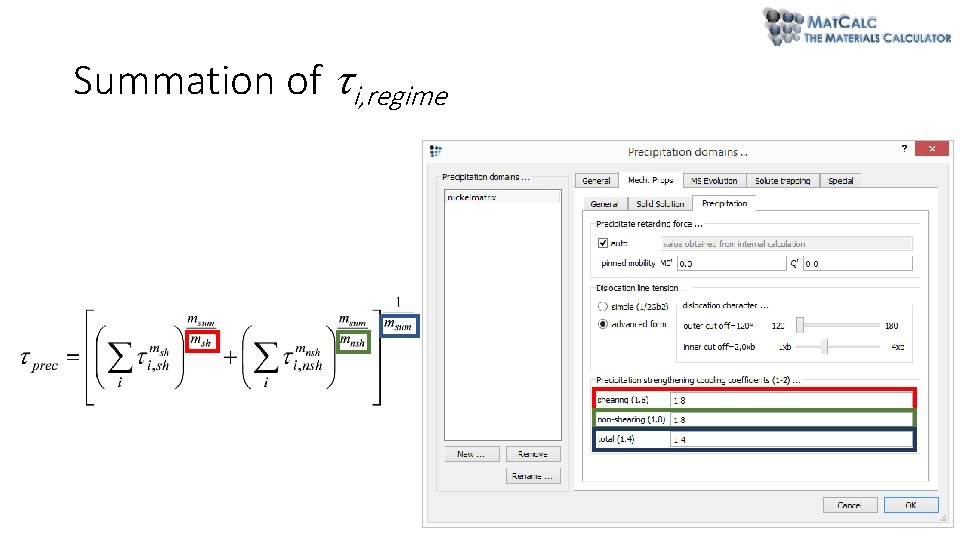
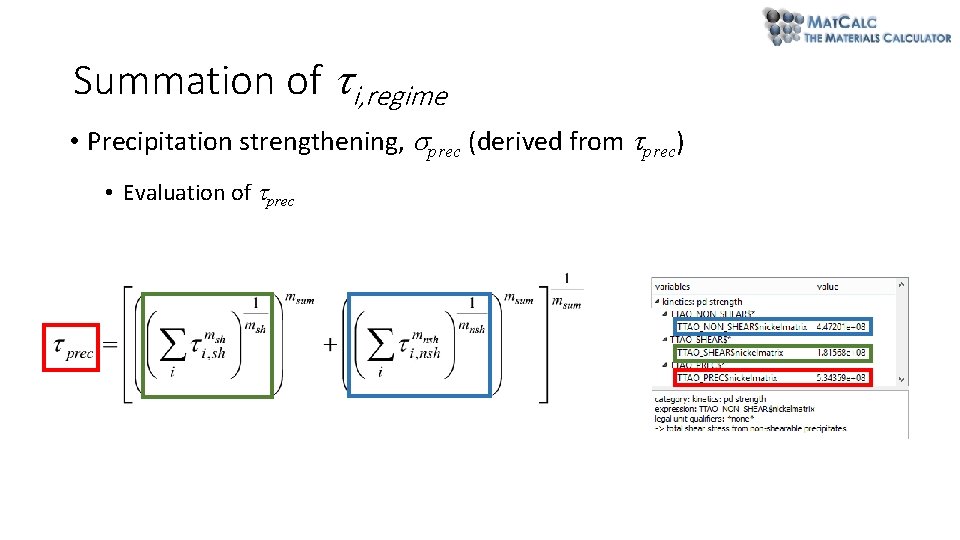
Summation of i, regime - Shearable particles contribution (weak and strong regime) - Non-shearable particles contribution
Summation of i, regime
Summation of i, regime • Precipitation strengthening, prec (derived from prec) • Evaluation of prec
Precipitation strengthening, prec • Evaluation • Identifying the regime for each precipitate separately • Summation of the calculated i, regime of each precipitate • Conversion of prec to prec
Precipitation strengthening, prec • Evaluation • Identifying the regime for each precipitate separately • Summation of the calculated i, regime of each precipitate • Conversion of prec to prec - Taylor factor
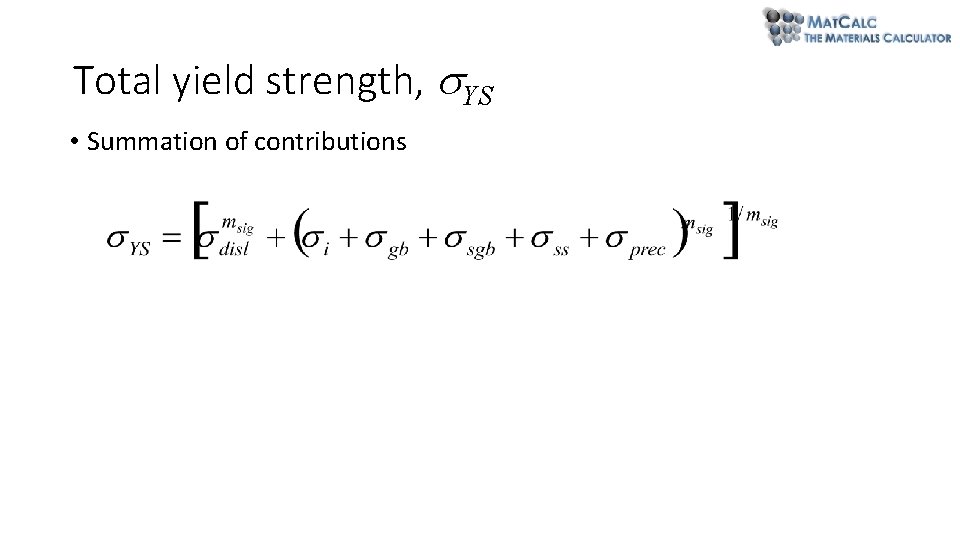
Total yield strength, YS • Summation of contributions
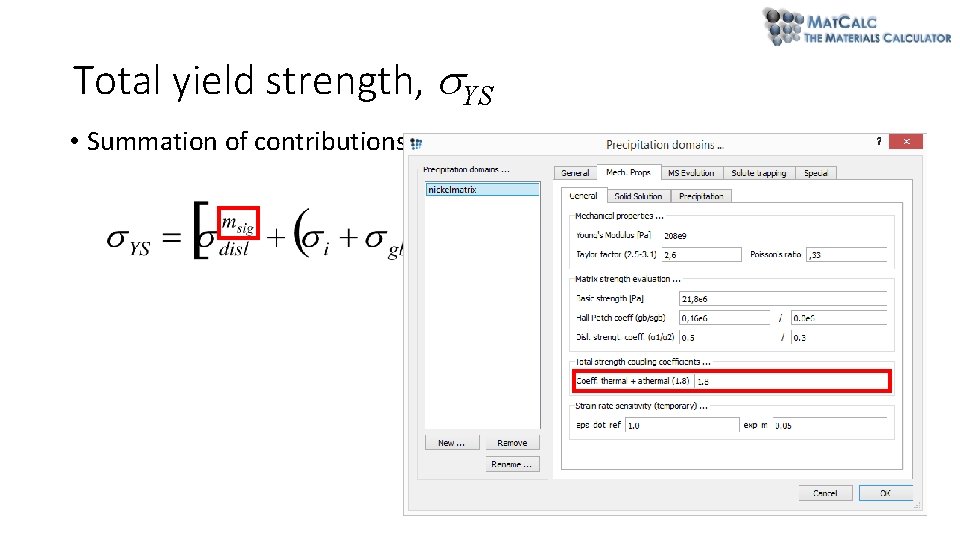
Total yield strength, YS • Summation of contributions
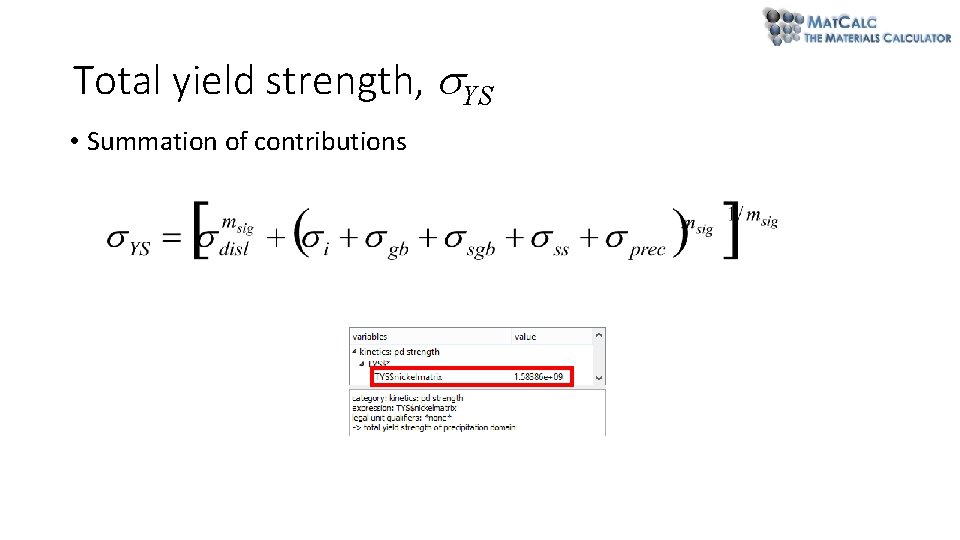
Total yield strength, YS • Summation of contributions
Thank you for your attention !
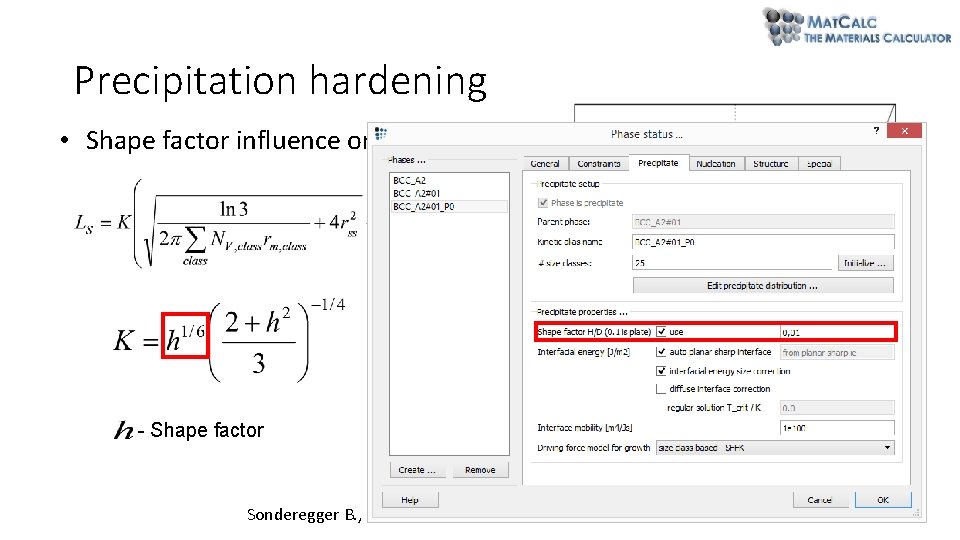
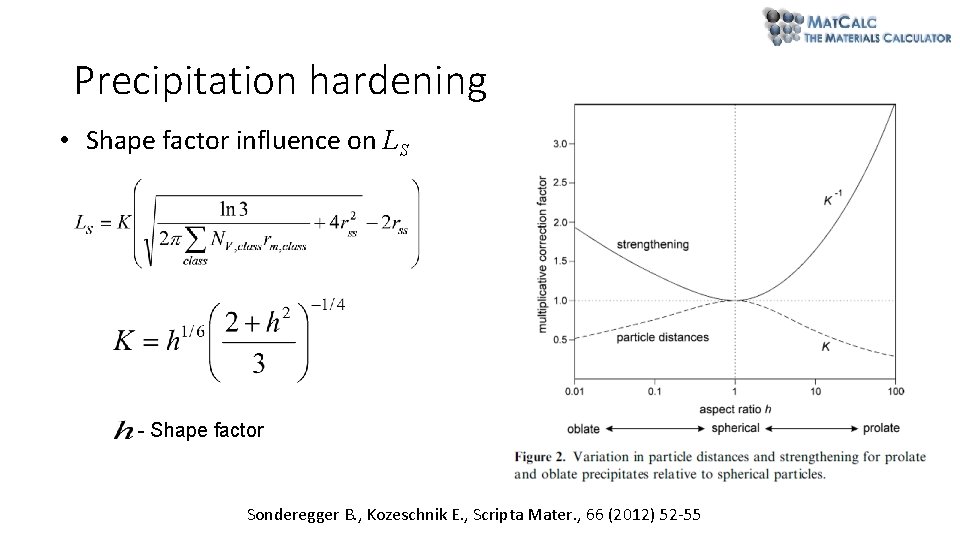
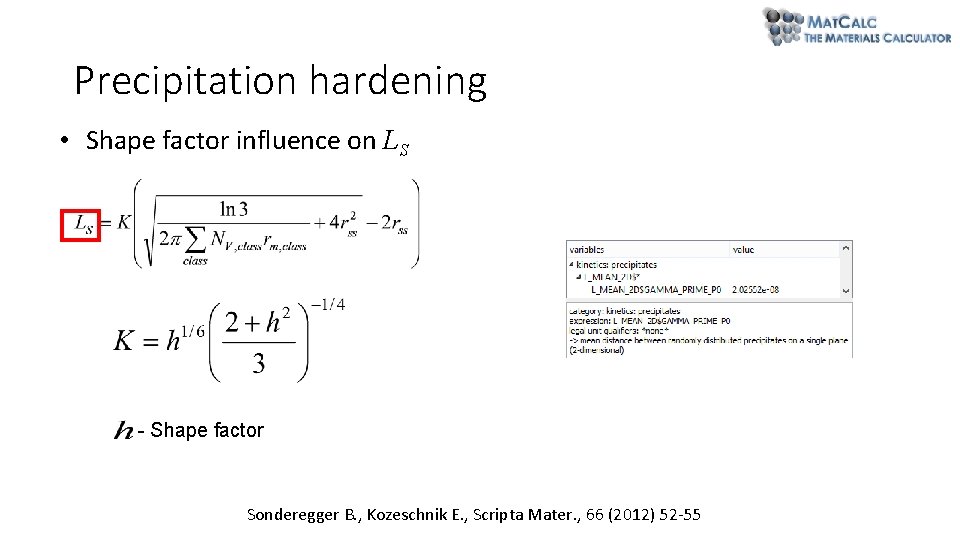
Precipitation hardening • Shape factor influence on LS - Shape factor Sonderegger B. , Kozeschnik E. , Scripta Mater. , 66 (2012) 52 -55
Precipitation hardening • Shape factor influence on LS - Shape factor Sonderegger B. , Kozeschnik E. , Scripta Mater. , 66 (2012) 52 -55
Precipitation hardening • Shape factor influence on LS - Shape factor Sonderegger B. , Kozeschnik E. , Scripta Mater. , 66 (2012) 52 -55
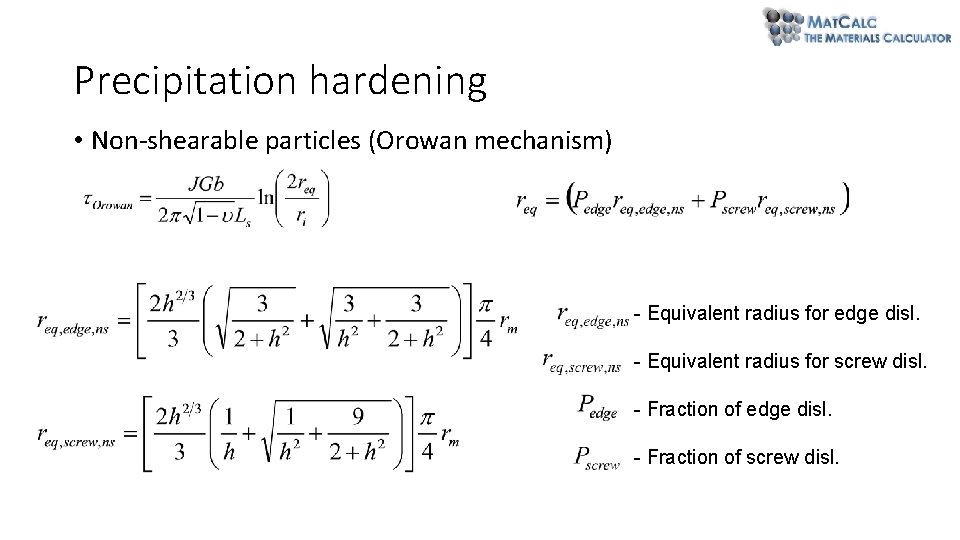
Precipitation hardening • Non-shearable particles (Orowan mechanism) - Equivalent radius for edge disl. - Equivalent radius for screw disl. - Fraction of edge disl. - Fraction of screw disl.
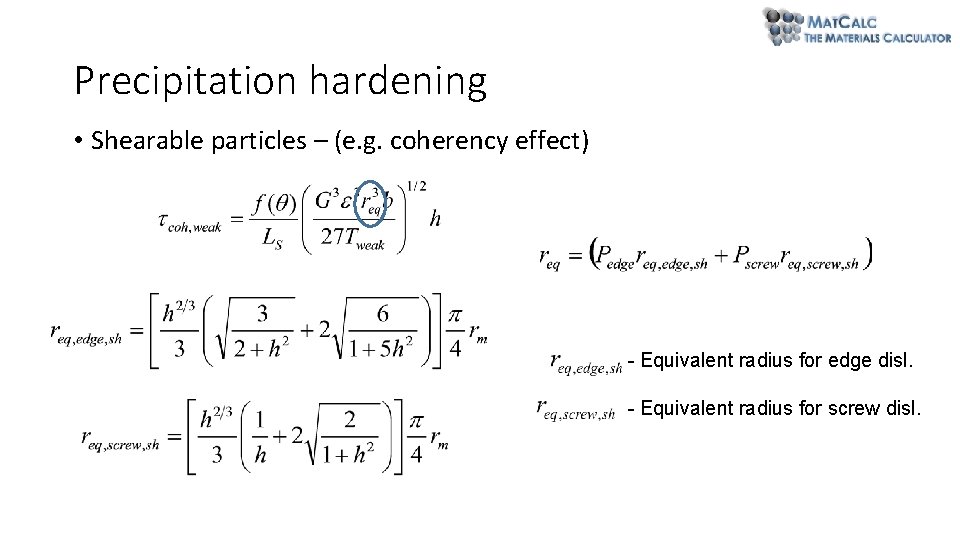
Precipitation hardening • Shearable particles – (e. g. coherency effect) - Equivalent radius for edge disl. - Equivalent radius for screw disl.
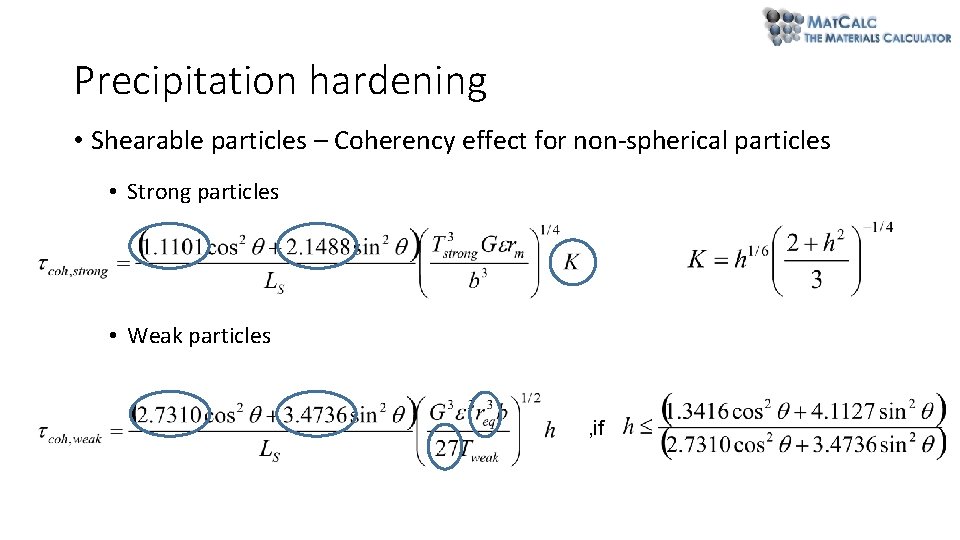
Precipitation hardening • Shearable particles – Coherency effect for non-spherical particles • Strong particles • Weak particles , if
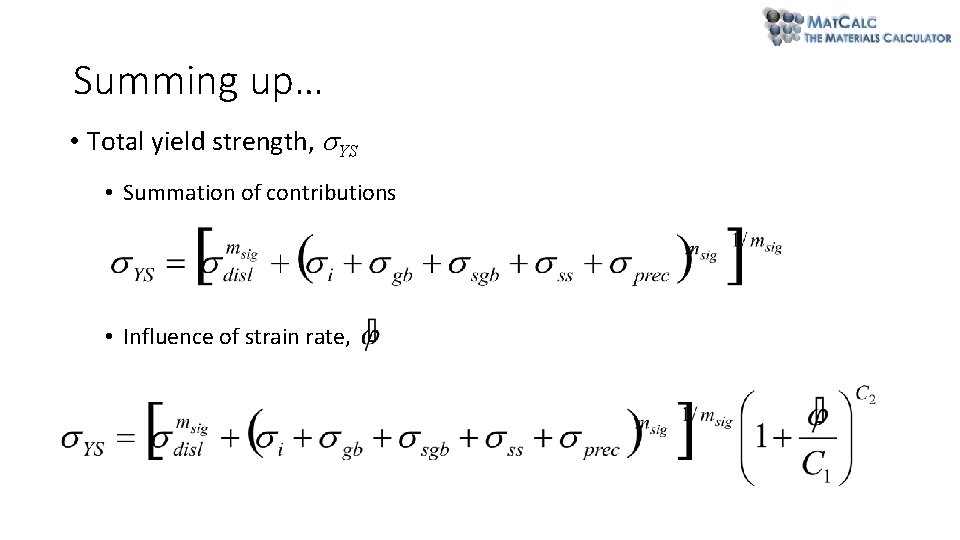
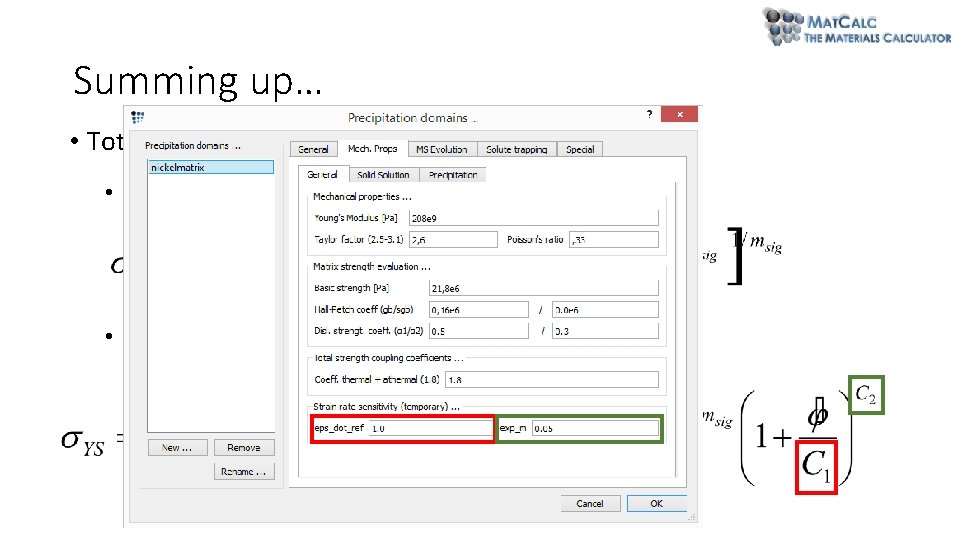
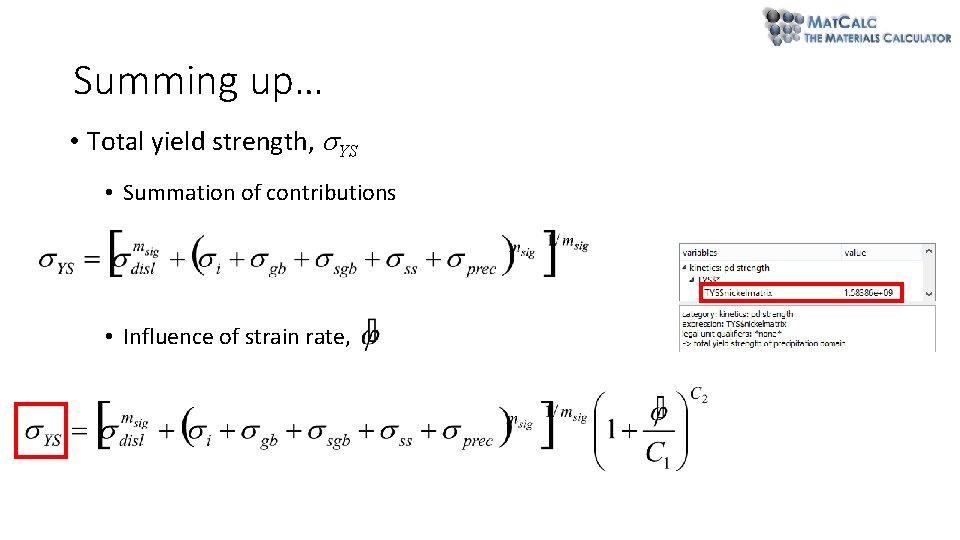
Summing up… • Total yield strength, YS • Summation of contributions • Influence of strain rate,
Summing up… • Total yield strength, YS • Summation of contributions • Influence of strain rate,
Summing up… • Total yield strength, YS • Summation of contributions • Influence of strain rate,