
AlloantibodyMediated Rejection Complement and nonComplement Dependent Mechanisms JHMI
Alloantibody-Mediated Rejection: Complement and non-Complement Dependent Mechanisms JHMI B. A. Wasowska
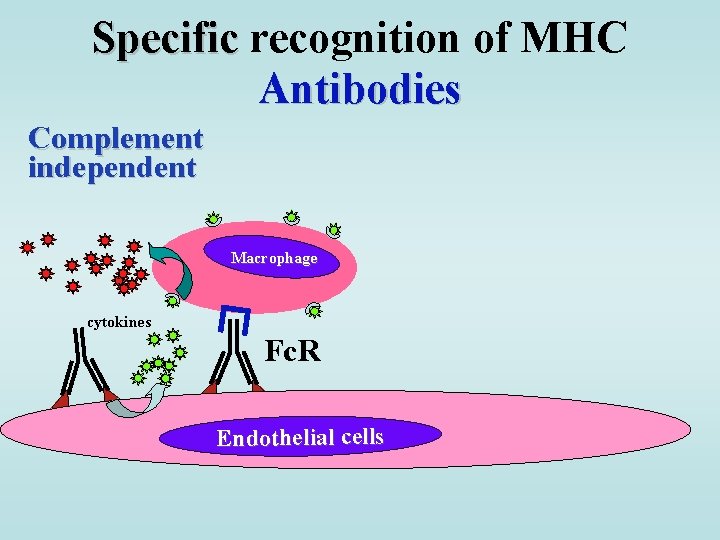
Specific recognition of MHC Antibodies Complement independent Macrophage cytokines Fc. R Endothelial cells
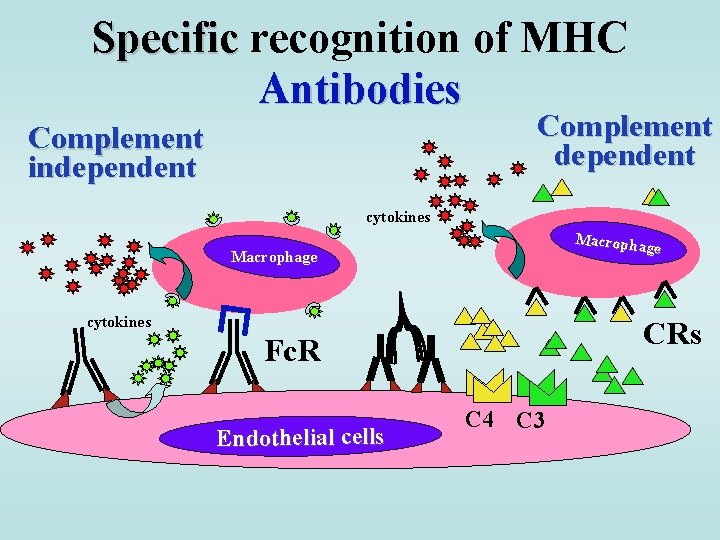
Specific recognition of MHC Antibodies Complement dependent Complement independent cytokines Macropha ge Macrophage cytokines CRs Fc. R Endothelial cells C 4 C 3
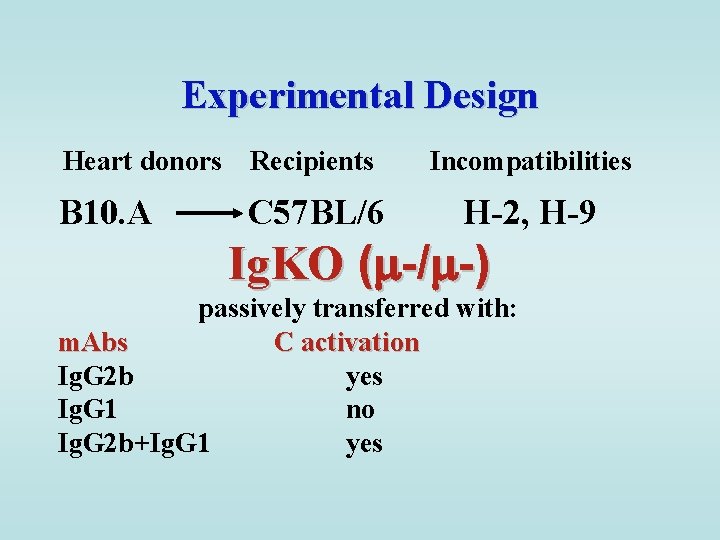
Experimental Design Heart donors Recipients Incompatibilities B 10. A C 57 BL/6 H-2, H-9 Ig. KO (m-/m-) passively transferred with: m. Abs C activation Ig. G 2 b yes Ig. G 1 no Ig. G 2 b+Ig. G 1 yes
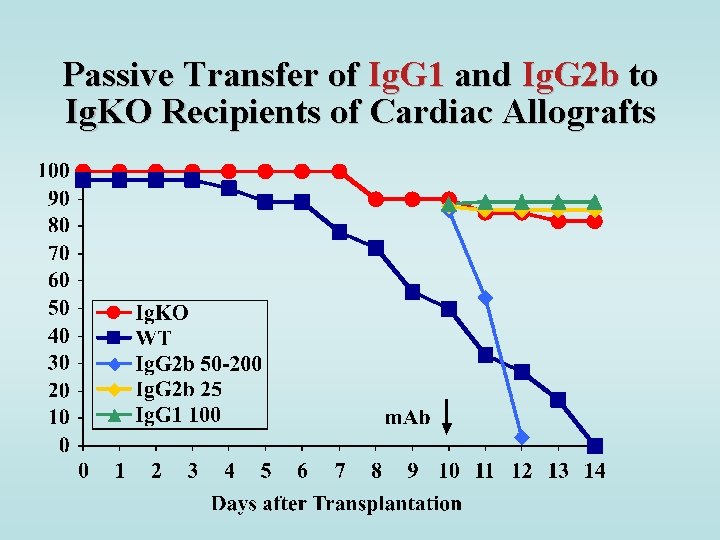
Passive Transfer of Ig. G 1 and Ig. G 2 b to Ig. KO Recipients of Cardiac Allografts
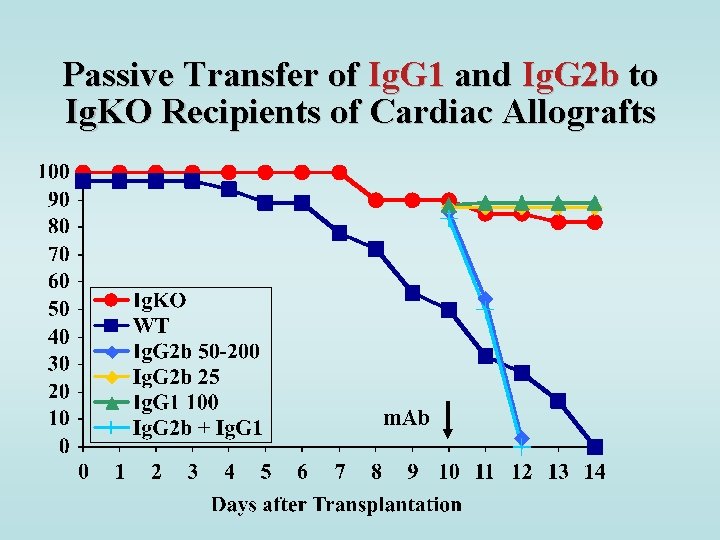
Passive Transfer of Ig. G 1 and Ig. G 2 b to Ig. KO Recipients of Cardiac Allografts m. Ab
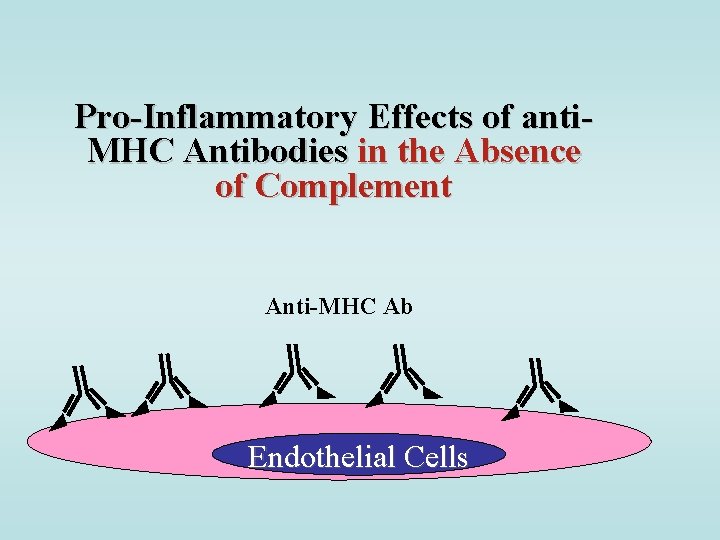
Pro-Inflammatory Effects of anti. MHC Antibodies in the Absence of Complement Anti-MHC Ab Endothelial Cells
Contribution of Anti-MHC antibodies to graft rejection and activation of EC Ligation of MHC class I molecules with anti. MHC antibodies on EC and smooth muscle results in: • Increased phosphorylation of intracellualr proteins and induction of fibroblast growth factor receptor on EC. (Bian, Reed. JI, 1999, 163: 1010). • Increased phosphorylation of Src, Paxillin and Focal Adhesion Kinase and enhanced proliferation to fibroblast growth factor. (Jin, …Reed. JI, 2002, 168: 5415). • Activation of P 13 K/Akt signaling pathway and regulation of apoptotic genes (Bad, Bcl-2 and Bcl-x. L). (Jin, Fishbein, . . . Reed, Human Immunol. 2004, 65: 291).
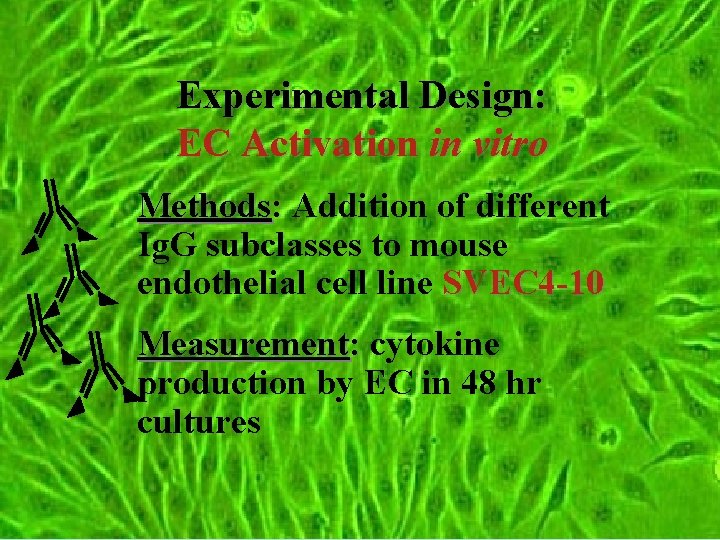
Experimental Design: EC Activation in vitro Methods: Addition of different Ig. G subclasses to mouse endothelial cell line SVEC 4 -10 Measurement: cytokine production by EC in 48 hr cultures
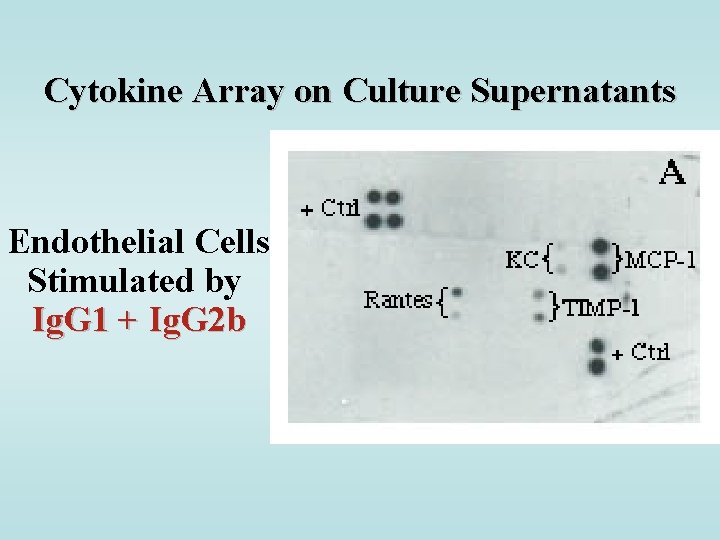
Cytokine Array on Culture Supernatants Endothelial Cells Stimulated by Ig. G 1 + Ig. G 2 b
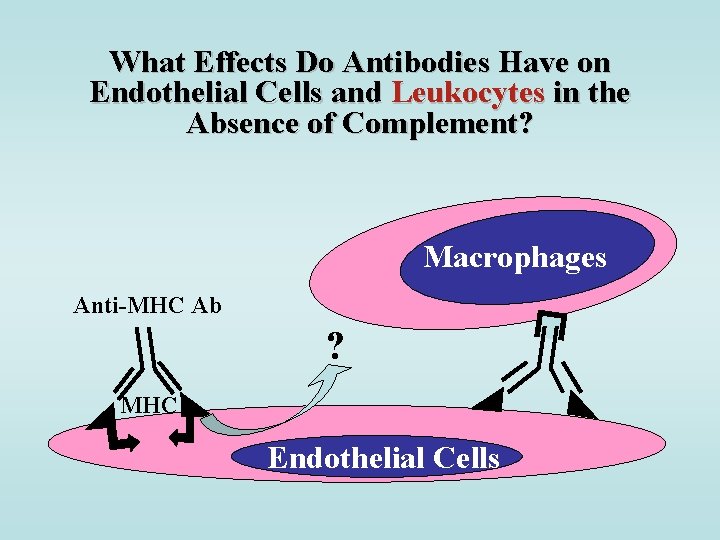
What Effects Do Antibodies Have on Endothelial Cells and Leukocytes in the Absence of Complement? Macrophages Anti-MHC Ab ? MHC Endothelial Cells
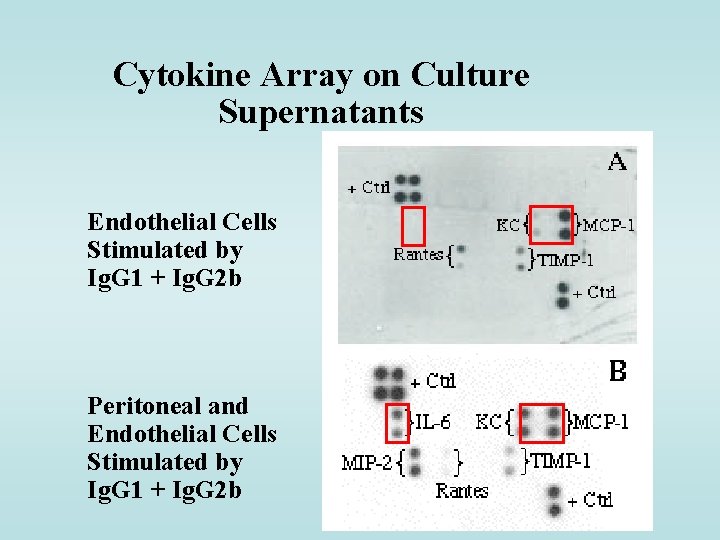
Cytokine Array on Culture Supernatants Endothelial Cells Stimulated by Ig. G 1 + Ig. G 2 b Peritoneal and Endothelial Cells Stimulated by Ig. G 1 + Ig. G 2 b
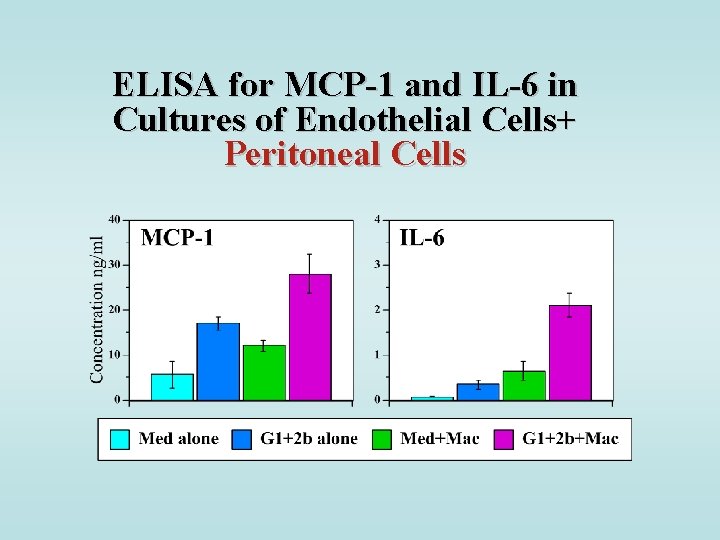
ELISA for MCP-1 and IL-6 in Cultures of Endothelial Cells+ Peritoneal Cells
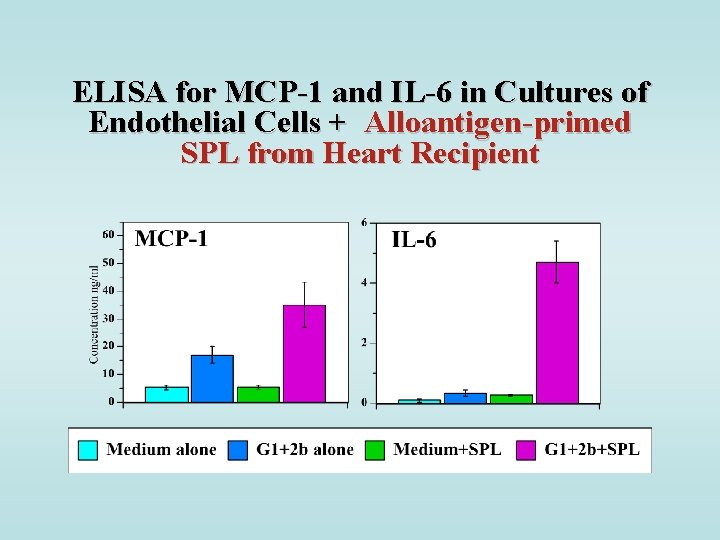
ELISA for MCP-1 and IL-6 in Cultures of Endothelial Cells + Alloantigen-primed SPL from Heart Recipient
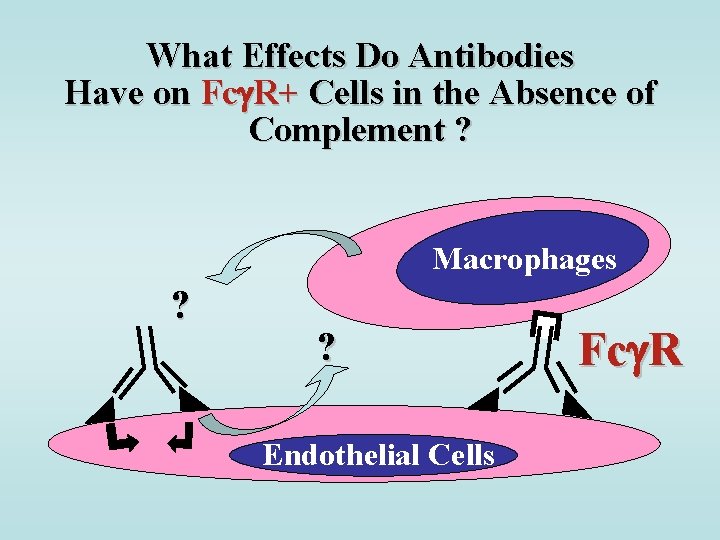
What Effects Do Antibodies Have on Fc R+ Cells in the Absence of Complement ? Macrophages ? ? Endothelial Cells Fc R
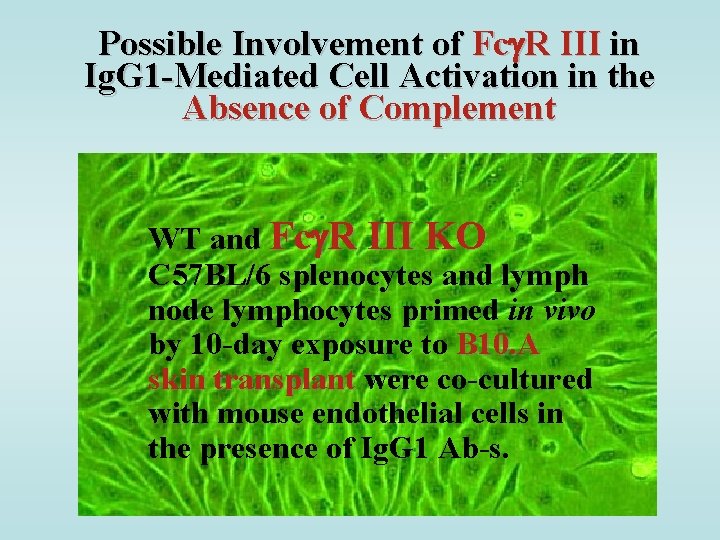
Possible Involvement of Fc R III in Ig. G 1 -Mediated Cell Activation in the Absence of Complement WT and Fc R III KO C 57 BL/6 splenocytes and lymph node lymphocytes primed in vivo by 10 -day exposure to B 10. A skin transplant were co-cultured with mouse endothelial cells in the presence of Ig. G 1 Ab-s.
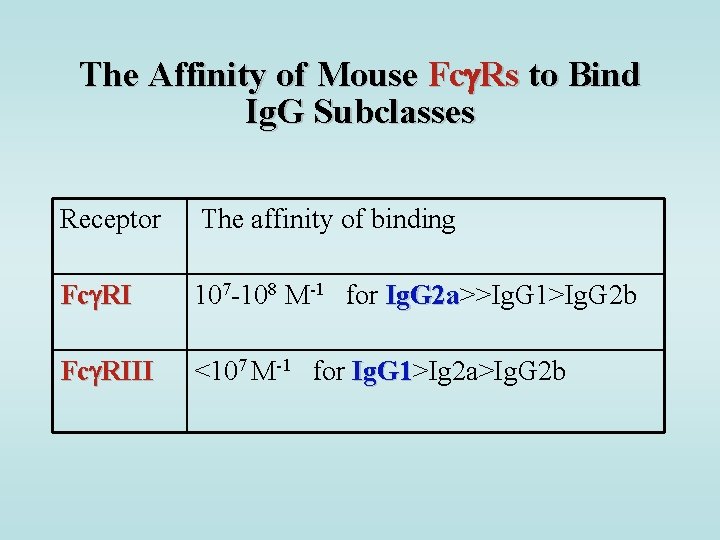
The Affinity of Mouse Fc Rs to Bind Ig. G Subclasses Receptor The affinity of binding Fc RI 107 -108 M-1 for Ig. G 2 a>>Ig. G 1>Ig. G 2 b Ig. G 2 a Fc RIII <107 M-1 for Ig. G 1>Ig 2 a>Ig. G 2 b Ig. G 1
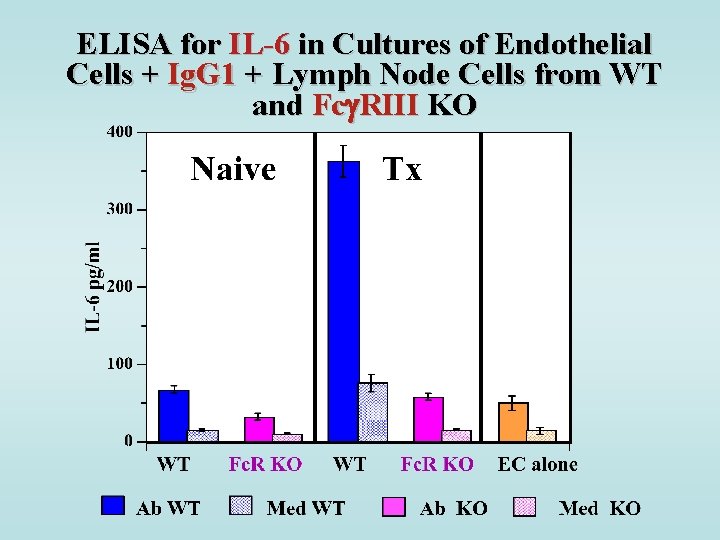
ELISA for IL-6 in Cultures of Endothelial Cells + Ig. G 1 + Lymph Node Cells from WT and Fc RIII KO
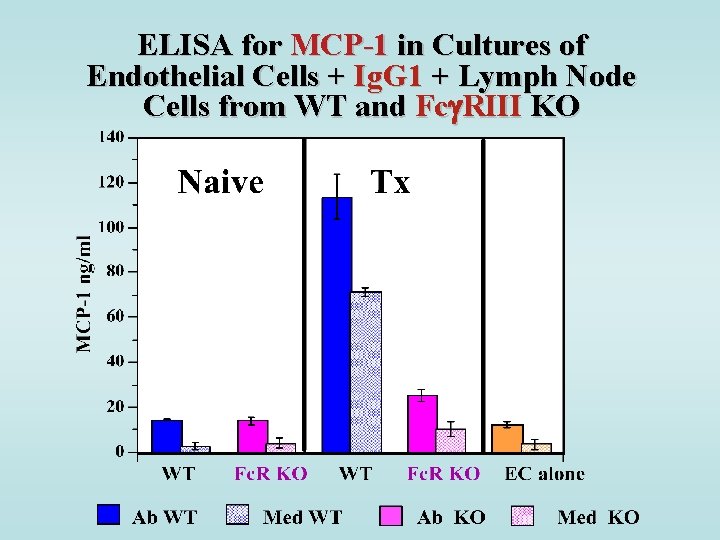
ELISA for MCP-1 in Cultures of Endothelial Cells + Ig. G 1 + Lymph Node Cells from WT and Fc RIII KO
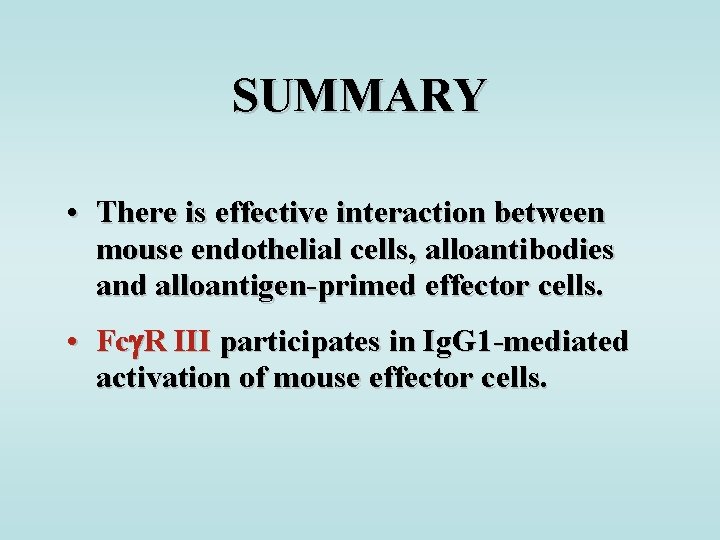
SUMMARY • There is effective interaction between mouse endothelial cells, alloantibodies and alloantigen-primed effector cells. • Fc R III participates in Ig. G 1 -mediated activation of mouse effector cells.
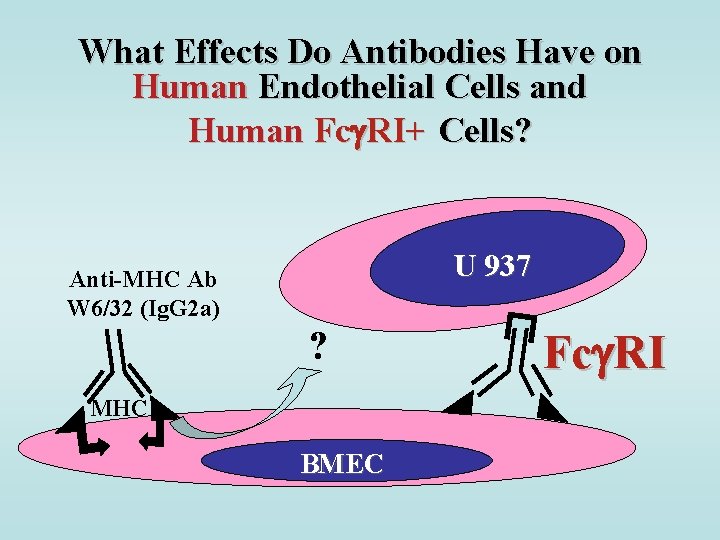
What Effects Do Antibodies Have on Human Endothelial Cells and Human Fc RI+ Cells? U 937 Anti-MHC Ab W 6/32 (Ig. G 2 a) ? MHC BMEC Fc RI
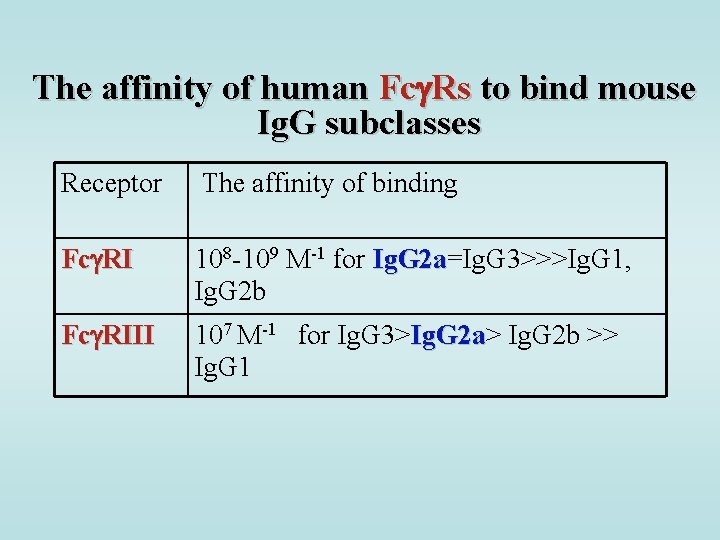
The affinity of human Fc Rs to bind mouse Ig. G subclasses Receptor The affinity of binding Fc RI 108 -109 M-1 for Ig. G 2 a=Ig. G 3>>>Ig. G 1, Ig. G 2 a Ig. G 2 b Fc RIII 107 M-1 for Ig. G 3>Ig. G 2 a> Ig. G 2 a Ig. G 2 b >> Ig. G 1
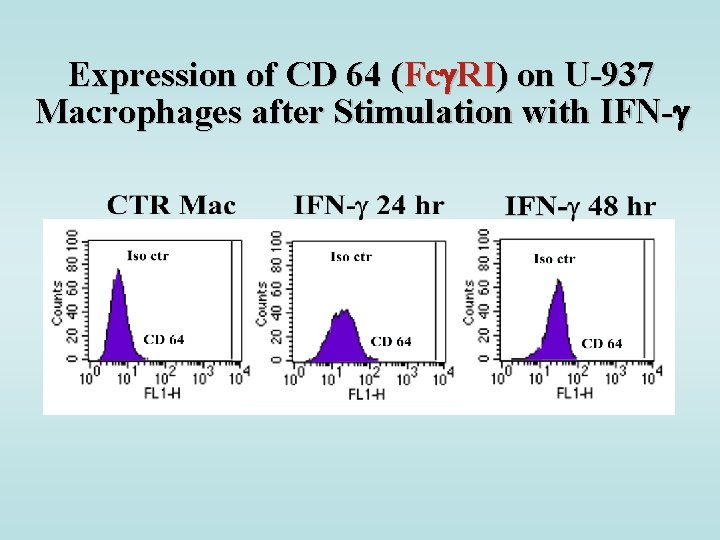
Expression of CD 64 (Fc RI) on U-937 Macrophages after Stimulation with IFN-
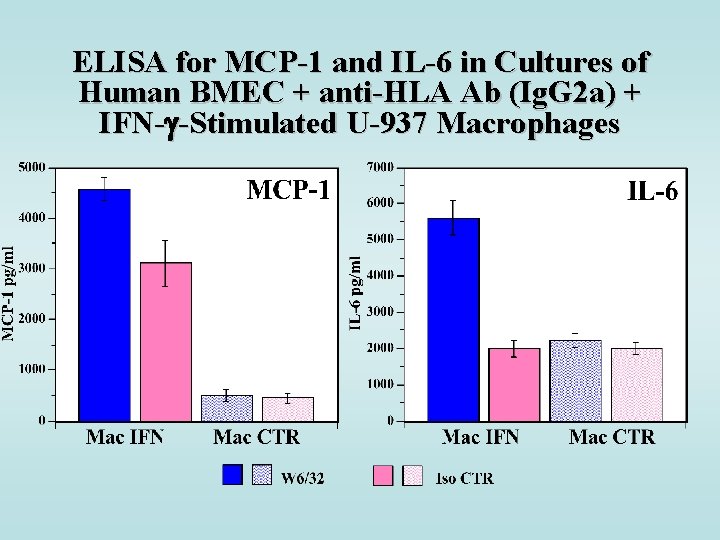
ELISA for MCP-1 and IL-6 in Cultures of Human BMEC + anti-HLA Ab (Ig. G 2 a) + IFN- -Stimulated U-937 Macrophages
SUMMARY • Two lines of evidence, in mouse and human models of EC sensitized with anti-MHC antibodies, suggest that: • Fc R participate in Ig. G-mediated activation of EC.
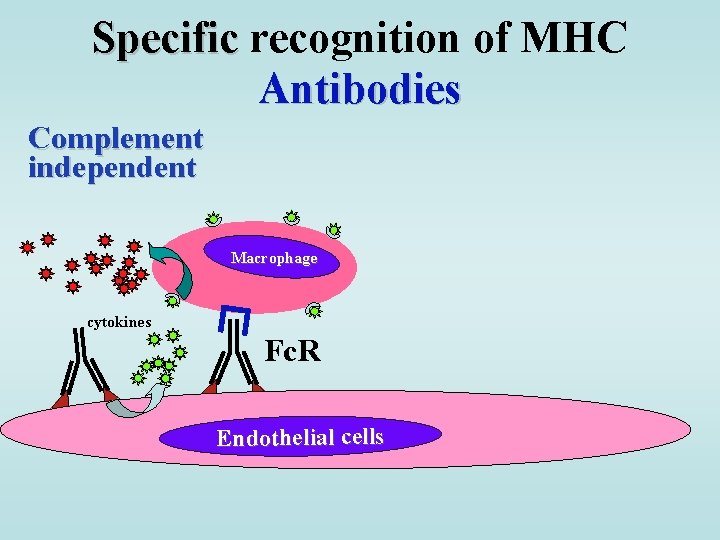
Specific recognition of MHC Antibodies Complement independent Macrophage cytokines Fc. R Endothelial cells
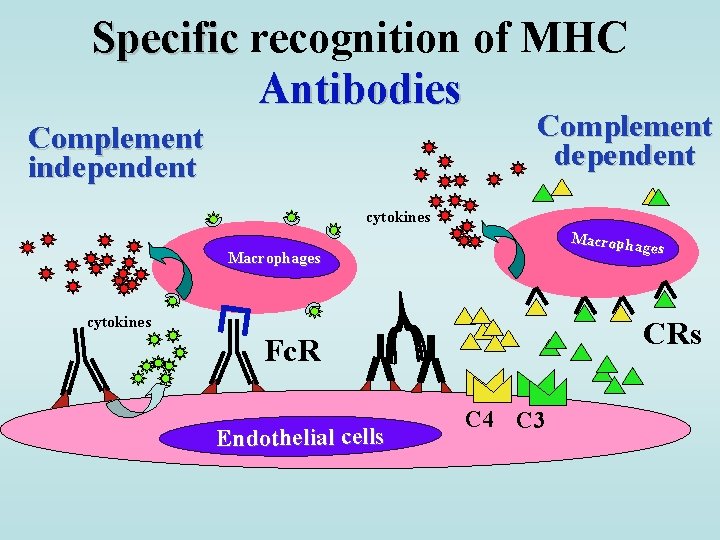
Specific recognition of MHC Antibodies Complement dependent Complement independent cytokines Macropha ges Macrophages cytokines CRs Fc. R Endothelial cells C 4 C 3
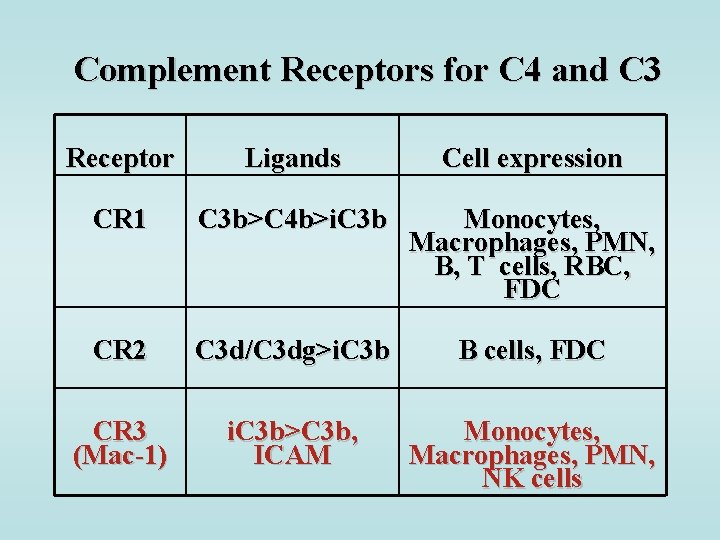
Complement Receptors for C 4 and C 3 Receptor Ligands Cell expression CR 1 C 3 b>C 4 b>i. C 3 b Monocytes, Macrophages, PMN, B, T cells, RBC, FDC CR 2 C 3 d/C 3 dg>i. C 3 b B cells, FDC CR 3 (Mac-1) i. C 3 b>C 3 b, ICAM Monocytes, Macrophages, PMN, NK cells
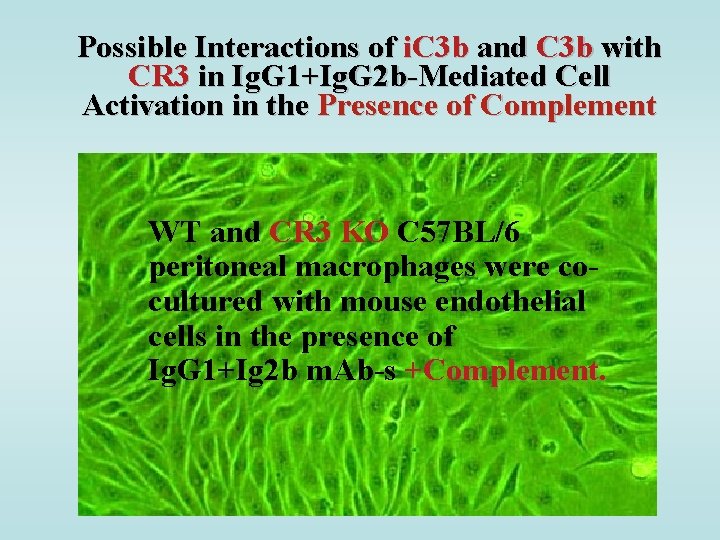
Possible Interactions of i. C 3 b and C 3 b with CR 3 in Ig. G 1+Ig. G 2 b-Mediated Cell Activation in the Presence of Complement WT and CR 3 KO C 57 BL/6 peritoneal macrophages were cocultured with mouse endothelial cells in the presence of Ig. G 1+Ig 2 b m. Ab-s +Complement.
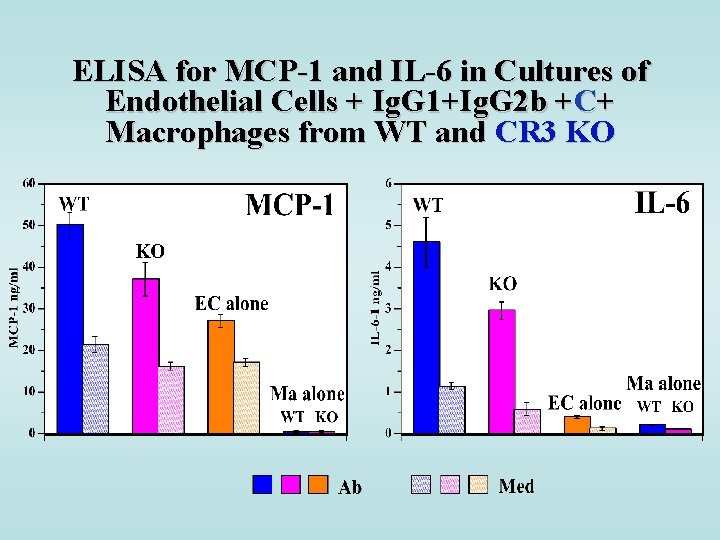
ELISA for MCP-1 and IL-6 in Cultures of Endothelial Cells + Ig. G 1+Ig. G 2 b +C+ Macrophages from WT and CR 3 KO
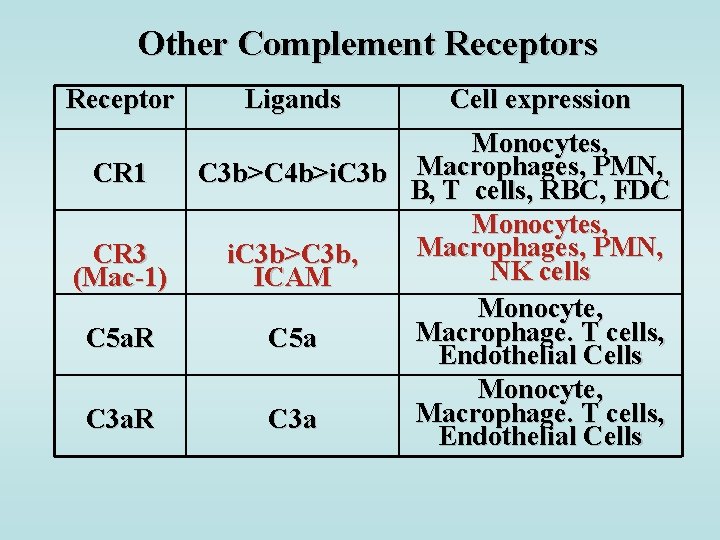
Other Complement Receptors Receptor CR 1 CR 3 (Mac-1) C 5 a. R C 3 a. R Ligands Cell expression Monocytes, C 3 b>C 4 b>i. C 3 b Macrophages, PMN, B, T cells, RBC, FDC Monocytes, Macrophages, PMN, i. C 3 b>C 3 b, NK cells ICAM Monocyte, Macrophage. T cells, C 5 a Endothelial Cells Monocyte, Macrophage. T cells, C 3 a Endothelial Cells
Complement and non-Complement Dependent Mechanisms Contribute to Alloantibody-Mediated Activation of Endothelial Cells and Macrophages
ACKNOWLEDGEMENTS Zhiping Qian, M. D. Salma Rahimi Mike Coonfield Justin Garyu Jinhuan Liu Karen Fox Miriam Reynolds Wink Baldwin, M. D. , Ph. D. Millie Samaniego, M. D.
- Slides: 33