
Alliteration The repetition of beginning consonant sounds She


Alliteration ÜThe repetition of beginning consonant sounds ÜShe says she sells seashells by the seashore.
Allusion Ü Allusion is a brief reference to a person, event, or place, real or ficticious, or to a work of art, a famous historical or literary figure or event from history, geography, literature, or religion.
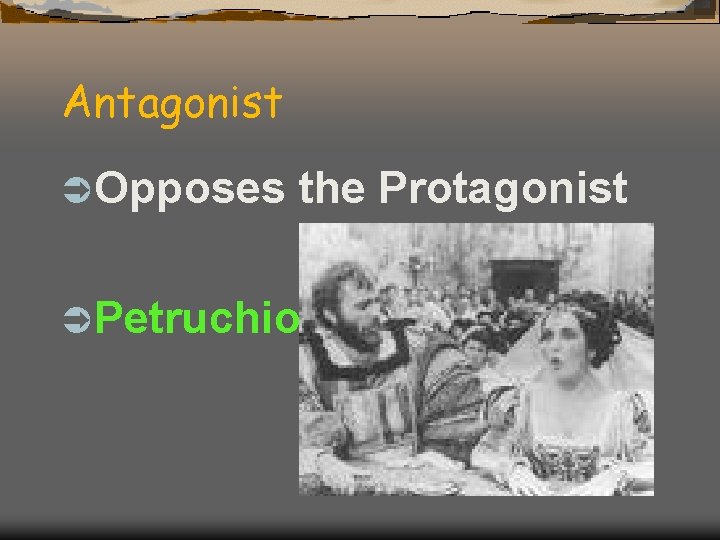
Antagonist ÜOpposes the Protagonist ÜPetruchio
Apostrophe ÜThe Apostrophe is a figure of speech in which someone absent or dead or something nonhuman is addressed as if it were alive and present and was able to reply.
The Sun Rising by John Donne Busy old fool, unruly sun, Why dost thou thus, Through windows, and through curtains call on us?
Archetypes Üthe original pattern or model from which all things of the same kind are copied or on which they are based; a model or first form; prototype. ÜSuperman
Assonance ÜThe repetition of similar vowel sounds in a sentence or a line of poetry or prose Ü "I rose and told him of my woe. "
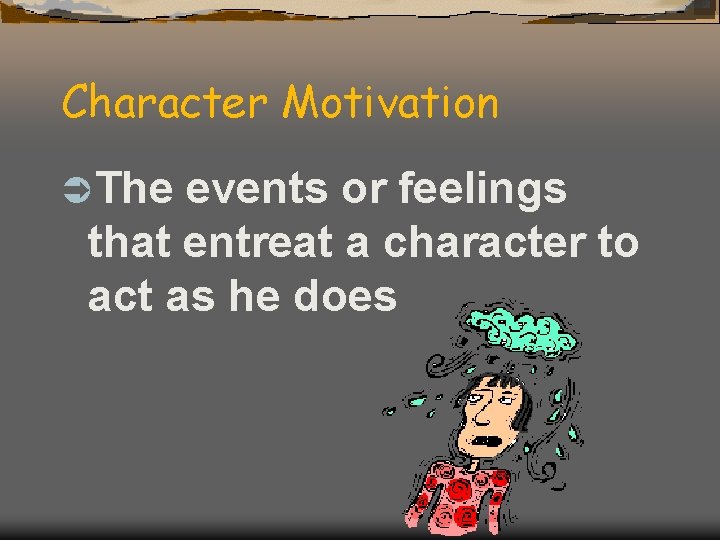
Character Motivation ÜThe events or feelings that entreat a character to act as he does
Conflict ÜA struggle between opposing characters or opposing forces ÜInternal conflict – takes place in the character’s mind ÜExternal conflict – a struggle with an outside force (character, society, nature)
Connotation ÜThe associated or secondary meaning of a word or expression in addition to its explicit or primary meaning Ü A possible connotation of “home” is “a place of warmth, comfort, and affection. ”

Consonance ÜConsonance is the repetition of consonant sounds, but not vowels, as in assonance. ÜExample: litter and batter slither and lather
Denotation ÜThe dictionary definition of a word Ü“Wind” is the denotation for air in natural motion. Ü“Poodle” is the denotation for a certain breed of dog.
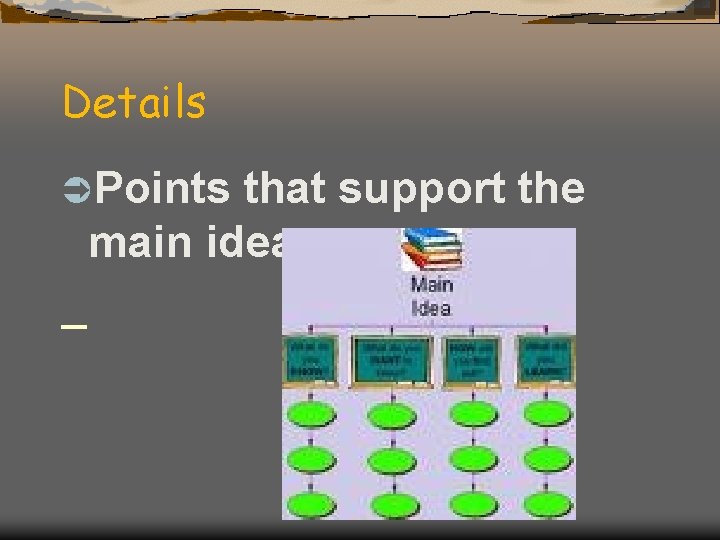
Details ÜPoints that support the main idea
Dialect ÜThe way of speaking that is characteristic of a certain geographical area or a certain group of people
Direct Characterization ÜWhen the writer simply tells readers that a character is amusing or evil or dull or brave ÜPercy was an incredibly boring individual…
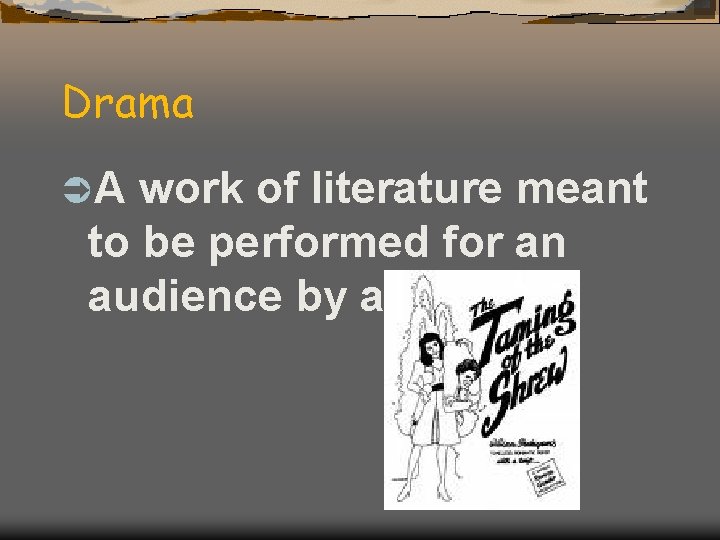
Drama ÜA work of literature meant to be performed for an audience by actors
Dramatic Irony ÜWhen the audience or the reader knows something a character doesn’t know ÜWhen a character thinks he’s a goner, but we know the rescue attempt will succeed.
Dynamic Characters ÜThey change as a result of a story’s events.
Epiphany (as related to characters) a. When a character comprehends or perceives reality by means of a sudden intuitive realization: "I experienced an epiphany, a spiritual flash that would change the way I viewed myself" (Frank Maier).
Expressive Writing Ü Expressive writing is personal and emotional writing without regard to form or other writing conventions like spelling, punctuation and verb agreement.
Flashback ÜInterruption in the present action of a plot to show events that happened at an earlier time
Flat Characters ÜA character who represents only one facet of life or just one value ÜExample: the wolf in “Little Red Riding Hood”
Foreshadowing ÜThe use of clues or hints to suggest events that will occur later in the plot
Historical Allusion Üa brief reference to a famous historical or literary figure or event from history, geography, literature, or religion. Utopian discord A Pearl Harbor sneak-attack All roads lead to Rome (often an idiom)
Hyperbole ÜExtravagant ÜI’ve exaggeration a ton of homework tonight.
Idiom ÜAn expression peculiar to a particular language that means something different from the literal meaning of the words. Ü“Hold your tongue” Ü“Bury your head in the
Imagery ÜLanguage that appeals to the five senses Ü“…A slow widening of her thin black lips to show even small white teeth then the slow effortless closing. ” – Maya Angelou
Indirect Characterization Ü The writer reveals the personality of a character: through the words of the character through the description of the character’s looks and clothing through description of the character’s thoughts and feelings
Journey of the Hero ÜOne of the favorite themes in literature
Metaphor ÜA comparison saying something IS something else ÜTommy was a bulldozer when he tore through the
Meter Ü English poetry employs different rhythms of varying stressed (/) and unstressed (x) syllables. Ü The most common is iambic pentameter where a short syllable (u) is followed by a long (/) syllable u/u/u/ I wandered lonely as a newborn
Mood ÜThe overall feeling of a work of literature ÜScary, happy, sad, nostalgic, eerie
Onomatopoeia ÜWords that imitate sounds ÜBang! Ah-choo! Moo
Oxymoron A figure of speech in which two words of opposing meanings are used together to express two contrasting qualities in one concept. 2. cruel kindness; laborious idleness. 1.
Paradox A seemingly contradictory statement that may nonetheless be true 2. the paradox that standing is more tiring than walking. 1.
Personification ÜGiving something not living, living qualities ÜThe ocean waved to me to come in for a swim.
Poetry Üa form of literature that uses aesthetic and rhythmic qualities of language—such as phonaesthetics, sound symbolism, and metre—to evoke meanings in addition to, or in place of, the prosaic ostensible meaning.
Point of view Ü The vantage point from which a story is told Third-person omniscient – the narrator knows everything about the characters and their problems Third-person limited – the narrator focuses on the thoughts and feelings of only one character First-person – one of the characters, using the personal pronoun I tells the
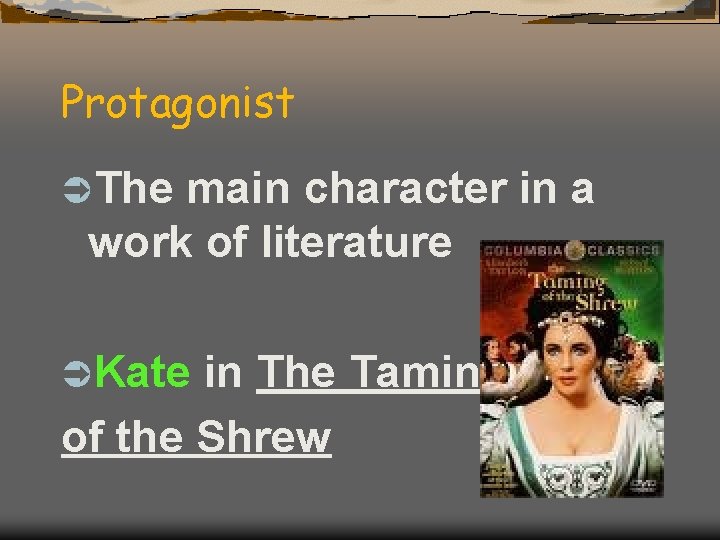
Protagonist ÜThe main character in a work of literature ÜKate in The Taming of the Shrew
Rhyme ÜRhyme is a pattern of words that contain similar sounds. ÜExample: go/show/glow/know/though
Rhythm ÜThe beat ÜThe number of syllables in a line of poetry
Round Characters ÜA character who has many dimensions ÜPetruchio – he’s greedy, stubborn, wise, in love, humorous
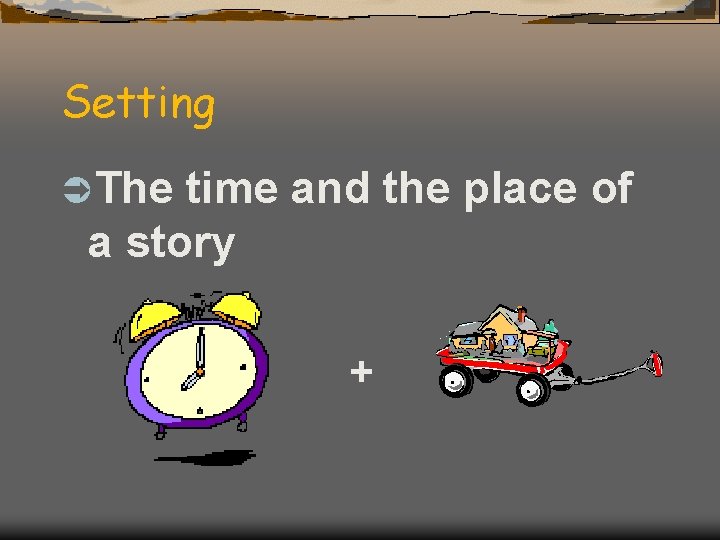
Setting ÜThe time and the place of a story +
Short Stories Üa story with a fully developed theme but significantly shorter and less elaborate than a novel
Simile ÜA comparison using “like” or “as” ÜTommy was as noisy as a bulldozer when he tore through the room.
Situational Irony ÜWhen what happens is totally opposite from what we think should happen ÜIn “The Ransom of Red Chief” one would not expects a kidnapping victim to order his kidnappers
Songs Üa short poem or other set of words set to music or meant to be sung.
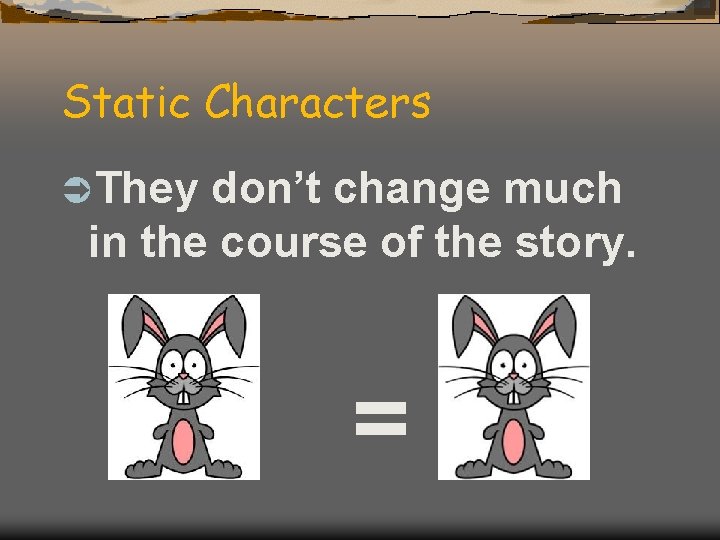
Static Characters ÜThey don’t change much in the course of the story. =
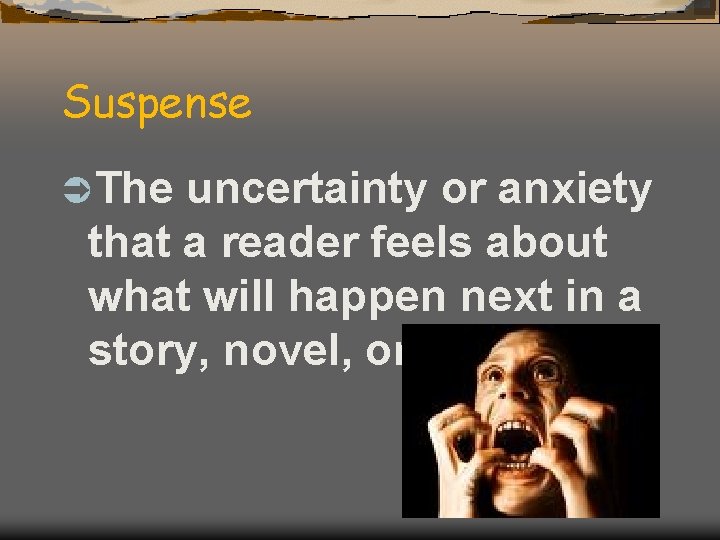
Suspense ÜThe uncertainty or anxiety that a reader feels about what will happen next in a story, novel, or drama
Symbolism ÜWhen some object stands or represents something else ÜOur flag
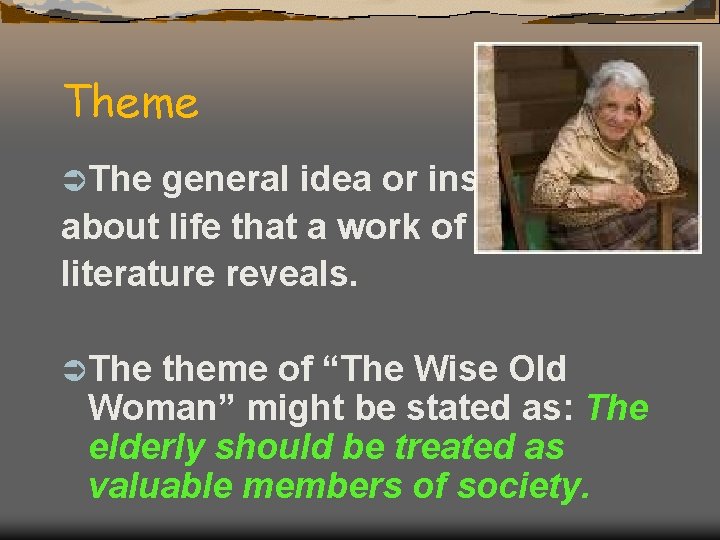
Theme Ü The general idea or insight about life that a work of literature reveals. Ü The theme of “The Wise Old Woman” might be stated as: The elderly should be treated as valuable members of society.
Tone ÜThe attitude a writer takes toward his or her subject, characters, and audience ÜHumorous, sincere
Verbal Irony ÜA contrast between what is said or written and what is really meant ÜCalling a baseball player who just struck out “Slugger”
Verse ÜA stanza; a stave; as, a hymn of four verses.
Active Voice vs Passive Voice Ü Active voice is used for most nonscientific writing. Using active voice for the majority of your sentences makes your meaning clear for readers, and keeps the sentences from becoming too complicated or wordy. Even in scientific writing, too much use of passive voice can cloud the meaning of your sentences.
Active Voice Ü “One-third of the applicants to the school failed the entrance exam. ” Ü This is an example of the active voice because the sentence subject performs the action.
Passive Voice Ü “The entrance exam was failed by over one-third of the applicants to the school. ” Ü The action is performed upon the sentence subject, meaning this sentence is passive (the action is found in a prepositional phrase)
Active Voice Ü She slammed on the brakes as her car sped down the hill. Ü This is an example of an active voice sentence because the sentence subject performs the action.
Passive Voice Ü The brakes were slammed on by her as her car sped down the hill. Ü This is an example of the passive voice.
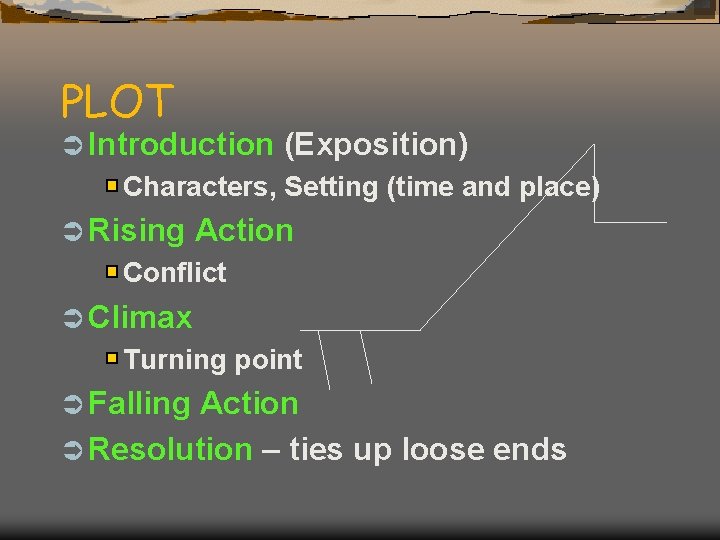
PLOT Ü Introduction (Exposition) Characters, Setting (time and place) Ü Rising Action Conflict Ü Climax Turning point Ü Falling Action Ü Resolution – ties up loose ends
Prose ÜAny writing that is not poetry ÜEssays, short stories, novels, newspaper articles, letters ÜProse is usually
- Slides: 62