
Allied Bakeries Implementing Corporate Performance Management The Company
Allied Bakeries Implementing Corporate Performance Management
The Company • • • T/o 440 m 4500 staff 10 Manufacturing Units Shared Service Centre Business Centre Parent Company “Associated British Foods” • Recent growth strategy
Business Challenges • Key Strategic Drivers • Focus on Brand Value and Volume Growth • Customer and channel focus • Business transformation • Measure plans v performance, • Analysis of current & future strategies, • Innovation/new business
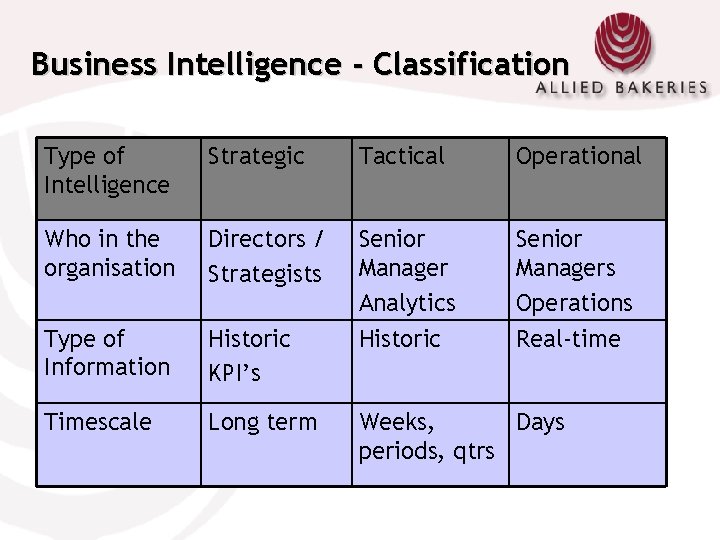
Business Intelligence - Classification Type of Intelligence Strategic Tactical Operational Who in the organisation Directors / Strategists Senior Manager Analytics Senior Managers Operations Type of Information Historic KPI’s Historic Real-time Timescale Long term Weeks, Days periods, qtrs
Business Intelligence • Operational BI • Customer Service • Organisational Growth • Business Planning
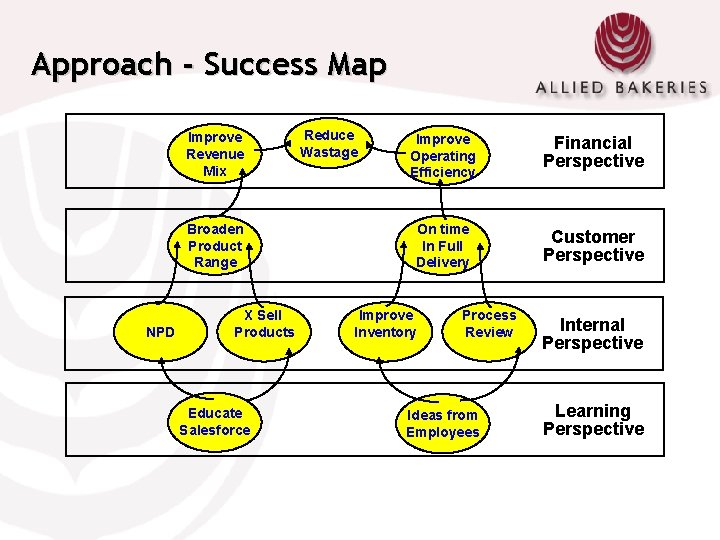
Approach - Success Map Improve Revenue Mix Broaden Product Range NPD X Sell Products Educate Salesforce Reduce Wastage Improve Operating Efficiency Financial Perspective On time In Full Delivery Customer Perspective Improve Inventory Process Review Ideas from Employees Internal Perspective Learning Perspective
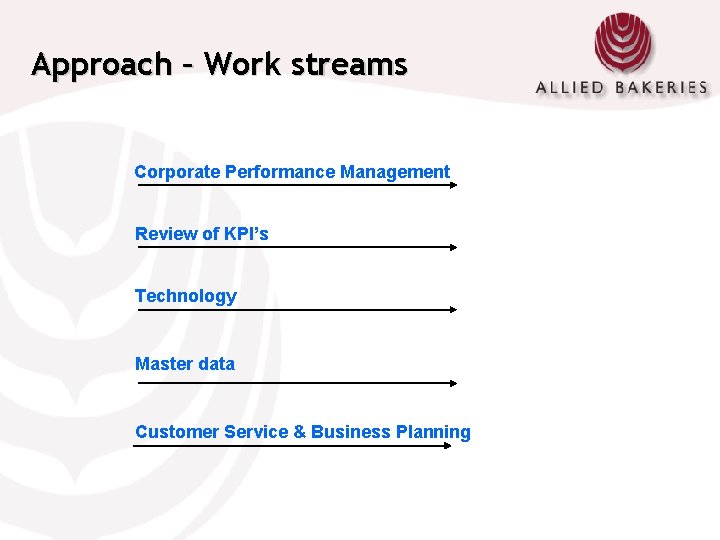
Approach – Work streams Corporate Performance Management Review of KPI’s Technology Master data Customer Service & Business Planning
Business Intelligence • Operational BI • Customer Service • Organisational Growth • Business Planning
Goals • To implement a full BI infrastructure on the Microsoft platform. • Knowledge transfer with the Allied Bakeries development team. • Improve the reporting and analytical capabilities of the Allied Bakeries Customer Services team. • Integrate with other Allied Bakeries strategies (SBV, Core)
Pilot Project Team • Whole team exposed to all components of the project delivery but have concentrated on specific areas. • ETL Team • Report Development • OLAP Development • Data Modeller
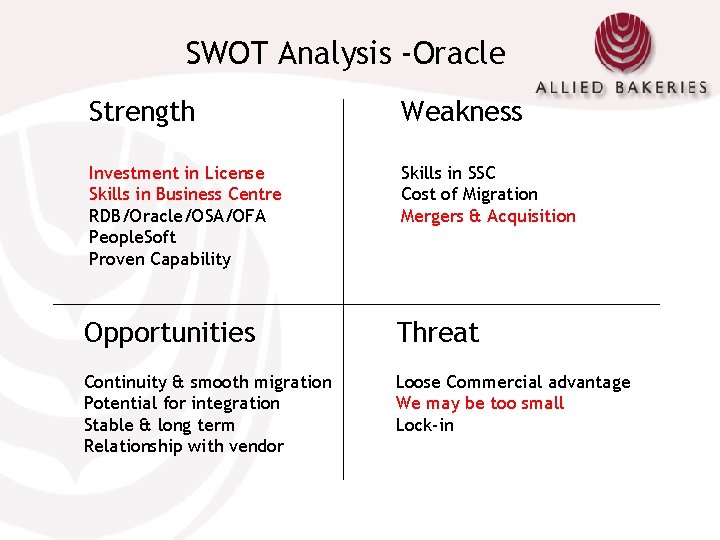
SWOT Analysis -Oracle Strength Weakness Investment in License Skills in Business Centre RDB/Oracle/OSA/OFA People. Soft Proven Capability Skills in SSC Cost of Migration Mergers & Acquisition Opportunities Threat Continuity & smooth migration Potential for integration Stable & long term Relationship with vendor Loose Commercial advantage We may be too small Lock-in
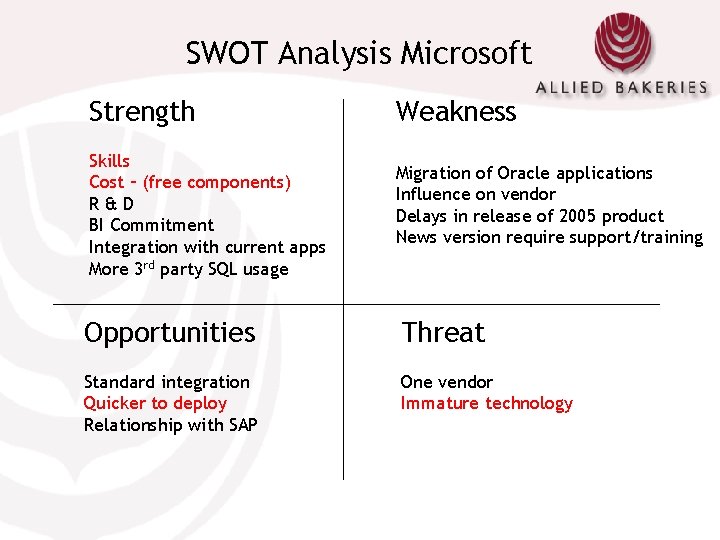
SWOT Analysis Microsoft Strength Skills Cost – (free components) R&D BI Commitment Integration with current apps More 3 rd party SQL usage Weakness Migration of Oracle applications Influence on vendor Delays in release of 2005 product News version require support/training Opportunities Threat Standard integration Quicker to deploy Relationship with SAP One vendor Immature technology
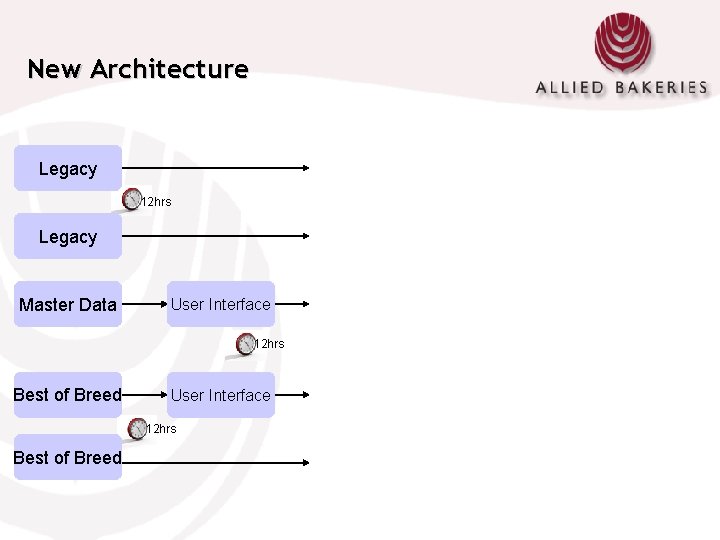
New Architecture Legacy 12 hrs Legacy Master Data User Interface 12 hrs Best of Breed
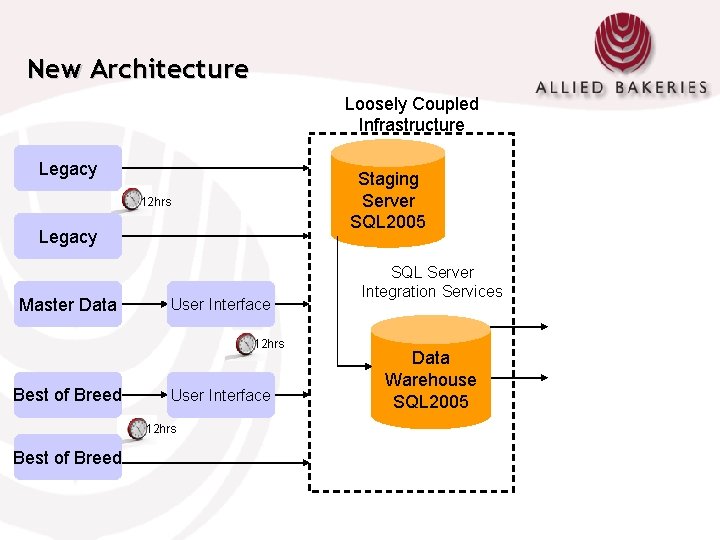
New Architecture Loosely Coupled Infrastructure Legacy Staging Server SQL 2005 12 hrs Legacy Master Data User Interface 12 hrs Best of Breed SQL Server Integration Services Data Warehouse SQL 2005
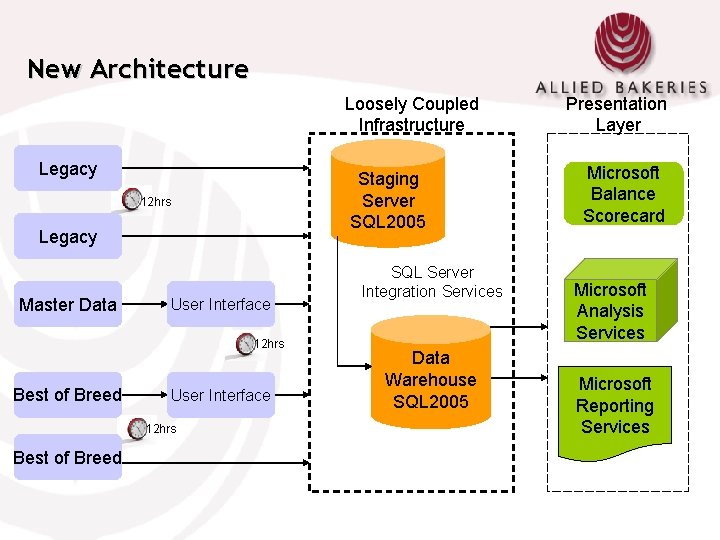
New Architecture Loosely Coupled Infrastructure Legacy Staging Server SQL 2005 12 hrs Legacy Master Data User Interface 12 hrs Best of Breed SQL Server Integration Services Data Warehouse SQL 2005 Presentation Layer Microsoft Balance Scorecard Microsoft Analysis Services Microsoft Reporting Services
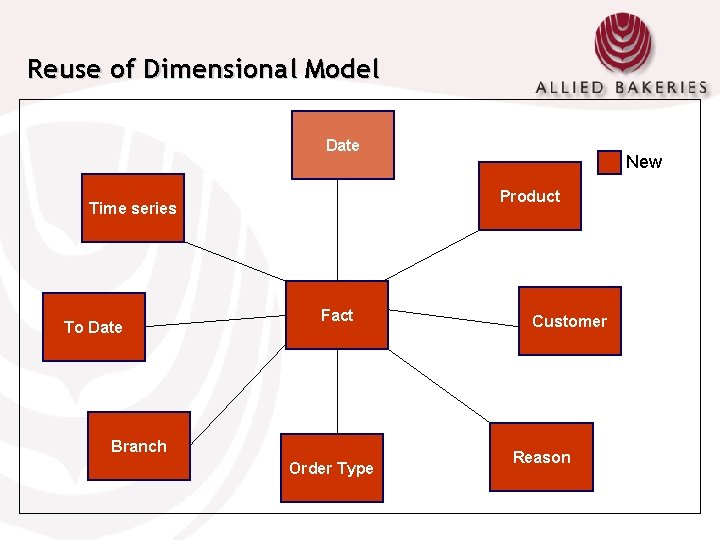
Reuse of Dimensional Model Date Product Time series To Date New Fact Branch Order Type Customer Reason
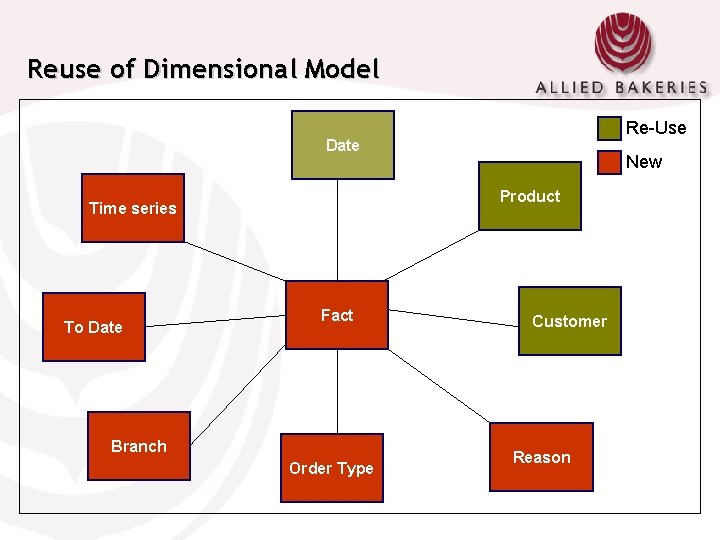
Reuse of Dimensional Model Re-Use Date Product Time series To Date New Fact Branch Order Type Customer Reason
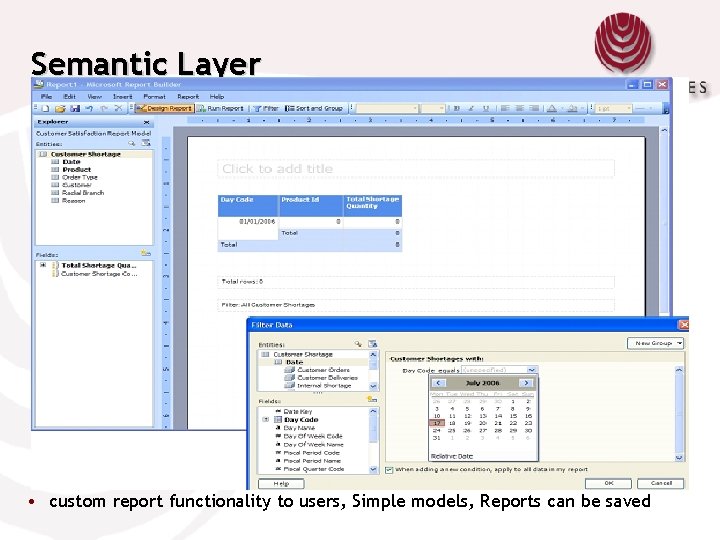
Semantic Layer • custom report functionality to users, Simple models, Reports can be saved
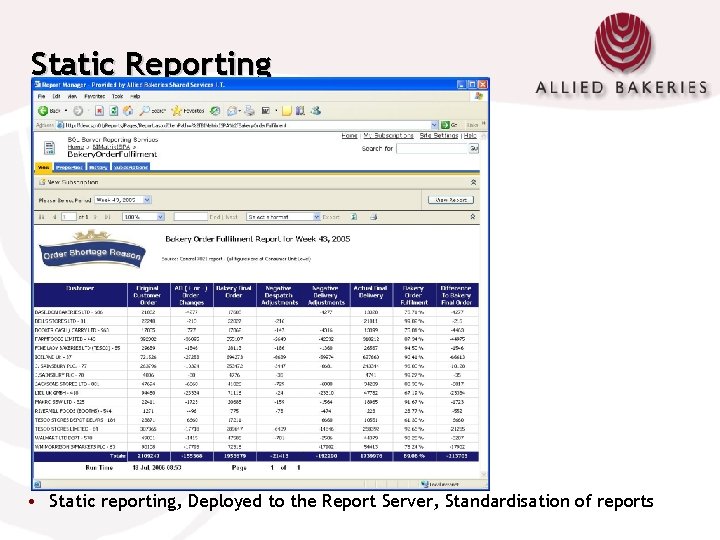
Static Reporting • Static reporting, Deployed to the Report Server, Standardisation of reports
Summary of Key Design Features • Architecture based on loose coupling to minimise the impact of system changes outside of the BI infrastructure. • ETL process designed to maintain history of all master data within staging database. • Cube with a number of measure groups, customer services focused including time based analytical functionality.
Business Intelligence • Operational BI • Customer Service • Organisational Growth • Business Planning
Objective & Scope • Propose a replacement system for: • • Planning/Budgeting/Forecasting Event Management Balance Scorecard Dashboard • Scope • Finance • Commercial • Marketing

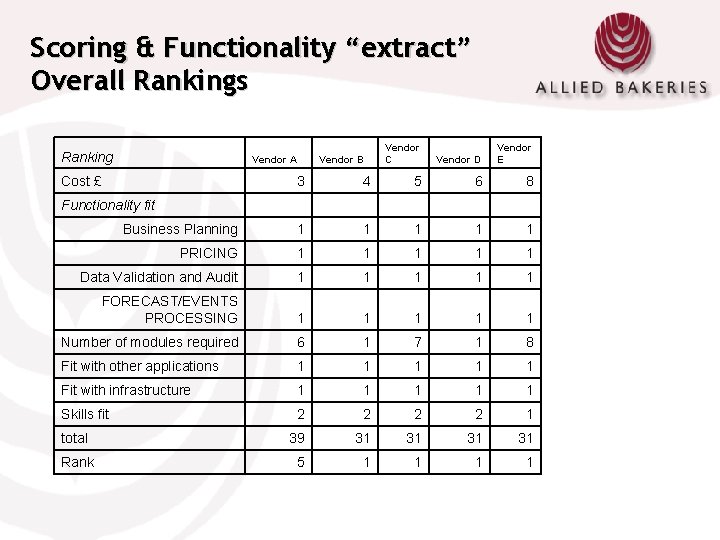
Scoring & Functionality “extract” Overall Rankings Ranking Vendor A Cost £ Vendor B 3 Functionality fit Vendor C Vendor D Vendor E 5 6 8 4 Business Planning 1 1 1 PRICING 1 1 1 Data Validation and Audit 1 1 1 FORECAST/EVENTS PROCESSING 1 1 1 Number of modules required 6 1 7 1 8 Fit with other applications 1 1 1 Fit with infrastructure 1 1 1 Skills fit 2 2 1 total 39 31 31 Rank 5 1 1
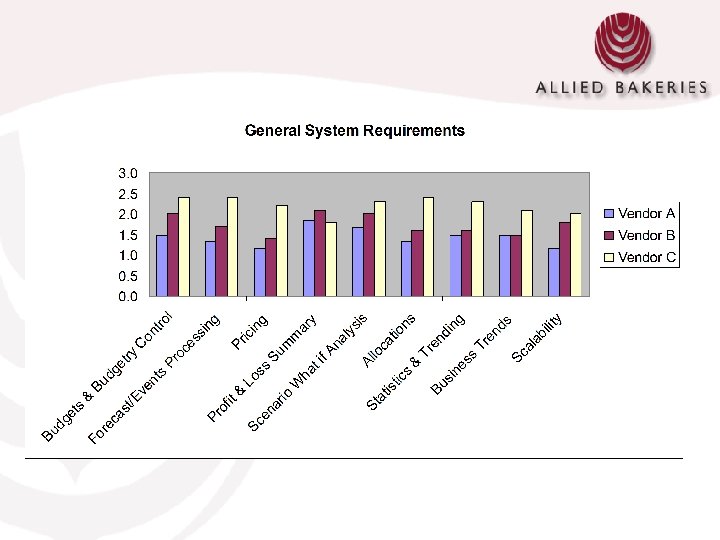
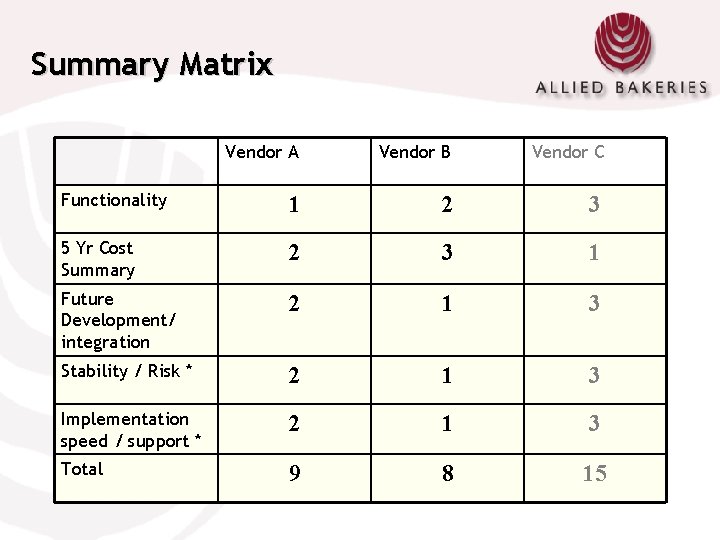
Summary Matrix Vendor A Vendor B Vendor C Functionality 1 2 3 5 Yr Cost Summary 2 3 1 Future Development/ integration 2 1 3 Stability / Risk * 2 1 3 Implementation speed / support * 2 1 3 Total 9 8 15
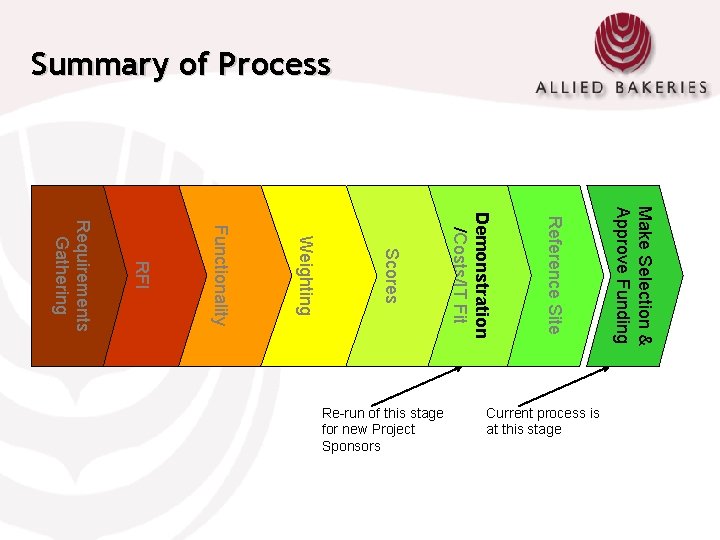
Summary of Process Make Selection & Approve Funding Reference Site Demonstration /Costs/IT Fit Scores Weighting Functionality RFI Requirements Gathering Current process is at this stage Re-run of this stage for new Project Sponsors
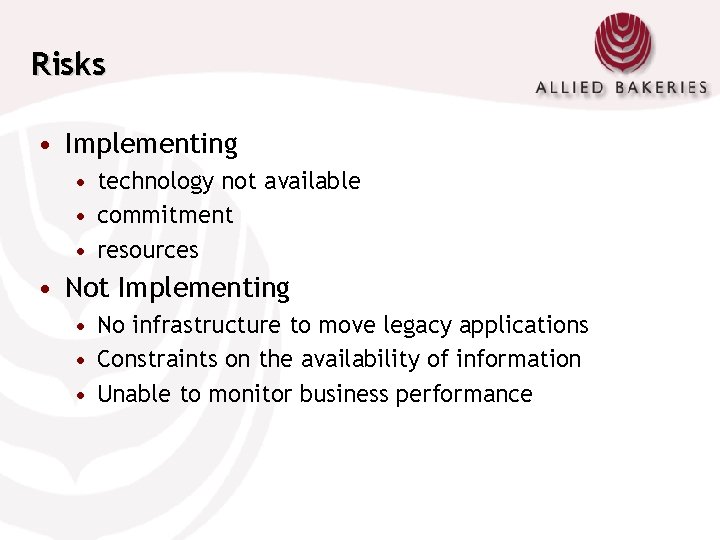
Risks • Implementing • technology not available • commitment • resources • Not Implementing • No infrastructure to move legacy applications • Constraints on the availability of information • Unable to monitor business performance
Summary • Quick to be deploy • Ongoing Value • Faster end user adoption
- Slides: 30