
Alliances Triple EntenteBritain France Russia Triple Alliance became
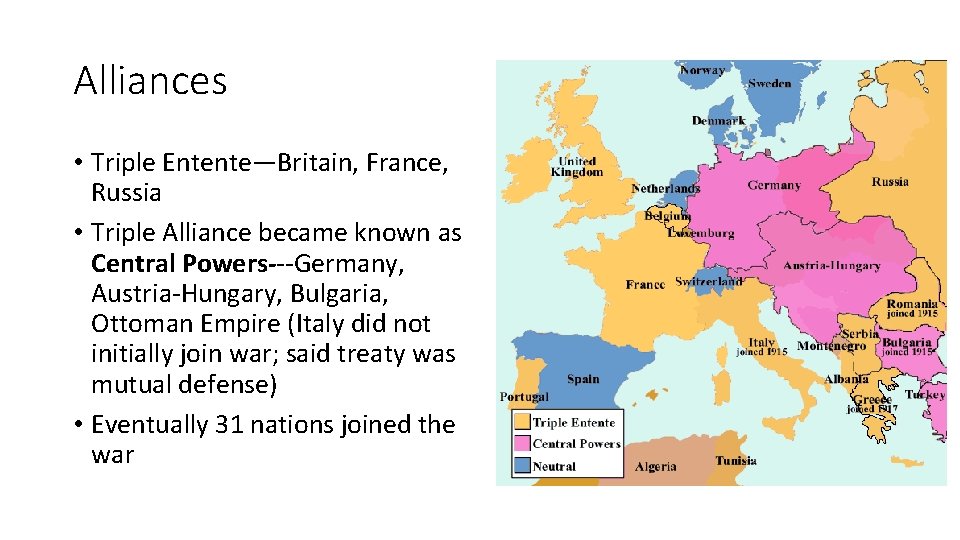
Alliances • Triple Entente—Britain, France, Russia • Triple Alliance became known as Central Powers---Germany, Austria-Hungary, Bulgaria, Ottoman Empire (Italy did not initially join war; said treaty was mutual defense) • Eventually 31 nations joined the war
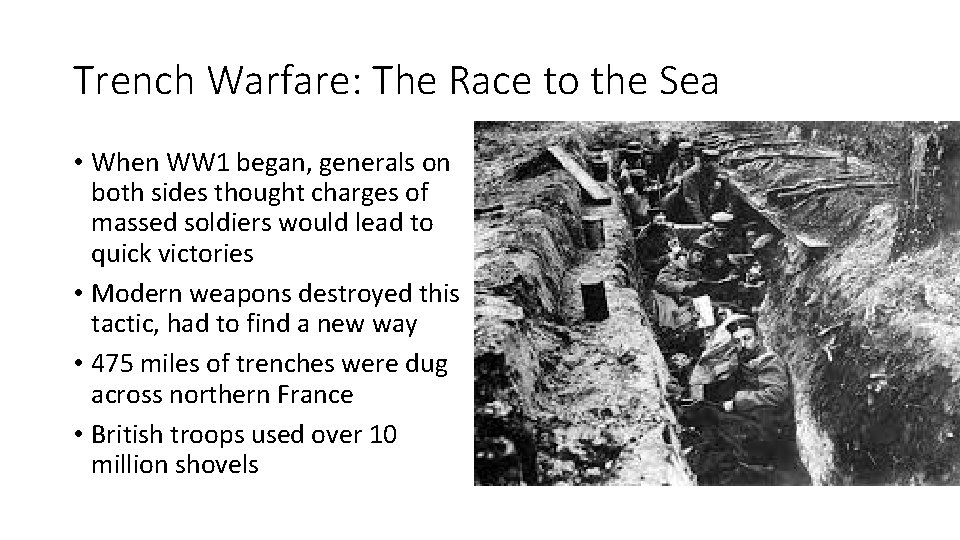
Trench Warfare: The Race to the Sea • When WW 1 began, generals on both sides thought charges of massed soldiers would lead to quick victories • Modern weapons destroyed this tactic, had to find a new way • 475 miles of trenches were dug across northern France • British troops used over 10 million shovels
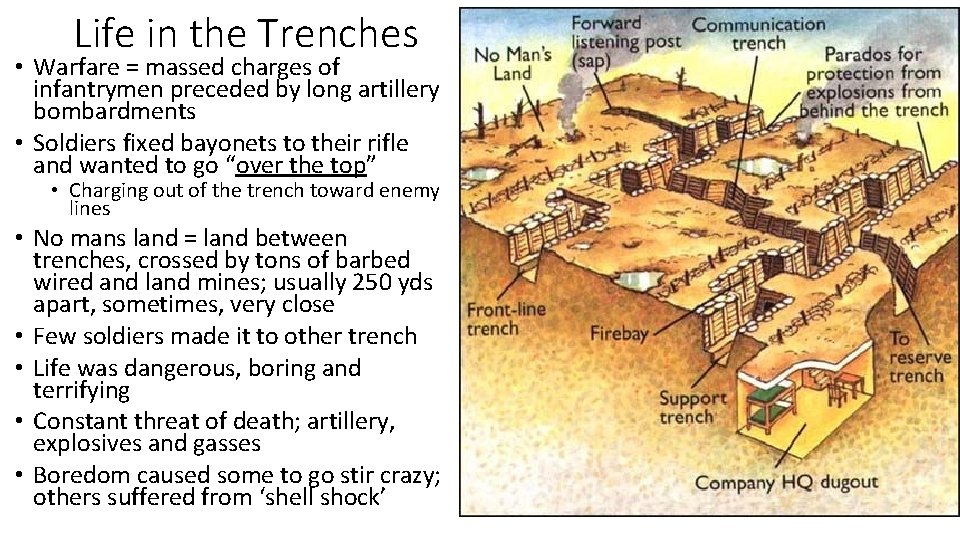
Life in the Trenches • Warfare = massed charges of infantrymen preceded by long artillery bombardments • Soldiers fixed bayonets to their rifle and wanted to go “over the top” • Charging out of the trench toward enemy lines • No mans land = land between trenches, crossed by tons of barbed wired and land mines; usually 250 yds apart, sometimes, very close • Few soldiers made it to other trench • Life was dangerous, boring and terrifying • Constant threat of death; artillery, explosives and gasses • Boredom caused some to go stir crazy; others suffered from ‘shell shock’
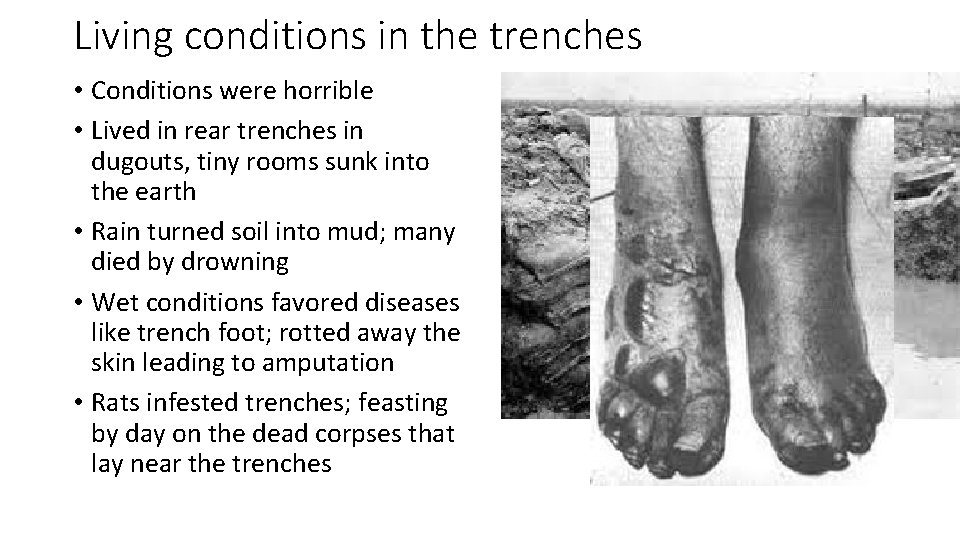
Living conditions in the trenches • Conditions were horrible • Lived in rear trenches in dugouts, tiny rooms sunk into the earth • Rain turned soil into mud; many died by drowning • Wet conditions favored diseases like trench foot; rotted away the skin leading to amputation • Rats infested trenches; feasting by day on the dead corpses that lay near the trenches
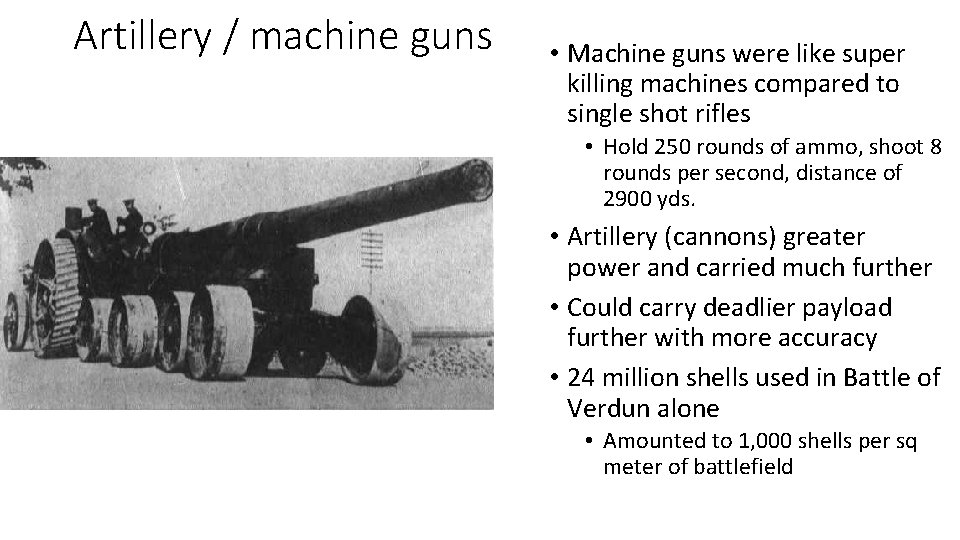
Artillery / machine guns • Machine guns were like super killing machines compared to single shot rifles • Hold 250 rounds of ammo, shoot 8 rounds per second, distance of 2900 yds. • Artillery (cannons) greater power and carried much further • Could carry deadlier payload further with more accuracy • 24 million shells used in Battle of Verdun alone • Amounted to 1, 000 shells per sq meter of battlefield
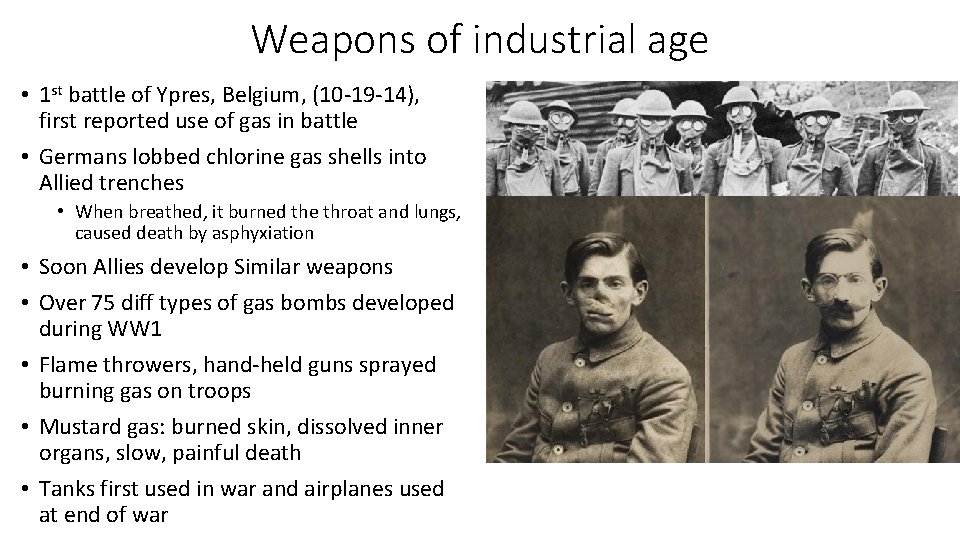
Weapons of industrial age • 1 st battle of Ypres, Belgium, (10 -19 -14), first reported use of gas in battle • Germans lobbed chlorine gas shells into Allied trenches • When breathed, it burned the throat and lungs, caused death by asphyxiation • Soon Allies develop Similar weapons • Over 75 diff types of gas bombs developed during WW 1 • Flame throwers, hand-held guns sprayed burning gas on troops • Mustard gas: burned skin, dissolved inner organs, slow, painful death • Tanks first used in war and airplanes used at end of war
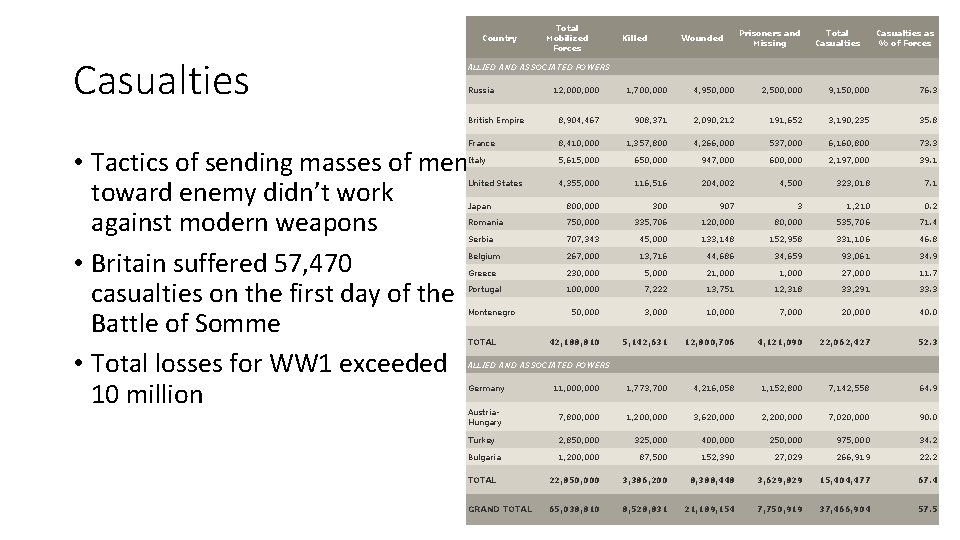
Country Casualties Total Mobilized Forces Killed Wounded Prisoners and Missing Total Casualties as % of Forces ALLIED AND ASSOCIATED POWERS Russia 12, 000 1, 700, 000 4, 950, 000 2, 500, 000 9, 150, 000 76. 3 British Empire 8, 904, 467 908, 371 2, 090, 212 191, 652 3, 190, 235 35. 8 France 8, 410, 000 1, 357, 800 4, 266, 000 537, 000 6, 160, 800 73. 3 Italy 5, 615, 000 650, 000 947, 000 600, 000 2, 197, 000 39. 1 United States 4, 355, 000 116, 516 204, 002 4, 500 323, 018 7. 1 Japan 800, 000 300 907 3 1, 210 0. 2 Romania 750, 000 335, 706 120, 000 80, 000 535, 706 71. 4 Serbia 707, 343 45, 000 133, 148 152, 958 331, 106 46. 8 Belgium 267, 000 13, 716 44, 686 34, 659 93, 061 34. 9 Greece 230, 000 5, 000 21, 000 27, 000 11. 7 Portugal 100, 000 7, 222 13, 751 12, 318 33, 291 33. 3 50, 000 3, 000 10, 000 7, 000 20, 000 40. 0 42, 188, 810 5, 142, 631 12, 800, 706 4, 121, 090 22, 062, 427 52. 3 11, 000 1, 773, 700 4, 216, 058 1, 152, 800 7, 142, 558 64. 9 Austria. Hungary 7, 800, 000 1, 200, 000 3, 620, 000 2, 200, 000 7, 020, 000 90. 0 Turkey 2, 850, 000 325, 000 400, 000 250, 000 975, 000 34. 2 Bulgaria 1, 200, 000 87, 500 152, 390 27, 029 266, 919 22. 2 TOTAL 22, 850, 000 3, 386, 200 8, 388, 448 3, 629, 829 15, 404, 477 67. 4 GRAND TOTAL 65, 038, 810 8, 528, 831 21, 189, 154 7, 750, 919 37, 466, 904 57. 5 • Tactics of sending masses of men toward enemy didn’t work against modern weapons • Britain suffered 57, 470 casualties on the first day of the Battle of Somme • Total losses for WW 1 exceeded 10 million Montenegro TOTAL ALLIED AND ASSOCIATED POWERS Germany
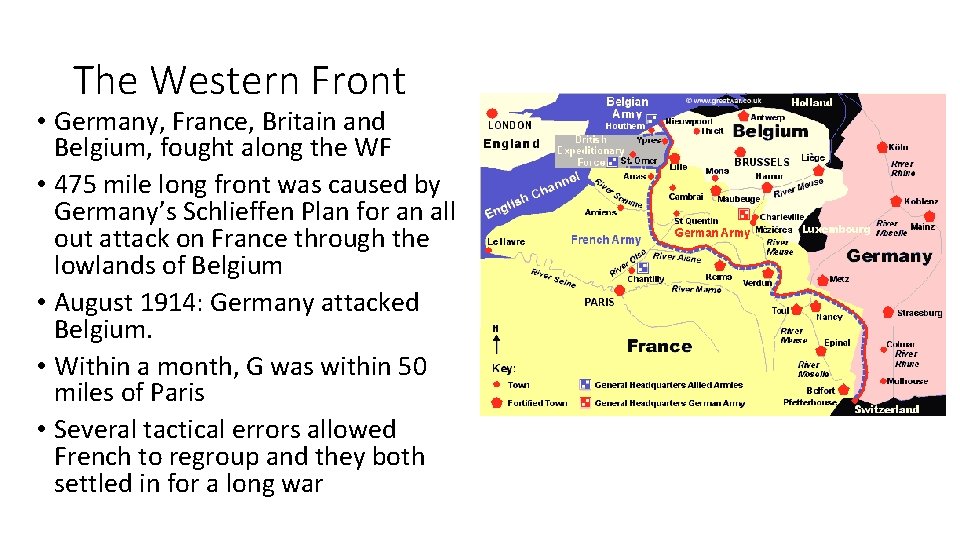
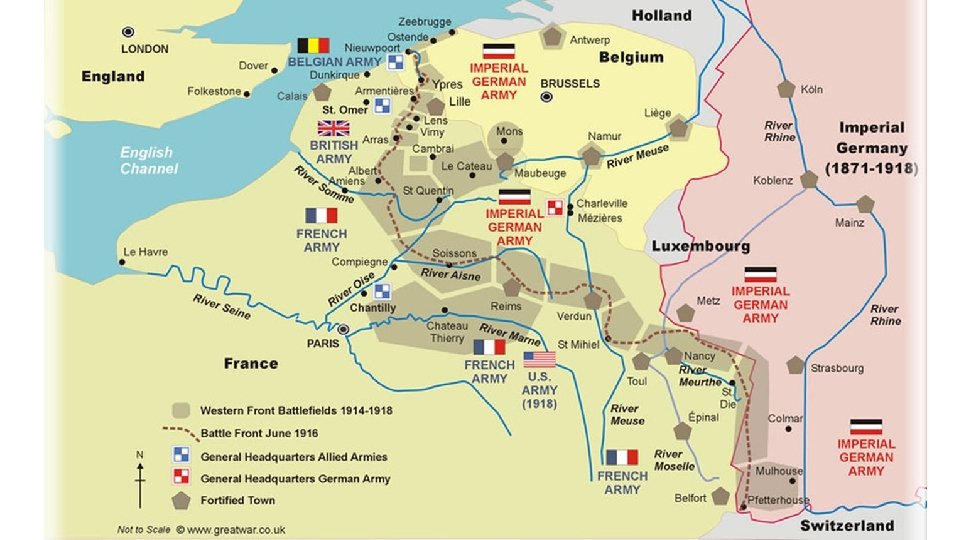
The Western Front • Germany, France, Britain and Belgium, fought along the WF • 475 mile long front was caused by Germany’s Schlieffen Plan for an all out attack on France through the lowlands of Belgium • August 1914: Germany attacked Belgium. • Within a month, G was within 50 miles of Paris • Several tactical errors allowed French to regroup and they both settled in for a long war
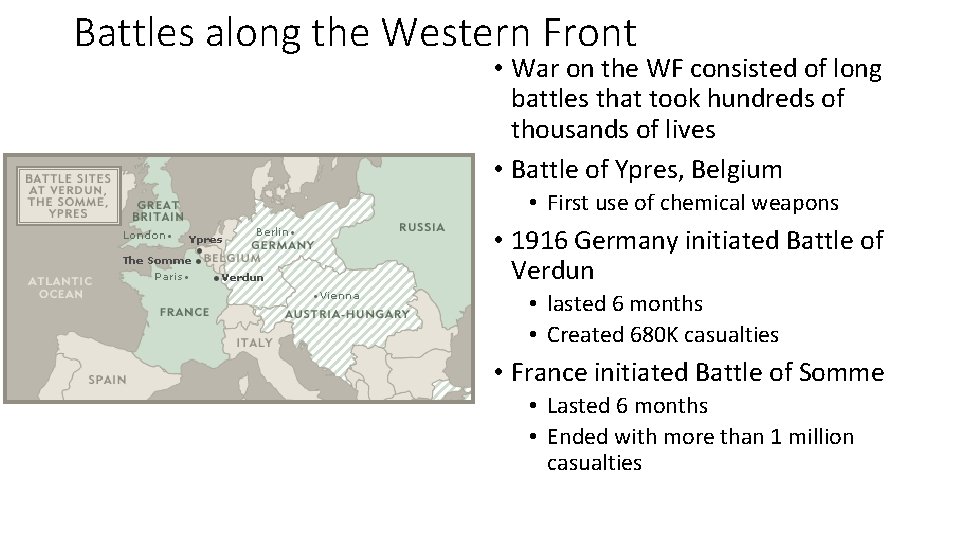
Battles along the Western Front • War on the WF consisted of long battles that took hundreds of thousands of lives • Battle of Ypres, Belgium • First use of chemical weapons • 1916 Germany initiated Battle of Verdun • lasted 6 months • Created 680 K casualties • France initiated Battle of Somme • Lasted 6 months • Ended with more than 1 million casualties
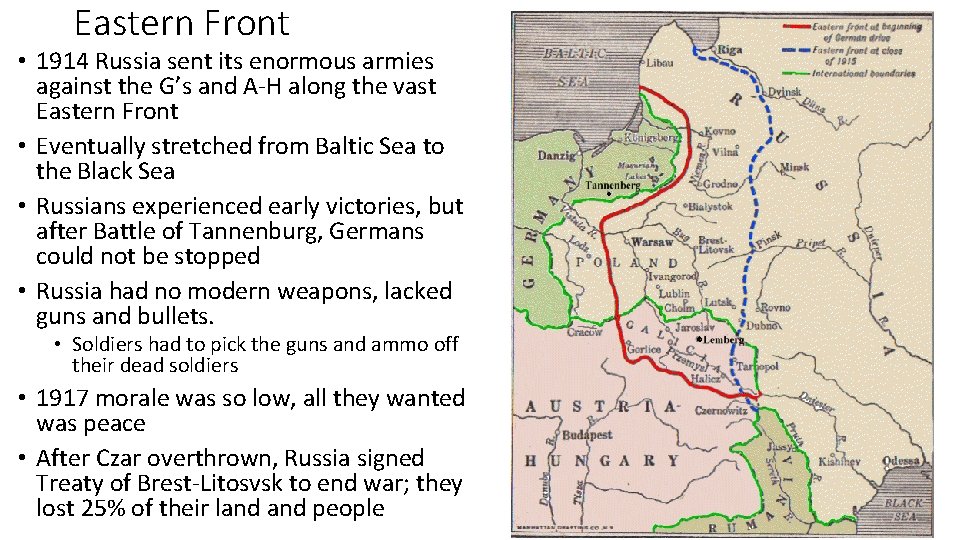
Eastern Front • 1914 Russia sent its enormous armies against the G’s and A-H along the vast Eastern Front • Eventually stretched from Baltic Sea to the Black Sea • Russians experienced early victories, but after Battle of Tannenburg, Germans could not be stopped • Russia had no modern weapons, lacked guns and bullets. • Soldiers had to pick the guns and ammo off their dead soldiers • 1917 morale was so low, all they wanted was peace • After Czar overthrown, Russia signed Treaty of Brest-Litosvsk to end war; they lost 25% of their land people
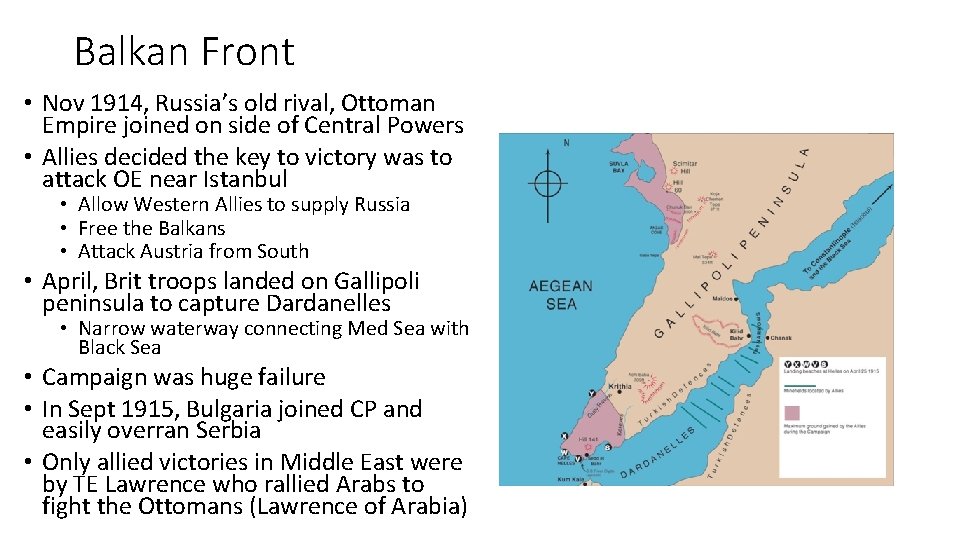
Balkan Front • Nov 1914, Russia’s old rival, Ottoman Empire joined on side of Central Powers • Allies decided the key to victory was to attack OE near Istanbul • Allow Western Allies to supply Russia • Free the Balkans • Attack Austria from South • April, Brit troops landed on Gallipoli peninsula to capture Dardanelles • Narrow waterway connecting Med Sea with Black Sea • Campaign was huge failure • In Sept 1915, Bulgaria joined CP and easily overran Serbia • Only allied victories in Middle East were by TE Lawrence who rallied Arabs to fight the Ottomans (Lawrence of Arabia)
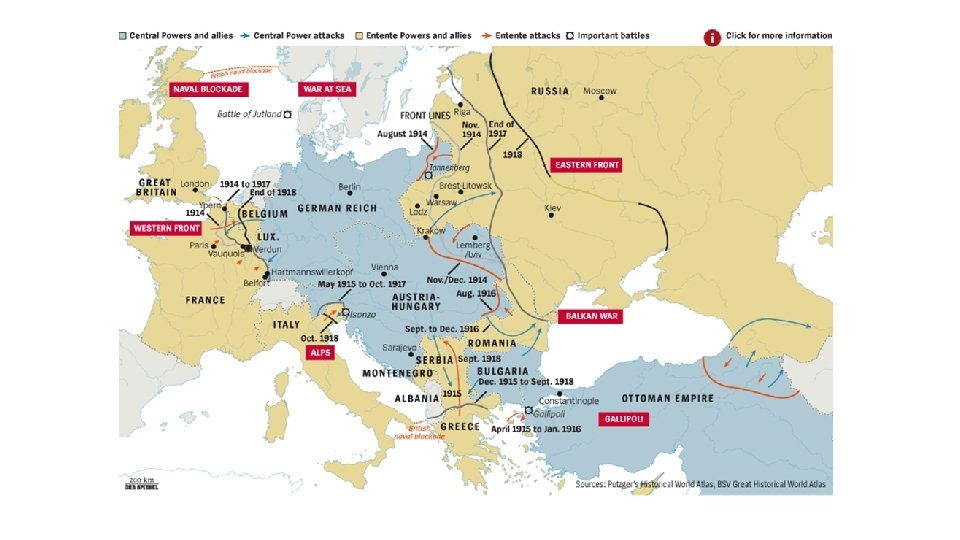
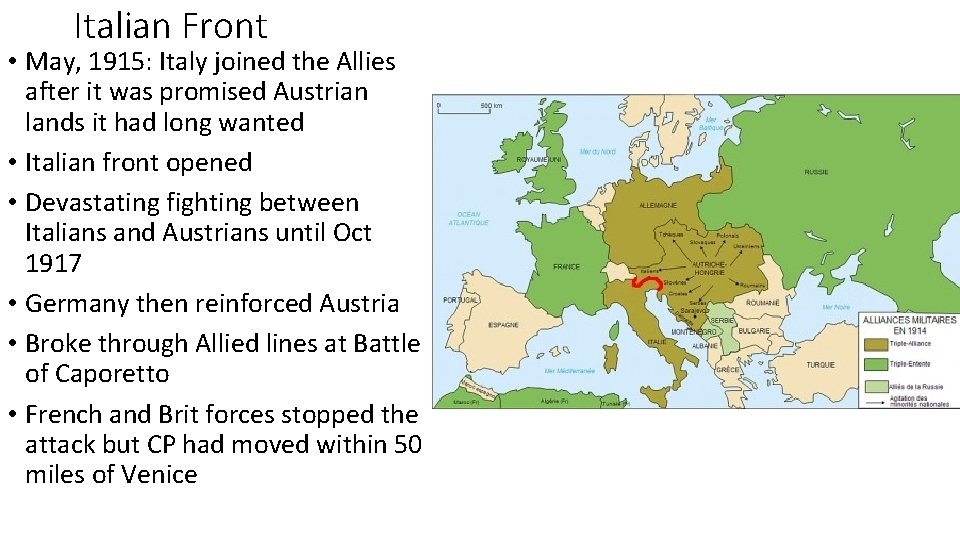
Italian Front • May, 1915: Italy joined the Allies after it was promised Austrian lands it had long wanted • Italian front opened • Devastating fighting between Italians and Austrians until Oct 1917 • Germany then reinforced Austria • Broke through Allied lines at Battle of Caporetto • French and Brit forces stopped the attack but CP had moved within 50 miles of Venice
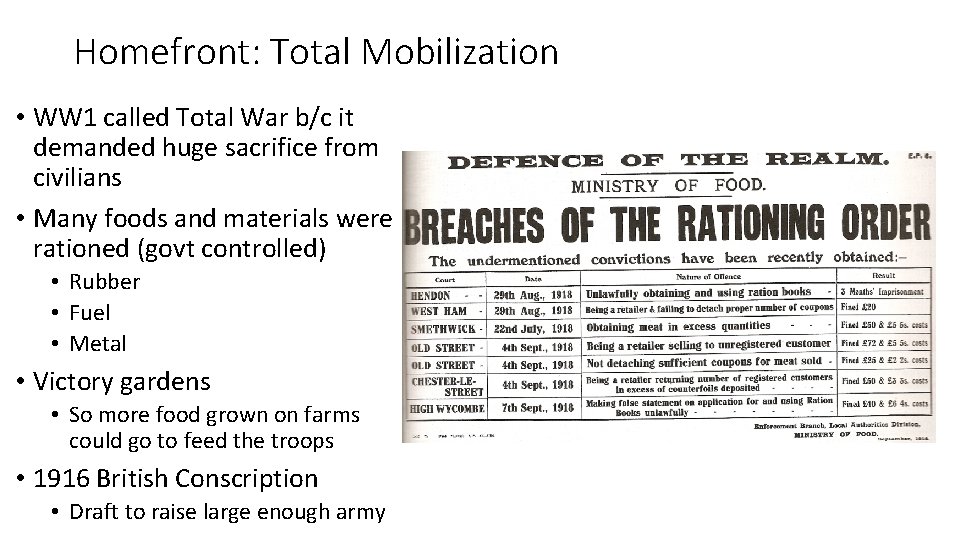
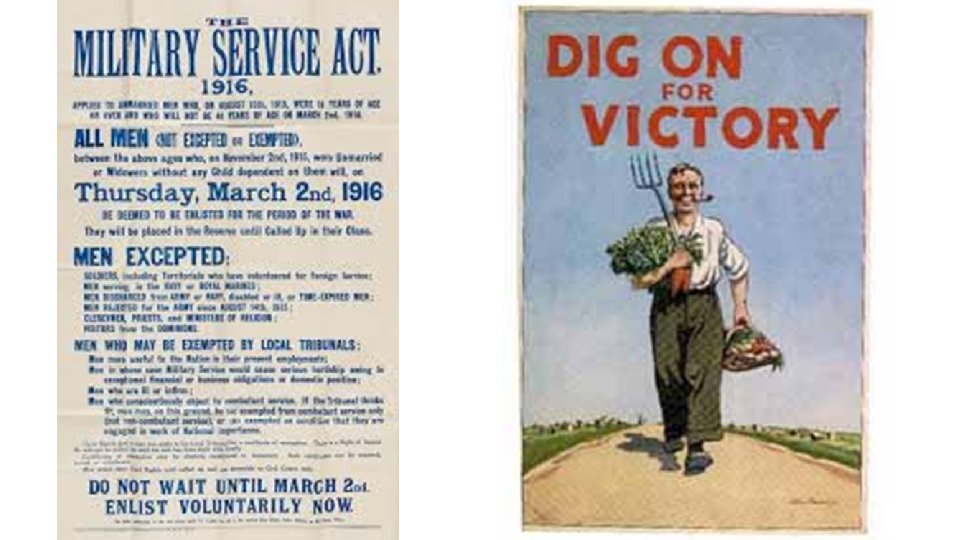
Homefront: Total Mobilization • WW 1 called Total War b/c it demanded huge sacrifice from civilians • Many foods and materials were rationed (govt controlled) • Rubber • Fuel • Metal • Victory gardens • So more food grown on farms could go to feed the troops • 1916 British Conscription • Draft to raise large enough army
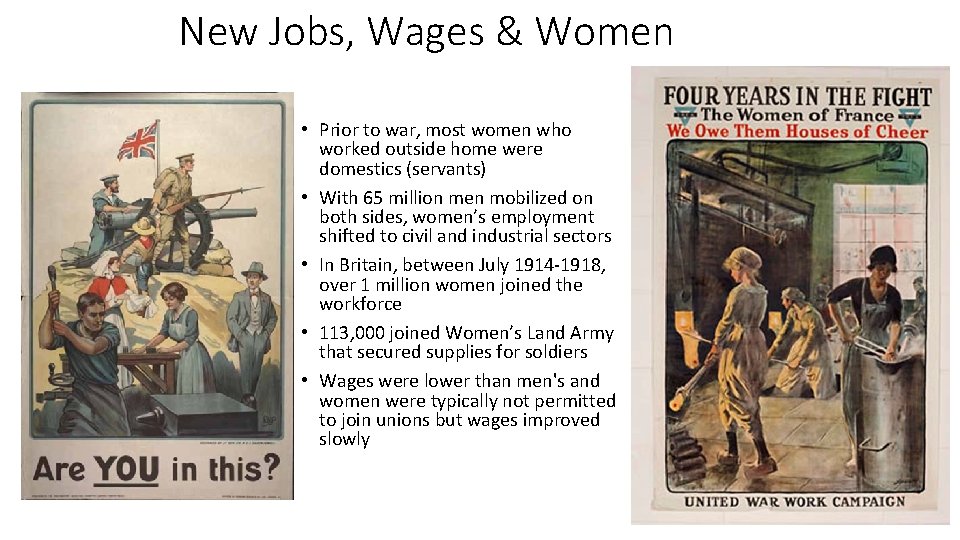
New Jobs, Wages & Women • Prior to war, most women who worked outside home were domestics (servants) • With 65 million men mobilized on both sides, women’s employment shifted to civil and industrial sectors • In Britain, between July 1914 -1918, over 1 million women joined the workforce • 113, 000 joined Women’s Land Army that secured supplies for soldiers • Wages were lower than men's and women were typically not permitted to join unions but wages improved slowly
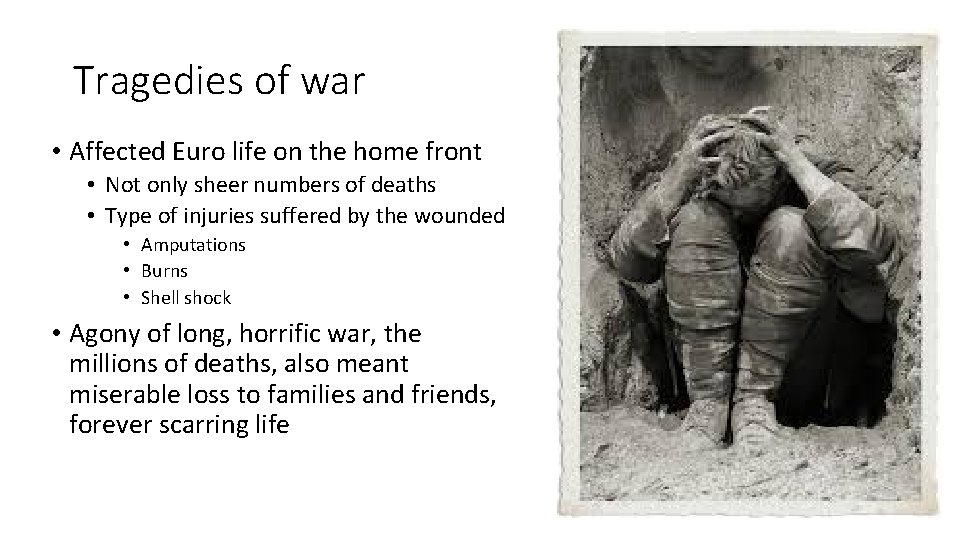
Tragedies of war • Affected Euro life on the home front • Not only sheer numbers of deaths • Type of injuries suffered by the wounded • Amputations • Burns • Shell shock • Agony of long, horrific war, the millions of deaths, also meant miserable loss to families and friends, forever scarring life
- Slides: 18