
Allergic Transfusion Reactions and Passive Transfer of Allergy


- Slides: 34
Allergic Transfusion Reactions and Passive Transfer of Allergy Margaret Compton, MD
Importance of Allergic Transfusion Reactions • The most common reaction associated with transfusion of platelets and plasma products – About 2% of platelet transfusions • Second-most common reaction with PRBCs – About 0. 1 -0. 5% of PRBC transfusions – Most common reaction is febrile transfusion reaction • Morbidity for the patient, energy and time of BB staff, product wastage Transfusion. 2013 June 53(6): 1361 -1371
But. . . to put things in perspective • Estimates for rates of anaphylaxis due to blood products range were reported to be 1: 9630 for platelets, 1: 28, 831 for FFP, and 1: 57, 869 for RBC transfusions • Contrast media- 1: 450 • Penicillins- 1: 2500 to 1: 6000 • Muscle Relaxers- 1: 13, 000 Current Opinion Hematol: 2003 vol: 10 iss: 6 pg: 419 -23
Definition of Allergic Transfusion Reaction CDC National Healthcare Safety Network (NHSN) Manual Definitive: 2 or more of the following occurring during or within 4 hours of transfusion Conjunctival edema, Edema of lips, tongue and uvula, Erythema and edema of the periorbital area, Generalized flushing, Hypotension, Localized angioedema, Maculopapular rash, Pruritus, Respiratory distress; bronchospasm, Urticaria Probable: 1 or more of the following occurring during or within 4 hours of transfusion Conjunctival edema, Edema of lips, tongue and uvula, Erythema and edema of the periorbital area, Localized angioedema, Maculopapular rash, Pruritus, Urticaria
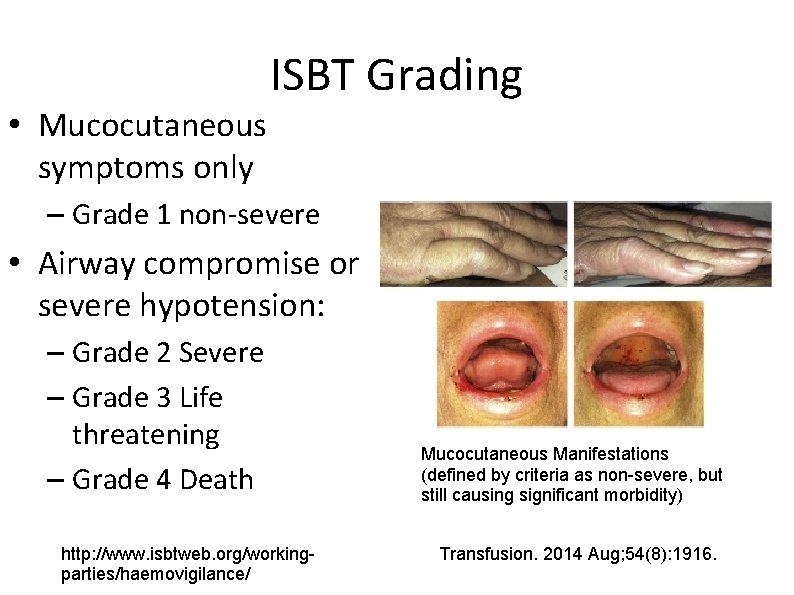
ISBT Grading • Mucocutaneous symptoms only – Grade 1 non-severe • Airway compromise or severe hypotension: – Grade 2 Severe – Grade 3 Life threatening – Grade 4 Death http: //www. isbtweb. org/workingparties/haemovigilance/ Mucocutaneous Manifestations (defined by criteria as non-severe, but still causing significant morbidity) Transfusion. 2014 Aug; 54(8): 1916.
Why do Allergic Reactions Occur?
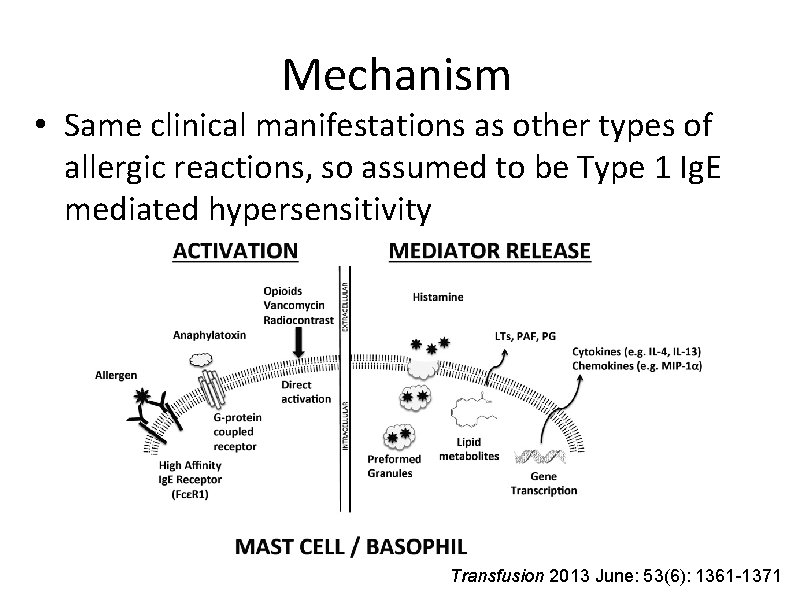
Mechanism • Same clinical manifestations as other types of allergic reactions, so assumed to be Type 1 Ig. E mediated hypersensitivity Transfusion 2013 June: 53(6): 1361 -1371
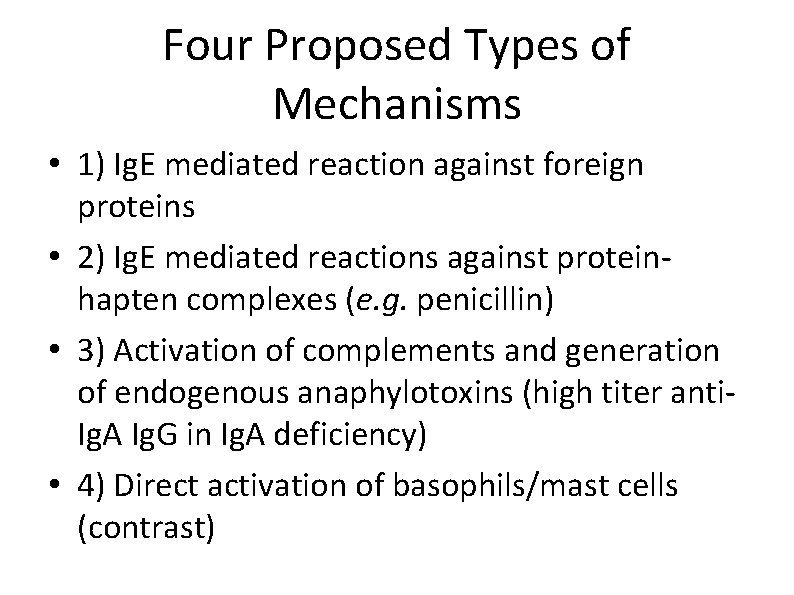
Four Proposed Types of Mechanisms • 1) Ig. E mediated reaction against foreign proteins • 2) Ig. E mediated reactions against proteinhapten complexes (e. g. penicillin) • 3) Activation of complements and generation of endogenous anaphylotoxins (high titer anti. Ig. A Ig. G in Ig. A deficiency) • 4) Direct activation of basophils/mast cells (contrast)
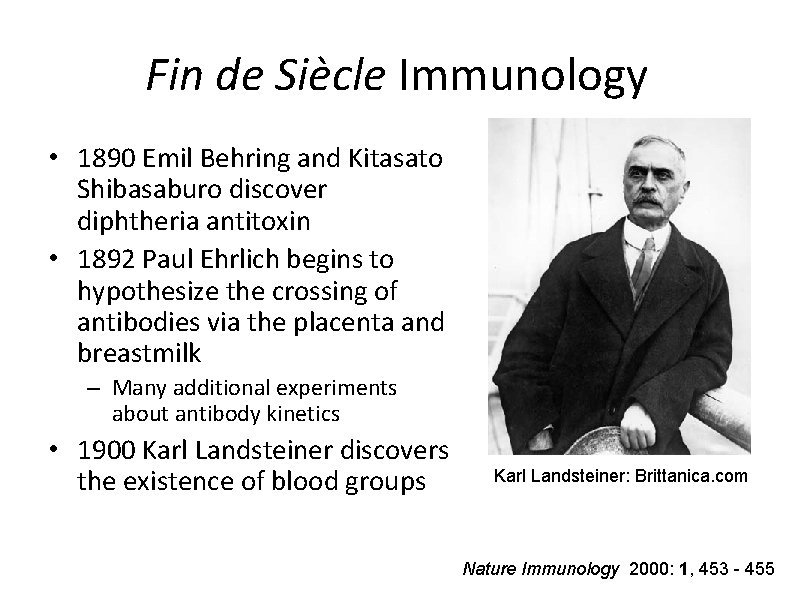
Fin de Siècle Immunology • 1890 Emil Behring and Kitasato Shibasaburo discover diphtheria antitoxin • 1892 Paul Ehrlich begins to hypothesize the crossing of antibodies via the placenta and breastmilk – Many additional experiments about antibody kinetics • 1900 Karl Landsteiner discovers the existence of blood groups Karl Landsteiner: Brittanica. com Nature Immunology 2000: 1, 453 - 455
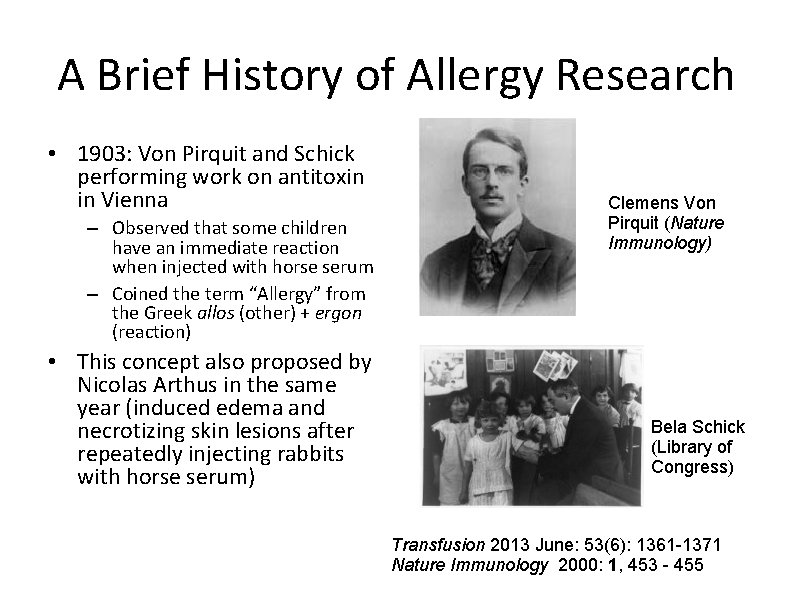
A Brief History of Allergy Research • 1903: Von Pirquit and Schick performing work on antitoxin in Vienna – Observed that some children have an immediate reaction when injected with horse serum – Coined the term “Allergy” from the Greek allos (other) + ergon (reaction) • This concept also proposed by Nicolas Arthus in the same year (induced edema and necrotizing skin lesions after repeatedly injecting rabbits with horse serum) Clemens Von Pirquit (Nature Immunology) Bela Schick (Library of Congress) Transfusion 2013 June: 53(6): 1361 -1371 Nature Immunology 2000: 1, 453 - 455
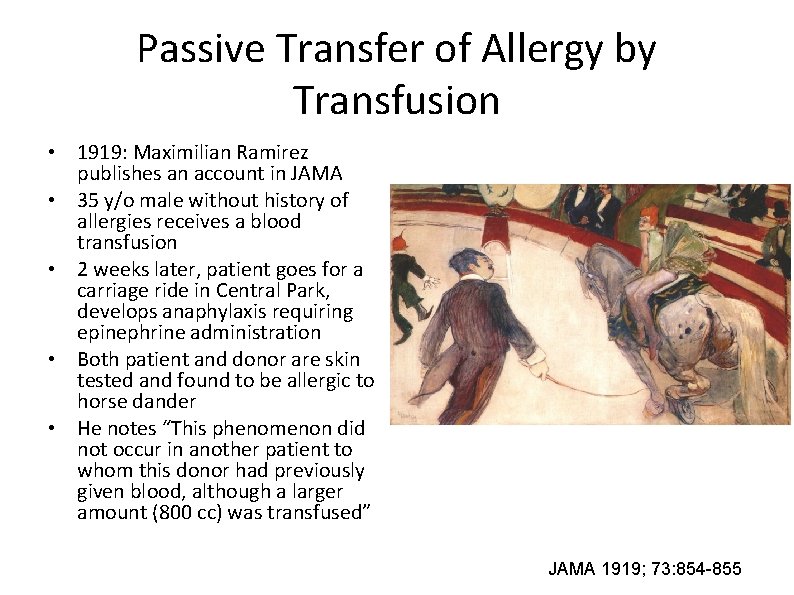
Passive Transfer of Allergy by Transfusion • 1919: Maximilian Ramirez publishes an account in JAMA • 35 y/o male without history of allergies receives a blood transfusion • 2 weeks later, patient goes for a carriage ride in Central Park, develops anaphylaxis requiring epinephrine administration • Both patient and donor are skin tested and found to be allergic to horse dander • He notes “This phenomenon did not occur in another patient to whom this donor had previously given blood, although a larger amount (800 cc) was transfused” JAMA 1919; 73: 854 -855
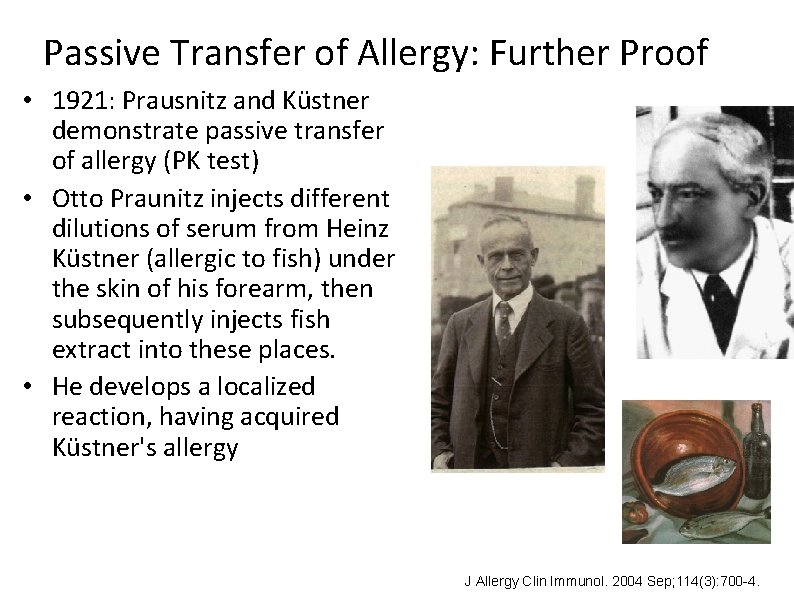
Passive Transfer of Allergy: Further Proof • 1921: Prausnitz and Küstner demonstrate passive transfer of allergy (PK test) • Otto Praunitz injects different dilutions of serum from Heinz Küstner (allergic to fish) under the skin of his forearm, then subsequently injects fish extract into these places. • He develops a localized reaction, having acquired Küstner's allergy J Allergy Clin Immunol. 2004 Sep; 114(3): 700 -4.
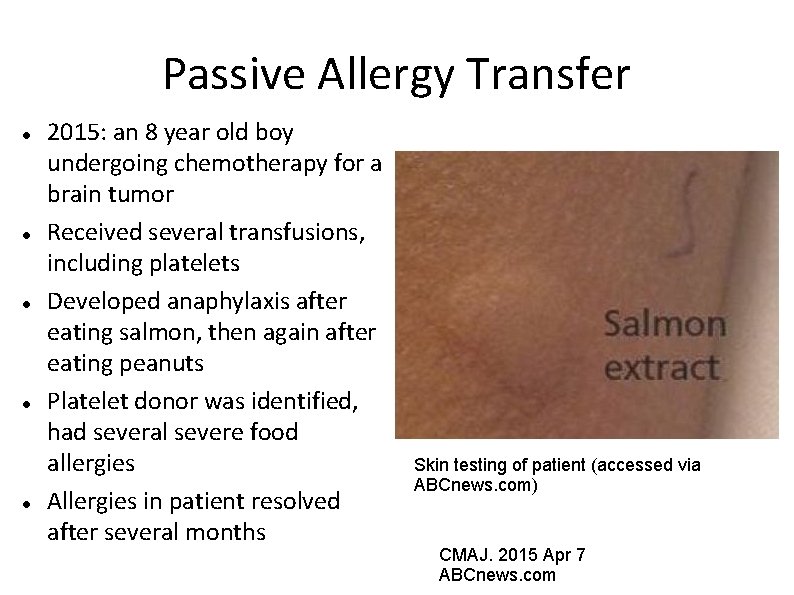
Passive Allergy Transfer 2015: an 8 year old boy undergoing chemotherapy for a brain tumor Received several transfusions, including platelets Developed anaphylaxis after eating salmon, then again after eating peanuts Platelet donor was identified, had several severe food allergies Allergies in patient resolved after several months Skin testing of patient (accessed via ABCnews. com) CMAJ. 2015 Apr 7 ABCnews. com
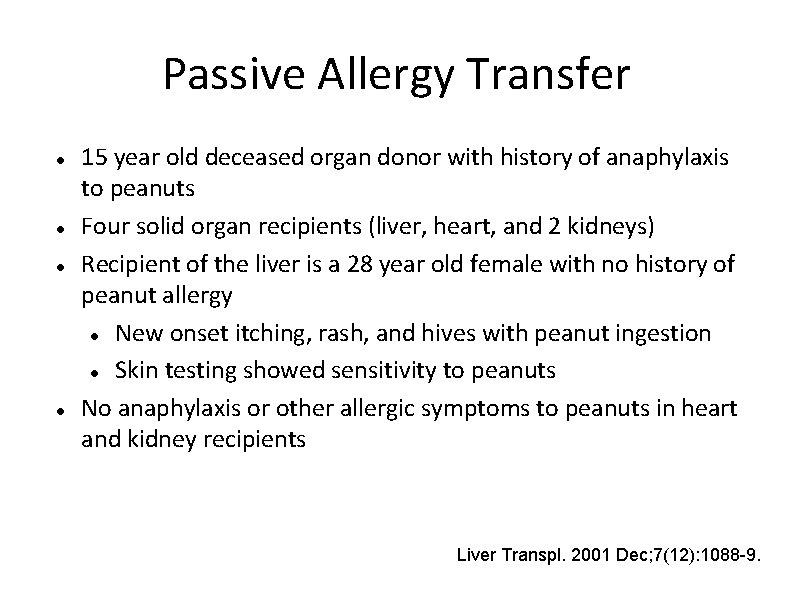
Passive Allergy Transfer 15 year old deceased organ donor with history of anaphylaxis to peanuts Four solid organ recipients (liver, heart, and 2 kidneys) Recipient of the liver is a 28 year old female with no history of peanut allergy New onset itching, rash, and hives with peanut ingestion Skin testing showed sensitivity to peanuts No anaphylaxis or other allergic symptoms to peanuts in heart and kidney recipients Liver Transpl. 2001 Dec; 7(12): 1088 -9.
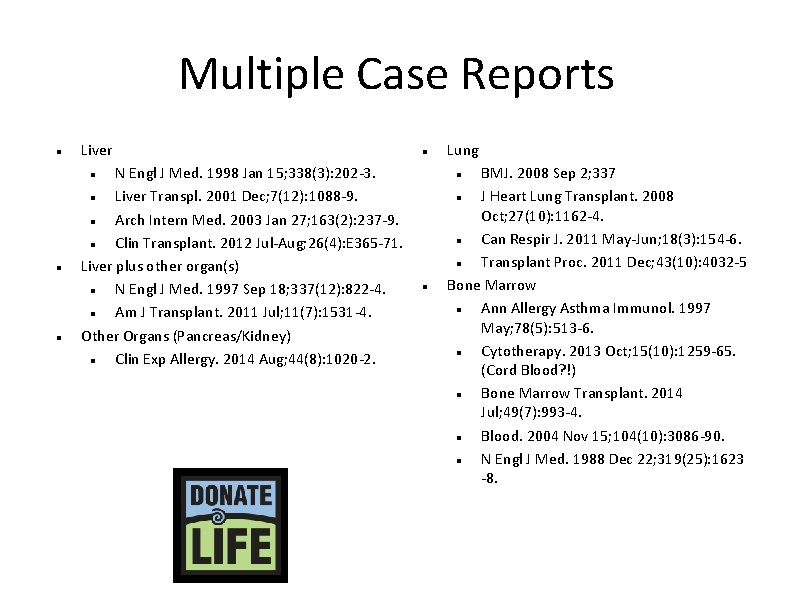
Multiple Case Reports Liver N Engl J Med. 1998 Jan 15; 338(3): 202 -3. Liver Transpl. 2001 Dec; 7(12): 1088 -9. Arch Intern Med. 2003 Jan 27; 163(2): 237 -9. Clin Transplant. 2012 Jul-Aug; 26(4): E 365 -71. Liver plus other organ(s) N Engl J Med. 1997 Sep 18; 337(12): 822 -4. Am J Transplant. 2011 Jul; 11(7): 1531 -4. Other Organs (Pancreas/Kidney) Clin Exp Allergy. 2014 Aug; 44(8): 1020 -2. Lung BMJ. 2008 Sep 2; 337 J Heart Lung Transplant. 2008 Oct; 27(10): 1162 -4. Can Respir J. 2011 May-Jun; 18(3): 154 -6. Transplant Proc. 2011 Dec; 43(10): 4032 -5 Bone Marrow Ann Allergy Asthma Immunol. 1997 May; 78(5): 513 -6. Cytotherapy. 2013 Oct; 15(10): 1259 -65. (Cord Blood? !) Bone Marrow Transplant. 2014 Jul; 49(7): 993 -4. Blood. 2004 Nov 15; 104(10): 3086 -90. N Engl J Med. 1988 Dec 22; 319(25): 1623 -8.
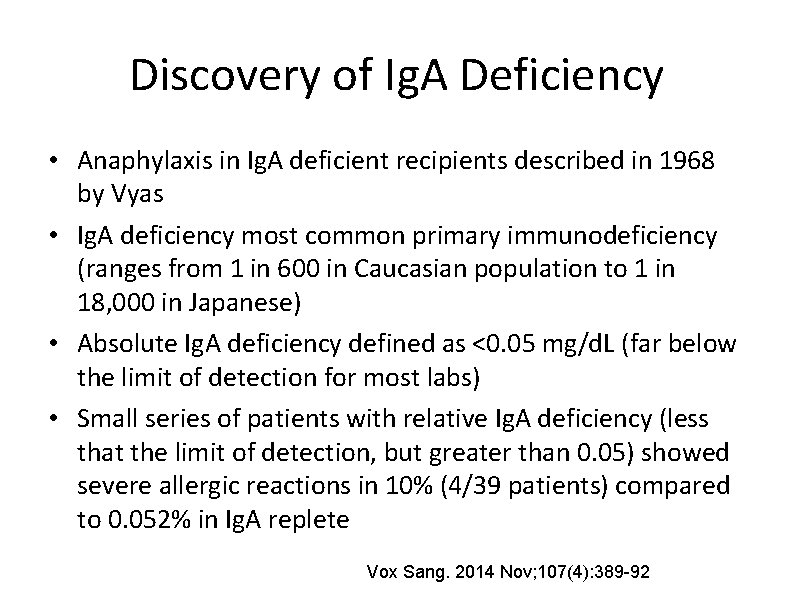
Discovery of Ig. A Deficiency • Anaphylaxis in Ig. A deficient recipients described in 1968 by Vyas • Ig. A deficiency most common primary immunodeficiency (ranges from 1 in 600 in Caucasian population to 1 in 18, 000 in Japanese) • Absolute Ig. A deficiency defined as <0. 05 mg/d. L (far below the limit of detection for most labs) • Small series of patients with relative Ig. A deficiency (less that the limit of detection, but greater than 0. 05) showed severe allergic reactions in 10% (4/39 patients) compared to 0. 052% in Ig. A replete Vox Sang. 2014 Nov; 107(4): 389 -92
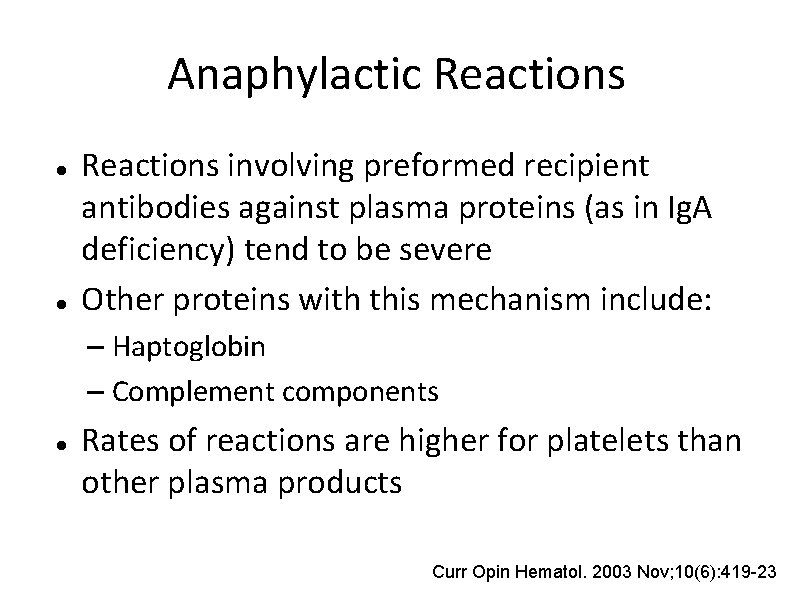
Anaphylactic Reactions involving preformed recipient antibodies against plasma proteins (as in Ig. A deficiency) tend to be severe Other proteins with this mechanism include: – Haptoglobin – Complement components Rates of reactions are higher for platelets than other plasma products Curr Opin Hematol. 2003 Nov; 10(6): 419 -23
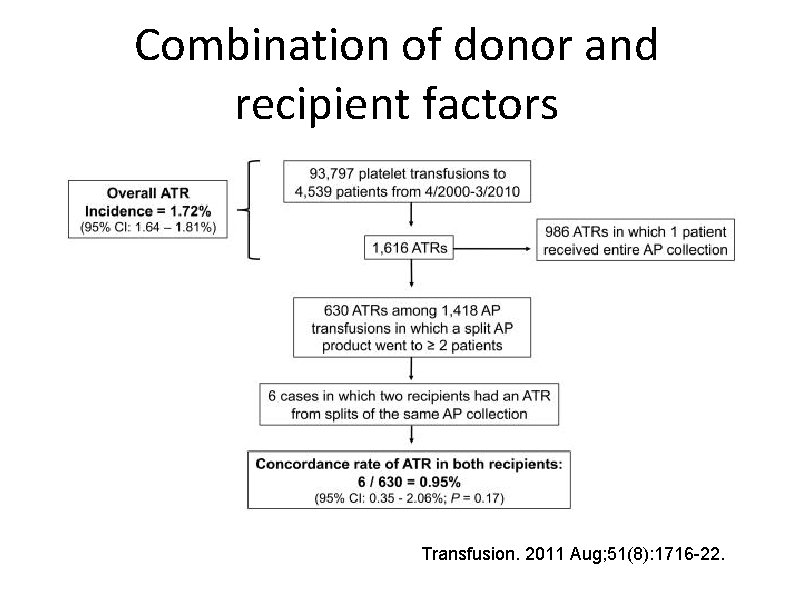
Combination of donor and recipient factors Transfusion. 2011 Aug; 51(8): 1716 -22.
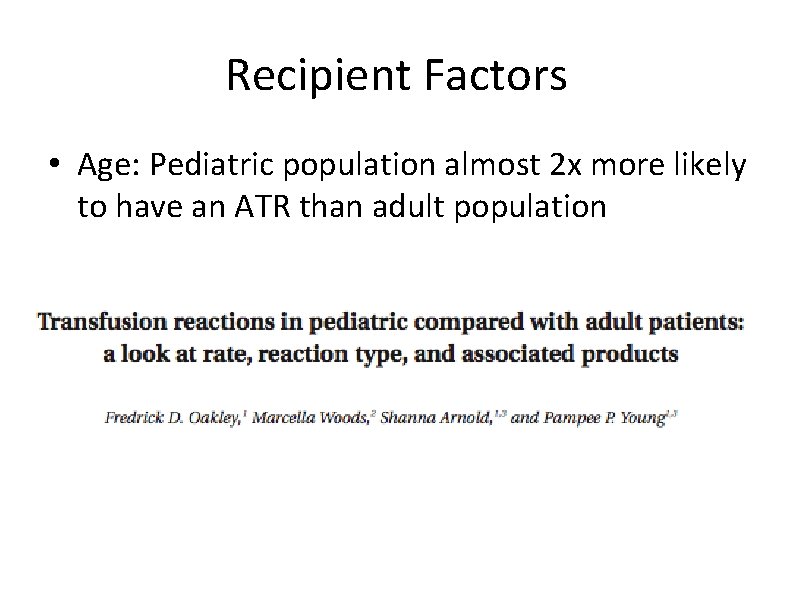
Recipient Factors • Age: Pediatric population almost 2 x more likely to have an ATR than adult population
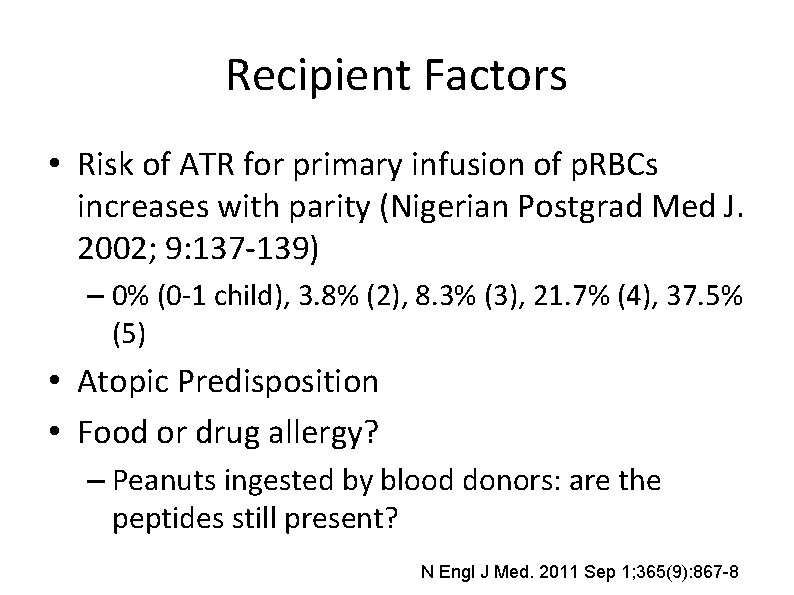
Recipient Factors • Risk of ATR for primary infusion of p. RBCs increases with parity (Nigerian Postgrad Med J. 2002; 9: 137 -139) – 0% (0 -1 child), 3. 8% (2), 8. 3% (3), 21. 7% (4), 37. 5% (5) • Atopic Predisposition • Food or drug allergy? – Peanuts ingested by blood donors: are the peptides still present? N Engl J Med. 2011 Sep 1; 365(9): 867 -8
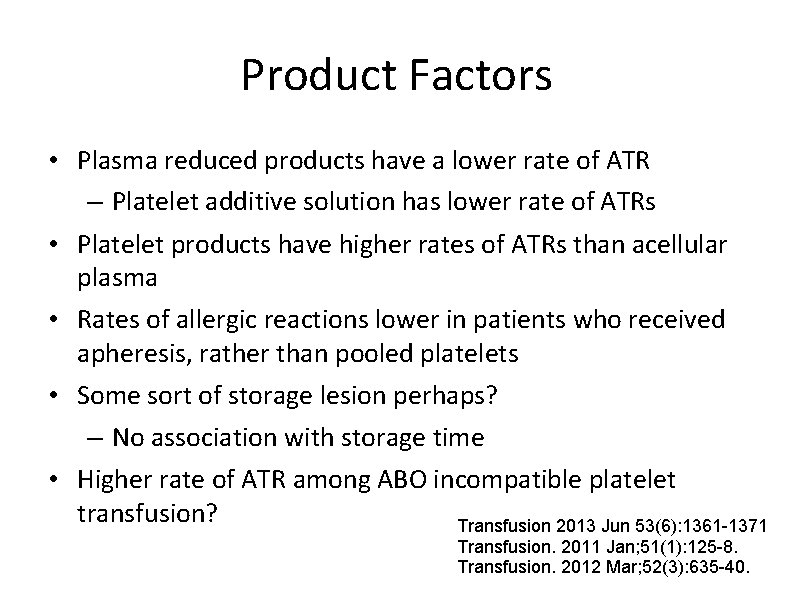
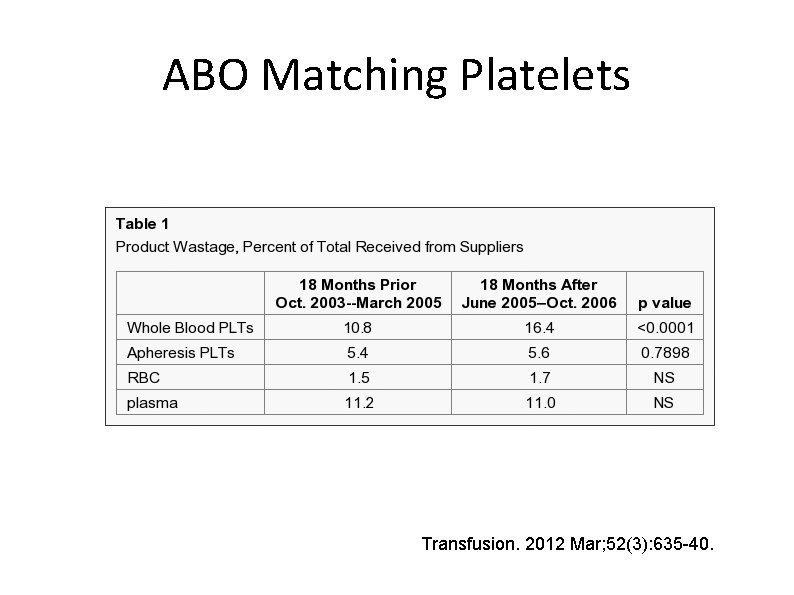
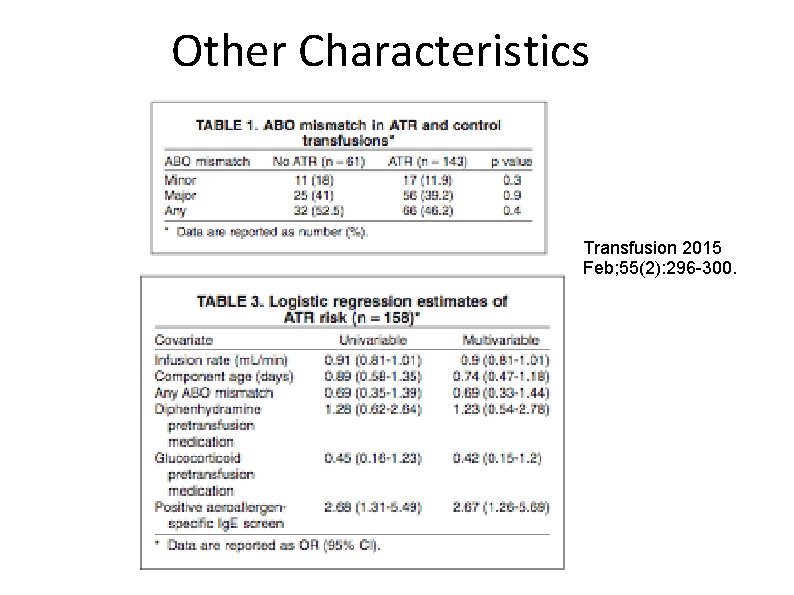
Product Factors • Plasma reduced products have a lower rate of ATR – Platelet additive solution has lower rate of ATRs • Platelet products have higher rates of ATRs than acellular plasma • Rates of allergic reactions lower in patients who received apheresis, rather than pooled platelets • Some sort of storage lesion perhaps? – No association with storage time • Higher rate of ATR among ABO incompatible platelet transfusion? Transfusion 2013 Jun 53(6): 1361 -1371 Transfusion. 2011 Jan; 51(1): 125 -8. Transfusion. 2012 Mar; 52(3): 635 -40.
ABO Matching Platelets Transfusion. 2012 Mar; 52(3): 635 -40.
Other Characteristics Transfusion 2015 Feb; 55(2): 296 -300.
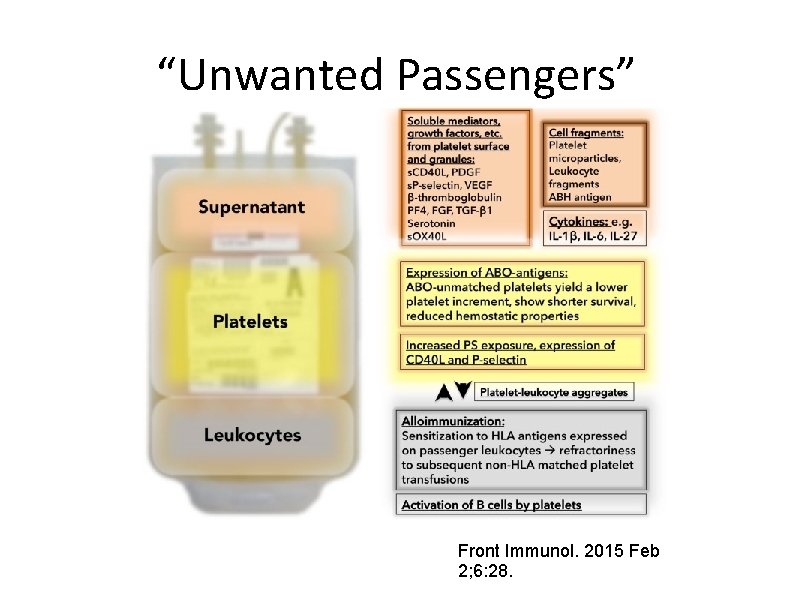
“Unwanted Passengers” Front Immunol. 2015 Feb 2; 6: 28.
Allergic Reaction to Food Antigens From Donor Patient allergic to shrimp Receives transfusion Level of shrimp specific Ig. E in pre-transfusion sample vs. post-transfusion sample from the patient shows post-transfusion elevation 13 year old with multiple food allergies (carrots, celery, hazelnuts, peanuts, and many others) Allergic reactions to transfusions Donor had eaten both hazelnuts and carrots the night prior to donating Transfus Apher Sci. 2014 Feb; 50(1): 68 -70. Dtsch Med Wochenschr. 2012 Jul; 137(28 -29): 1465 -7.
Presence of Drugs in Blood Products Netherlands: - Medication history specifically elicited in plasma donors - 1000 drugs and drug metabolites tested by HPLC in plasma samples, 14/87 samples contained detectable levels of medications - At least 8 of the drugs detected have been known to cause anaphylaxis Presence of Illegal drugs? Vox Sang. 2015 May; 108(4): 323 -7
Should Blood Donors Be Screened for Allergic Symptoms? • Hypothesis: passive transfer of Ig. E to common allergens causing allergic transfusion reaction • Eliminate atopic donors at the time of screening so that they do not pass on preformed Ig. E to recipient • 24. 9% of donor pop. reported allergic symptoms – 54. 5% of allergic had Ig. E to common food and aeroallergens – 12. 3% of “non-allergic” had Ig. E Vox Sang. 1995; 69(2): 114 -9.
Should Donors Be Screened for Antigen Exposure? • Donors may have lots of different potential food allergens, pharmaceuticals, etc. that may cause allergic reaction in recipient • Should donors be screened on a questionnaire whether or not they had exposure? • Logistical challenge (which allergens? ) • Decrease donor population
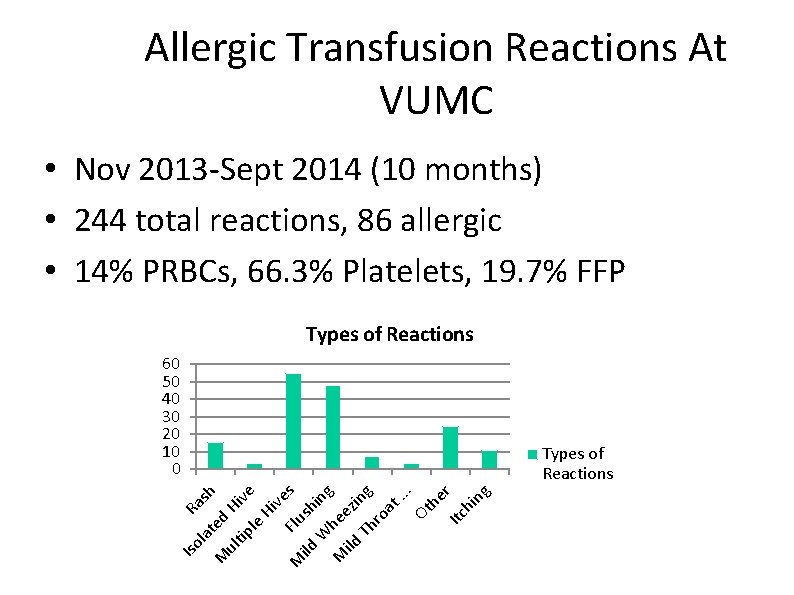
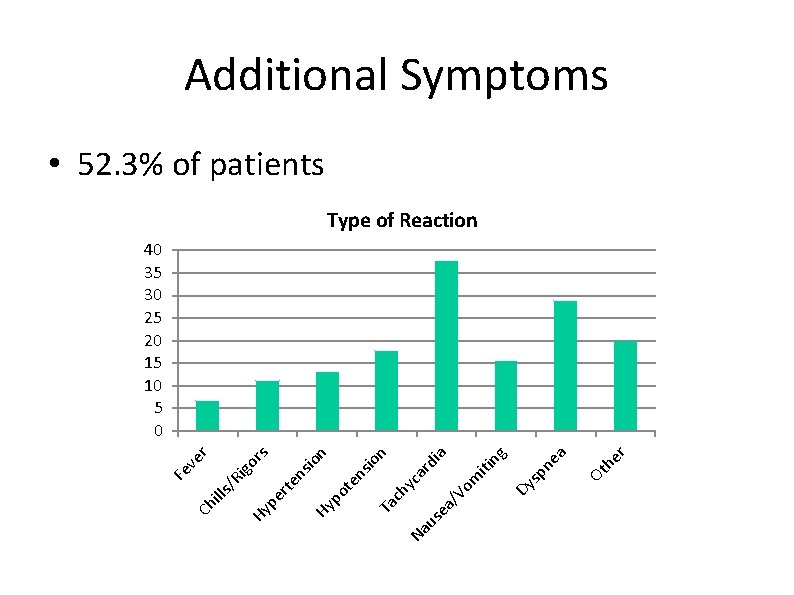
Allergic Transfusion Reactions At VUMC • Nov 2013 -Sept 2014 (10 months) • 244 total reactions, 86 allergic • 14% PRBCs, 66. 3% Platelets, 19. 7% FFP Types of Reactions 60 50 40 30 20 10 0 ul d H tip ive le H ive M Flu s ild sh W in g M hee ild z T ing hr oa t. . . Ot he Itc r hi ng M Iso la te Ra sh Types of Reactions
r he Ot ea sp n Dy ng a n di ar yc Vo m iti a/ se Na u Ta ch n io ns te po Hy ns io rte rs ve r igo /R lls pe Hy Ch i Fe Additional Symptoms • 52. 3% of patients Type of Reaction 40 35 30 25 20 15 10 5 0
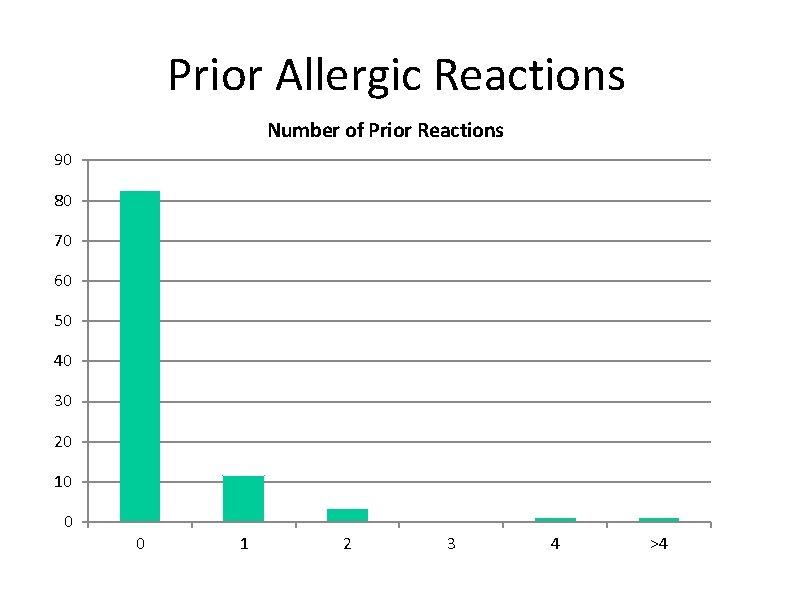
Prior Allergic Reactions Number of Prior Reactions 90 80 70 60 50 40 30 20 10 0 0 1 2 3 4 >4
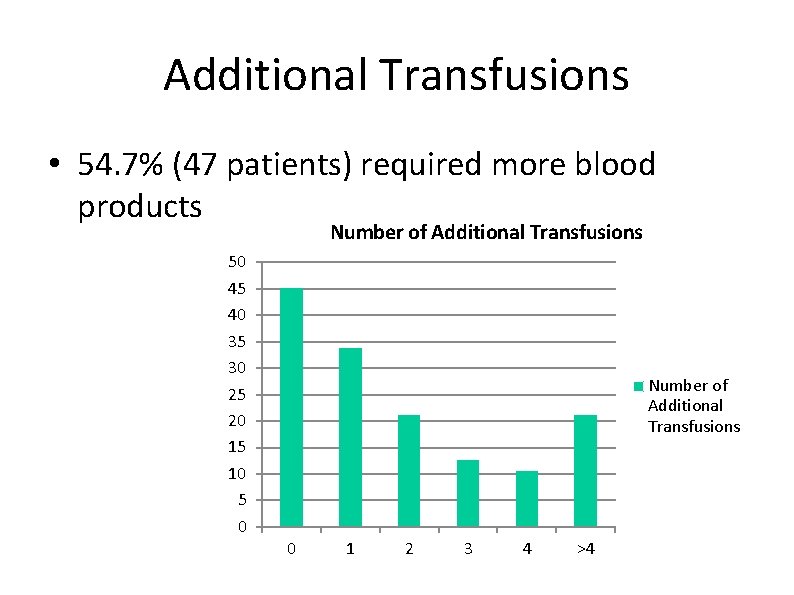
Additional Transfusions • 54. 7% (47 patients) required more blood products Number of Additional Transfusions 50 45 40 35 30 25 20 15 10 5 0 Number of Additional Transfusions 0 1 2 3 4 >4
Summary Mechanism for most allergic reactions is unknown. Complex reaction with many possible factors related to both the blood product (presence of donor Ig. E, ingestion of allergen by donor, donor medications, component released by platelets? , components of additive solution, etc. ) and the recipient (atopic predisposition, pre-formed Ig. E to particular protein, pre-formed Ig. G to particular protein) Not entirely clear how the rate of these reactions can be reduced
Questions?