
ALLERGIC RHINOCONJUNCTIVITIS Essentials of diagnosis and typical features
- Slides: 20
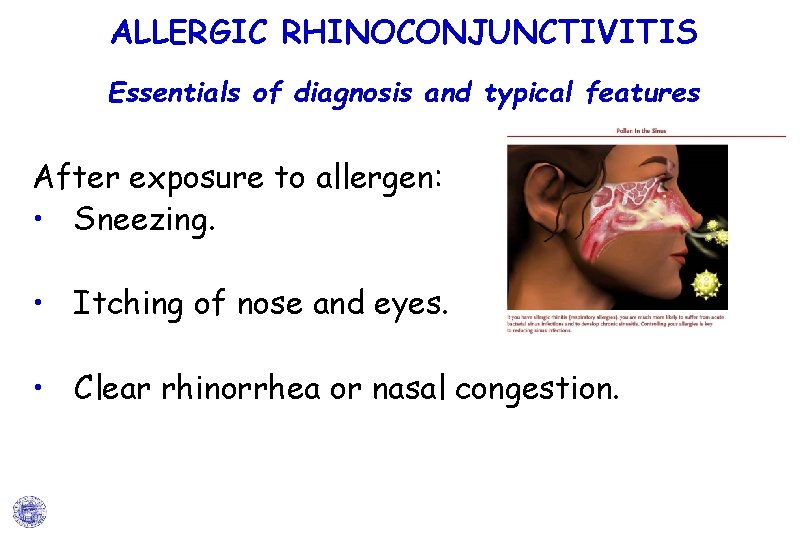
ALLERGIC RHINOCONJUNCTIVITIS Essentials of diagnosis and typical features After exposure to allergen: • Sneezing. • Itching of nose and eyes. • Clear rhinorrhea or nasal congestion.
ALLERGIC RHINOCONJUNCTIVITIS General considerations • The most common allergic disease. • Significantly affects quality of life as well as school performance. • It frequently coexists with asthma and is a risk factor for subsequent development of asthma. • Prevalence of this disease increases during chilhood, peaking at 15% in the post adolescent years.
ALLERGIC RHINOCONJUNCTIVITIS General considerations • The most common allergic disease. • Prevalence of this disease increases during chilhood, peaking at 15% in the post adolescent years. Children with allergic rhinitis seem to be affects more susceptible or as atschool • Significantly quality of lifetoas well performance. least may experience more symptoms from- upper respiratory • It frequently coexistswhich, with asthma and is a risk infections, in turn, may factor for subsequent development of asthma. aggravate the allergic rhinitis.
ALLERGIC RHINOCONJUNCTIVITIS General considerations • Allergic rhinoconjunctivitis may be: perennial, perennial seasonal (hay fever), or episodic. • Perennial allergic rhinitis occurs to exposure to indoor allergens. • Seasonal allergic rhinitis occurs as a result of exposure to pollens and molds. • Trees (late winter to early spring) grasses (late spring to early summer), and weed (late summer to early fall).
ALLERGIC RHINOCONJUNCTIVITIS General considerations • Allergic rhinoconjunctivitis may be: perennial, perennial seasonal (hay fever), or episodic. Seasons can vary significantly in • Perennial allergic rhinitis occurs to exposure to indoor allergens. different parts of the country • Seasonal allergic rhinitis occurs as a result of exposure to pollens and molds. • Trees (late winter to early spring) grasses (late spring to early summer), and weed (late summer to early fall).
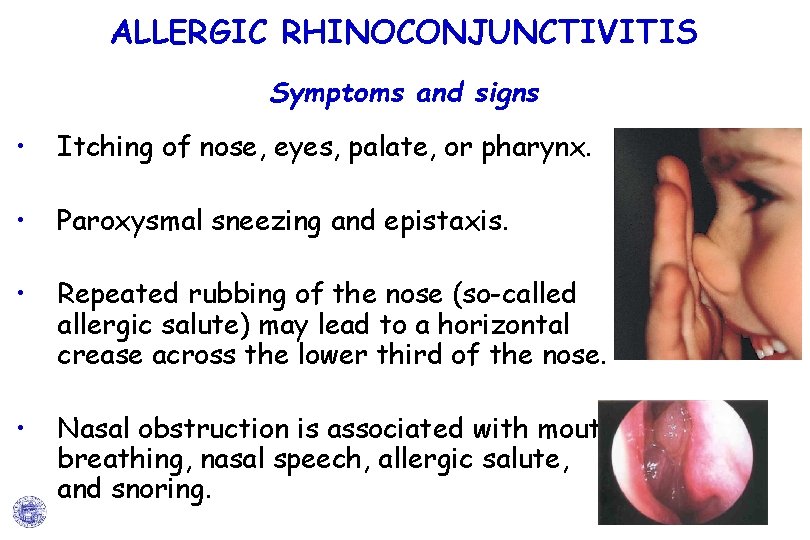
ALLERGIC RHINOCONJUNCTIVITIS Symptoms and signs • Itching of nose, eyes, palate, or pharynx. • Paroxysmal sneezing and epistaxis. • Repeated rubbing of the nose (so-called allergic salute) may lead to a horizontal crease across the lower third of the nose. • Nasal obstruction is associated with mouth breathing, nasal speech, allergic salute, and snoring.
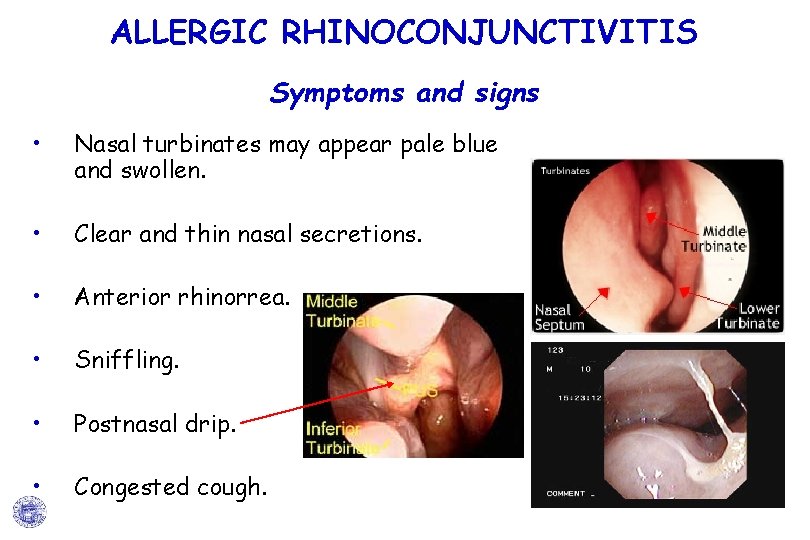
ALLERGIC RHINOCONJUNCTIVITIS Symptoms and signs • Nasal turbinates may appear pale blue and swollen. • Clear and thin nasal secretions. • Anterior rhinorrea. • Sniffling. • Postnasal drip. • Congested cough.
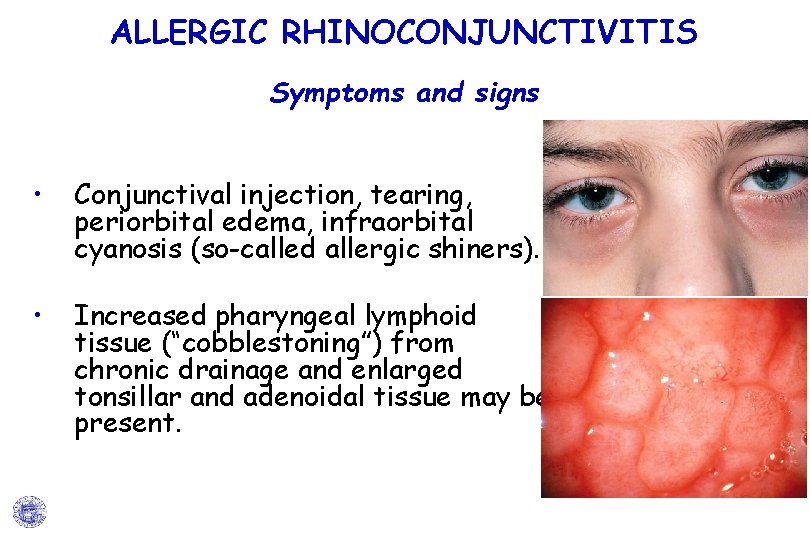
ALLERGIC RHINOCONJUNCTIVITIS Symptoms and signs • Conjunctival injection, tearing, periorbital edema, infraorbital cyanosis (so-called allergic shiners). • Increased pharyngeal lymphoid tissue (“cobblestoning”) from chronic drainage and enlarged tonsillar and adenoidal tissue may be present.
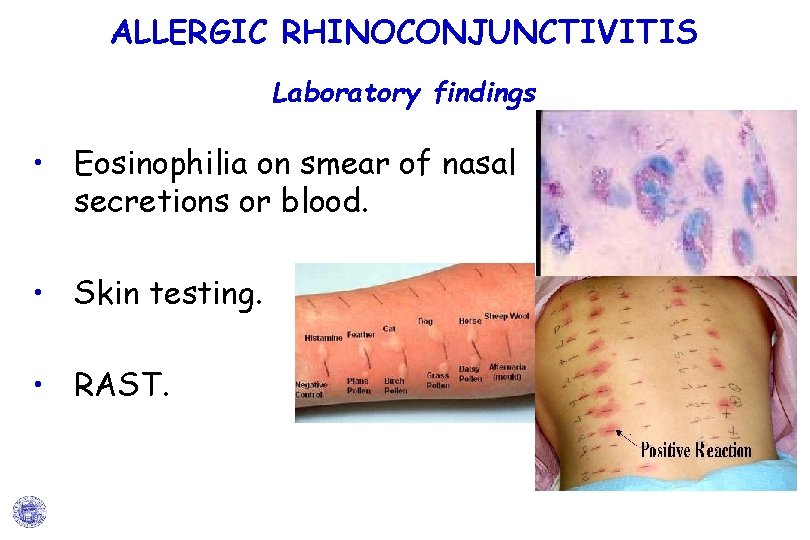
ALLERGIC RHINOCONJUNCTIVITIS Laboratory findings • Eosinophilia on smear of nasal secretions or blood. • Skin testing. • RAST.
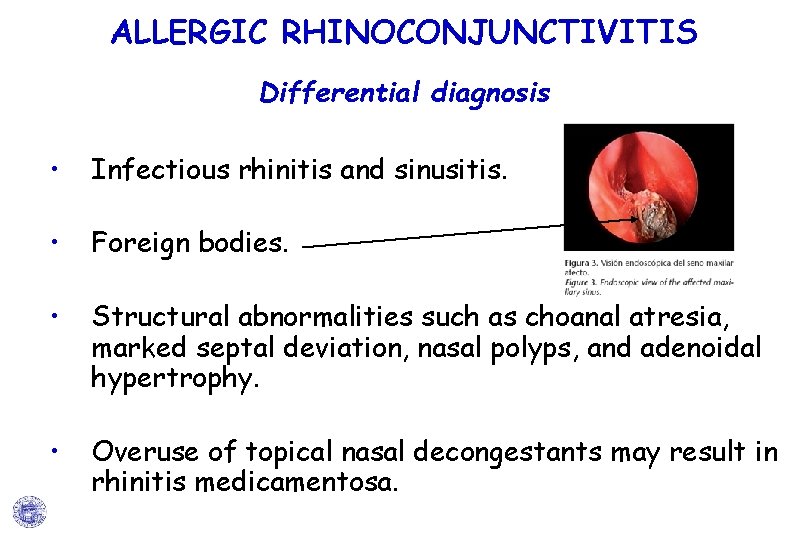
ALLERGIC RHINOCONJUNCTIVITIS Differential diagnosis • Infectious rhinitis and sinusitis. • Foreign bodies. • Structural abnormalities such as choanal atresia, marked septal deviation, nasal polyps, and adenoidal hypertrophy. • Overuse of topical nasal decongestants may result in rhinitis medicamentosa.
ALLERGIC RHINOCONJUNCTIVITIS Differential diagnosis • Use of medications such as propranolol, clonidine, and some psychoactive drugs may cause nasal congestion. • Illicit drug like cocaine can cause rhinorrea. • Spicy or hot foods may cause gustatory rhinitis. • Nonallergic rhinitis with eosinophilia syndrome. • Vasomotor rhinitis.
ALLERGIC RHINOCONJUNCTIVITIS Differential diagnosis • Use of medications such as propranolol, clonidine, and some psychoactive drugs may cause nasal congestion. Less common causes of symptoms that • Illicit drugbe likeconfused cocaine can cause rhinorrea. may with allergic rhinitis include pregnancy, pregnancy congenital syphilis, syphilis • Spicy or hot foods may cause tumors, gustatory and rhinitis. hypothyroidism, hypothyroidism tumors cerebrospinal fluid rhinorrhea • Nonallergic rhinitis with eosinophilia syndrome. • Vasomotor rhinitis.
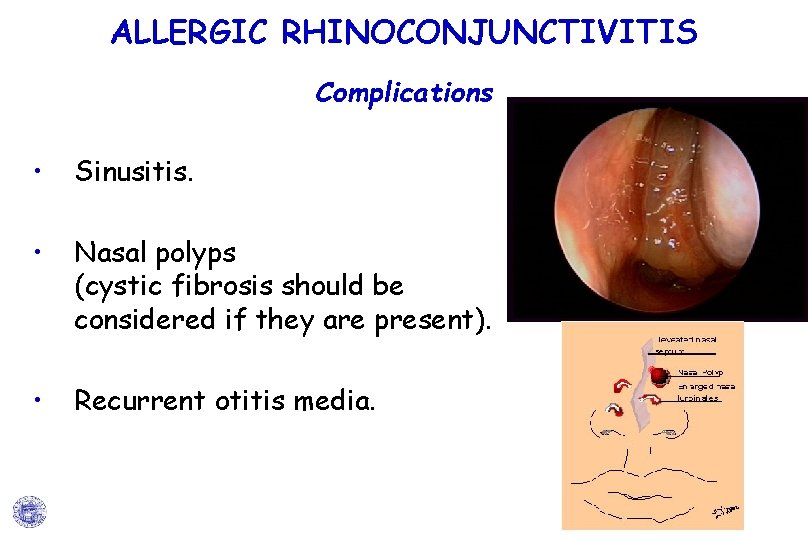
ALLERGIC RHINOCONJUNCTIVITIS Complications • Sinusitis. • Nasal polyps (cystic fibrosis should be considered if they are present). • Recurrent otitis media.
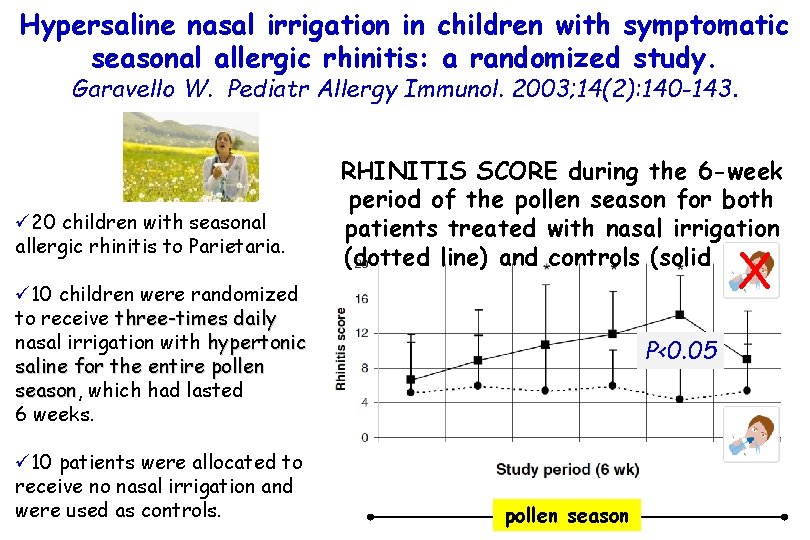
Hypersaline nasal irrigation in children with symptomatic seasonal allergic rhinitis: a randomized study. Garavello W. Pediatr Allergy Immunol. 2003; 14(2): 140 -143. ü 20 children with seasonal allergic rhinitis to Parietaria. RHINITIS SCORE during the 6 -week period of the pollen season for both patients treated with nasal irrigation (dotted line) and controls (solid line). X ü 10 children were randomized to receive three-times daily nasal irrigation with hypertonic saline for the entire pollen season, season which had lasted 6 weeks. ü 10 patients were allocated to receive no nasal irrigation and were used as controls. P<0. 05 pollen season
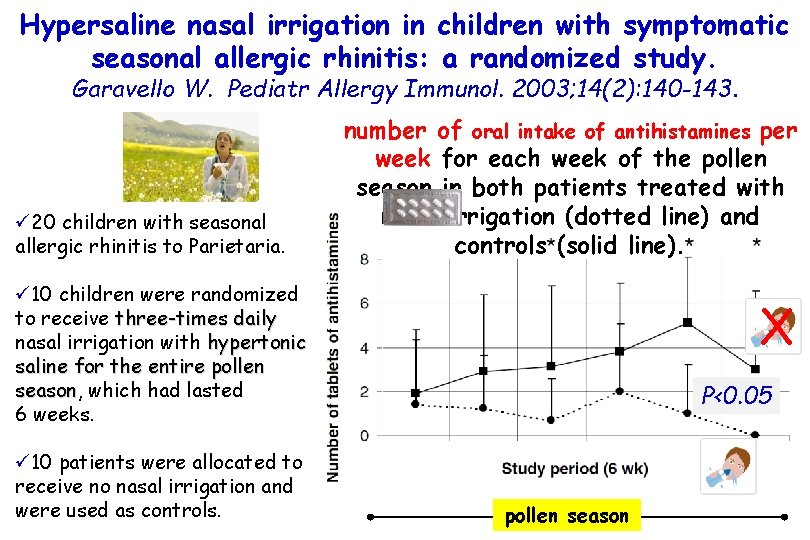
Hypersaline nasal irrigation in children with symptomatic seasonal allergic rhinitis: a randomized study. Garavello W. Pediatr Allergy Immunol. 2003; 14(2): 140 -143. ü 20 children with seasonal allergic rhinitis to Parietaria. number of oral intake of antihistamines per week for each week of the pollen season in both patients treated with nasal irrigation (dotted line) and controls (solid line). ü 10 children were randomized to receive three-times daily nasal irrigation with hypertonic saline for the entire pollen season, season which had lasted 6 weeks. ü 10 patients were allocated to receive no nasal irrigation and were used as controls. X P<0. 05 pollen season
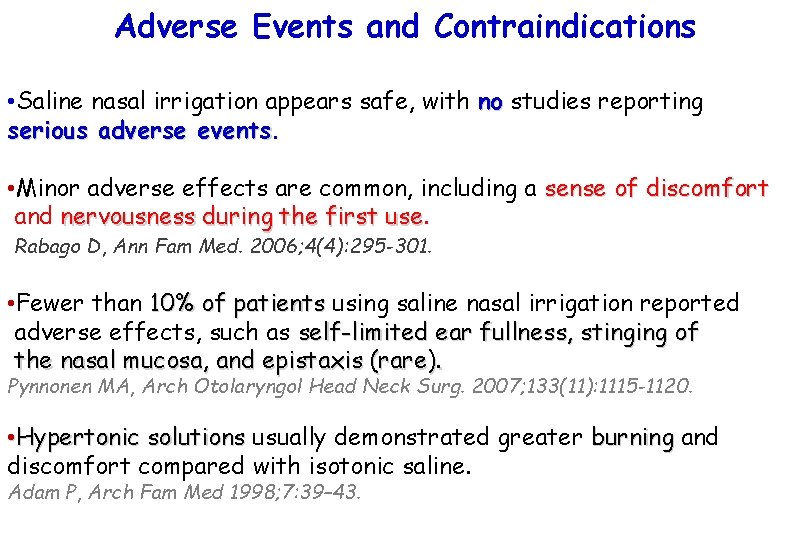
Adverse Events and Contraindications • Saline nasal irrigation appears safe, with no studies reporting serious adverse events • Minor adverse effects are common, including a sense of discomfort and nervousness during the first use Rabago D, Ann Fam Med. 2006; 4(4): 295 -301. • Fewer than 10% of patients using saline nasal irrigation reported adverse effects, such as self-limited ear fullness, stinging of the nasal mucosa, and epistaxis (rare). Pynnonen MA, Arch Otolaryngol Head Neck Surg. 2007; 133(11): 1115 -1120. • Hypertonic solutions usually demonstrated greater burning and discomfort compared with isotonic saline. Adam P, Arch Fam Med 1998; 7: 39– 43.
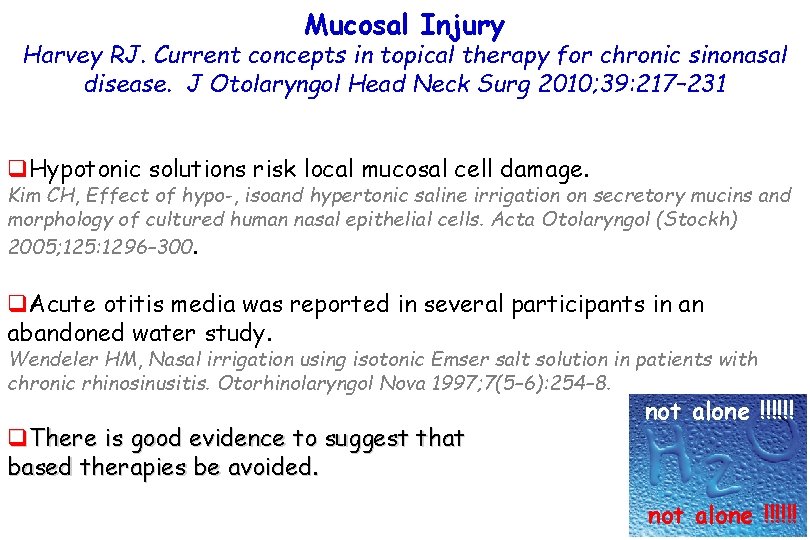
Mucosal Injury Harvey RJ. Current concepts in topical therapy for chronic sinonasal disease. J Otolaryngol Head Neck Surg 2010; 39: 217– 231 q. Hypotonic solutions risk local mucosal cell damage. Kim CH, Effect of hypo-, isoand hypertonic saline irrigation on secretory mucins and morphology of cultured human nasal epithelial cells. Acta Otolaryngol (Stockh) 2005; 125: 1296– 300. q. Acute otitis media was reported in several participants in an abandoned water study. Wendeler HM, Nasal irrigation using isotonic Emser salt solution in patients with chronic rhinosinusitis. Otorhinolaryngol Nova 1997; 7(5– 6): 254– 8. q. There is good evidence to suggest that based therapies be avoided. not alone !!!!!! waternot alone !!!!!!
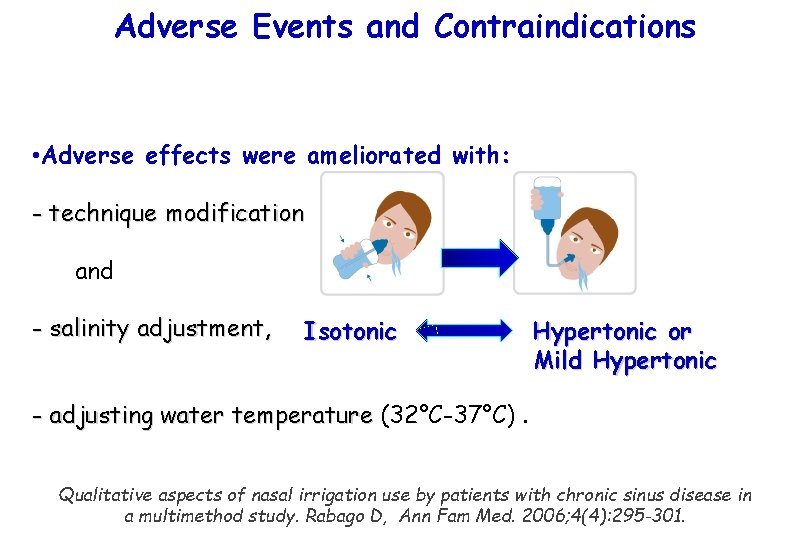
Adverse Events and Contraindications • Adverse effects were ameliorated with: - technique modification and - salinity adjustment, Isotonic Hypertonic or Mild Hypertonic - adjusting water temperature (32°C-37°C). Qualitative aspects of nasal irrigation use by patients with chronic sinus disease in a multimethod study. Rabago D, Ann Fam Med. 2006; 4(4): 295 -301.
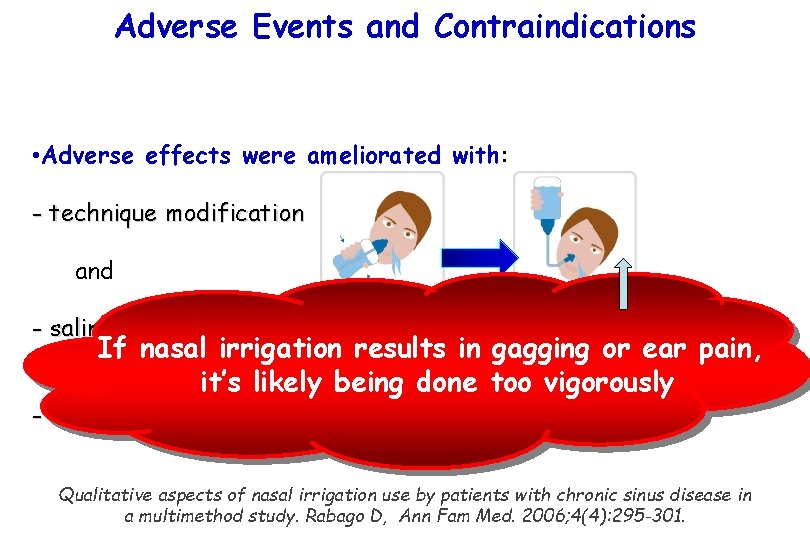
Adverse Events and Contraindications • Adverse effects were ameliorated with: - technique modification and - salinity adjustment, Isotonic Hypertonic or If nasal irrigation results in gagging or ear pain, Mild Hypertonic it’s likely being done too vigorously - adjusting water temperature (32°C-37°C). Qualitative aspects of nasal irrigation use by patients with chronic sinus disease in a multimethod study. Rabago D, Ann Fam Med. 2006; 4(4): 295 -301.
ALLERGIC RHINOCONJUNCTIVITIS Treatment • Avoidance of causative. • Nasal saline irrigation. • Antihistamines. • Decongestants. • Intranasal corticosteroid. • Immunotherapy.