
Allergenicity and Crosssensitization Crossreactivity Allergenicity Capacity of an

- Slides: 18
Allergenicity and Cross-sensitization Cross-reactivity 일산 백병원 소아과 남승연
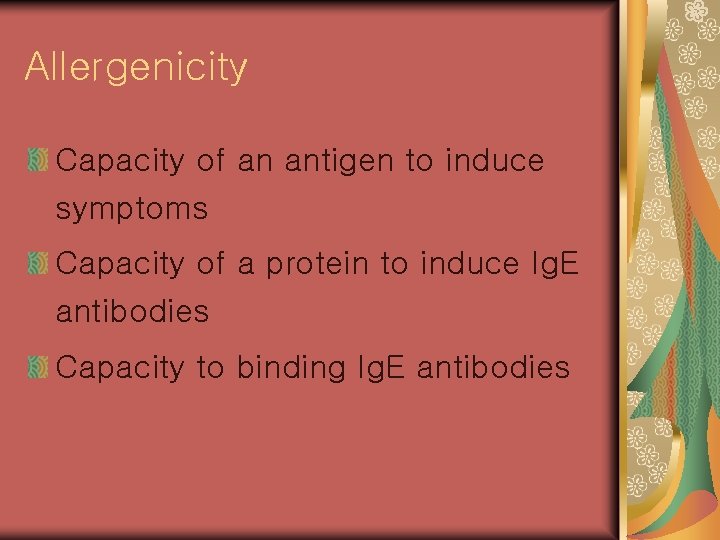
Allergenicity Capacity of an antigen to induce symptoms Capacity of a protein to induce Ig. E antibodies Capacity to binding Ig. E antibodies
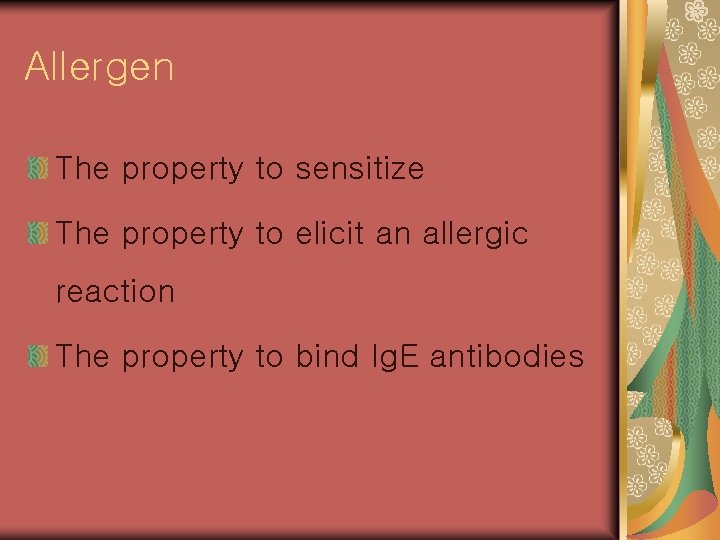
Allergen The property to sensitize The property to elicit an allergic reaction The property to bind Ig. E antibodies
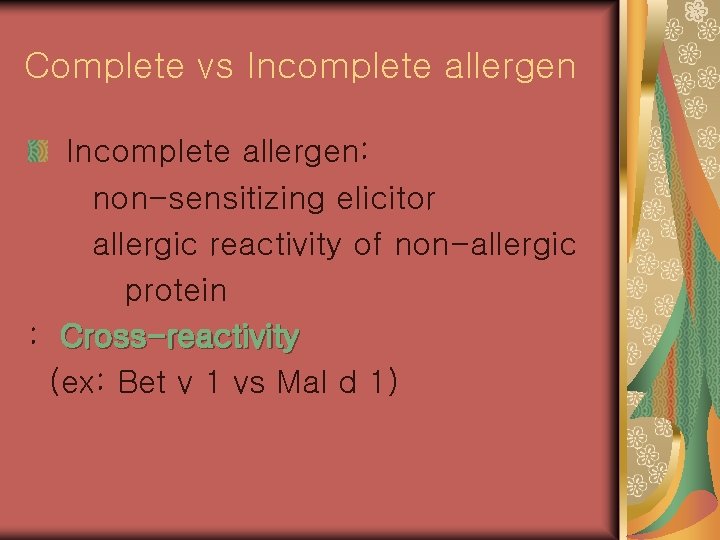
Complete vs Incomplete allergen: non-sensitizing elicitor allergic reactivity of non-allergic protein : Cross-reactivity (ex: Bet v 1 vs Mal d 1)
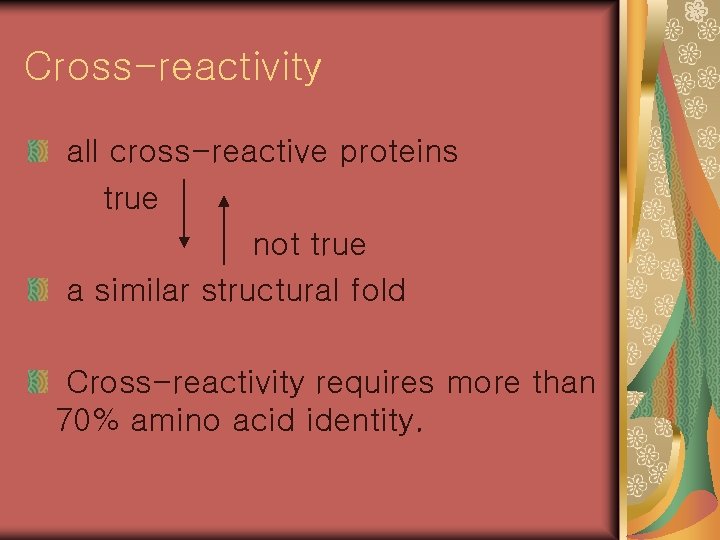
Cross-reactivity all cross-reactive proteins true not true a similar structural fold Cross-reactivity requires more than 70% amino acid identity.
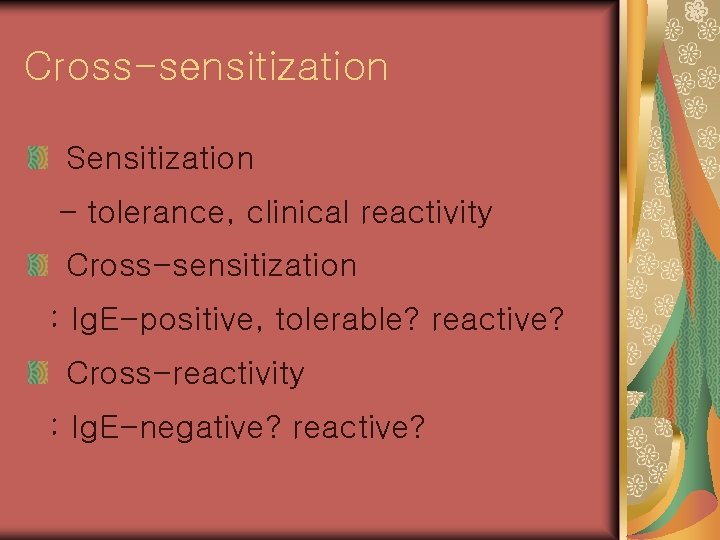
Cross-sensitization Sensitization – tolerance, clinical reactivity Cross-sensitization : Ig. E-positive, tolerable? reactive? Cross-reactivity : Ig. E-negative? reactive?
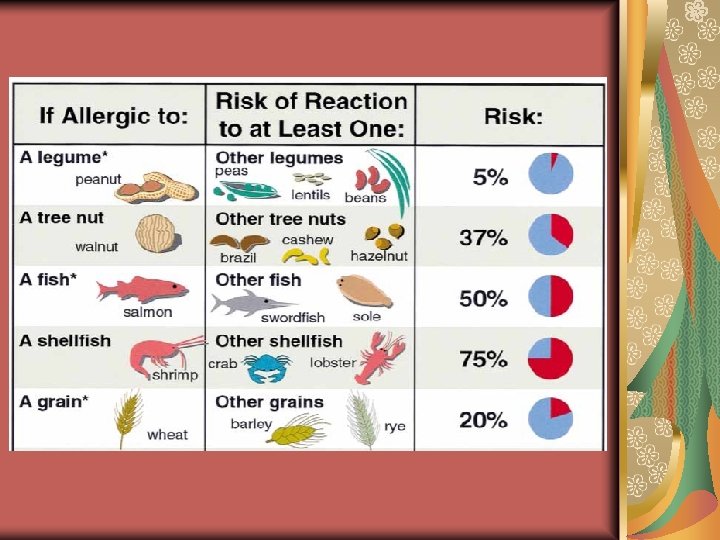
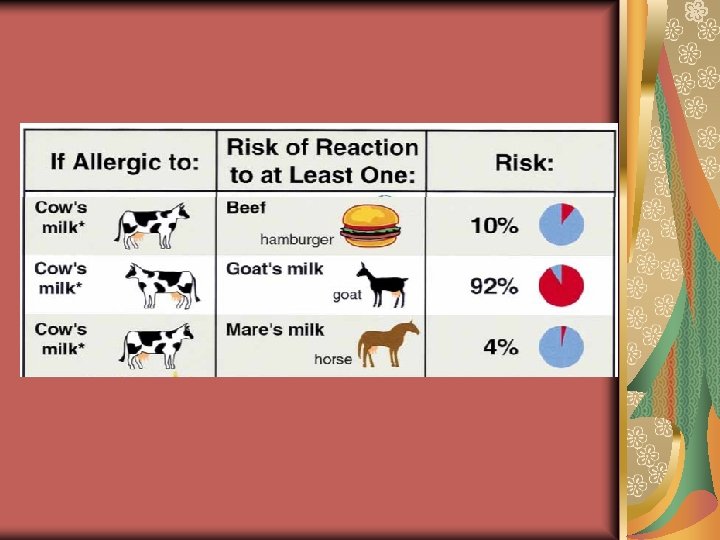
Legumes tree nuts, seeds Fish Shell fish cereal grain avian and mammalian food (meat, milk) fruit, tree pollen, latex
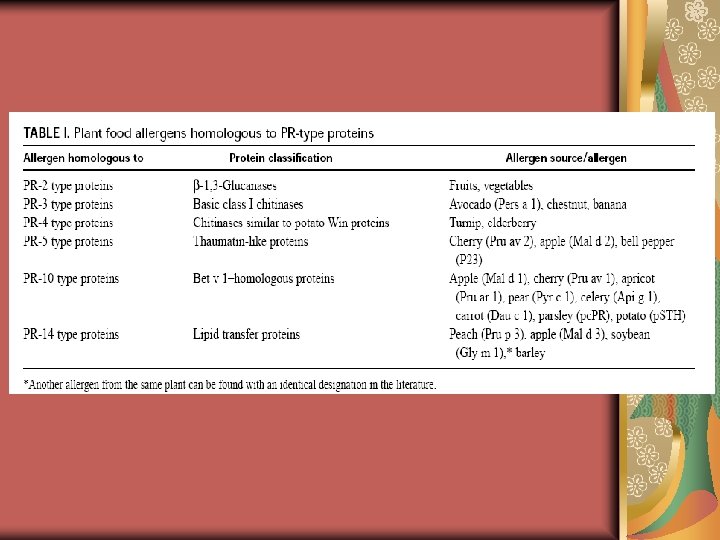
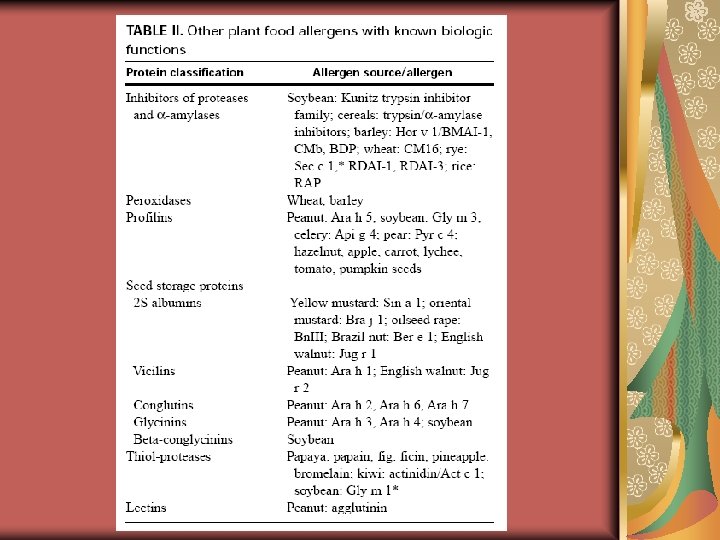
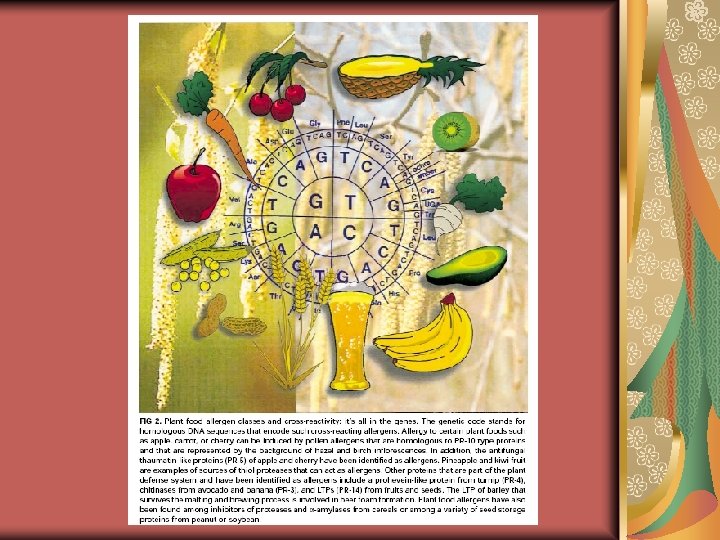
Plant-derived food allergens Pathogenesis-related proteins(PRs) : anti-infectious(fungus, bacteria. . ) anti-wound(insect…) anti-stress Seeds storage protein and enzyme inhibitors…
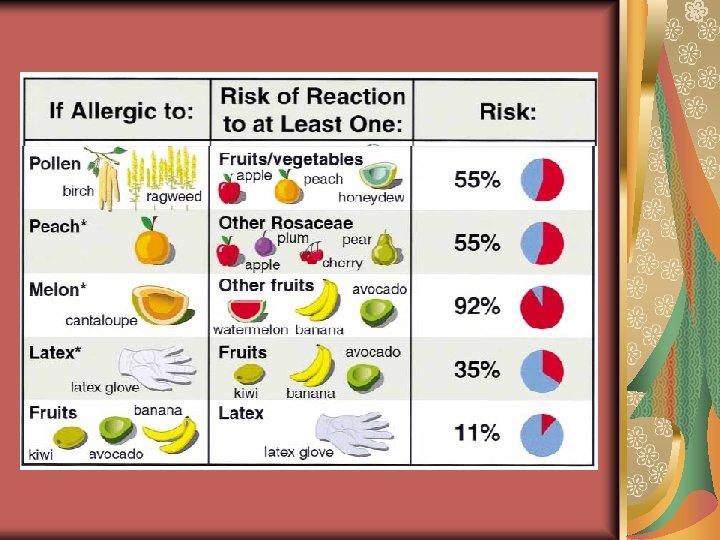
Oral allergy syndrome : Pollen-food allergy syndrome : PR-10 type proteins Latex allergy with fruit : banana, avocado, kiwi, melon, peach
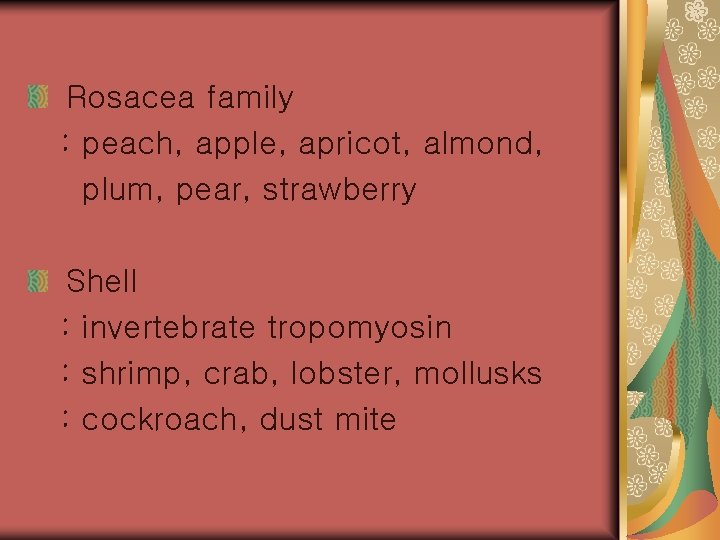
Rosacea family : peach, apple, apricot, almond, plum, pear, strawberry Shell : invertebrate tropomyosin : shrimp, crab, lobster, mollusks : cockroach, dust mite
Thanks for your attentions !