
Allegory of the Revolution Jeaurat de Bertray Turning
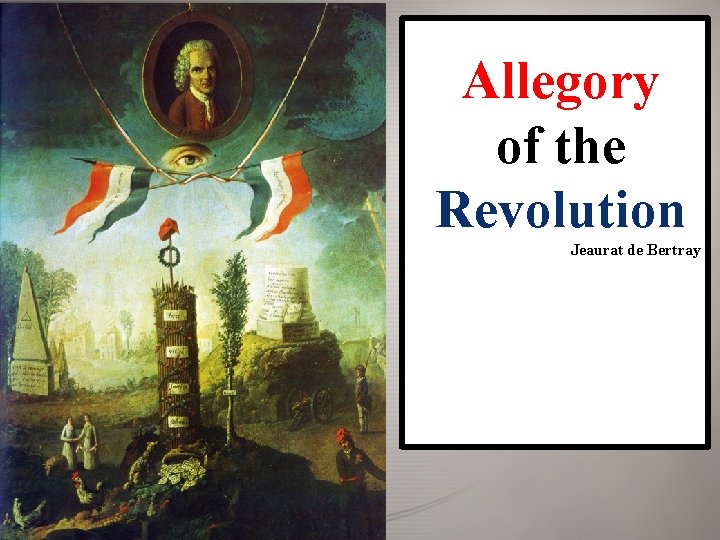
Allegory of the Revolution Jeaurat de Bertray
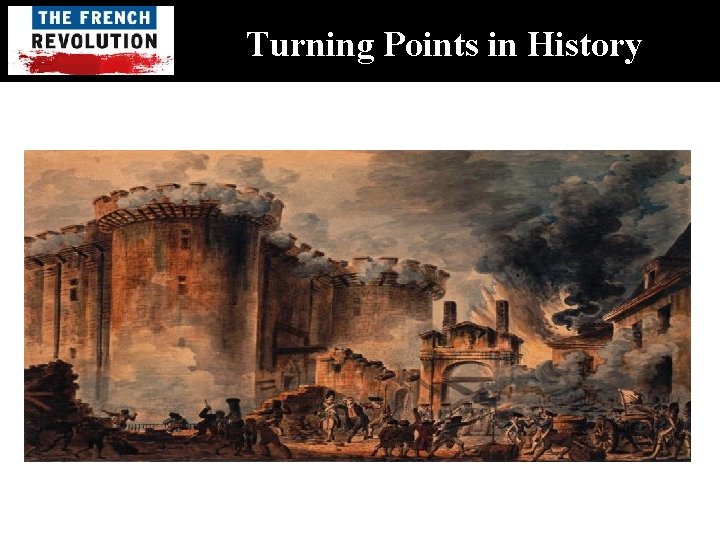
Turning Points in History
Turning Points in History Metaphor

Turning Points in History Metaphor
Turning Points in History Analyze various ways in which government policies during the Revolutionary and Napoleonic era contributed a greater sense of French national identity in the period 1789 – 1815.
Turning Points in History French national identity “National identity is intended to evoke the increasing likelihood of inhabitants of France thinking and acting as citizens of France rather than subjects of the monarchy. ”
1. 2. 3. 4. 5. People’s Rights Concept of the Nation in Arms: Levee en Masse Values of Democratic Society Notions of Political “Left” and “Right” Place of Religion in the Modern Nation The question of economic freedom and the sanctity of property came to dominate the political agenda.
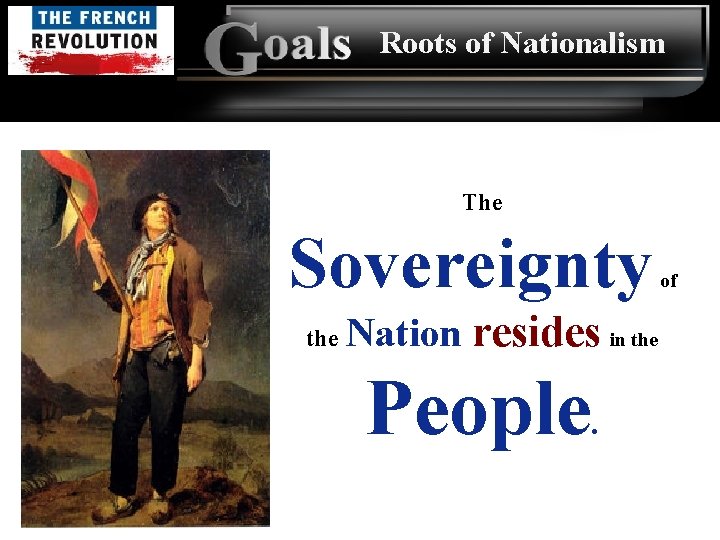
Roots of Nationalism The Sovereignty the Nation resides in the People . of
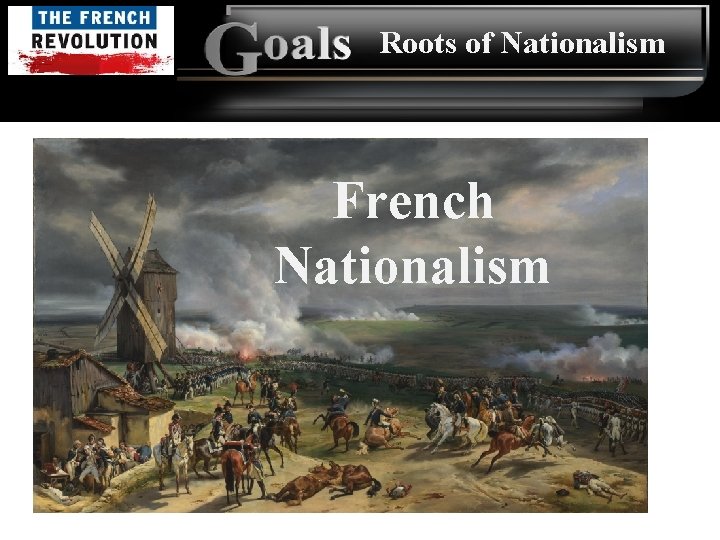
Roots of Nationalism French Nationalism
Essays 1. 2. 3. Analyze how the economic and political problems of the French monarchy led to the French Revolution. Analyze various ways in which government policies during the Revolutionary and Napoleonic era contributed to a greater sense of French national identity in the period 1789 to 1815. Assess the ways in which women participated and influenced the French Revolution.
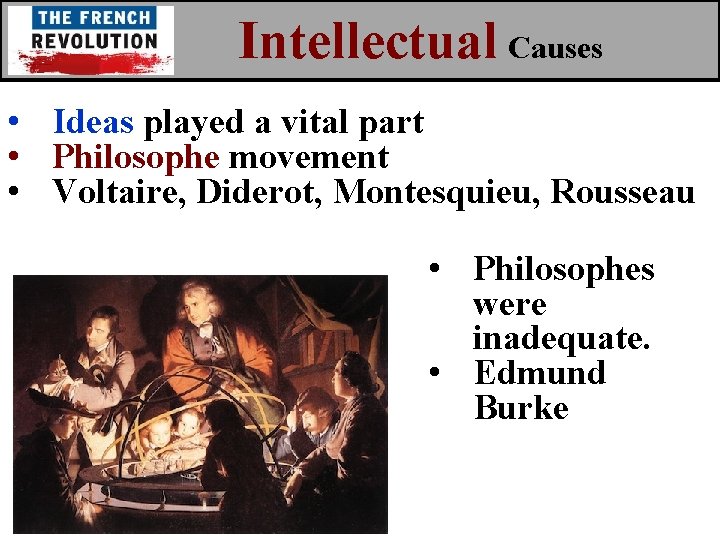
Intellectual Causes • Ideas played a vital part • Philosophe movement • Voltaire, Diderot, Montesquieu, Rousseau • Philosophes were inadequate. • Edmund Burke
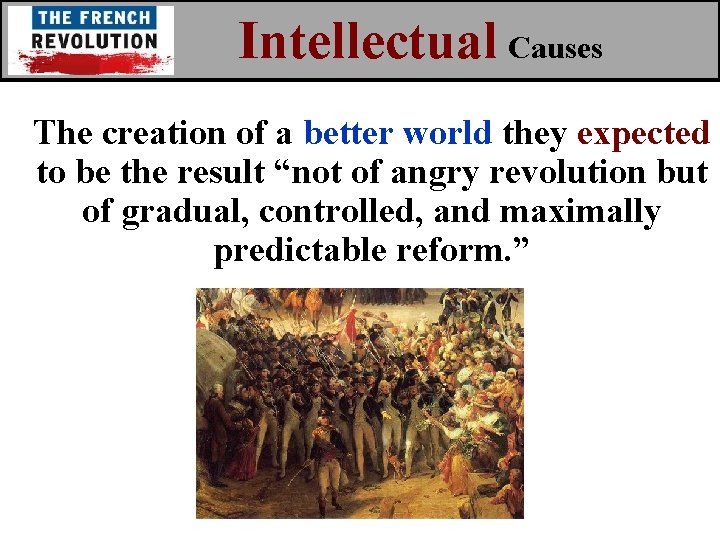
Intellectual Causes The creation of a better world they expected to be the result “not of angry revolution but of gradual, controlled, and maximally predictable reform. ”
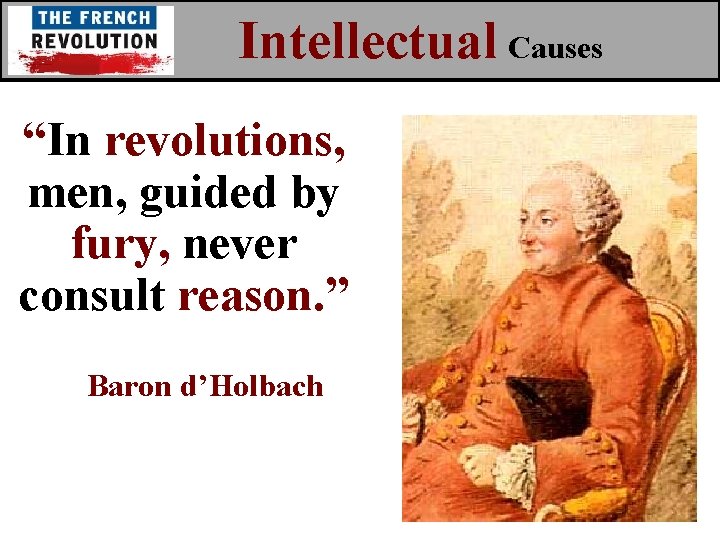
Intellectual Causes “In revolutions, men, guided by fury, never consult reason. ” Baron d’Holbach

Intellectual Causes “Republican government in France and the diffusion of republican ideals in other European countries influenced the evolution of European political life long after the Revolution. ”
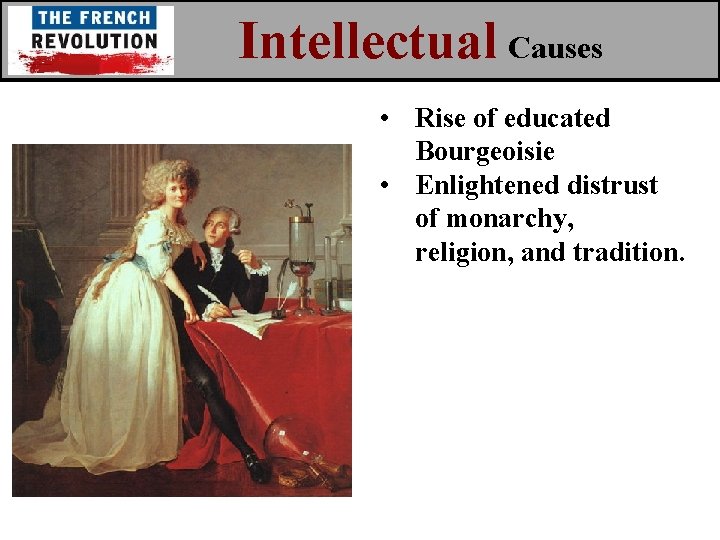
Intellectual Causes • Rise of educated Bourgeoisie • Enlightened distrust of monarchy, religion, and tradition.
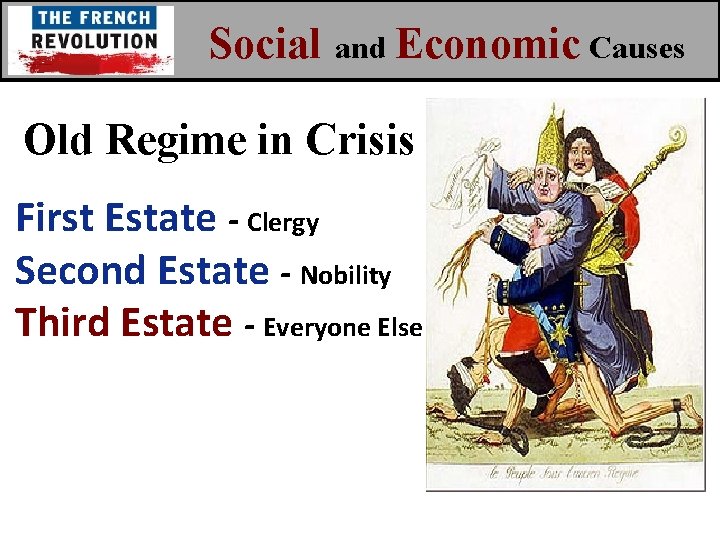
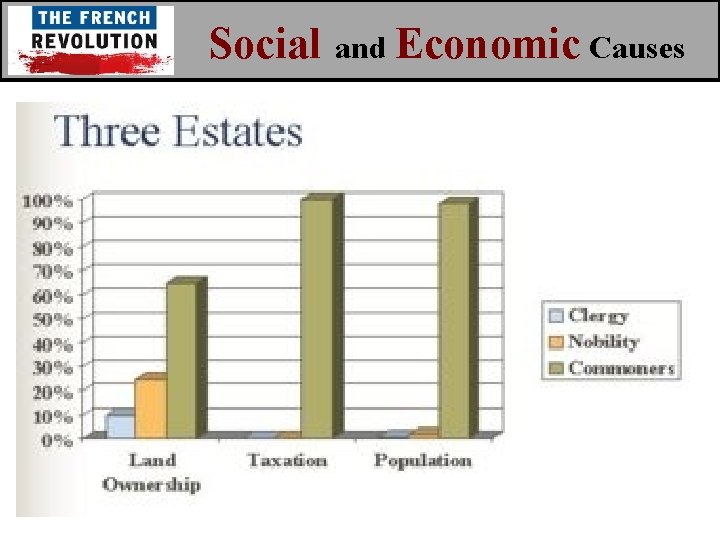
Social and Economic Causes Old Regime in Crisis First Estate - Clergy Second Estate - Nobility Third Estate - Everyone Else
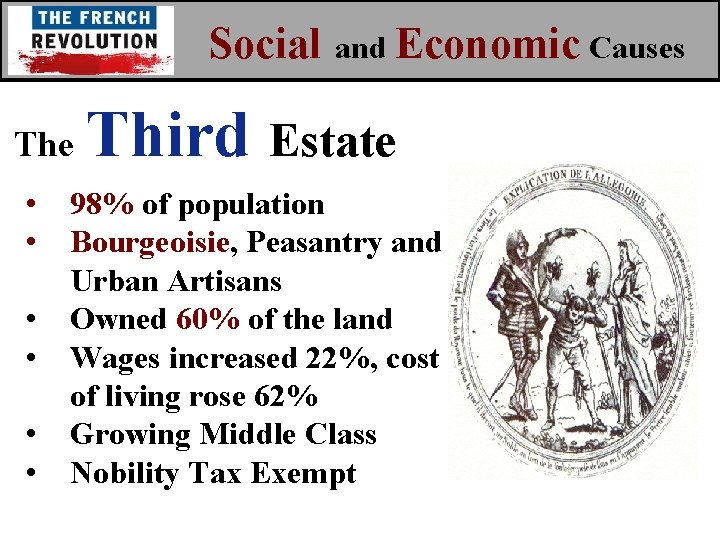
Social The • • • and Economic Causes Third Estate 98% of population Bourgeoisie, Peasantry and Urban Artisans Owned 60% of the land Wages increased 22%, cost of living rose 62% Growing Middle Class Nobility Tax Exempt
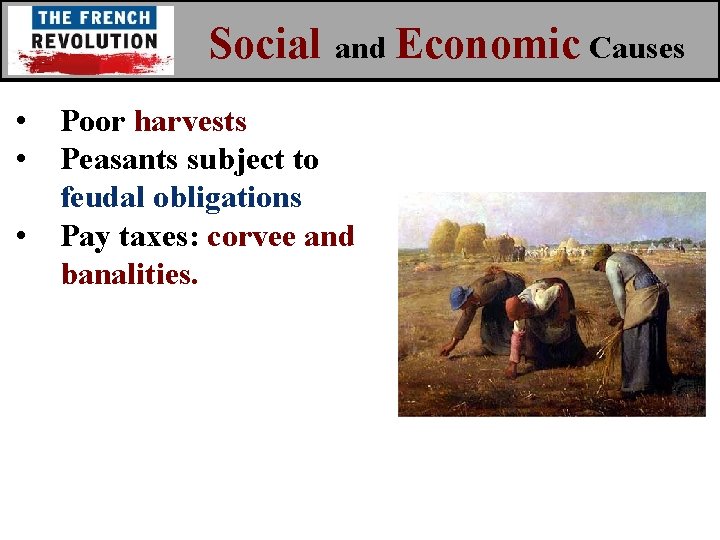
Social • • • and Economic Causes Poor harvests Peasants subject to feudal obligations Pay taxes: corvee and banalities.
Social and Economic Causes
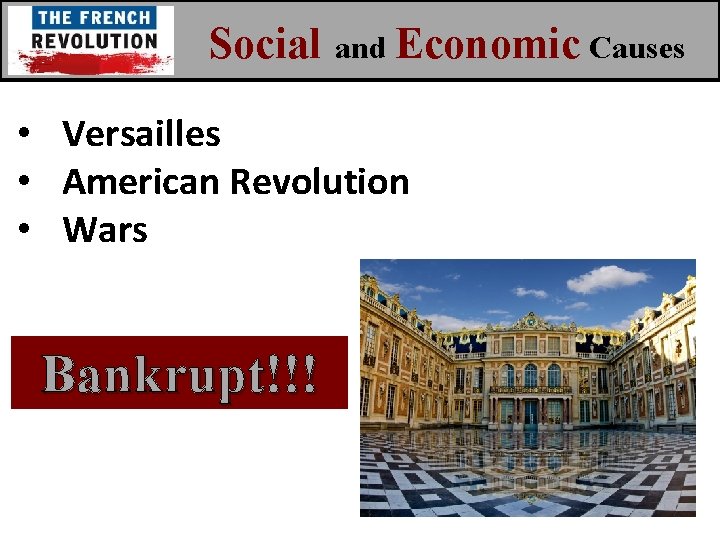
Social and Economic Causes • Versailles • American Revolution • Wars Bankrupt!!!
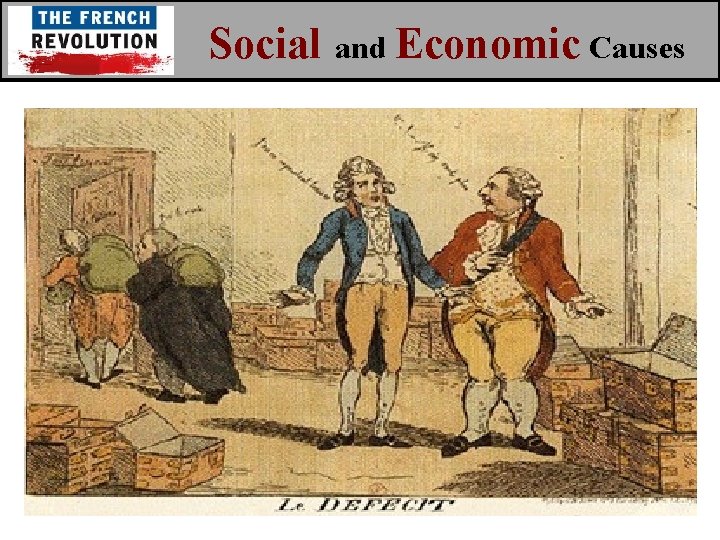
Social and Economic Causes
Political Causes • Madame Deficit, Marie Antoinette • 1780 s, military spending = 25% • 50% of budget for interest on debt. Bankrupt!!! Calling the Estates General
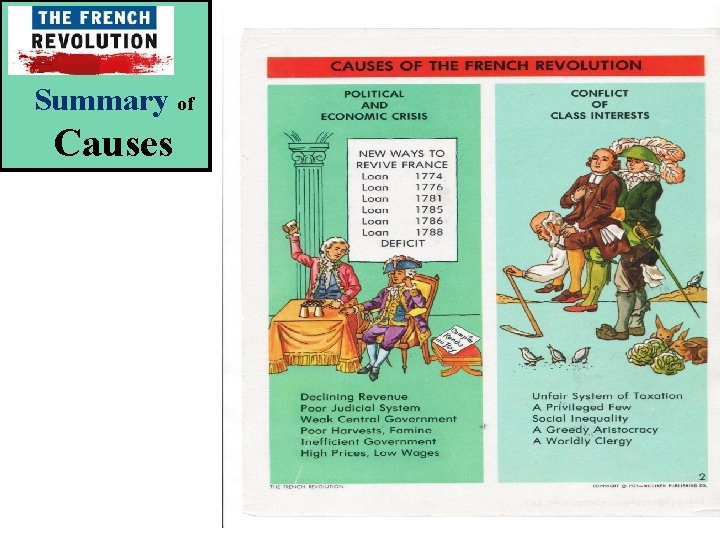
Summary of Causes
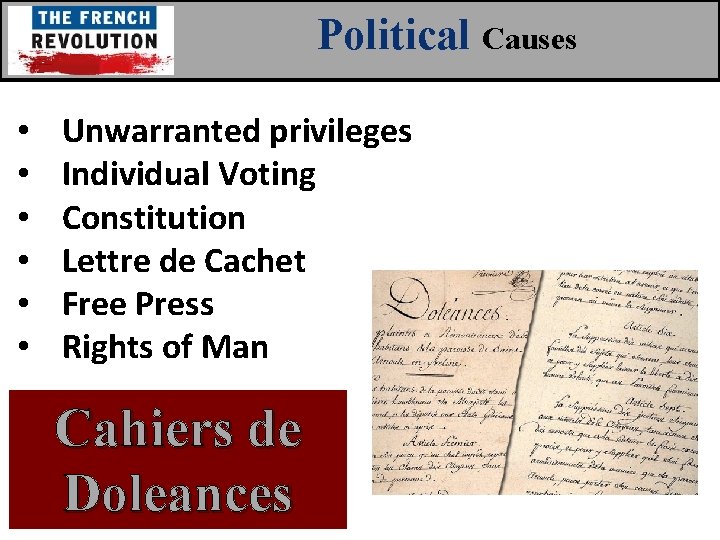
Political Causes • • • Unwarranted privileges Individual Voting Constitution Lettre de Cachet Free Press Rights of Man Cahiers de Doleances
National Identity King Louis XVI’s policies inspired a sense of unity against the French government, thus building a common bond among the people.
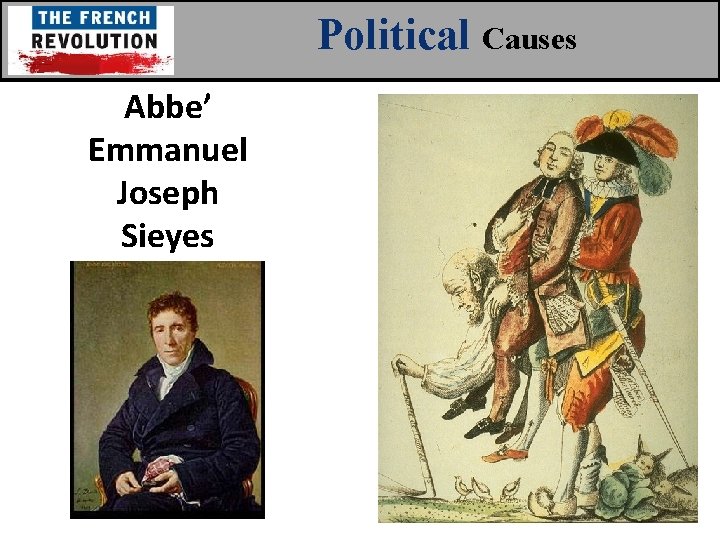
Political Causes Abbe’ Emmanuel Joseph Sieyes
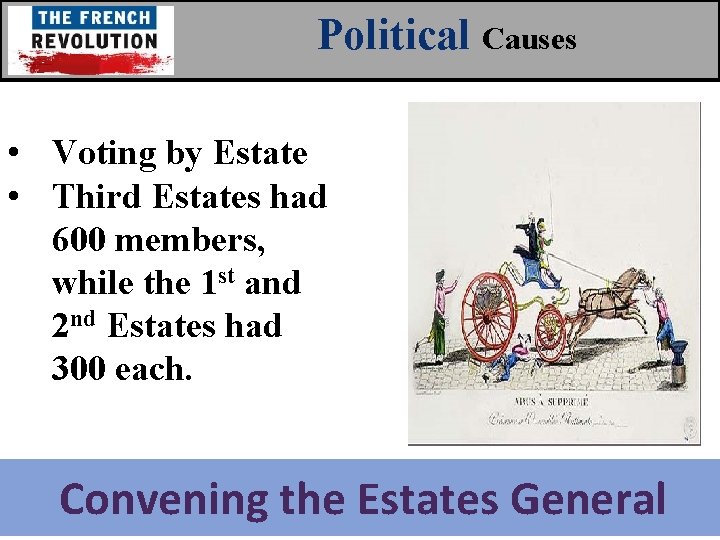
Political Causes • Voting by Estate • Third Estates had 600 members, while the 1 st and 2 nd Estates had 300 each. Convening the Estates General
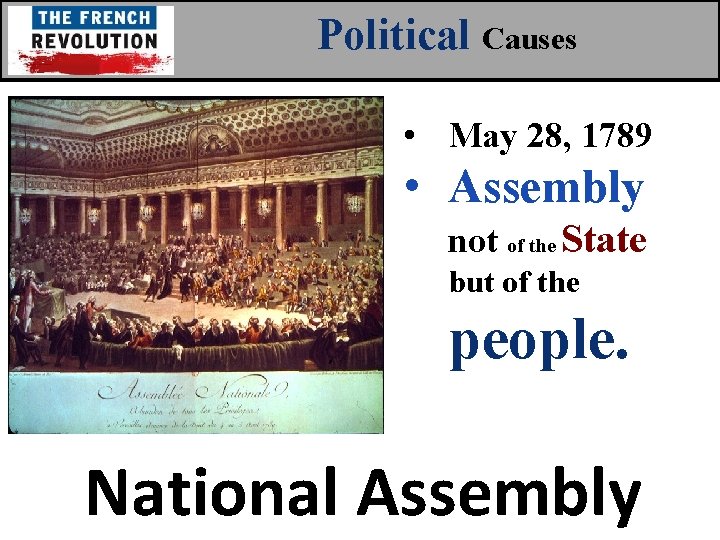
Political Causes • May 28, 1789 • Assembly not of the State but of the people. National Assembly
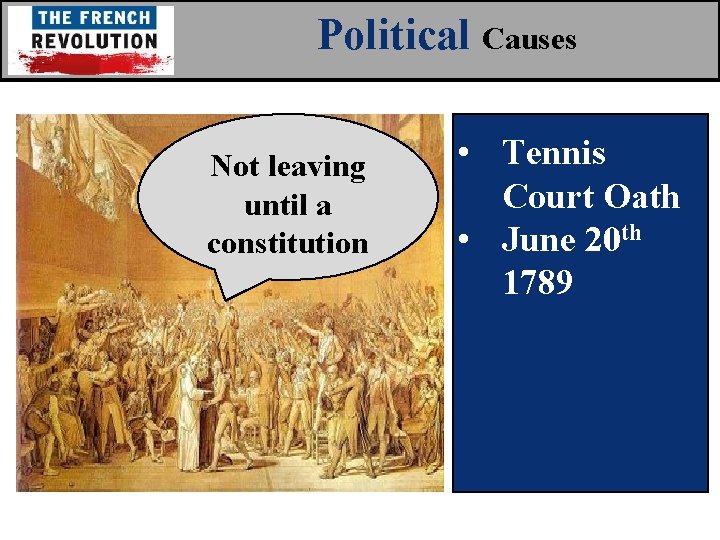
Political Causes Not leaving until a constitution • Tennis Court Oath • June 20 th 1789
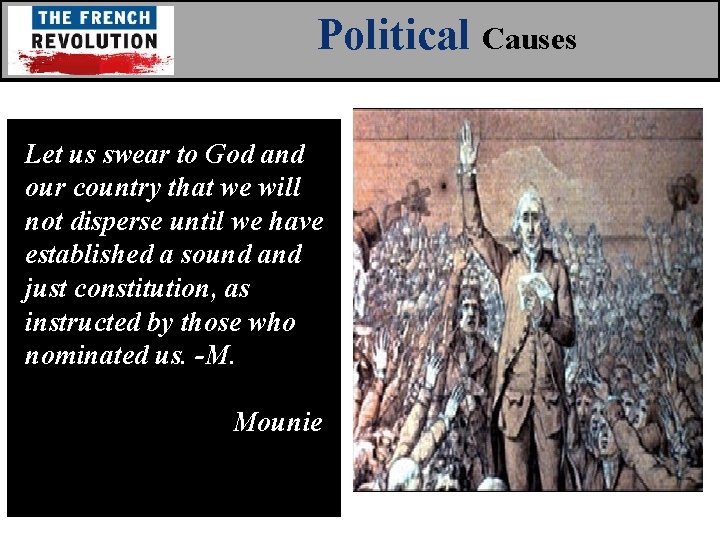
Political Causes Let us swear to God and our country that we will not disperse until we have established a sound and just constitution, as instructed by those who nominated us. -M. Mounie
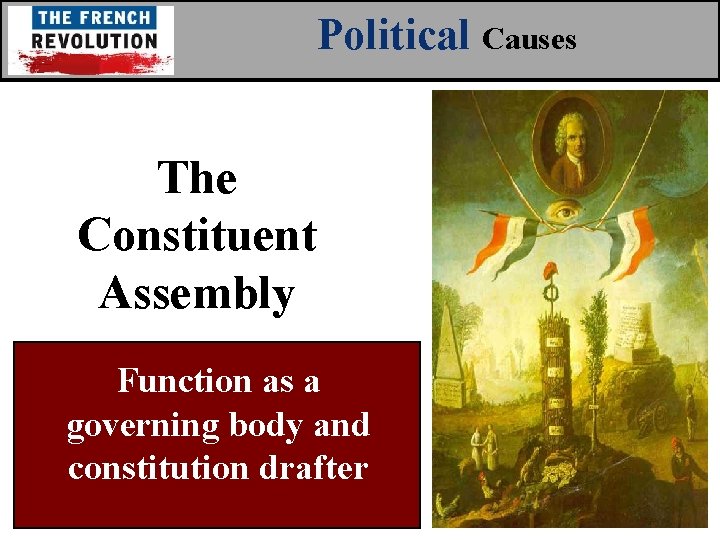
Political Causes The Constituent Assembly Function as a governing body and constitution drafter
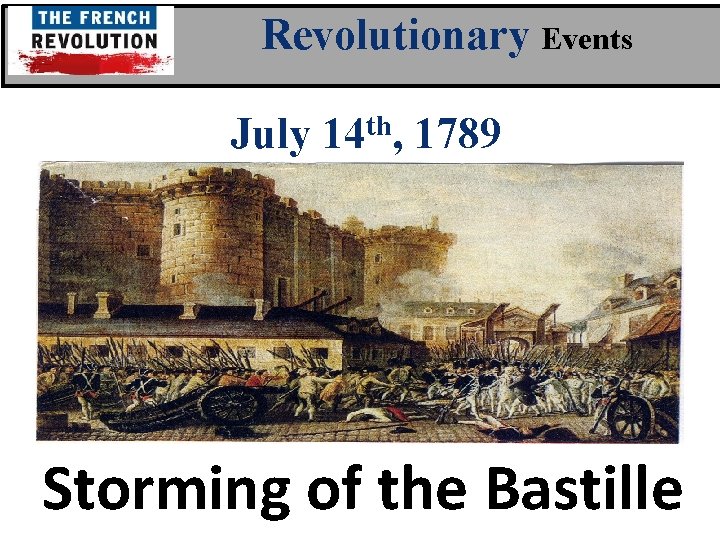
Revolutionary Events July th 14 , 1789 Storming of the Bastille
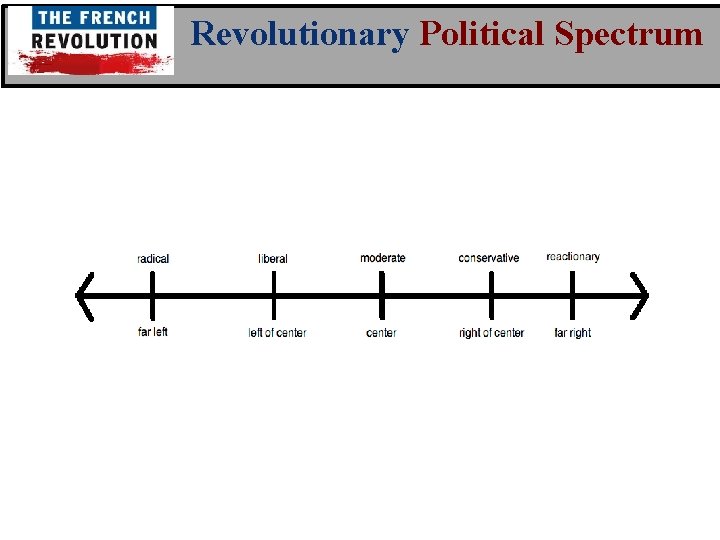
Revolutionary Political Spectrum
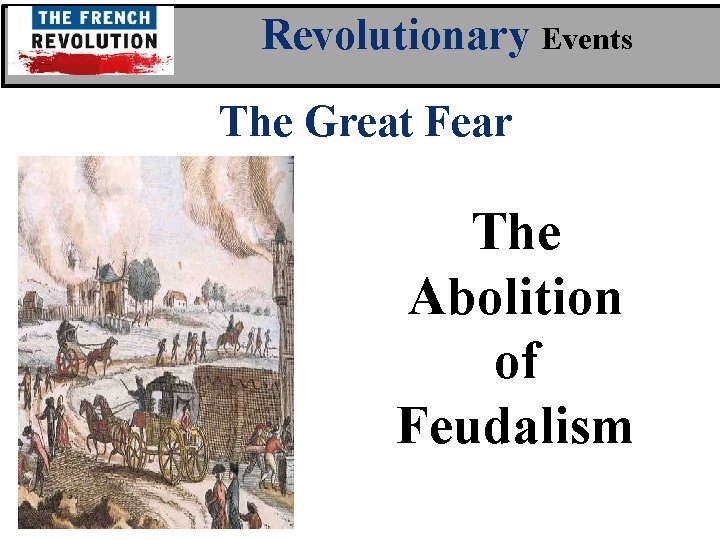
Revolutionary Events The Great Fear The Abolition of Feudalism
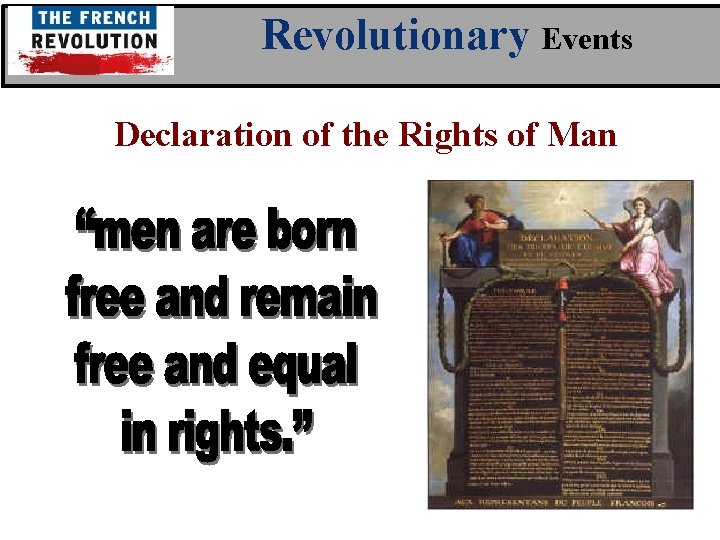
Revolutionary Events Declaration of the Rights of Man

National Identity How does this transform the people of France?
National Identity Establishes the government as the guarantor of individual rights and transforms inhabitants of France from subjects of the king to citizens of France
Revolutionary Slogan Liberty Equality Fraternity
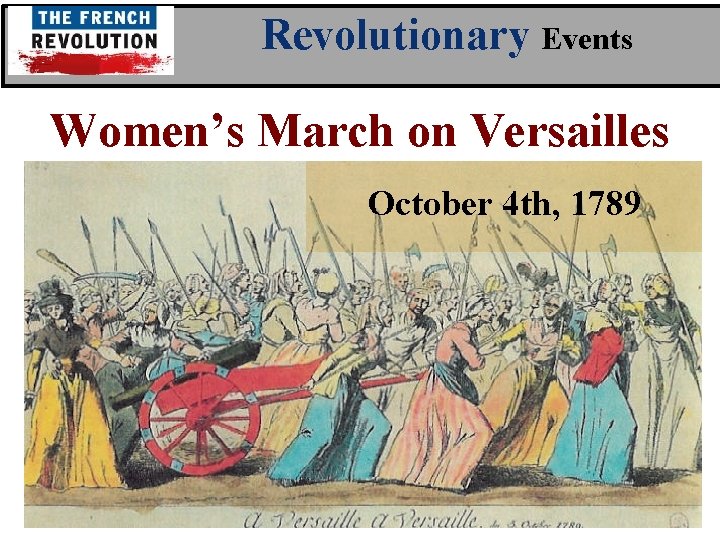
Revolutionary Events Women’s March on Versailles October 4 th, 1789
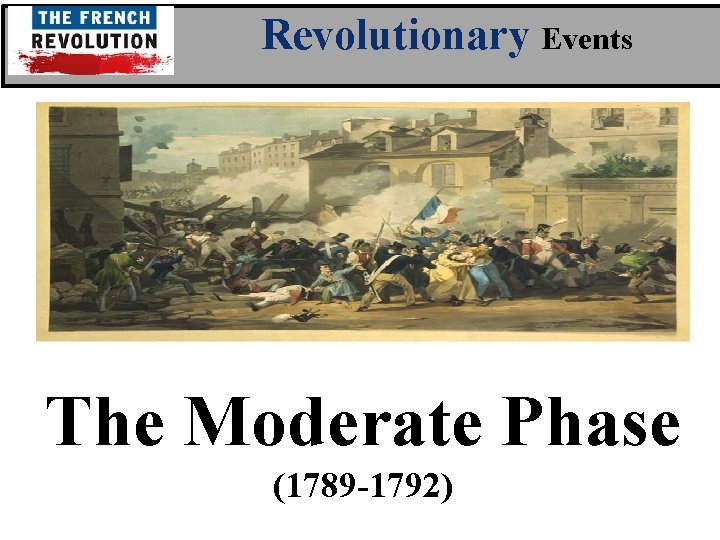
Revolutionary Events The Moderate Phase (1789 -1792)
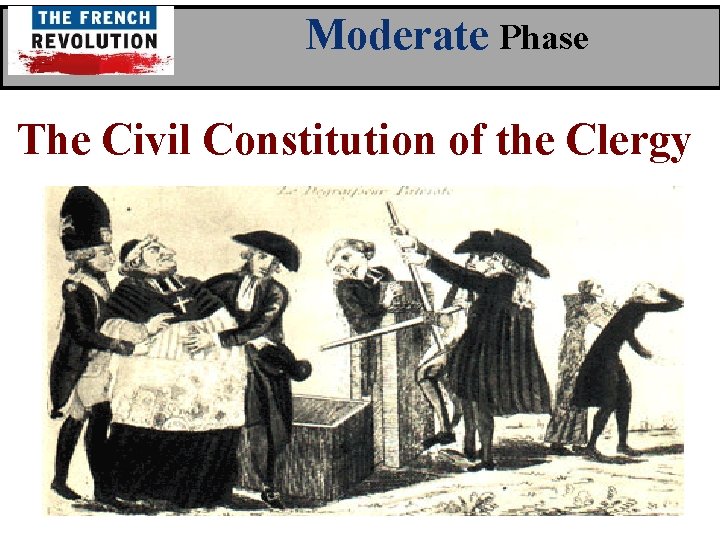
Moderate Phase The Civil Constitution of the Clergy
National Identity Government policy weakened the independence of the Catholic Church, weakening people’s attaachment to rival authority.
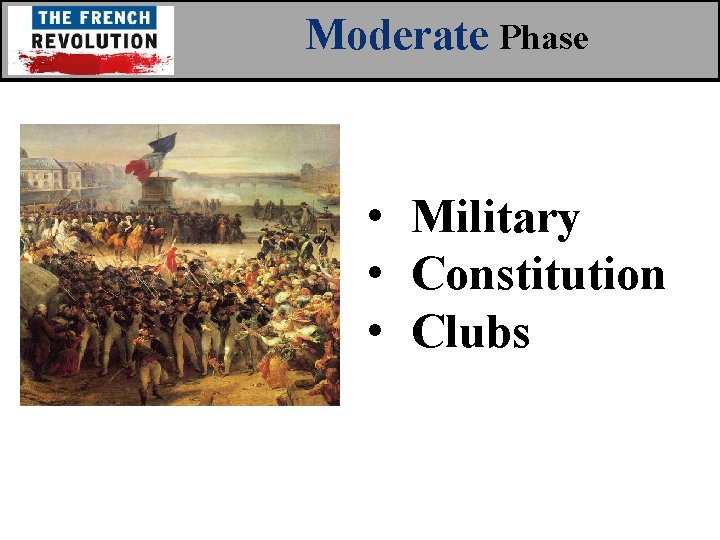
Moderate Phase • Military • Constitution • Clubs
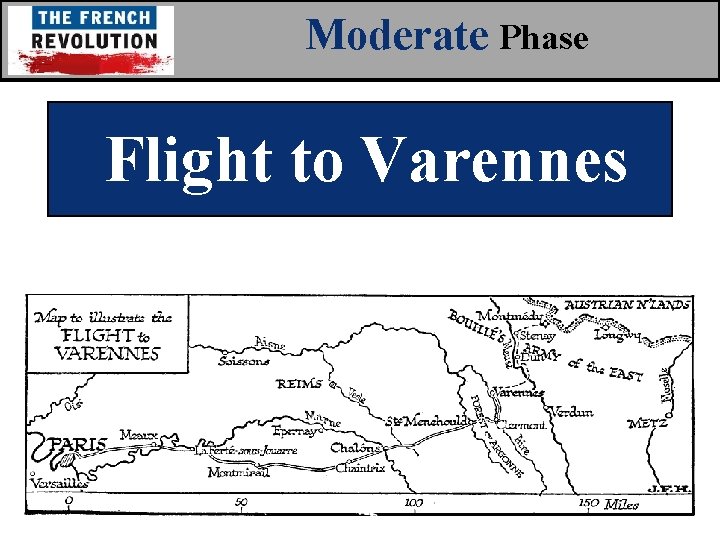
Moderate Phase Flight to Varennes
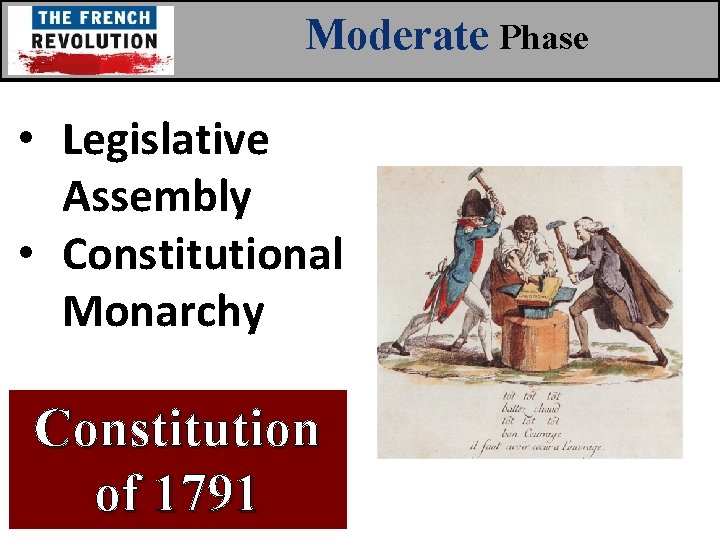
Moderate Phase • Legislative Assembly • Constitutional Monarchy Constitution of 1791
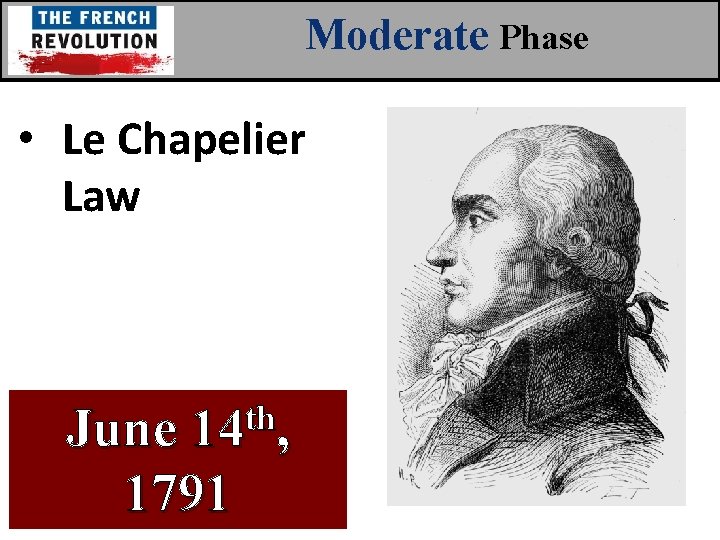
Moderate Phase • Le Chapelier Law th 14 , June 1791

National Identity How does this law illustrate the governments impact on the French national identity?

National Identity Establishes government as a regulator of the economy and protector of individual economic interests.
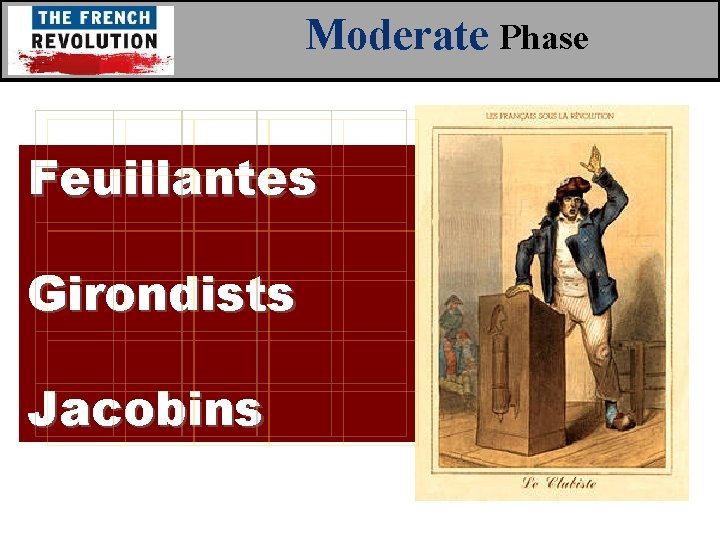
Moderate Phase Feuillantes Girondists Jacobins
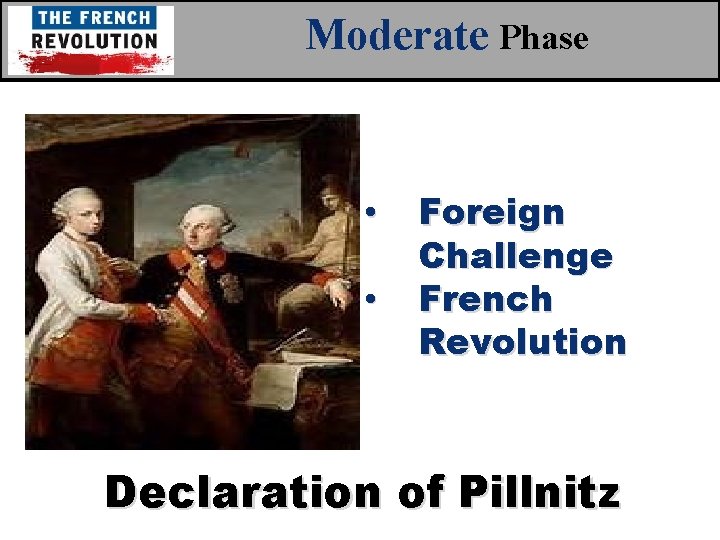
Moderate Phase • • Foreign Challenge French Revolution Declaration of Pillnitz
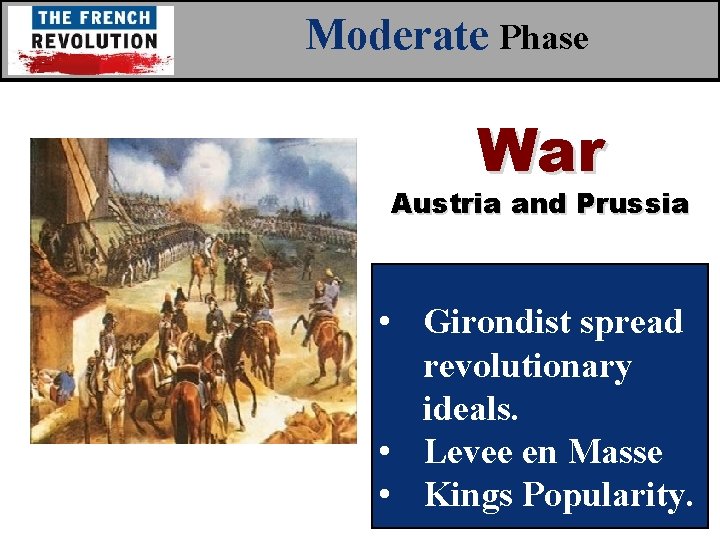
Moderate Phase War Austria and Prussia • Girondist spread revolutionary ideals. • Levee en Masse • Kings Popularity.
National Identity Levee en Masse creates a citizen army and theoretically mobilizes all citizens into service of France.
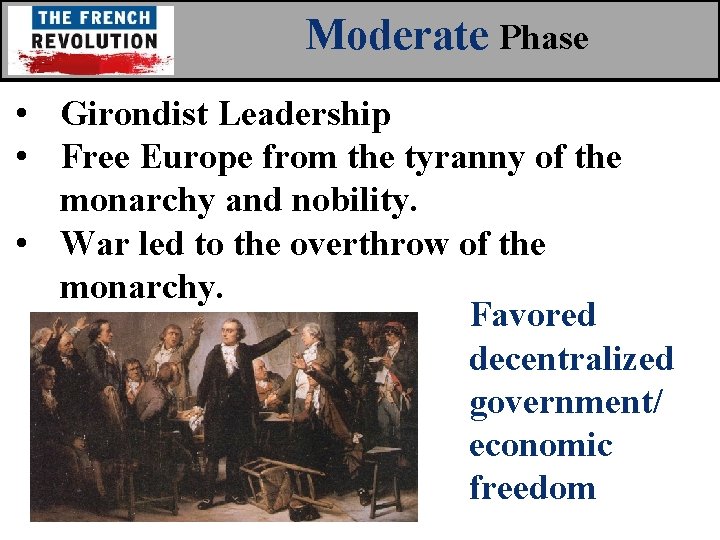
Moderate Phase • Girondist Leadership • Free Europe from the tyranny of the monarchy and nobility. • War led to the overthrow of the monarchy. Favored decentralized government/ economic freedom
Moderate Phase • Kings flight weakened the idea of a constitutional monarchy. • Republican Jacobeans, Marat, Danton, Robespierre given up the idea of constitutional monarchy.
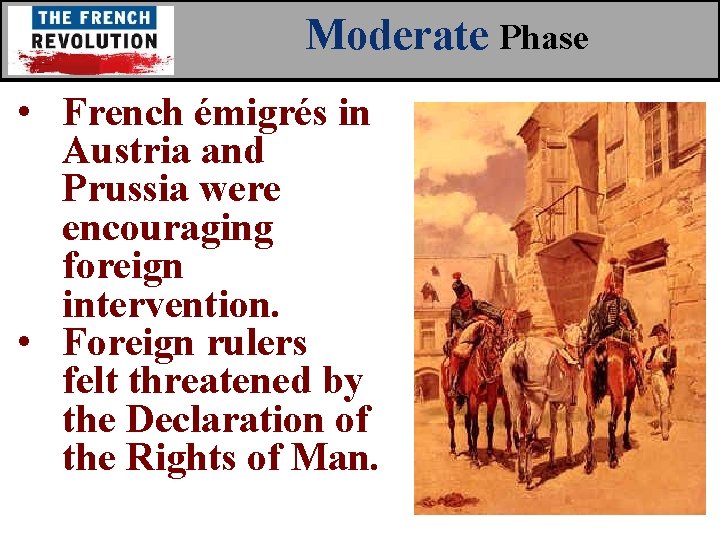
Moderate Phase • French émigrés in Austria and Prussia were encouraging foreign intervention. • Foreign rulers felt threatened by the Declaration of the Rights of Man.
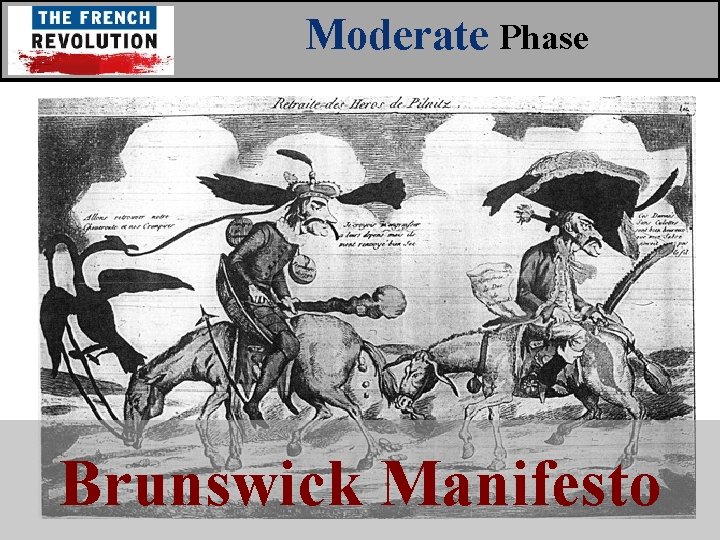
Moderate Phase Brunswick Manifesto
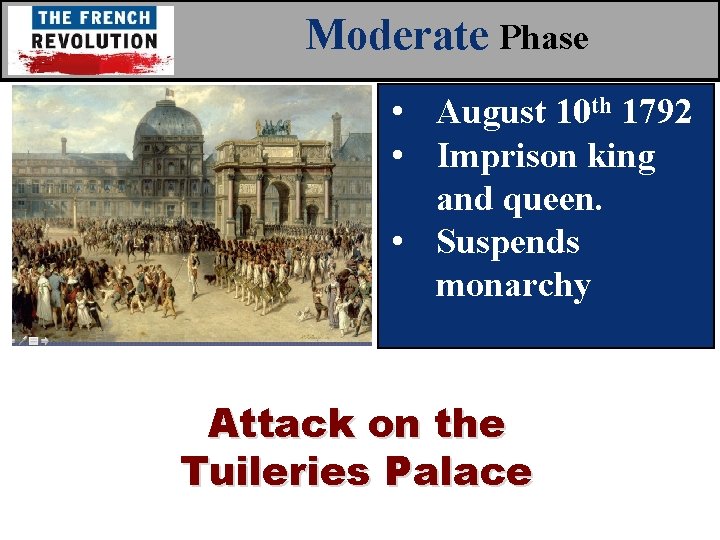
Moderate Phase • August 10 th 1792 • Imprison king and queen. • Suspends monarchy Attack on the Tuileries Palace
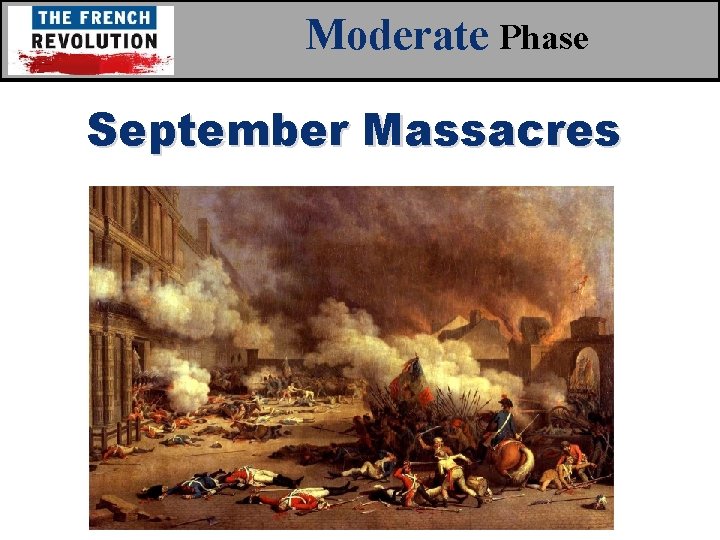
Moderate Phase September Massacres
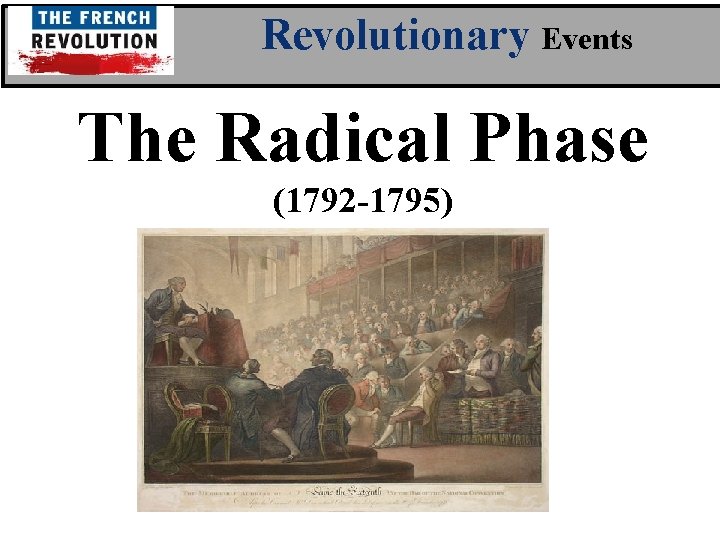
Revolutionary Events The Radical Phase (1792 -1795)
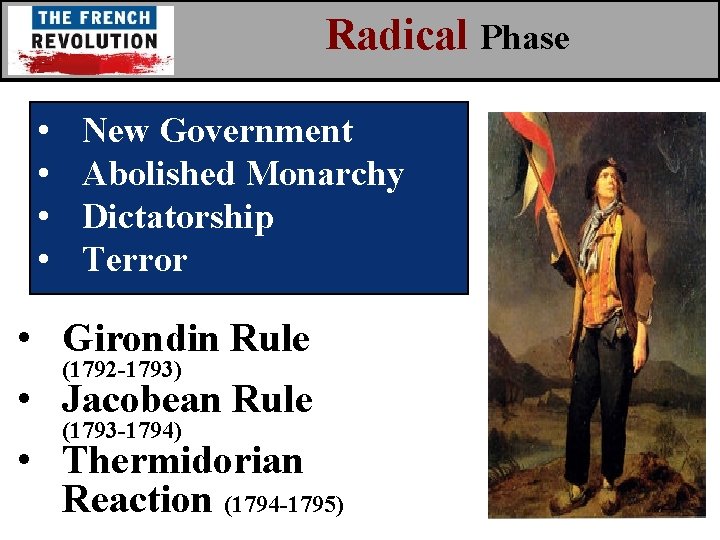
Radical Phase • • New Government Abolished Monarchy Dictatorship Terror • Girondin Rule (1792 -1793) • Jacobean Rule (1793 -1794) • Thermidorian Reaction (1794 -1795)
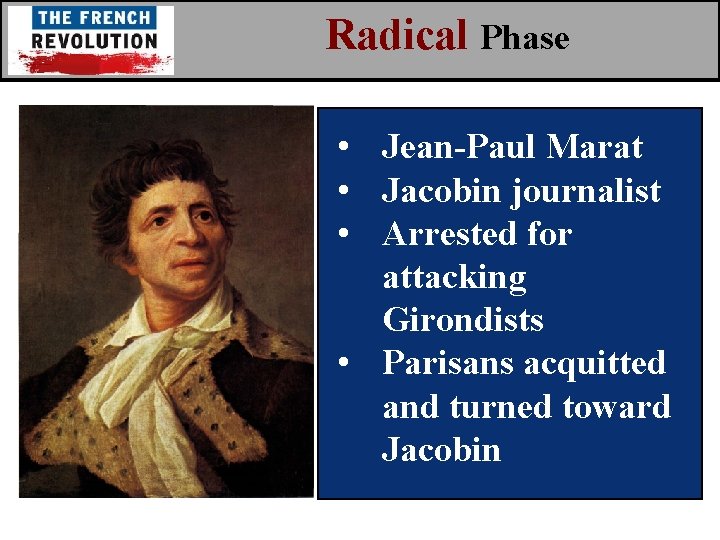
Radical Phase • Jean-Paul Marat • Jacobin journalist • Arrested for attacking Girondists • Parisans acquitted and turned toward Jacobin
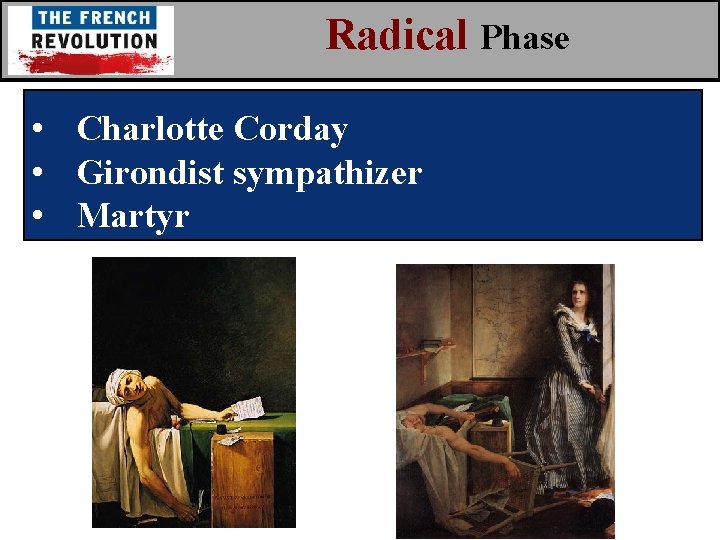
Radical Phase • Charlotte Corday • Girondist sympathizer • Martyr
Radical Phase • Jacobins managed Parisian Mob • June 22, 1793, 80, 000 San-culottes arrested 29 Girondin members of the Convention. • Jacobins were the government. Jacobean Ascension
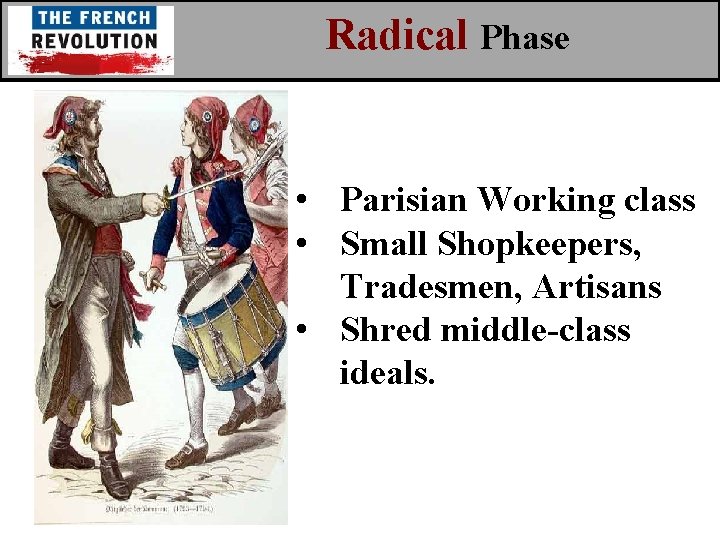
Radical Phase • Parisian Working class • Small Shopkeepers, Tradesmen, Artisans • Shred middle-class ideals.
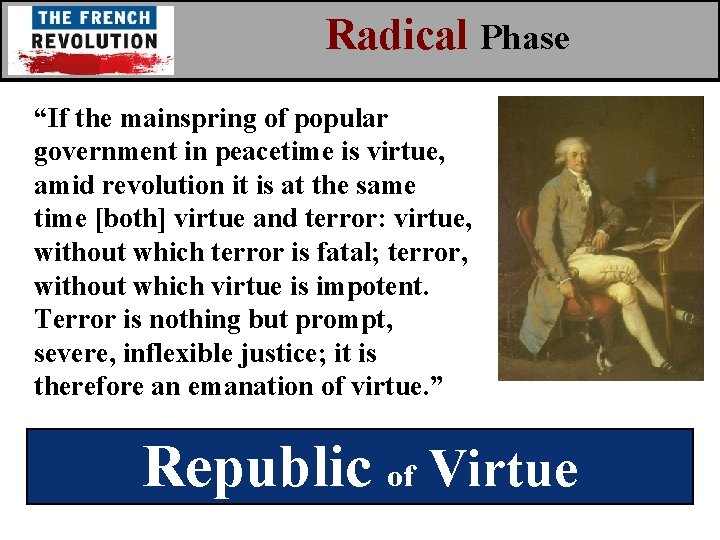
Radical Phase “If the mainspring of popular government in peacetime is virtue, amid revolution it is at the same time [both] virtue and terror: virtue, without which terror is fatal; terror, without which virtue is impotent. Terror is nothing but prompt, severe, inflexible justice; it is therefore an emanation of virtue. ” Republic of Virtue
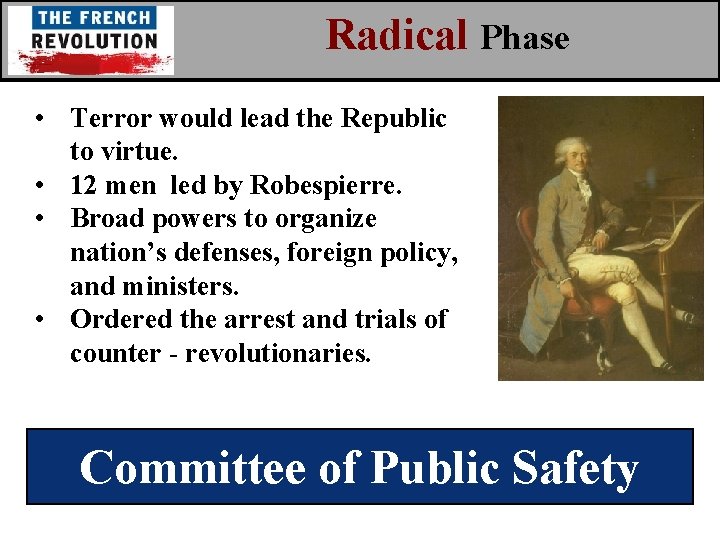
Radical Phase • Terror would lead the Republic to virtue. • 12 men led by Robespierre. • Broad powers to organize nation’s defenses, foreign policy, and ministers. • Ordered the arrest and trials of counter - revolutionaries. Committee of Public Safety
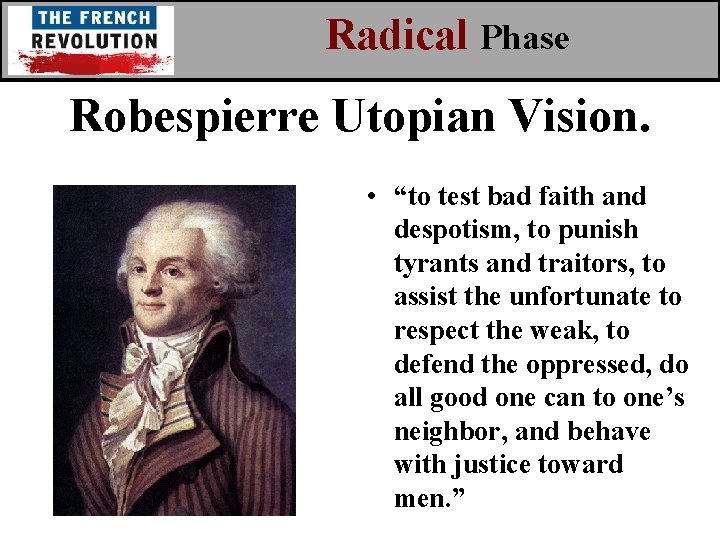
Radical Phase Robespierre Utopian Vision. • “to test bad faith and despotism, to punish tyrants and traitors, to assist the unfortunate to respect the weak, to defend the oppressed, do all good one can to one’s neighbor, and behave with justice toward men. ”
Radical Phase • • Disciple of Rousseau. Considered the general will an absolute First among equals. The Republic of Virtue could not become a reality unless the threats of foreign and civil war were removed. • Instituted the Reign of Terror to save the revolution. • Counter-revolutionaries fell under suspicion.
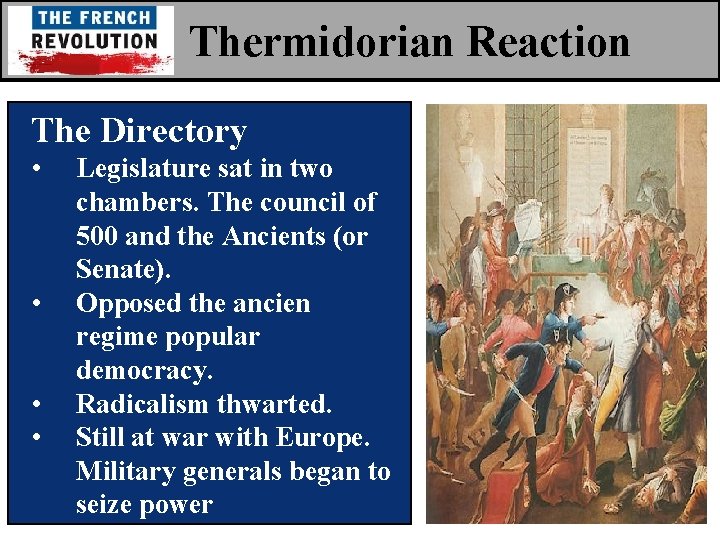
Thermidorian Reaction The Directory • • Legislature sat in two chambers. The council of 500 and the Ancients (or Senate). Opposed the ancien regime popular democracy. Radicalism thwarted. Still at war with Europe. Military generals began to seize power
Legacy and Effects Weakened influence and leadership of the aristocracy. Careers were open to talent. Middle class’ in government. Transformed France into a modern state. (natural, liberal, secular and rational)
- Slides: 71