
All You Need to Know about digits Marta
All You Need to Know about digits Marta Miko Marketing Manager, Middle Grades Math 2014 National Sales Meeting
Agenda Common Core and the Middle Grades 2. Top 3 Things to Know about digits 1. 3
Common Core and digits 4 1
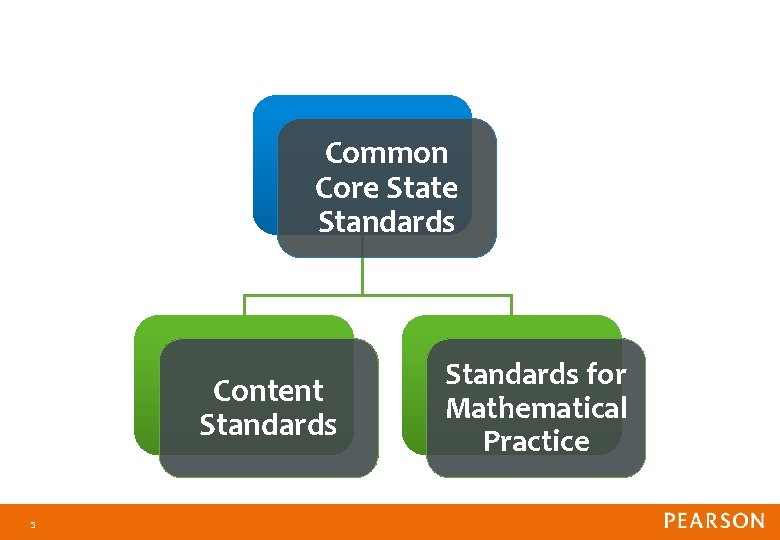
Common Core State Standards Content Standards 5 Standards for Mathematical Practice
Key Middle Grades Math Topics Grade 6: working with ratios and rates and working with variables and variable expressions — the building blocks of algebra. Grade 7: continue the previous grade’s work in proportional relationships, equations, and positive and negative numbers; special emphasis on percentages. Grade 8: continue to learn how to write and reason with algebraic expressions, linear equations with one and two variables, and introduction to mathematical functions (all in preparation for Algebra 1), plus congruence (same shape and size) and similarity of geometric figures (in preparation for high school geometry)
8 Practice Standards 1) Make sense of problems and persevere in solving them. 2) Reason abstractly and quantitatively. 3) Construct viable arguments and critique the reasoning of others. 4) Model with mathematics. 5) Use appropriate tools strategically. 6) Attend to precision. 7) Look for and make use of structure. 8) Look for and express regularity in repeated reasoning.
Compacted Pathway Options Accelerated Pathways for CCSS Coverage: Appendix A of the CCSS provides two accelerated pathways for the middle grades: Accelerated 7 th Grade and 8 th Grade Algebra 1. Accelerating students this way prepares them to take college-level courses, including Calculus, by their senior year of high school. digits offers an Accelerated Grade 7 course.
Top 3 Things to Know About digits 9 2
1) Rigorous, problem-based learning Digital lessons that keep students engaged (host videos, drag-and-drop interactivites, virtual manipulatives) Each lesson starts with interactive problem-based learning (Launch) that allows kids to link their work to larger mathematics concepts and the real world Each lesson features three example problems where cognitive demand increases with each example Each lesson loops back to the opening focus question and asks students to demonstrate both skill fluency and conceptual understanding
2) Assessment-based instruction Readiness Assessments that measure proficiency with pre-requisite skills kick off each Unit digits uses Readiness Assessment results to group students into learner levels (on/above level or below level) Learner levels determine if the auto-assigned and auto-graded homework includes extra skills practice/cognitively guided questions or challenge questions that encourage higher-order thinking Readiness Assessment achievement data is also used to assign individual study plans, customized to each student’s prerequisite skill strength digits is THE ONLY program that uses achievement data analysis to automate intervention and to do so BEFORE kids fall behind
3) Success. Net Plus with Math. XL for School integration digits runs on Success. Net Plus, which houses the complete curriculum as well as robust assessment, data management, reporting, gradebook, and calendar functions digits is the only program on Success. Net Plus that integrates Pearson’s award -winning Math. XL for School® software, which is used for auto-graded online homework, practice, and assessment delivery Data from Math. XL for School flows right into the teacher’s gradebook, where in-depth reports on skills mastery, student or class performance, student activity (and more) can be generated to inform instruction digits is headed for even bigger and better things, moving to Pearson’s new, mobile-optimized, flexible and fun platform, Realize in 2015 for new users

Thank you
- Slides: 13