
ALL WIRED UP Series and parallel circuits can

- Slides: 14
ALL WIRED UP!
Series and parallel circuits can be used to control the amount of electric energy produced. Electric forces arise from the presence of an unbalance in electric charge. An electric circuit allows electrons to flow from a negative pole (excess electrons) to a positive pole (deficient in electrons). Transformation of energy usually releases some energy typically in the form of heat. Essential Question: How are electric circuits wired?
CIRCUITS Electrons with a negative charge, can't "jump" through the air to a positively charged atom. They have to wait until there is a link or bridge between the negative area and the positive area. We usually call this bridge a "circuit. " When a bridge is created, the electrons begin moving quickly. Depending on the resistance of the material making up the bridge, they try to get across as fast as they can. If you're not careful, too many electrons can go across at one time and destroy the "bridge" or the circuit, in the process.
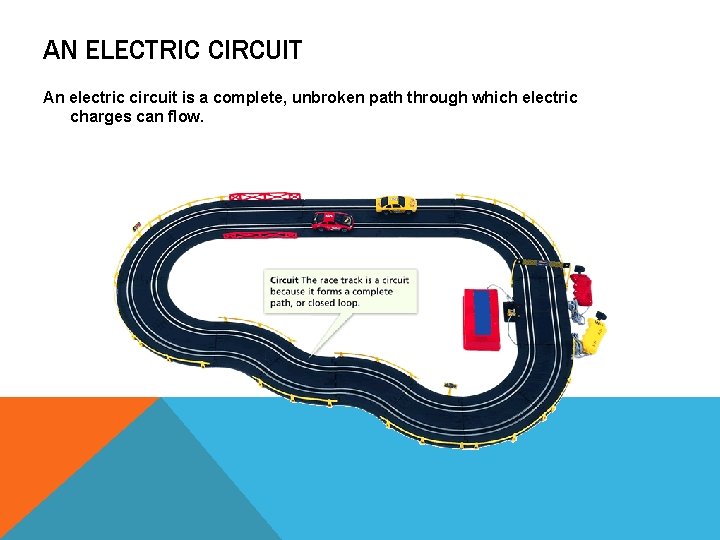
- Electric Current AN ELECTRIC CIRCUIT An electric circuit is a complete, unbroken path through which electric charges can flow.
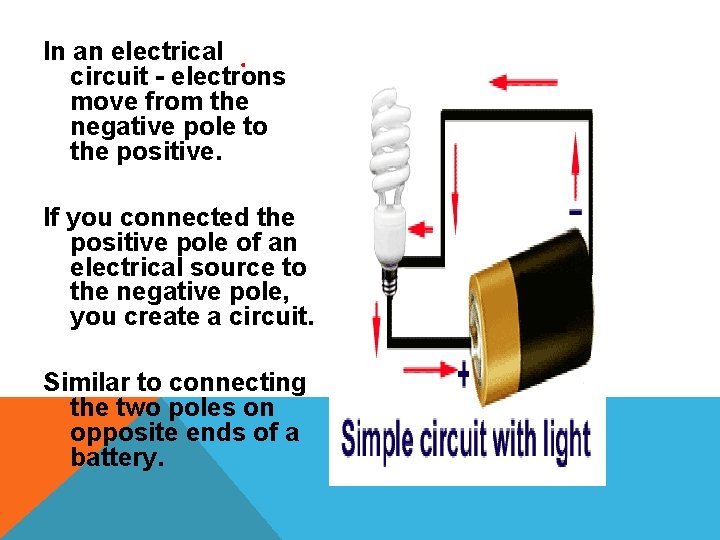
In an electrical circuit - electrons move from the negative pole to the positive. If you connected the positive pole of an electrical source to the negative pole, you create a circuit. Similar to connecting the two poles on opposite ends of a battery.
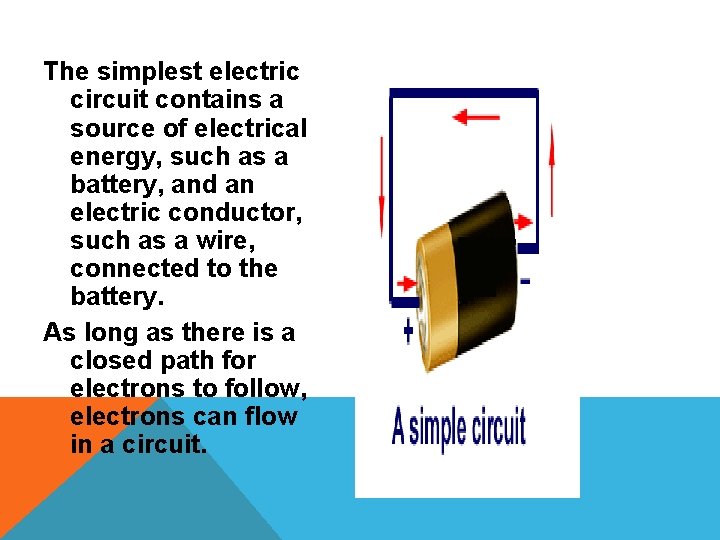
The simplest electric circuit contains a source of electrical energy, such as a battery, and an electric conductor, such as a wire, connected to the battery. As long as there is a closed path for electrons to follow, electrons can flow in a circuit.
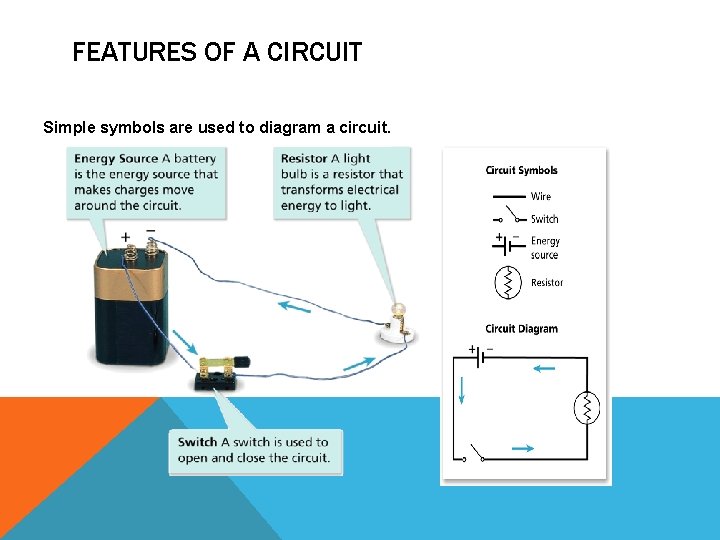
- Electric Circuits FEATURES OF A CIRCUIT Simple symbols are used to diagram a circuit.
SERIES AND PARALLEL CIRCUITS For current to flow, the circuit must provide an unbroken path for current to follow. There are two kinds of basic circuits —series and parallel.
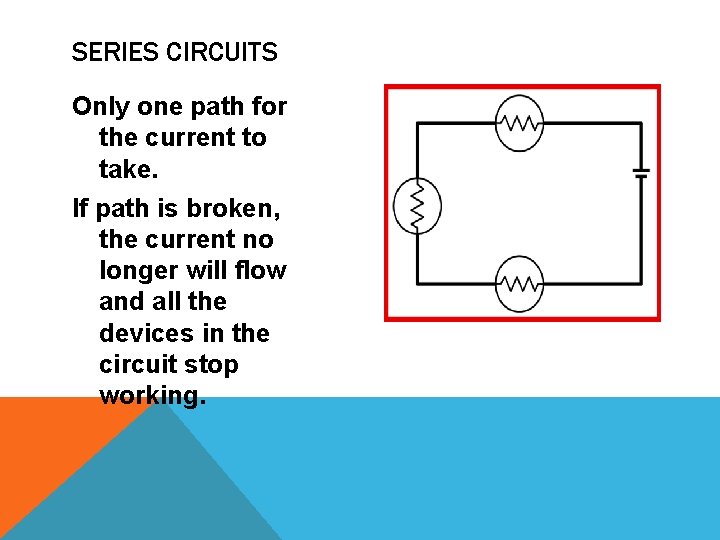
SERIES CIRCUITS Only one path for the current to take. If path is broken, the current no longer will flow and all the devices in the circuit stop working.
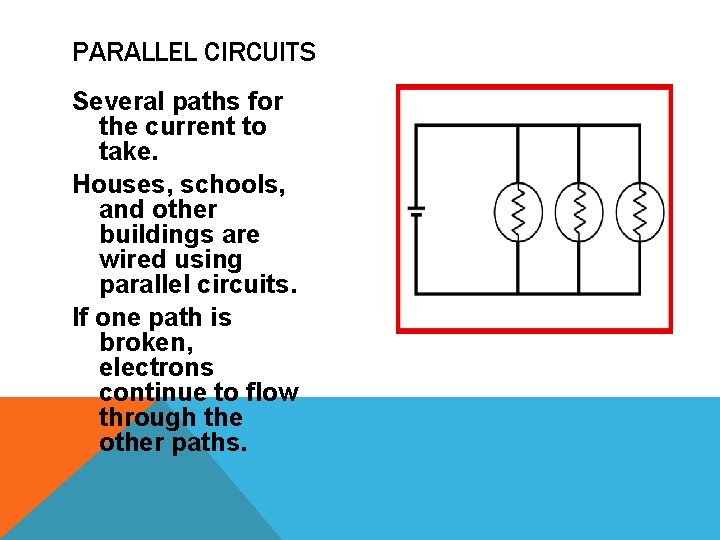
PARALLEL CIRCUITS Several paths for the current to take. Houses, schools, and other buildings are wired using parallel circuits. If one path is broken, electrons continue to flow through the other paths.
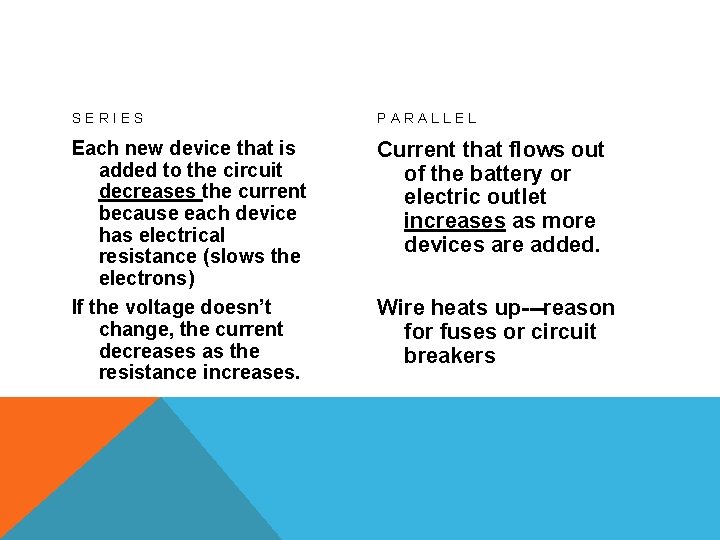
SERIES PARALLEL Each new device that is added to the circuit decreases the current because each device has electrical resistance (slows the electrons) If the voltage doesn’t change, the current decreases as the resistance increases. Current that flows out of the battery or electric outlet increases as more devices are added. Wire heats up---reason for fuses or circuit breakers
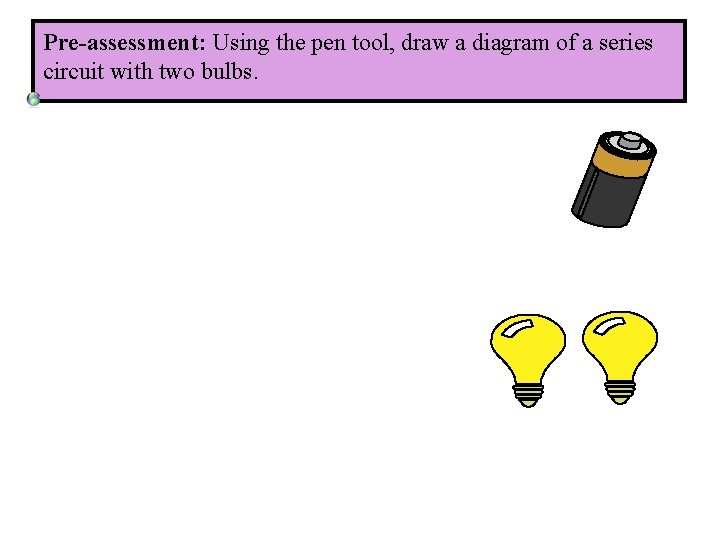
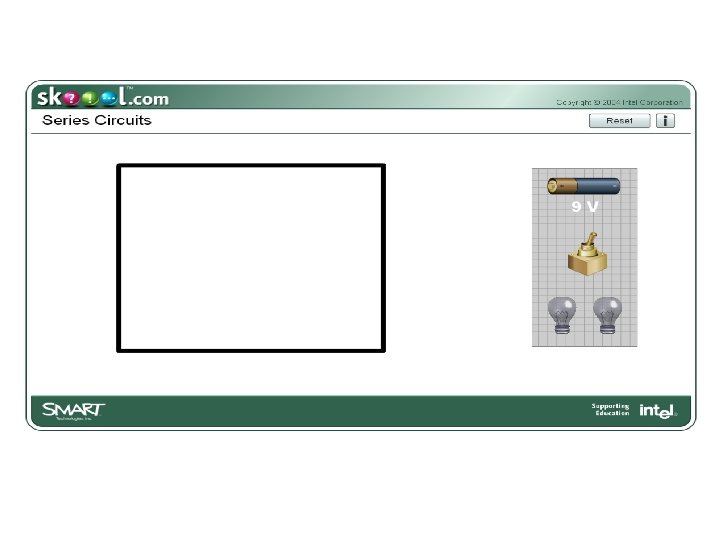
Pre-assessment: Using the pen tool, draw a diagram of a series circuit with two bulbs.
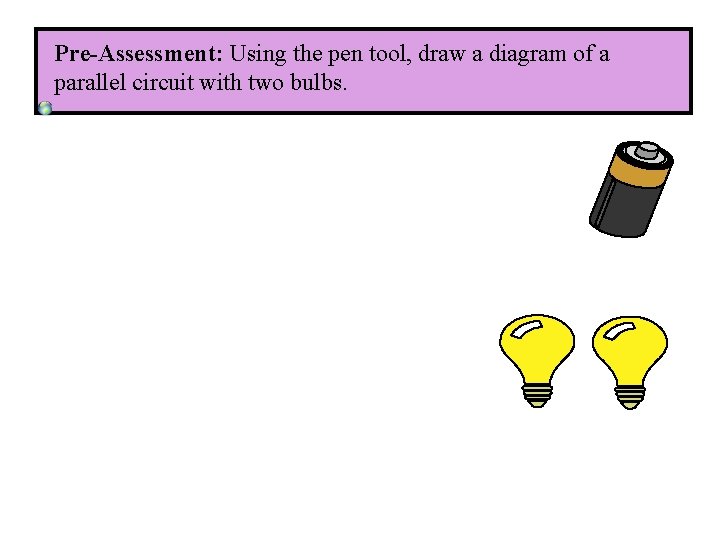
Pre-Assessment: Using the pen tool, draw a diagram of a parallel circuit with two bulbs.