
All Wales Basic Safeguarding 2020 ref Wales Safeguarding
All Wales Basic Safeguarding 2020 (ref Wales Safeguarding Procedures)
Overview • Housekeeping • Timings, respect, comfort, confidentiality, participation • Implementing the Wales Safeguarding Procedures (under the Social Services and Well-Being (Wales) Act 2014) • Any issues from today’s training
Learning outcomes This training will give participants the opportunity to: • know their own role in relation to safeguarding adults and children and young people from abuse, neglect and harm • understand how individuals are protected from abuse, neglect and harm • know how to recognise and report different types of abuse, neglect and harm • know the expectations placed on all practitioners to deliver the Wales Safeguarding Procedures
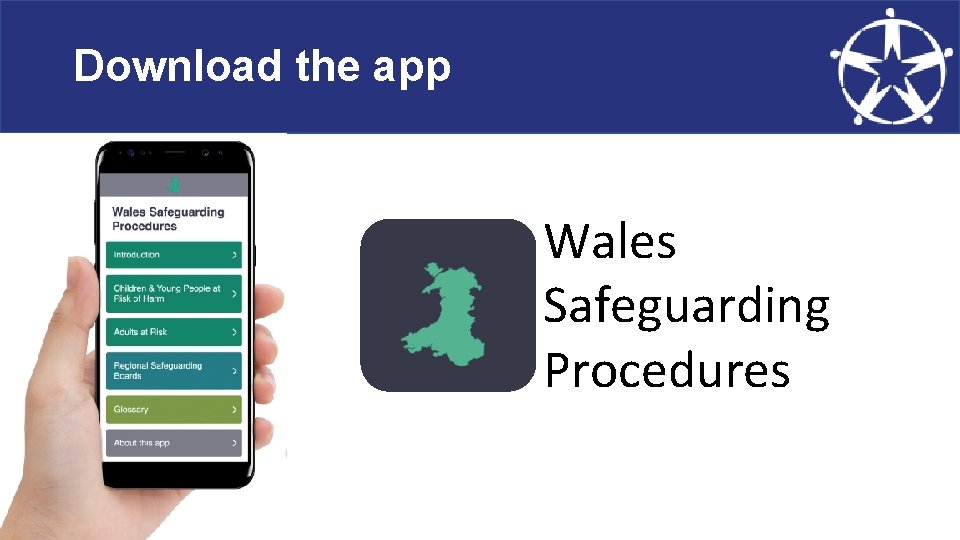
Download the app Wales Safeguarding Procedures
Safeguarding principles The principles supporting legislation, guidance and the Wales Safeguarding Procedures
Activity 1: Principles • Use of app or • Use of cards • Discuss the importance of these principles in safeguarding
Key values Two key values in safeguarding practice 1: Safeguarding is everybody’s responsibility 2: A child-centred/person-centred approach
Six safeguarding principles – practitioners: Principle 1 Put the wishes, needs and well-being of the child/desired outcomes of the adult at risk first Principle 2 Are alert to the needs of children/adults at risk (including any potential or suspected abuse or risk of abuse or harm) and understand what action they should take Principle 3 Share appropriate information and have direct access to advice to discuss any concerns about a child/adult
Six safeguarding principles – practitioners: Principle 4 Able to use their professional judgment to work with the child’s/adult’s needs and personal outcomes Principle 5 Work in a multi-agency and co-operative way, record decisions appropriately and regularly review progress Principle 6 Supported by leaders/managers to achieve the desired outcomes for the individual
Safeguarding is everybody’s responsibility Each practitioner and organisation must: • contribute to safeguarding and promoting the well-being of the individual • share information following data protection guidelines • work with practitioners within your team and other agencies to better understand the individual, their circumstances and their needs • develop co-productive working relationships with the individual at risk, their family and carers to establish what matters to them and to ensure they feel respected and informed.
All practitioners should: • understand their safeguarding role and responsibilities • follow their organisation’s safeguarding procedures and protocols • understand their duty to report/act • be alert to indicators of abuse and neglect to the child/adult at risk • have received training appropriate to their role and responsibilities • understand the safeguarding process • contribute as necessary at all stages of the safeguarding process
Safeguarding tasks The practitioner has two tasks: 1) to prevent situations where an individual may experience abuse, neglect and harm …and if this is not effective… 2) to identify emerging concerns about abuse, neglect and harm to the child/adult at risk
Designated Safeguarding Person (DSP) The person in an organisation who: • is available to discuss safeguarding concerns • you should consult about raising safeguarding concerns with social services • will manage any immediate actions to ensure the child at risk is safe from harm All practitioners must know who to contact in their agency for advice All practitioners should not hesitate to discuss their concerns, no matter how insignificant they think they are
Activity 2 What is acceptable? Do you think this child/adult is at risk?
Activity 3 Using the app or write down in small groups: • Find/discuss the definition of “safeguarding” • Find/discuss the definition of “at risk” for child or adult, whichever group you work with the most
Safeguarding adults at risk Safeguarding involves: • preventing and protecting adults at risk from abuse or neglect • educating people around them to recognise the signs and dangers of abuse and neglect • promoting their well-being One important difference between safeguarding adults and safeguarding children is an adult’s right to self-determination. Adults may choose not to act at all to protect themselves
Adult at risk Anyone aged 18 years or over who: • is experiencing, or is at risk of experiencing, abuse or neglect and • has care and support needs (whether or not the local authority is meeting any of those needs) and • as a result of those needs is unable to protect themselves against abuse or neglect or the risk of it
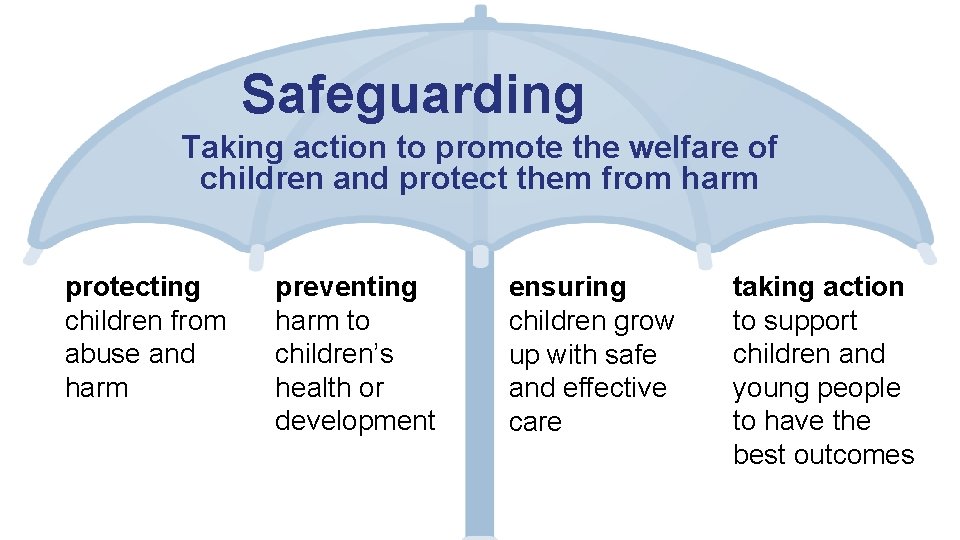
Safeguarding Taking action to promote the welfare of children and protect them from harm protecting children from abuse and harm preventing harm to children’s health or development ensuring children grow up with safe and effective care taking action to support children and young people to have the best outcomes
Child The Social Services and Well-being (Wales) Act 2014 and accompanying guidance define a “child” as a person who is aged under 18
Child at risk A child who: • is experiencing or is at risk of experiencing abuse, neglect or other kinds of harm and • has care and support needs (whether or not the local authority is meeting those needs)
Compare the two definitions • What does this mean?
The duty to report a “child or adult at risk” of abuse, neglect and/ or harm
Who has a responsibility to report? We all do! You have a responsibility to contact social services or the police if you know or have concerns or suspicions that a child: • is experiencing abuse, neglect or other kinds of harm • has experienced abuse, neglect or other kinds of harm • is likely to be at risk of abuse, neglect or other kinds of harm This is not a matter of personal choice
Statutory duty to report Statutory means it’s required by law. The Social Services and Well-being (Wales) Act 2014 says “relevant partners” of the local authority are: • other local authorities • the police, probation and youth justice services • education (and all other local authority departments) • local health boards and NHS trusts and have a statutory (legal) responsibility to report if they have reasonable cause to suspect adults and children, including unborn children, are at risk of abuse
Non-statutory responsibility to report Anyone who is not a “relevant partner” must still report any safeguarding concerns they have in the same way as those with a statutory duty to report Safeguarding is everyone’s responsibility!
Activity 4 • What factors suggest that individuals known to your service could be “at risk”?
Activity 4: Increased risk of abuse, neglect and harm due to: • • • experiencing needs for care and support limited or lacking verbal communication lacking capacity and understanding unaware of their rights suffering institutional poor practice or “institutionalised” low self-esteem/self-worth living away from the family home, such as in care domestic abuse, drug/alcohol misuse in close relationships disability (mental or physical) isolated family or individual previous abuse or neglect experienced
Legislation and guidance
Legislation Social Services and Well-being (Wales) Act 2014: Any practitioner working with: • an individual who has, or may have, care and support needs • a carer who has, or may have, support needs • children (who are looked after) must • put the person’s rights and best interests first • consider the person’s views, wishes and feelings • promote and respect the person’s dignity • respect the person’s characteristics, culture and beliefs • support the person to be involved in decisions that affect them
• The Social Services and Well-being (Wales) Act 2014 – Part 7 Safeguarding • Working Together to Safeguard People • Code of Practice under Part 10 of the Social Services and Well-being (Wales) Act 2014 • The Mental Capacity Act 2005 • The European Convention of Human Rights, particularly Articles 2, 3, 5, 6 and 8 • The United Nations Principles of Older Persons • The United Nations Convention on the Rights of the Child • Welsh Language Standards and the “More than Just Words” Framework
Child-centred approach • See and speak to the child Aim – to establish trust so that the child can be open and honest • Understand their daily life experience Aim – to understand what a typical day looks like • Establish what they would like to see change in their daily lives Aim – to understand what the child wants as an outcome • Put the child’s safeguarding interests over their wishes when needed Aim – to ensure what’s best for the child’s well-being
Person-centred approach • Puts the needs of the person at the centre of decisionmaking • Ensures decision-making is based on a clear understanding of: • the personal outcomes the adult wishes to achieve and • what matters to the individual • Engages with the adult at risk throughout the safeguarding process • Enables them to determine how they manage risks
Advocacy and capacity It is a legal duty to consider a person’s need for advocacy and to provide appropriate support to enable people to participate. This may be through professional advocacy or informal advocates such as family members/carers It is important that practitioners assume a person has the mental capacity to engage in the process and make decisions unless it is established that they lack capacity to make specific decisions at a specific time
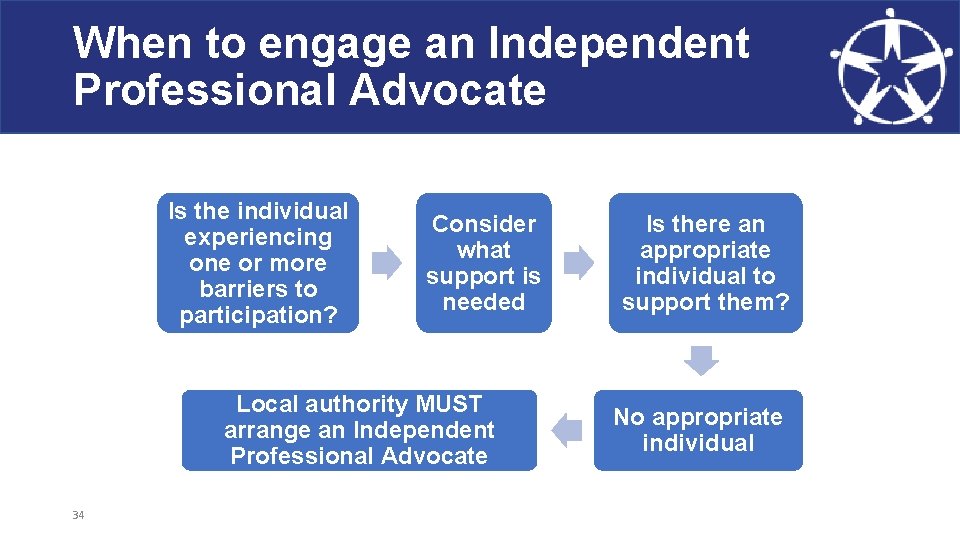
When to engage an Independent Professional Advocate Is the individual experiencing one or more barriers to participation? Consider what support is needed Local authority MUST arrange an Independent Professional Advocate 34 Is there an appropriate individual to support them? No appropriate individual
Abuse and neglect may be a specific incident or ongoing or repeated abuse and neglect The harm may be caused by a single issue or an accumulation of family circumstances and events The task is to identify how identified risks come together and impact on the parents’/carer’s ability and the health and well-being of the individual
Activity 5 a Use the app (or confer with a partner) to confirm your understanding of the different categories of abuse and neglect Categories: • physical • sexual • financial • emotional/psychological abuse • neglect
Activity 5 b Use the app (or confer with partner) to confirm your understanding of the different sources of harm Sources of harm: • domestic abuse • exploitation • modern slavery and trafficking • “honour”-based abuse • female genital mutilation • online abuse and grooming • child sexual exploitation
Activity 6 Use the app (or discuss with partner) What are the barriers to identifying and reporting abuse and neglect for: • an adult at risk • a child or young person • a family member or close friend • staff and volunteers
Obtaining consent
Consent to report Although practitioners have a duty to report suspected abuse and neglect with or without the child’s consent, it is best practice to get the child’s consent to report, unless it would place the child at risk of harm Discussing consent is an example of using a child-centred approach to consult with and involve the child in decisions If the child objects to the report the practitioner should explain to them that they respect their feelings but they must make the report to protect the child from possible harm
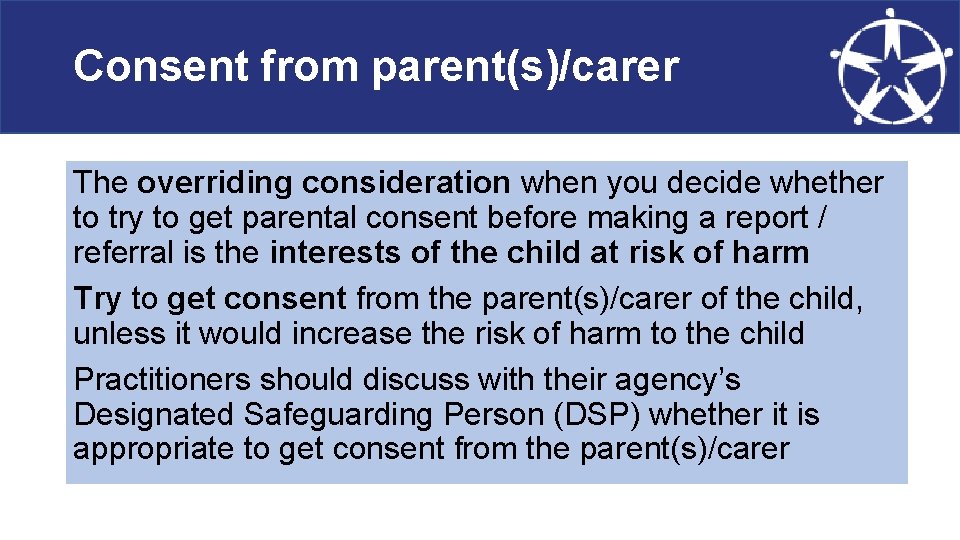
Consent from parent(s)/carer The overriding consideration when you decide whether to try to get parental consent before making a report / referral is the interests of the child at risk of harm Try to get consent from the parent(s)/carer of the child, unless it would increase the risk of harm to the child Practitioners should discuss with their agency’s Designated Safeguarding Person (DSP) whether it is appropriate to get consent from the parent(s)/carer
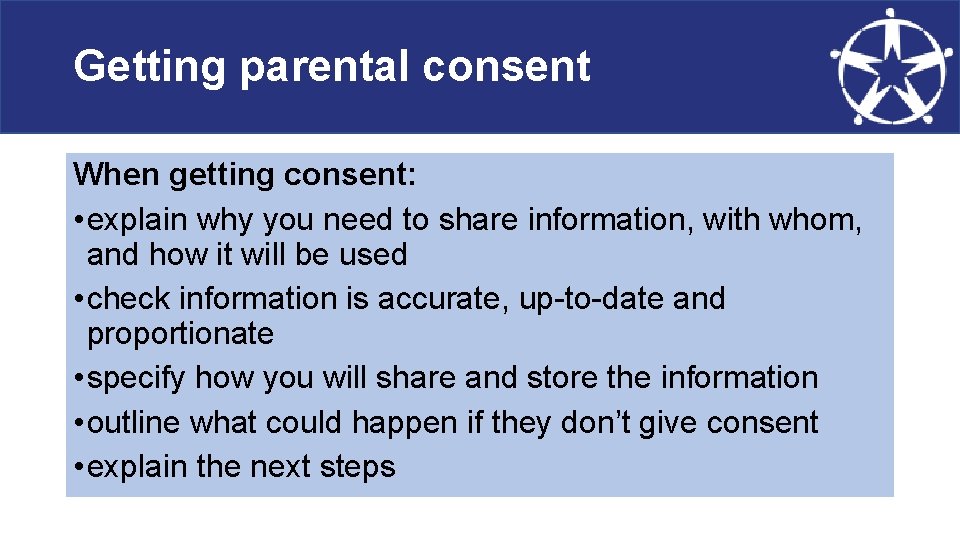
Getting parental consent When getting consent: • explain why you need to share information, with whom, and how it will be used • check information is accurate, up-to-date and proportionate • specify how you will share and store the information • outline what could happen if they don’t give consent • explain the next steps
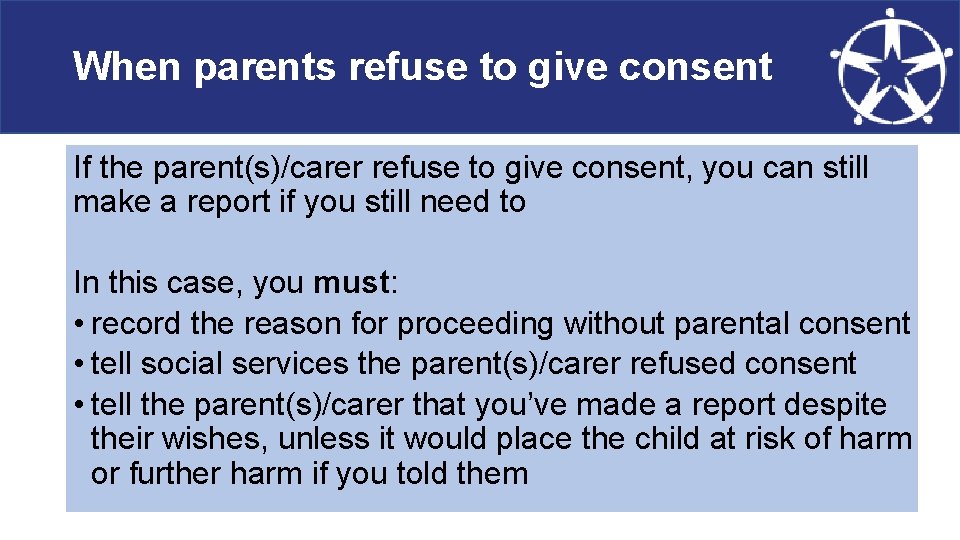
When parents refuse to give consent If the parent(s)/carer refuse to give consent, you can still make a report if you still need to In this case, you must: • record the reason for proceeding without parental consent • tell social services the parent(s)/carer refused consent • tell the parent(s)/carer that you’ve made a report despite their wishes, unless it would place the child at risk of harm or further harm if you told them
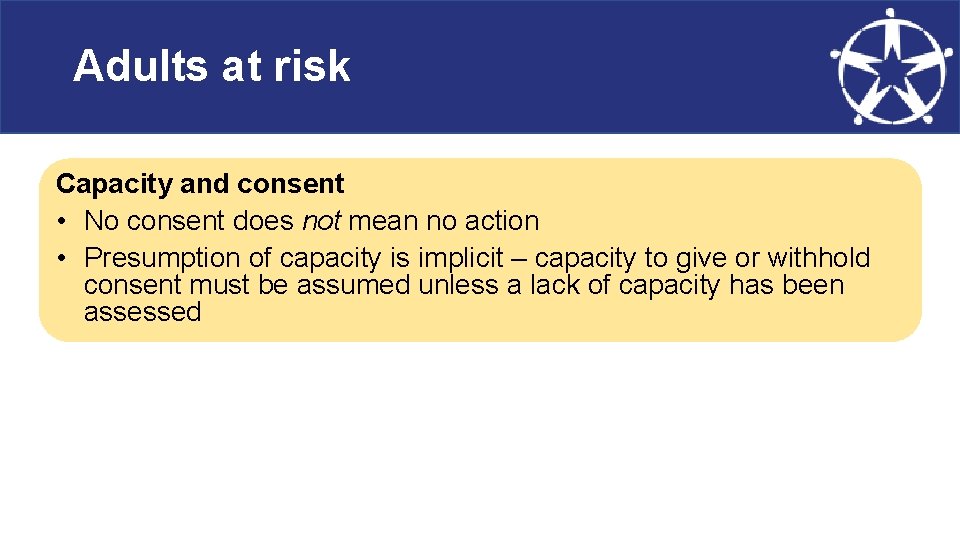
Adults at risk Capacity and consent • No consent does not mean no action • Presumption of capacity is implicit – capacity to give or withhold consent must be assumed unless a lack of capacity has been assessed
Adult’s consent • An adult has the right to withhold consent to a safeguarding report being made about them unless certain circumstances exist • An adult has the right to make decisions for themselves, even when these might be deemed “too risky” by others around them • An adult has the right to choose that no action should be taken, to determine what action might be taken, and to refuse to cooperate in any procedures unless they relate to criminal activity • It is the role of the practitioner to help the adult understand the consequences of their choices
Justifiable reasons to make a safeguarding report without consent: • the adult at risk is unable to give consent due to coercion or undue influence by someone else • there is an overriding public interest (for example, risk to others) • it is necessary to prevent imminent danger or distress • it is a life-threatening situation • report to the police if a crime has been committed (no consent required)

Making a report
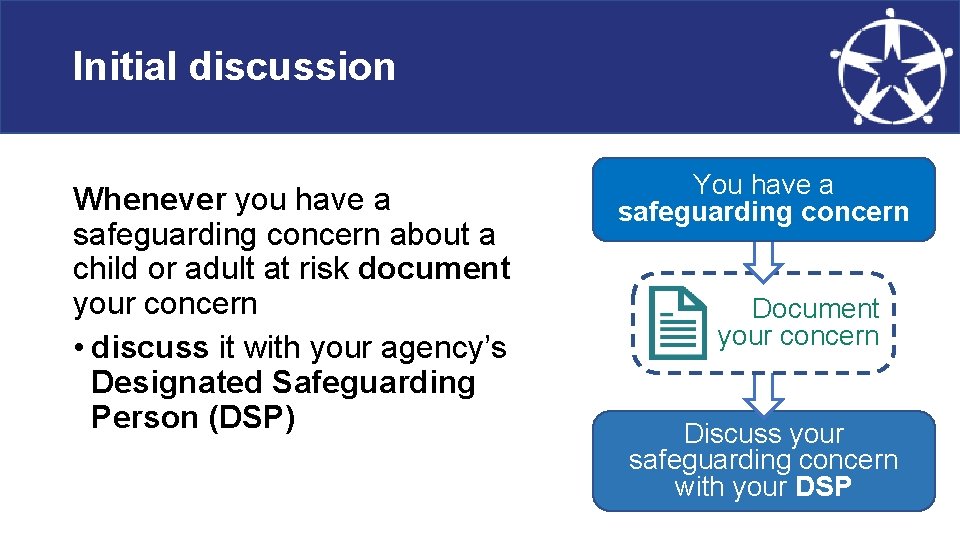
Initial discussion Whenever you have a safeguarding concern about a child or adult at risk document your concern • discuss it with your agency’s Designated Safeguarding Person (DSP) You have a safeguarding concern Document your concern Discuss your safeguarding concern with your DSP
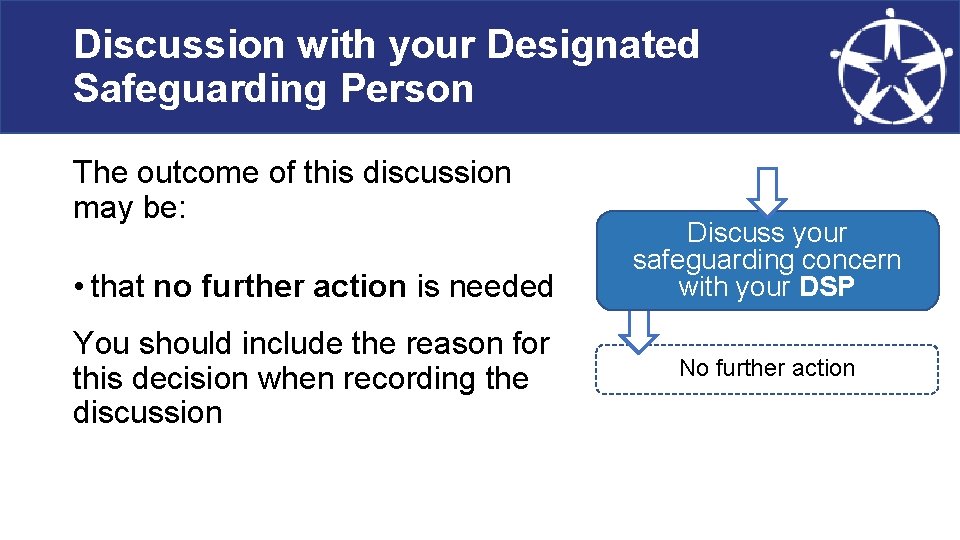
Discussion with your Designated Safeguarding Person The outcome of this discussion may be: • that no further action is needed You should include the reason for this decision when recording the discussion Discuss your safeguarding concern with your DSP No further action
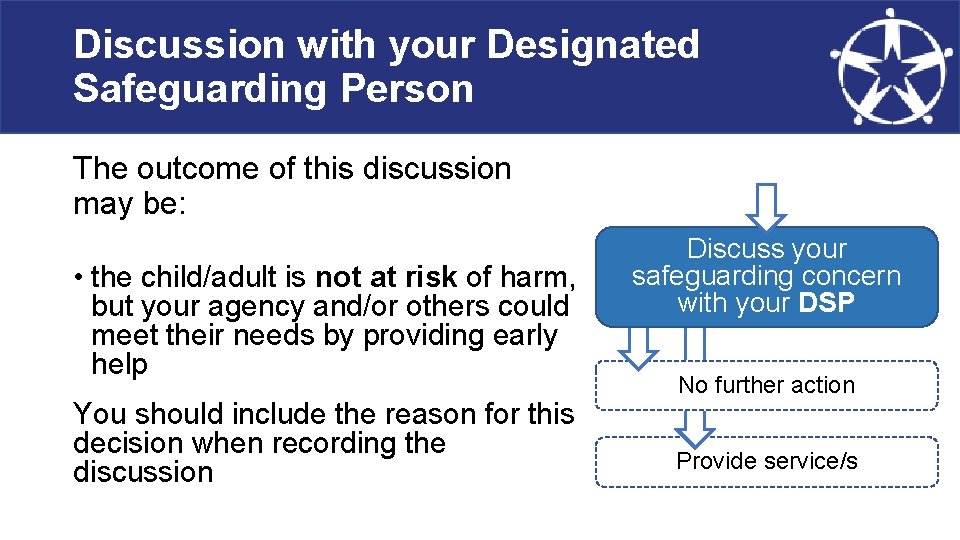
Discussion with your Designated Safeguarding Person The outcome of this discussion may be: • the child/adult is not at risk of harm, but your agency and/or others could meet their needs by providing early help You should include the reason for this decision when recording the discussion Discuss your safeguarding concern with your DSP No further action Provide service/s
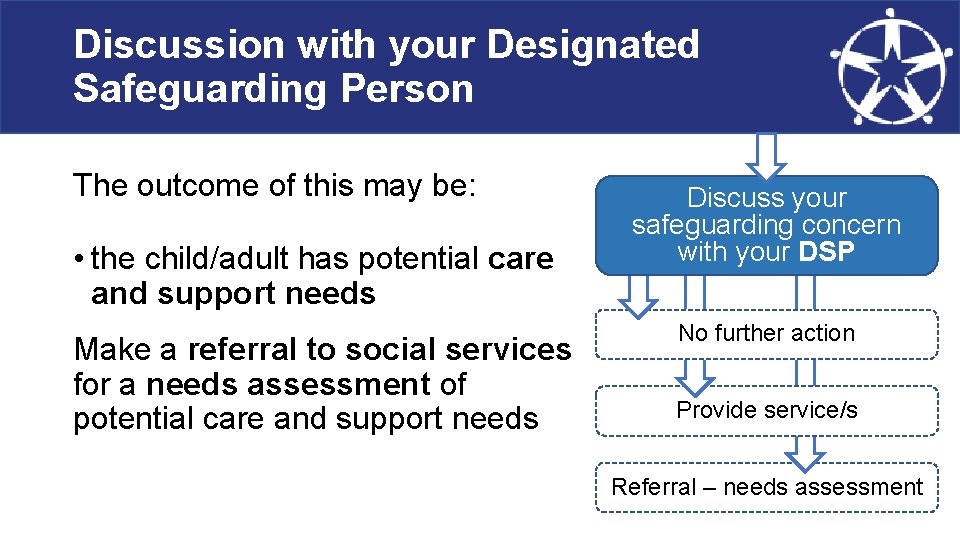
Discussion with your Designated Safeguarding Person The outcome of this may be: • the child/adult has potential care and support needs Make a referral to social services for a needs assessment of potential care and support needs Discuss your safeguarding concern with your DSP No further action Provide service/s Referral – needs assessment
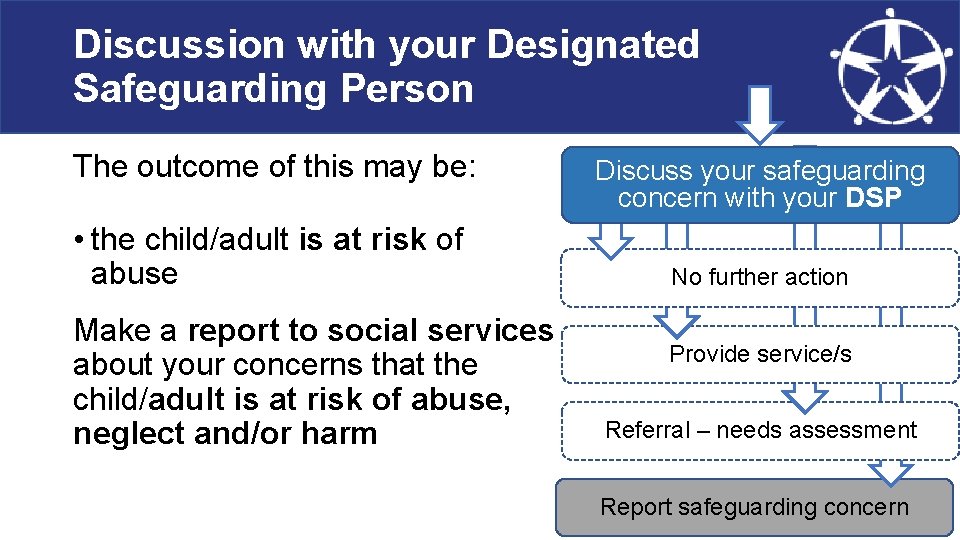
Discussion with your Designated Safeguarding Person The outcome of this may be: • the child/adult is at risk of abuse Make a report to social services about your concerns that the child/adult is at risk of abuse, neglect and/or harm Discuss your safeguarding concern with your DSP No further action Provide service/s Referral – needs assessment Report safeguarding concern
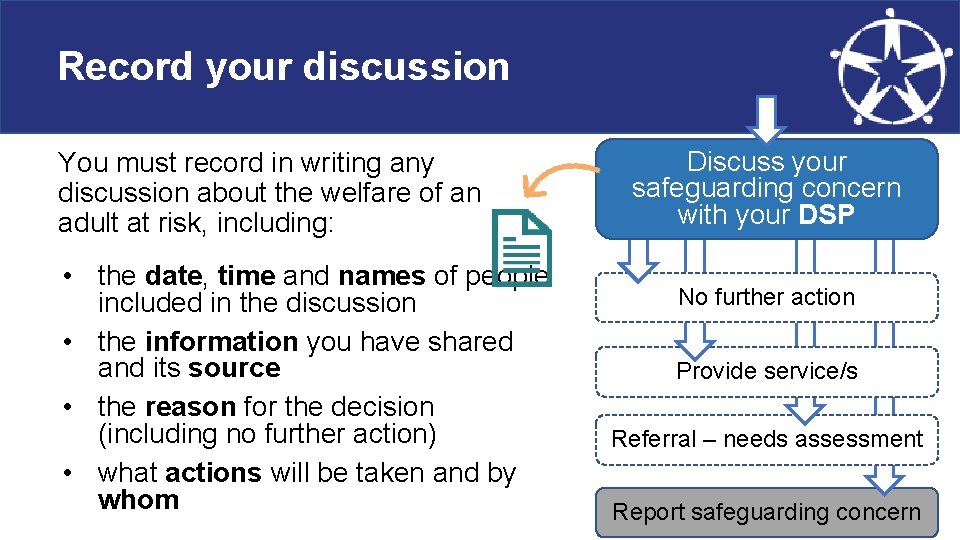
Record your discussion You must record in writing any discussion about the welfare of an adult at risk, including: • the date, time and names of people included in the discussion • the information you have shared and its source • the reason for the decision (including no further action) • what actions will be taken and by whom Discuss your safeguarding concern with your DSP No further action Provide service/s Referral – needs assessment Report safeguarding concern
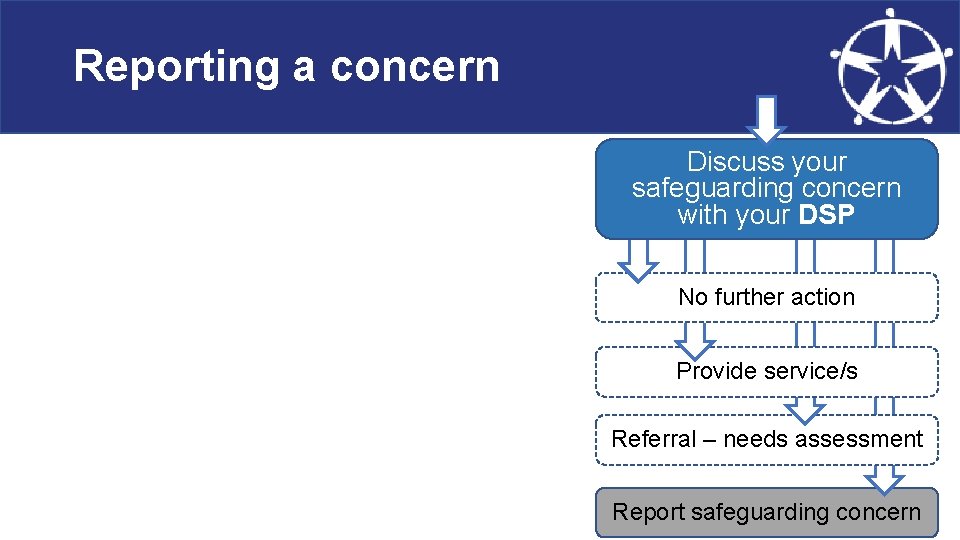
Reporting a concern Discuss your safeguarding concern with your DSP No further action Provide service/s Referral – needs assessment Report safeguarding concern
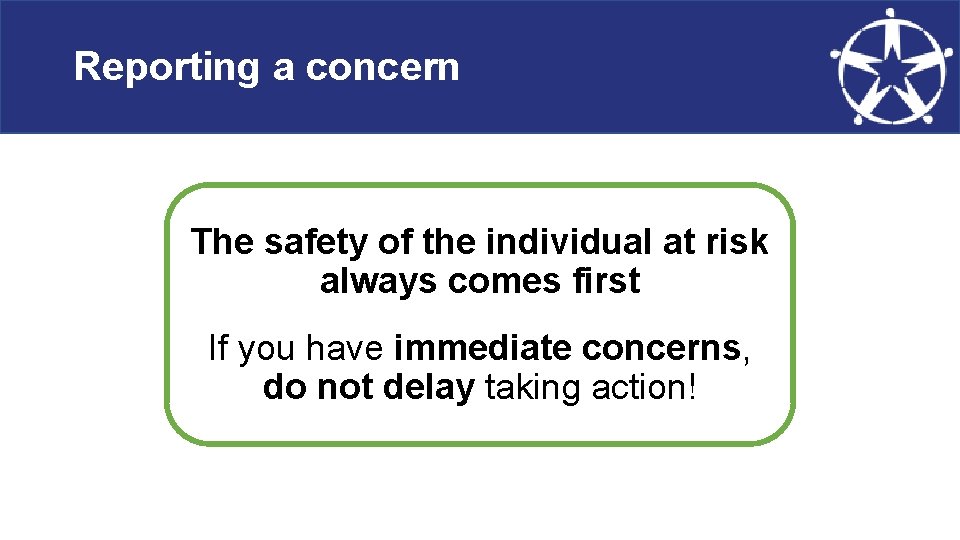
Reporting a concern The safety of the individual at risk always comes first If you have immediate concerns, do not delay taking action!
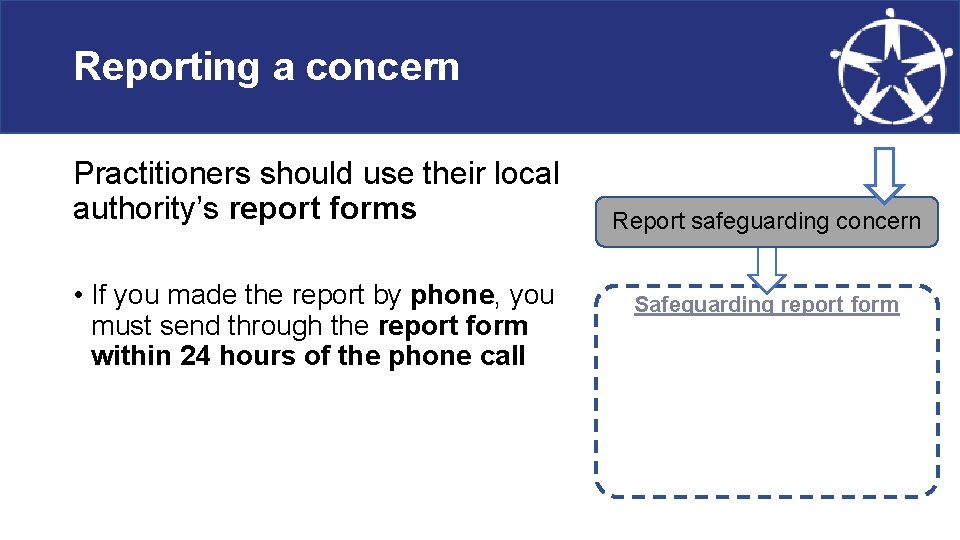
Reporting a concern Practitioners should use their local authority’s report forms • If you made the report by phone, you must send through the report form within 24 hours of the phone call Report safeguarding concern Safeguarding report form
Activity 7 Incident recording • Consider the written report and how it could be improved • Share your report with the Designated Safeguarding Person in your organisation (or line/senior manager/volunteer co-ordinator)
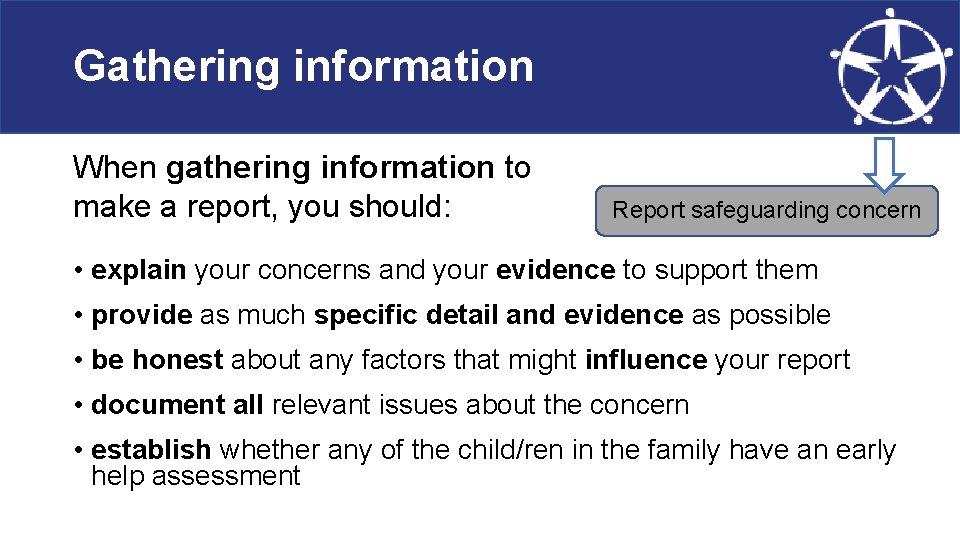
Gathering information When gathering information to make a report, you should: Report safeguarding concern • explain your concerns and your evidence to support them • provide as much specific detail and evidence as possible • be honest about any factors that might influence your report • document all relevant issues about the concern • establish whether any of the child/ren in the family have an early help assessment
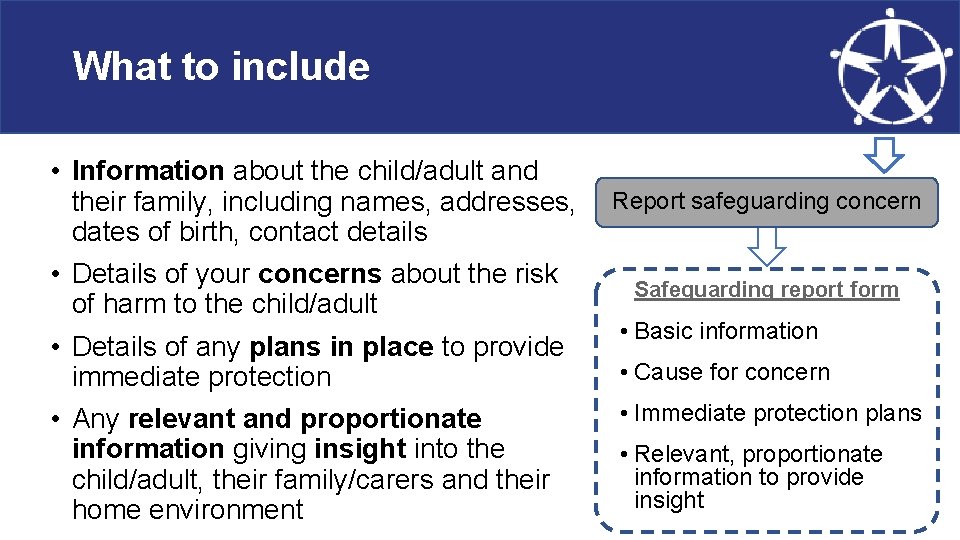
What to include • Information about the child/adult and their family, including names, addresses, dates of birth, contact details • Details of your concerns about the risk of harm to the child/adult • Details of any plans in place to provide immediate protection • Any relevant and proportionate information giving insight into the child/adult, their family/carers and their home environment Report safeguarding concern Safeguarding report form • Basic information • Cause for concern • Immediate protection plans • Relevant, proportionate information to provide insight
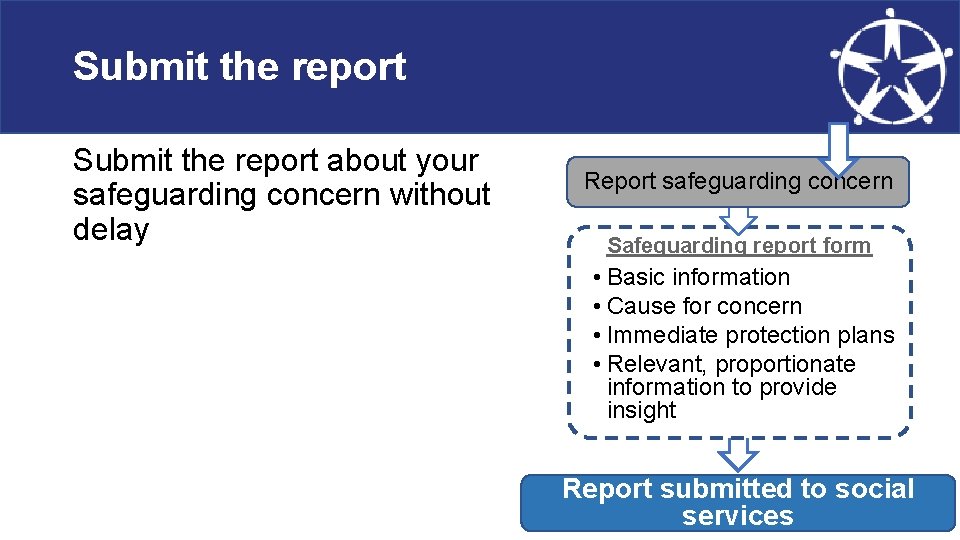
Submit the report about your safeguarding concern without delay Report safeguarding concern Safeguarding report form • Basic information • Cause for concern • Immediate protection plans • Relevant, proportionate information to provide insight Report submitted to social services
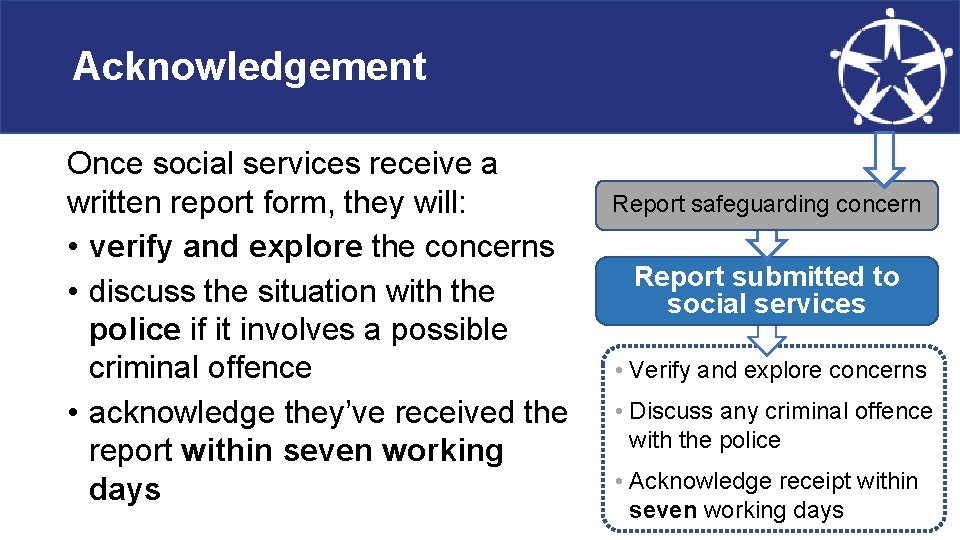
Acknowledgement Once social services receive a written report form, they will: • verify and explore the concerns • discuss the situation with the police if it involves a possible criminal offence • acknowledge they’ve received the report within seven working days Report safeguarding concern Report submitted to social services • Verify and explore concerns • Discuss any criminal offence with the police • Acknowledge receipt within seven working days
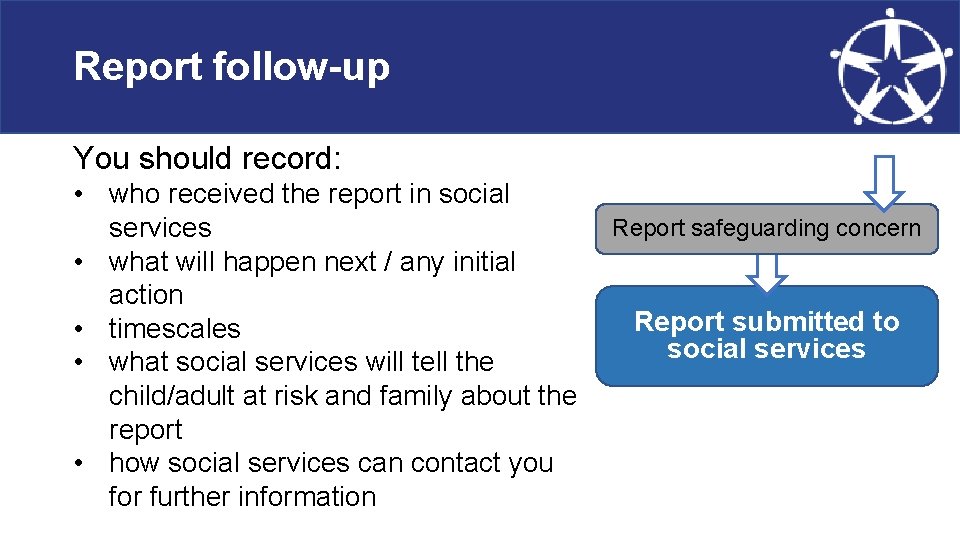
Report follow-up You should record: • who received the report in social services • what will happen next / any initial action • timescales • what social services will tell the child/adult at risk and family about the report • how social services can contact you for further information Report safeguarding concern Report submitted to social services
Activity 8 Practice reviews Look at the summary of a real practice review you have been given What do you think would have made a difference to prevent or stop the abuse, neglect or harm?
All practitioners should: • understand their safeguarding role and responsibilities • follow their organisation’s safeguarding procedures and protocols • understand their duty to report/act • be alert to indicators of abuse and neglect to the child/adult • have received training appropriate to their role and responsibilities • understand the safeguarding process • contribute as necessary at all stages of the safeguarding process
Safeguarding tasks The practitioner has two tasks: 1) to prevent situations where a child/adult may experience abuse, neglect and harm …and if this is not effective… 2) to identify emerging concerns about abuse, neglect and harm to the individual
Thank you • Please complete an evaluation form • Further information from…
Reporting safeguarding allegations/concerns about practitioners and those in positions of trust Section 5 of the Wales Safeguarding Procedures/app • sometimes termed “whistle-blowing”
Who has responsibility to report? We all have a responsibility to report safeguarding concerns, regardless of a person’s status, profession or authority You must report concerns about the conduct or behaviour of a practitioner/person in a position of trust to social services or the police This includes your private life – you must report concerning behaviour of a friend, family member or neighbour who is also a practitioner/person in a position of trust
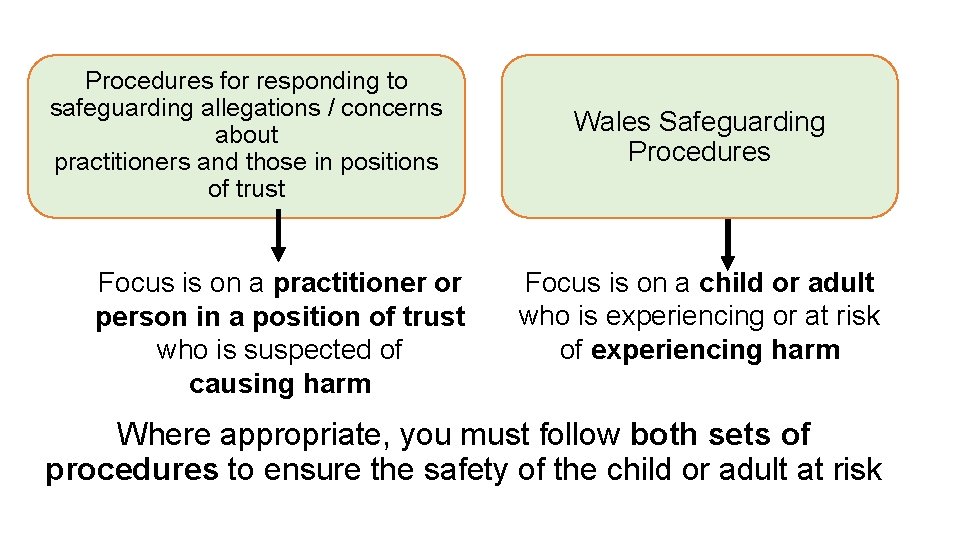
Procedures for responding to safeguarding allegations / concerns about practitioners and those in positions of trust Focus is on a practitioner or person in a position of trust who is suspected of causing harm Wales Safeguarding Procedures Focus is on a child or adult who is experiencing or at risk of experiencing harm Where appropriate, you must follow both sets of procedures to ensure the safety of the child or adult at risk
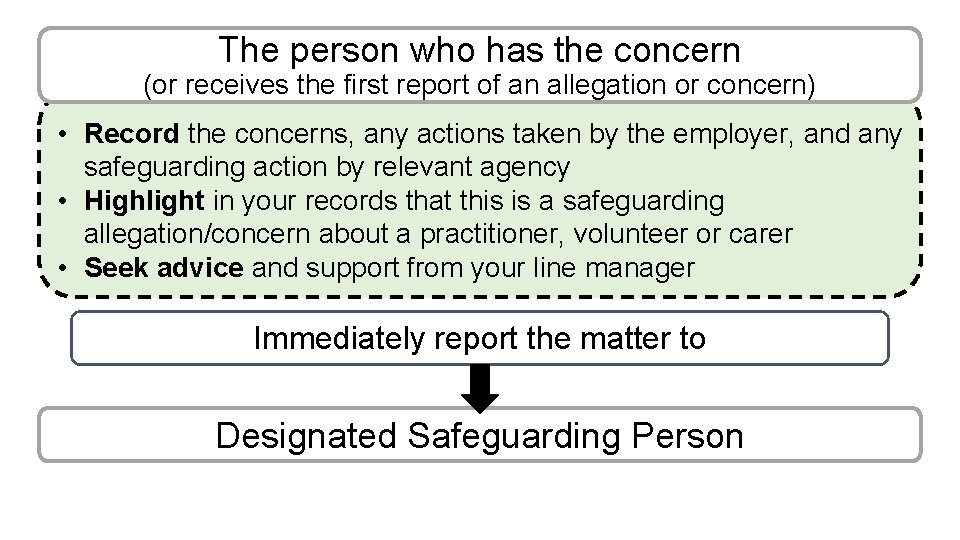
The person who has the concern (or receives the first report of an allegation or concern) • Record the concerns, any actions taken by the employer, and any safeguarding action by relevant agency • Highlight in your records that this is a safeguarding allegation/concern about a practitioner, volunteer or carer • Seek advice and support from your line manager Immediately report the matter to Designated Safeguarding Person
Who is accountable and responsible for handling allegations/concerns? All local authorities must have an identified senior manager, known as the local authority designated officer (LADO) or the designated officer for safeguarding (DOS), who is accountable and responsible for allegations against professionals and those in positions of trust in their area
Thank you • Please complete an evaluation form • Further information from…
- Slides: 72