
All Things Heart Visceral Parietal Pericardium Dense connective

- Slides: 18
All Things Heart
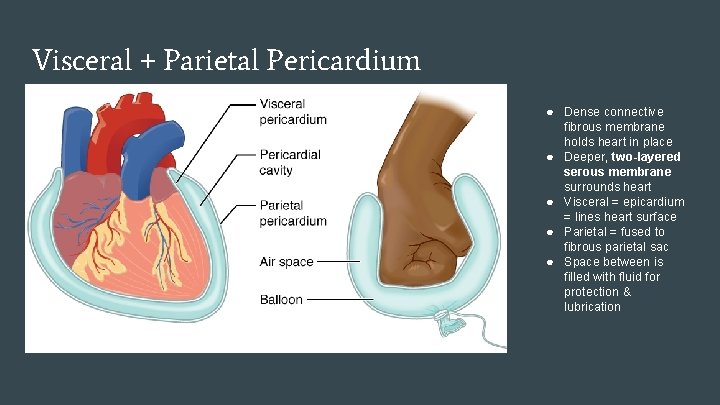
Visceral + Parietal Pericardium ● Dense connective fibrous membrane holds heart in place ● Deeper, two-layered serous membrane surrounds heart ● Visceral = epicardium = lines heart surface ● Parietal = fused to fibrous parietal sac ● Space between is filled with fluid for protection & lubrication
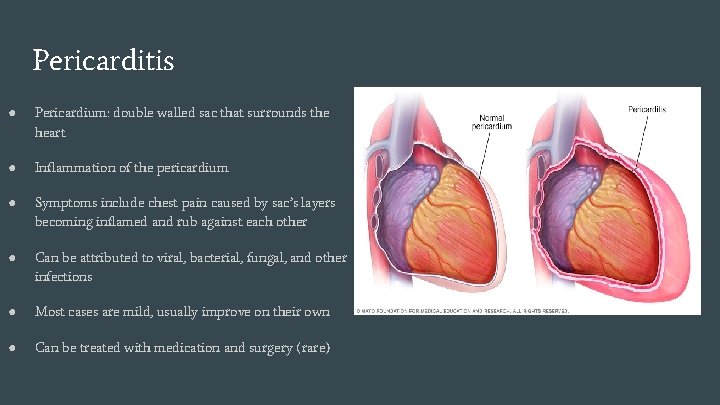
Pericarditis ● Pericardium: double walled sac that surrounds the heart ● Inflammation of the pericardium ● Symptoms include chest pain caused by sac’s layers becoming inflamed and rub against each other ● Can be attributed to viral, bacterial, fungal, and other infections ● Most cases are mild, usually improve on their own ● Can be treated with medication and surgery (rare)
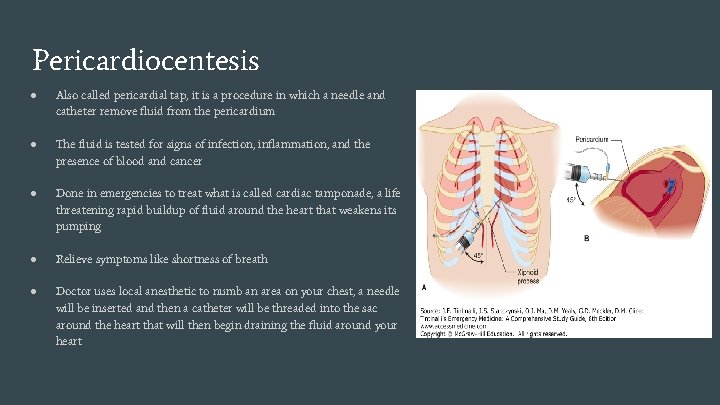
Pericardiocentesis ● Also called pericardial tap, it is a procedure in which a needle and catheter remove fluid from the pericardium ● The fluid is tested for signs of infection, inflammation, and the presence of blood and cancer ● Done in emergencies to treat what is called cardiac tamponade, a life threatening rapid buildup of fluid around the heart that weakens its pumping ● Relieve symptoms like shortness of breath ● Doctor uses local anesthetic to numb an area on your chest, a needle will be inserted and then a catheter will be threaded into the sac around the heart that will then begin draining the fluid around your heart
Hemopericardium (continue) Symptoms Treatments Symptoms of hemopericardium often include difficulty breathing, abnormally rapid breathing, and fatigue. In many cases, patients also report feeling chest pressure and have an abnormally elevated heart rate. Diagnosis Hemopericardium can be diagnosed using echocardiography, a cardiac ultrasound. Chest X-rays are also often taken when hemopericardium is suspected and would reveal an enlarged heart. Other observable signs include rapid heart rate, jugular venous distension, low blood pressure, and pulsus paradoxus. Hemopericardium is usually treated by pericardiocentesis, a procedure wherein a needle is used to remove the fluid from the pericardial sac. This procedure typically utilizes a needle that is inserted between the xiphoid process and the left costal margin until it enters the pericardial sac, then it can then be used to drain the fluid from the sac. A catheter is often left in the pericardium to continue draining any remaining fluid after the initial procedure. The catheter can be removed when the hemopericardium no longer persists.
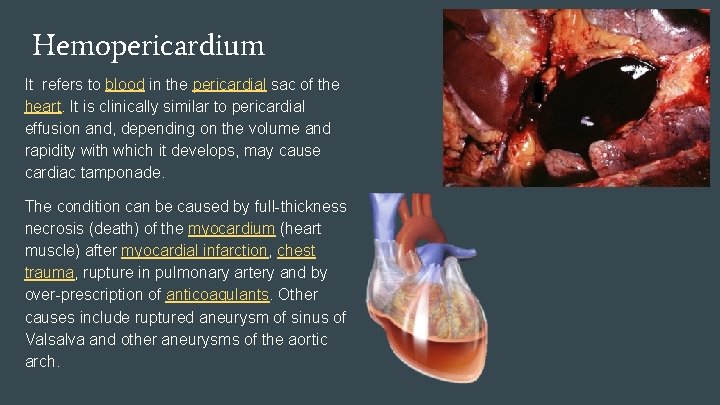
Hemopericardium It refers to blood in the pericardial sac of the heart. It is clinically similar to pericardial effusion and, depending on the volume and rapidity with which it develops, may cause cardiac tamponade. The condition can be caused by full-thickness necrosis (death) of the myocardium (heart muscle) after myocardial infarction, chest trauma, rupture in pulmonary artery and by over-prescription of anticoagulants. Other causes include ruptured aneurysm of sinus of Valsalva and other aneurysms of the aortic arch.
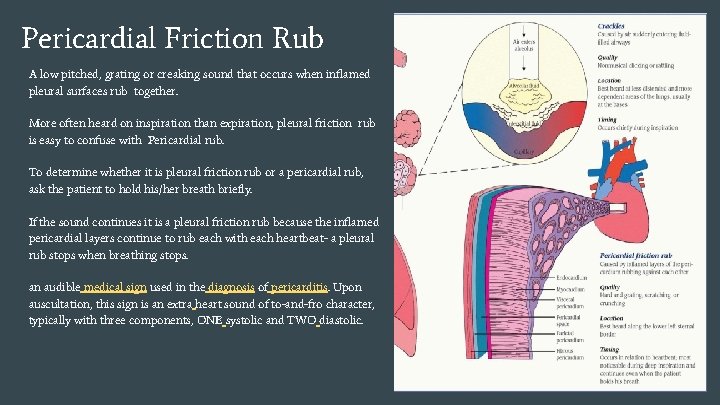
Pericardial Friction Rub A low pitched, grating or creaking sound that occurs when inflamed pleural surfaces rub together. More often heard on inspiration than expiration, pleural friction rub is easy to confuse with Pericardial rub. To determine whether it is pleural friction rub or a pericardial rub, ask the patient to hold his/her breath briefly. If the sound continues it is a pleural friction rub because the inflamed pericardial layers continue to rub each with each heartbeat- a pleural rub stops when breathing stops. an audible medical sign used in the diagnosis of pericarditis. Upon auscultation, this sign is an extra heart sound of to-and-fro character, typically with three components, ONE systolic and TWO diastolic.
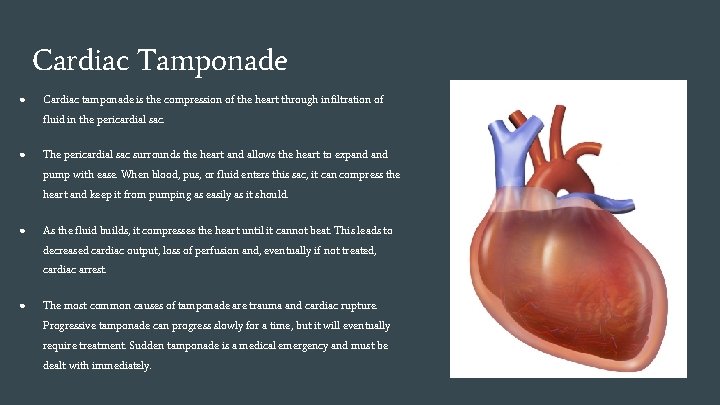
Cardiac Tamponade ● Cardiac tamponade is the compression of the heart through infiltration of fluid in the pericardial sac. ● The pericardial sac surrounds the heart and allows the heart to expand pump with ease. When blood, pus, or fluid enters this sac, it can compress the heart and keep it from pumping as easily as it should. ● As the fluid builds, it compresses the heart until it cannot beat. This leads to decreased cardiac output, loss of perfusion and, eventually if not treated, cardiac arrest. ● The most common causes of tamponade are trauma and cardiac rupture. Progressive tamponade can progress slowly for a time, but it will eventually require treatment. Sudden tamponade is a medical emergency and must be dealt with immediately.
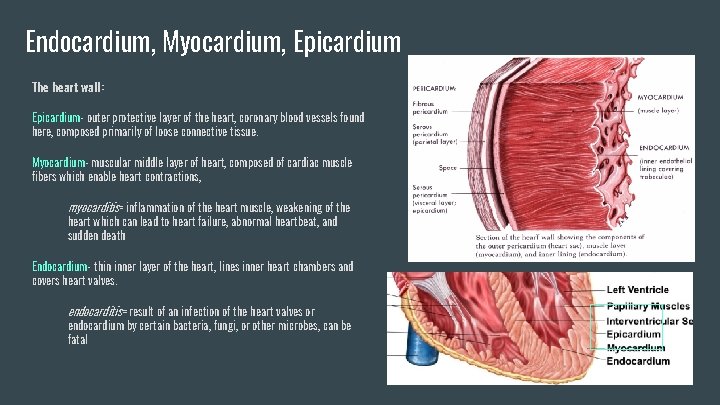
Endocardium, Myocardium, Epicardium The heart wall: Epicardium- outer protective layer of the heart, coronary blood vessels found here, composed primarily of loose connective tissue. Myocardium- muscular middle layer of heart, composed of cardiac muscle fibers which enable heart contractions, myocarditis= inflammation of the heart muscle, weakening of the heart which can lead to heart failure, abnormal heartbeat, and sudden death Endocardium- thin inner layer of the heart, lines inner heart chambers and covers heart valves. endocarditis= result of an infection of the heart valves or endocardium by certain bacteria, fungi, or other microbes, can be fatal
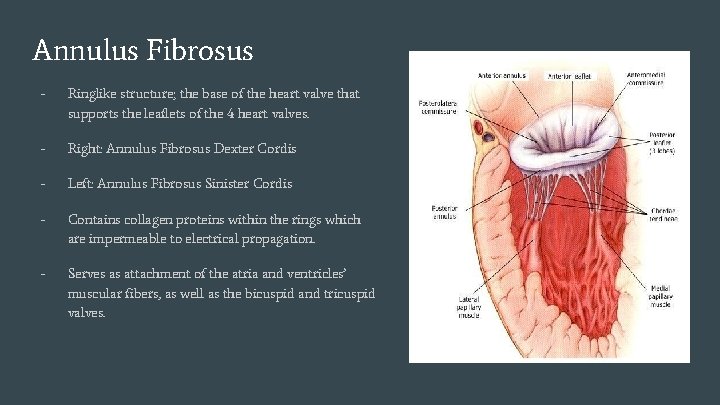
Annulus Fibrosus - Ringlike structure; the base of the heart valve that supports the leaflets of the 4 heart valves. - Right: Annulus Fibrosus Dexter Cordis - Left: Annulus Fibrosus Sinister Cordis - Contains collagen proteins within the rings which are impermeable to electrical propagation. - Serves as attachment of the atria and ventricles’ muscular fibers, as well as the bicuspid and tricuspid valves.
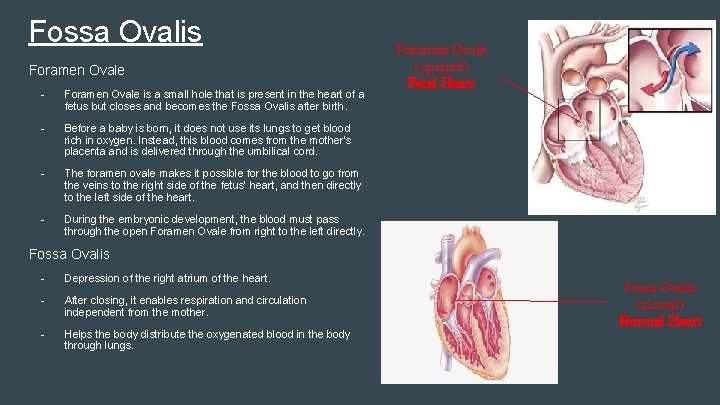
Fossa Ovalis Foramen Ovale - Foramen Ovale is a small hole that is present in the heart of a fetus but closes and becomes the Fossa Ovalis after birth. - Before a baby is born, it does not use its lungs to get blood rich in oxygen. Instead, this blood comes from the mother’s placenta and is delivered through the umbilical cord. - The foramen ovale makes it possible for the blood to go from the veins to the right side of the fetus’ heart, and then directly to the left side of the heart. - During the embryonic development, the blood must pass through the open Foramen Ovale from right to the left directly. Foramen Ovale (opened) Fetal Heart Fossa Ovalis - Depression of the right atrium of the heart. - After closing, it enables respiration and circulation independent from the mother. - Helps the body distribute the oxygenated blood in the body through lungs. Fossa Ovalis (closed) Normal Heart
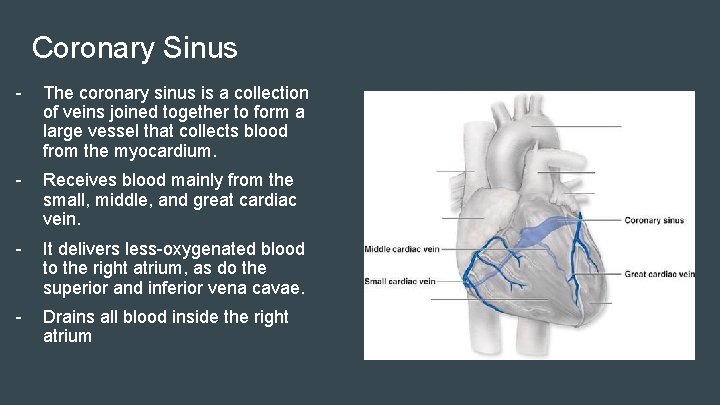
Coronary Sinus - The coronary sinus is a collection of veins joined together to form a large vessel that collects blood from the myocardium. - Receives blood mainly from the small, middle, and great cardiac vein. - It delivers less-oxygenated blood to the right atrium, as do the superior and inferior vena cavae. - Drains all blood inside the right atrium
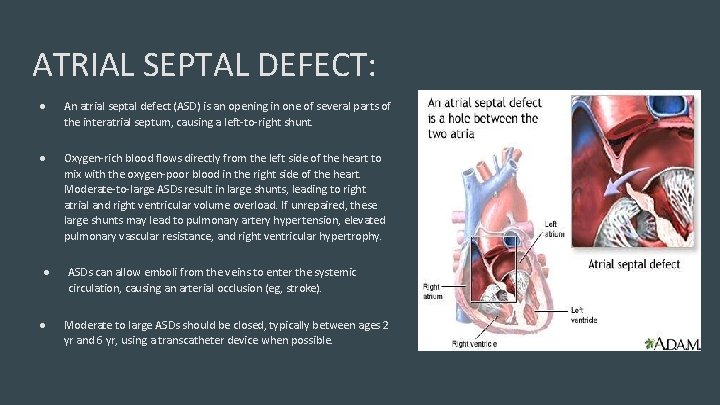
ATRIAL SEPTAL DEFECT: ● An atrial septal defect (ASD) is an opening in one of several parts of the interatrial septum, causing a left-to-right shunt. ● Oxygen-rich blood flows directly from the left side of the heart to mix with the oxygen-poor blood in the right side of the heart. Moderate-to-large ASDs result in large shunts, leading to right atrial and right ventricular volume overload. If unrepaired, these large shunts may lead to pulmonary artery hypertension, elevated pulmonary vascular resistance, and right ventricular hypertrophy. ● ● ASDs can allow emboli from the veins to enter the systemic circulation, causing an arterial occlusion (eg, stroke). Moderate to large ASDs should be closed, typically between ages 2 yr and 6 yr, using a transcatheter device when possible.
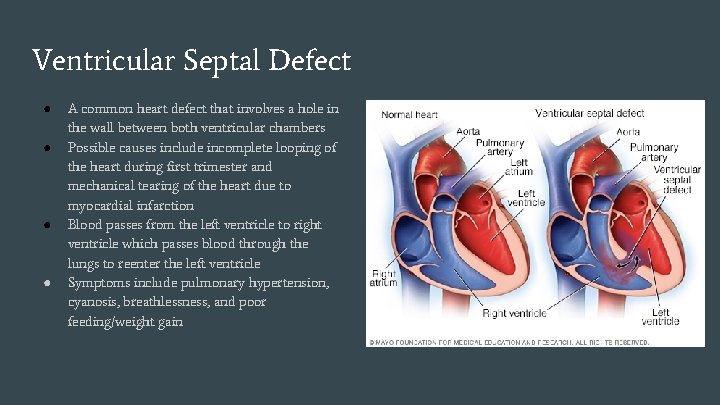
Ventricular Septal Defect ● ● A common heart defect that involves a hole in the wall between both ventricular chambers Possible causes include incomplete looping of the heart during first trimester and mechanical tearing of the heart due to myocardial infarction Blood passes from the left ventricle to right ventricle which passes blood through the lungs to reenter the left ventricle Symptoms include pulmonary hypertension, cyanosis, breathlessness, and poor feeding/weight gain
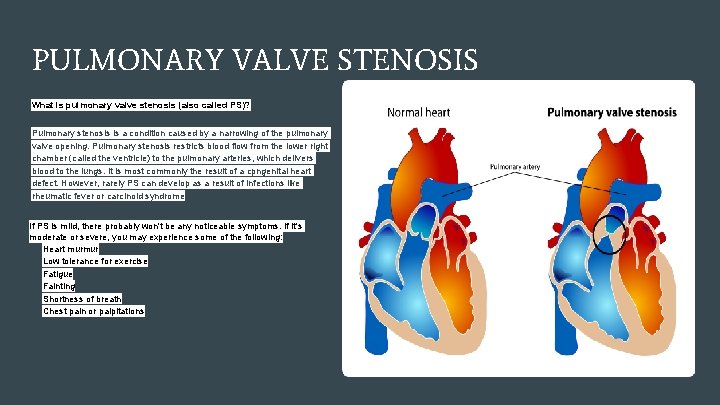
PULMONARY VALVE STENOSIS What is pulmonary valve stenosis (also called PS)? Pulmonary stenosis is a condition caused by a narrowing of the pulmonary valve opening. Pulmonary stenosis restricts blood flow from the lower right chamber (called the ventricle) to the pulmonary arteries, which delivers blood to the lungs. It is most commonly the result of a cpngenital heart defect. However, rarely PS can develop as a result of infections like rheumatic fever or carcinoid syndrome If PS is mild, there probably won't be any noticeable symptoms. If it's moderate or severe, you may experience some of the following: Heart murmur Low tolerance for exercise Fatigue Fainting Shortness of breath Chest pain or palpitations
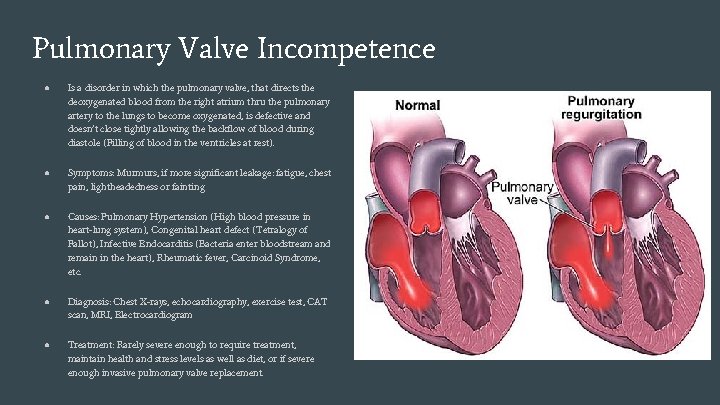
Pulmonary Valve Incompetence ● Is a disorder in which the pulmonary valve, that directs the deoxygenated blood from the right atrium thru the pulmonary artery to the lungs to become oxygenated, is defective and doesn’t close tightly allowing the backflow of blood during diastole (Filling of blood in the ventricles at rest). ● Symptoms: Murmurs, if more significant leakage: fatigue, chest pain, lightheadedness or fainting ● Causes: Pulmonary Hypertension (High blood pressure in heart-lung system), Congenital heart defect (Tetralogy of Fallot), Infective Endocarditis (Bacteria enter bloodstream and remain in the heart), Rheumatic fever, Carcinoid Syndrome, etc. ● Diagnosis: Chest X-rays, echocardiography, exercise test, CAT scan, MRI, Electrocardiogram ● Treatment: Rarely severe enough to require treatment, maintain health and stress levels as well as diet, or if severe enough invasive pulmonary valve replacement.
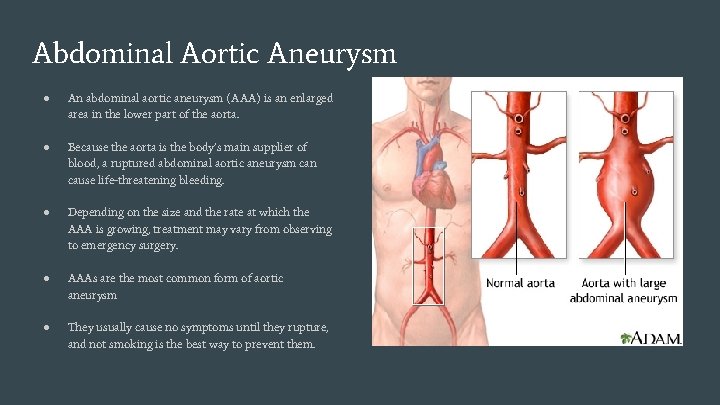
Abdominal Aortic Aneurysm ● An abdominal aortic aneurysm (AAA) is an enlarged area in the lower part of the aorta. ● Because the aorta is the body’s main supplier of blood, a ruptured abdominal aortic aneurysm can cause life-threatening bleeding. ● Depending on the size and the rate at which the AAA is growing, treatment may vary from observing to emergency surgery. ● AAAs are the most common form of aortic aneurysm ● They usually cause no symptoms until they rupture, and not smoking is the best way to prevent them.
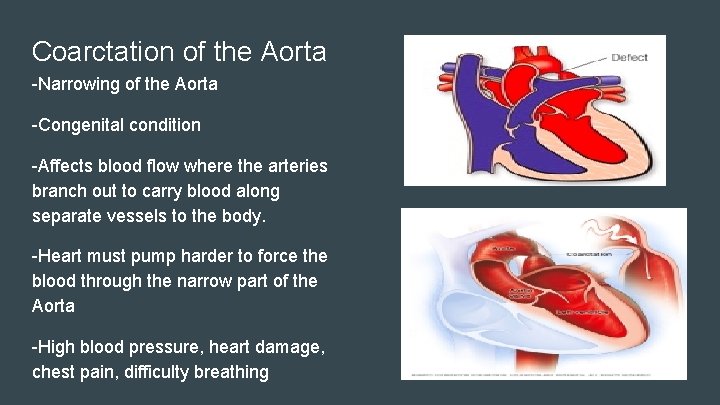
Coarctation of the Aorta -Narrowing of the Aorta -Congenital condition -Affects blood flow where the arteries branch out to carry blood along separate vessels to the body. -Heart must pump harder to force the blood through the narrow part of the Aorta -High blood pressure, heart damage, chest pain, difficulty breathing