
All behaviour is communication Making sense of behaviour
All behaviour is communication Making sense of behaviour in a neurodiverse world Part 3 “English is my second language. Autism is my first, ” Dani Bowman Sarah Barratt Educational Psychologist, PASDA sarahs_karma@yahoo. co. uk
Module Outline Part 3 • Neurology of the Stress Response: Hand Model of the Brain • Autistic Meltdown: Fight, Flight, Freeze or Fawn Response • • • The Arousal Cycle: Making Sense of Distressed Behaviour Cause of Autistic Overload: Too much Emotional, Cognitive and Sensory Information Autistic Tools: Coping with Overload Self-Care: Parent-Carers; Me Too Escalating Behaviour: Responding Appropriately Co-Regulation: First step towards Self-Regulation
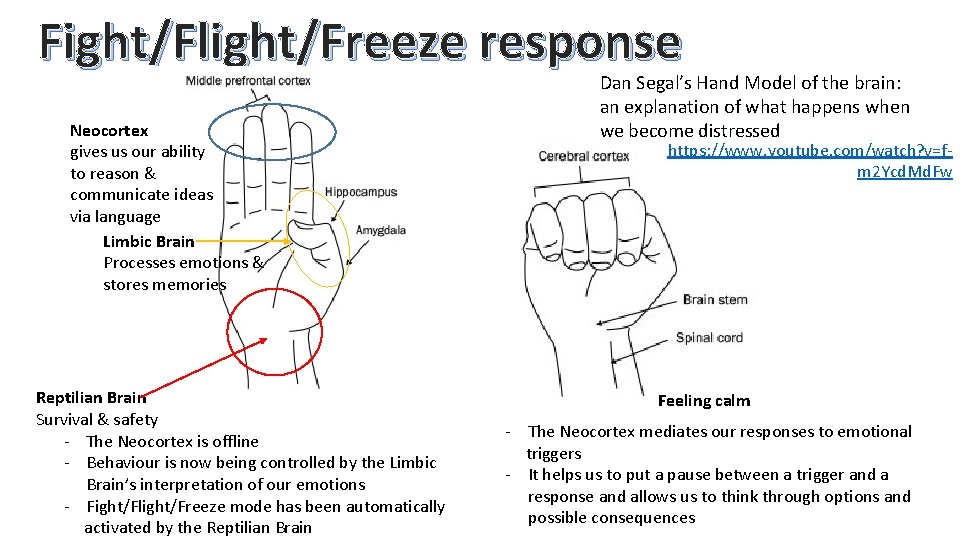
Fight/Flight/Freeze response Neocortex gives us our ability to reason & communicate ideas via language Limbic Brain Processes emotions & stores memories Reptilian Brain Survival & safety - The Neocortex is offline - Behaviour is now being controlled by the Limbic Brain’s interpretation of our emotions - Fight/Flight/Freeze mode has been automatically activated by the Reptilian Brain Dan Segal’s Hand Model of the brain: an explanation of what happens when we become distressed https: //www. youtube. com/watch? v=fm 2 Ycd. Md. Fw Feeling calm - The Neocortex mediates our responses to emotional triggers - It helps us to put a pause between a trigger and a response and allows us to think through options and possible consequences
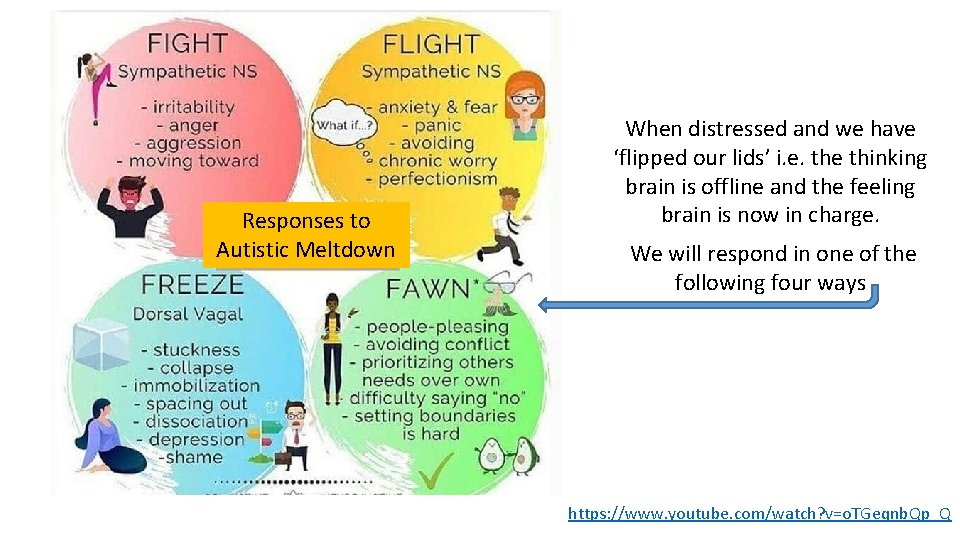
Responses to Autistic Meltdown When distressed and we have ‘flipped our lids’ i. e. the thinking brain is offline and the feeling brain is now in charge. We will respond in one of the following four ways https: //www. youtube. com/watch? v=o. TGeqnb. Qp_Q

The arousal cycle of distressed behaviour Trigger Phase Escalation Phase Crisis Phase Recovery Phase Crisis A R O U S A L Post Crisis Phase Learning Phase Additional assaults Assault Aggression Anger DANGER Anxiety PERCEIVED THREAT TIME Baseline Behaviour Exhaustion

Emotion Behaviour Message Response Anxiety Withdrawal or agitation I’m worried I’m frustrated Active Listening, explore feelings, Problem Solve, Involve, redirect, relaxation strategies, anxiety management Anger Loud / Disruptive (Escalation Phase) Critical, Swearing, Generalised Abuse Listen to me Help Me As above + divert, refocus, reassure, set limits, remove others Personalised Abuse (Escalation Phase) Threats , Gesticulation, Space Invasion, Eye contact I’m losing control Set limits, unambiguous Help me regain control language, don’t question, divert, offer exit, seek help (Trigger Phase) Aggression Crisis (Crisis Phase) Destructive behaviour Towards people/ property / self Can you control me? Escape, Protect self and others, Seek Assistance, Exhaustion I feel bad (Recovery Phase) Tearful, Expressions of remorse / anger, regret, apologetic Support, Monitor Secure the area Post Incident Return to baseline behaviour (Learning Phase) Post incident review(s)
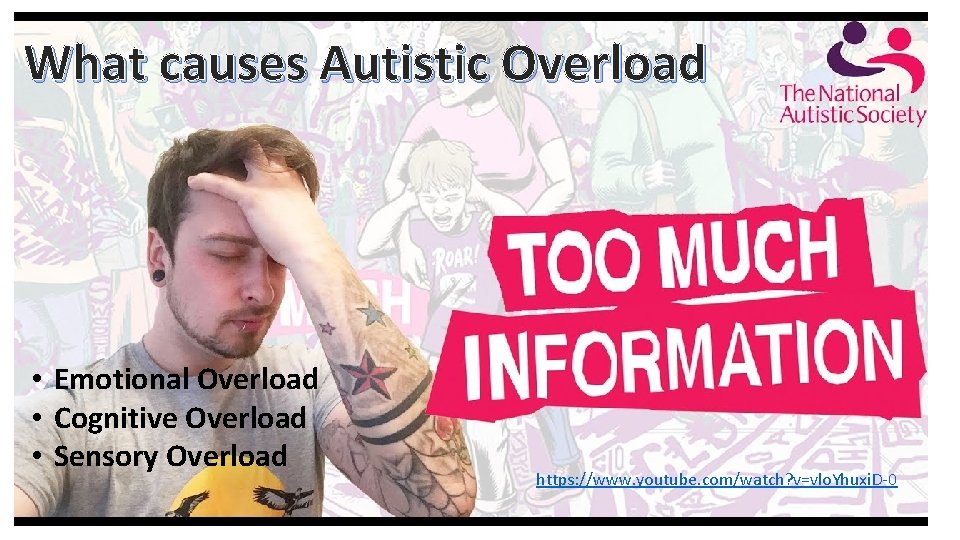
What causes Autistic Overload • Emotional Overload • Cognitive Overload • Sensory Overload https: //www. youtube. com/watch? v=vlo. Yhuxi. D-0
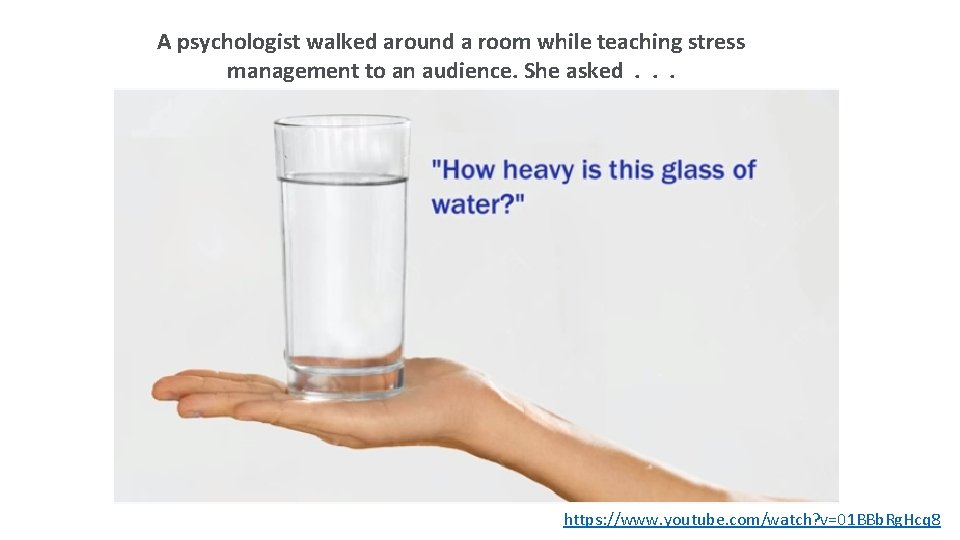
A psychologist walked around a room while teaching stress management to an audience. She asked. . . https: //www. youtube. com/watch? v=01 BBb. Rg. Hcq 8
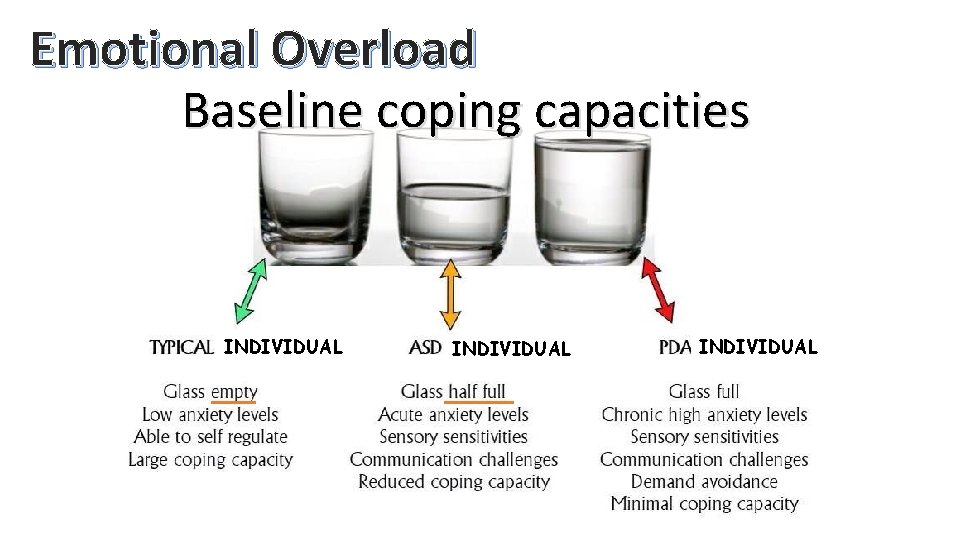
Emotional Overload Baseline coping capacities INDIVIDUAL
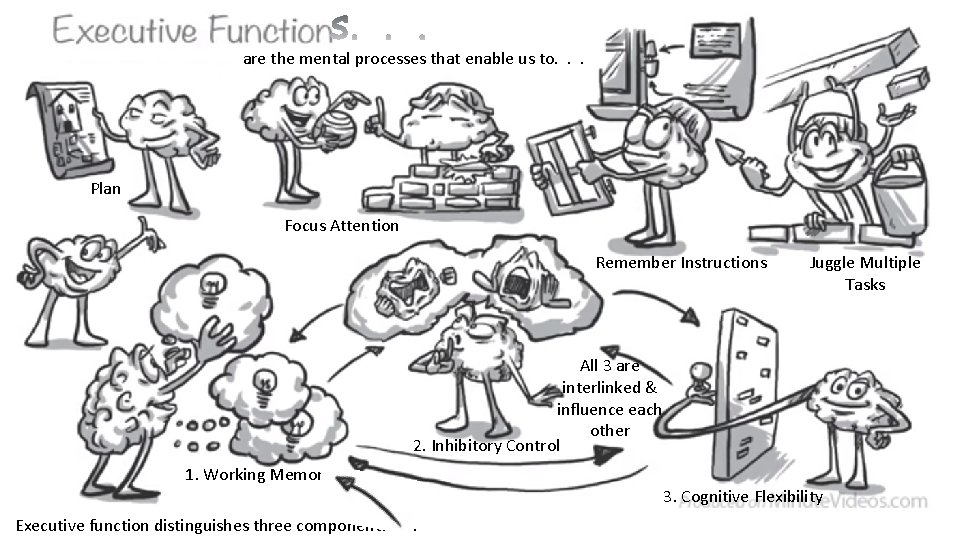
are the mental processes that enable us to. . . Plan Focus Attention Remember Instructions Juggle Multiple Tasks All 3 are interlinked & influence each other 2. Inhibitory Control 1. Working Memory 3. Cognitive Flexibility Executive function distinguishes three components. . .
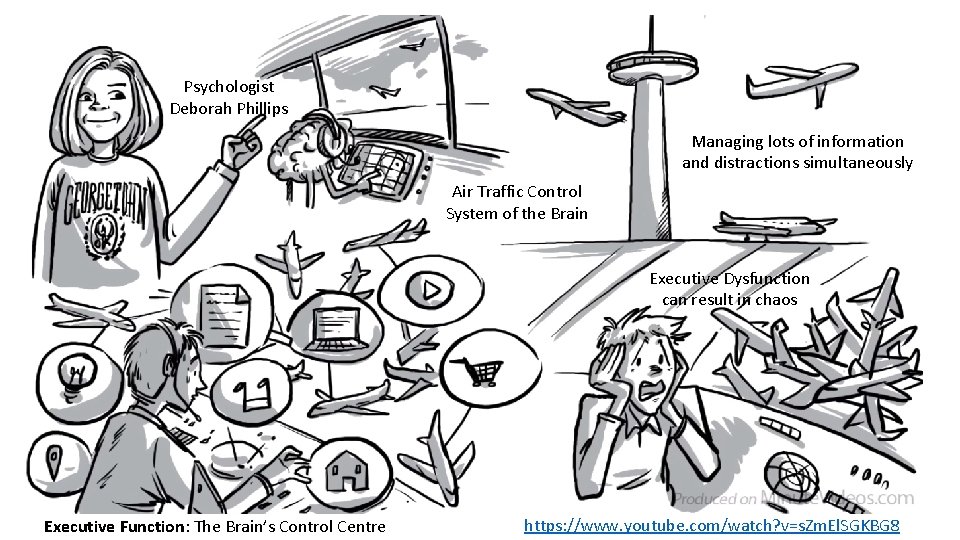
Psychologist Deborah Phillips Managing lots of information and distractions simultaneously Air Traffic Control System of the Brain Executive Dysfunction can result in chaos Executive Function: The Brain’s Control Centre https: //www. youtube. com/watch? v=s. Zm. El. SGKBG 8
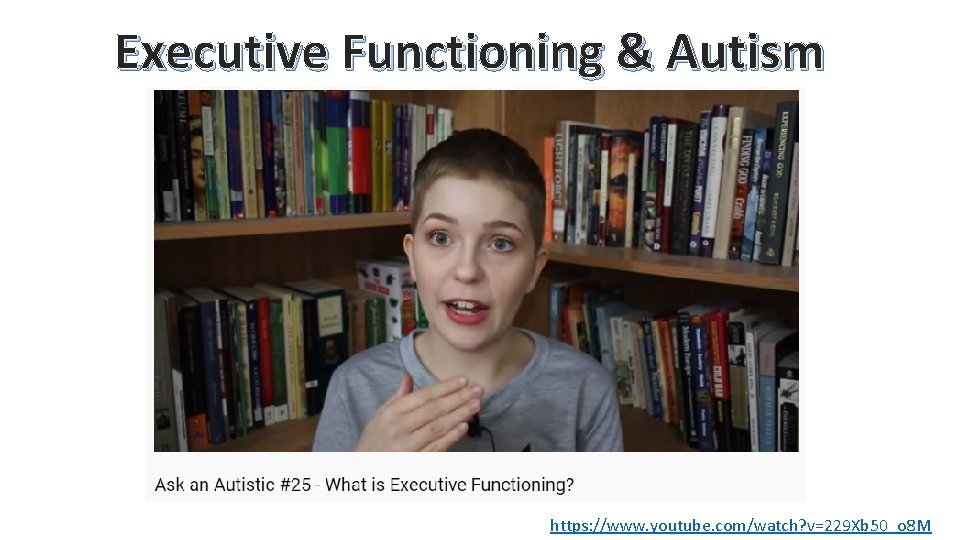
Executive Functioning & Autism https: //www. youtube. com/watch? v=229 Xb 50_o 8 M
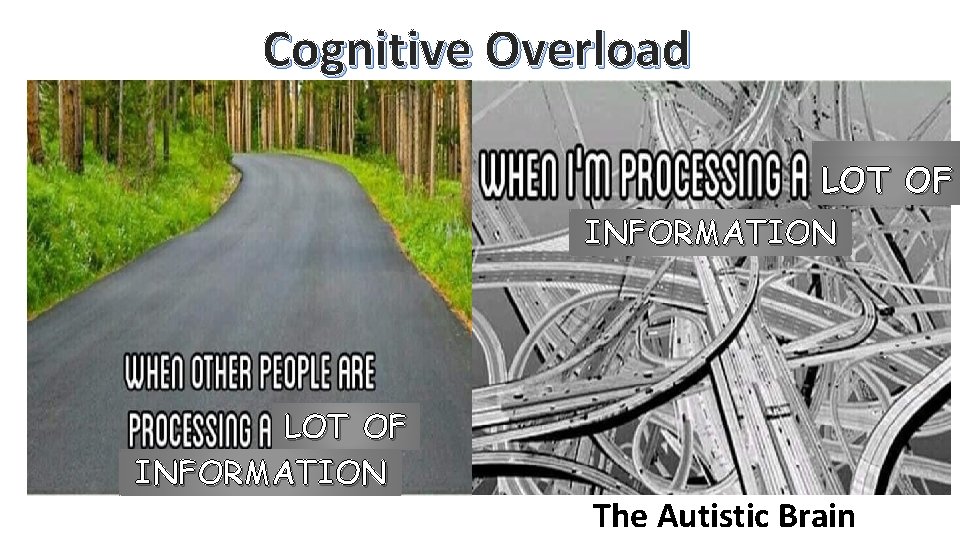
Cognitive Overload LOT OF INFORMATION The Autistic Brain
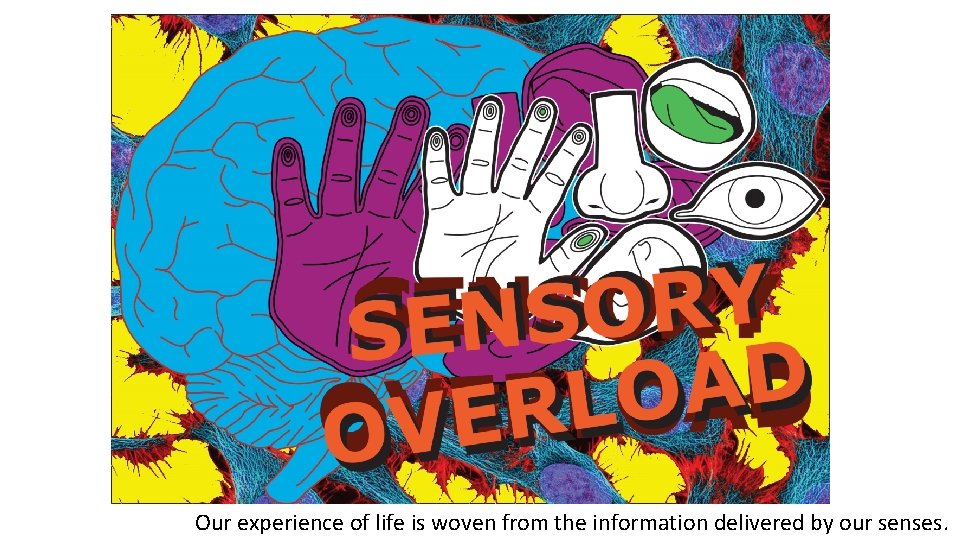
Our experience of life is woven from the information delivered by our senses.
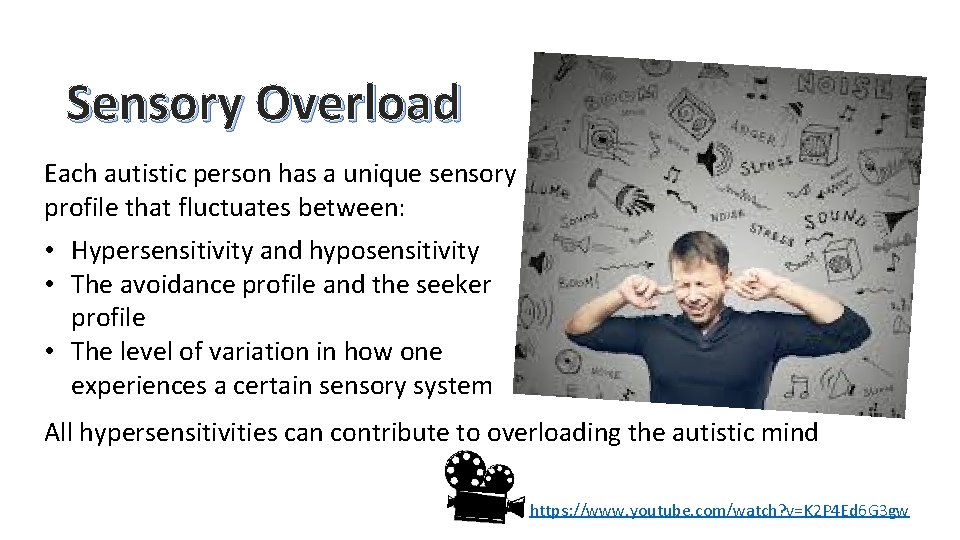
Sensory Overload Each autistic person has a unique sensory profile that fluctuates between: • Hypersensitivity and hyposensitivity • The avoidance profile and the seeker profile • The level of variation in how one experiences a certain sensory system All hypersensitivities can contribute to overloading the autistic mind https: //www. youtube. com/watch? v=K 2 P 4 Ed 6 G 3 gw
Autistic tools Ways of coping with Autistic Overload • Creating and maintaining routines can become a way to build • a structure for the day, allowing some reassurance; the form of planning that best fits the detailed and intense Autistic neurology • Hyperfocus limited to a particular field of interest; the Autistic mind experiences the joy of a space of peace and mental wellbeing • Retreating to a safe space allows the timeous closing of the doors to the Autistic mind, potentially preventing burnout and avoiding overload • Engaging in self-soothing sensory activity e. g. listening to music, mindfulness breathing exercises or going for a walk, improves emotional regulation and prevents overload in stressful situations http: //www. thinkclinicalpsychologists. com. au/2017/09/04/using-your-5 -senses-to-self-soothe/
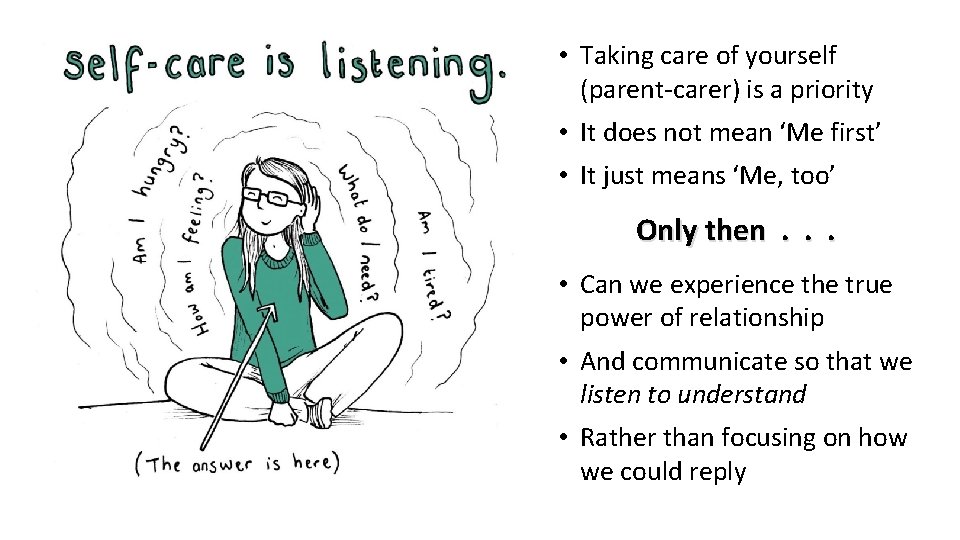
• Taking care of yourself (parent-carer) is a priority • It does not mean ‘Me first’ • It just means ‘Me, too’ Only then. . . • Can we experience the true power of relationship • And communicate so that we listen to understand • Rather than focusing on how we could reply
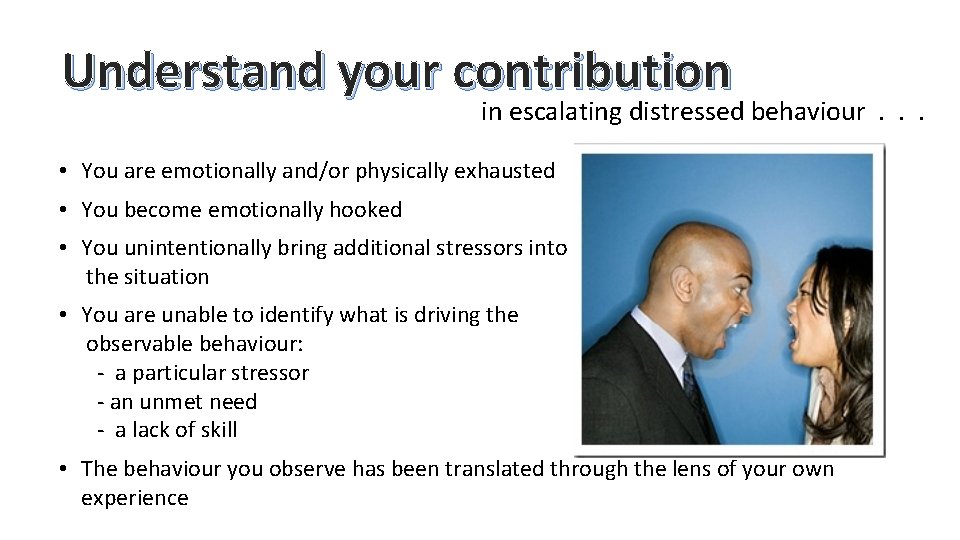
Understand your contribution in escalating distressed behaviour. . . • You are emotionally and/or physically exhausted • You become emotionally hooked • You unintentionally bring additional stressors into the situation • You are unable to identify what is driving the observable behaviour: - a particular stressor - an unmet need - a lack of skill • The behaviour you observe has been translated through the lens of your own experience
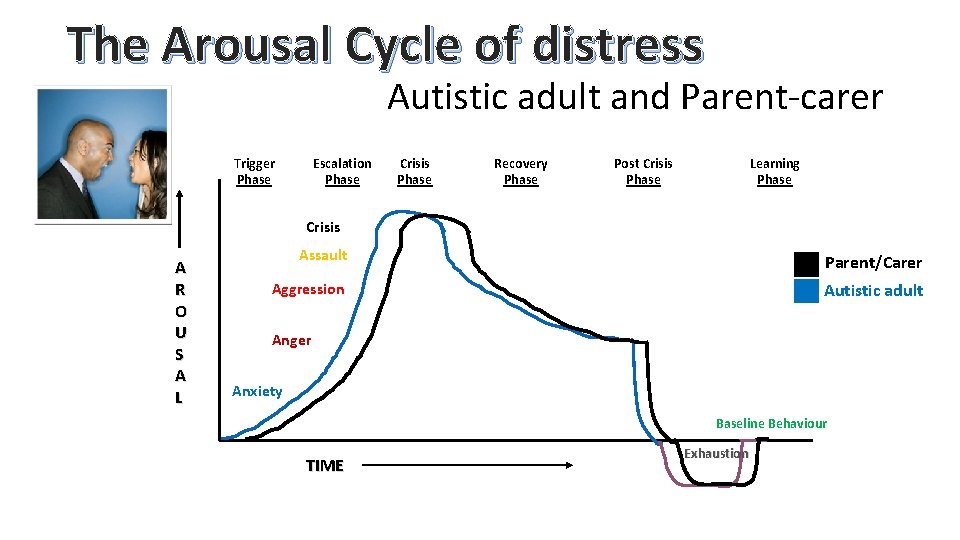
The Arousal Cycle of distress Autistic adult and Parent-carer Trigger Phase Escalation Phase Crisis Phase Recovery Phase Post Crisis Phase Learning Phase Crisis A R O U S A L Assault Parent/Carer Aggression Autistic adult Anger Anxiety Baseline Behaviour TIME Exhaustion
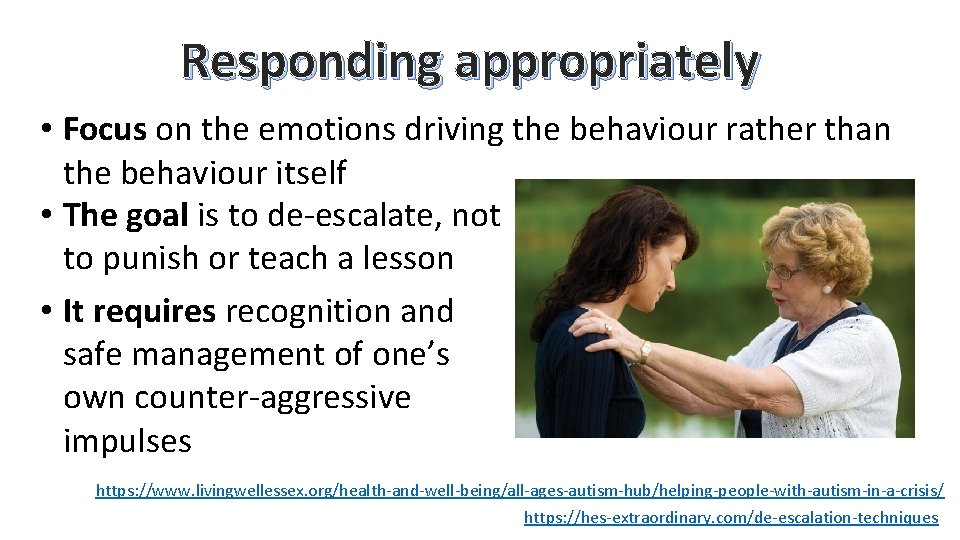
Responding appropriately • Focus on the emotions driving the behaviour rather than the behaviour itself • The goal is to de-escalate, not to punish or teach a lesson • It requires recognition and safe management of one’s own counter-aggressive impulses https: //www. livingwellessex. org/health-and-well-being/all-ages-autism-hub/helping-people-with-autism-in-a-crisis/ https: //hes-extraordinary. com/de-escalation-techniques
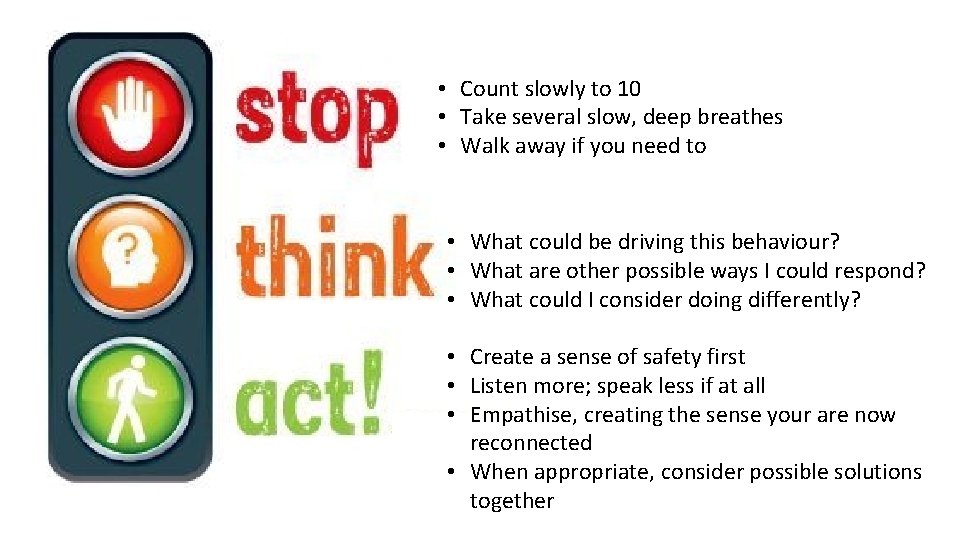
• Count slowly to 10 • Take several slow, deep breathes • Walk away if you need to • What could be driving this behaviour? • What are other possible ways I could respond? • What could I consider doing differently? • Create a sense of safety first • Listen more; speak less if at all • Empathise, creating the sense your are now reconnected • When appropriate, consider possible solutions together
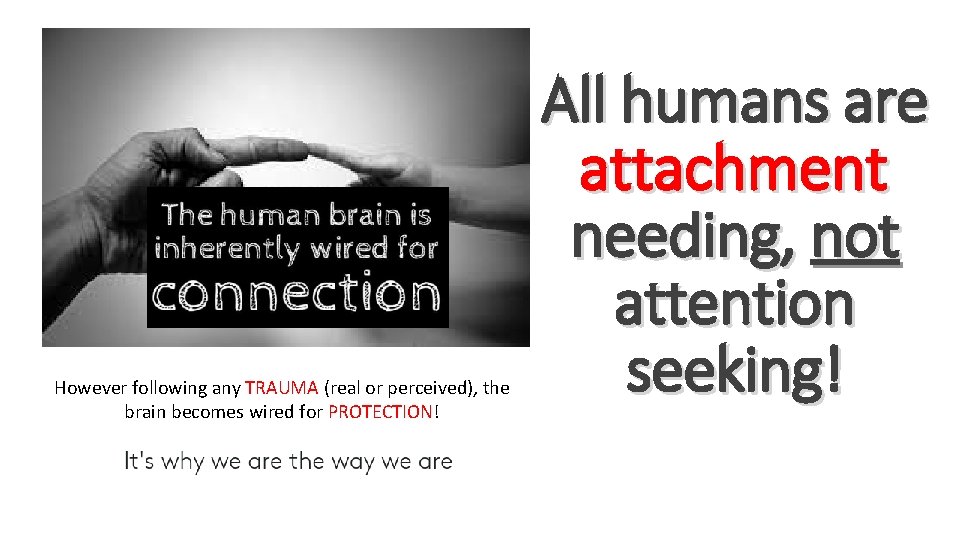
However following any TRAUMA (real or perceived), the brain becomes wired for PROTECTION! All humans are attention attachment needing, not attention seeking!
The art of co-regulation the first step on the pathway to self-regulation ‘How we experience the world, relate to others, and find meaning in life is dependent on how we have come to regulate our emotions. ’ Dan Siegel, 1999

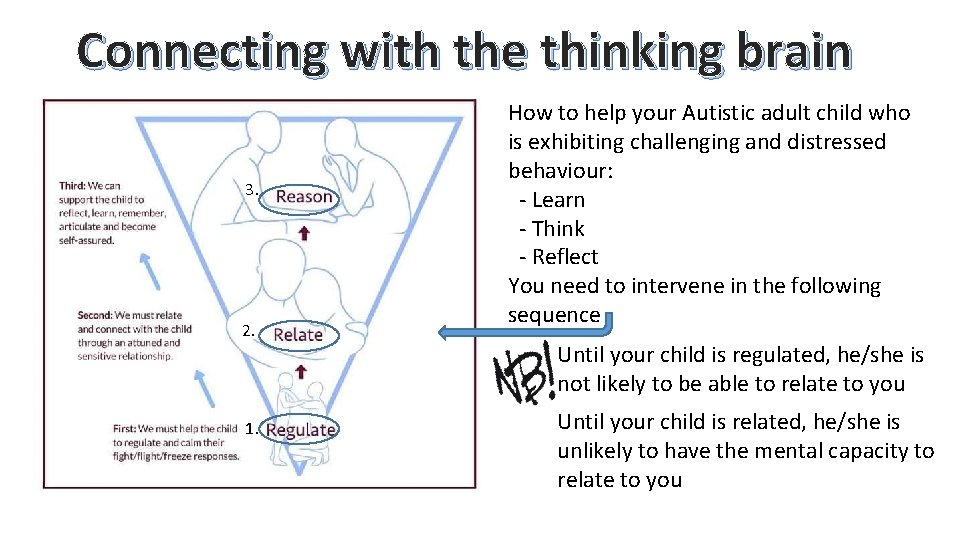
Connecting with the thinking brain 3. 2. 1. How to help your Autistic adult child who is exhibiting challenging and distressed behaviour: - Learn - Think - Reflect You need to intervene in the following sequence Until your child is regulated, he/she is not likely to be able to relate to you Until your child is related, he/she is unlikely to have the mental capacity to relate to you
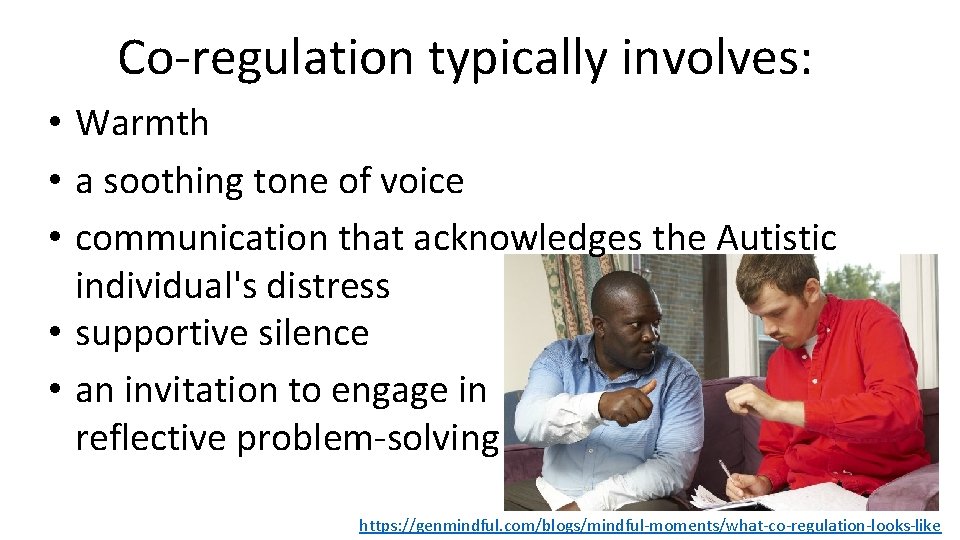
Co-regulation typically involves: • Warmth • a soothing tone of voice • communication that acknowledges the Autistic individual's distress • supportive silence • an invitation to engage in reflective problem-solving https: //genmindful. com/blogs/mindful-moments/what-co-regulation-looks-like

Further considerations. . . in response to distressed behaviour • Co-regulation alone is not always enough • Autistic adults may also need: - to be actively coached in ways to manage their emotions and impulses - support recognizing their and other’s body cues; translating this into a verbal description of how they feel before deciding on an appropriate response
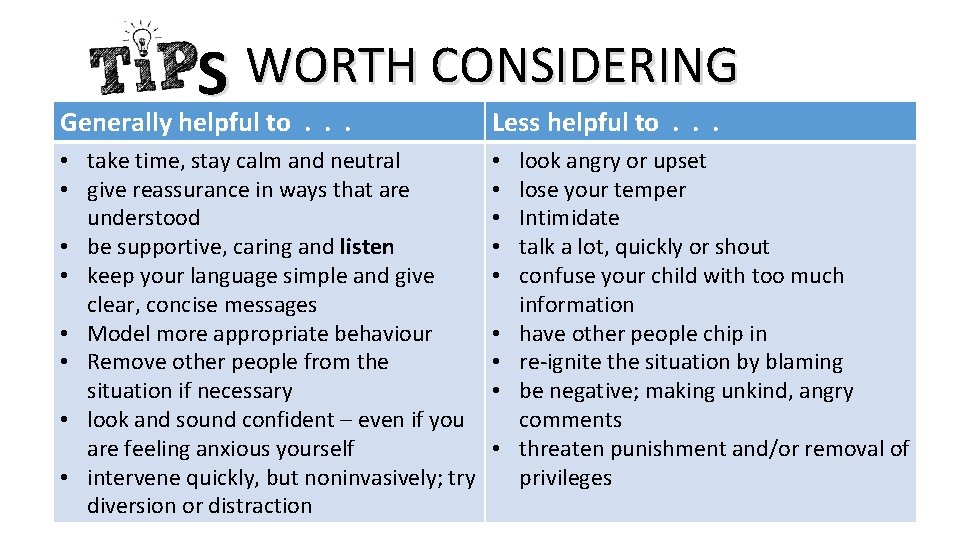
S WORTH CONSIDERING Generally helpful to. . . Less helpful to. . . • take time, stay calm and neutral • give reassurance in ways that are understood • be supportive, caring and listen • keep your language simple and give clear, concise messages • Model more appropriate behaviour • Remove other people from the situation if necessary • look and sound confident – even if you are feeling anxious yourself • intervene quickly, but noninvasively; try diversion or distraction • • • look angry or upset lose your temper Intimidate talk a lot, quickly or shout confuse your child with too much information have other people chip in re-ignite the situation by blaming be negative; making unkind, angry comments threaten punishment and/or removal of privileges

57 Albion Road, Edinburgh EH 7 5 QY Tel: 0131 475 2416 Email: info@pasda. org. uk Website: www. pasda. org. uk Scottish Charity Number: SC 042678 MAKE A DONATION TO SUPPORT Pasda’s WORK If you have benefitted from this presentation, please consider supporting Pasda's work. You can do this in one of four ways: 1) Donate via Just. Giving on the Pasda website at: https: //www. pasda. org. uk , at the top right of the Home Page. 2) Donate via Just. Giving at: https: //www. justgiving. com/pasdauk 3) Make a bank transfer. To do this, please contact us by phone or email for the account details. 4) Make out a cheque payable to Pasda, and mail it to our office at the address above. Thank you very much.

- Slides: 31