
All About Intermediaries August 16 2012 What is
All About Intermediaries August 16, 2012
What is your role in after-school?
Agenda Introduction Dara Rose, Senior Program Officer, The Wallace Foundation National survey findings Jessica Donner, Director, CBASS Respondents Liz Nusken, Director, Ohio Afterschool Network Chris Smith, Executive Director, Boston After School & Beyond Q&A Previously submitted and live questions
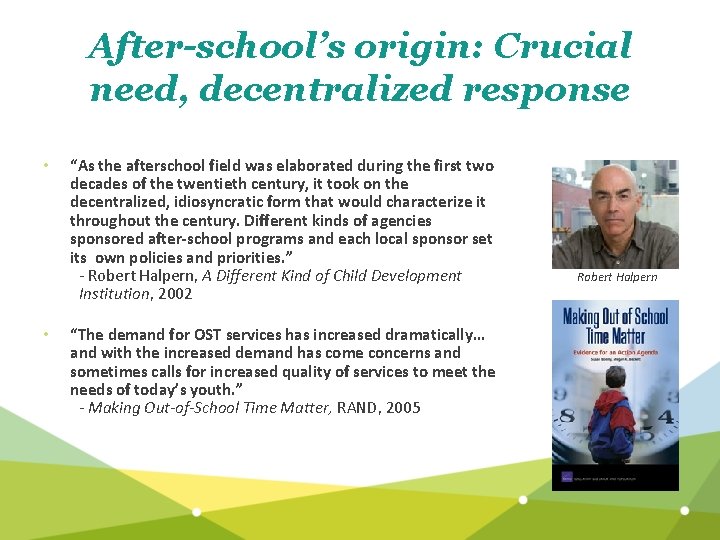
After-school’s origin: Crucial need, decentralized response • • “As the afterschool field was elaborated during the first two decades of the twentieth century, it took on the decentralized, idiosyncratic form that would characterize it throughout the century. Different kinds of agencies sponsored after-school programs and each local sponsor set its own policies and priorities. ” - Robert Halpern, A Different Kind of Child Development Institution, 2002 “The demand for OST services has increased dramatically… and with the increased demand has come concerns and sometimes calls for increased quality of services to meet the needs of today’s youth. ” - Making Out-of-School Time Matter, RAND, 2005 Robert Halpern
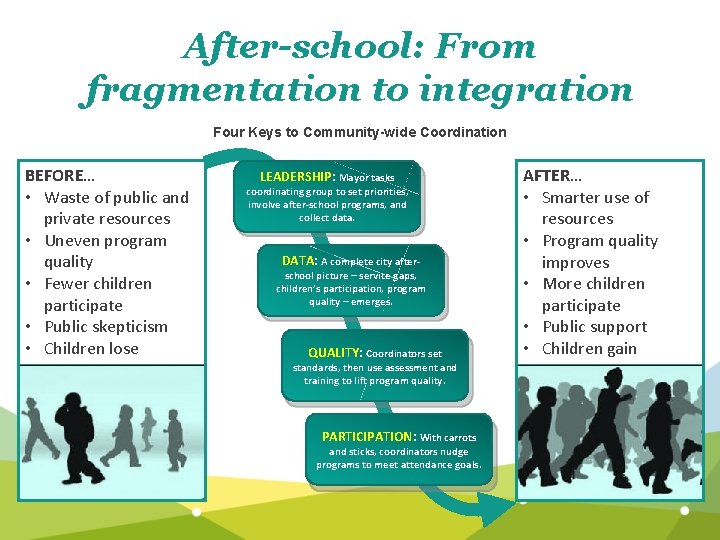
After-school: From fragmentation to integration Four Keys to Community-wide Coordination BEFORE… • Waste of public and private resources • Uneven program quality • Fewer children participate • Public skepticism • Children lose LEADERSHIP: Mayor tasks coordinating group to set priorities, involve after-school programs, and collect data. DATA: A complete city after- school picture – service gaps, children’s participation, program quality – emerges. QUALITY: Coordinators set standards, then use assessment and training to lift program quality. PARTICIPATION: With carrots and sticks, coordinators nudge programs to meet attendance goals. AFTER… • Smarter use of resources • Program quality improves • More children participate • Public support • Children gain
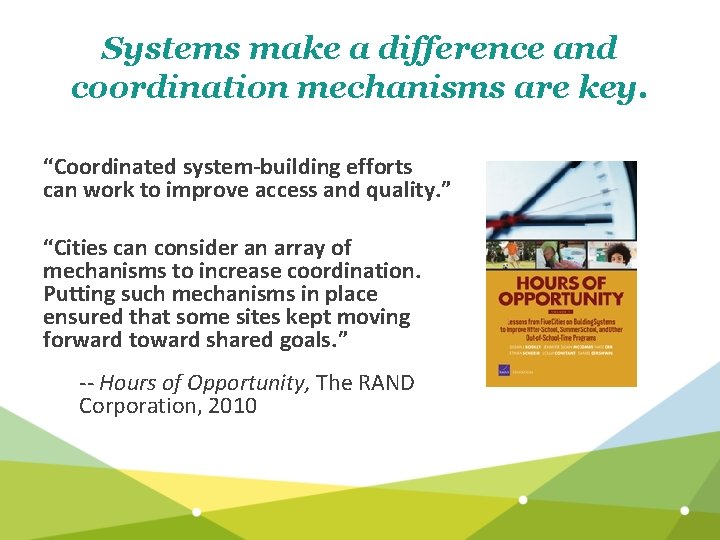
Systems make a difference and coordination mechanisms are key. “Coordinated system-building efforts can work to improve access and quality. ” “Cities can consider an array of mechanisms to increase coordination. Putting such mechanisms in place ensured that some sites kept moving forward toward shared goals. ” -- Hours of Opportunity, The RAND Corporation, 2010
All About Intermediaries Jessica Donner Director CBASS
CBASS is a coalition of intermediary organizations in cities and regions dedicated to increasing the availability of high- quality learning opportunities. Our mission. We help cities and regions employ coordinated approaches to increase the scale, quality, and accountability of programs, and to leverage the power of community organizations and schools to create inspired learning systems for our children and youth. Strategies • Communications • Practice • Policy
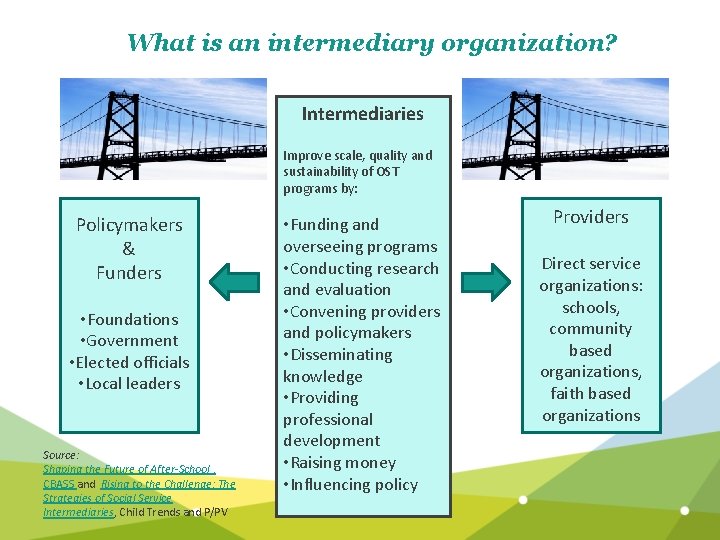
What is an intermediary organization? Intermediaries Improve scale, quality and sustainability of OST programs by: Policymakers & Funders • Foundations • Government • Elected officials • Local leaders Source: Shaping the Future of After-School , CBASS and Rising to the Challenge: The Strategies of Social Service Intermediaries, Child Trends and P/PV • Funding and overseeing programs • Conducting research and evaluation • Convening providers and policymakers • Disseminating knowledge • Providing professional development • Raising money • Influencing policy Providers Direct service organizations: schools, community based organizations, faith based organizations
Why a national OST intermediary survey? • Map the intermediary landscape • Identify scale and scope of organizations building the capacity of after-school programs. • Better understand organizational impact, priorities and challenge areas. The Wallace Foundation, wallacefoundation. org
Intermediary Characteristics
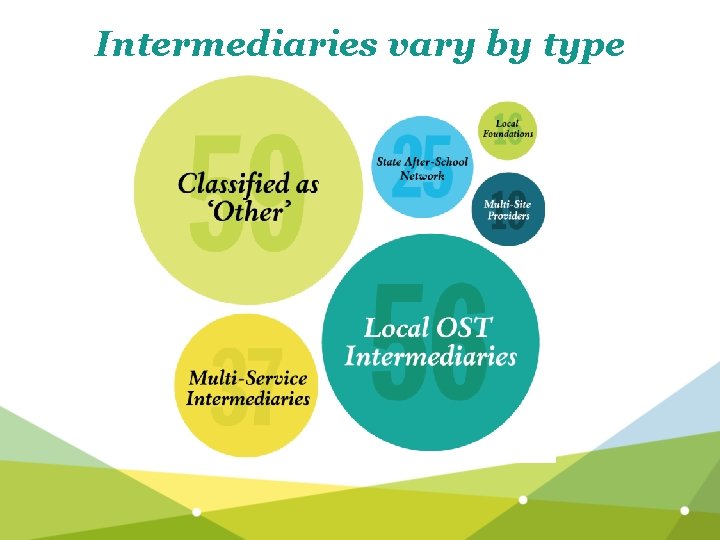
Intermediaries vary by type
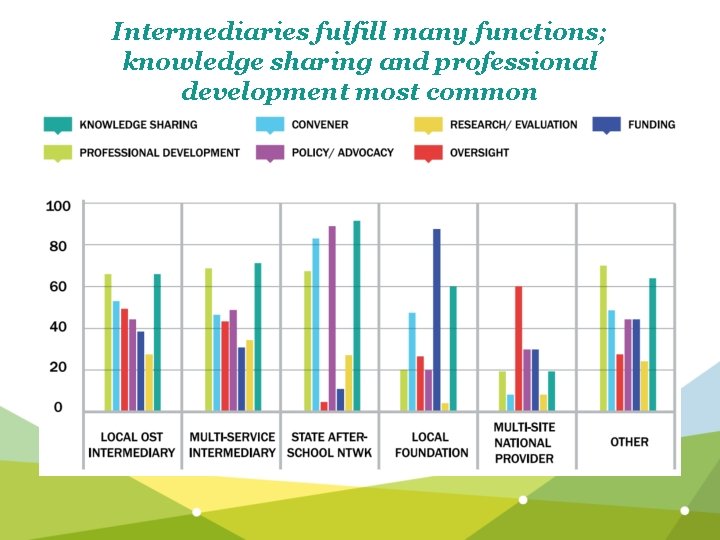
Intermediaries fulfill many functions; knowledge sharing and professional development most common
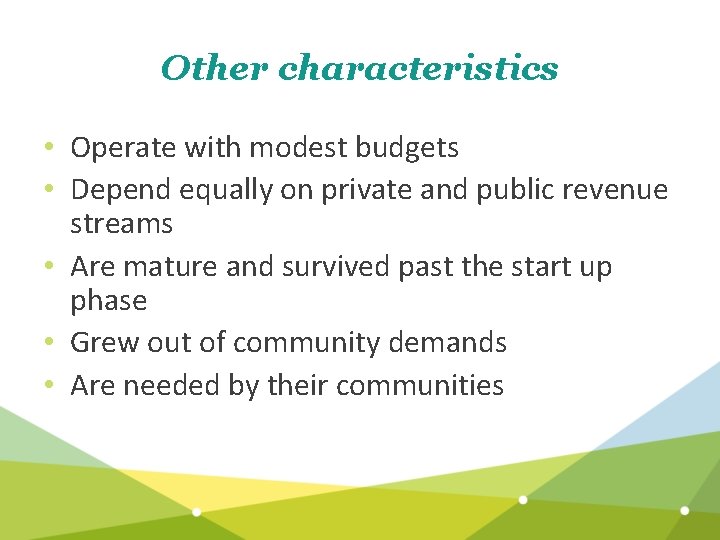
Other characteristics • Operate with modest budgets • Depend equally on private and public revenue streams • Are mature and survived past the start up phase • Grew out of community demands • Are needed by their communities
Impact
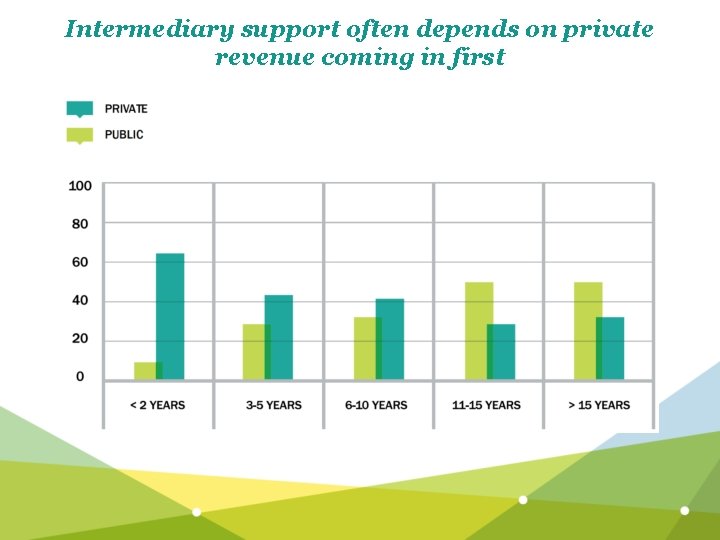
Intermediary support often depends on private revenue coming in first
Intermediaries help communities serve more kids, even in a recession. • 64% of respondents reported the number of youth served by OST programs increased. • 80% of survey respondents report helping increase the number of youth served. • More mature intermediaries played a critical role in participation rates.
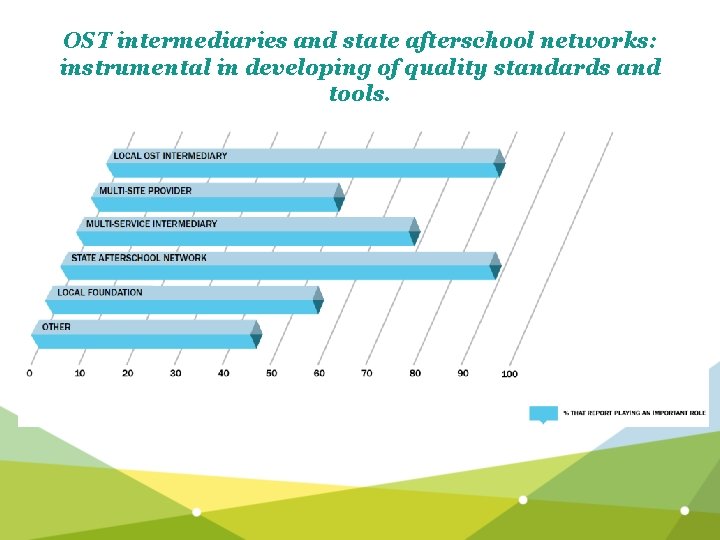
OST intermediaries and state afterschool networks: instrumental in developing of quality standards and tools. • Graphic to come.
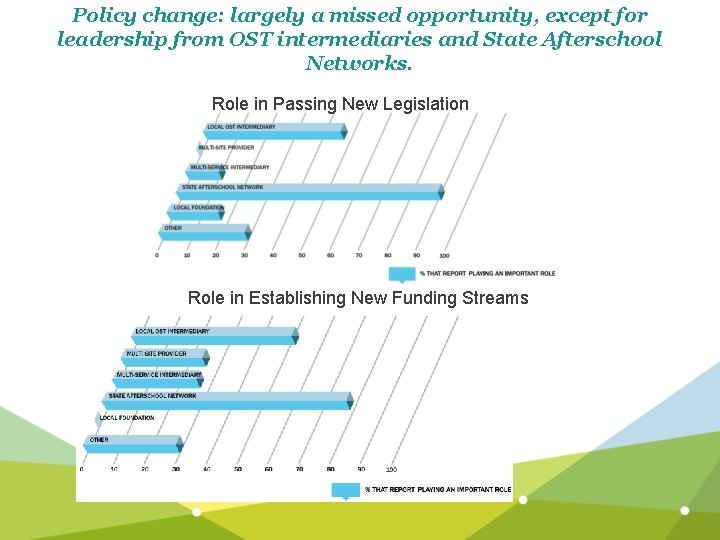
Policy change: largely a missed opportunity, except for leadership from OST intermediaries and State Afterschool Networks. Role in Passing New Legislation Role in Establishing New Funding Streams

Pressing Issues
Priority content areas for the next five years Top challenges • • • Increase access for underserved youth Raise funds for programs Establish data systems, use data to drive improvement Improve professional development for program staff Implement quality improvement systems Pressing issue areas for technical assistance • • Funding and program sustainability in a difficult economy Building coordinated OST systems Determining youth, program, systems outcomes Expanding access and improving services for older youth
Concluding thoughts • Stick with it for the long haul • Staging may be key to success • There’s no need to start from scratch
All About Intermediaries Liz Nusken Director, Ohio Afterschool Network
Ohio Afterschool Network • The Ohio Afterschool Network (OAN) supports children, youth, families, and communities by advocating and building capacity with a unified voice for sustainable investments in safe, healthy, and nurturing afterschool experiences. • One of 40 statewide afterschool networks supported by the C. S. Mott Foundation
Ohio Afterschool Network • Over 800 members representing providers, child advocacy organizations, educators, state agencies, funders and other stakeholders. • A program of the Ohio Child Care Resource and Referral Association
Ohio Afterschool Network’s policy and funding work • State funding: mixed success o Secured $20 M for afterschool and summer programs in 2006 o $10 M in 2007 o Funding wasn’t sustained • Go-to organization o Information for funders o Afterschool voice on policy committees and task forces
Ohio Afterschool Network’s policy and funding work • Create afterschool advocates o Mobilize membership on timely policy issues o Statehouse Days o Legislative site visits • Strategic allies on policy issues o Child care regulation, quality investments, system changes o Health and wellness
Ohio Afterschool Network’s quality work • Created quality tools o Program quality guidelines and assessment tool o Physical activity guidelines • Brought national resources to Ohio o Asia Society’s Expanding Horizons global learning resources o EDC’s National Partnership for After School Science • Knowledge sharing, communication and networking
All About Intermediaries Chris Smith Executive Director Boston After School & Beyond
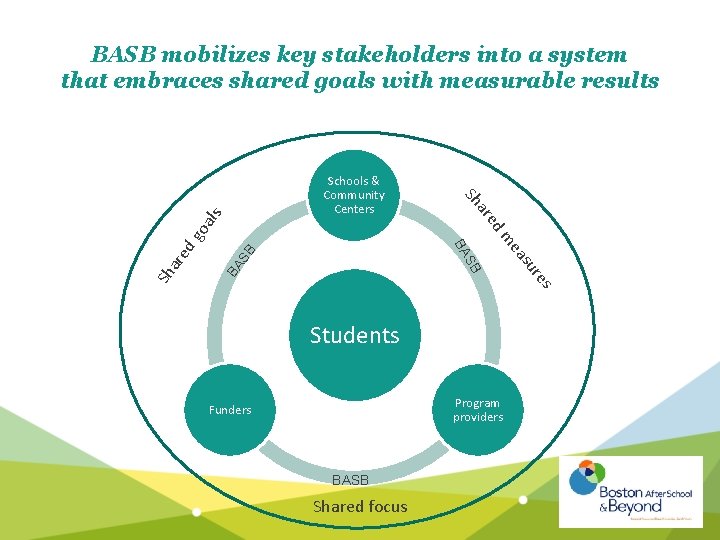
BASB mobilizes key stakeholders into a system that embraces shared goals with measurable results ls SB BA Program providers Funders BASB Shared focus s re Students su ea SB Sh ar e m BA dg oa ed ar Sh Schools & Community Centers
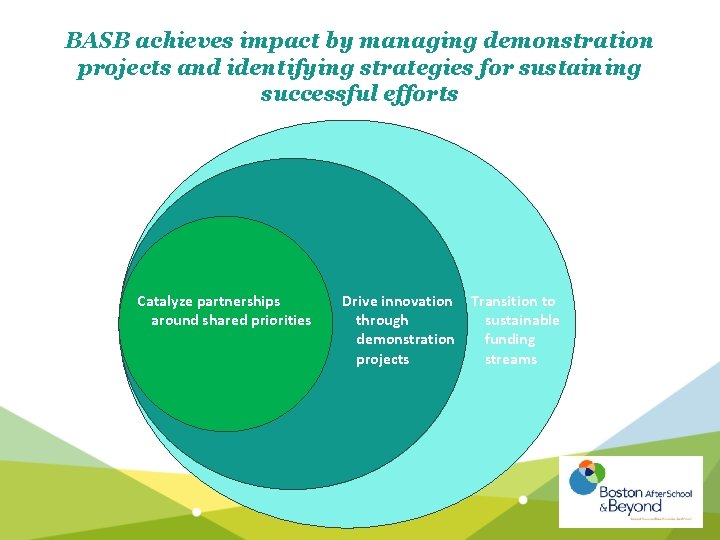
BASB achieves impact by managing demonstration projects and identifying strategies for sustaining successful efforts Catalyze partnerships around shared priorities Drive innovation through demonstration projects Transition to sustainable funding streams
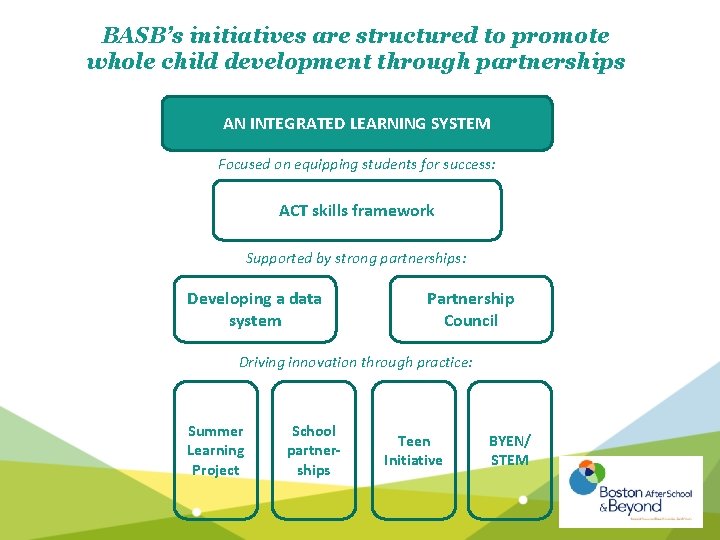
BASB’s initiatives are structured to promote whole child development through partnerships AN INTEGRATED LEARNING SYSTEM Focused on equipping students for success: ACT skills framework Supported by strong partnerships: Developing a data system Partnership Council Driving innovation through practice: Summer Learning Project School partnerships Teen Initiative BYEN/ STEM
All About Intermediaries will be archived at: www. wallacefoundation. org and www. afterschoolsystems. org Please direct follow up questions to: Jessica Donner at jdonner@tascorp. org or (646) 943 -8738 Thank you for participating!
- Slides: 33