
All About Bones The Skeletal System Do Now
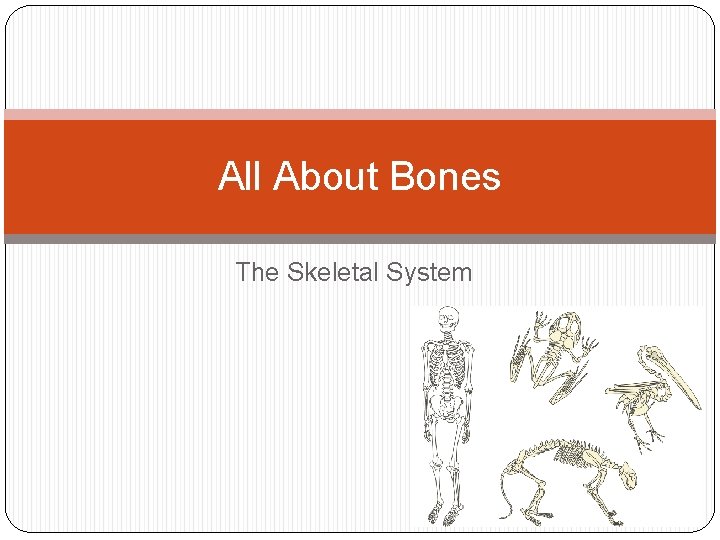
All About Bones The Skeletal System
Do Now 10 -10 -14 (Fri) �How many bones can you name?
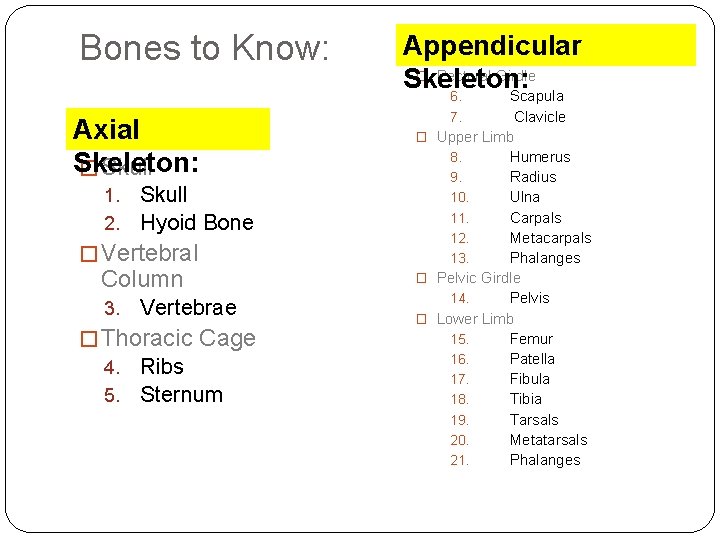
Bones to Know: Axial Skeleton: � Skull 1. 2. Skull Hyoid Bone � Vertebral Column 3. Vertebrae � Thoracic Cage 4. 5. Ribs Sternum Appendicular � Pectoral Girdle Skeleton: 6. Scapula Clavicle � Upper Limb 8. Humerus 9. Radius 10. Ulna 11. Carpals 12. Metacarpals 13. Phalanges � Pelvic Girdle 14. Pelvis � Lower Limb 15. Femur 16. Patella 17. Fibula 18. Tibia 19. Tarsals 20. Metatarsals 21. Phalanges 7.
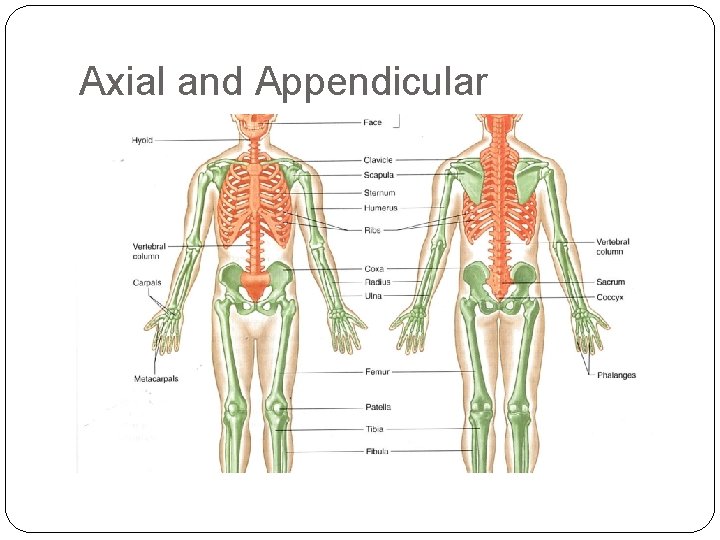
Axial and Appendicular
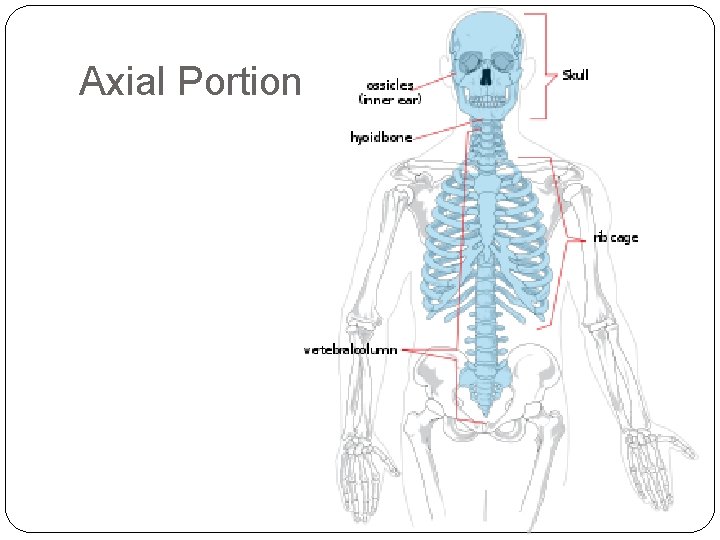
Axial Portion
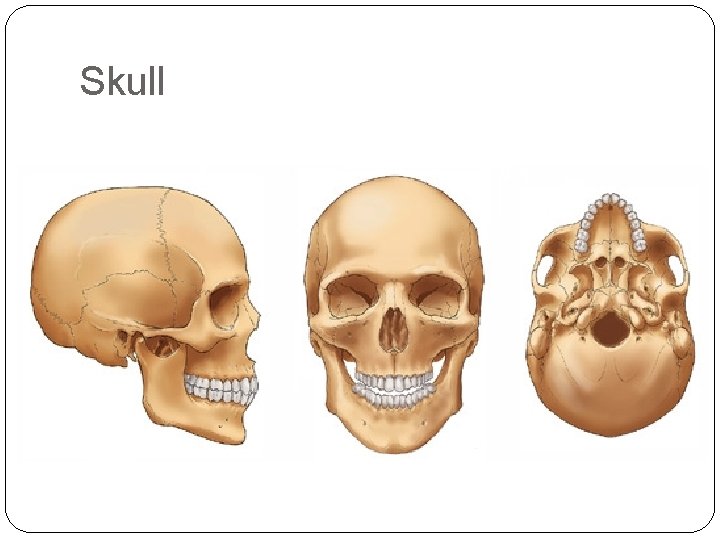
Skull
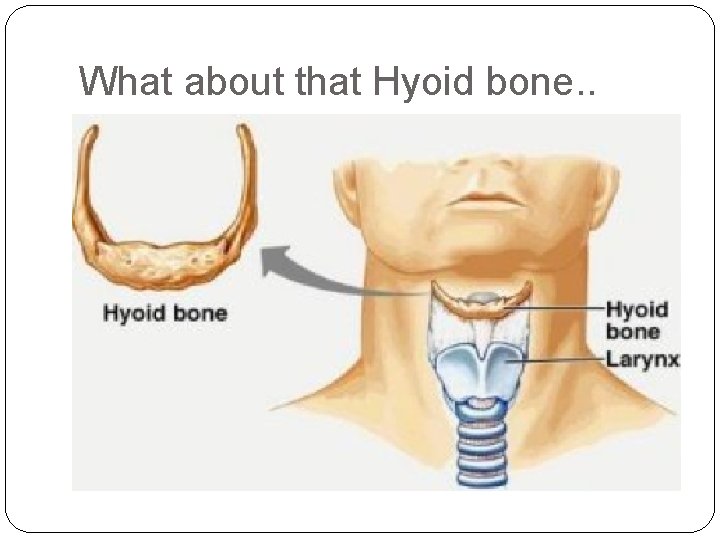
What about that Hyoid bone. .
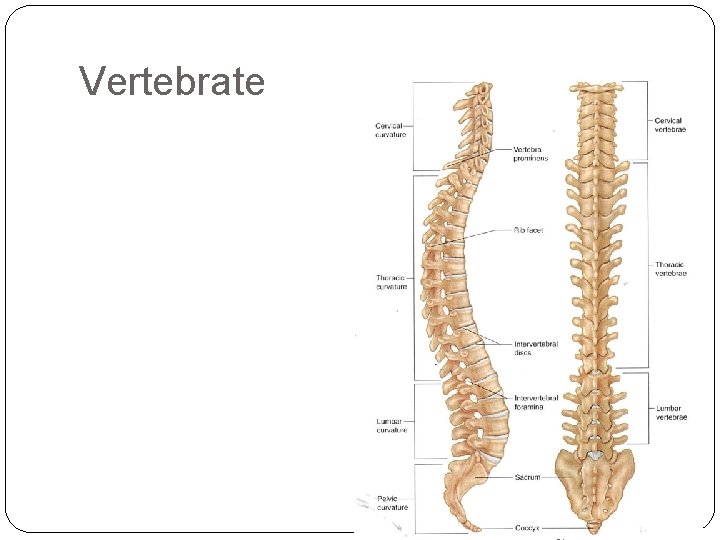
Vertebrate
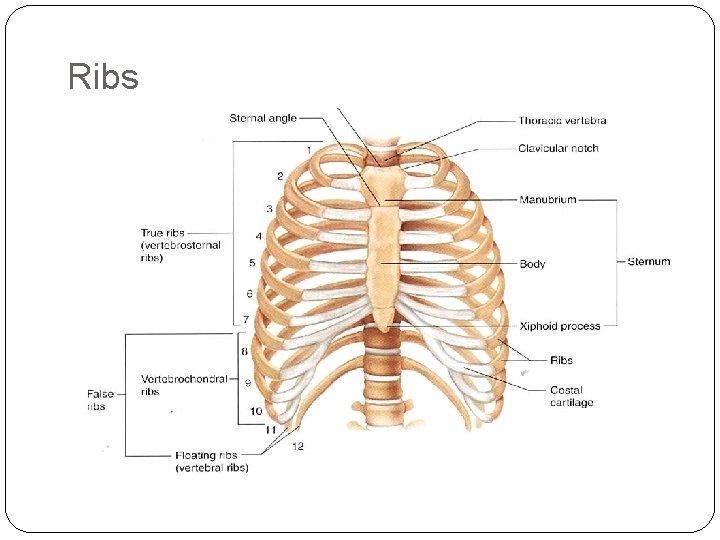
Ribs
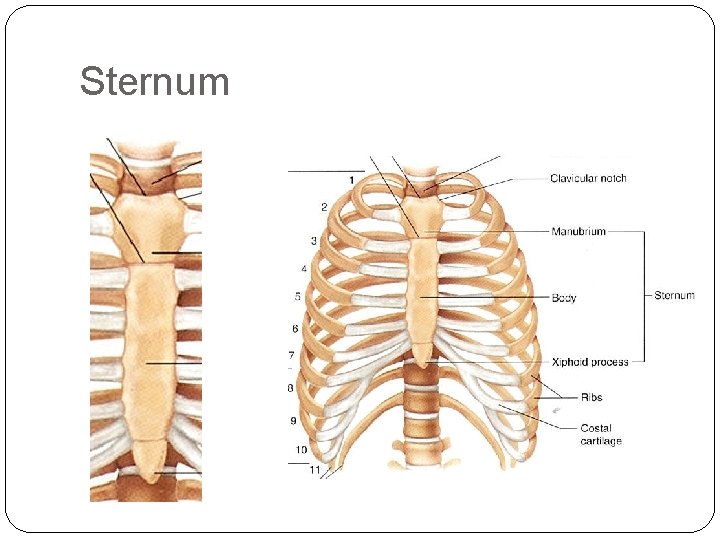
Sternum
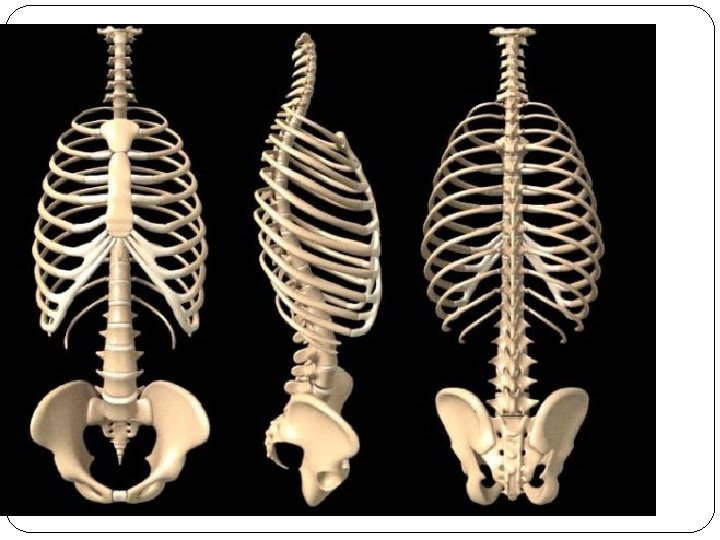
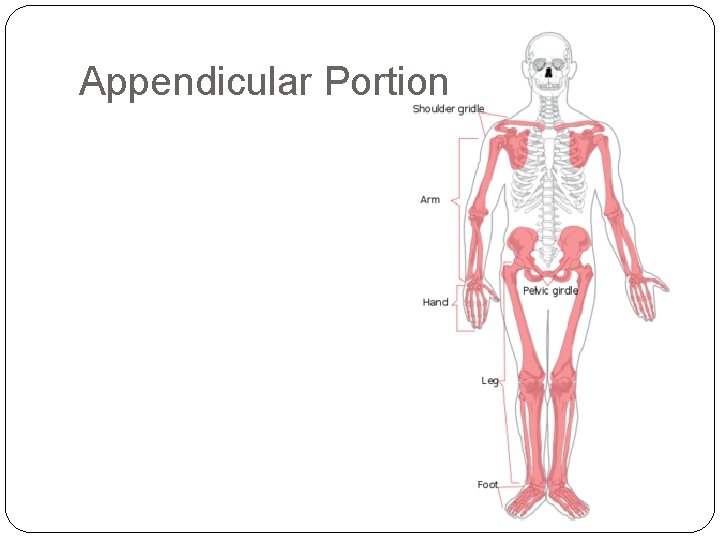
Appendicular Portion
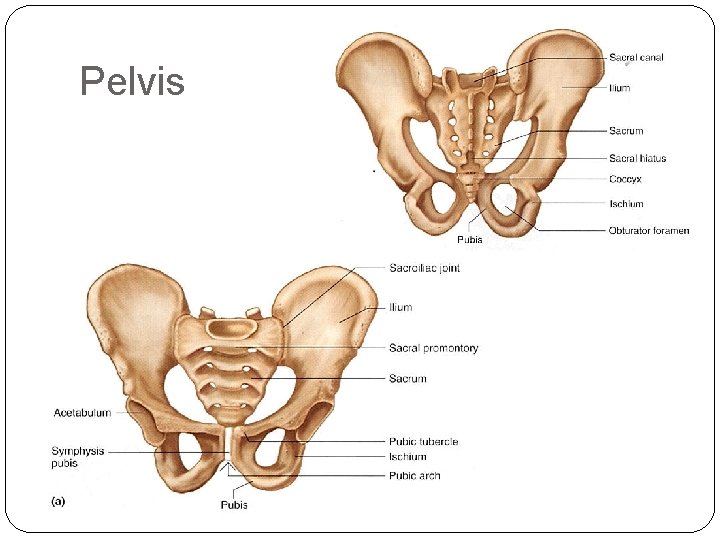
Pelvis
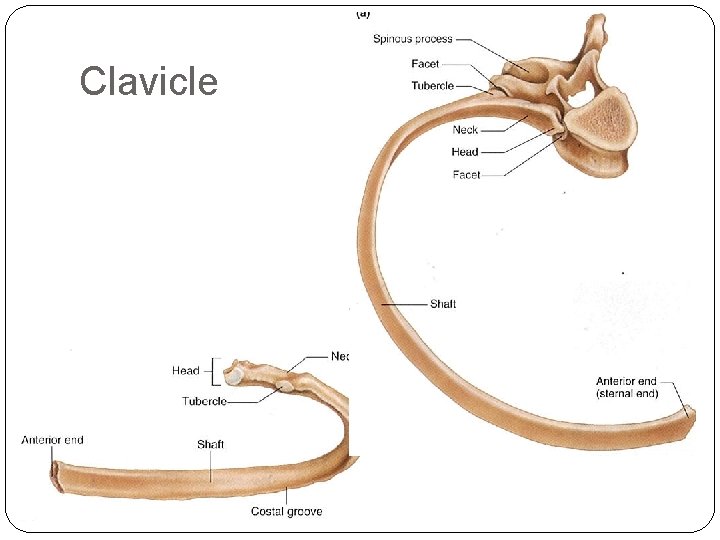
Clavicle
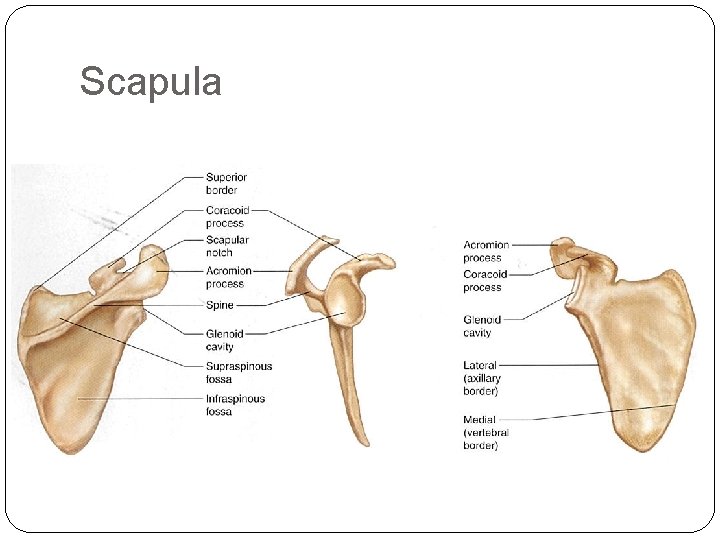
Scapula
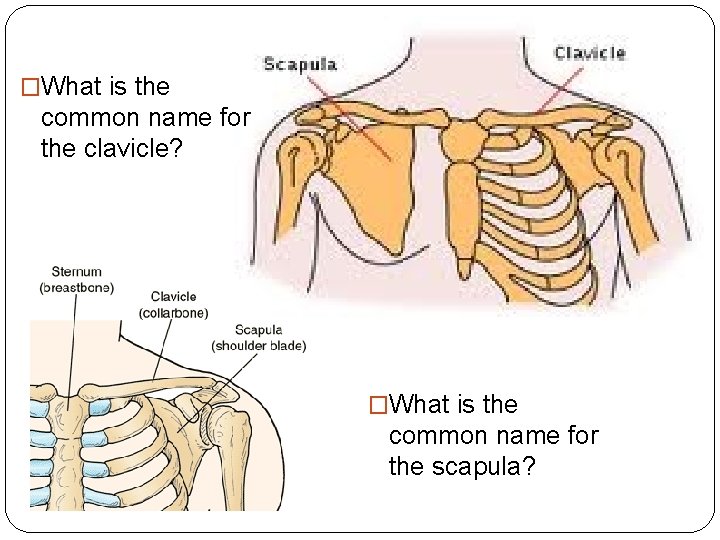
�What is the common name for the clavicle? �What is the common name for the scapula?
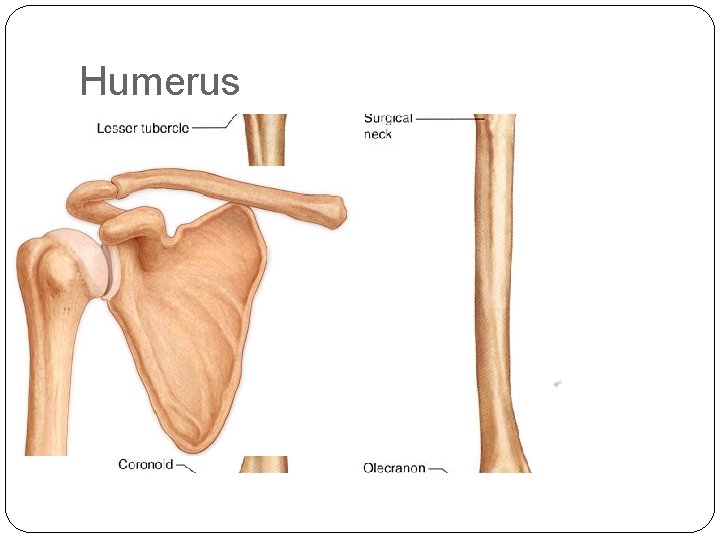
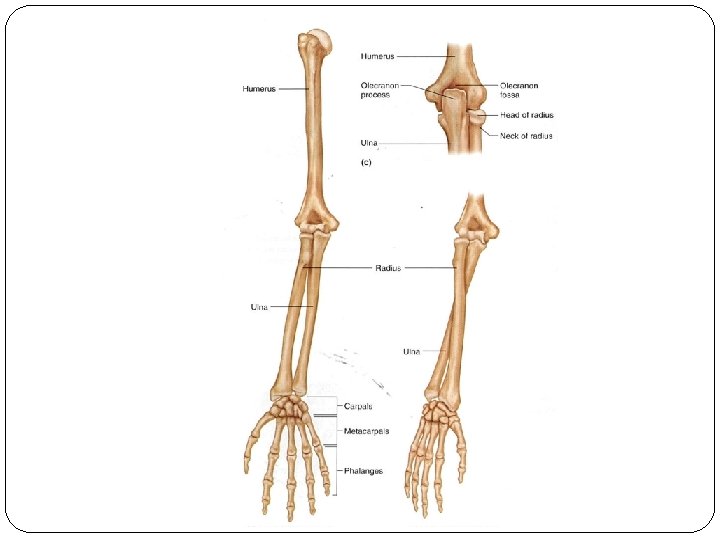
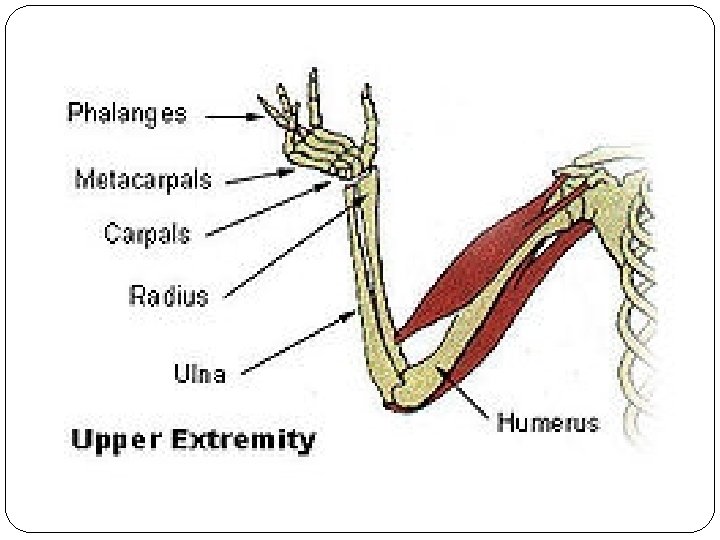
Humerus
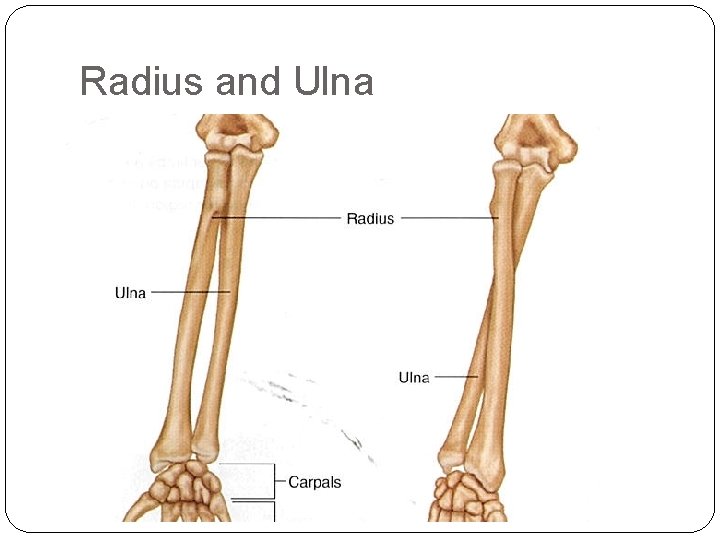
Radius and Ulna
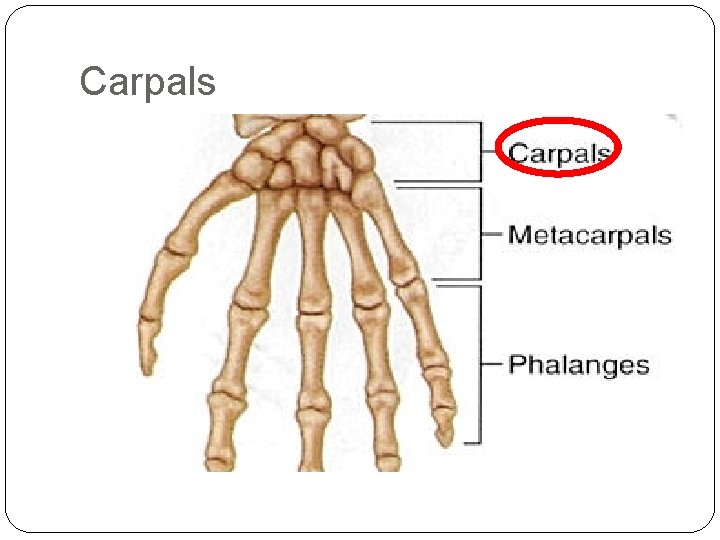
Carpals
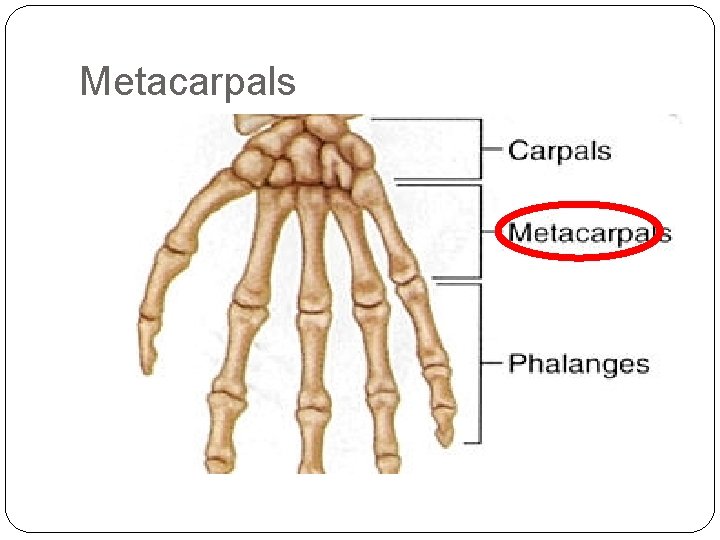
Metacarpals
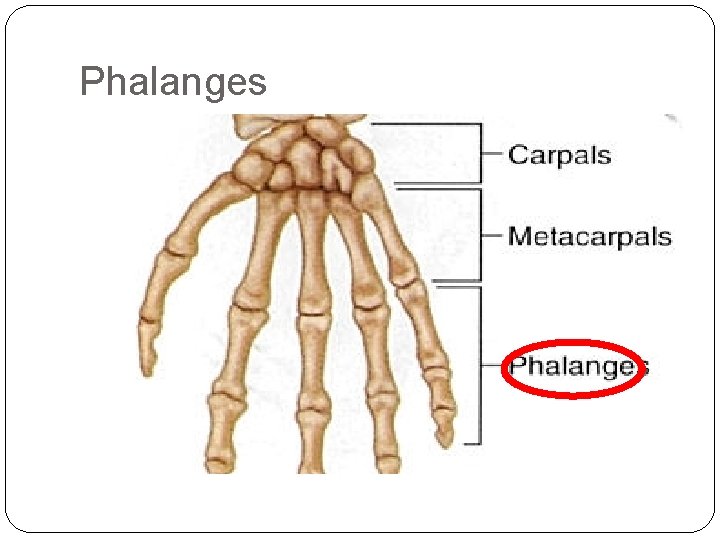
Phalanges
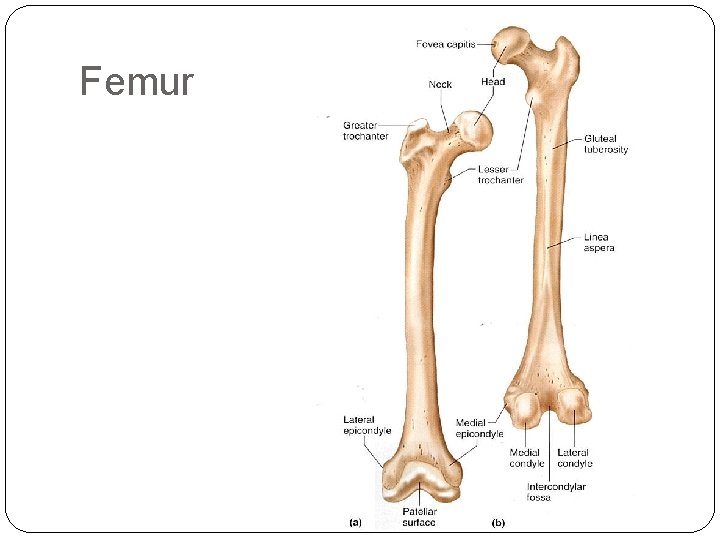
Femur
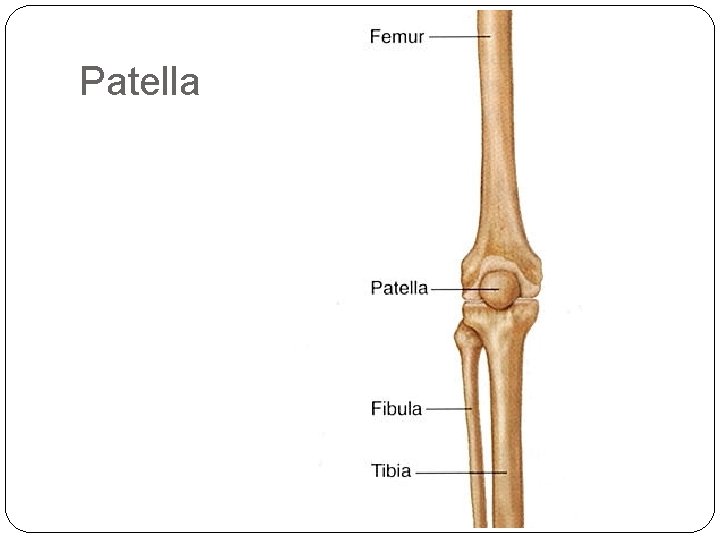
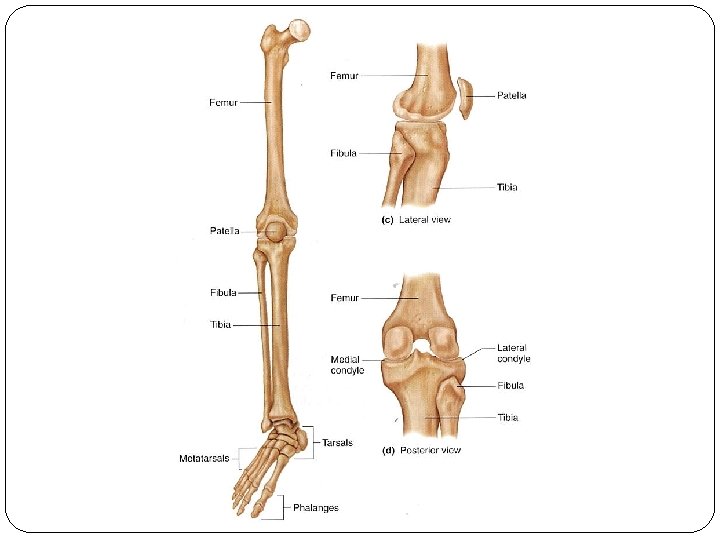
Patella
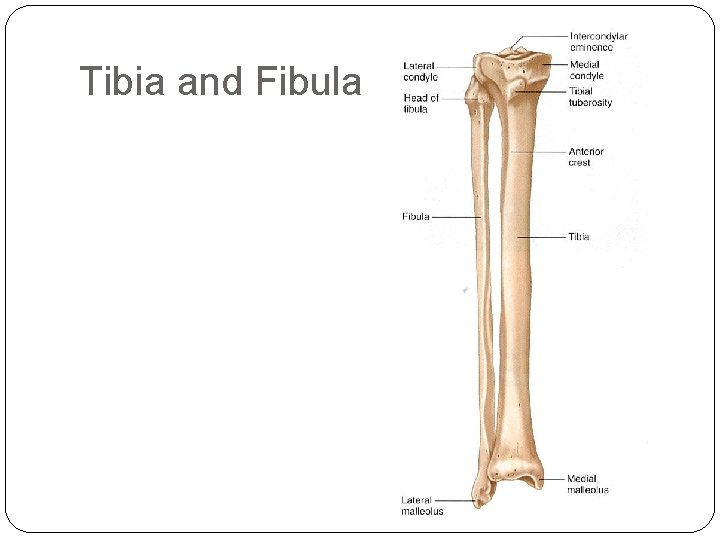
Tibia and Fibula
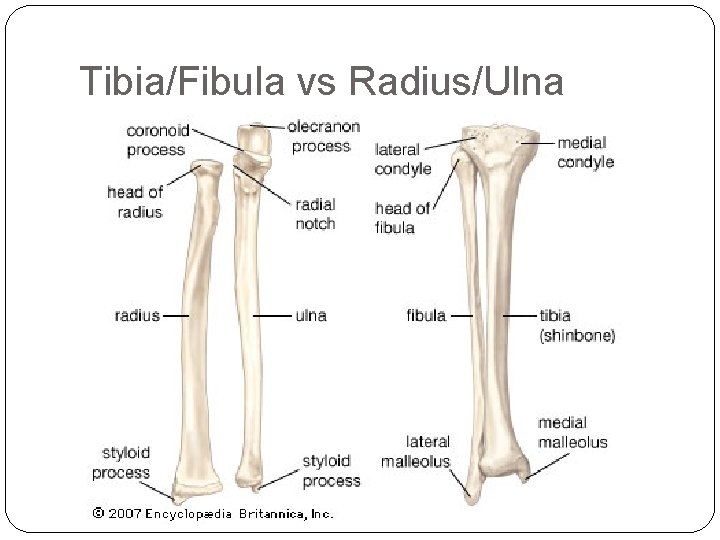
Tibia/Fibula vs Radius/Ulna
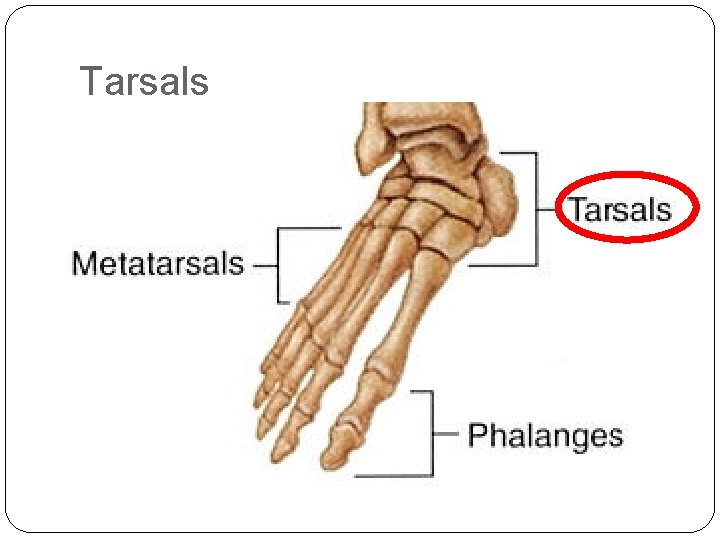
Tarsals
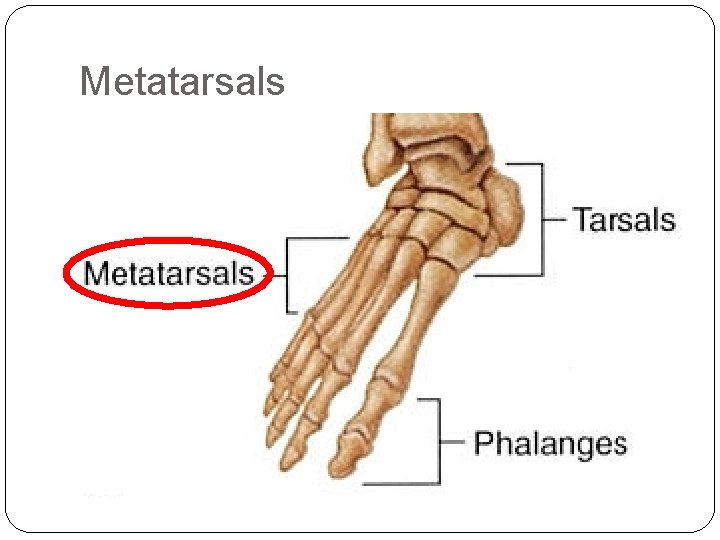
Metatarsals
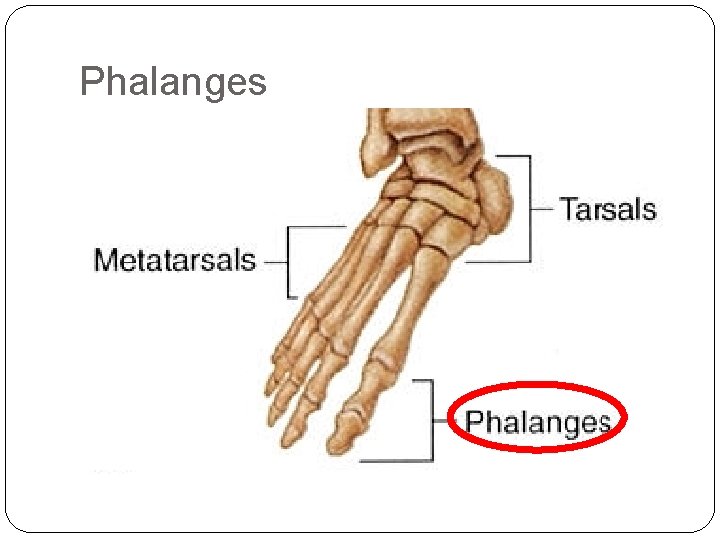
Phalanges
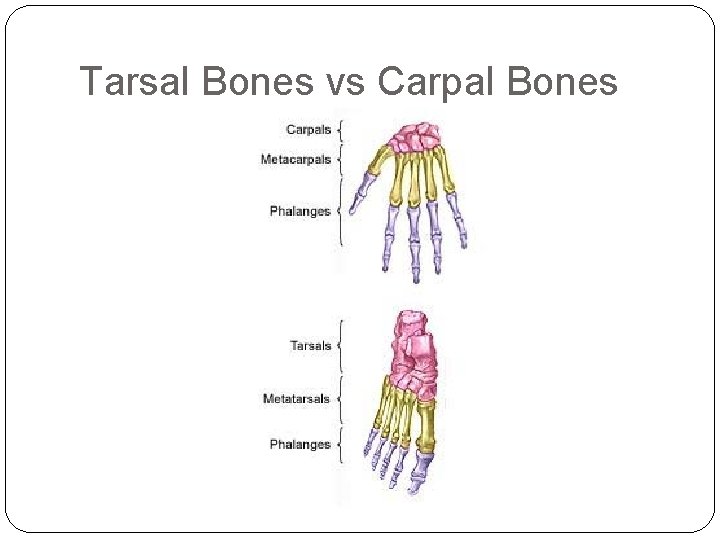
Tarsal Bones vs Carpal Bones
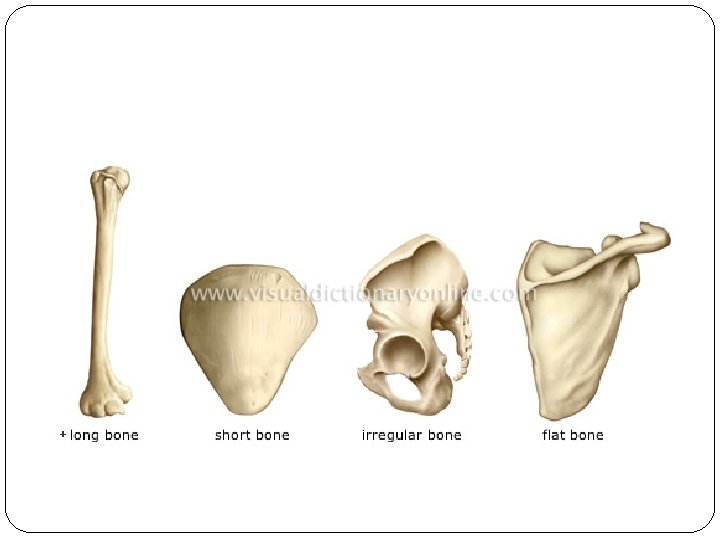
Types of Bones
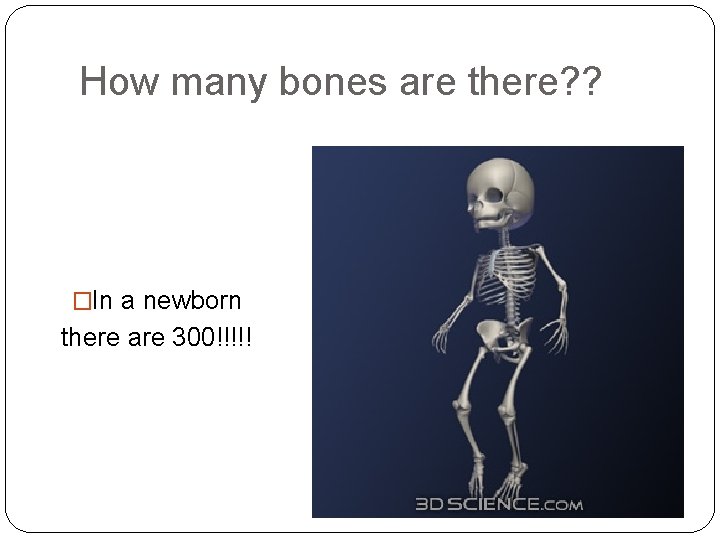
How many bones are there? ? �In a newborn there are 300!!!!!
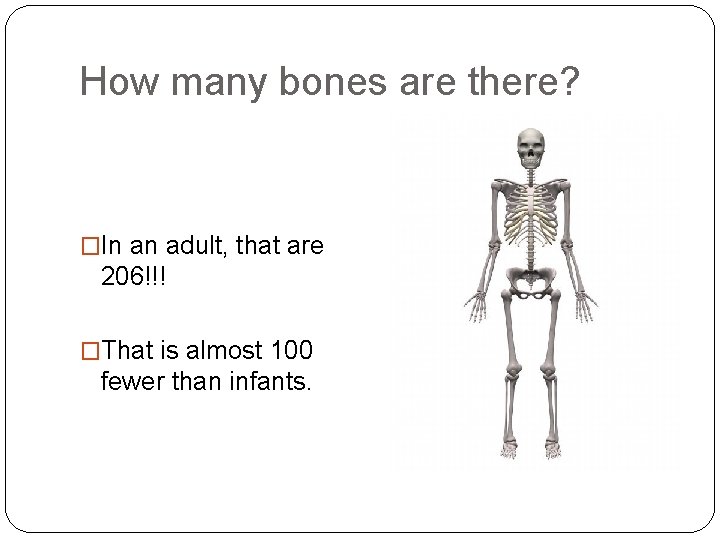
How many bones are there? �In an adult, that are 206!!! �That is almost 100 fewer than infants.
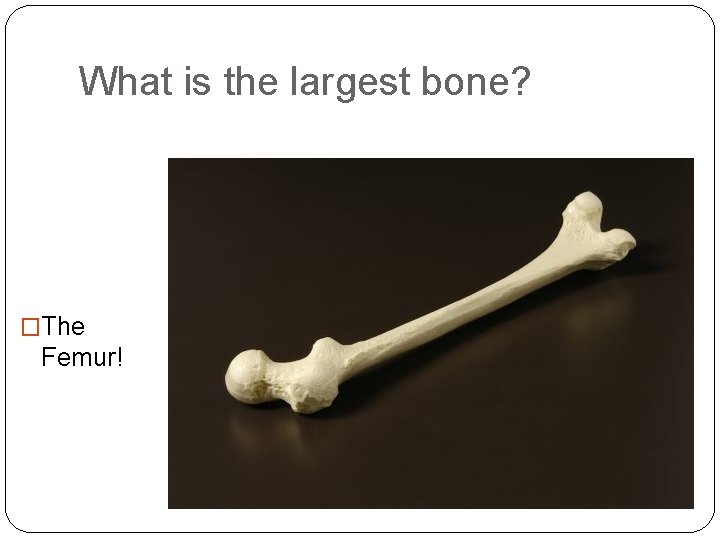
What is the largest bone? �The Femur!
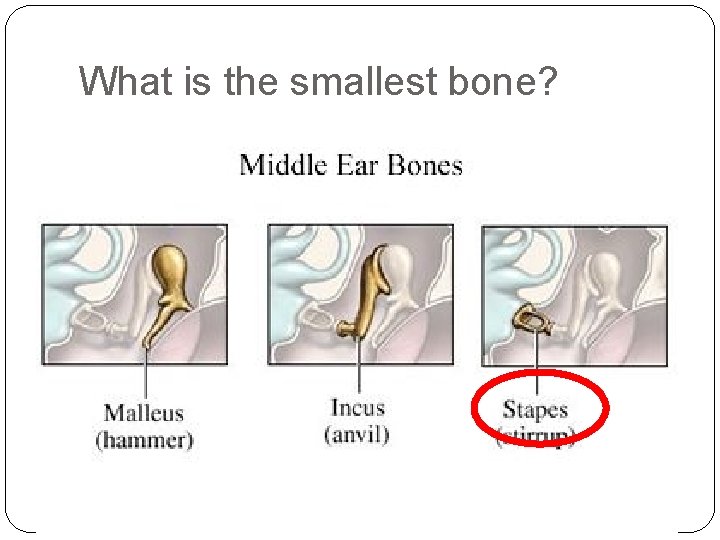
What is the smallest bone?
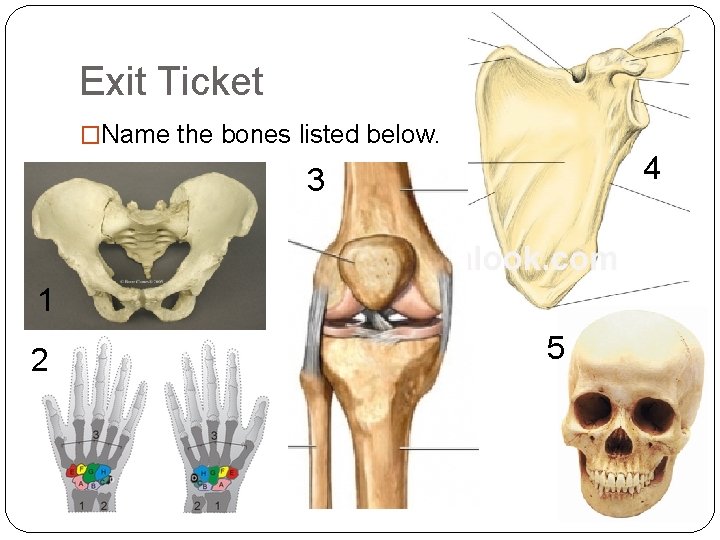
Exit Ticket �Name the bones listed below. 4 3 1 2 5
Skeletal Disorders All About Bones
DO NOW �Can you name any skeletal disorders? �What do you know about them? �What would you like to know?
Skeletal Disorder Assignment �Research 1 Skeletal Disorder {>2 questions to find the answer to} to share with the class. There will be one question about this topic on the test.
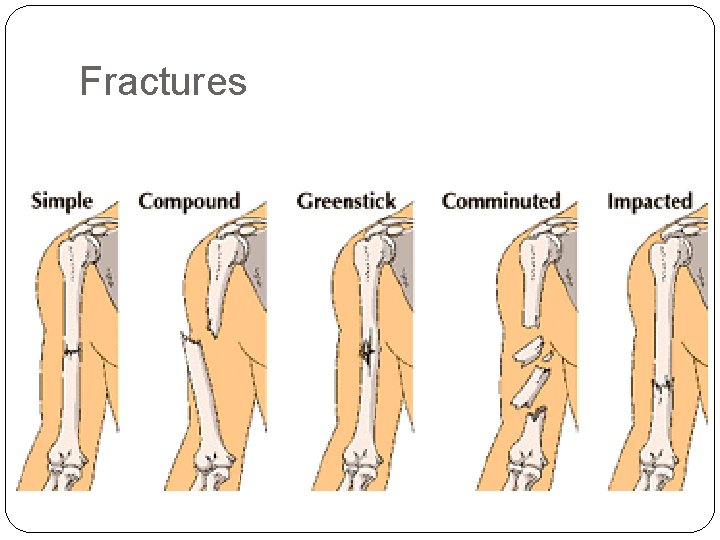
Fractures
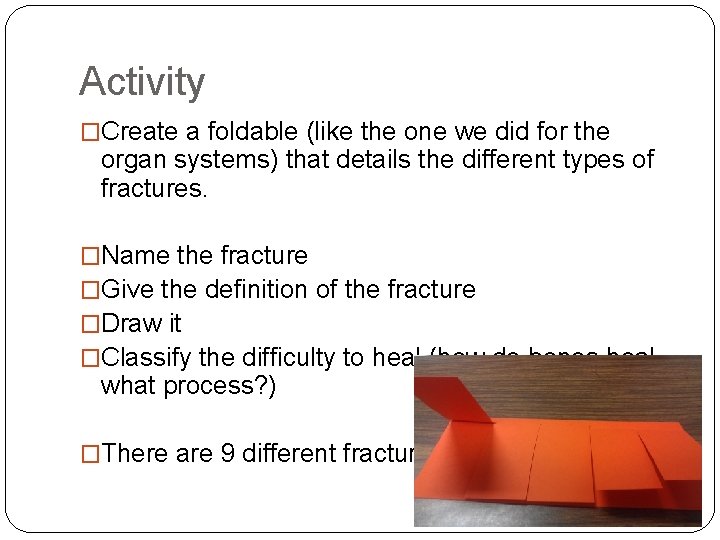
Activity �Create a foldable (like the one we did for the organ systems) that details the different types of fractures. �Name the fracture �Give the definition of the fracture �Draw it �Classify the difficulty to heal (how do bones heal, what process? ) �There are 9 different fractures
Exit Ticket �Which fracture do you think are the hardest to mend? Why? �Which fracture do you think are the easiest to mend? Why?
Males vs. Females All About Bones
Take Notes on slides 45 -62 �How can you distinguish between males and females? �Don’t just make a list, describe the differences.
Activity �You are a world-renowned bone expert. �You just received an urgent call from your Supervisor. He has informed you that a jogger has discovered a body in the woods. The body is nearly decayed and the police need to know if the victim is male or female.
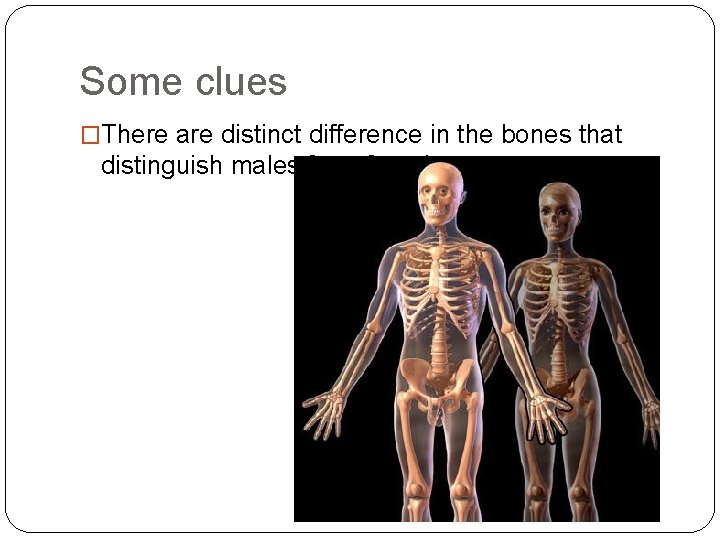
Some clues �There are distinct difference in the bones that distinguish males from females
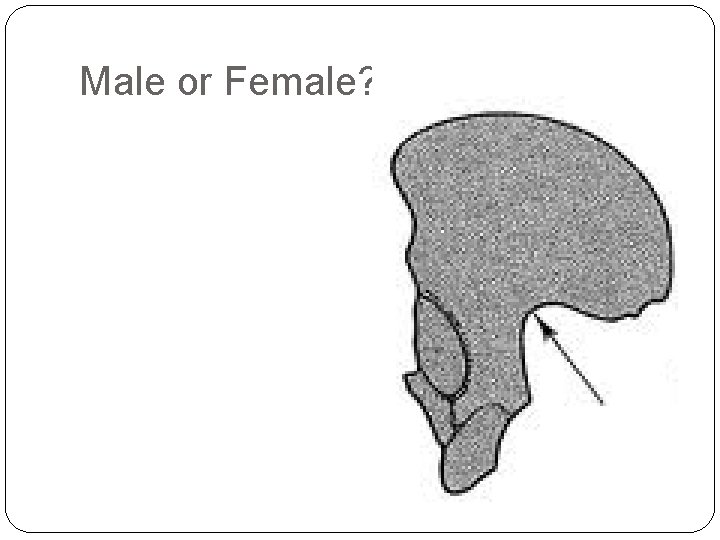
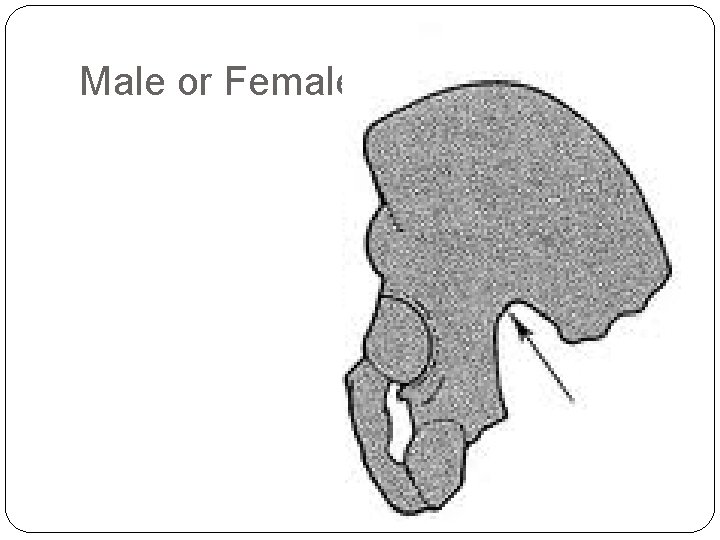
The Pelvis �Female Pelvic bones �Broader sciatic notch �Raised auricular surface �Males Pelvic Bones �Narrower sciatic notch �Flat auricular surface
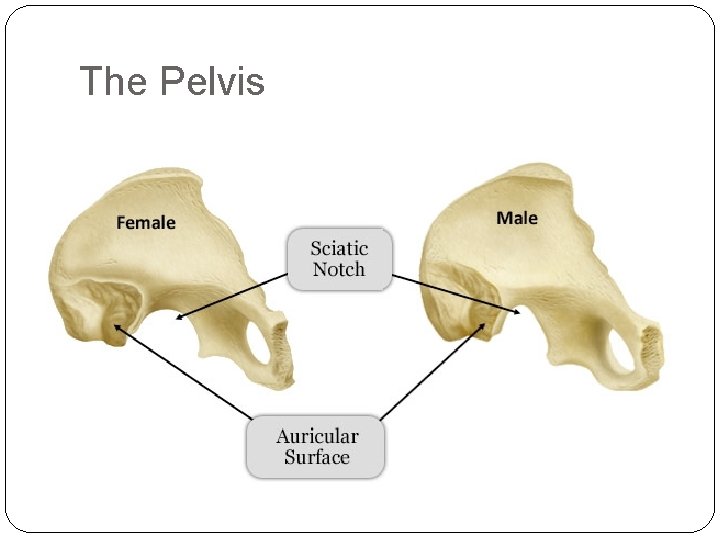
The Pelvis
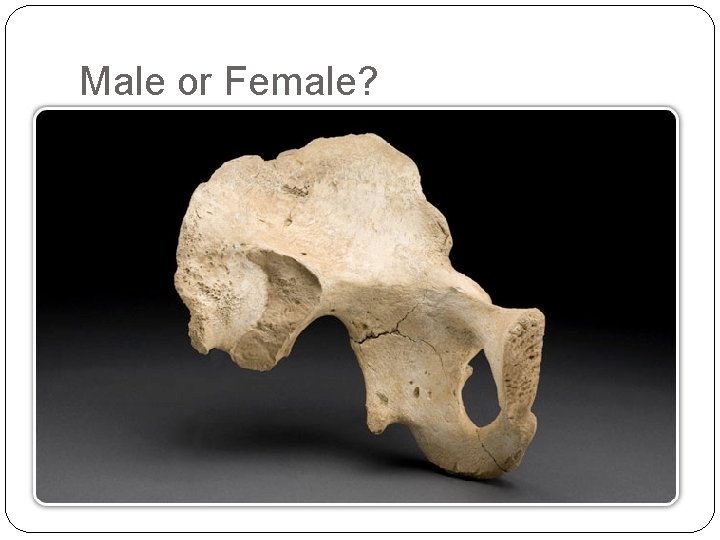
Male or Female?
Male or Female?
Male or Female?
Male or Female?
Skull �Male skulls 1. Larger than females 2. Larger brow ridge a. Sloping, less rounded forehead 3. Larger projections behind ears 4. Square chin 5. Greater definition of muscle attachment areas on the back of the head
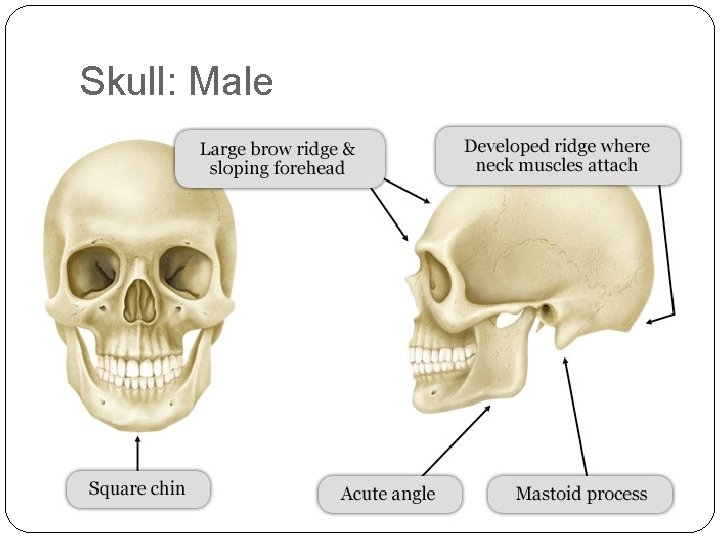
Skull: Male
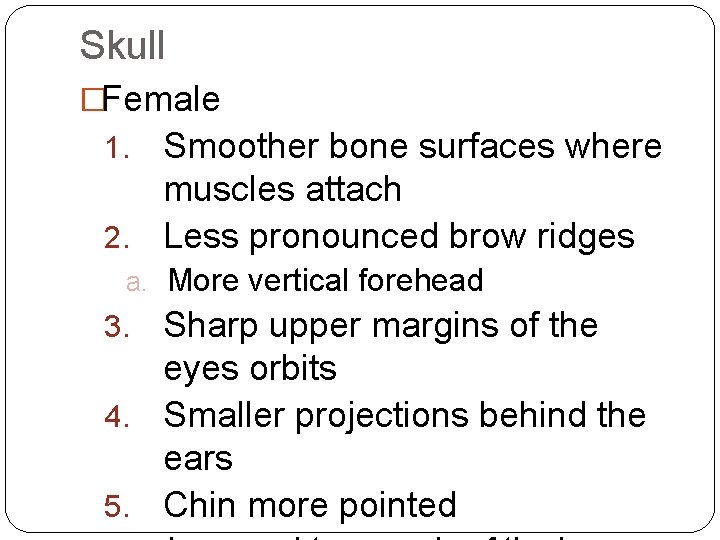
Skull �Female Smoother bone surfaces where muscles attach 2. Less pronounced brow ridges 1. a. More vertical forehead Sharp upper margins of the eyes orbits 4. Smaller projections behind the ears 5. Chin more pointed 3.
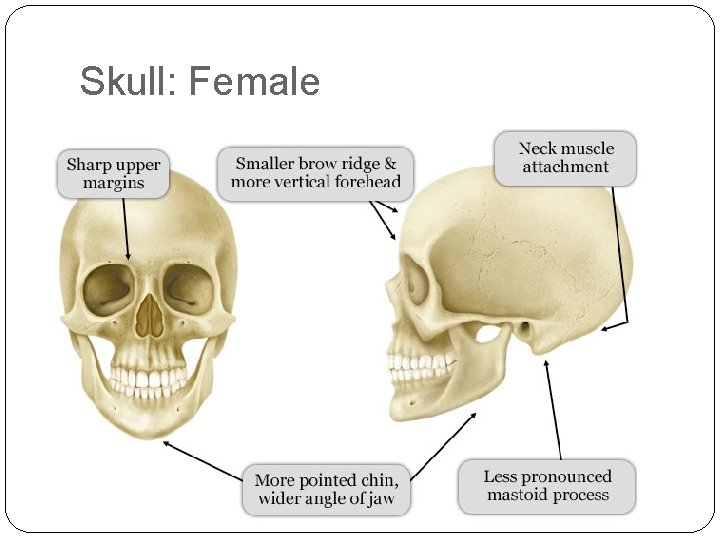
Skull: Female
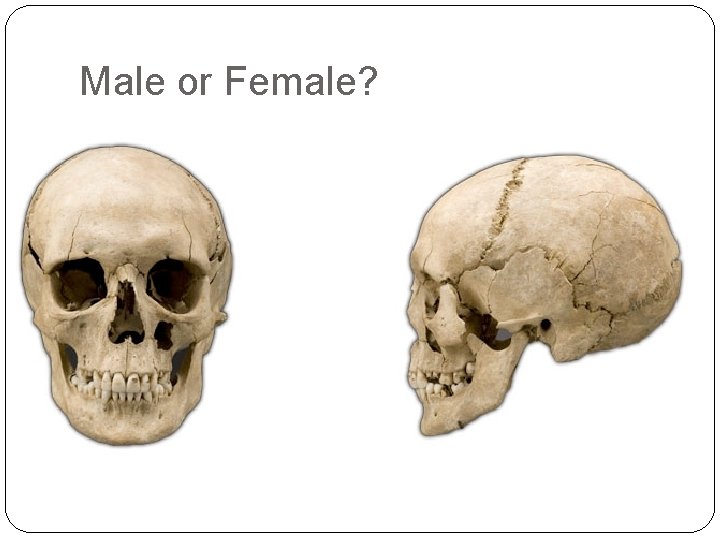
Male or Female?
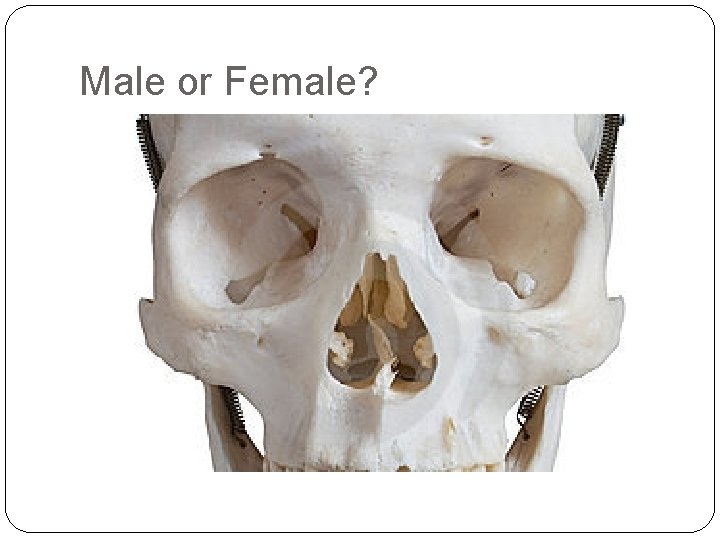
Male or Female?
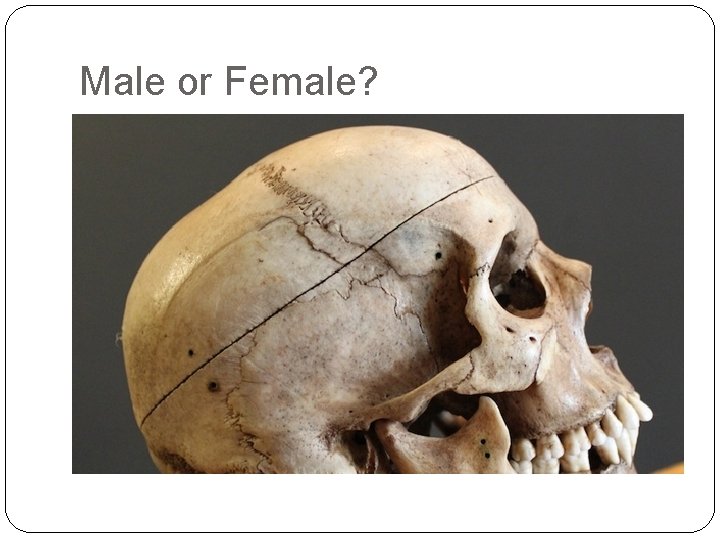
Male or Female?
Checklist for examining the skull Ø For each category, describe what you see and determine male or female for that feature. 1. 2. 3. 4. 5. 6. Brow ridge Neck muscle attachments Mastoid Process Upper eye orbit margin Angle of jaw Chin From there you can make a better estimate as to the sex.
Exit Ticket �What is the easiest way to determine the gender (using the skeleton) of an individual, and why?
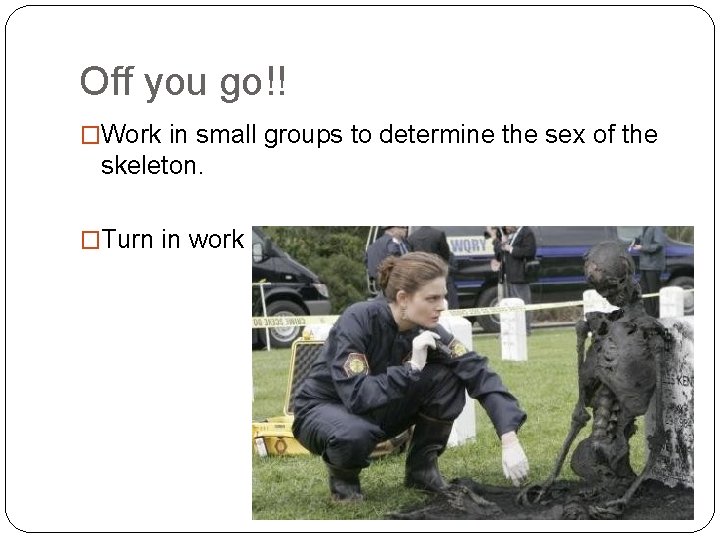
Off you go!! �Work in small groups to determine the sex of the skeleton. �Turn in work individually!
Determining Your Height All About Bones
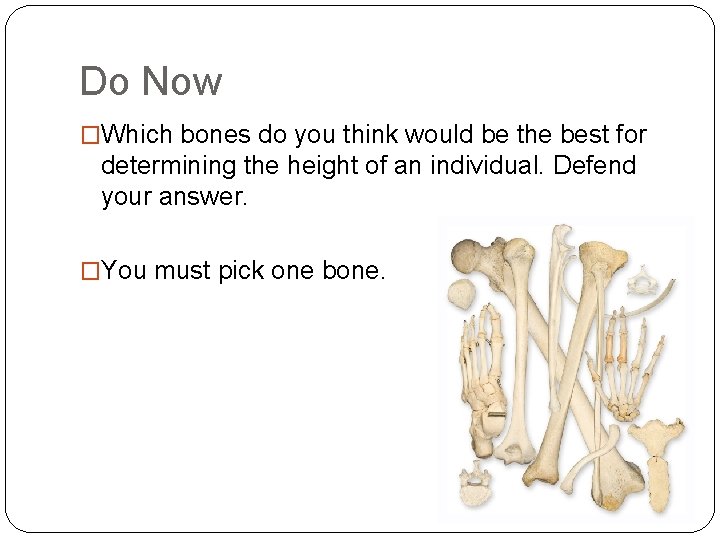
Do Now �Which bones do you think would be the best for determining the height of an individual. Defend your answer. �You must pick one bone.
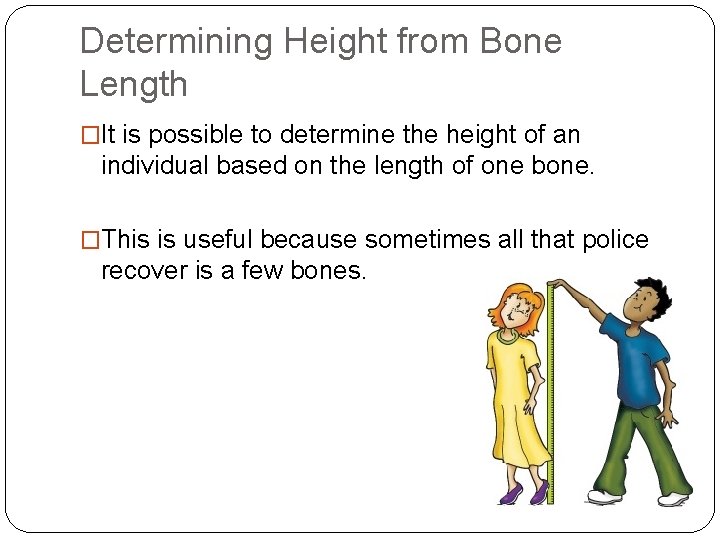
Determining Height from Bone Length �It is possible to determine the height of an individual based on the length of one bone. �This is useful because sometimes all that police recover is a few bones.
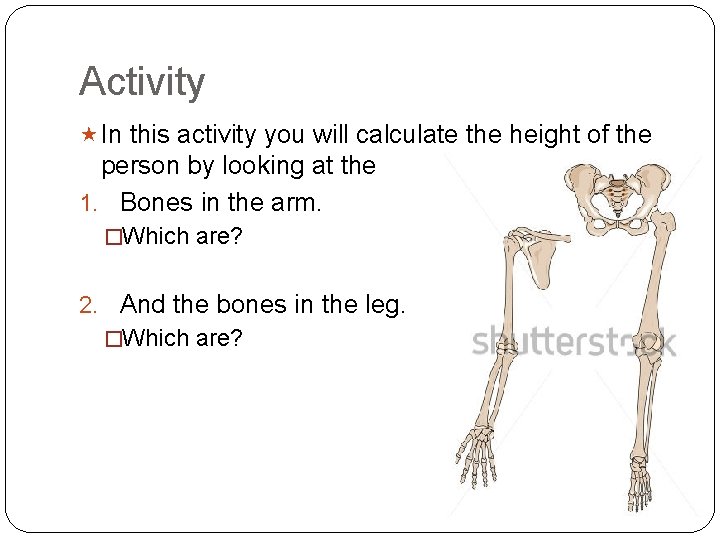
Activity In this activity you will calculate the height of the person by looking at the 1. Bones in the arm. �Which are? 2. And the bones in the leg. �Which are?
Activity �Break into groups of 4. Pick 1 person in your group to be the test subject. 2 of you will measure the arm bones 2 of you will measure the leg bones Use the appropriate equations to figure height Construct a Data Table to record and make calculations q Then compare your results to actual height q q q 1. How accurate are you to the actual height of the person? 2. Which equation is more accurate?
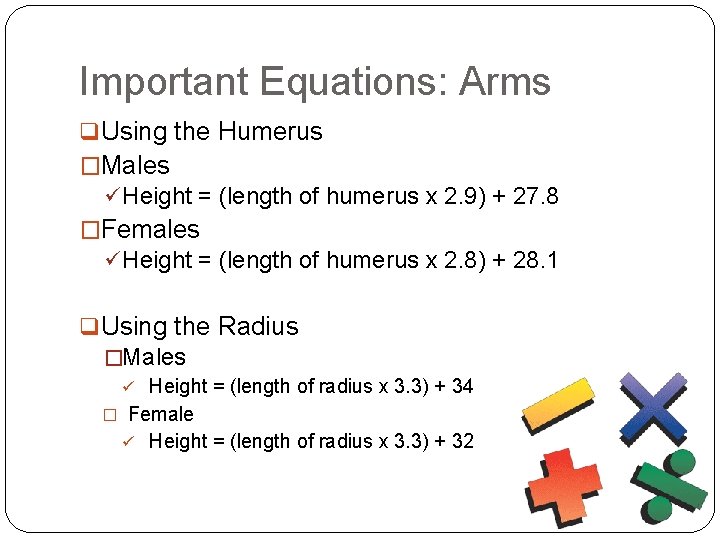
Important Equations: Arms q Using the Humerus �Males ü Height = (length of humerus x 2. 9) + 27. 8 �Females ü Height = (length of humerus x 2. 8) + 28. 1 q Using the Radius �Males ü Height = (length of radius x 3. 3) + 34 � Female ü Height = (length of radius x 3. 3) + 32
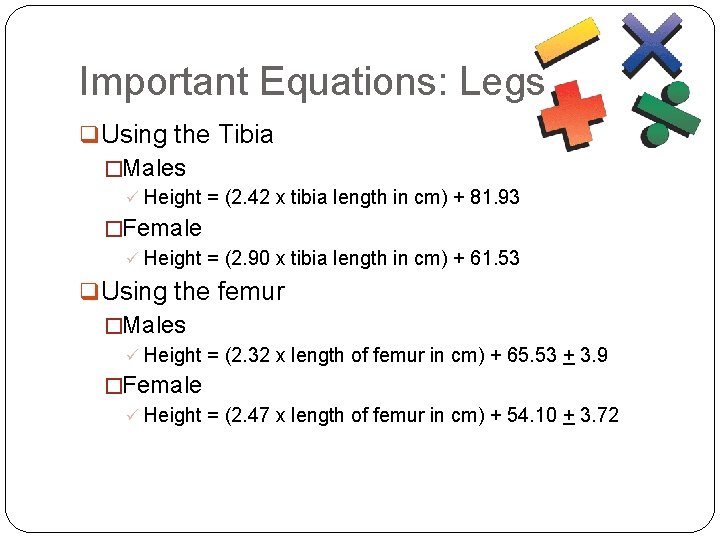
Important Equations: Legs q Using the Tibia �Males ü Height = (2. 42 x tibia length in cm) + 81. 93 �Female ü Height = (2. 90 x tibia length in cm) + 61. 53 q Using the femur �Males ü Height = (2. 32 x length of femur in cm) + 65. 53 + 3. 9 �Female ü Height = (2. 47 x length of femur in cm) + 54. 10 + 3. 72
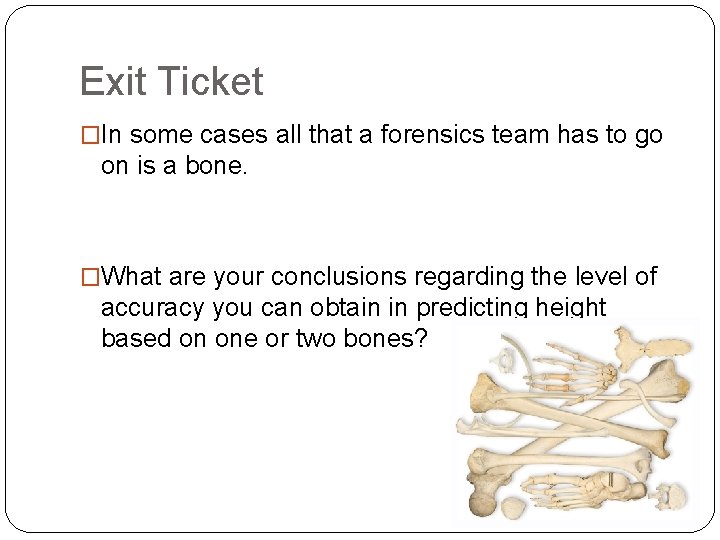
Exit Ticket �In some cases all that a forensics team has to go on is a bone. �What are your conclusions regarding the level of accuracy you can obtain in predicting height based on one or two bones?
- Slides: 72