
All aboard best practices for new employee orientation
![All aboard: best practices for [~new employee orientation ~] Leigh Manning Sr Safety Management](https://slidetodoc.com/presentation_image_h/ee69bb248f0b603c2c5322c8dd79ec11/image-1.jpg "All aboard: best practices for [~new employee orientation ~] Leigh Manning Sr Safety Management")
All aboard: best practices for [~new employee orientation ~] Leigh Manning Sr Safety Management Consultant September 28, 2017
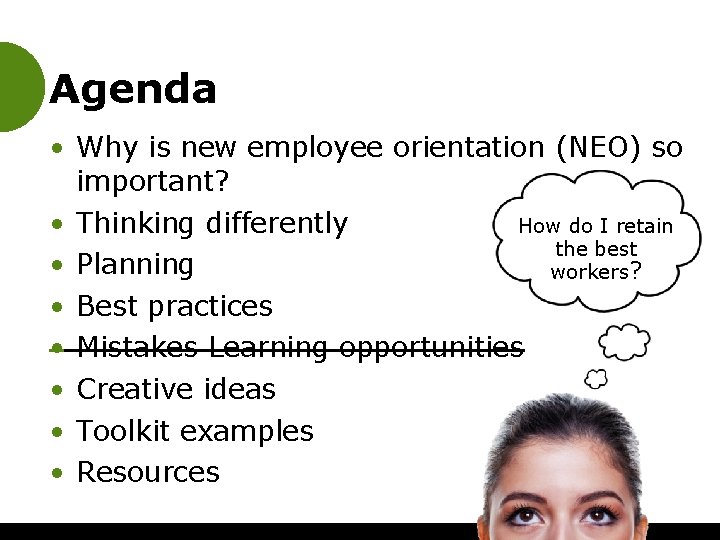
Agenda • Why is new employee orientation (NEO) so important? • Thinking differently How do I retain the best • Planning workers? • Best practices • Mistakes Learning opportunities • Creative ideas • Toolkit examples • Resources

Why is NEO so important? New hires are 58 percent more likely to stay with a company for at least 3 years if they attend a structured orientation program. — 2007 Wynhurst Group Survey 31 percent of new hires quit a job in the first 6 months; one third of those had little or no onboarding. — 2014 Bamboo HR Survey U. S. companies with 100 or more employees spend an average of $3, 500 to hire and onboard a new employee. — 2011 Bersin & Associates Study

Why is NEO so important? 1/3 of all nonfatal occupational injuries in 2013 were from workers with less than a year on the job. — Bureau of Labor Statistics

Why is NEO so important? Decade-long study found risk of injury much higher for workers with less time on the job —even higher for those with less than one month. Only 1 in 5 new workers received safety training. —Institute for Work & Health
Why is NEO so important? New work trends contribute to injuries: “The growth of precarious forms of work means more temporary employment, a higher proportion of workers with shorter job tenure, and higher rates of job turnover. If frequent job changing continually puts a worker at high risk, then job turnover becomes a potential health and safety issue. ” — Dr. Curtis Breslin, Institute for Work & Health Scientist
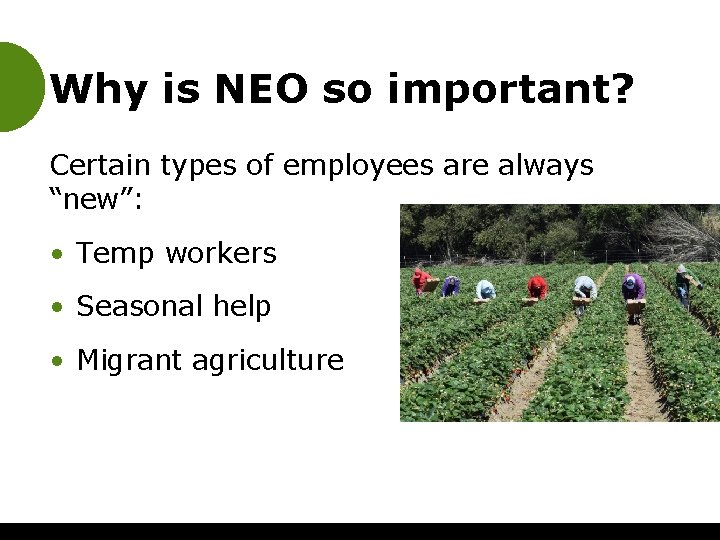
Why is NEO so important? Certain types of employees are always “new”: • Temp workers • Seasonal help • Migrant agriculture

Why is NEO so important? Model for achieving best results Set expectations Recognize achievements Provide feedback Provide training Hold accountable

Why is NEO so important? - Originally published as Onboarding New Employees: Maximizing Success by Talya Bauer. © 2010, the SHRM Foundation, Alexandria, VA. Used with permission. All rights reserved.
Thinking differently New research—make NEO participatory and focused on individual identity. It created: • • • Stronger employment relationships Lower turnover Greater customer satisfaction Higher productivity Fewer errors —Daniel Cable, MIT Sloan Business Review
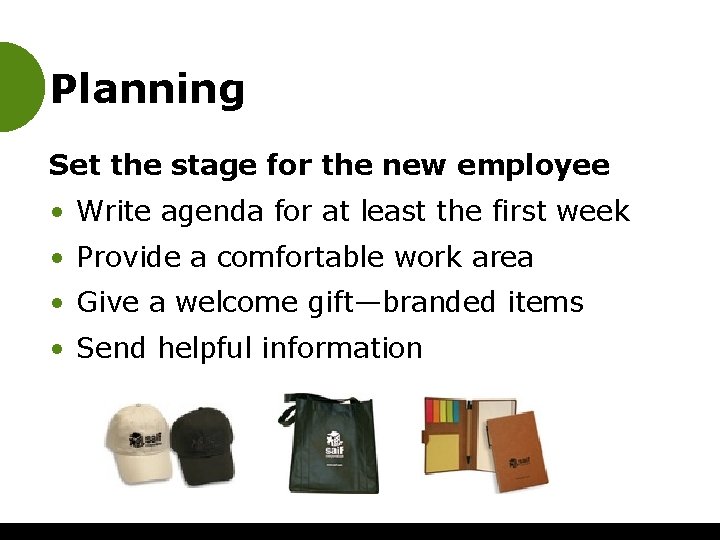
Planning Set the stage for the new employee • Write agenda for at least the first week • Provide a comfortable work area • Give a welcome gift—branded items • Send helpful information

Planning Set the stage for the new employee • Announce new team member and start date to other employees • Order business cards and nameplate (if needed) • Stock area with all needed tools • Set up computer/phone to be ready upon arrival • Create a NEO plan with target dates—what you would like them to be able to do, and by when
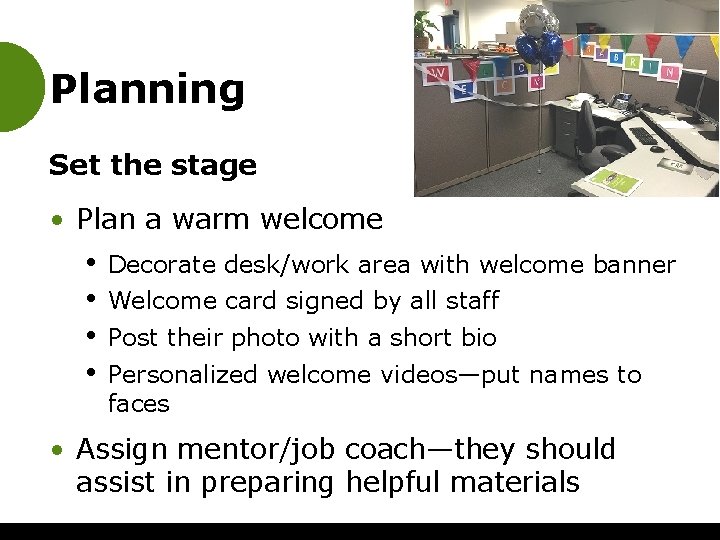
Planning Set the stage • Plan a warm welcome • • Decorate desk/work area with welcome banner Welcome card signed by all staff Post their photo with a short bio Personalized welcome videos—put names to faces • Assign mentor/job coach—they should assist in preparing helpful materials

Planning: employee adjustment stages After selection - Originally published as Onboarding New Employees: Maximizing Success by Talya Bauer. © 2010, the SHRM Foundation, Alexandria, VA. Used with permission. All rights reserved.
Best practices Use a checklist • Ensures all items are covered • Provides organized approach • Creates a written record • Maintains consistency • Allows you to establish expectations, metrics, and benchmarks
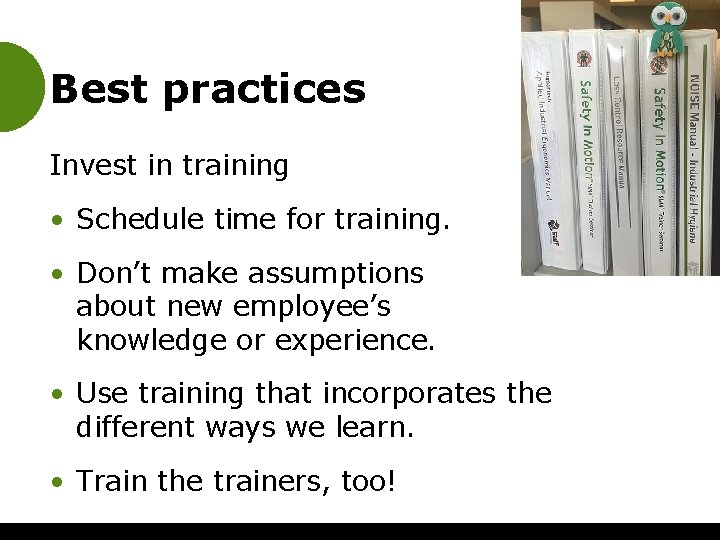
Best practices Invest in training • Schedule time for training. • Don’t make assumptions about new employee’s knowledge or experience. • Use training that incorporates the different ways we learn. • Train the trainers, too!

Best practices Don’t forget safety! • Include safety expectations at every step. • Provide new employee with proper-fitting personal protective equipment (PPE). • Inform employee about workplace hazards and train on controlling them. • Address any safety concerns.
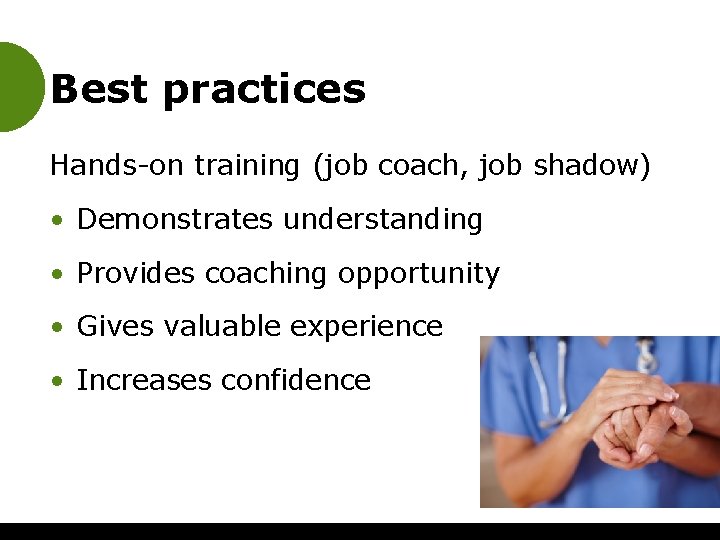
Best practices Hands-on training (job coach, job shadow) • Demonstrates understanding • Provides coaching opportunity • Gives valuable experience • Increases confidence
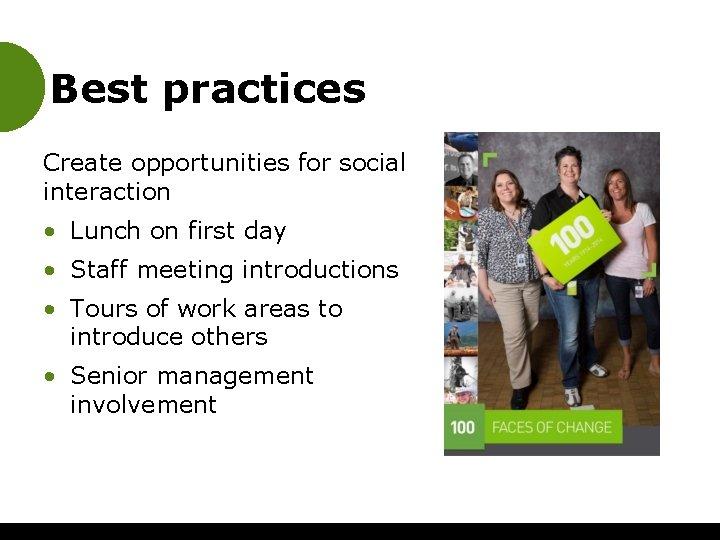
Best practices Create opportunities for social interaction • Lunch on first day • Staff meeting introductions • Tours of work areas to introduce others • Senior management involvement
Best practices Follow up • Create opportunities for employee feedback (consider using a survey). • Schedule regular check-ins to stay on track with NEO plan. • Stay open to new employee questions and concerns.

Mistakes Learning opportunities Read and sign NEO • Limited interaction • Limited content • No good way to check understanding • Does not fit adult learning model
Mistakes Learning opportunities • First day of work is when supervisor is on vacation • Wrong choice of mentor/job coach or no mentor/job coach • Failing to remove old files/work from their work area • Misspelling their name • Not including safety in training
Mistakes Learning opportunities • Putting the employee right to work “sink or swim” • Too much information—too fast • No structure to NEO program “flying by the seat of your pants” • No planning beforehand • Computer/phone not set— they have to work in temporary area
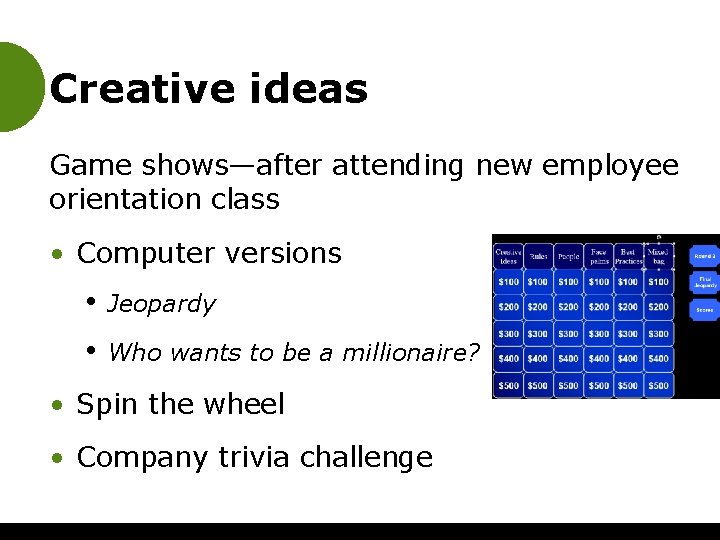
Creative ideas Game shows—after attending new employee orientation class • Computer versions • Jeopardy • Who wants to be a millionaire? • Spin the wheel • Company trivia challenge
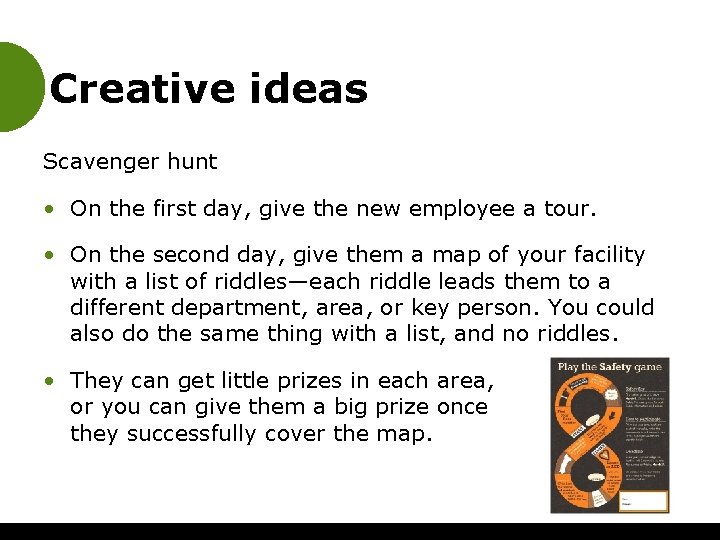
Creative ideas Scavenger hunt • On the first day, give the new employee a tour. • On the second day, give them a map of your facility with a list of riddles—each riddle leads them to a different department, area, or key person. You could also do the same thing with a list, and no riddles. • They can get little prizes in each area, or you can give them a big prize once they successfully cover the map.
Creative ideas Team building—getting to know you • My river, my mountain • Best job, worst job • Anything, anytime • Human scavenger hunt • Recognition profiles
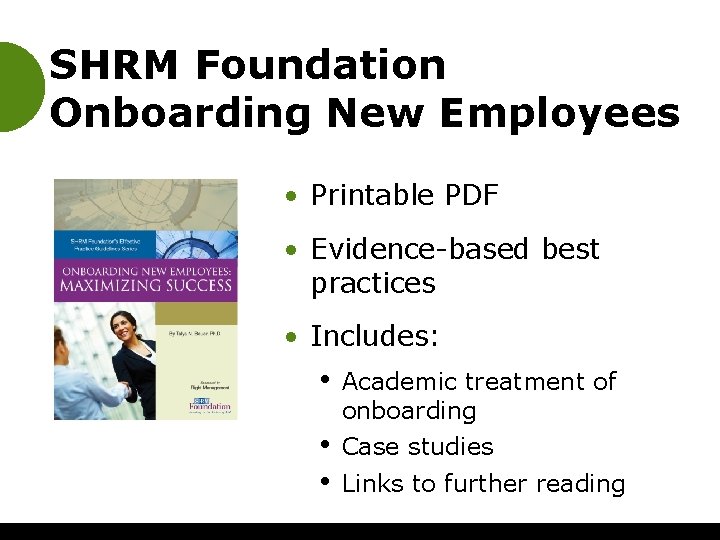
SHRM Foundation Onboarding New Employees • Printable PDF • Evidence-based best practices • Includes: • Academic treatment of onboarding • • Case studies Links to further reading
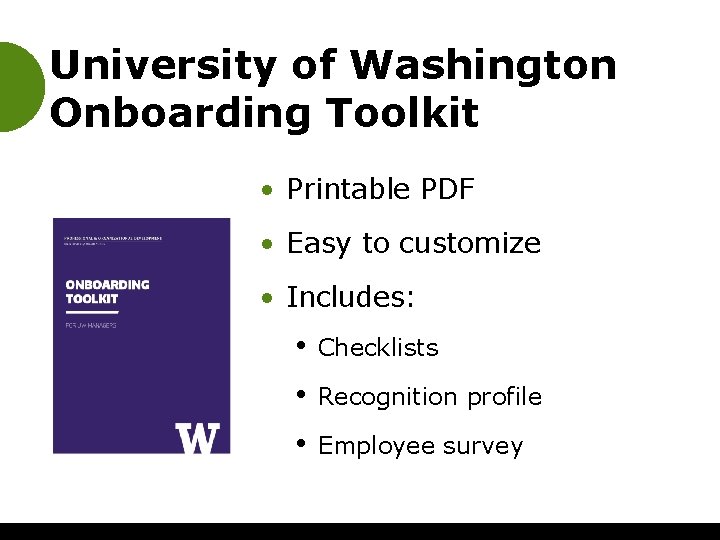
University of Washington Onboarding Toolkit • Printable PDF • Easy to customize • Includes: • Checklists • Recognition profile • Employee survey
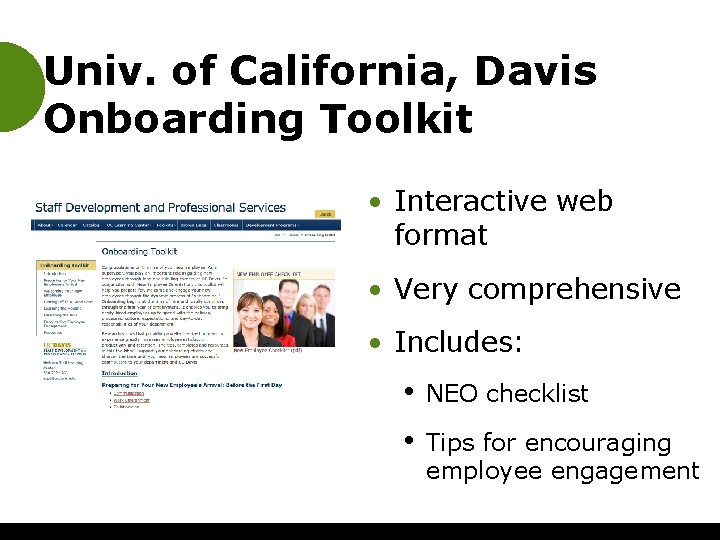
Univ. of California, Davis Onboarding Toolkit • Interactive web format • Very comprehensive • Includes: • NEO checklist • Tips for encouraging employee engagement
Other resources • HR software (examples i. CIMS, Bamboo HR, Clear Company, My Staffing Pro, and numerous others) • Society for Human Resource Management (SHRM) • State of Oregon — Bureau of Labor & Industries
Now let’s play a game. . Using your smart phone Go to your browser Go to the website kahoot. it December 6, 2020

Questions to think about What does our NEO process look like now? Can I take ideas from this presentation to improve our process?
References Bauer, Talya N. , Ph. D, Onboarding New Employees: Maximizing Success. Society of Human Resource Management Foundations Effective Practice Guidelines Series. http: //www. shrm. org/about/foundation/products/Documents/Onboarding%20 EPG%20 FINAL. pdf Bennington, Emily. Monster video: New Employee Orientation. http: //hiring. monster. com/hr/hr-best-practices/small-business/hiring-process/newemployee-orientation. aspx Cable, Daniel M. , et al. Reinventing Employee Onboarding. MIT Sloan Management Review Spring 2013. http: //sloanreview. mit. edu/article/reinventing-employee-onboarding/ Chen, Xin. Suggestions on Effective Corporate New Employee Orientation Program for Human Resource Specialists. Online Journal of Workforce Education and Development. Vol IV, Iss 3; Summer 2010. http: //opensiuc. lib. siu. edu/cgi/viewcontent. cgi? article=1081&context=ojwed Cuma, Mike A. Mastering New Employee Orientations: Common Flaws and Winning Best Practices. http: //www. legacybowes. com/latest-blog-posts/entry/mastering-newemployee-orientations-common-flaws-and-winning-best-practices-. html Grillo, Maria, et al. A Strategic Approach to Onboarding Design: Surveys, Materials, & Diverse Hires. Cornell University Digital Commons. http: //digitalcommons. ilr. cornell. edu/cgi/viewcontent. cgi? article=1085&context=student
References Halvorson, Chad. 12 Employee Onboarding Best Practices Every Business Owner Needs to Know. When I Work. http: //wheniwork. com/blog/employee-onboarding-bestpractices/ Lepi, Katie. The 7 Styles of Learning: Which Works for You? . Edudemic. http: //www. edudemic. com/styles-of-learning/ Meinert, Dori. Onboarding Mistakes to Avoid-And Some Great Ideas to Adopt. Society of Human Resources. https: //www. shrm. org/publications/hrmagazine/editorialcontent/2016/0616/pages/061 6 -onboarding-mistakes-and-good-ideas. aspx Accessed June 1, 2016. O’Leonard, Karen. The Talent Acquisition Factbook® 2011. Bersin & Associates. University of California, Davis. Onboarding Toolkit. Staff Development and Professional Services. http: //sdps. ucdavis. edu/toolkits/onboarding/ University of Washington. Onboarding Toolkit. Professional & Organizational Development. http: //www. washington. edu/admin/hr/pod/leaders/eecareerdev/onboarding/docs/onbdtoolkit. pdf

Questions? Leigh Manning Sr Safety Management Consultant leiman@saif. com 541 -338 -6718 © SAIF CORPORATION Page 35
December 6, 2020
- Slides: 36