
Alkyl Halides Name the following alkyl halides How
![7. 25] Draw and name the monochlorination products of the reaction of 2 -methylpentane](https://slidetodoc.com/presentation_image_h/f4ec4077fef7e0a0d35987309f11276b/image-25.jpg "7. 25] Draw and name the monochlorination products of the reaction of 2 -methylpentane")
- Slides: 93
Alkyl Halides
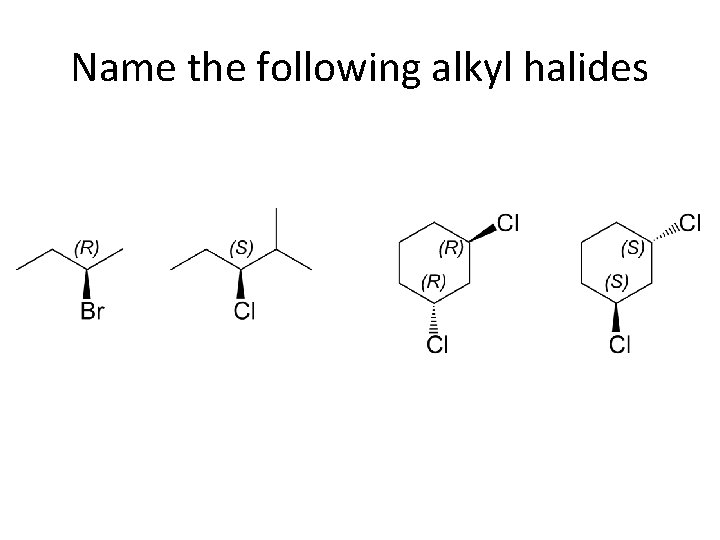
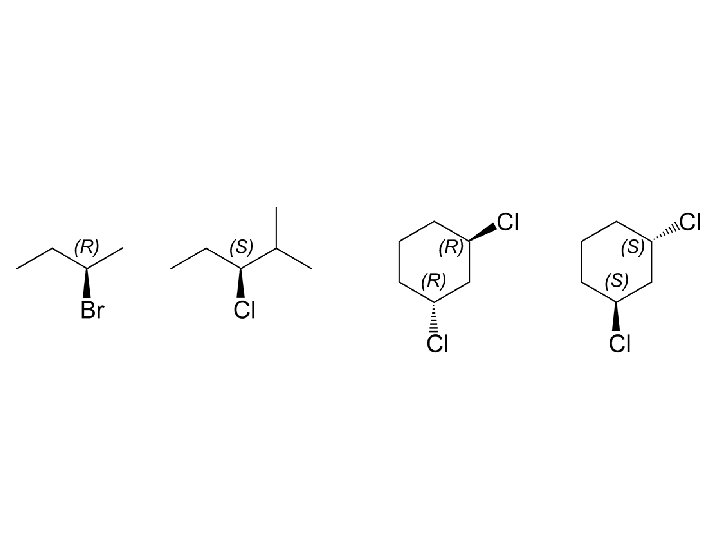
Name the following alkyl halides
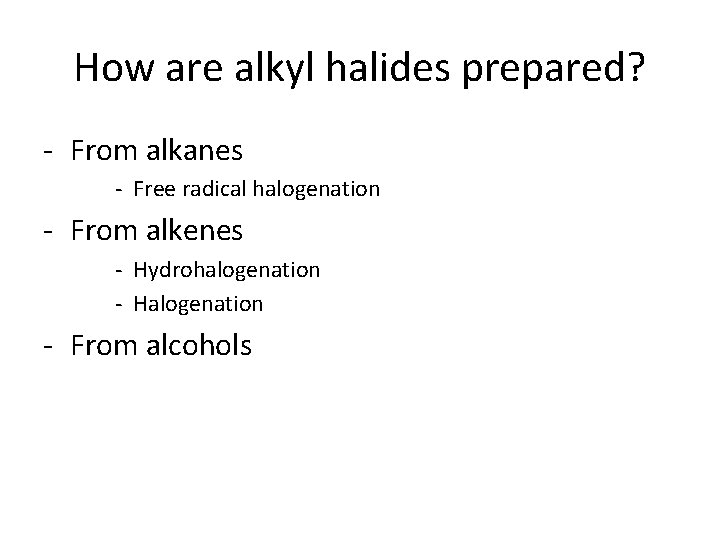
How are alkyl halides prepared? - From alkanes - Free radical halogenation - From alkenes - Hydrohalogenation - Halogenation - From alcohols
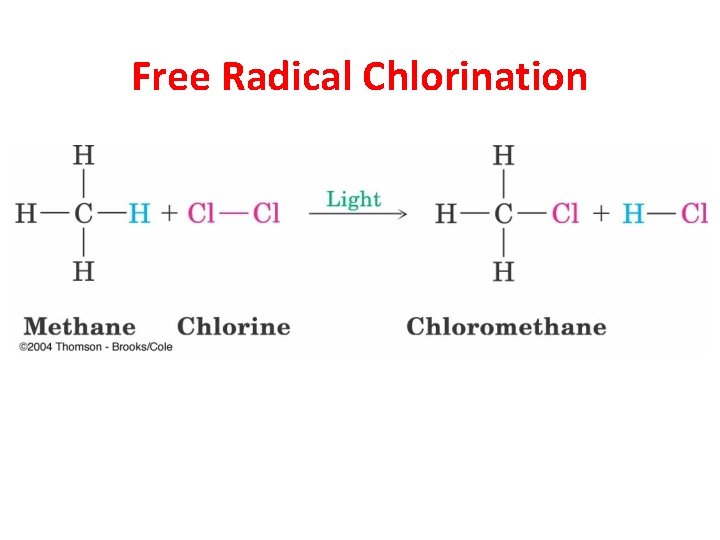
Free Radical Chlorination
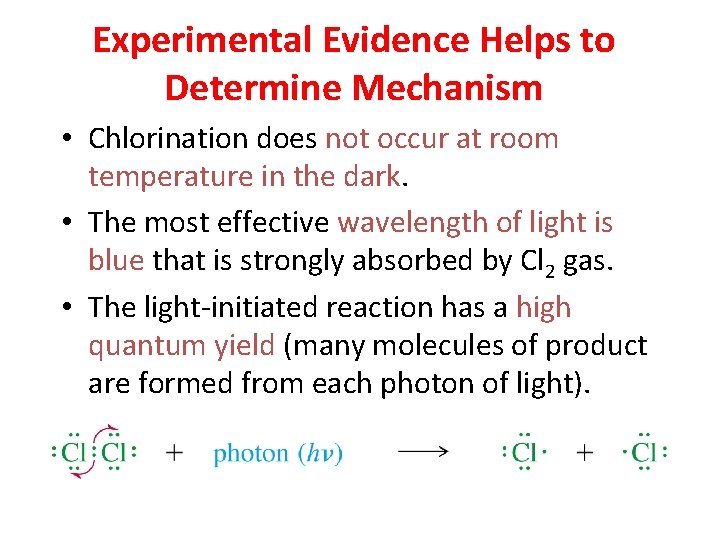
Experimental Evidence Helps to Determine Mechanism • Chlorination does not occur at room temperature in the dark. • The most effective wavelength of light is blue that is strongly absorbed by Cl 2 gas. • The light-initiated reaction has a high quantum yield (many molecules of product are formed from each photon of light).
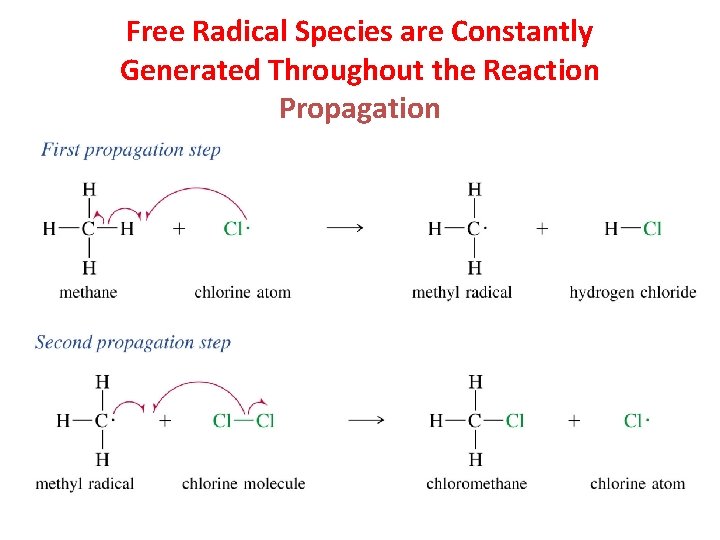
Free Radical Species are Constantly Generated Throughout the Reaction Propagation
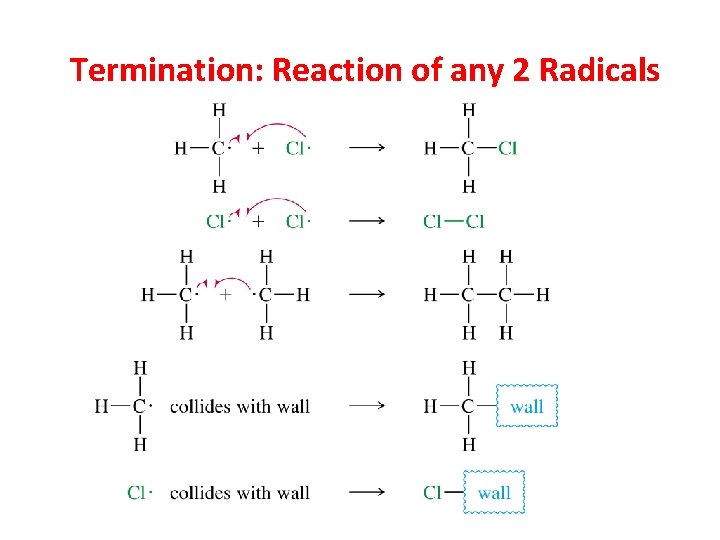
Termination: Reaction of any 2 Radicals
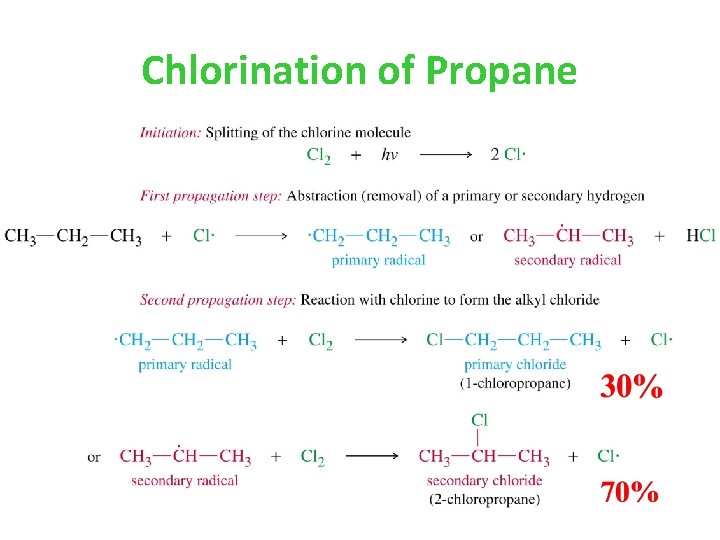
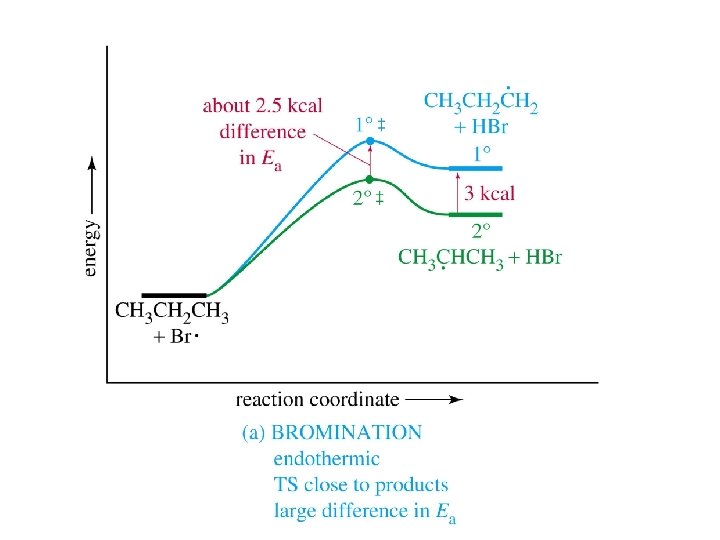
Chlorination of Propane
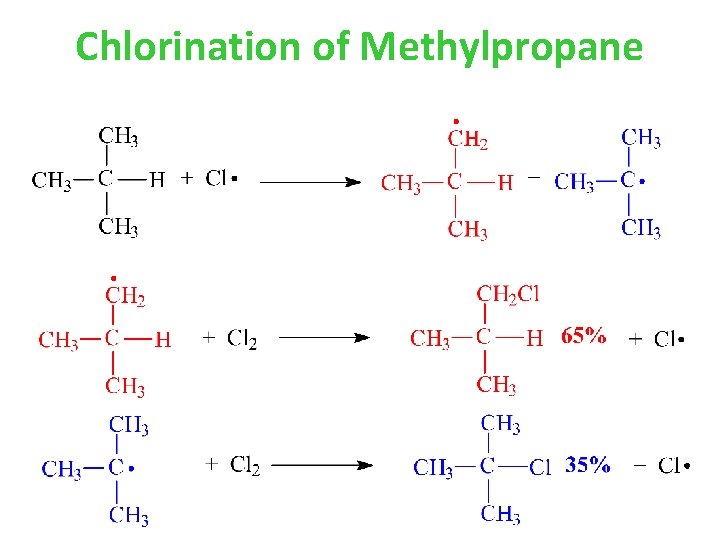
Chlorination of Methylpropane
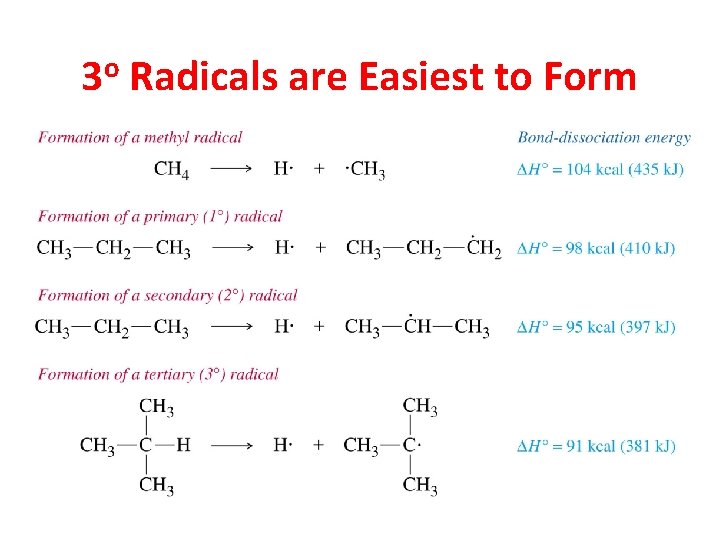
3 o Radicals are Easiest to Form
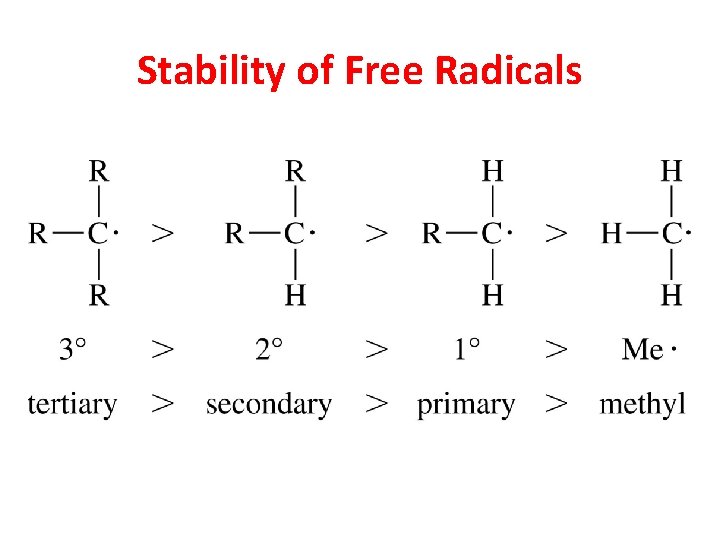
Stability of Free Radicals
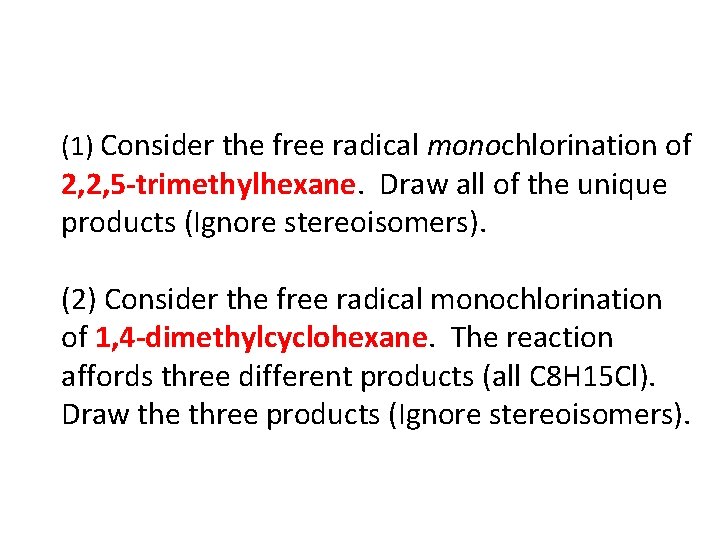
(1) Consider the free radical monochlorination of 2, 2, 5 -trimethylhexane. Draw all of the unique products (Ignore stereoisomers). (2) Consider the free radical monochlorination of 1, 4 -dimethylcyclohexane. The reaction affords three different products (all C 8 H 15 Cl). Draw the three products (Ignore stereoisomers).
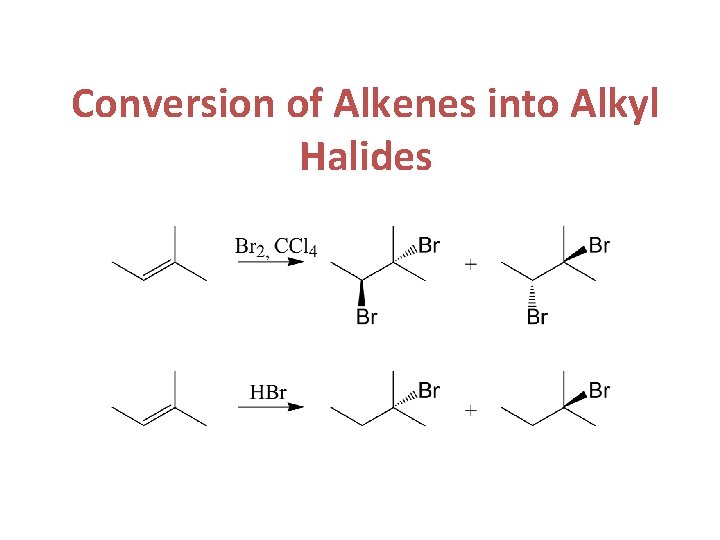
Conversion of Alkenes into Alkyl Halides
Conversion of Alcohols into Alkyl Halides Reactions with HX, SOCl 2, PBr 3
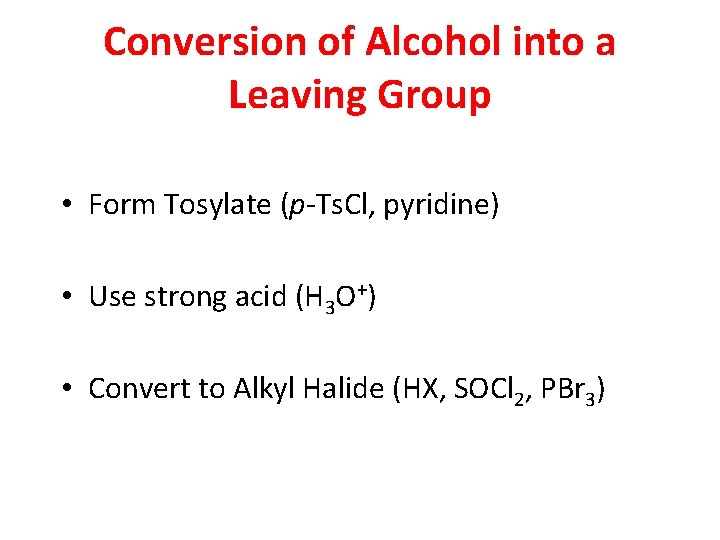
Conversion of Alcohol into a Leaving Group • Form Tosylate (p-Ts. Cl, pyridine) • Use strong acid (H 3 O+) • Convert to Alkyl Halide (HX, SOCl 2, PBr 3)
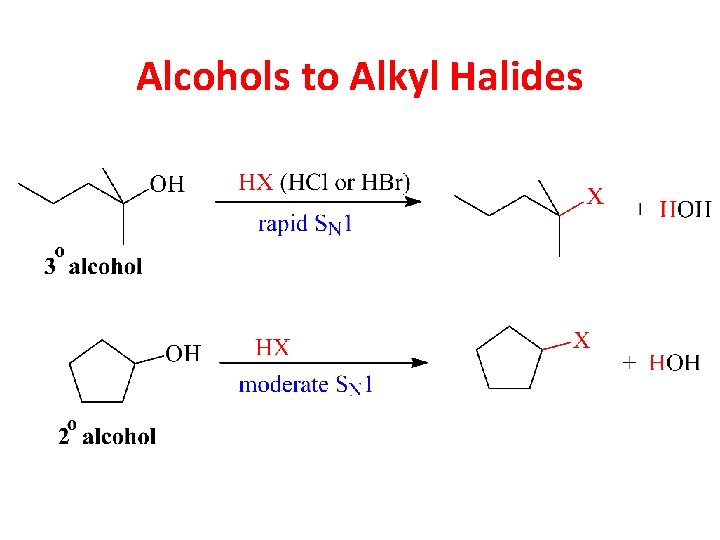
Alcohols to Alkyl Halides
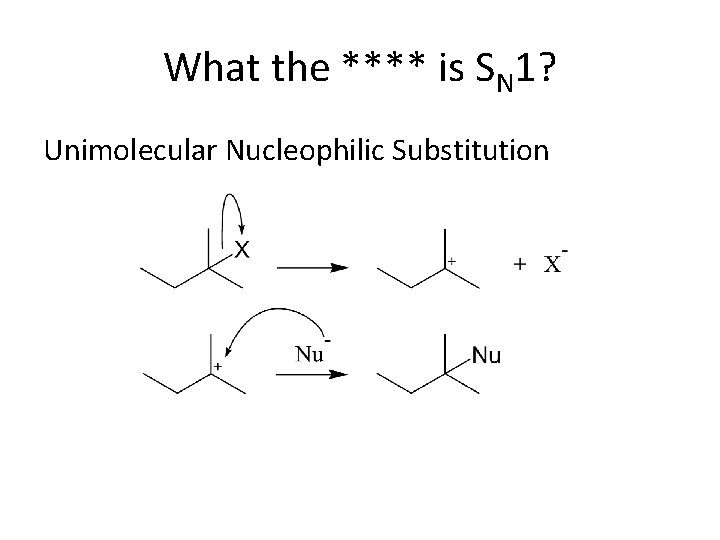
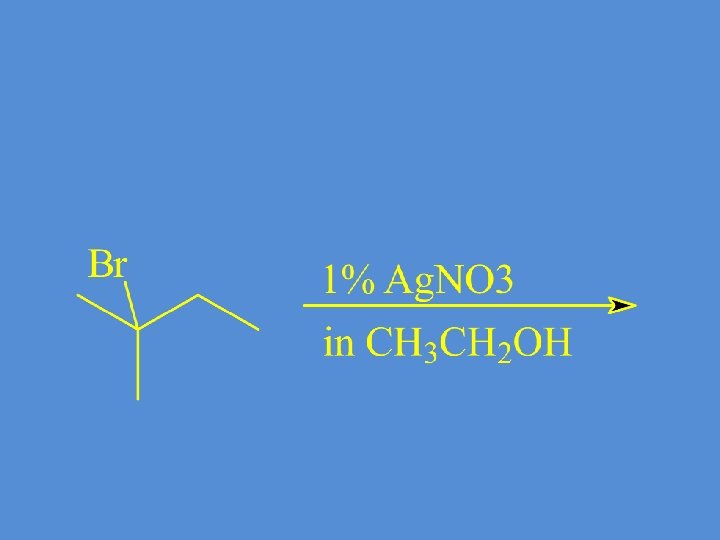
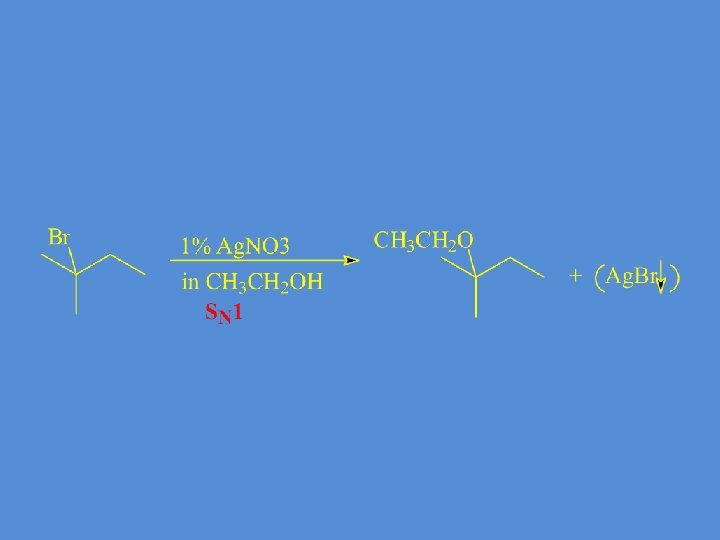
What the **** is SN 1? Unimolecular Nucleophilic Substitution
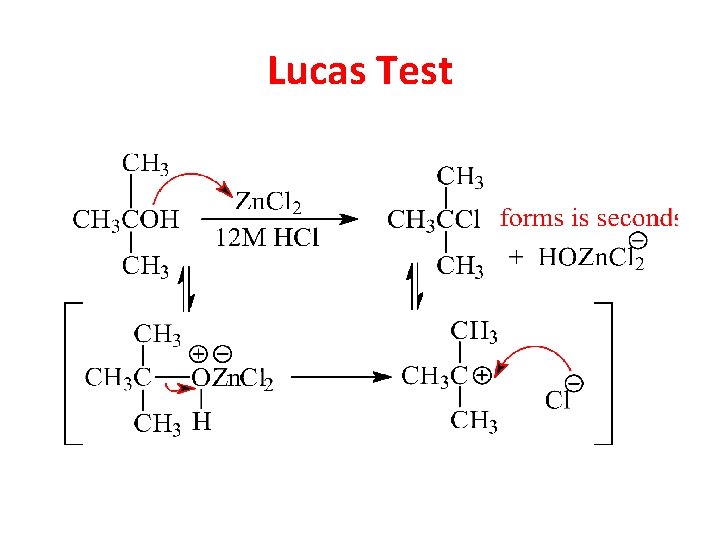
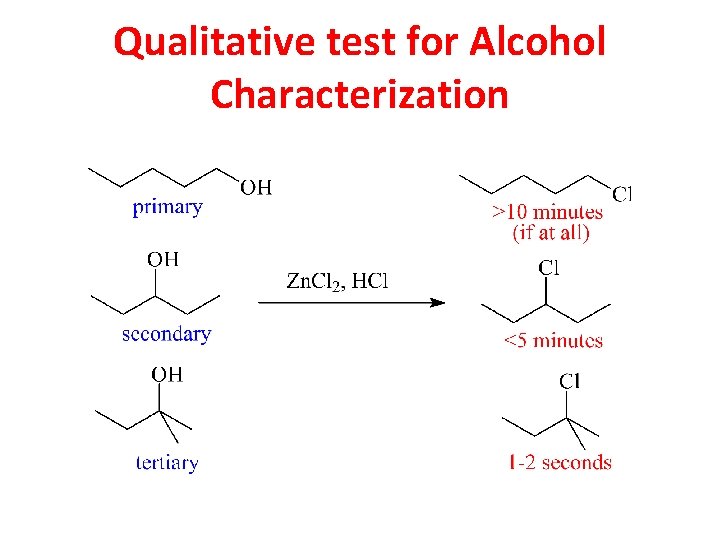
Lucas Test
Qualitative test for Alcohol Characterization
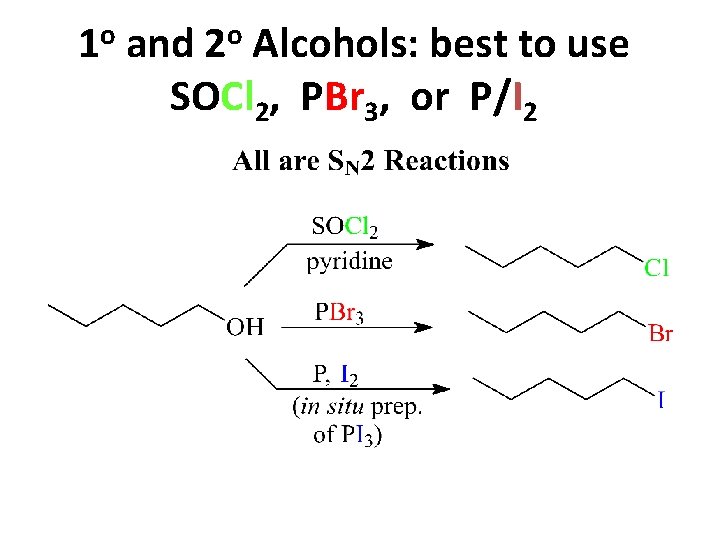
1 o and 2 o Alcohols: best to use SOCl 2, PBr 3, or P/I 2
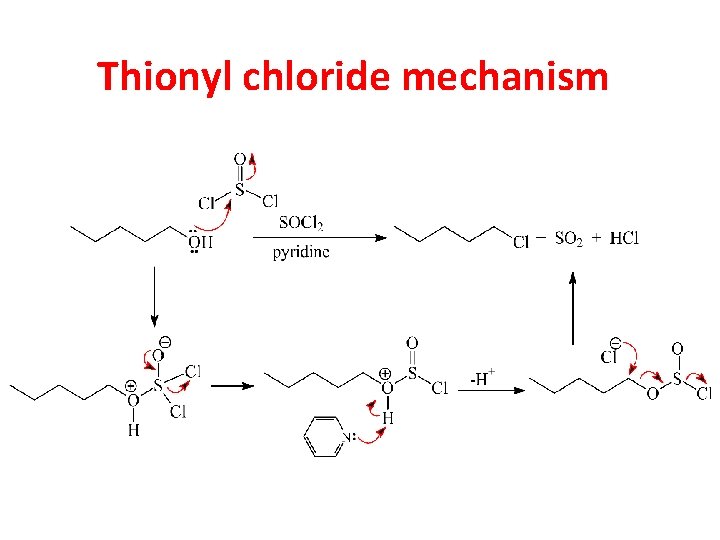
Thionyl chloride mechanism
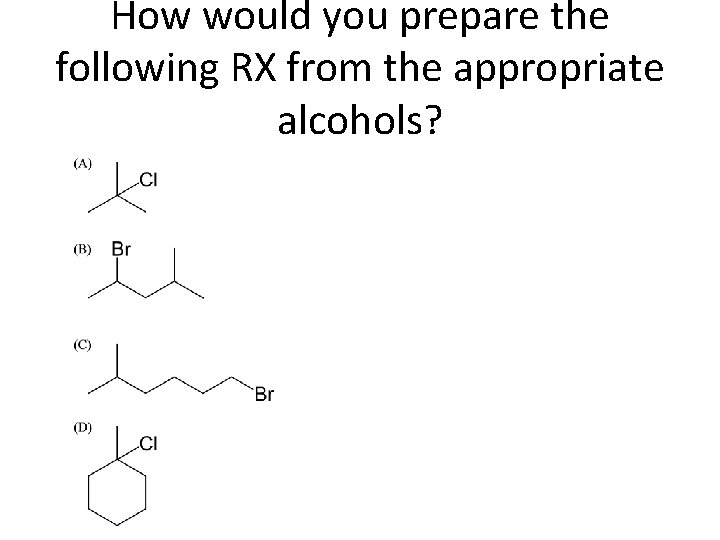
How would you prepare the following RX from the appropriate alcohols?
7. 25] Draw and name the monochlorination products of the reaction of 2 -methylpentane with chlorine gas. Which are chiral? 7. 36] How would you prepare the ff cpds, starting from cyclopentene and any other reagents needed? a) Chlorocyclopentene b) Cyclopentanol c) Cyclopentylmagnesium chloride d) cyclopentane
Reactions of Alkyl Halides Grignard Reagents
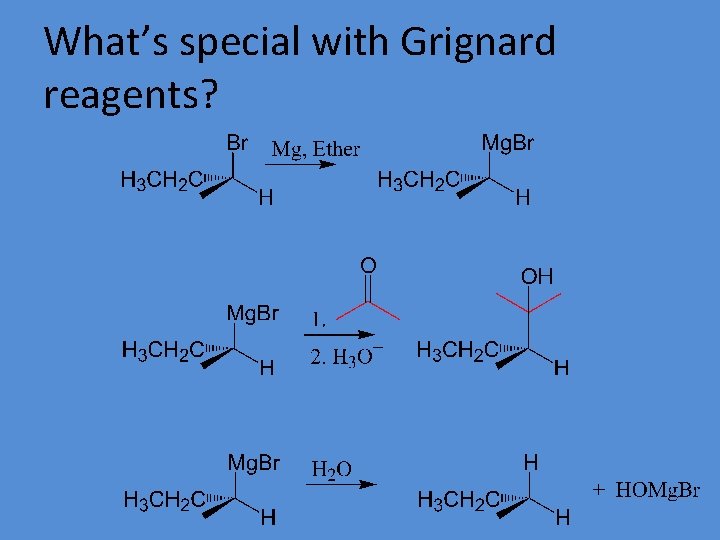
What’s special with Grignard reagents?
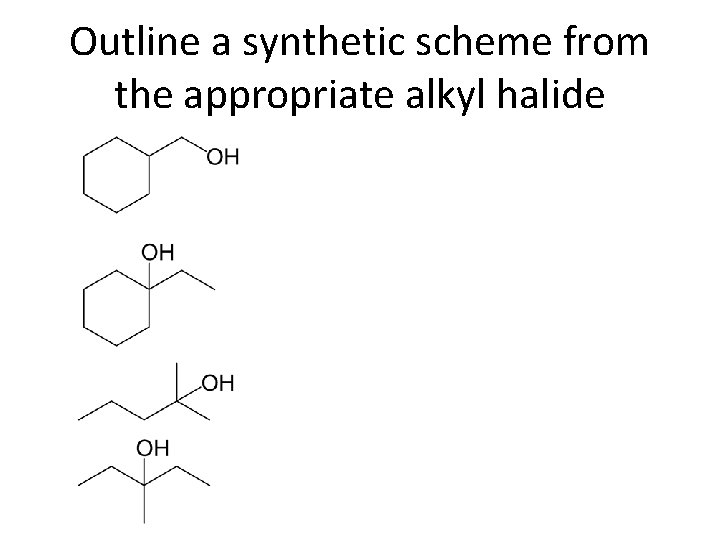
Outline a synthetic scheme from the appropriate alkyl halide
Reactions of Alkyl Halides Substitution and Elimination
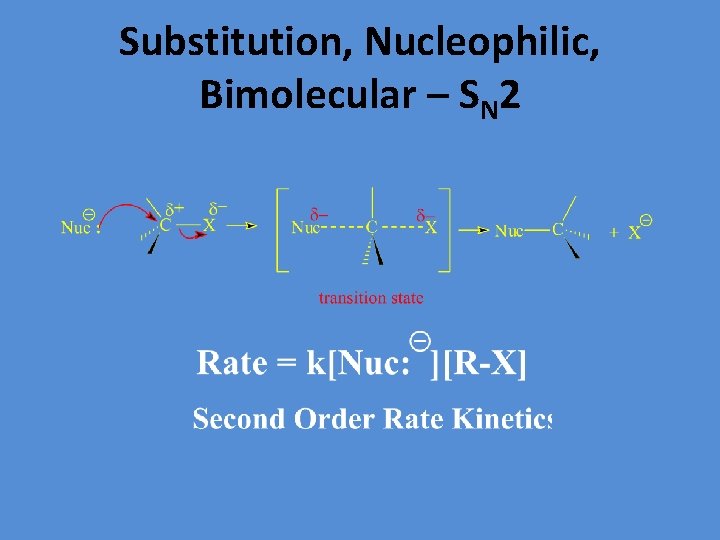
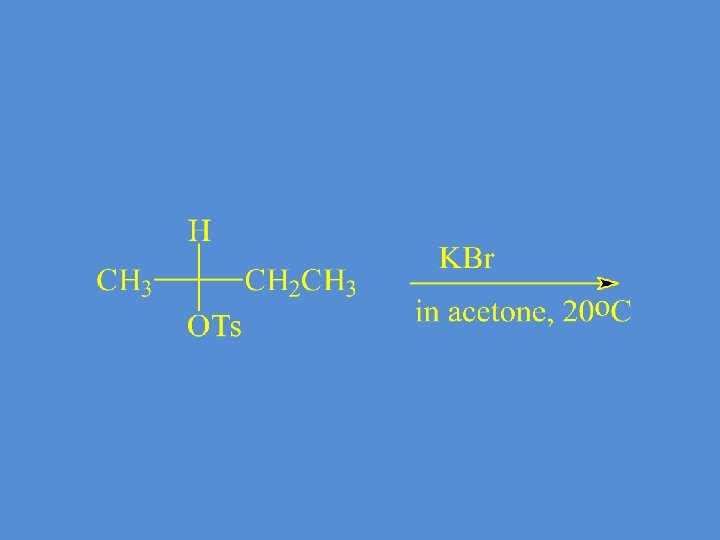
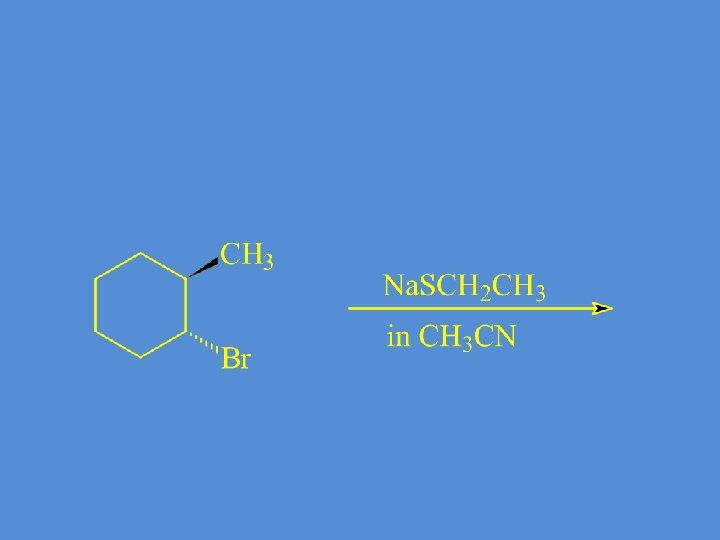
Substitution, Nucleophilic, Bimolecular – SN 2
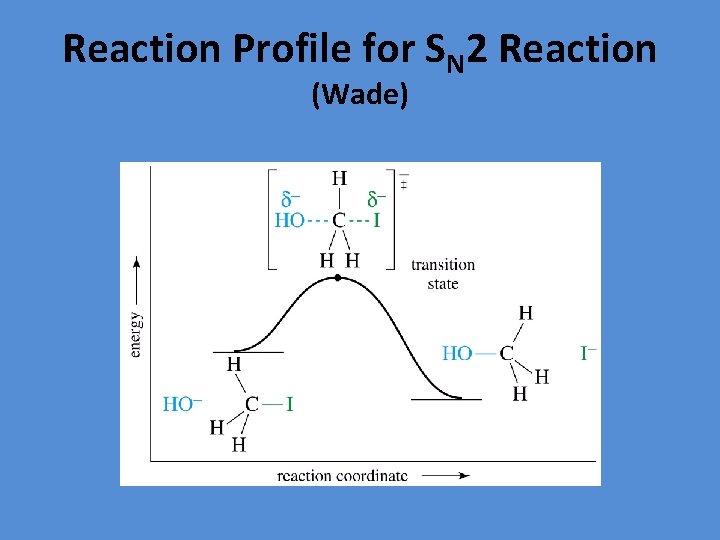
Reaction Profile for SN 2 Reaction (Wade)
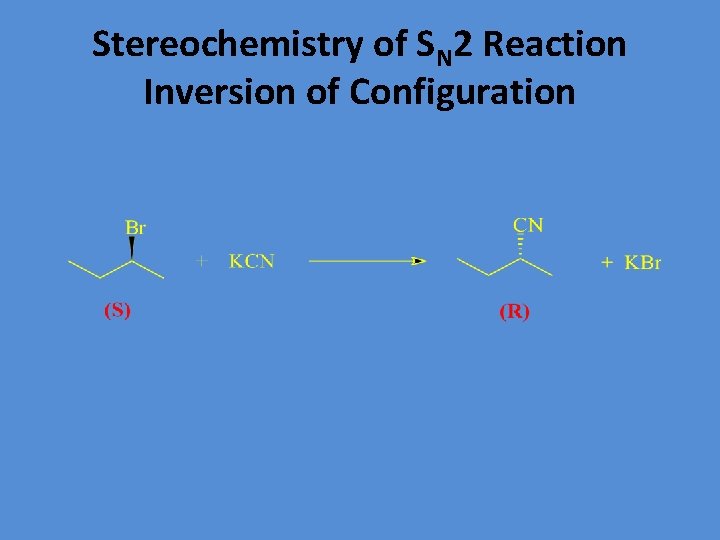
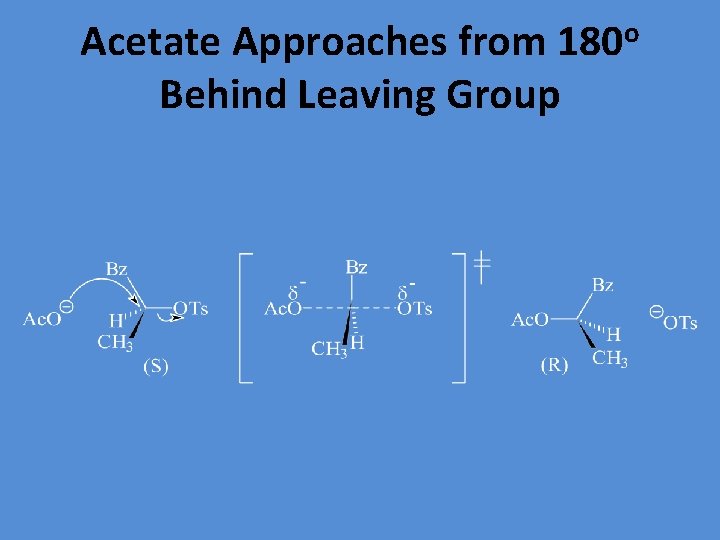
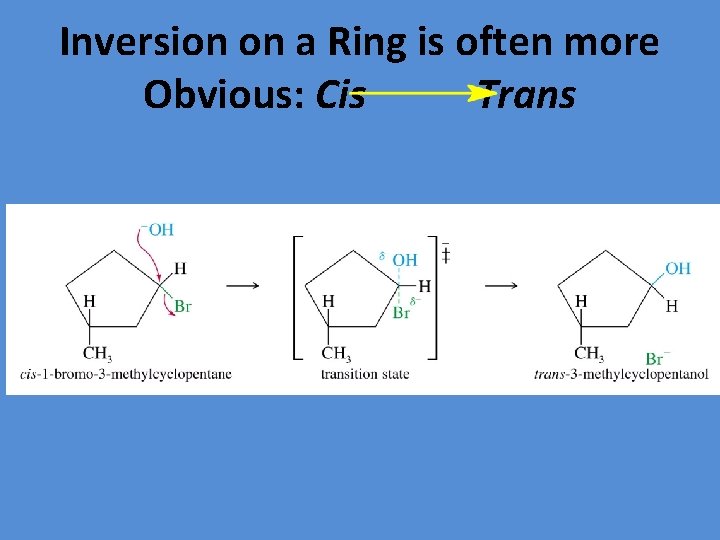
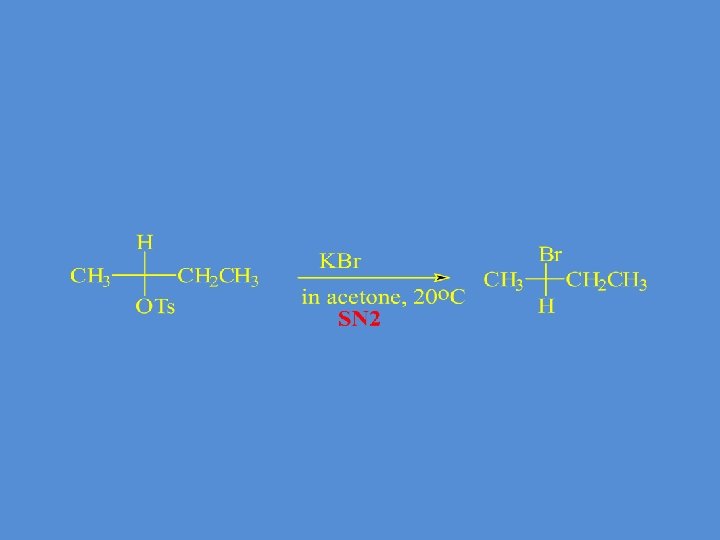
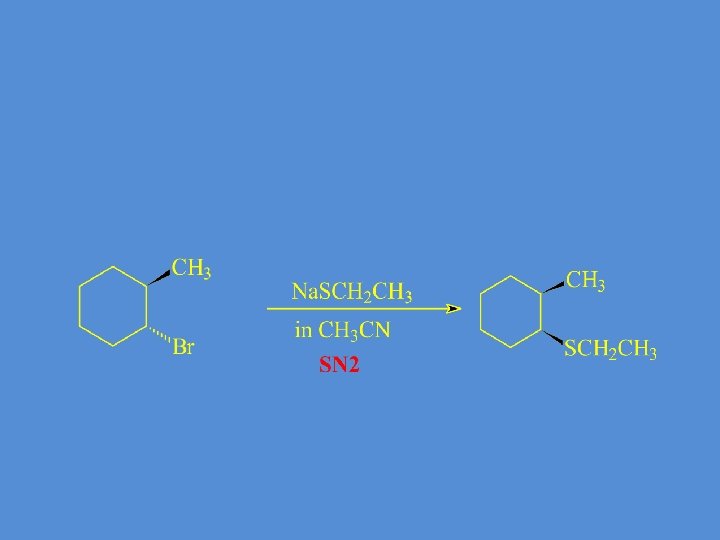
Stereochemistry of SN 2 Reaction Inversion of Configuration
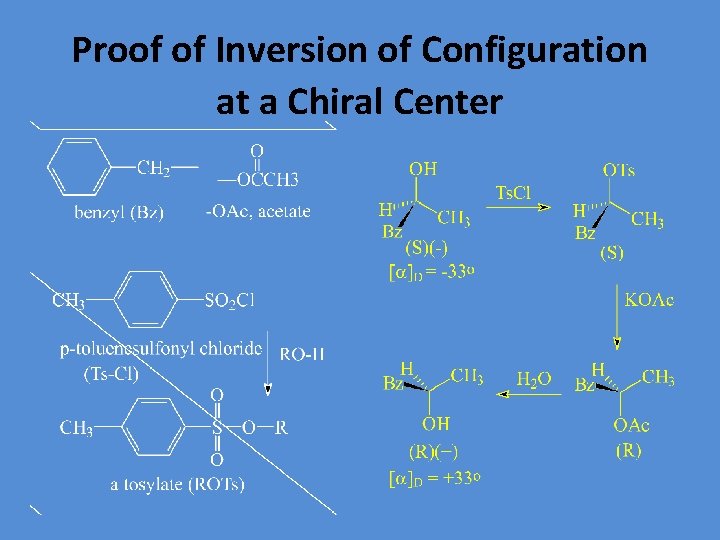
Proof of Inversion of Configuration at a Chiral Center
Acetate Approaches from 180 o Behind Leaving Group
Inversion on a Ring is often more Obvious: Cis Trans
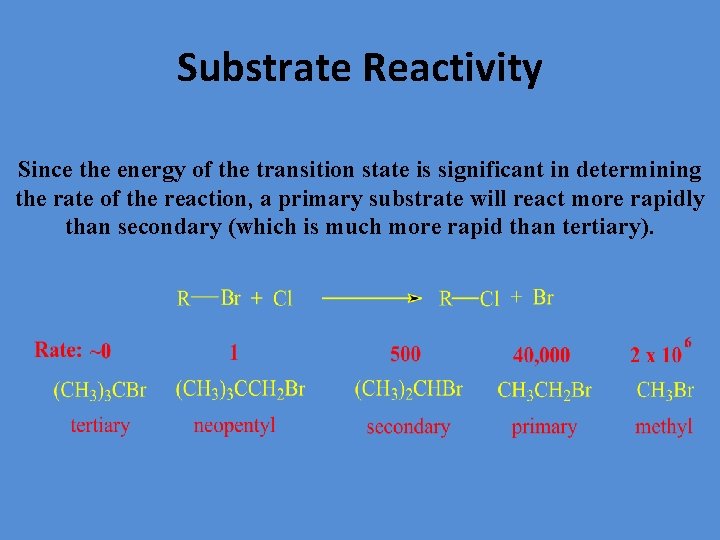
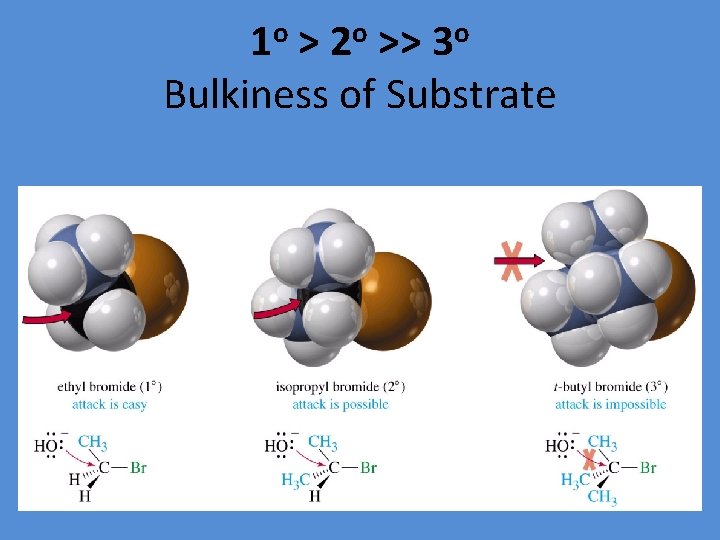
Substrate Reactivity Since the energy of the transition state is significant in determining the rate of the reaction, a primary substrate will react more rapidly than secondary (which is much more rapid than tertiary).
1 o > 2 o >> 3 o Bulkiness of Substrate
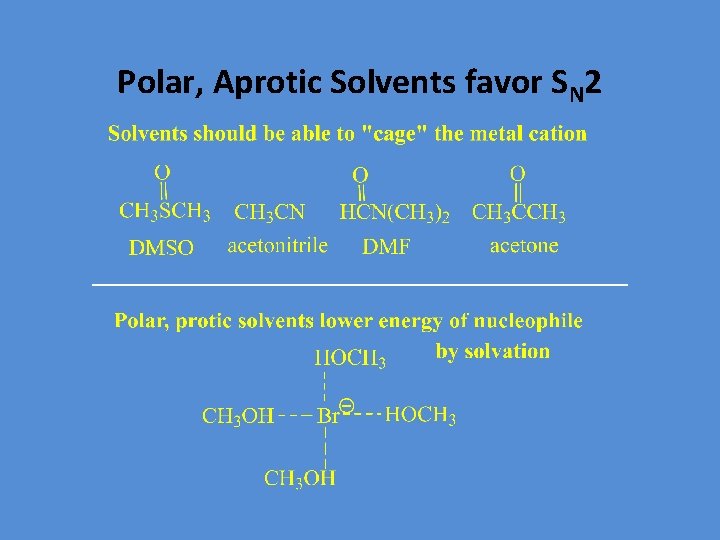
Polar, Aprotic Solvents favor SN 2
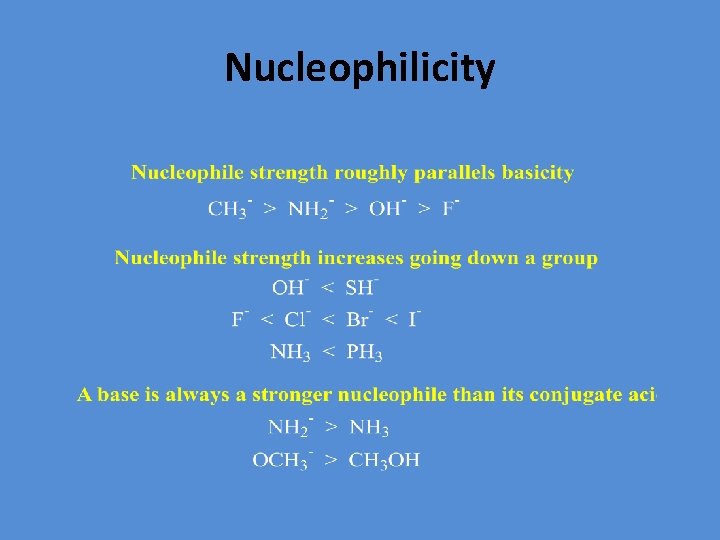
Nucleophilicity
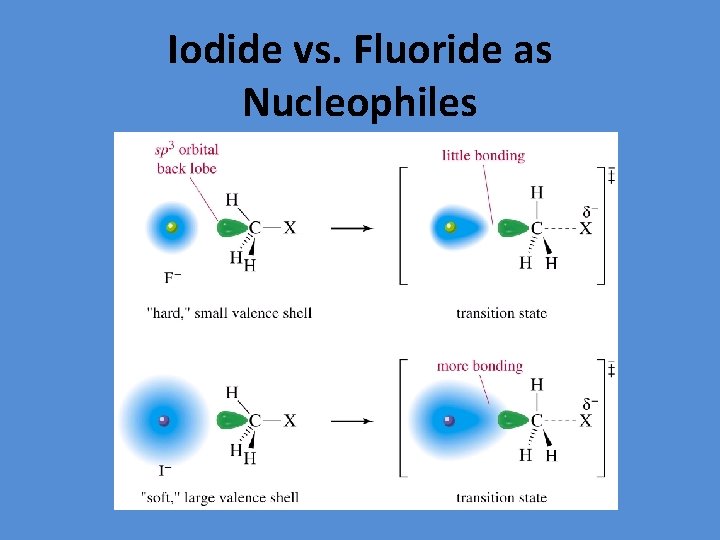
Iodide vs. Fluoride as Nucleophiles
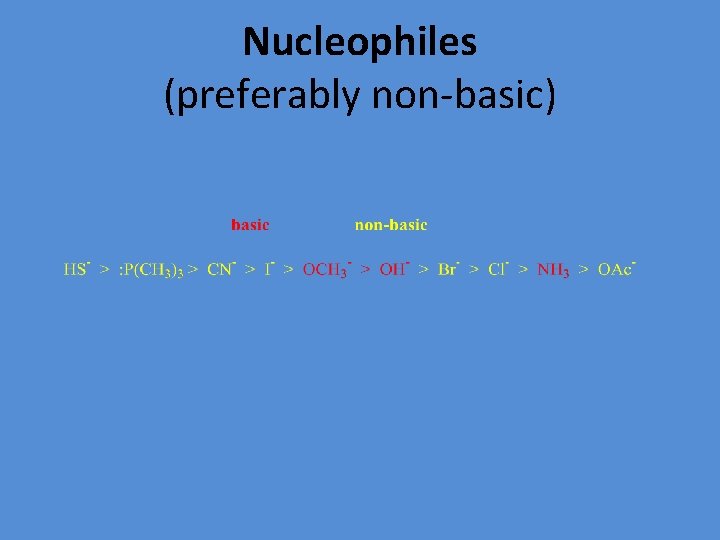
Nucleophiles (preferably non-basic)
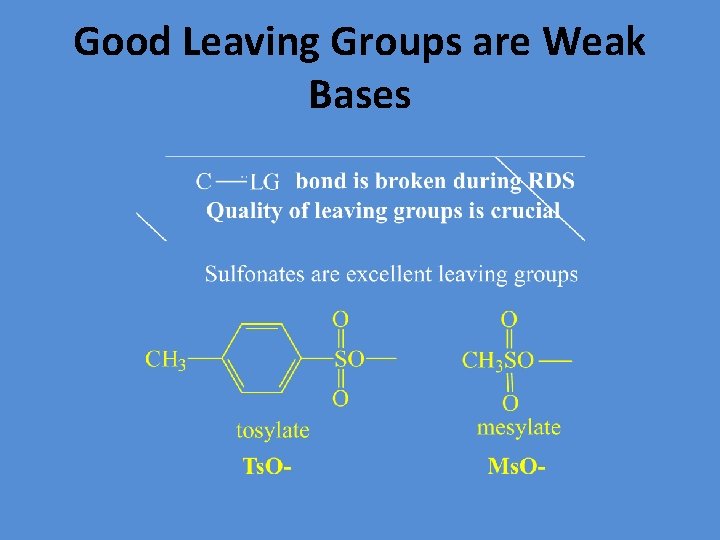
Good Leaving Groups are Weak Bases
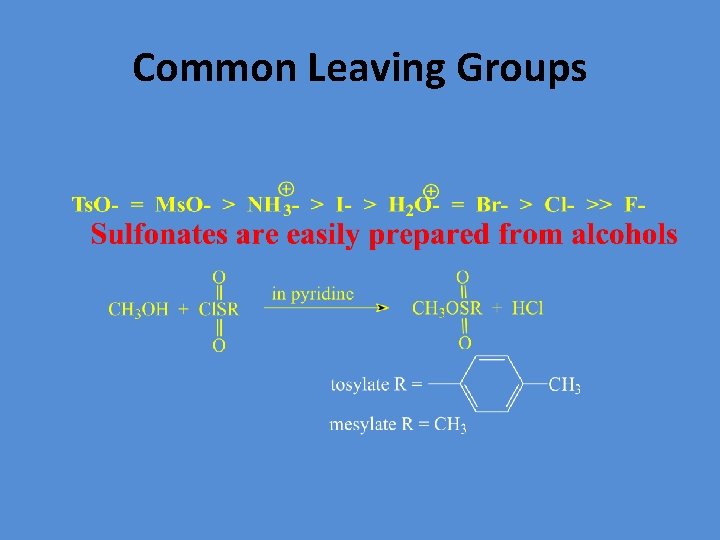
Common Leaving Groups
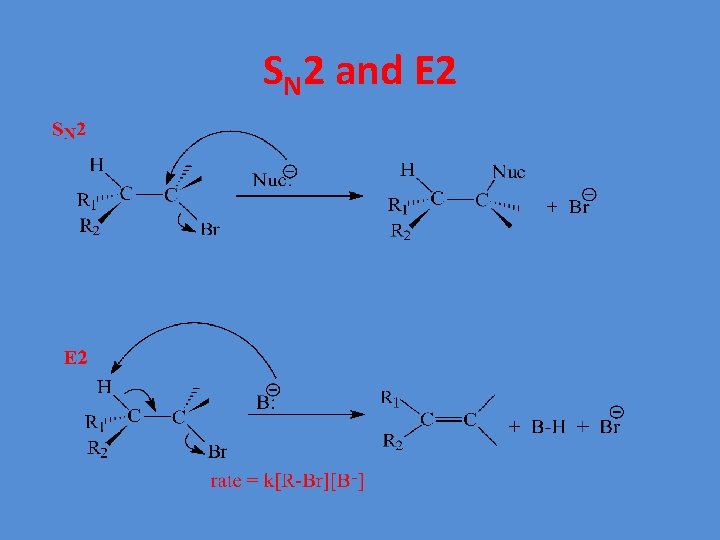
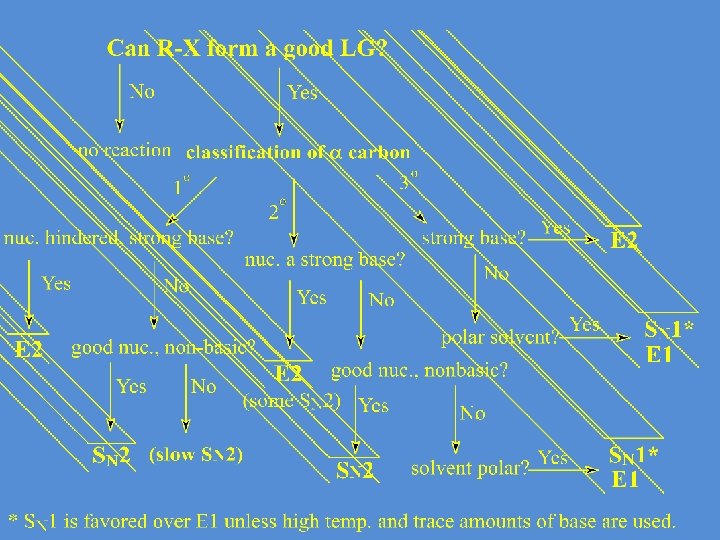
SN 2 and E 2
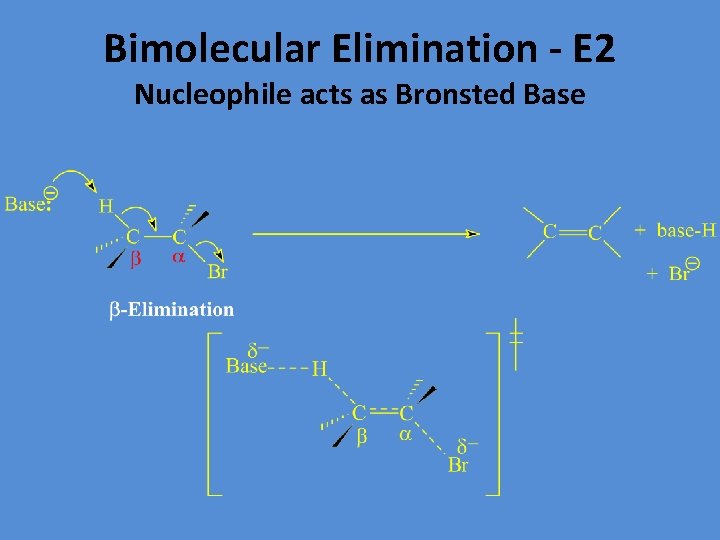
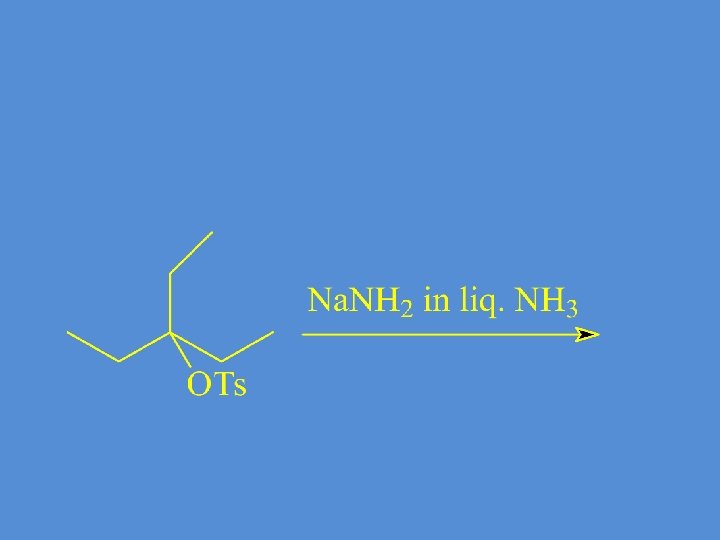
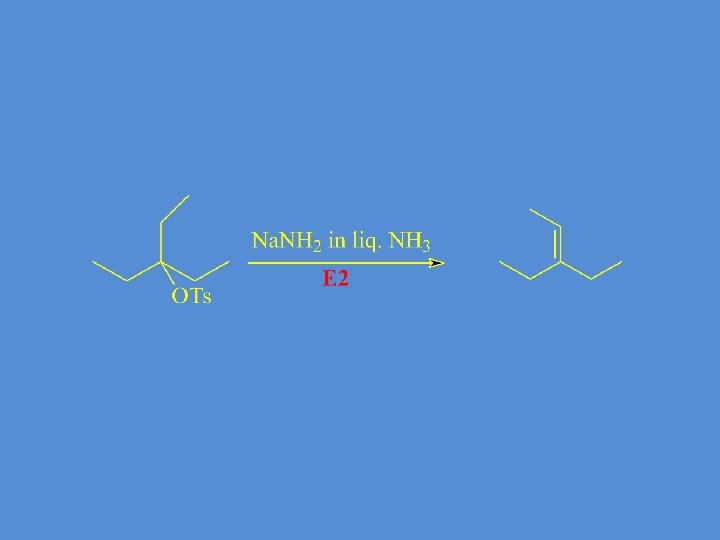
Bimolecular Elimination - E 2 Nucleophile acts as Bronsted Base
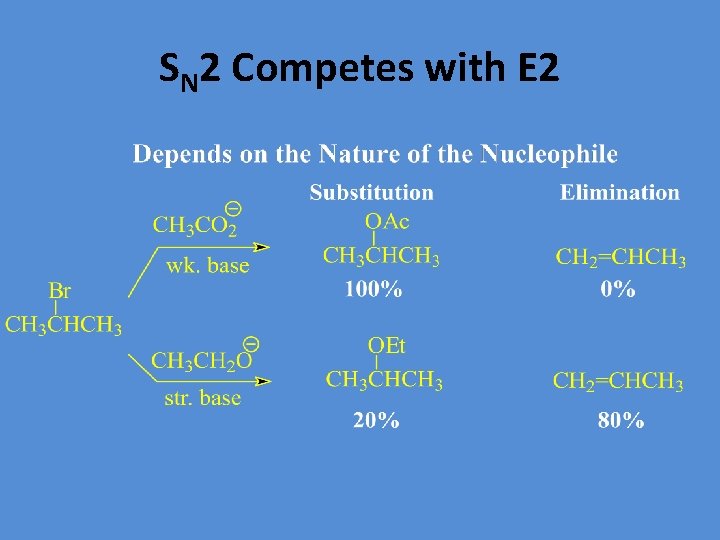
SN 2 Competes with E 2
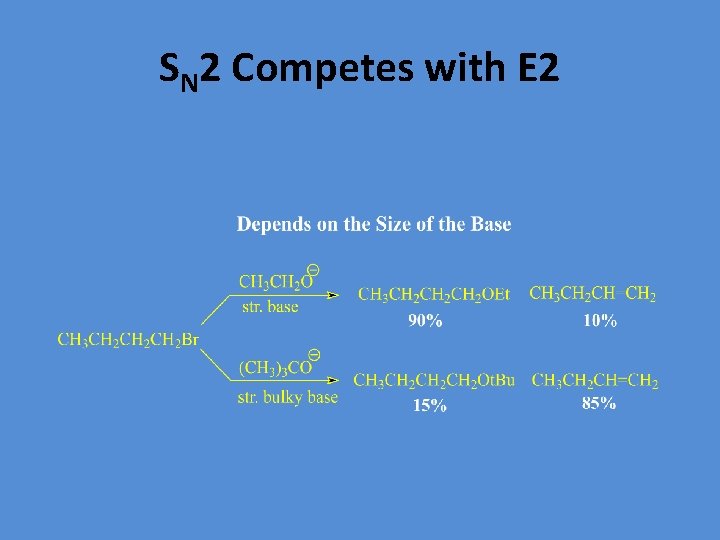
SN 2 Competes with E 2
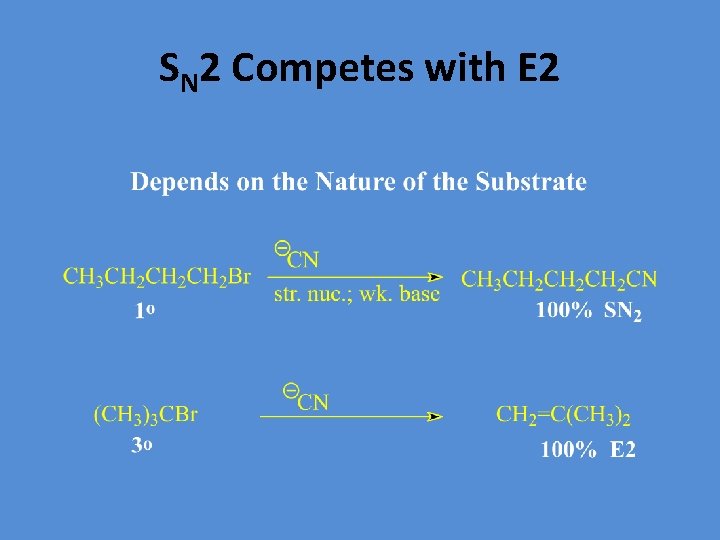
SN 2 Competes with E 2
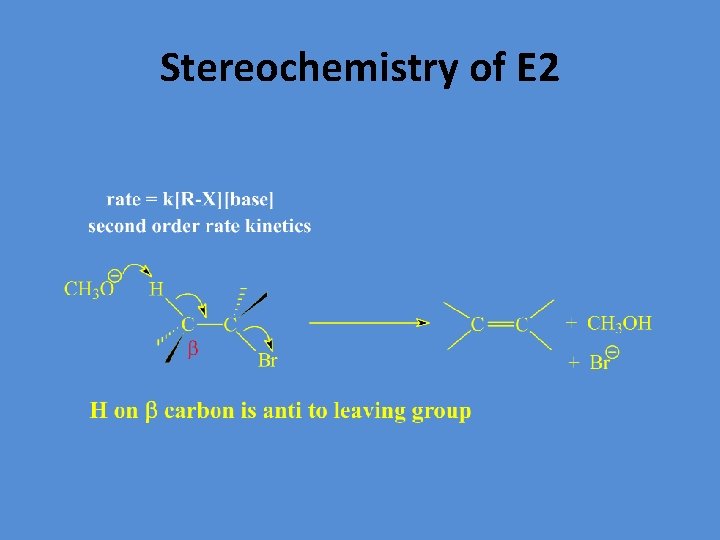
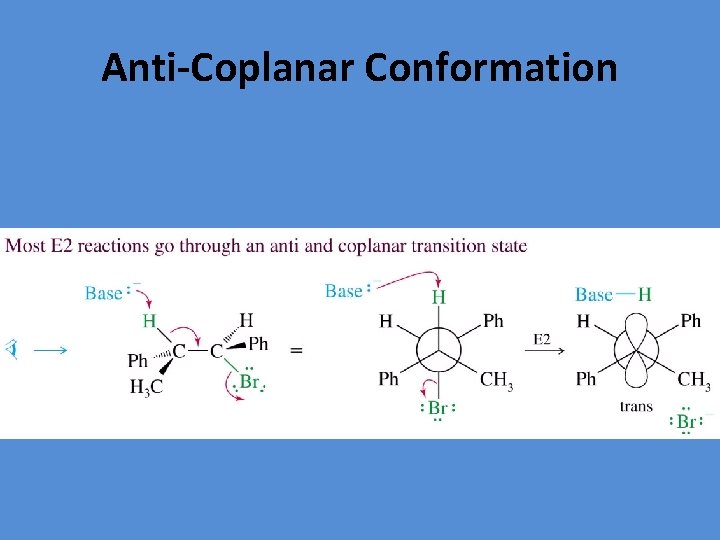
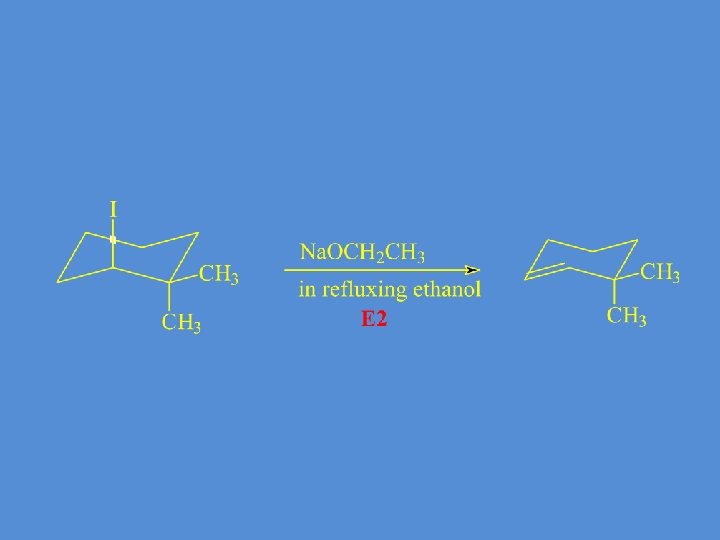
Stereochemistry of E 2
Anti-Coplanar Conformation
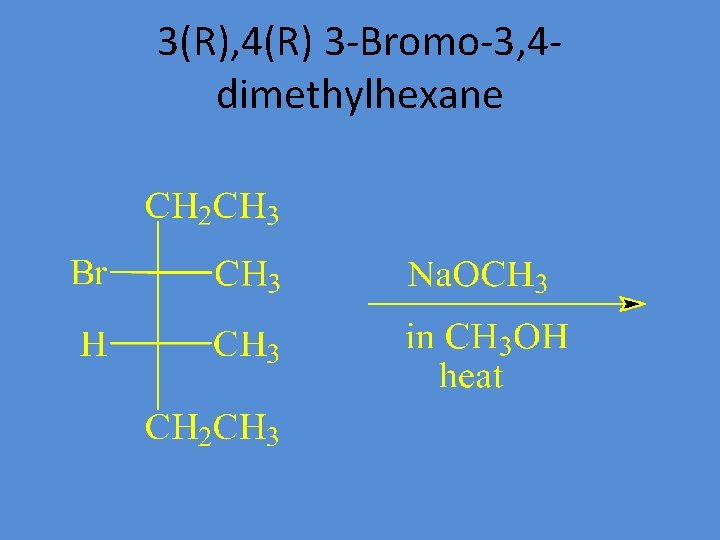
3(R), 4(R) 3 -Bromo-3, 4 dimethylhexane
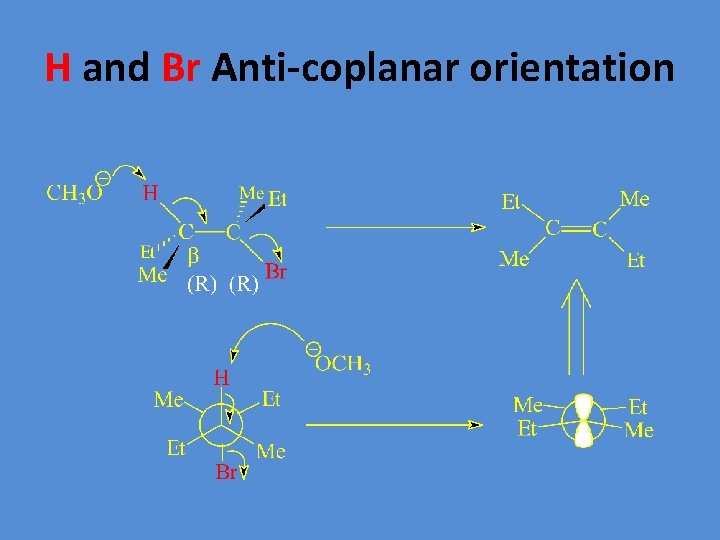
H and Br Anti-coplanar orientation
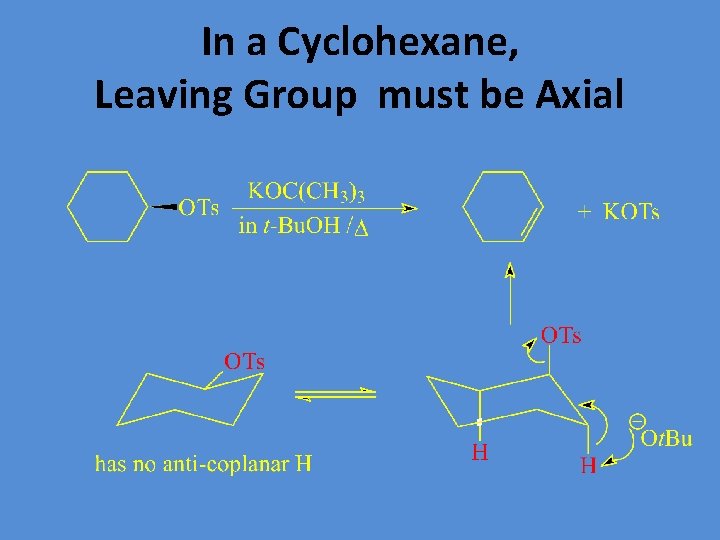
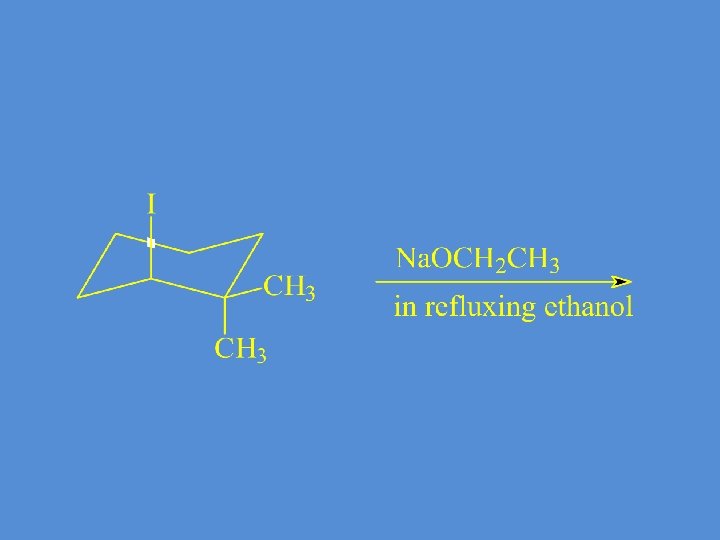
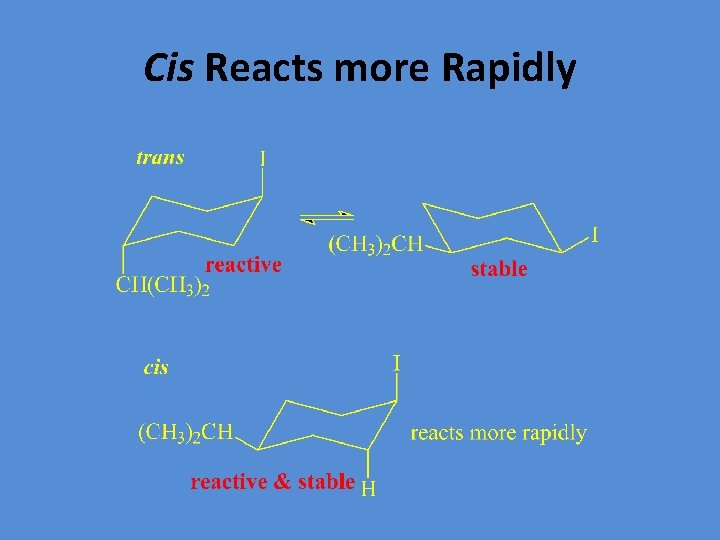
In a Cyclohexane, Leaving Group must be Axial
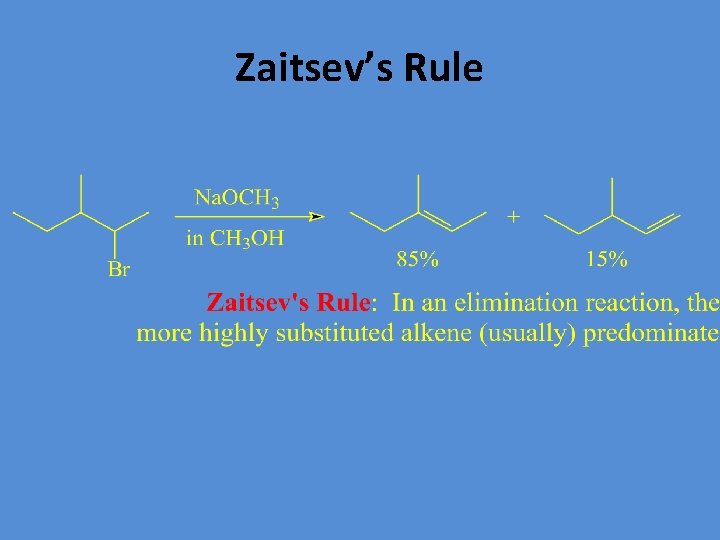
Zaitsev’s Rule
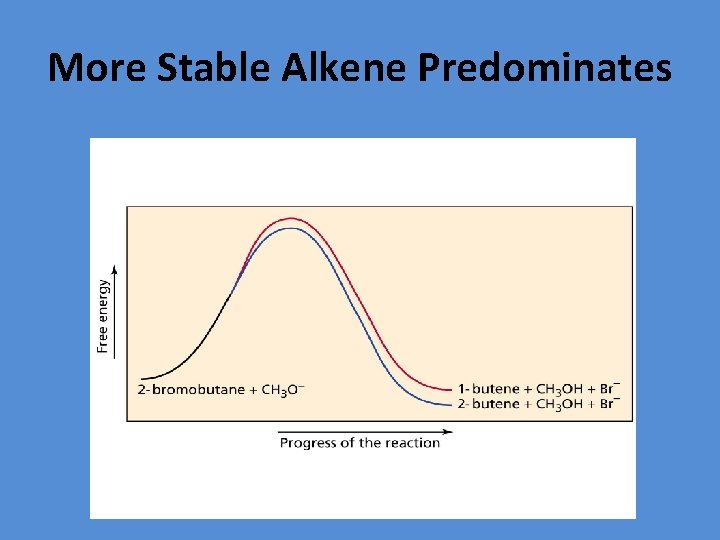
More Stable Alkene Predominates
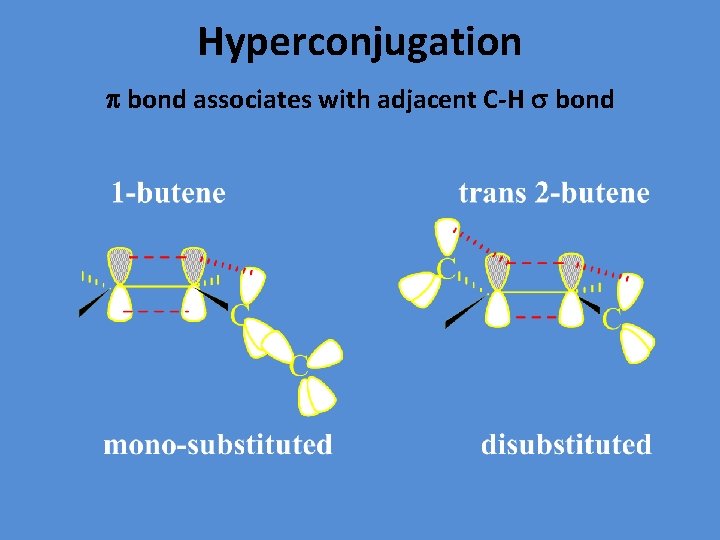
Hyperconjugation p bond associates with adjacent C-H s bond
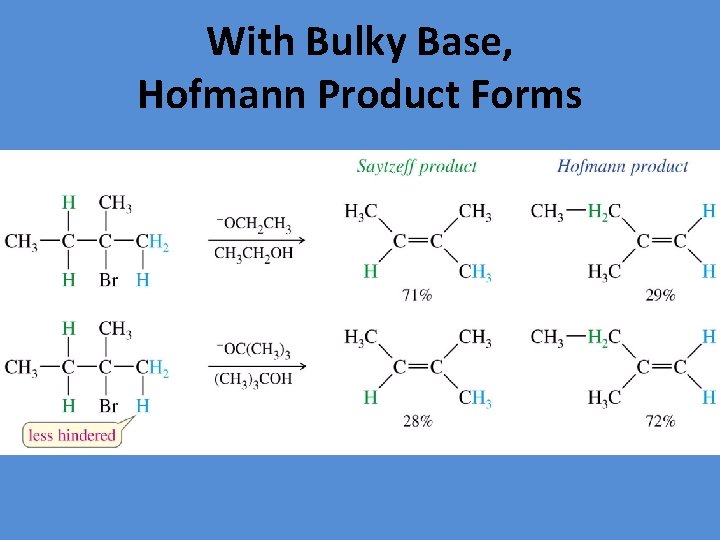
With Bulky Base, Hofmann Product Forms
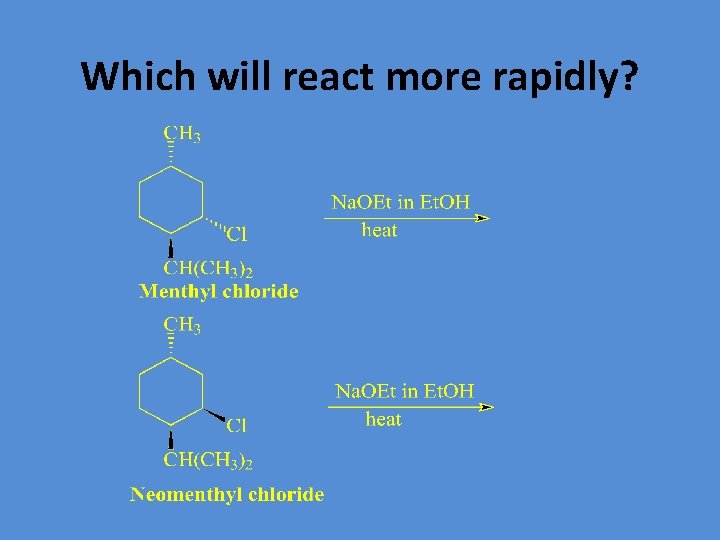
Which will react more rapidly?
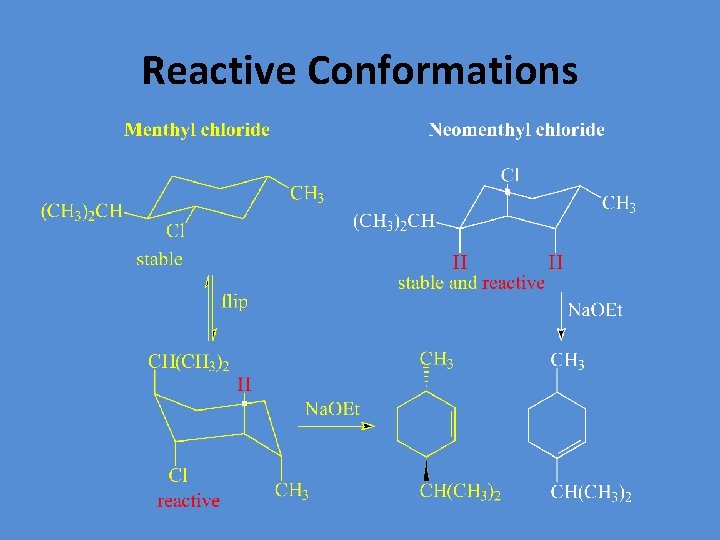
Reactive Conformations
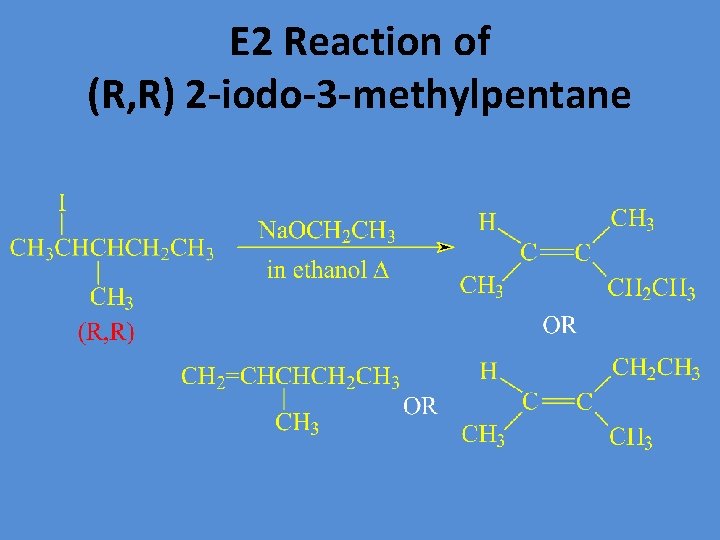
E 2 Reaction of (R, R) 2 -iodo-3 -methylpentane
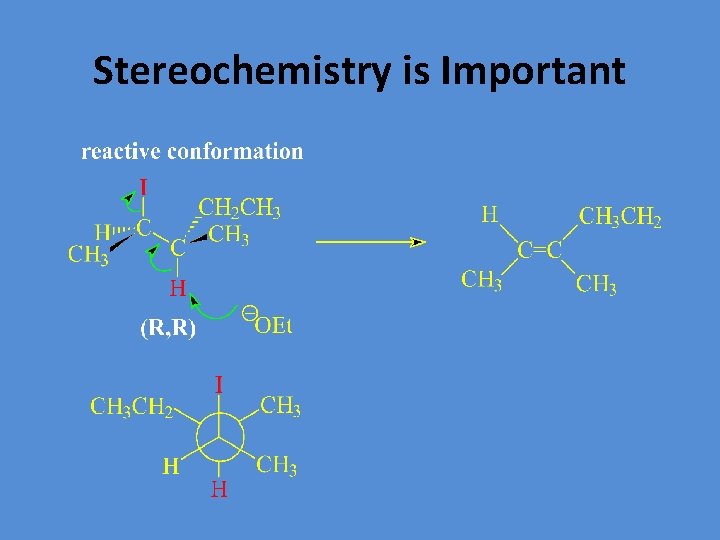
Stereochemistry is Important
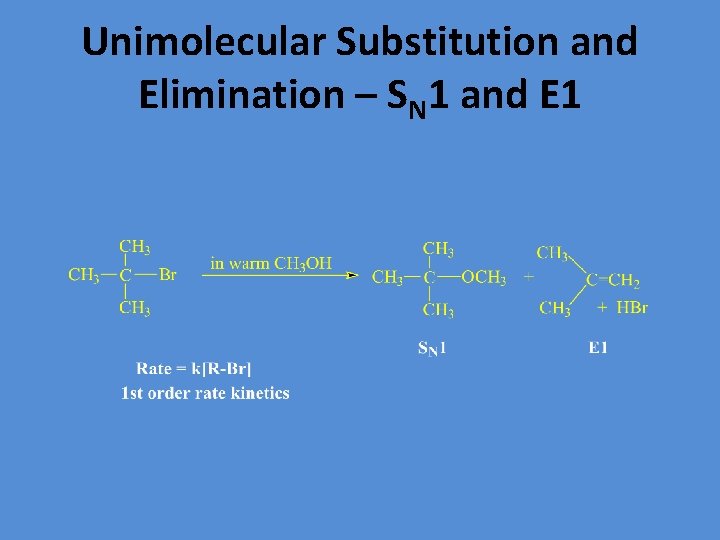
Unimolecular Substitution and Elimination – SN 1 and E 1
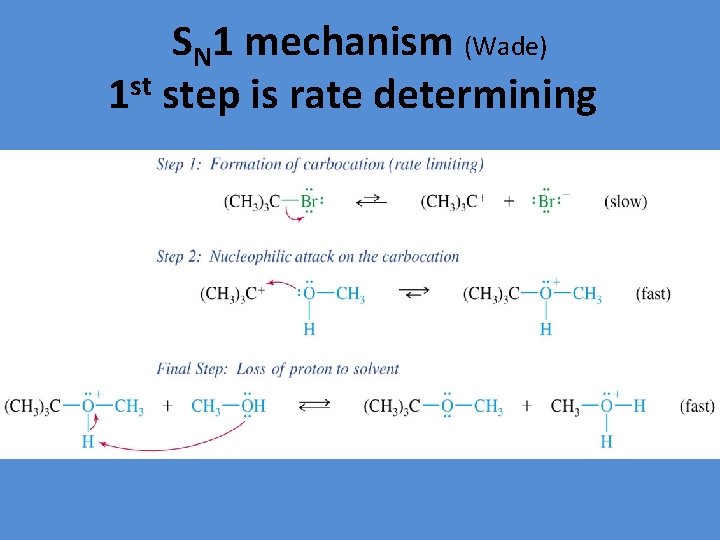
SN 1 mechanism (Wade) 1 st step is rate determining
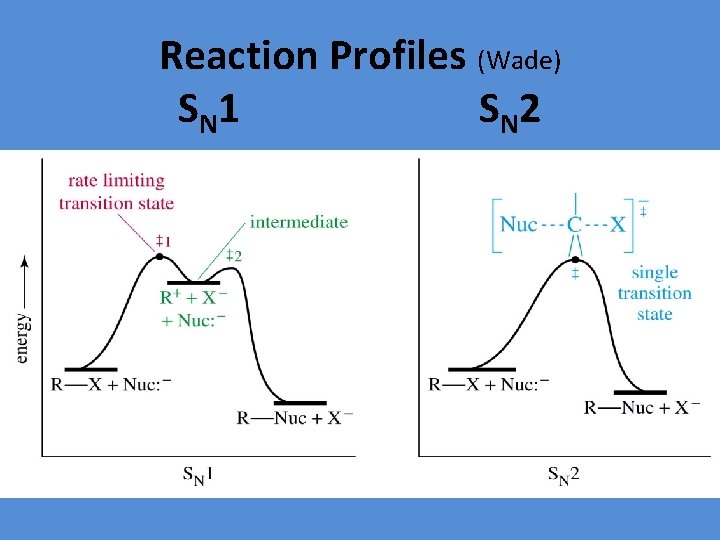
Reaction Profiles (Wade) S N 1 S N 2
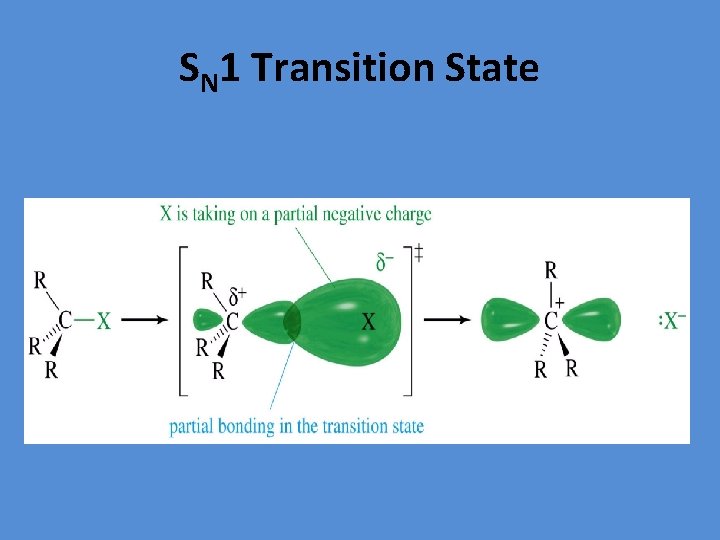
SN 1 Transition State
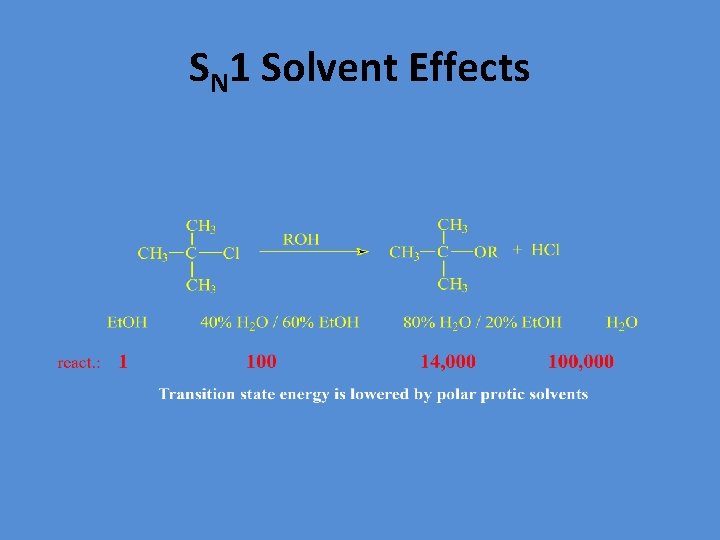
SN 1 Solvent Effects
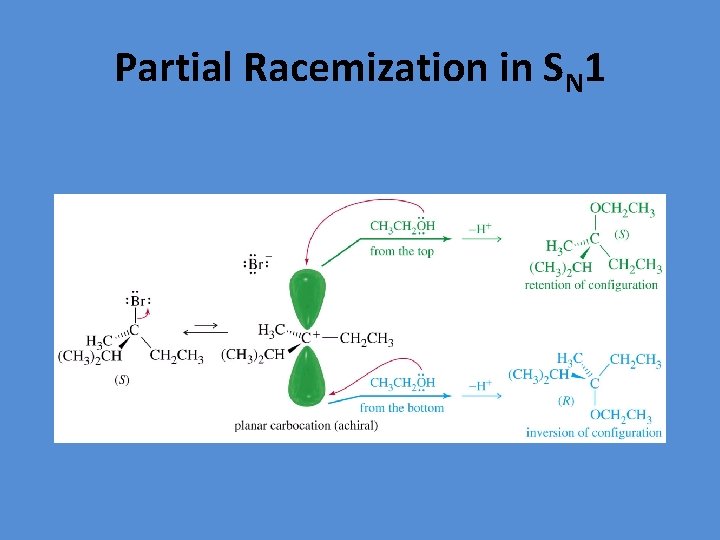
Partial Racemization in SN 1
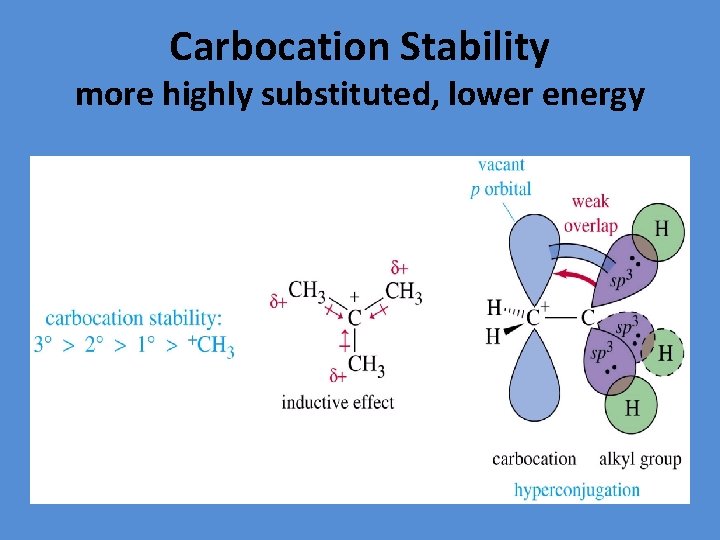
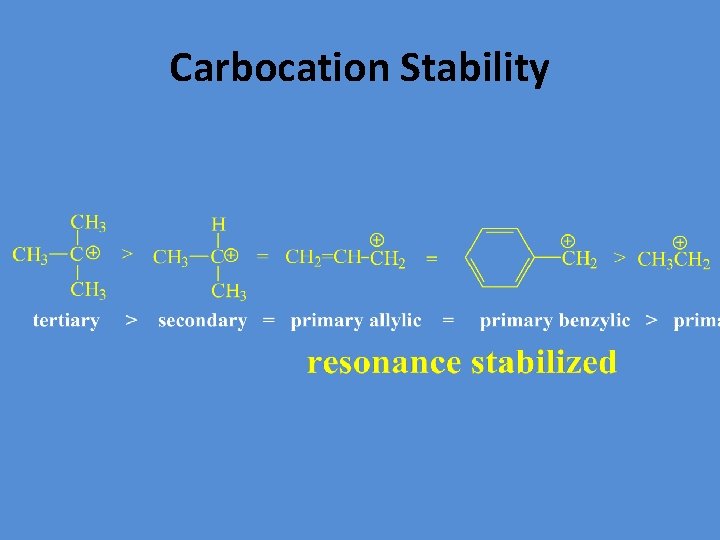
Carbocation Stability more highly substituted, lower energy
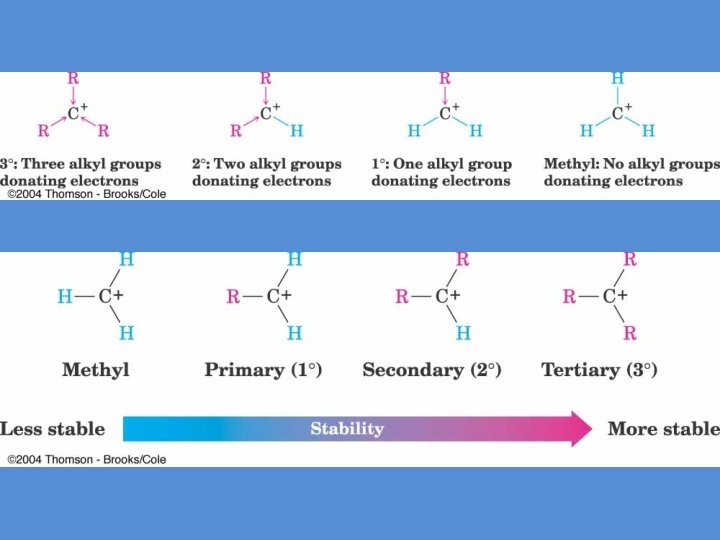
Carbocation Stability
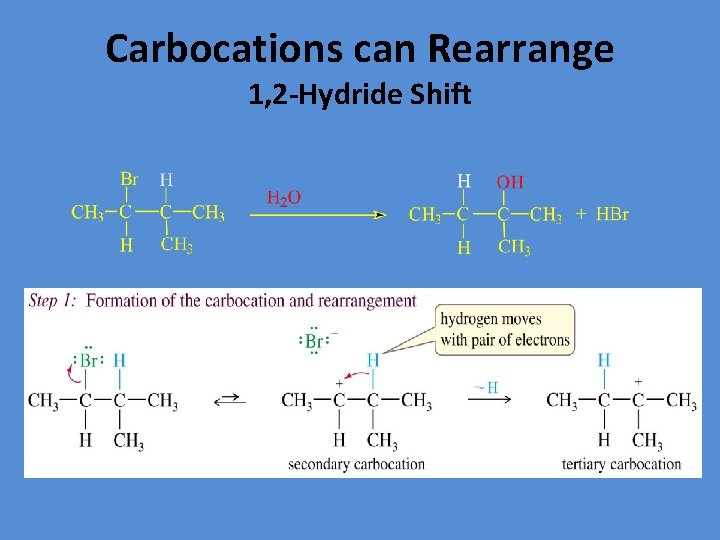
Carbocations can Rearrange 1, 2 -Hydride Shift
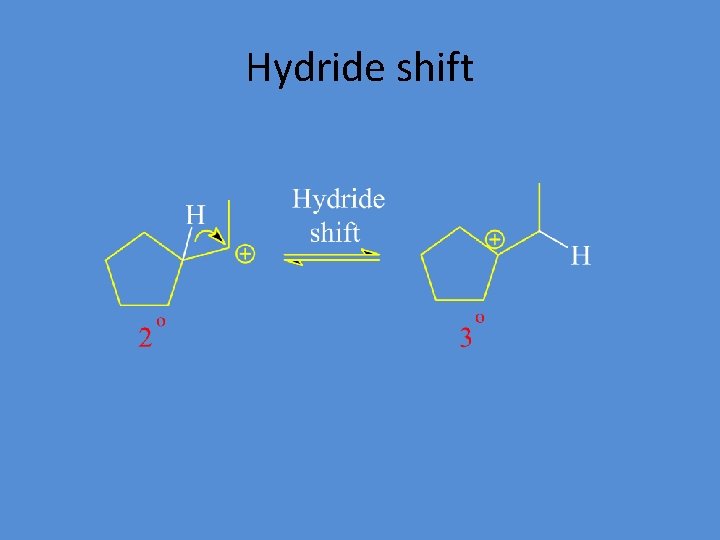
Hydride shift
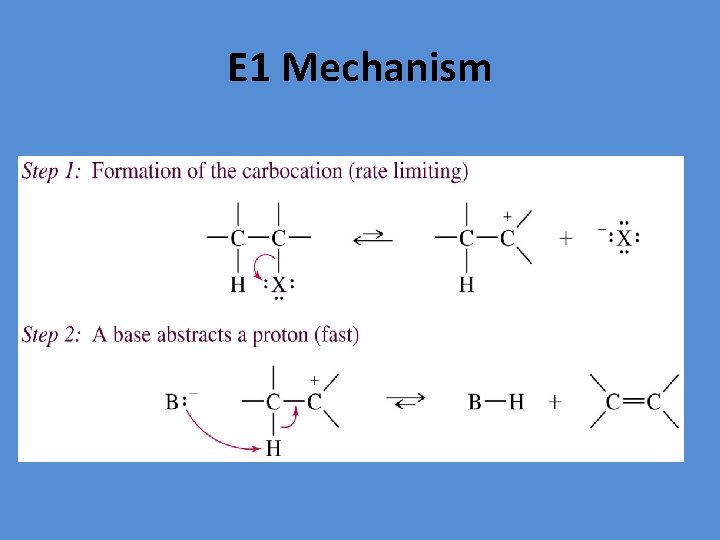
E 1 Mechanism
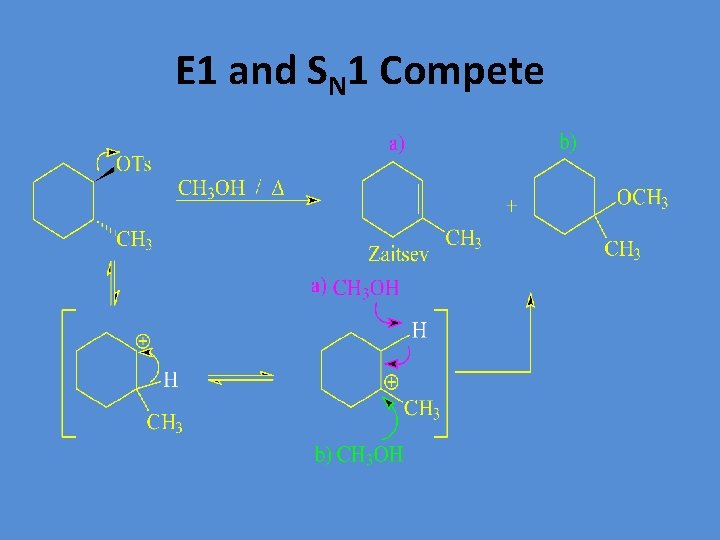
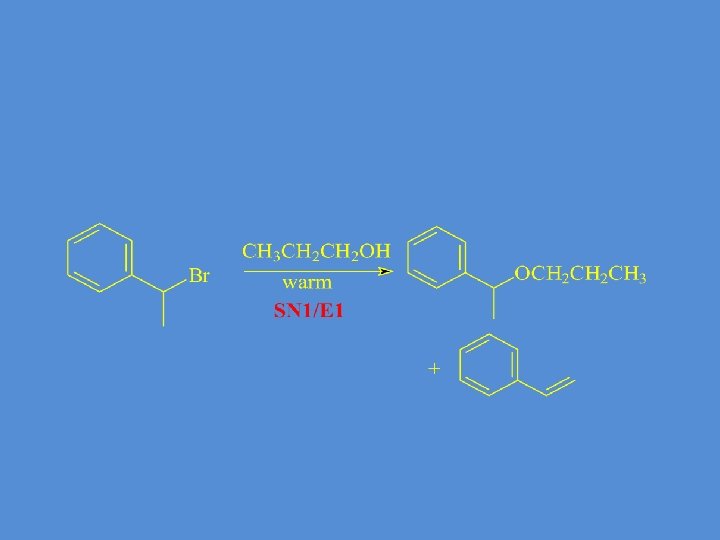
E 1 and SN 1 Compete
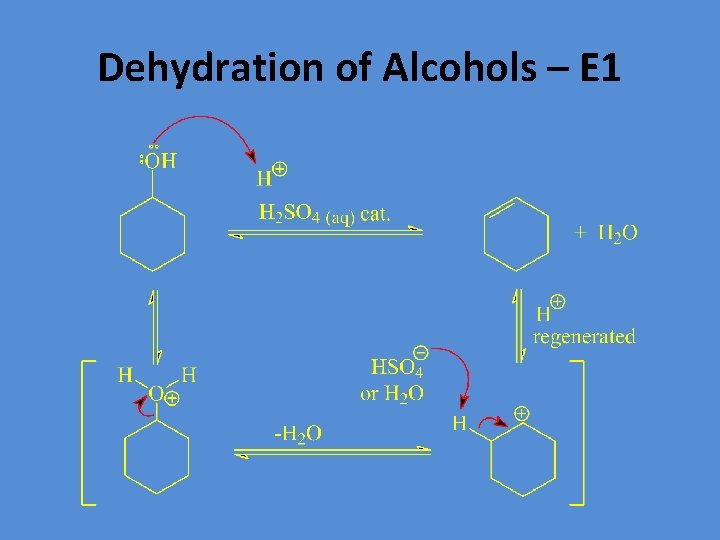
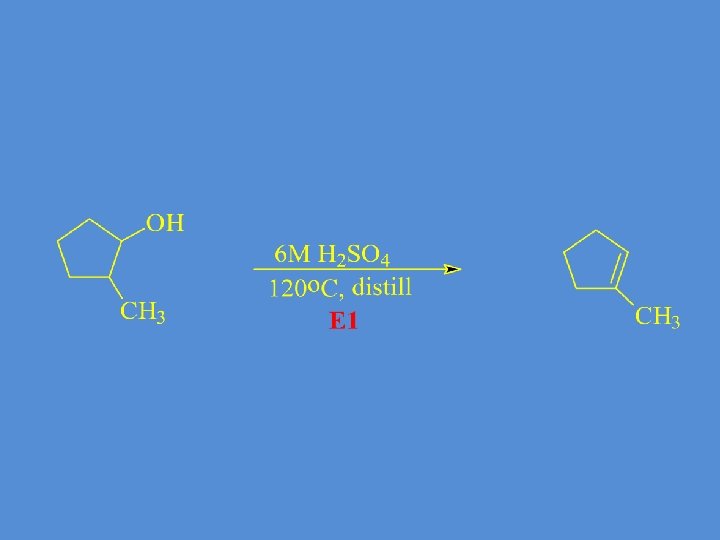
Dehydration of Alcohols – E 1
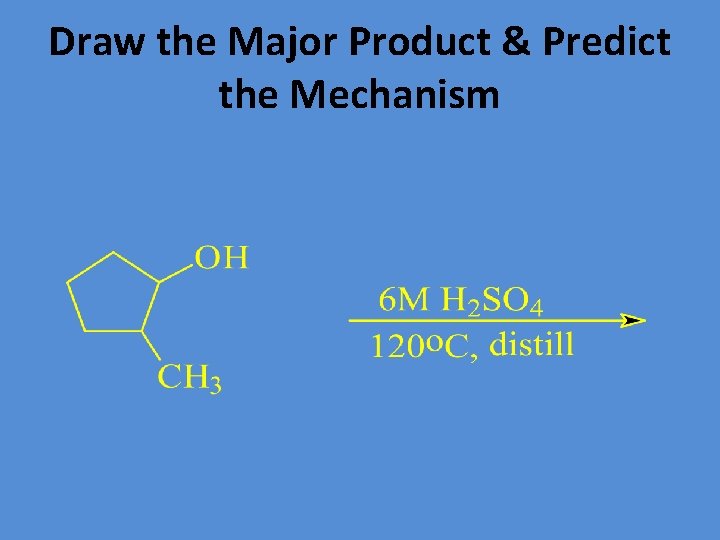
Draw the Major Product & Predict the Mechanism
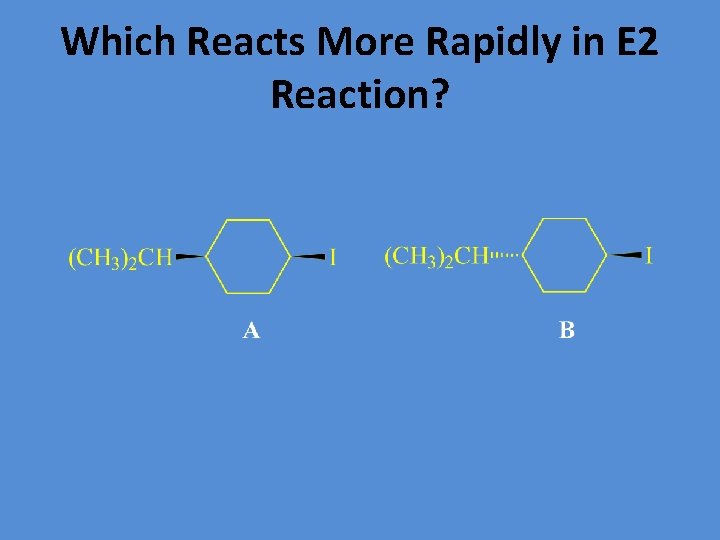
Which Reacts More Rapidly in E 2 Reaction?
Cis Reacts more Rapidly
What is an E 1 CB reaction? • Poor LG 2 carbons away from a carbonyl carbon (beta alcohol) • Proceeds via a carbanion intermediate stabilized by resonance. • Step 1: Abstraction of alpha proton • Step 2: Ejection of leaving group.