
Alkohol dan Eter Ikatan tunggal Karbon ke Oksigen

Alkohol dan Eter Ikatan tunggal Karbon ke Oksigen
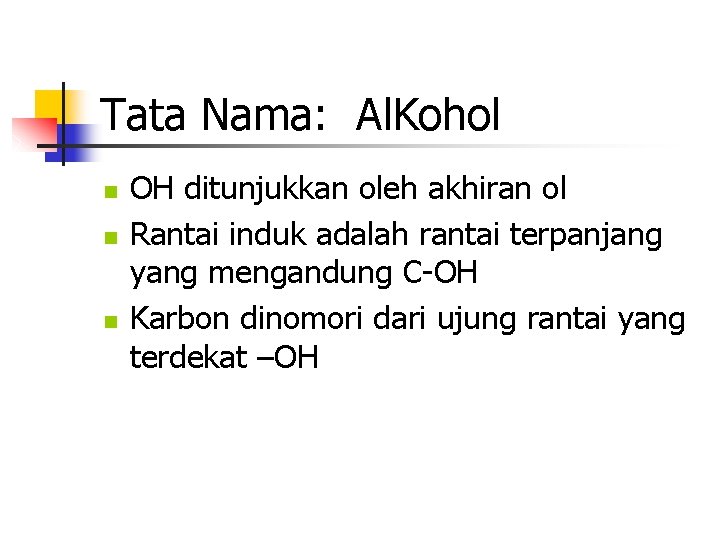
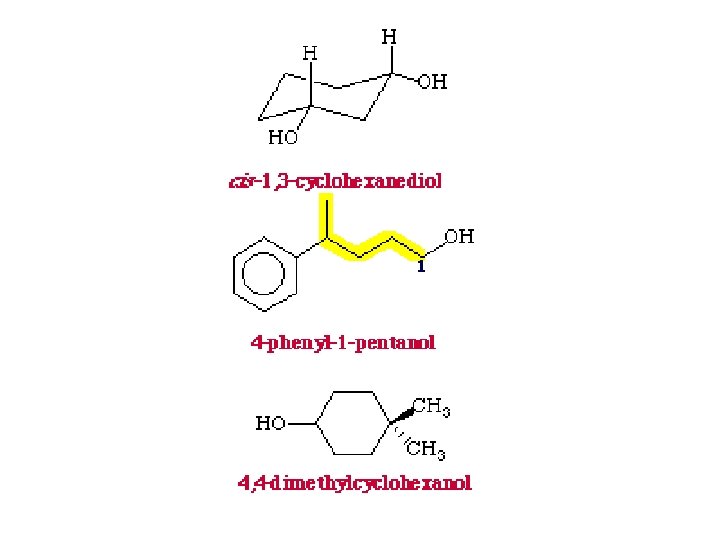
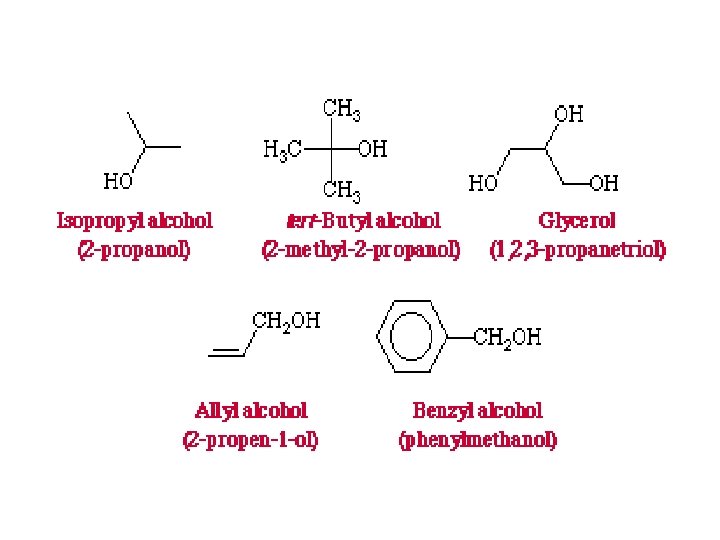
Tata Nama: Al. Kohol n n n OH ditunjukkan oleh akhiran ol Rantai induk adalah rantai terpanjang yang mengandung C-OH Karbon dinomori dari ujung rantai yang terdekat –OH
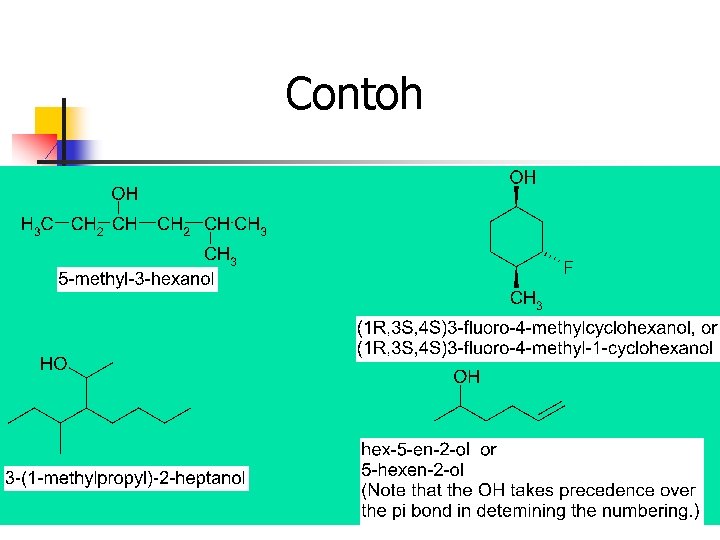
Contoh
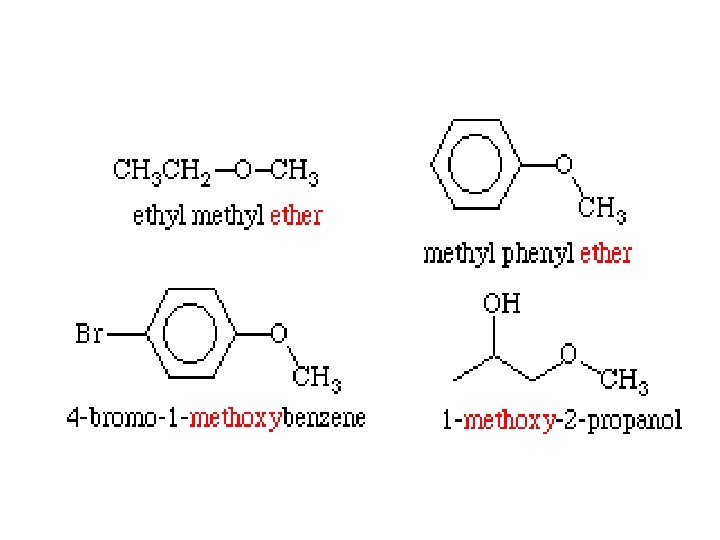
Tata Nama: Eter n n Eter sederhana : nama dua gugus karbon sebagai substituen, diikuti dengan eter Sistematik: nama sebagai alkoksi alkana
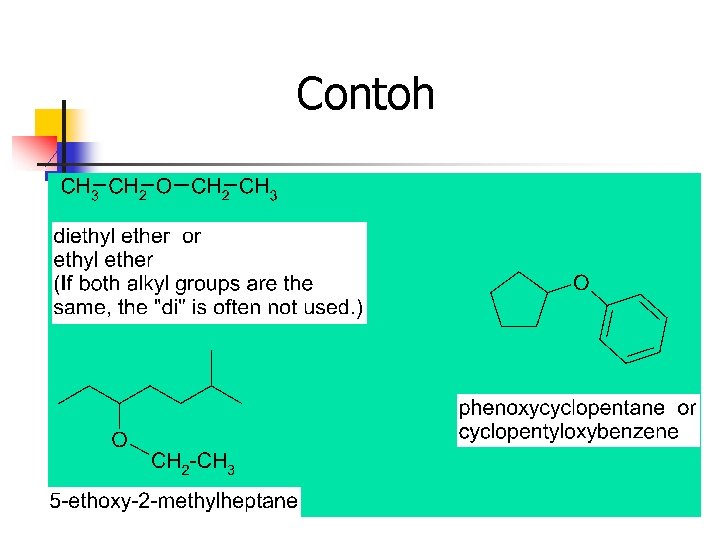
Contoh
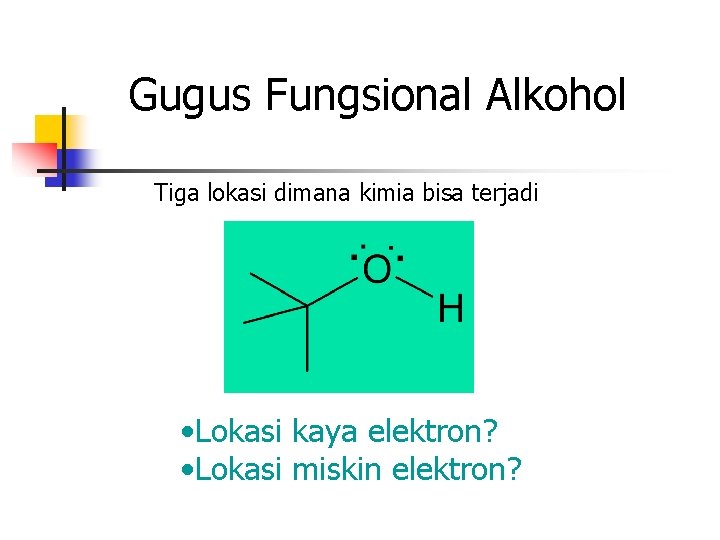
Gugus Fungsional Alkohol Tiga lokasi dimana kimia bisa terjadi • Lokasi kaya elektron? • Lokasi miskin elektron?
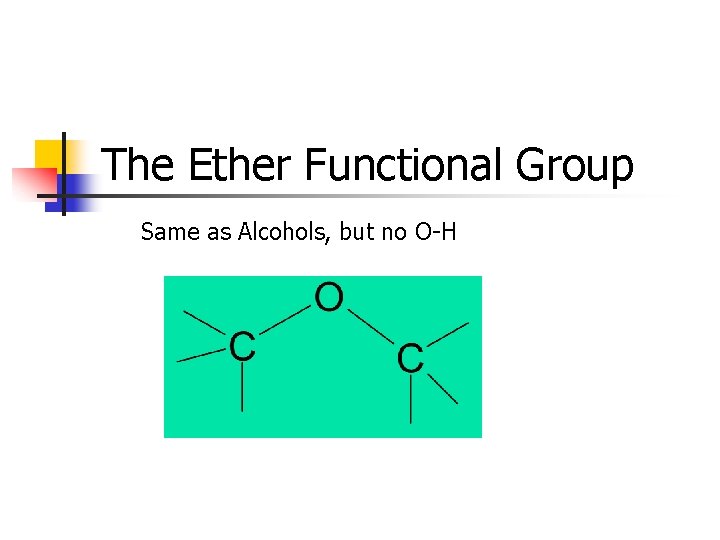
The Ether Functional Group Same as Alcohols, but no O-H
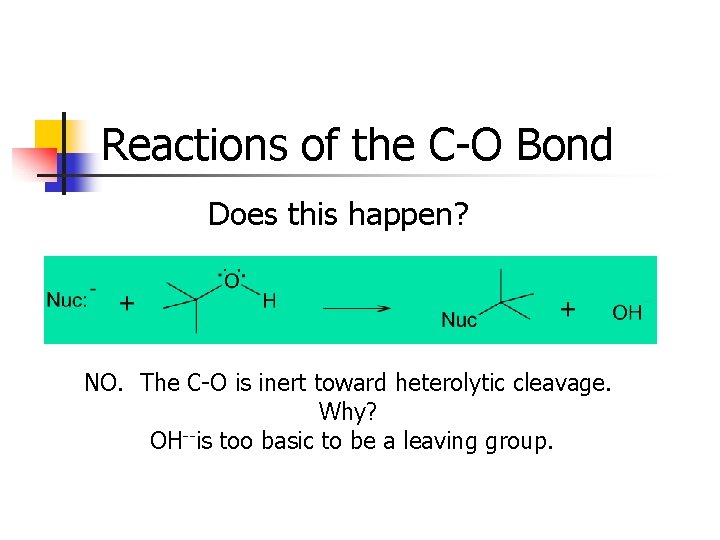
Reactions of the C-O Bond Does this happen? NO. The C-O is inert toward heterolytic cleavage. Why? OH--is too basic to be a leaving group.
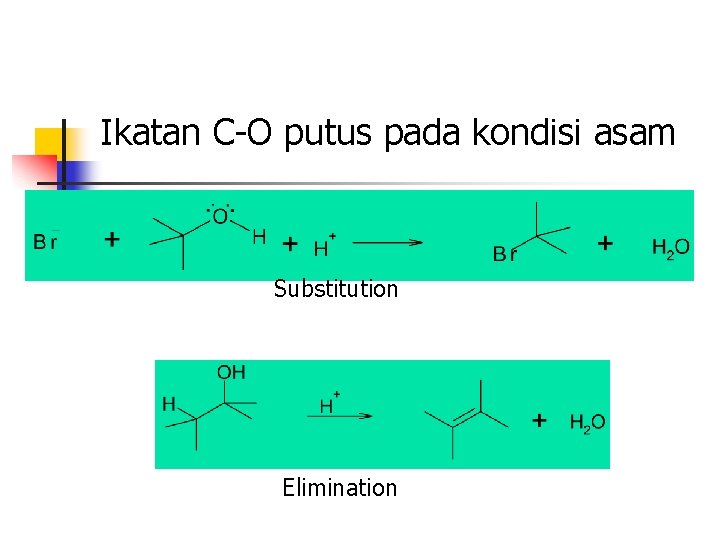
Ikatan C-O putus pada kondisi asam Substitution Elimination
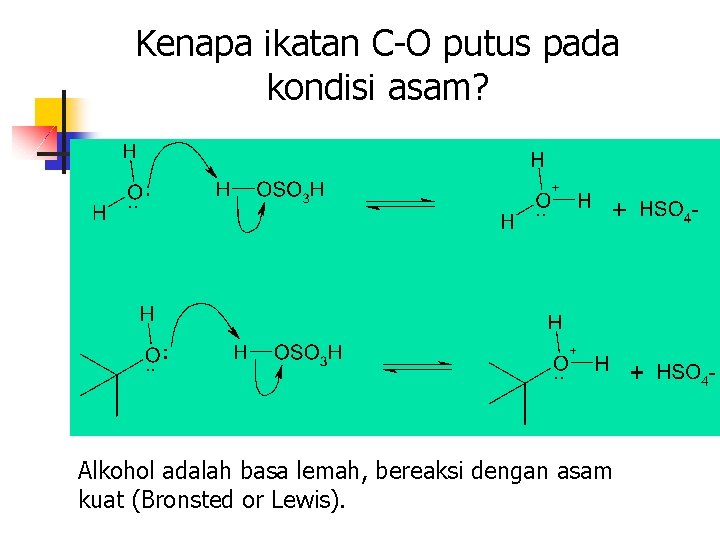
Kenapa ikatan C-O putus pada kondisi asam? Alkohol adalah basa lemah, bereaksi dengan asam kuat (Bronsted or Lewis).
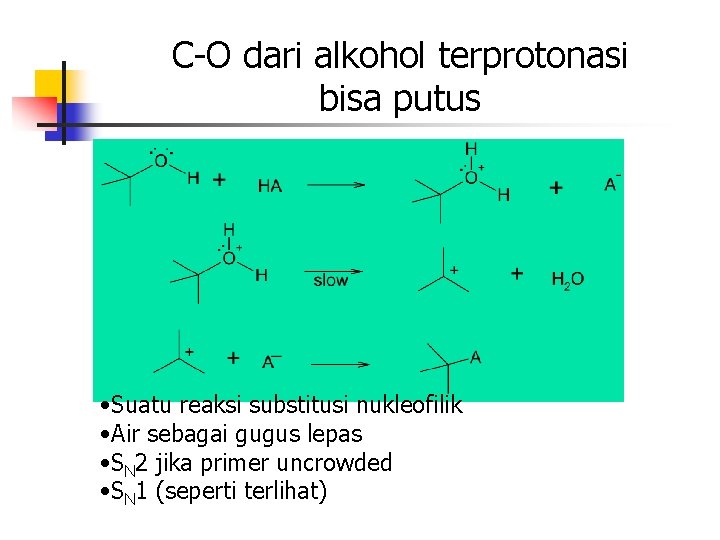
C-O dari alkohol terprotonasi bisa putus • Suatu reaksi substitusi nukleofilik • Air sebagai gugus lepas • SN 2 jika primer uncrowded • SN 1 (seperti terlihat)
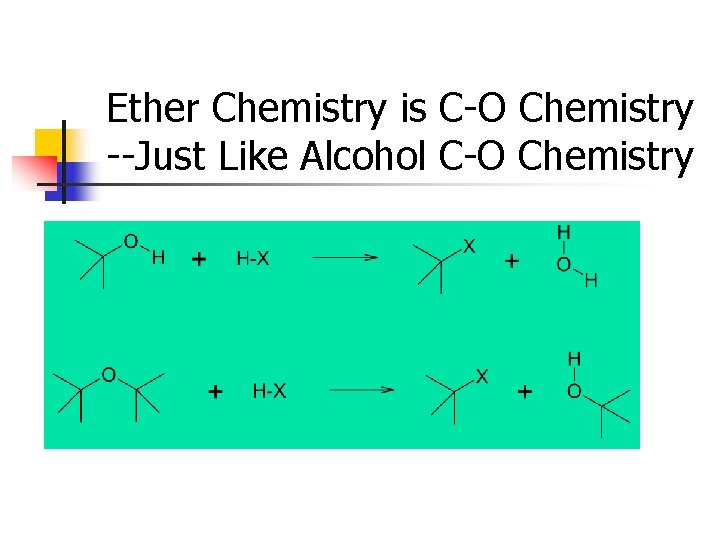
Ether Chemistry is C-O Chemistry --Just Like Alcohol C-O Chemistry
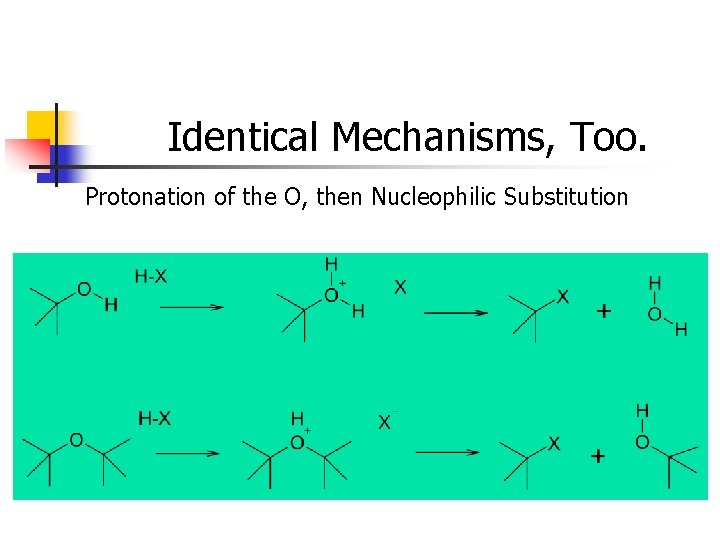
Identical Mechanisms, Too. Protonation of the O, then Nucleophilic Substitution
Predicting the Products n n Ether cleavage is not usually selective; both sets of cleavage products are to be expected. In methyl ethers, the X preferentially attacks the methyl group. In excess HX, both C-O are cleaved, producing water and two C-X bonds. In phenyl ethers, the benzene ring is not attacked, even in excess HX.
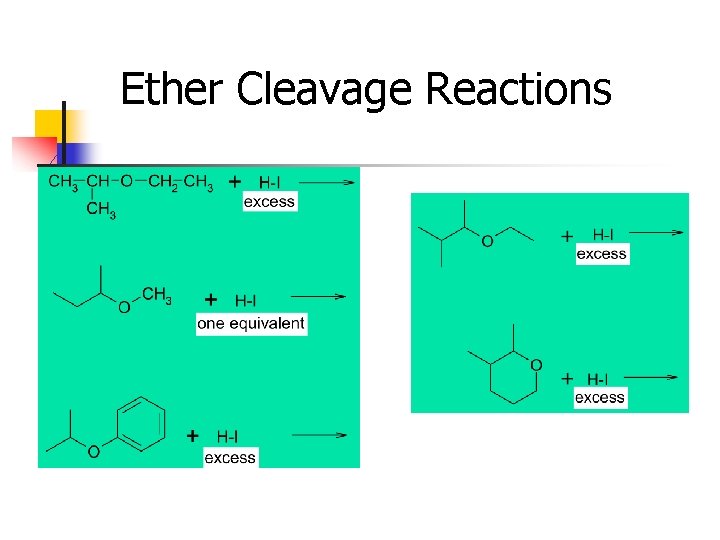
Ether Cleavage Reactions
Alcohol Reactions Not Involving C-O Cleavage Electron-rich oxygen The O-H
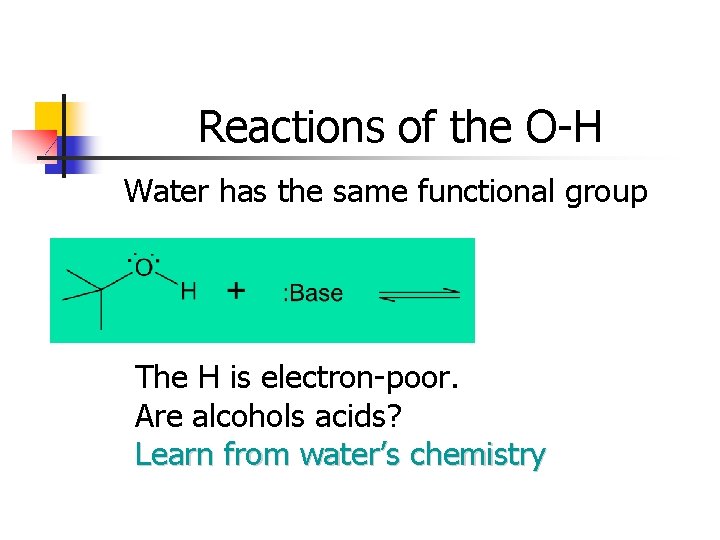
Reactions of the O-H Water has the same functional group The H is electron-poor. Are alcohols acids? Learn from water’s chemistry
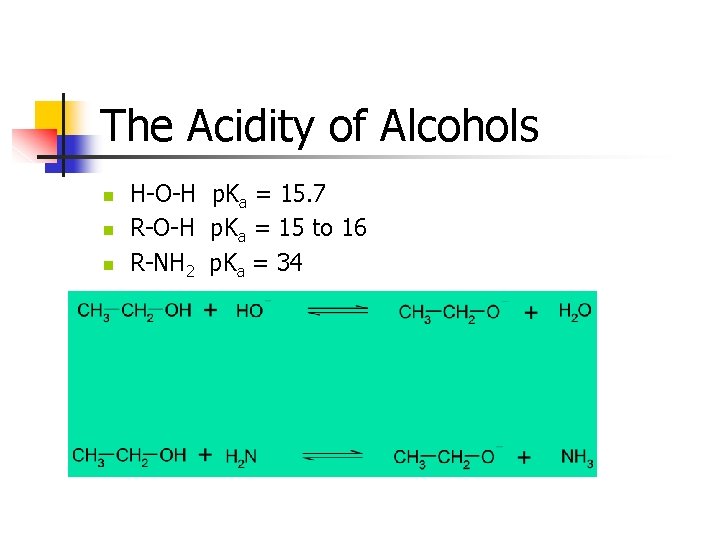
The Acidity of Alcohols n n n H-O-H p. Ka = 15. 7 R-O-H p. Ka = 15 to 16 R-NH 2 p. Ka = 34
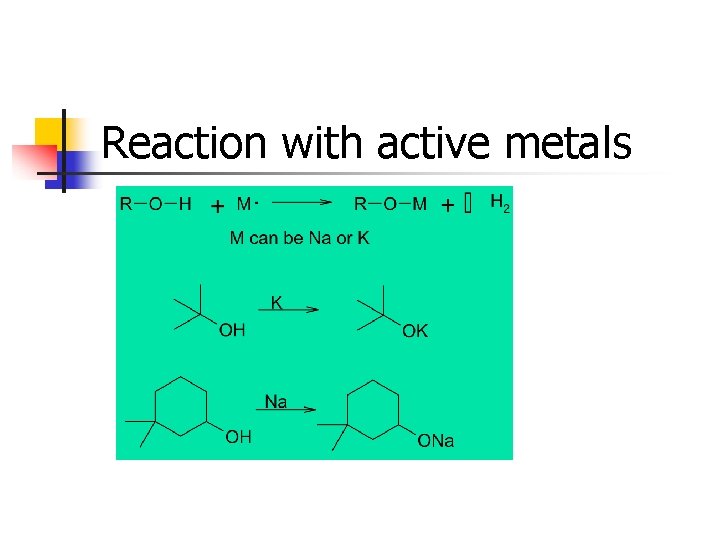
Reaction with active metals
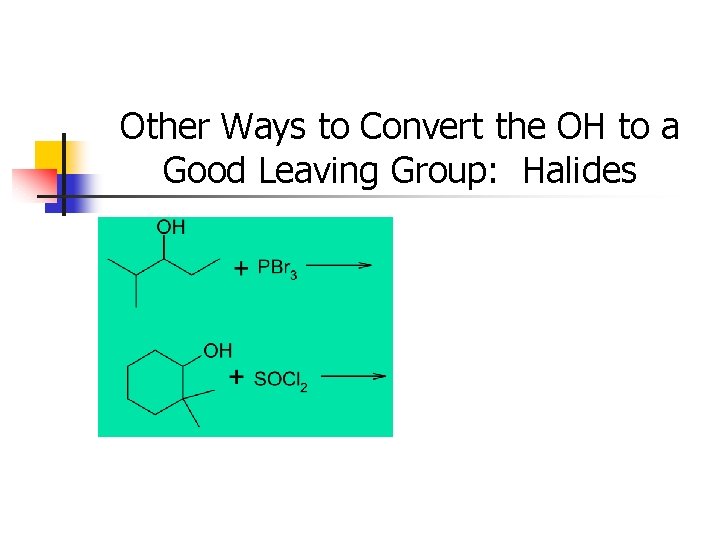
Other Ways to Convert the OH to a Good Leaving Group: Halides
Reactions Using the Lone Electron Pairs of Oxygen Base? Nucleophile?
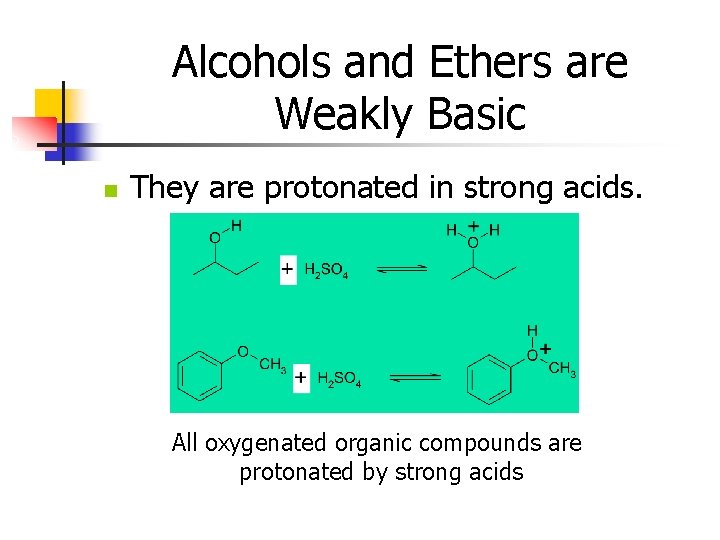
Alcohols and Ethers are Weakly Basic n They are protonated in strong acids. All oxygenated organic compounds are protonated by strong acids
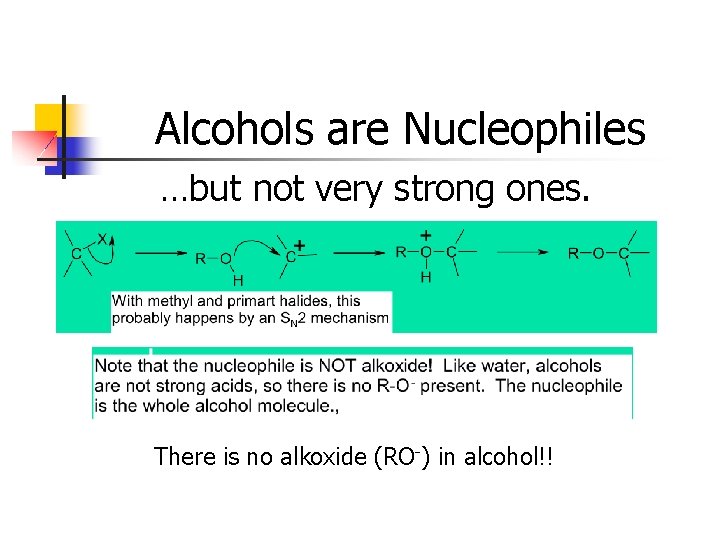
Alcohols are Nucleophiles …but not very strong ones. There is no alkoxide (RO-) in alcohol!!
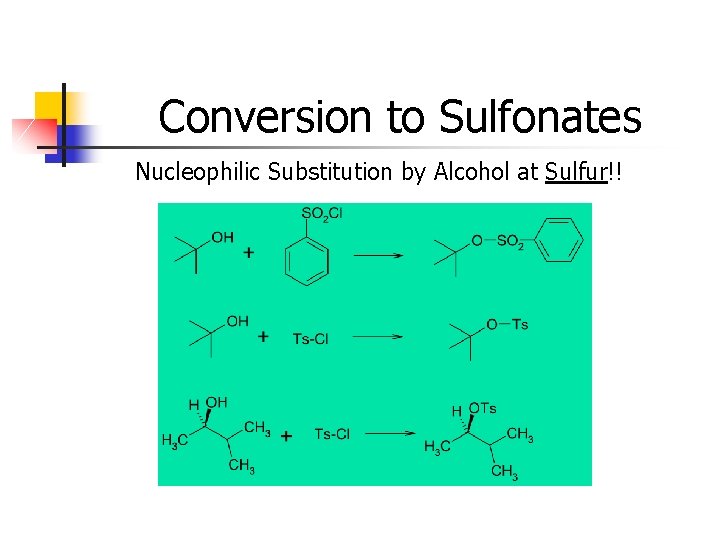
Conversion to Sulfonates Nucleophilic Substitution by Alcohol at Sulfur!!
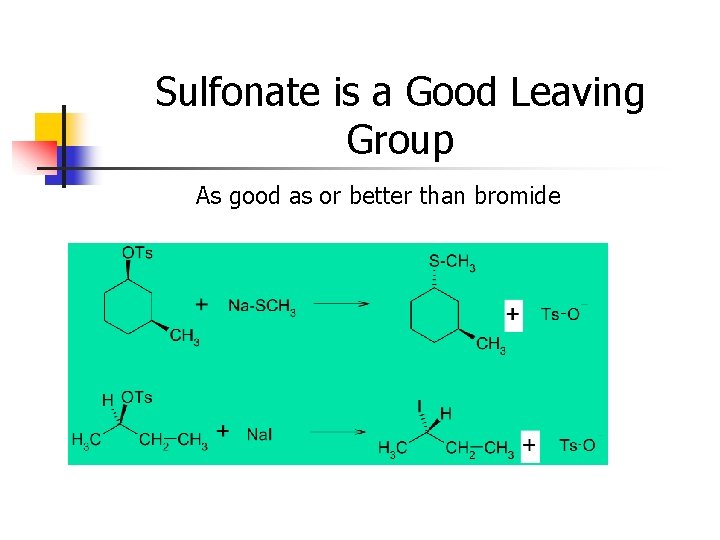
Sulfonate is a Good Leaving Group As good as or better than bromide
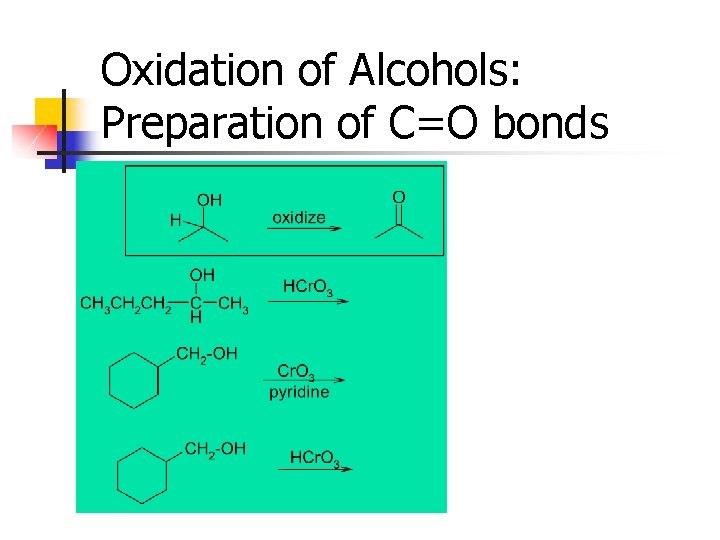
Oxidation of Alcohols: Preparation of C=O bonds
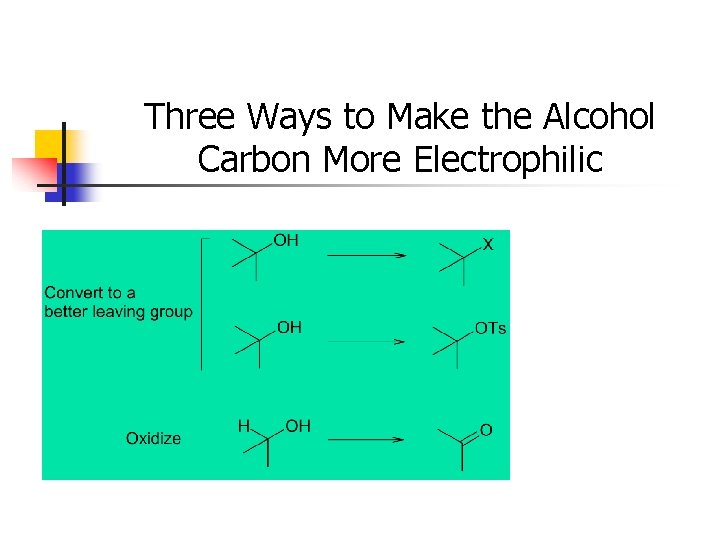
Three Ways to Make the Alcohol Carbon More Electrophilic
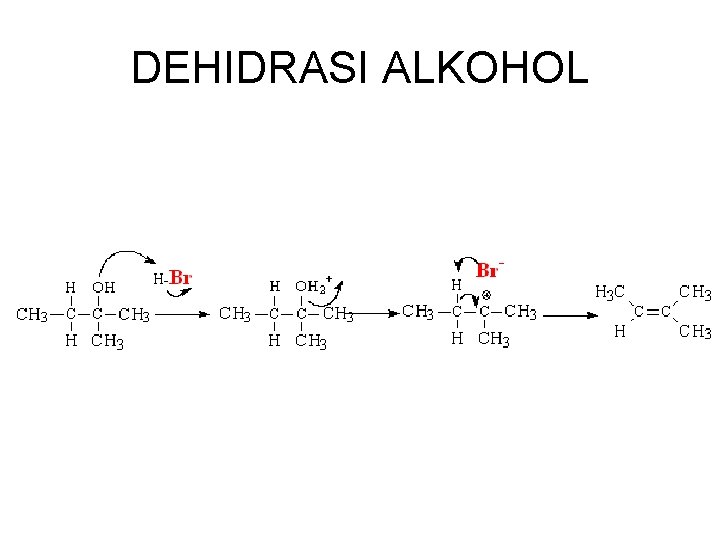
DEHIDRASI ALKOHOL
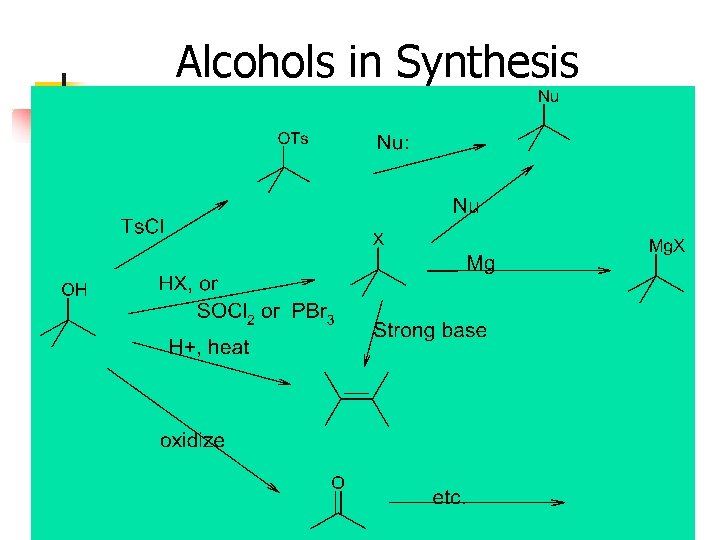
Alcohols in Synthesis
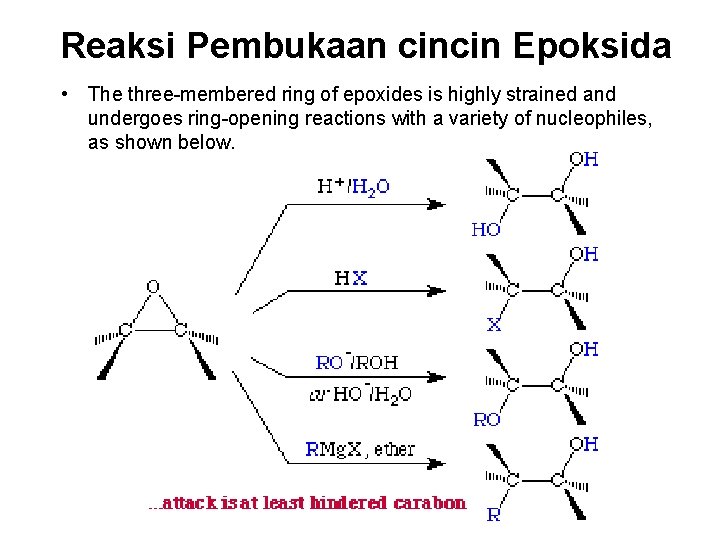
Reaksi Pembukaan cincin Epoksida • The three-membered ring of epoxides is highly strained and undergoes ring-opening reactions with a variety of nucleophiles, as shown below.
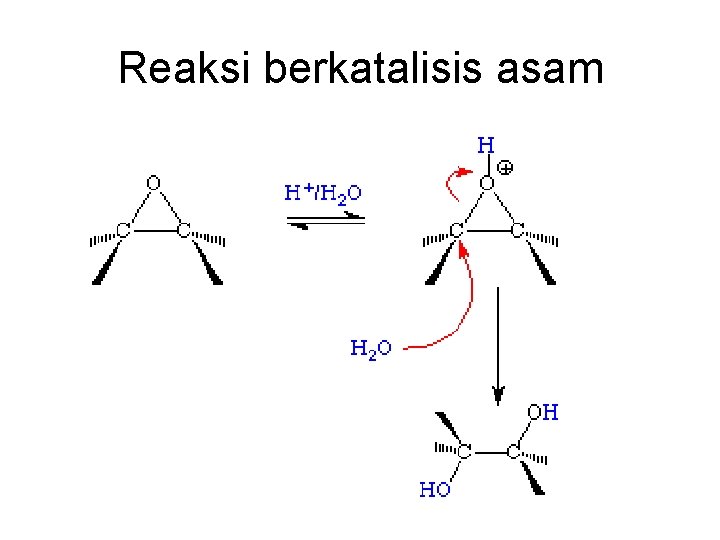
Reaksi berkatalisis asam
- Slides: 34