
Alignment Principles in TKA Balancing the Joint to
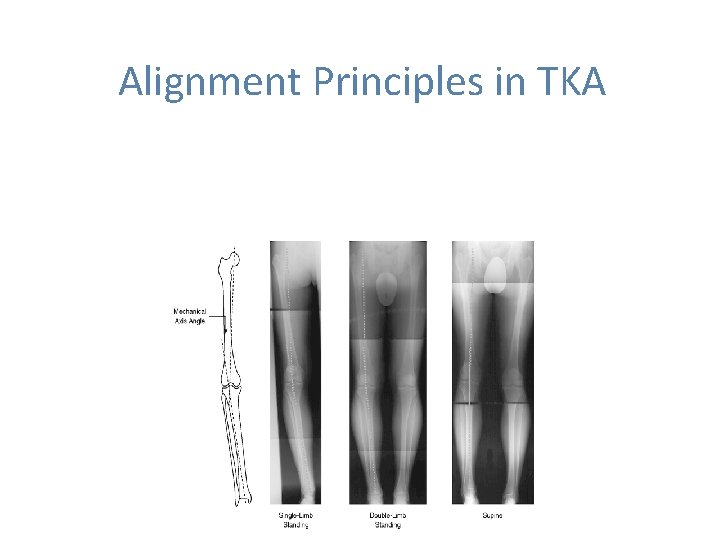
Alignment Principles in TKA
Balancing the Joint to Achieve Limb Alignment TKR is a “soft tissue procedure. ”
Coronal Alignment Choice Since the onset of the modern era of TKA, the commandment has been to align the limb to a neutral mechanical axis.
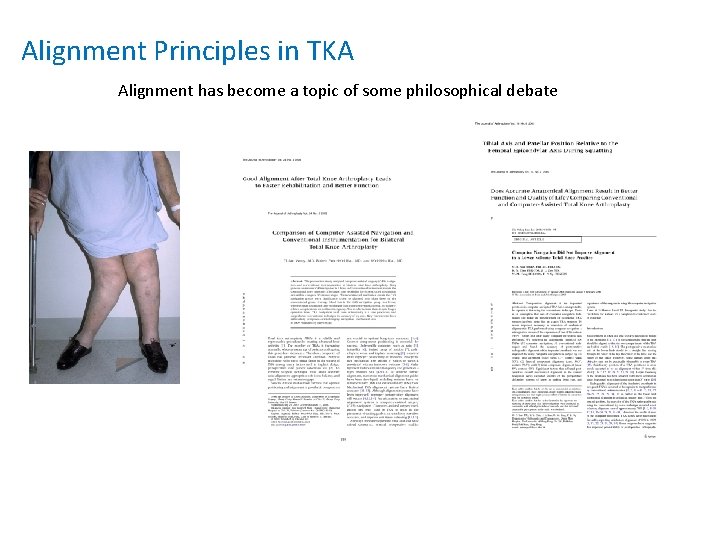
Alignment Principles in TKA Alignment has become a topic of some philosophical debate

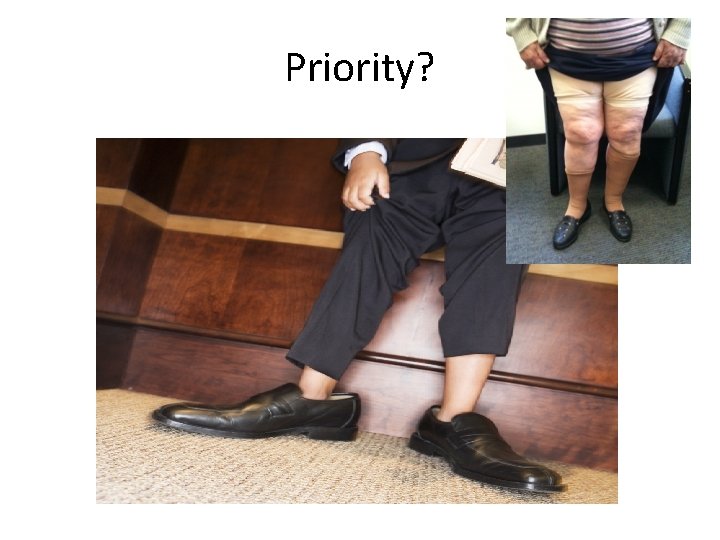
Normal Population Alignment • Neutral MA is quite rare • Limb alignment is distributed around Neutral MA • Only 4 of 180 (2. 2%) knees in normal (non -arthritic) patients had a neutral mechanical axis. • 103 Varus (57. 2%) • 73 Valgus (40. 6%) • Range : 12. 2 Varus – 16. 2 Valgus Eckhoff et al. Three dimensional mechanics, kinematics and morphology of the knee viewed in virtual reality. J Bone Joint Surg Am. 2005; 87; 71 -80
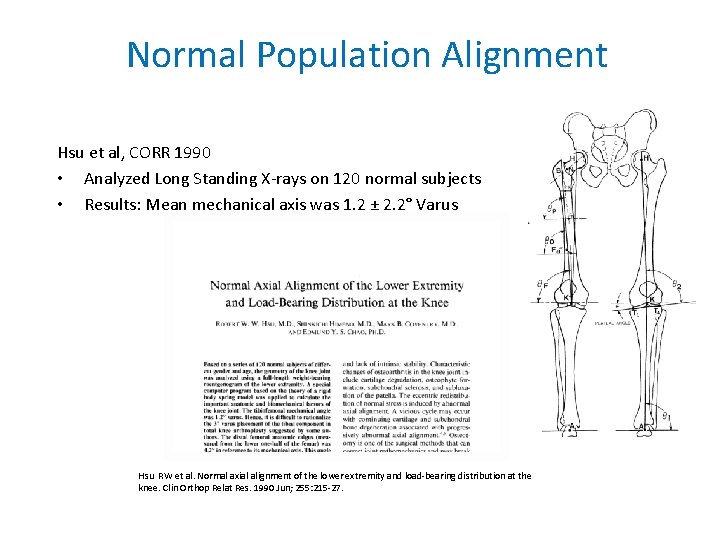
Normal Population Alignment Hsu et al, CORR 1990 • Analyzed Long Standing X-rays on 120 normal subjects • Results: Mean mechanical axis was 1. 2 ± 2. 2° Varus Hsu RW et al. Normal axial alignment of the lower extremity and load-bearing distribution at the knee. Clin Orthop Relat Res. 1990 Jun; 255: 215 -27.
Priority?
Why has neutral mechanical limb alignment been the target? If so few patients have a neutral mechanical limb alignment, why do surgeons want to change patients to that alignment? 1 1. Rudimentary instruments meant accurate preparation and alignment was difficult. 2 2. It was theorized that aligning the limb in a straight line would more evenly distribute the stress to the proximal tibia and tibial implant and bearing surfaces. . References: 1 Eckhoff et al. Three dimensional mechanics, kinematics and morphology of the knee viewed in virtual reality. J Bone Joint Surg Am. 2005; 87; 71 -80. 2 Kinzel V et al. Varus/Valgus alignment of the femur in total knee arthroplasty. Can accuracy be improved by pre-operative CT scanning. The Knee. 2004; 11(3): 197 -201
Why has neutral mechanical limb alignment been used? 3. Standardized target 4. Historically achieved satisfactory results in terms of implant survivorship 5. Coronal post-op x-ray alignment was the historical benchmark for a successful TKR.
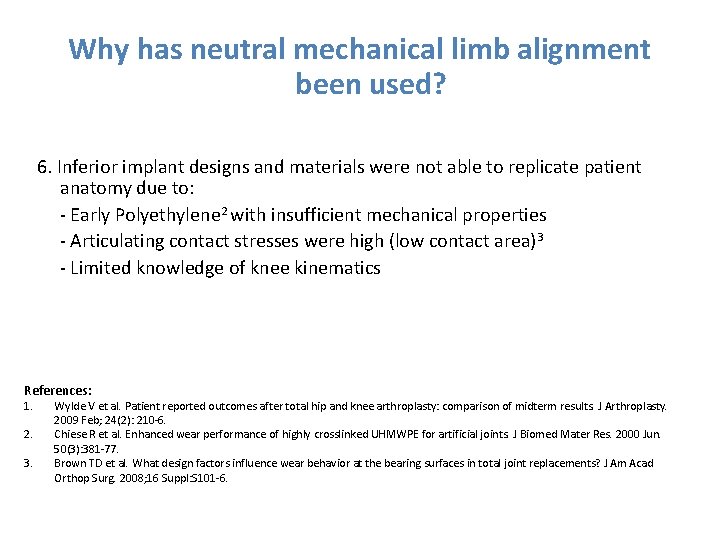
Why has neutral mechanical limb alignment been used? 6. Inferior implant designs and materials were not able to replicate patient anatomy due to: - Early Polyethylene 2 with insufficient mechanical properties - Articulating contact stresses were high (low contact area)3 - Limited knowledge of knee kinematics References: 1. 2. 3. Wylde V et al. Patient reported outcomes after total hip and knee arthroplasty: comparison of midterm results. J Arthroplasty. 2009 Feb; 24(2): 210 -6. Chiese R et al. Enhanced wear performance of highly crosslinked UHMWPE for artificial joints. J Biomed Mater Res. 2000 Jun. 50(3): 381 -77. Brown TD et al. What design factors influence wear behavior at the bearing surfaces in total joint replacements? J Am Acad Orthop Surg. 2008; 16 Suppl: S 101 -6.

Patient Satisfaction following TKA • Knee survivorship and satisfaction are not the same. • 17% to 25% of TKA patients are dissatisfied with their outcome following TKA. 1, 2, 3 1. 2. 3. Baker PN, van der Meulen JH, et al. The role of pain and function in determining patient satisfaction after total knee replacement. Data from the National Joint Registry for England Wales. J Bone Joint Surg Br. 2007; 89(7): 893 -900. Noble PC, Conditt MA, Cook KF et al. The John Insall Award: Patient expectations affect satisfaction with total knee arthroplasty. Clin Orthop Relat Res. 2006 Nov; 452: 35 -43. Wylde V et al. Patient-reported outcomes after total hip and knee arthroplasty: comparison of midterm results. J Arthroplasty. 2009 Feb; 24(2): 210 -6.
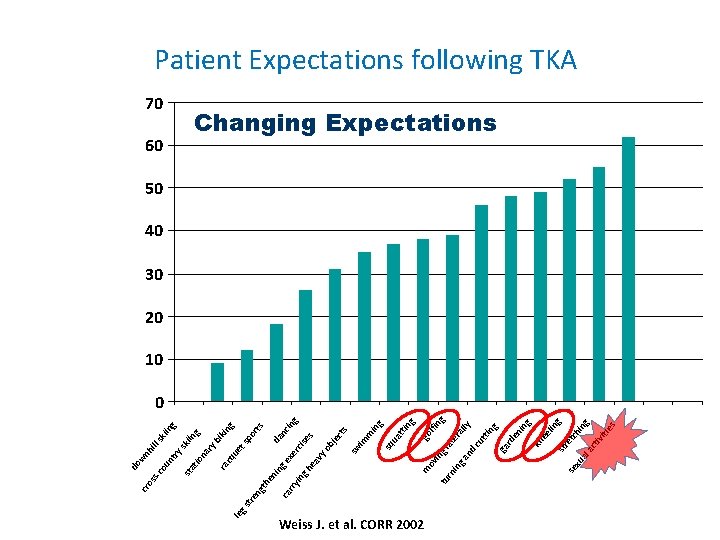
Weiss J. et al. CORR 2002 tu al ng hi lin g g in tie s ivi ac t et c str en ee kn y ng ng tti cu er all at lfi go ga rd an d se xu ng rn i g ng tti ua m in im sq gl in ov m ts ob je c sw vy ea g in nc da rts po ts ng iki rc ise s ge xe in gh in rry ca en th ng gs tre le ue ry b 60 ra cq ng ng kii ry s 70 na sta tio nt ll s kii hi wn do ou s-c os cr Patient Expectations following TKA Changing Expectations 50 40 30 20 10 0
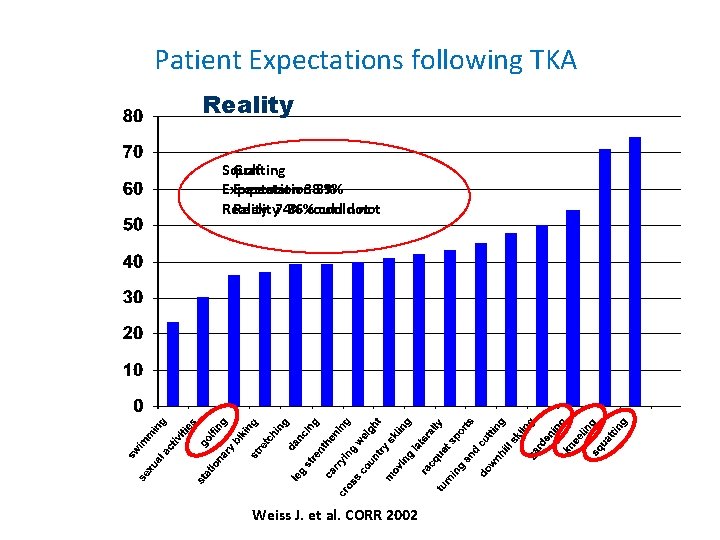
Patient Expectations following TKA Reality Squatting Golf Expectation 3839% % Reality 74% 36%couldnot Weiss J. et al. CORR 2002
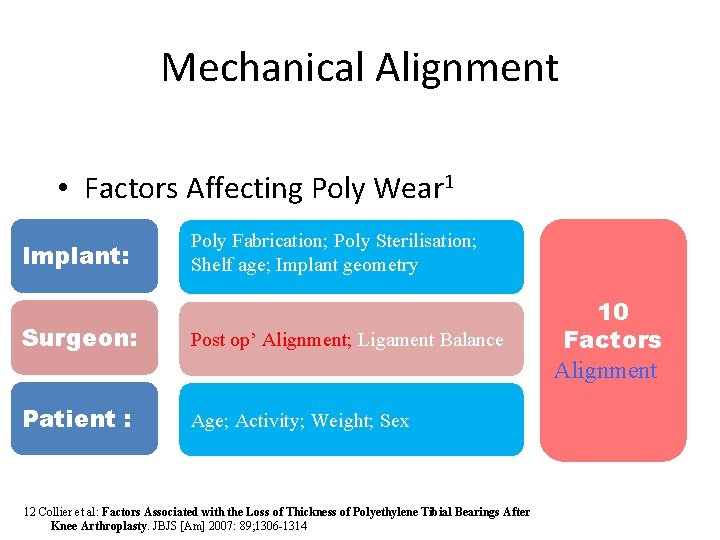
Mechanical Alignment • Factors Affecting Poly Wear 1 Implant: Poly Fabrication; Poly Sterilisation; Shelf age; Implant geometry Surgeon: Post op’ Alignment; Ligament Balance Patient : Age; Activity; Weight; Sex 12 Collier et al: Factors Associated with the Loss of Thickness of Polyethylene Tibial Bearings After Knee Arthroplasty. JBJS [Am] 2007: 89; 1306 -1314 10 Factors Alignment

What is the mechanical axis? and Why has it been historically referenced?
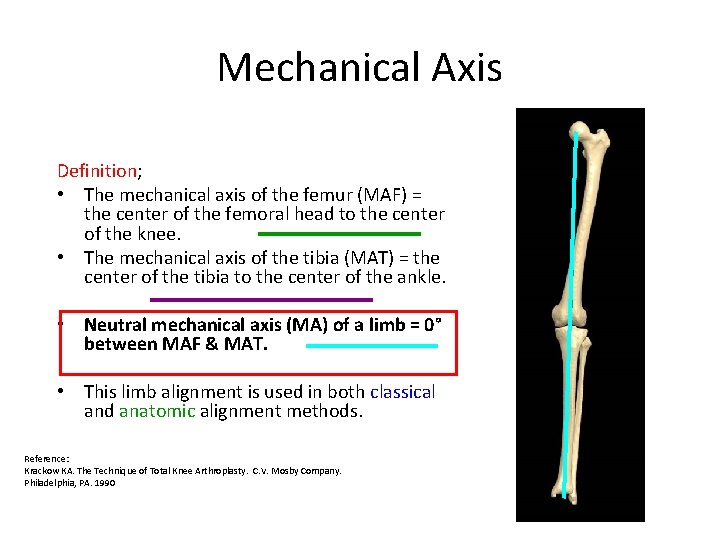
Mechanical Axis Definition; • The mechanical axis of the femur (MAF) = the center of the femoral head to the center of the knee. • The mechanical axis of the tibia (MAT) = the center of the tibia to the center of the ankle. • Neutral mechanical axis (MA) of a limb = 0° between MAF & MAT. • This limb alignment is used in both classical and anatomic alignment methods. Reference: Krackow KA. The Technique of Total Knee Arthroplasty. C. V. Mosby Company. Philadelphia, PA. 1990
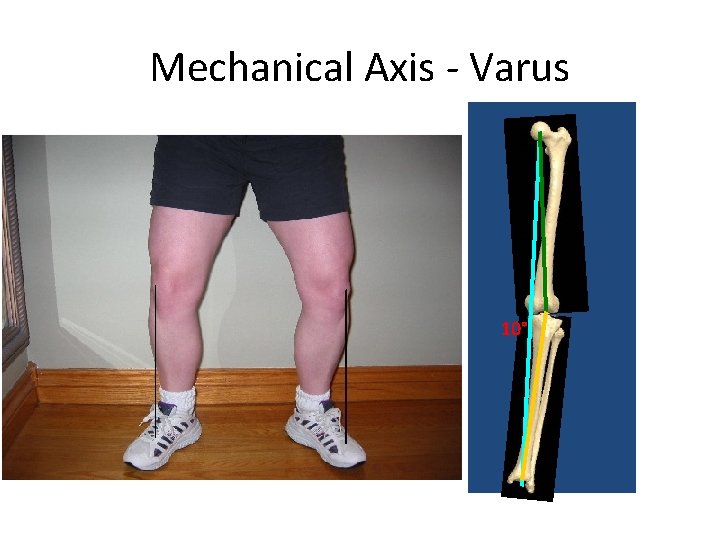
Mechanical Axis - Varus 10°
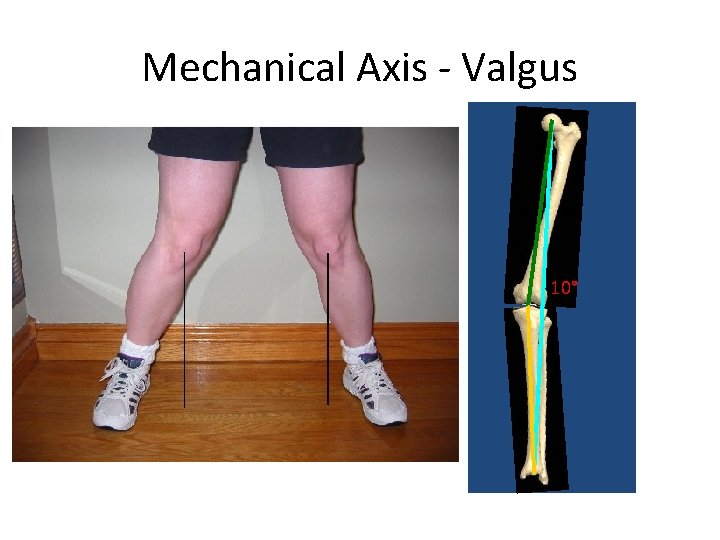
Mechanical Axis - Valgus 10°

What are Classical and Anatomic Alignment?
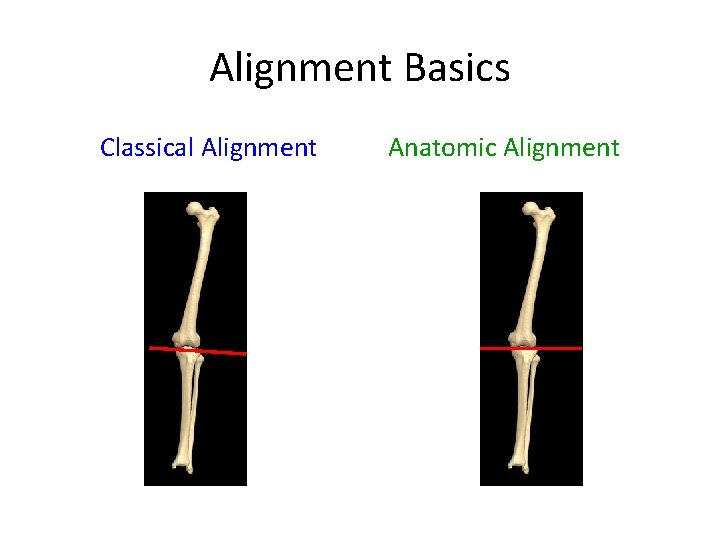
Alignment Basics Classical Alignment Anatomic Alignment
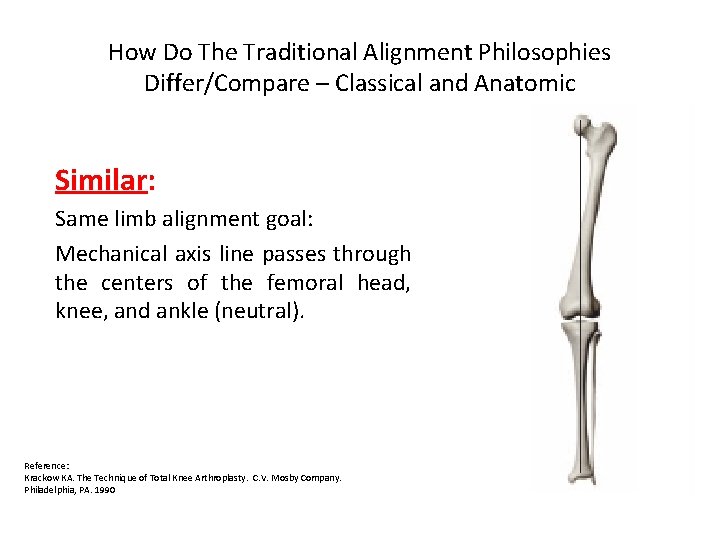
How Do The Traditional Alignment Philosophies Differ/Compare – Classical and Anatomic Similar: Same limb alignment goal: Mechanical axis line passes through the centers of the femoral head, knee, and ankle (neutral). Reference: Krackow KA. The Technique of Total Knee Arthroplasty. C. V. Mosby Company. Philadelphia, PA. 1990
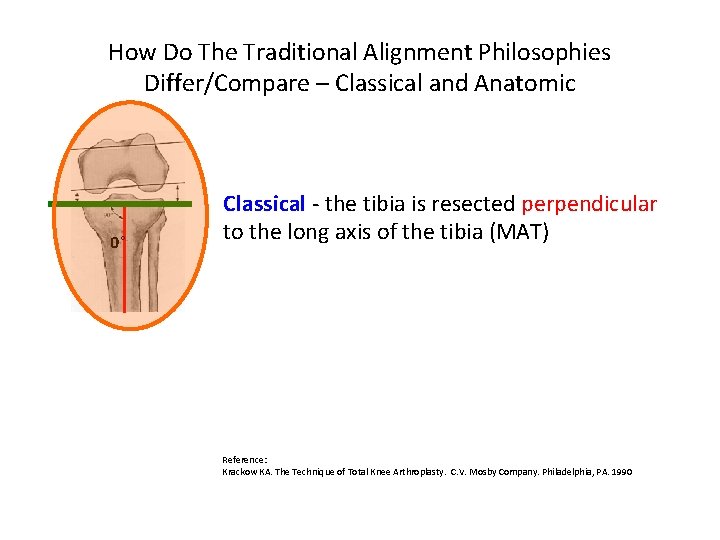
How Do The Traditional Alignment Philosophies Differ/Compare – Classical and Anatomic 0° Classical - the tibia is resected perpendicular to the long axis of the tibia (MAT) Reference: Krackow KA. The Technique of Total Knee Arthroplasty. C. V. Mosby Company. Philadelphia, PA. 1990
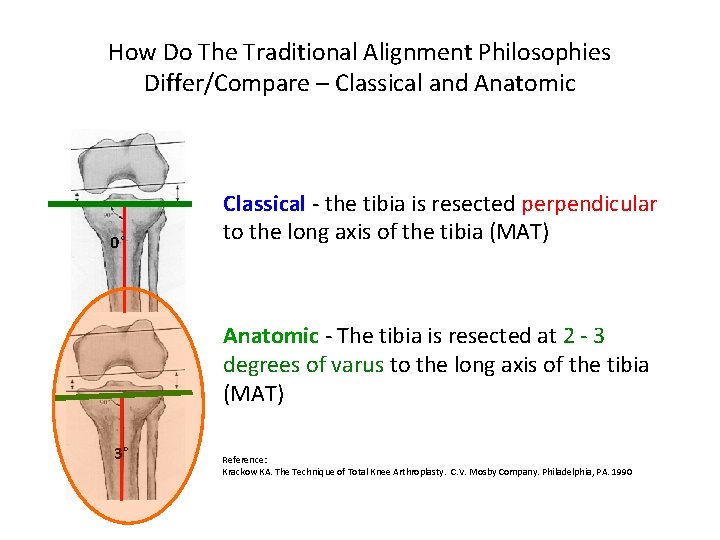
How Do The Traditional Alignment Philosophies Differ/Compare – Classical and Anatomic 0° Classical - the tibia is resected perpendicular to the long axis of the tibia (MAT) Anatomic - The tibia is resected at 2 - 3 degrees of varus to the long axis of the tibia (MAT) 3° Reference: Krackow KA. The Technique of Total Knee Arthroplasty. C. V. Mosby Company. Philadelphia, PA. 1990
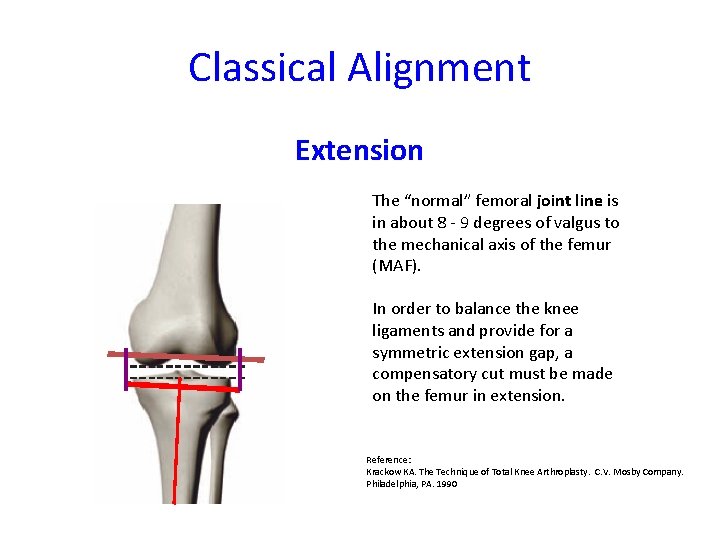
Classical Alignment Extension The “normal” femoral joint line is in about 8 - 9 degrees of valgus to the mechanical axis of the femur (MAF). In order to balance the knee ligaments and provide for a symmetric extension gap, a compensatory cut must be made on the femur in extension. Reference: Krackow KA. The Technique of Total Knee Arthroplasty. C. V. Mosby Company. Philadelphia, PA. 1990
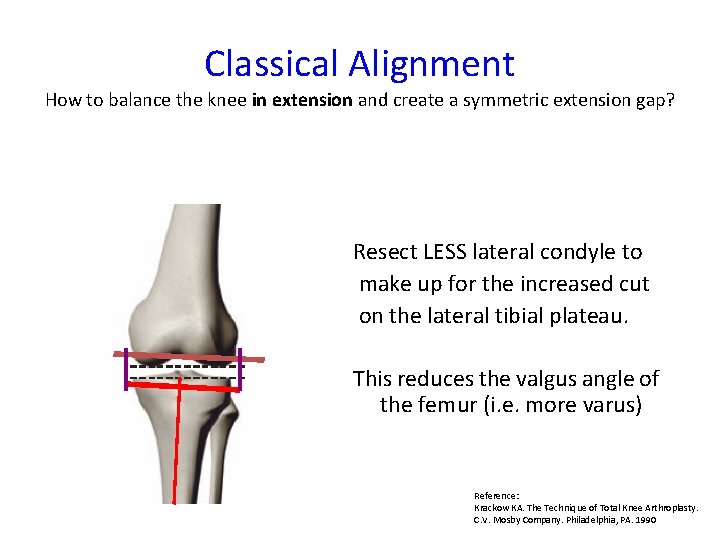
Classical Alignment How to balance the knee in extension and create a symmetric extension gap? Resect LESS lateral condyle to make up for the increased cut on the lateral tibial plateau. This reduces the valgus angle of the femur (i. e. more varus) Reference: Krackow KA. The Technique of Total Knee Arthroplasty. C. V. Mosby Company. Philadelphia, PA. 1990
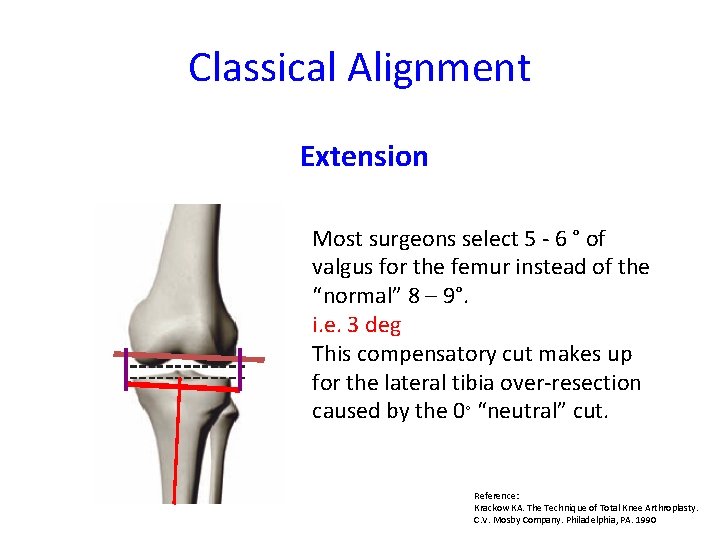
Classical Alignment Extension Most surgeons select 5 - 6 ° of valgus for the femur instead of the “normal” 8 – 9°. i. e. 3 deg This compensatory cut makes up for the lateral tibia over-resection caused by the 0° “neutral” cut. Reference: Krackow KA. The Technique of Total Knee Arthroplasty. C. V. Mosby Company. Philadelphia, PA. 1990
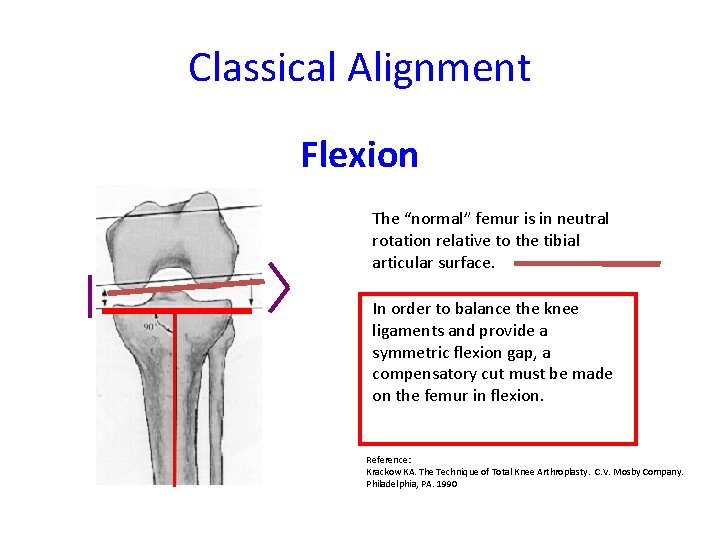
Classical Alignment Flexion The “normal” femur is in neutral rotation relative to the tibial articular surface. In order to balance the knee ligaments and provide a symmetric flexion gap, a compensatory cut must be made on the femur in flexion. Reference: Krackow KA. The Technique of Total Knee Arthroplasty. C. V. Mosby Company. Philadelphia, PA. 1990
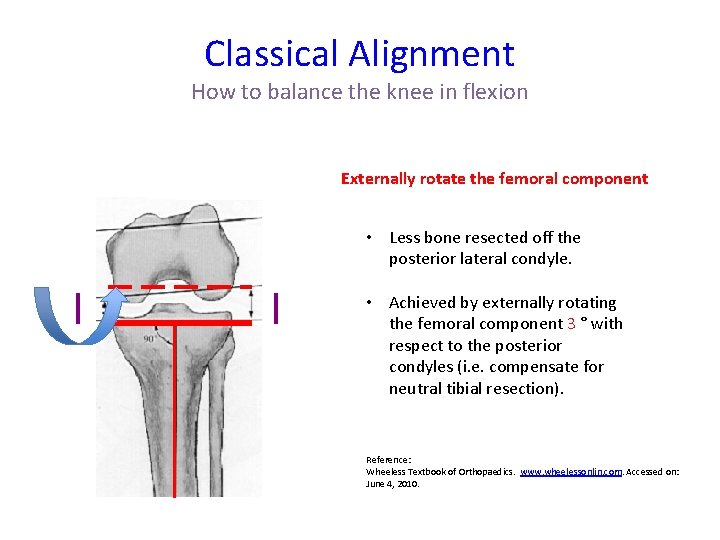
Classical Alignment How to balance the knee in flexion Externally rotate the femoral component • Less bone resected off the posterior lateral condyle. • Achieved by externally rotating the femoral component 3 ° with respect to the posterior condyles (i. e. compensate for neutral tibial resection). Reference: Wheeless Textbook of Orthopaedics. www. wheelessonlin. com. Accessed on: June 4, 2010.
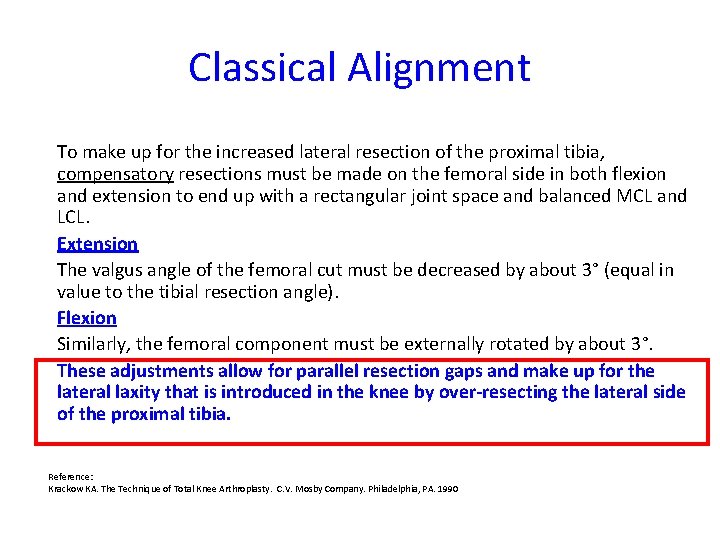
Classical Alignment To make up for the increased lateral resection of the proximal tibia, compensatory resections must be made on the femoral side in both flexion and extension to end up with a rectangular joint space and balanced MCL and LCL. Extension The valgus angle of the femoral cut must be decreased by about 3° (equal in value to the tibial resection angle). Flexion Similarly, the femoral component must be externally rotated by about 3°. These adjustments allow for parallel resection gaps and make up for the lateral laxity that is introduced in the knee by over-resecting the lateral side of the proximal tibia. Reference: Krackow KA. The Technique of Total Knee Arthroplasty. C. V. Mosby Company. Philadelphia, PA. 1990
Classical Alignment 1. Perpendicular cut on the proximal tibia - 90° to the MAT 2. Compensatory cuts are required on the femur. 3. Require soft tissue balancing since the limb is usually being aligned to a position that the patient never had. 4. Referencing worn joint surfaces which often moves the joint line. 5. Most widely used alignment technique in TKR - both conventional and navigated. Reference: Krackow KA. The Technique of Total Knee Arthroplasty. C. V. Mosby Company. Philadelphia, PA. 1990
Anatomic Alignment 1. Anatomic alignment tries to replicate the “average” joint line alignment of the lower limb. 2. The “average” tibia is in 2 - 3 ° of varus with respect to the MAT and the “average” femur is in 8 - 9 ° of valgus with respect to the MAF. 1 3. Like classical alignment, on average this results in a neutral mechanical limb alignment. 1 Reference: Krackow KA. The Technique of Total Knee Arthroplasty. C. V. Mosby Company. Philadelphia, PA. 1990
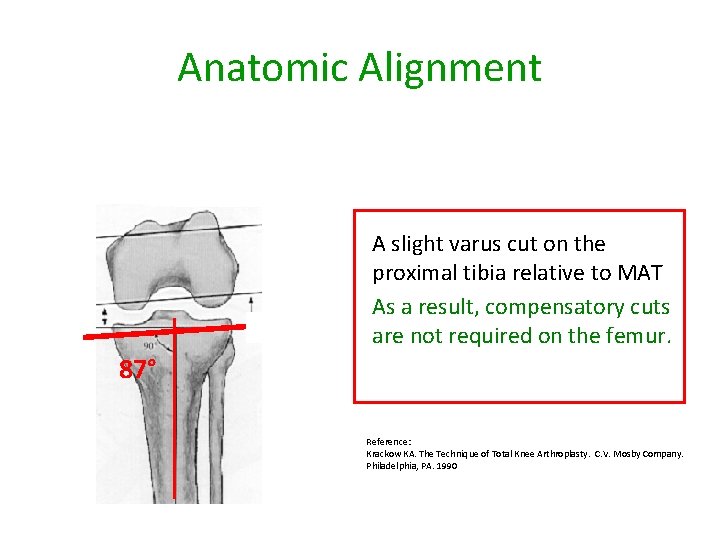
Anatomic Alignment A slight varus cut on the proximal tibia relative to MAT As a result, compensatory cuts are not required on the femur. 87° Reference: Krackow KA. The Technique of Total Knee Arthroplasty. C. V. Mosby Company. Philadelphia, PA. 1990
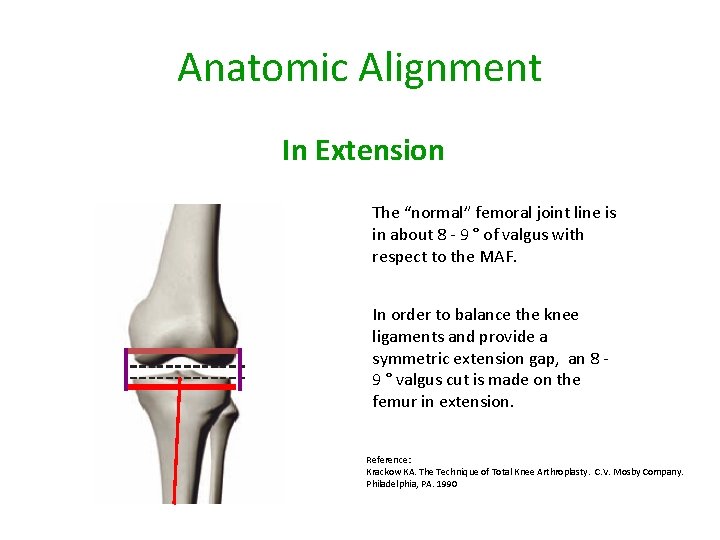
Anatomic Alignment In Extension The “normal” femoral joint line is in about 8 - 9 ° of valgus with respect to the MAF. In order to balance the knee ligaments and provide a symmetric extension gap, an 8 9 ° valgus cut is made on the femur in extension. Reference: Krackow KA. The Technique of Total Knee Arthroplasty. C. V. Mosby Company. Philadelphia, PA. 1990
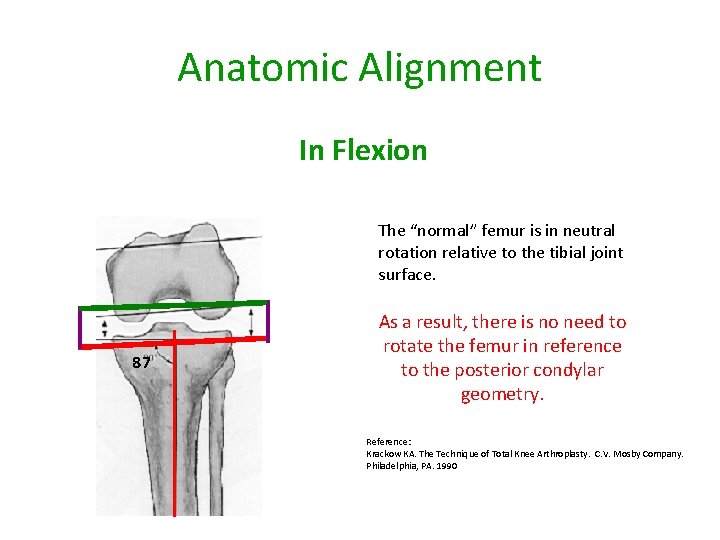
Anatomic Alignment In Flexion The “normal” femur is in neutral rotation relative to the tibial joint surface. 87 As a result, there is no need to rotate the femur in reference to the posterior condylar geometry. Reference: Krackow KA. The Technique of Total Knee Arthroplasty. C. V. Mosby Company. Philadelphia, PA. 1990
Anatomic Alignment 1. Varus cut on the proximal tibia mimicking “average” anatomy (tibial joint line). 2. Anatomic cuts on the femur (referencing femoral joint line). 3. May require soft tissue balancing to obtain neutral mechanical limb alignment. 4. Referencing worn joint surfaces which often moves the joint line. 5. NOT widely used due to 1. historic difficulty in accurately reproducing a 3 ° tibial cut 2. historic concerns about varus tibias causing Poly wear

Which alignment philosophy is more commonly used?
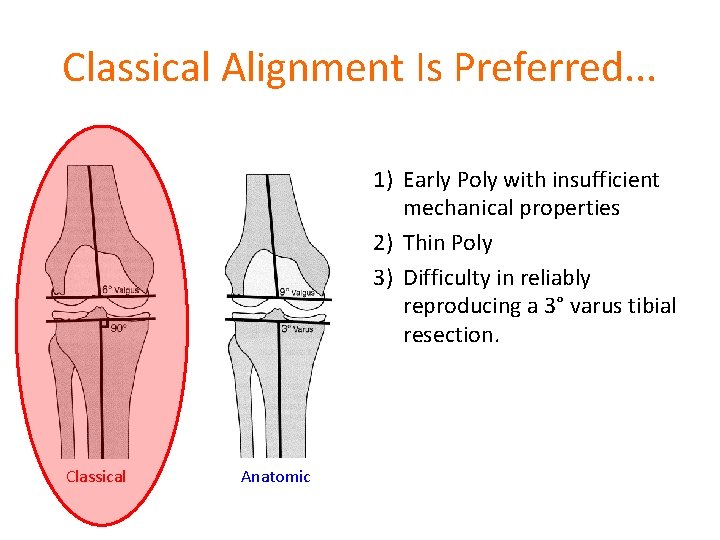
Classical Alignment Is Preferred. . . 1) Early Poly with insufficient mechanical properties 2) Thin Poly 3) Difficulty in reliably reproducing a 3° varus tibial resection. Classical Anatomic
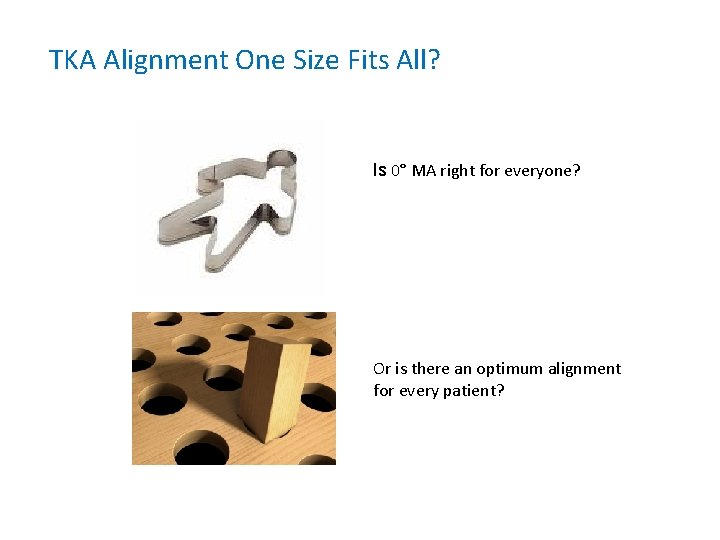
TKA Alignment One Size Fits All? Is 0° MA right for everyone? Or is there an optimum alignment for every patient?
Kinematic Alignment Neutral Mechanical Alignment – A Requirement for Successful TKA? Interestingly, 32% of males and 17% of females had constitutional varus knees with a natural mechanical axis ≥ 3˚ varus. Restoring neutral alignment would be abnormal and unphysiological for them. . . …Based upon our study, we believe it is not logical to restore the leg into neutral alignment for all cases. Bellemans, Current concepts Joint Replacements 2010
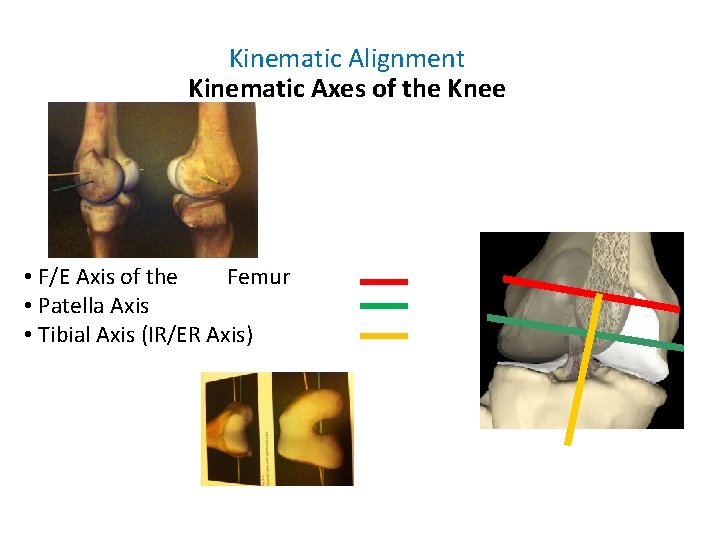
Kinematic Alignment Kinematic Axes of the Knee • F/E Axis of the Femur • Patella Axis • Tibial Axis (IR/ER Axis)
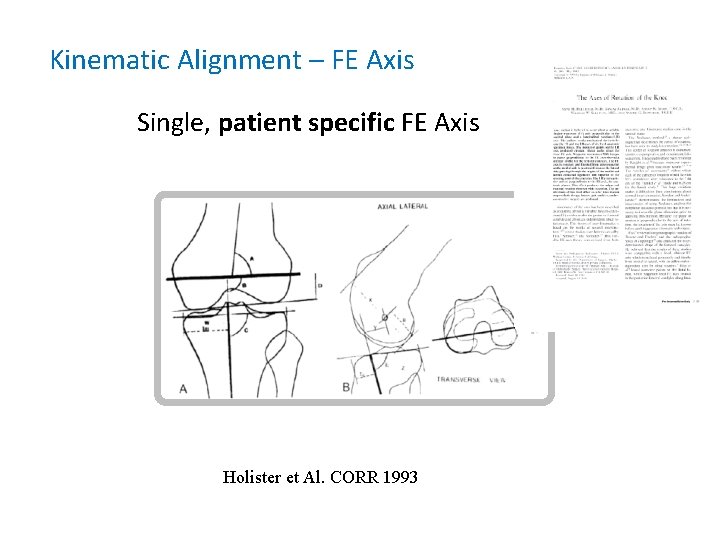
Kinematic Alignment – FE Axis Single, patient specific FE Axis Holister et Al. CORR 1993
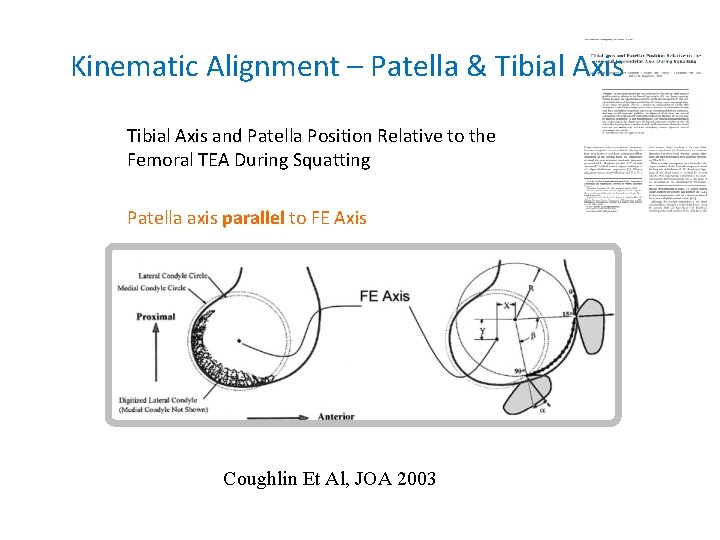
Kinematic Alignment – Patella & Tibial Axis and Patella Position Relative to the Femoral TEA During Squatting Patella axis parallel to FE Axis Coughlin Et Al, JOA 2003
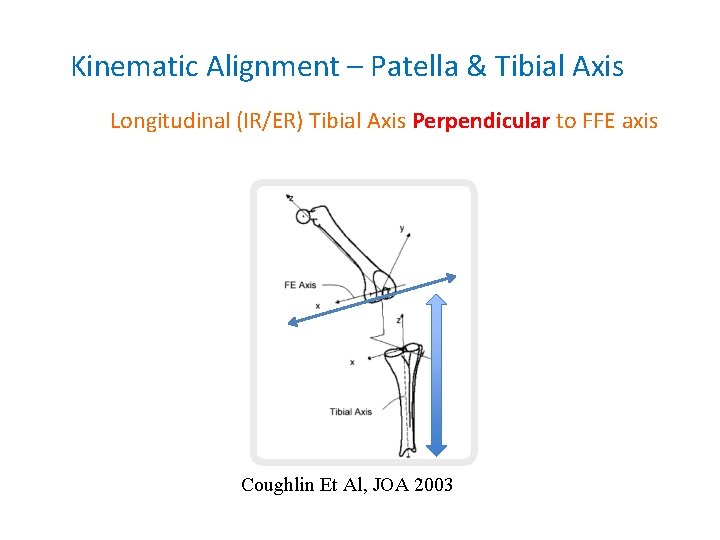
Kinematic Alignment – Patella & Tibial Axis Longitudinal (IR/ER) Tibial Axis Perpendicular to FFE axis Coughlin Et Al, JOA 2003
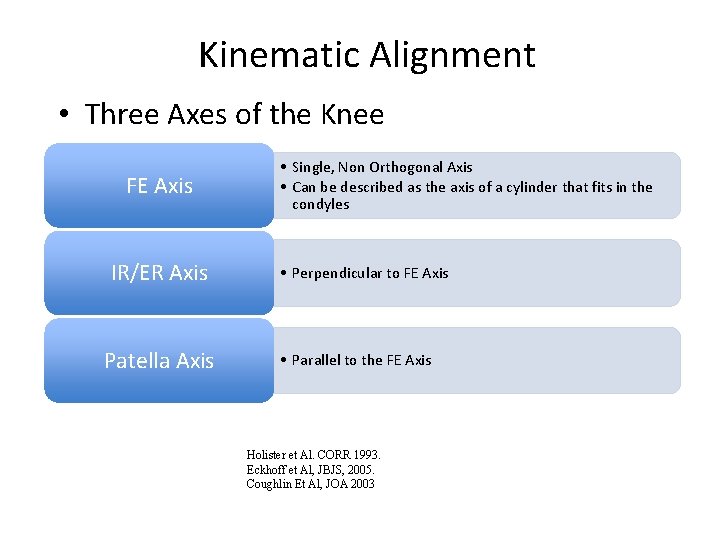
Kinematic Alignment • Three Axes of the Knee FE Axis IR/ER Axis Patella Axis • Single, Non Orthogonal Axis • Can be described as the axis of a cylinder that fits in the condyles • Perpendicular to FE Axis • Parallel to the FE Axis Holister et Al. CORR 1993. Eckhoff et Al, JBJS, 2005. Coughlin Et Al, JOA 2003
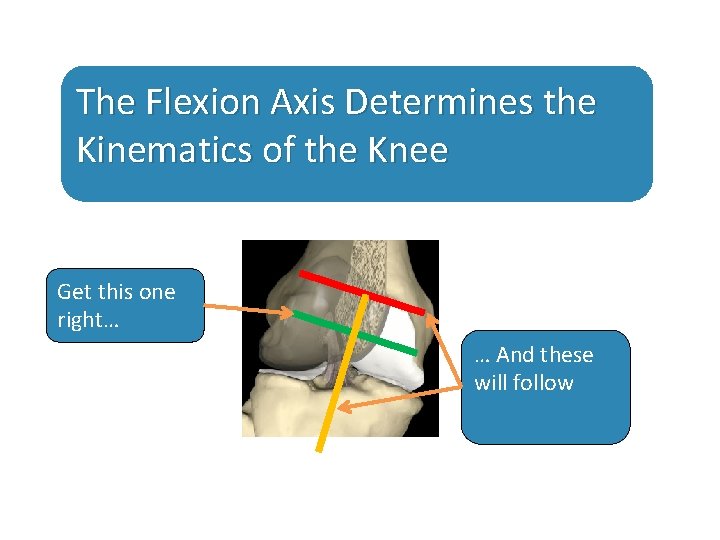
The Flexion Axis Determines the Kinematics of the Knee Get this one right… … And these will follow can we find it? ? )
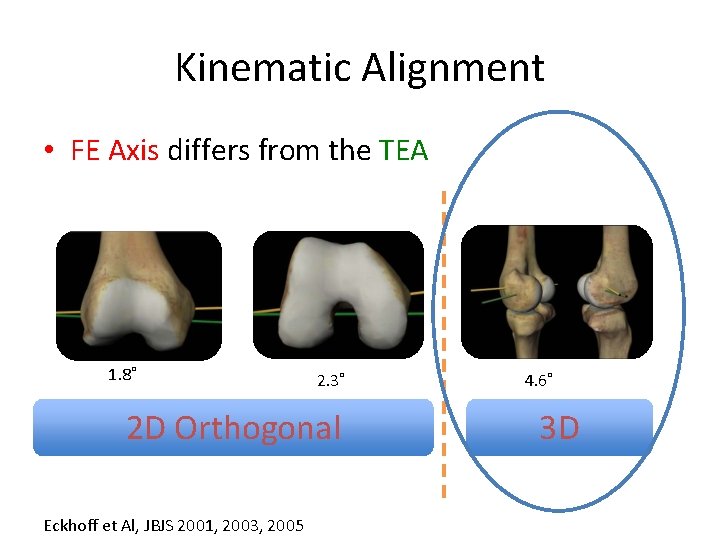
Kinematic Alignment • FE Axis differs from the TEA 1. 8˚ 2. 3˚ 2 D Orthogonal Eckhoff et Al, JBJS 2001, 2003, 2005 4. 6˚ 3 D
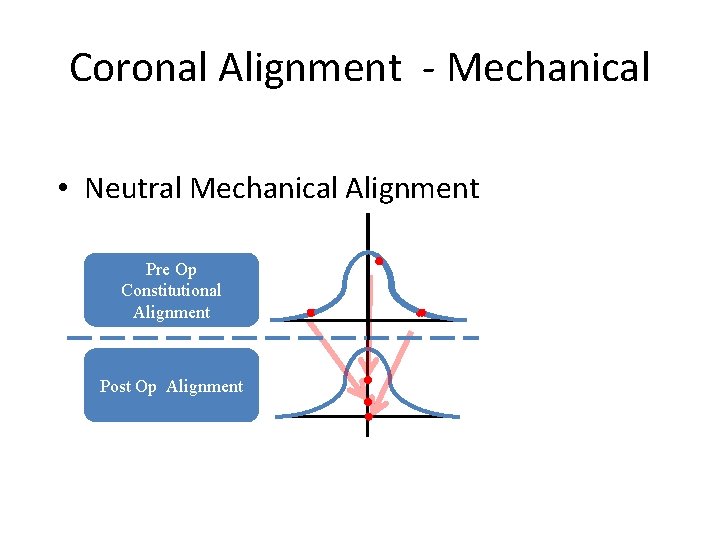
Coronal Alignment - Mechanical • Neutral Mechanical Alignment Pre Op Constitutional Alignment Post Op Alignment
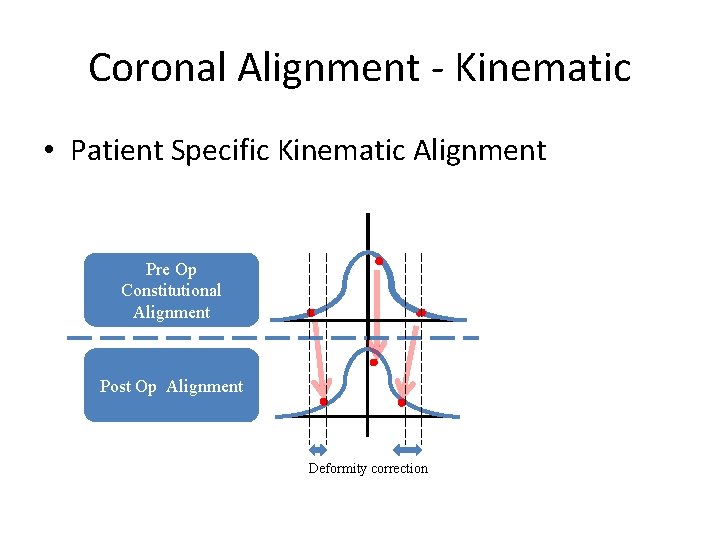
Coronal Alignment - Kinematic • Patient Specific Kinematic Alignment Pre Op Constitutional Alignment Post Op Alignment Deformity correction
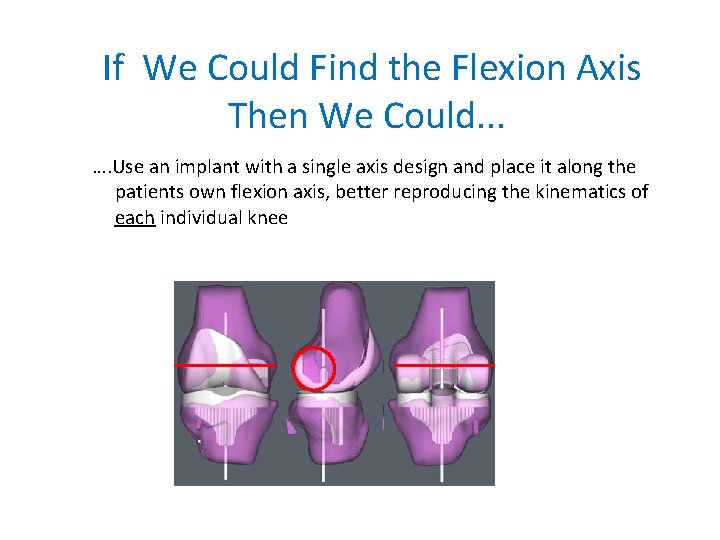
If We Could Find the Flexion Axis Then We Could. . . …. Use an implant with a single axis design and place it along the patients own flexion axis, better reproducing the kinematics of each individual knee

If We Can Find the Flexion Axis Then Perhaps We Can. . . …Place the knee components within the confines of the normal ligamentous envelope reducing the need for soft tissue rebalancing and maybe give patients a knee that “feels more normal”
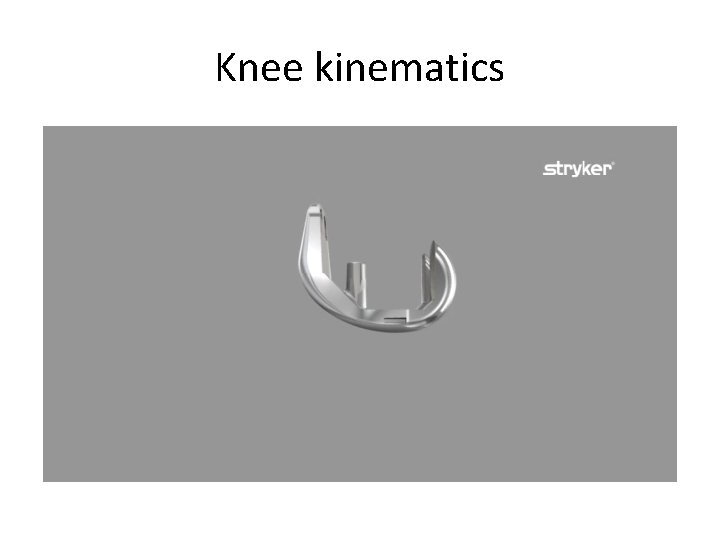
Knee kinematics
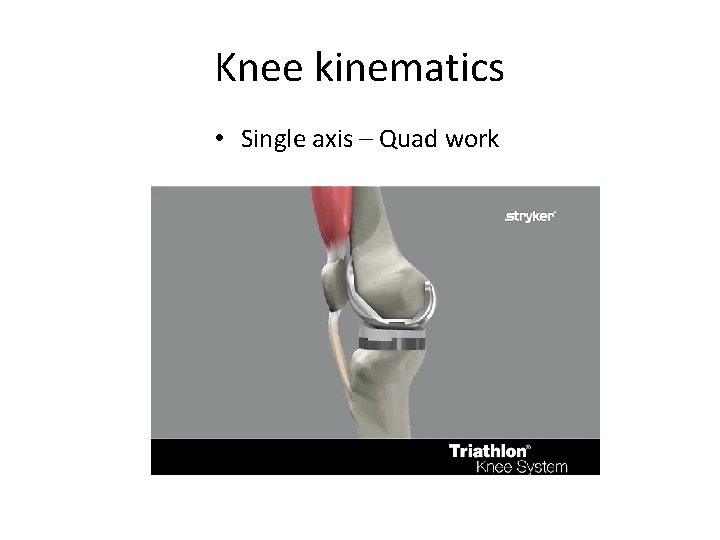
Knee kinematics • Single axis – Quad work
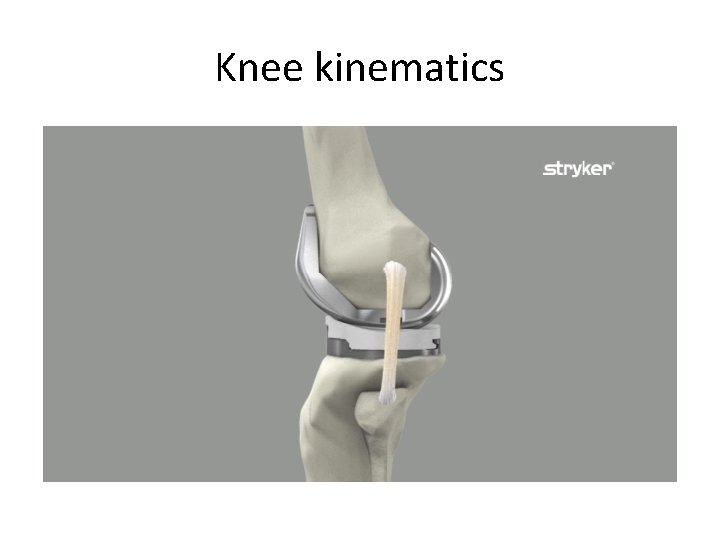
Knee kinematics
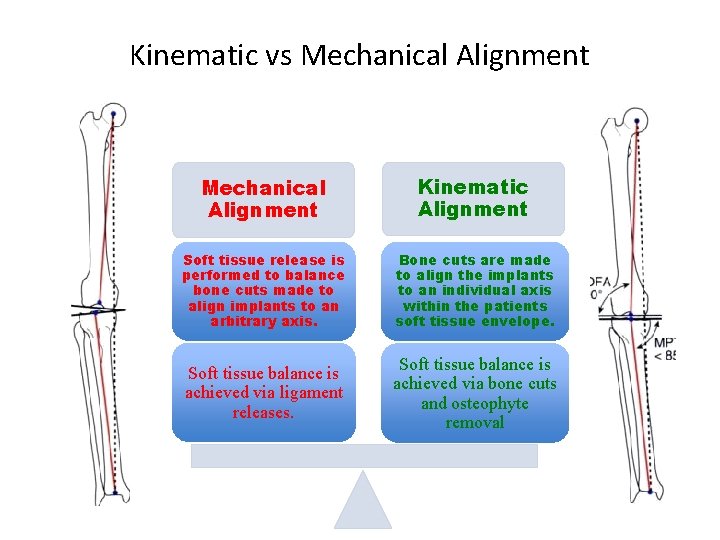
Kinematic vs Mechanical Alignment Kinematic Alignment Soft tissue release is performed to balance bone cuts made to align implants to an arbitrary axis. Bone cuts are made to align the implants to an individual axis within the patients soft tissue envelope. Soft tissue balance is achieved via ligament releases. Soft tissue balance is achieved via bone cuts and osteophyte removal
Kinematic alignment • Knee survivorship and satisfaction are not the same • Neutral mechanical alignment in the coronal plane doesn’t lead to better patient satisfaction or survivorship. • Restoration of the joint using kinematic alignment may result in a more natural motion and a better functioning knee. • Eckhoff - Neutral mechanical limb alignment within safe window (+/- 3 degrees) is achieved in the majority of patients restored using kinematic alignment


Questions?
- Slides: 57