
ALI 139 Arabic Grammar I Week 5 Outline
ALI 139 – Arabic Grammar I Week 5
Outline n n n Types of Pronouns Personal Pronouns: Subject, Object and Possessive Subject Pronouns ( )ﺍﻟﻀﻤﺎﺋﺮ Object Pronouns ( )ﺿﻤﺎﺋﺮ ﺍﻟﻨﺼﺐ Possessive Pronouns ( )ﺍﻟﻀﻤﺎﺋﺮ ﺍﻟﻤﻠﻜﻴﺔ Another way of looking at pronouns: Detached and Attached n Detached ( )ﺍﻟﻀﻤﺎﺋﺮ ﺍﻟﻟﺔ n Attached ( )ﺍﻟﻀﻤﺎﺋﺮ ﺍﻟﻤ ﻟﺔ
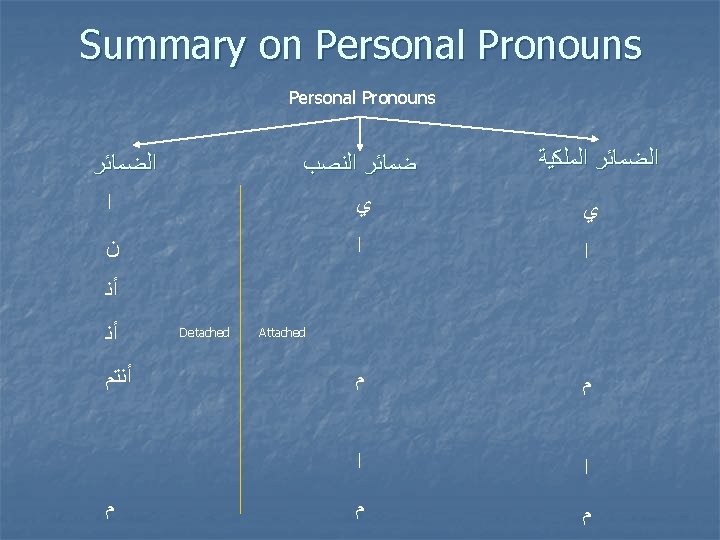
Personal Pronouns n n n n Arabic has three sets of personal pronouns: subject, object and possessive. This is similar to English grammar. For example, think of the English pronouns I, me and my. I is a subject pronoun as in “I live here”. Me is an object pronoun as in “He saw me”. And my is a possessive pronoun as in “My father”. Within each set, Arabic has more pronouns than English because of separate categories for masculine, feminine, singular, dual, plural, etc. The pronouns can also be categorized as Detached or Attached Pronouns. Subject pronouns are detached when they represent a noun. They are attached as a prefix or suffix to verbs when they denote the doer (subject) of the action. Object pronouns are always suffixes to verbs and denote the person or thing to whom the action is being done to (by the subject) Possessive pronouns are also suffixes but to nouns and particles as they denote possession i. e. who possesses the noun.
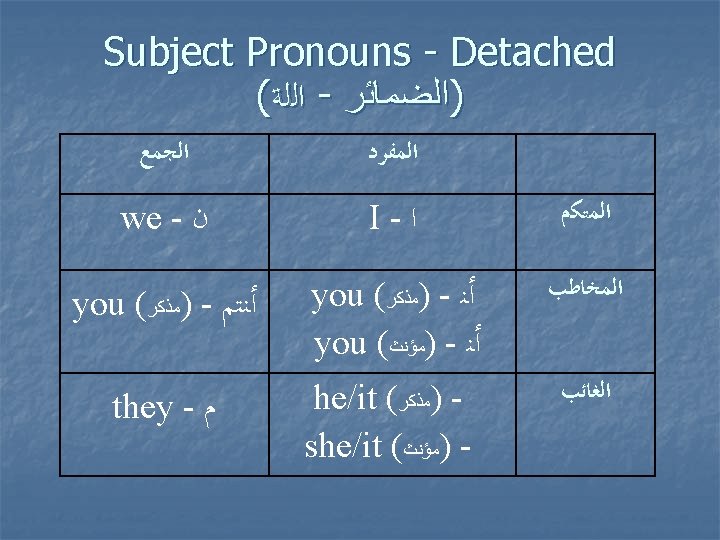
Qur’anic Language Made Easy Hafiza Iffath Hasan Review of Lesson 1. 3 Detached (Subject) Pronouns
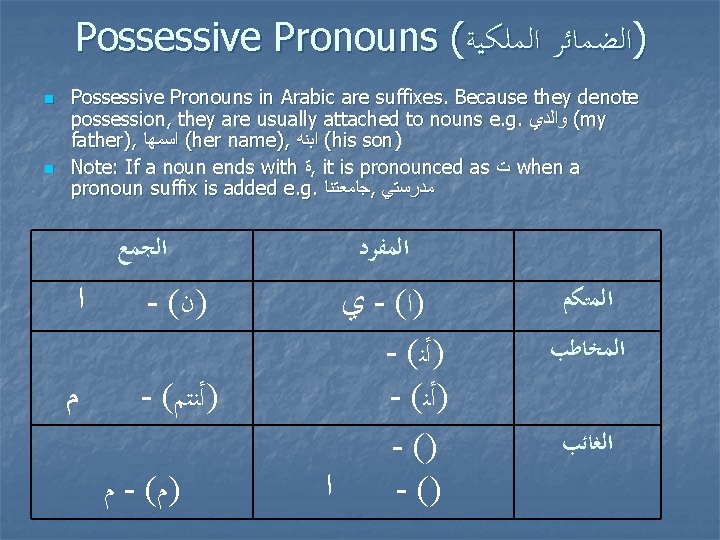
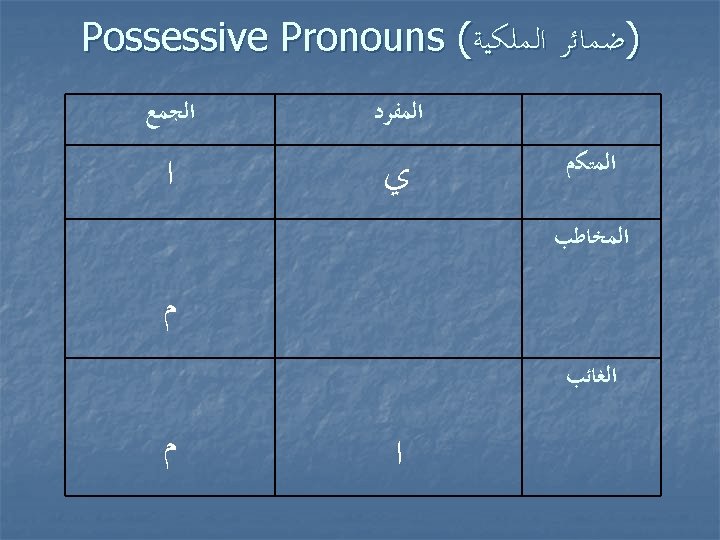
Possessive Pronouns ( )ﺍﻟﻀﻤﺎﺋﺮ ﺍﻟﻤﻠﻜﻴﺔ n n Possessive Pronouns in Arabic are suffixes. Because they denote possession, they are usually attached to nouns e. g. ( ﻭﺍﻟﺪﻱ my father), ( ﺍﺳﻤﻬﺎ her name), ( ﺍﺑﻨﻪ his son) Note: If a noun ends with ﺓ , it is pronounced as ﺕ when a pronoun suffix is added e. g. ﺟﺎﻣﻌﺘﻨﺎ , ﻣﺪﺭﺳﺘﻲ ﺍﻟﺠﻤﻊ ﺍ ﻡ - ( )ﻥ - ( )ﺃﻨﺘﻢ ﻡ - ( )ﻡ ﺍﻟﻤﻔﺮﺩ ﻱ - ( )ﺍ - ( )ﺃﻨ - () ﺍ - () ﺍﻟﻤﺘﻜﻡ ﺍﻟﻤﺨﺎﻃﺐ ﺍﻟﻐﺎﺋﺐ
Qur’anic Language Made Easy Hafiza Iffath Hasan Review of Lesson 1. 4 Attached Pronouns (General) & Lesson 1. 5 Attached Pronouns with Nouns (Possessive)

Object Pronouns ( )ﺿﻤﺎﺋﺮ ﺍﻟﻨﺼﺐ n n Object Pronouns are suffixes added to verbs to indicate the object of a verb i. e. to whom the action was done. e. g. ( ﺿﺮﺑﻨﻲ he hit me), ( ﺍﻟﻠﻪ ﻳﺮﺣﻤﻬﺎ Allah have mercy on her). You will notice that except for the 1 st person singular ( )ﺍ , all object pronouns match possessive pronouns. ﺍﻟﺠﻤﻊ us - ﺍ ﺍﻟﻤﻔﺮﺩ - ( )ﻥ ﻡ ( )ﺃﻨﺘﻢ them - ﻡ - ( )ﻡ you (pl. ) - me - ﻱ you (m. ) you (f. ) - him/it her/it - ﺍ - ( )ﺍ - ( )ﺃﻨ - () ﺍﻟﻤﺘﻜﻡ ﺍﻟﻤﺨﺎﻃﺐ ﺍﻟﻐﺎﺋﺐ
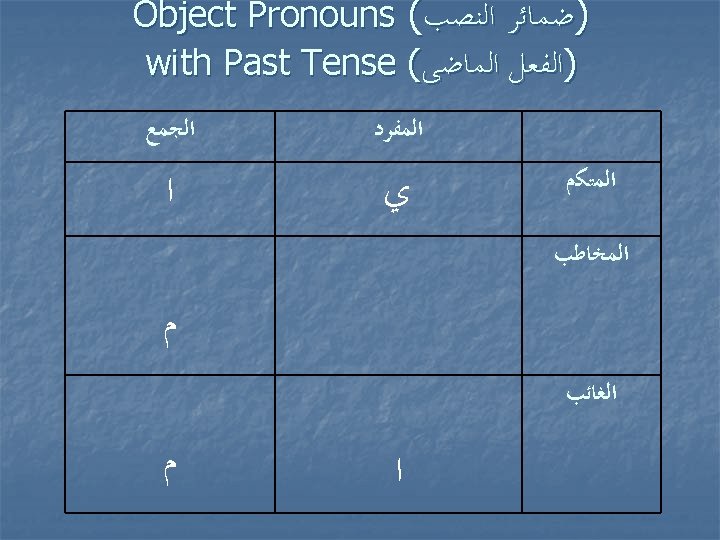
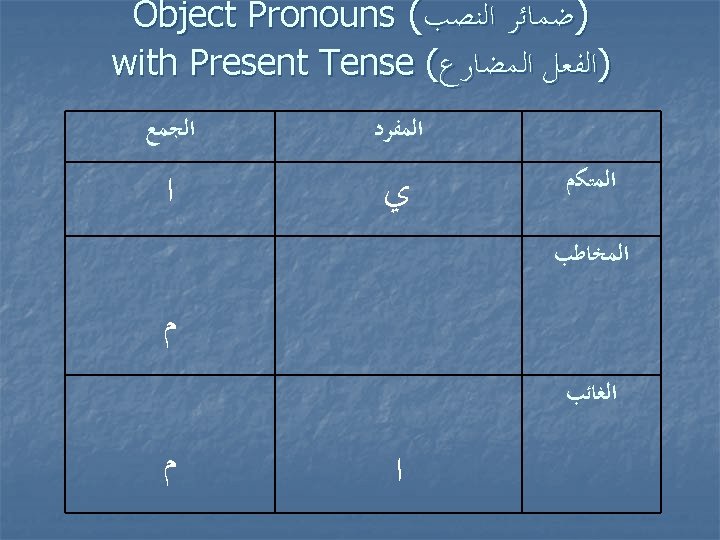
Qur’anic Language Made Easy Hafiza Iffath Hasan Review of Lesson 1. 6 Attached Pronouns with Verbs
More Notes on Pronouns n n n In spoken Arabic, the suffixes for ﺃﻨ and ﺃﻨ are often pronounce _ﻙ an _ﻙ respectively. If a verb is in past tense and masc. 2 nd person plural (i. e. ending with )ﻡ and you add any object pronoun to it, then an extra ﻭ is added to help in pronunciation. E. g. ﻋﻣﻣﻮﻱ Subject pronouns are detached for nouns but attached for verbs Possessive Pronouns are attached but only to nouns and particles because they denote possession. Object Pronouns are attached but only to verbs because they indicated the one to whom an action is done i. e. the object of the verb
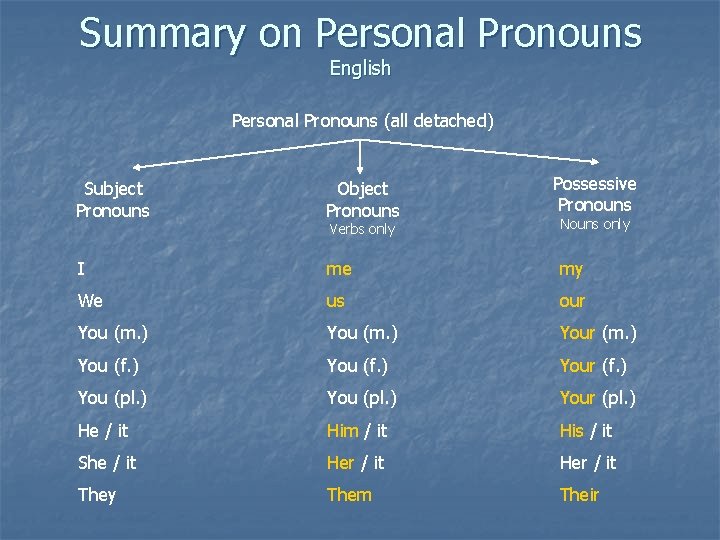
Summary on Personal Pronouns English Personal Pronouns (all detached) Possessive Pronouns Subject Pronouns Object Pronouns Verbs only Nouns only I me my We us our You (m. ) Your (m. ) You (f. ) Your (f. ) You (pl. ) Your (pl. ) He / it Him / it His / it She / it Her / it They Them Their
- Slides: 15