
Algorithms for moment computation Various definitions of moments

- Slides: 38
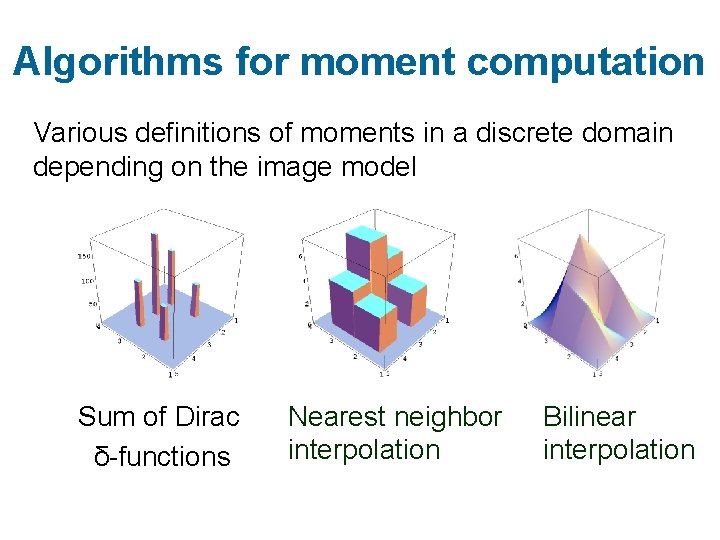
Algorithms for moment computation Various definitions of moments in a discrete domain depending on the image model Sum of Dirac δ-functions Nearest neighbor interpolation Bilinear interpolation
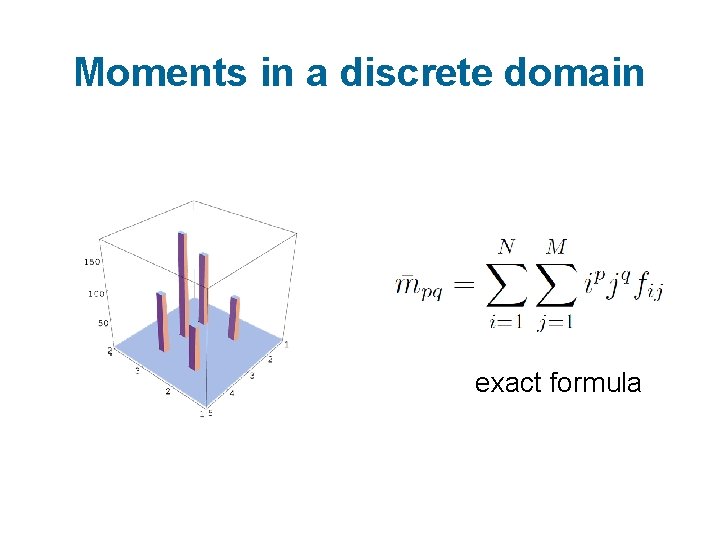
Moments in a discrete domain exact formula
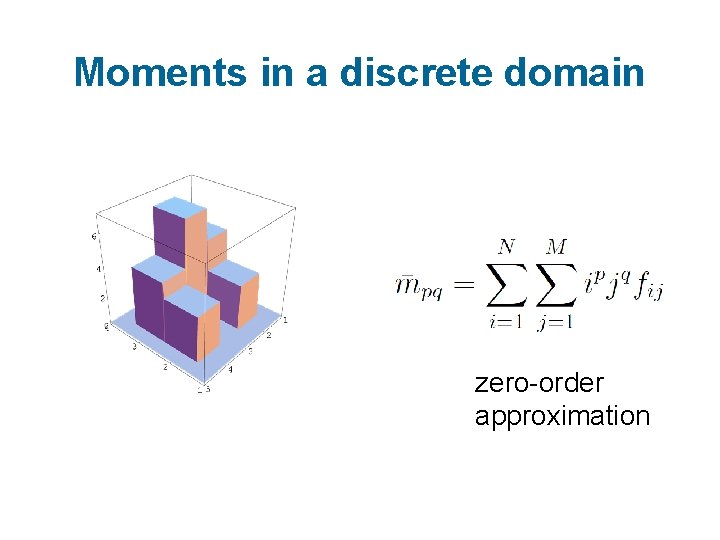
Moments in a discrete domain zero-order approximation
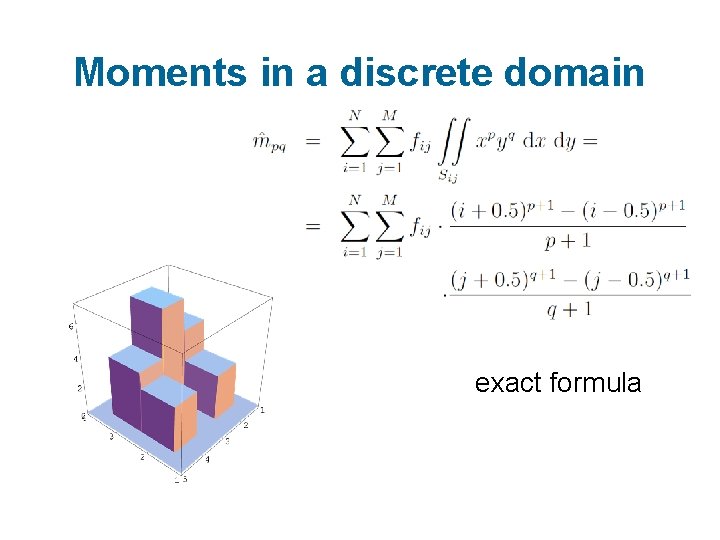
Moments in a discrete domain exact formula
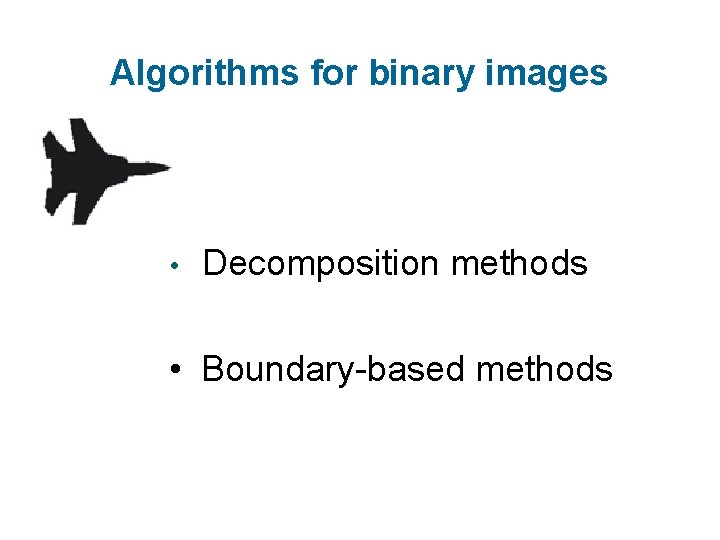
Algorithms for binary images • Decomposition methods • Boundary-based methods
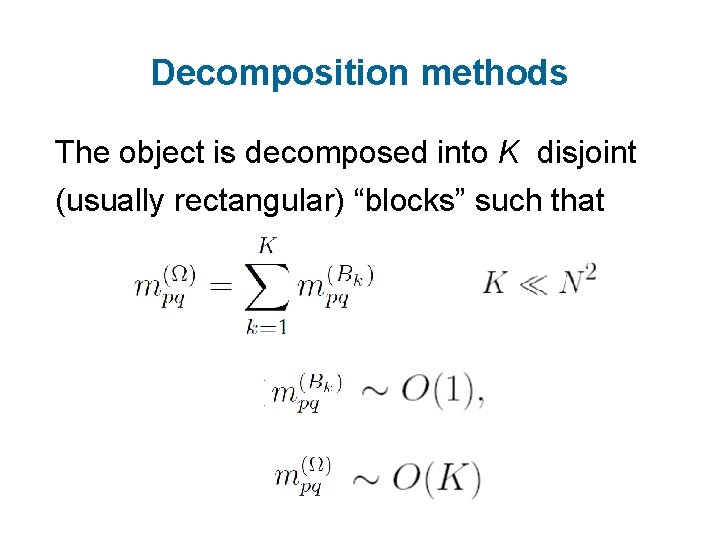
Decomposition methods The object is decomposed into K disjoint (usually rectangular) “blocks” such that
Decomposition methods differ from each other by - the decomposition algorithms - the shape of the blocks - the way how the moments of the blocks are calculated
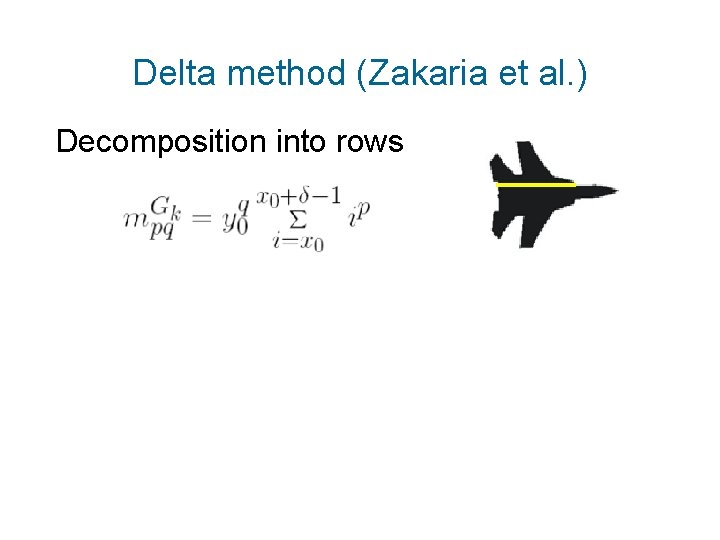
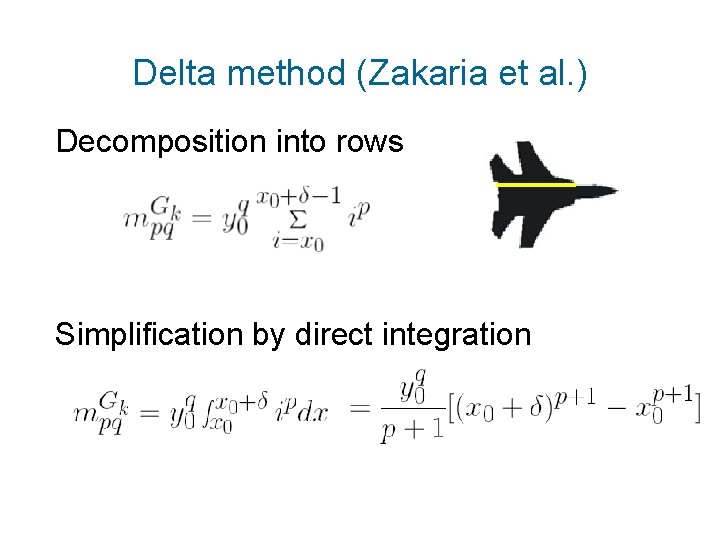
Delta method (Zakaria et al. ) Decomposition into rows
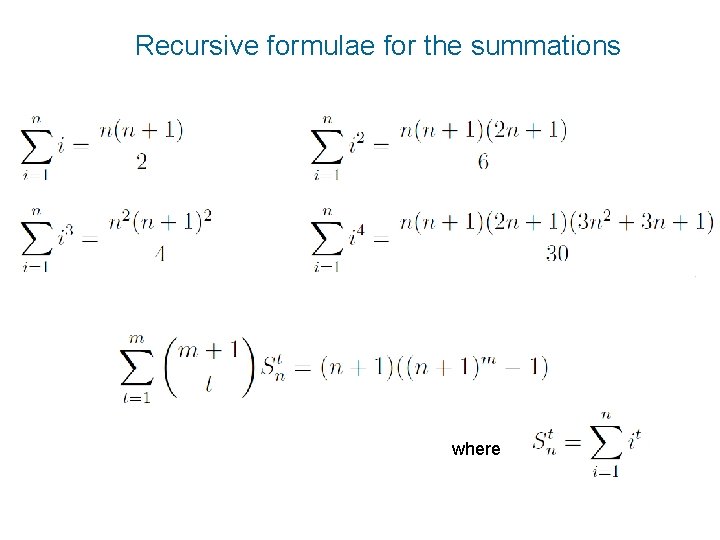
Recursive formulae for the summations where
Delta method (Zakaria et al. ) Decomposition into rows Simplification by direct integration
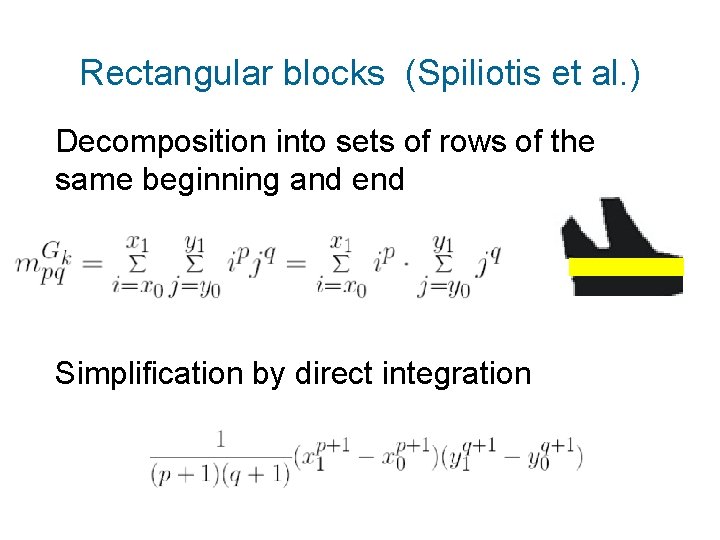
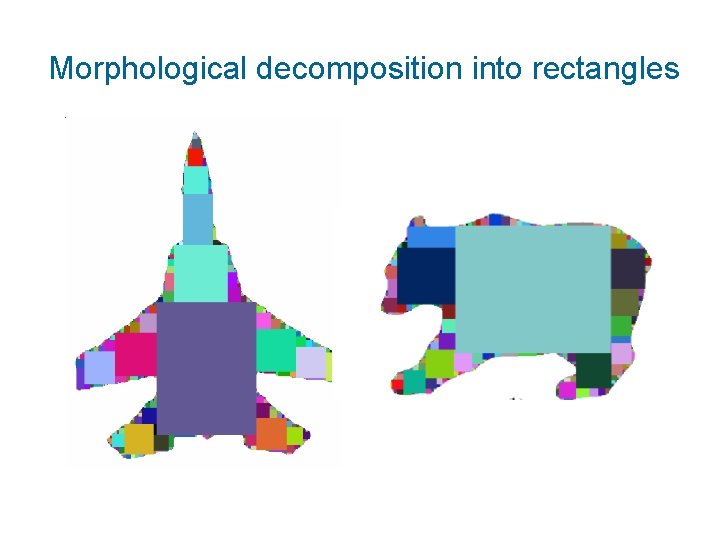
Rectangular blocks (Spiliotis et al. ) Decomposition into sets of rows of the same beginning and end Simplification by direct integration
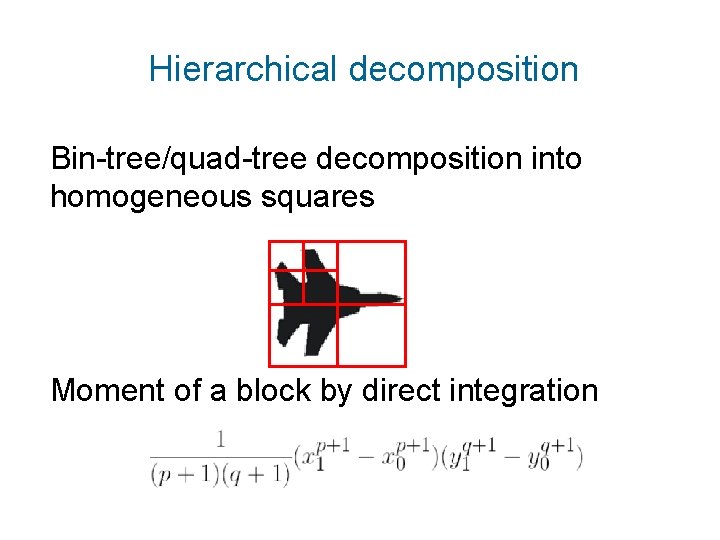
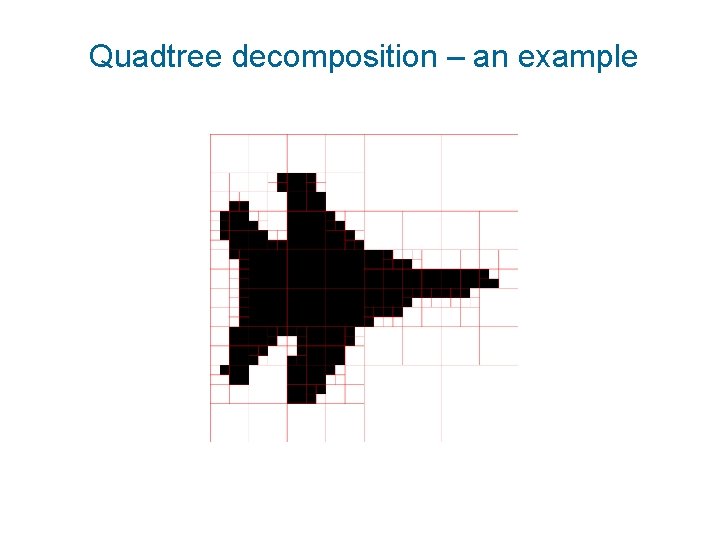
Hierarchical decomposition Bin-tree/quad-tree decomposition into homogeneous squares Moment of a block by direct integration
Quadtree decomposition – an example
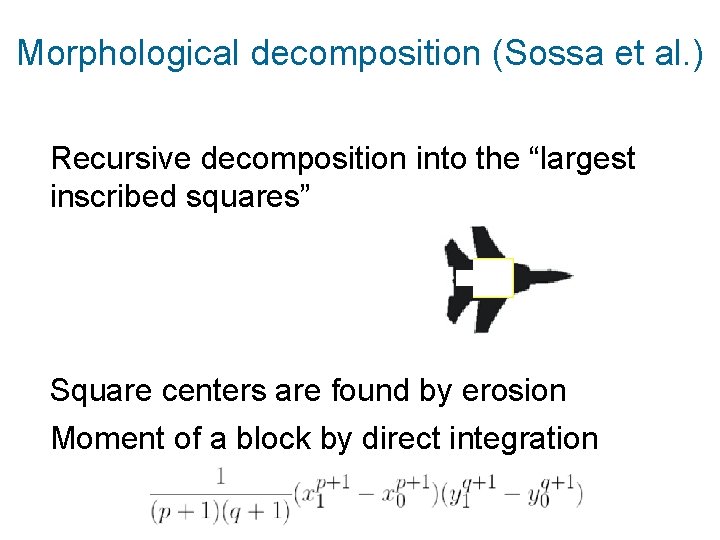
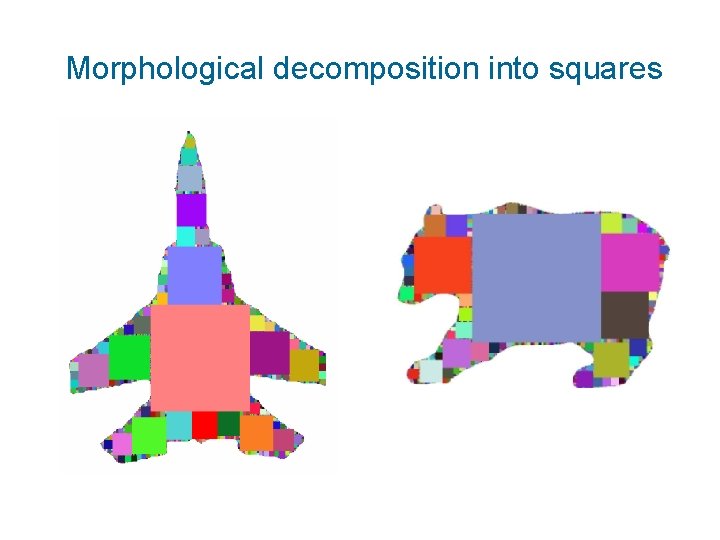
Morphological decomposition (Sossa et al. ) Recursive decomposition into the “largest inscribed squares” Square centers are found by erosion Moment of a block by direct integration
Morphological decomposition into squares
Morphological decomposition into rectangles
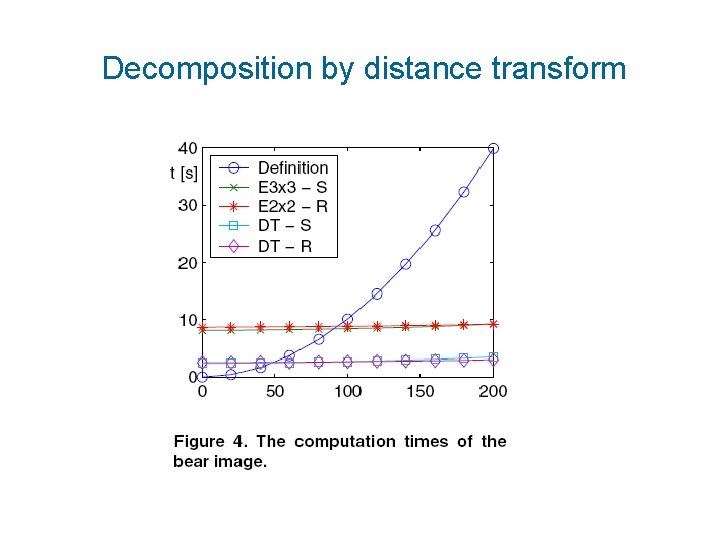
Decomposition by distance transform
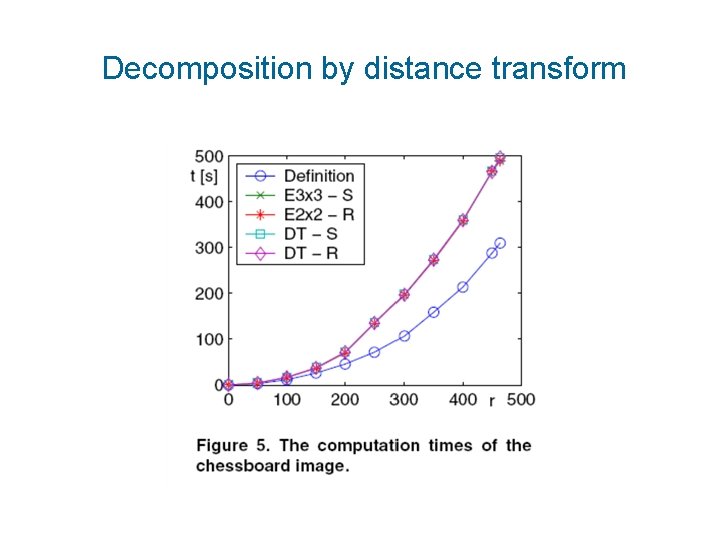
Decomposition by distance transform
Decomposition methods - complexity • Complexity of the decomposition is often ignored (believed to be O(1)) but it might be very high – it must be always considered • Efficient when calculating a large number of moments of the object • Certain objects cannot be efficiently decomposed at all (a chessboard)
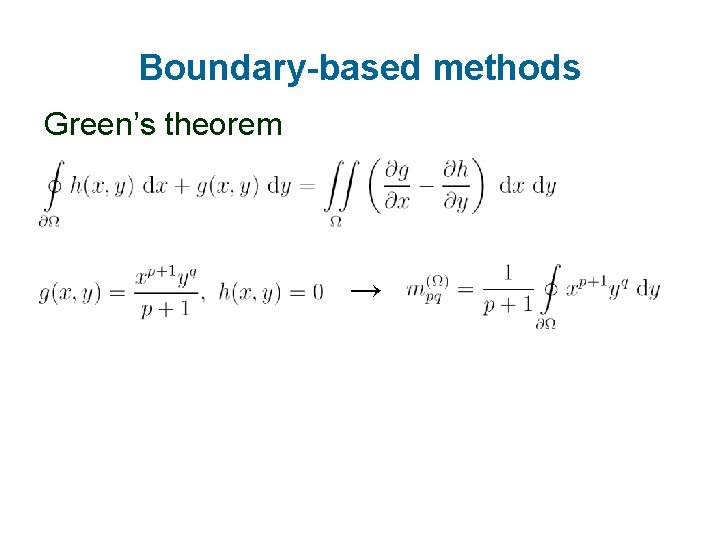
Boundary-based methods Green’s theorem →
Calculation of the boundary integral • Summation pixel-by-pixel • Polygonal approximation • Other approximations (splines, etc. )
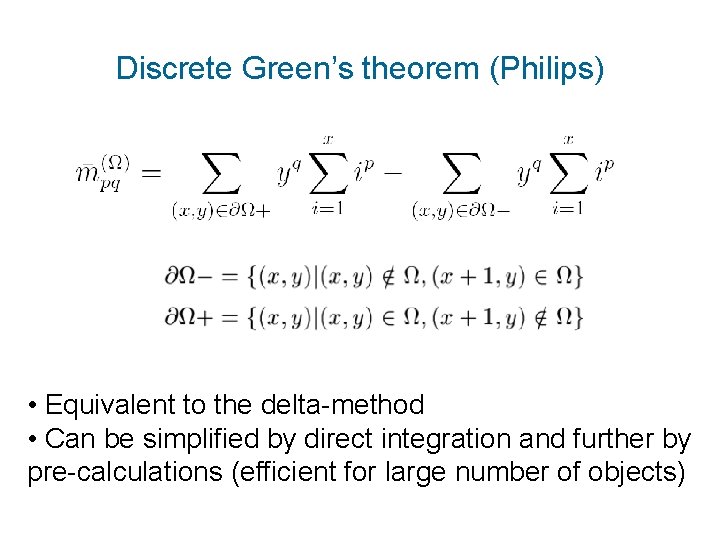
Discrete Green’s theorem (Philips) • Equivalent to the delta-method • Can be simplified by direct integration and further by pre-calculations (efficient for large number of objects)
Boundary-based methods - complexity • Complexity depends on the length of the boundary • Detecting boundary is assumed to be fast • Efficient for objects with simple boundary • Unlike decomposition methods, they can be used even for small number of moments • Inefficient for objects with complex boundaries (a chessboard)
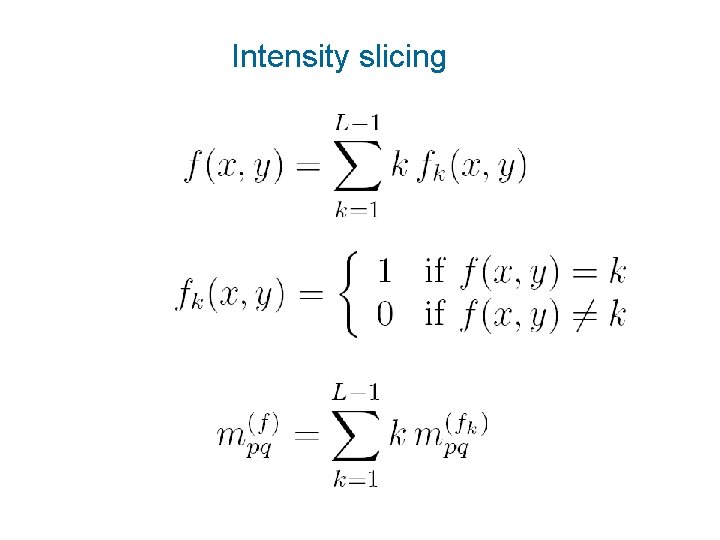
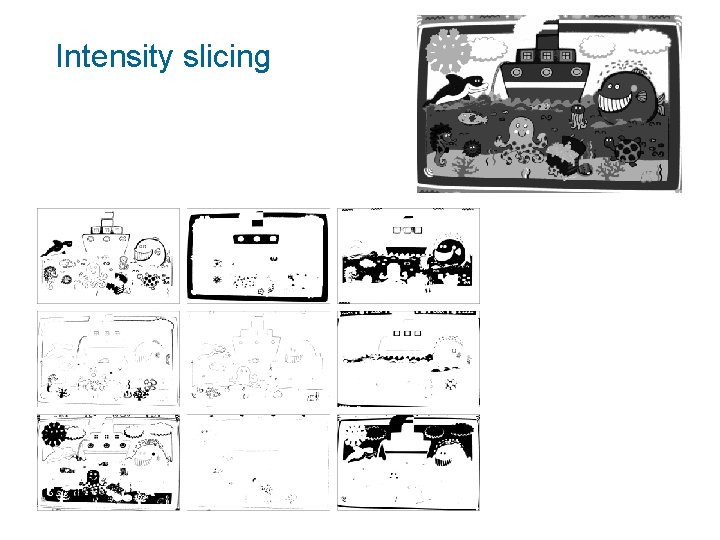
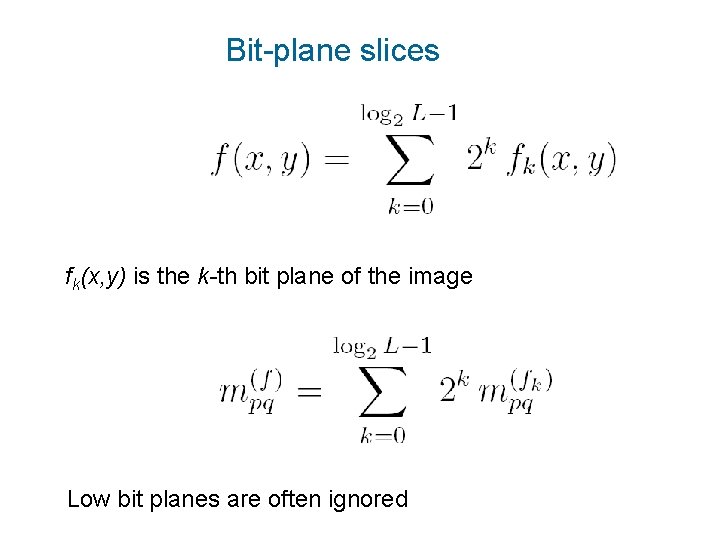
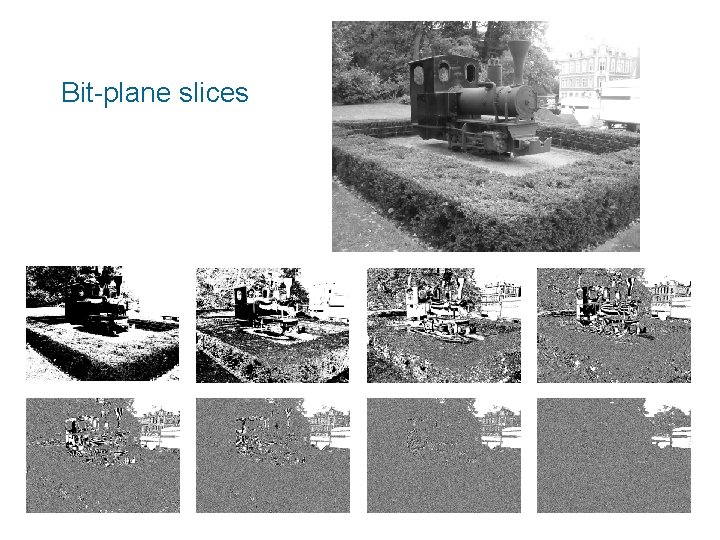
Moments of gray-level images • Decomposition into several binary images (intensity slices, bit planes) • Approximation of graylevels
Intensity slicing
Intensity slicing
Bit-plane slices fk(x, y) is the k-th bit plane of the image Low bit planes are often ignored
Bit-plane slices
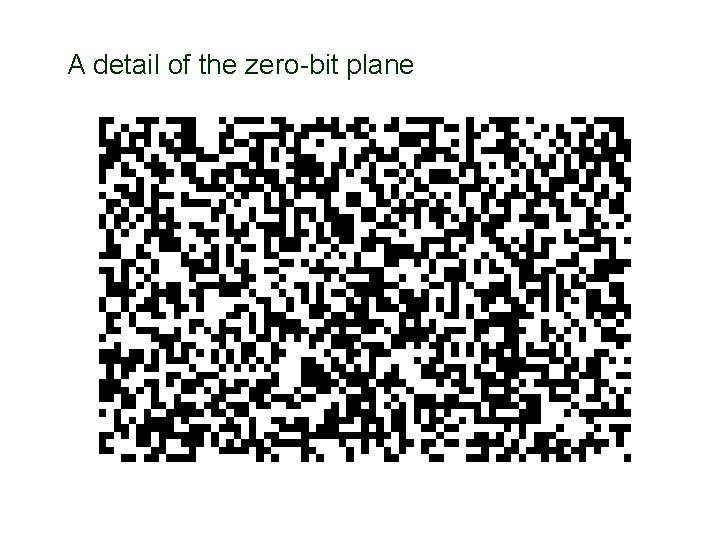
A detail of the zero-bit plane
Approximation methods The image is decomposed into blocks where it can be approximated by an “easy-to-integrate” function (e. g. by polynomials) Any kind of decomposition can be used.
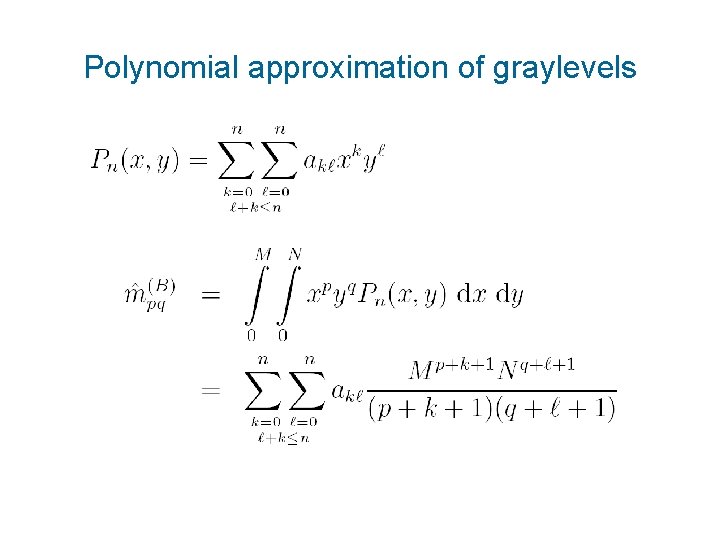
Polynomial approximation of graylevels
Algorithms for OG moments Specific methods • Methods using recurrent relations • Decomposition methods • Boundary-based methods
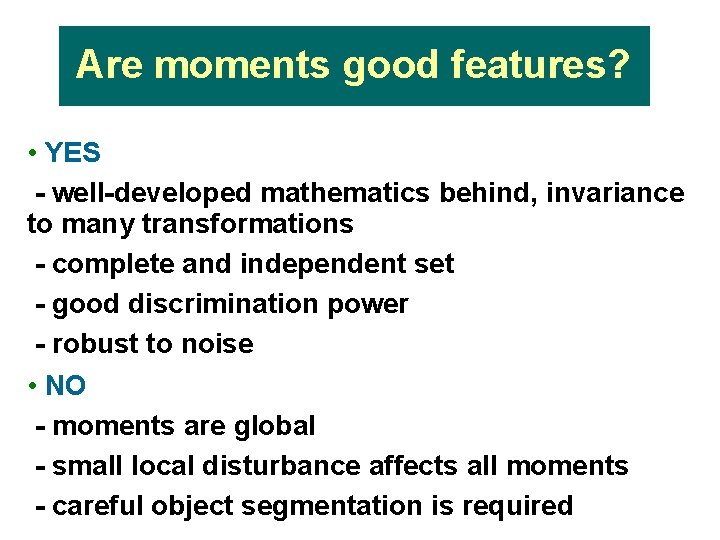
Are moments good features? • YES - well-developed mathematics behind, invariance to many transformations - complete and independent set - good discrimination power - robust to noise • NO - moments are global - small local disturbance affects all moments - careful object segmentation is required
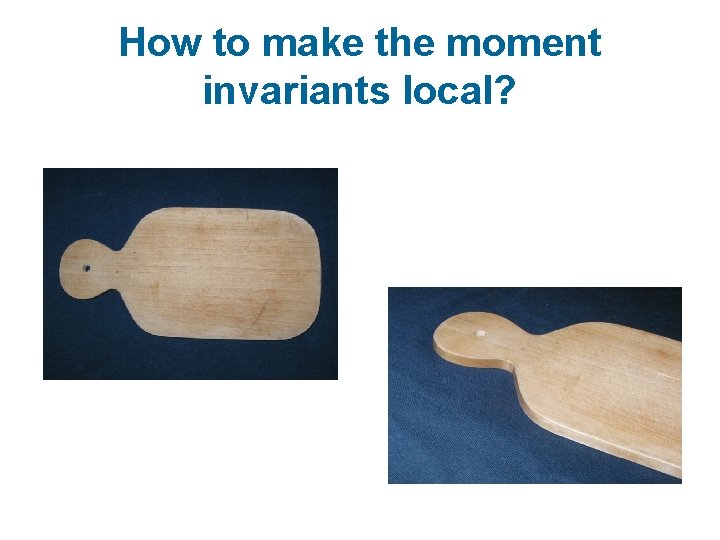
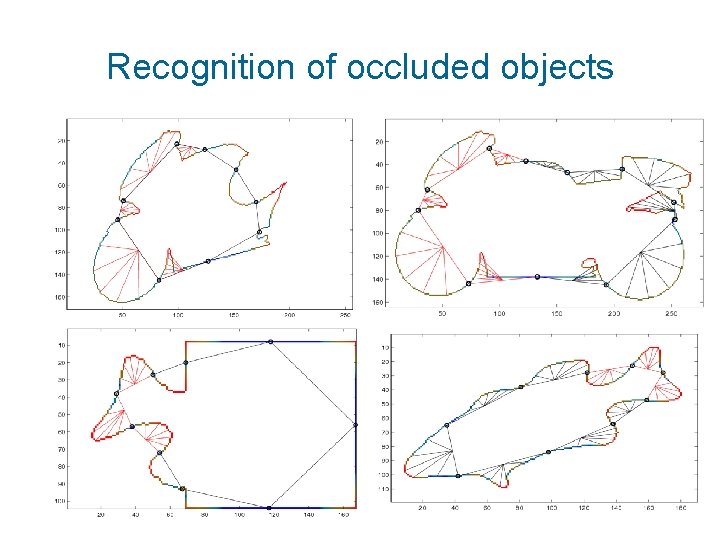
How to make the moment invariants local?
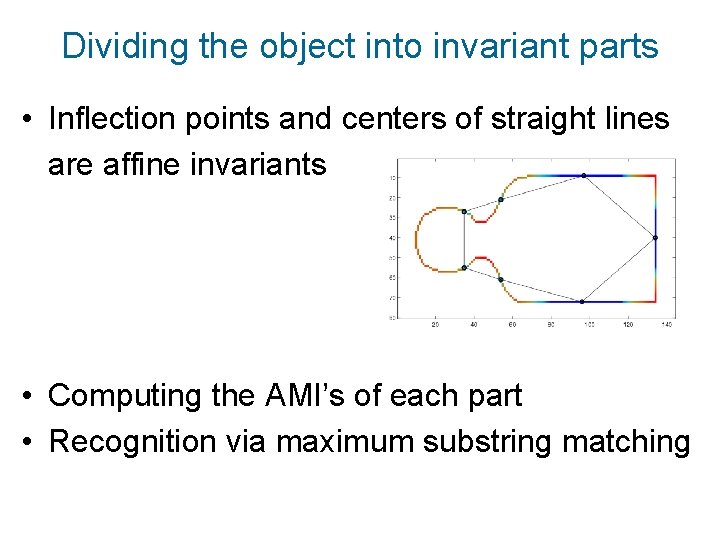
Dividing the object into invariant parts • Inflection points and centers of straight lines are affine invariants • Computing the AMI’s of each part • Recognition via maximum substring matching
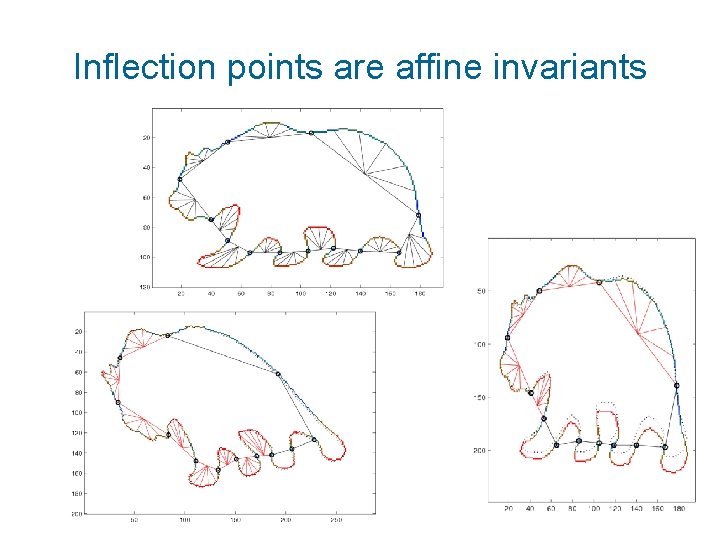
Inflection points are affine invariants
Recognition of occluded objects
Thank you ! Any questions?