
ALGORITHM CHAPTER 8 Chapter Outlines and Objectives Define
ALGORITHM CHAPTER 8
Chapter Outlines and Objectives Define an algorithm and relate it to problem solving. Define three construct and describe their use in algorithms. Describe UML diagrams and pseudocode and how they are used in algorithms. List basic algorithms and their applications. Describe the concept of sorting and understand the mechanisms behind three primitive sorting algorithms. Describe the concept of searching and understand the mechanisms behind two common searching algorithms. Define subalgorithms and their relations to algorithms. Distinguish between iterative and recursive algorithms.
8. 1 CONCEPT
Algorithm
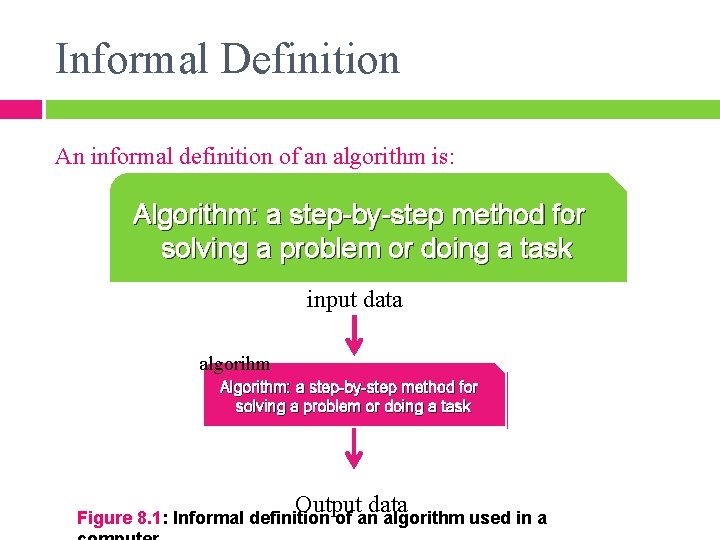
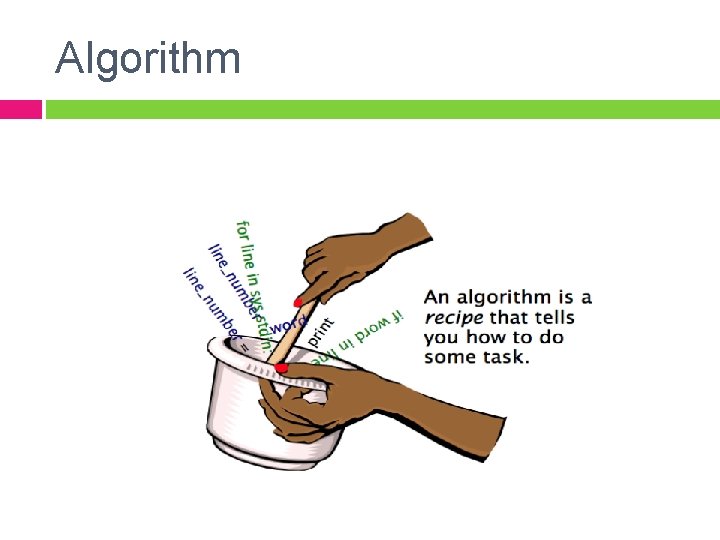
Informal Definition An informal definition of an algorithm is: Algorithm: a step-by-step method for solving a problem or doing a task input data algorihm Algorithm: a step-by-step method for solving a problem or doing a task Output data Figure 8. 1: Informal definition of an algorithm used in a
Example We want to develop an algorithm for finding the largest integer among a list of positive integers. The algorithm should find the largest integer among a list of any values ( for example 5, 1000, 10, 000, 1, 000). The algorithm should be general and not depend on the number of integers. v To solve this problem, we need an intuitive approach. Ø First use a small number of integers ( for example, five), then extend the solution to any number of integers.
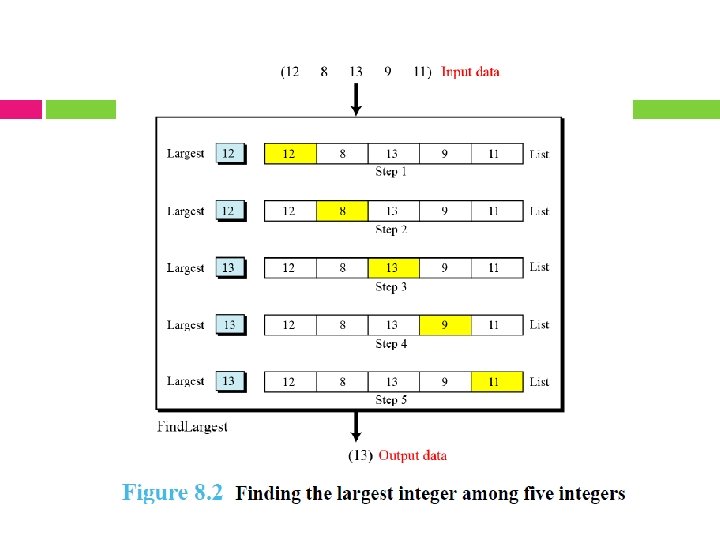
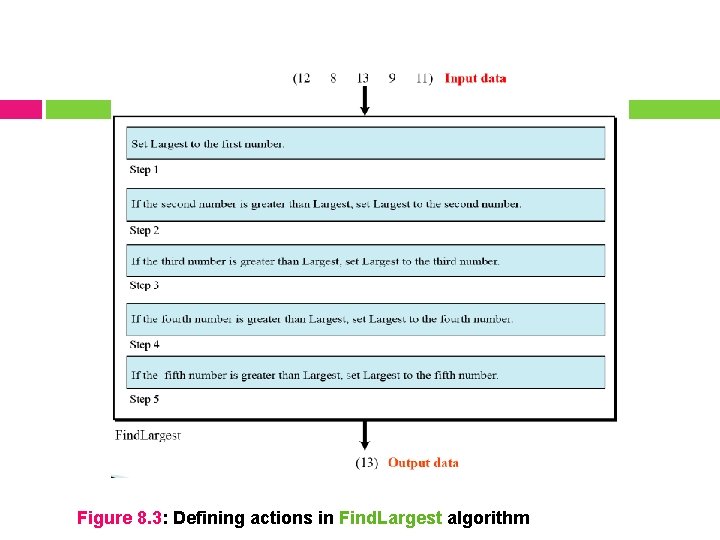
Figure 8. 3: Defining actions in Find. Largest algorithm
Refinement 1. First, the action in the first step is different than those for the other steps. 2. Second, the wording is not the same in steps 2 to 5.
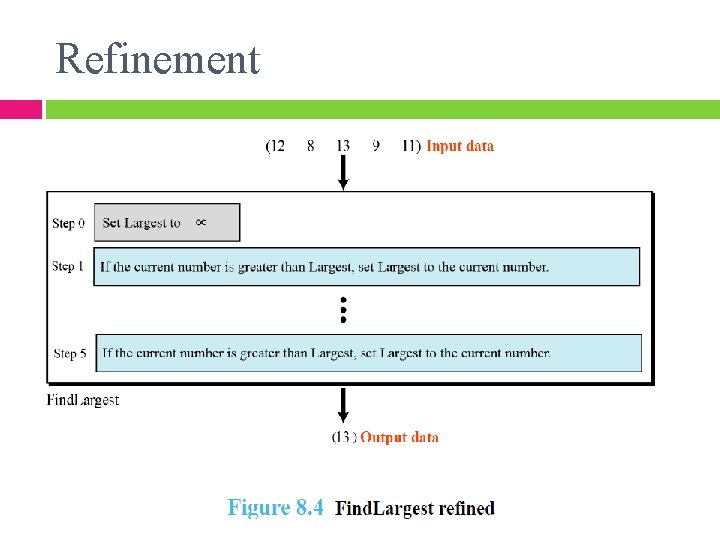
Refinement
Generalization Is it possible to generalize the algorithm ? We want to find the largest of n positive integers, where n can be 1000, 1, 000, or more. There is a better way to do this. We can tell the computer to repeat the steps n times.
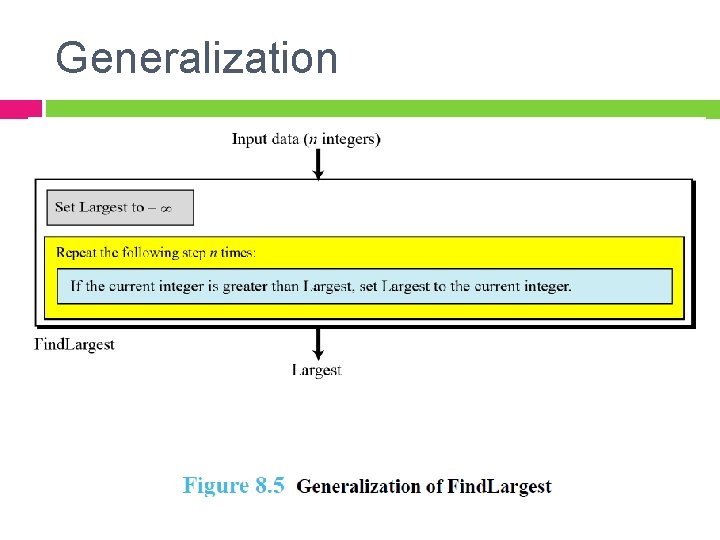
Generalization
8. 2 THREE CONSTRUCTS
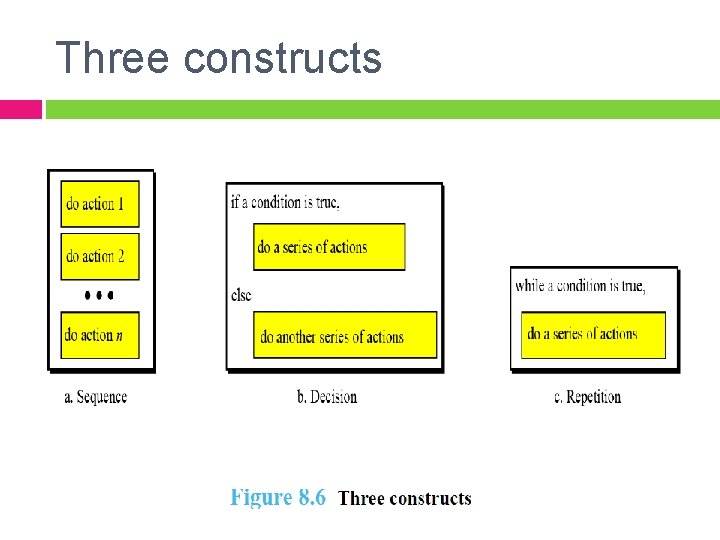
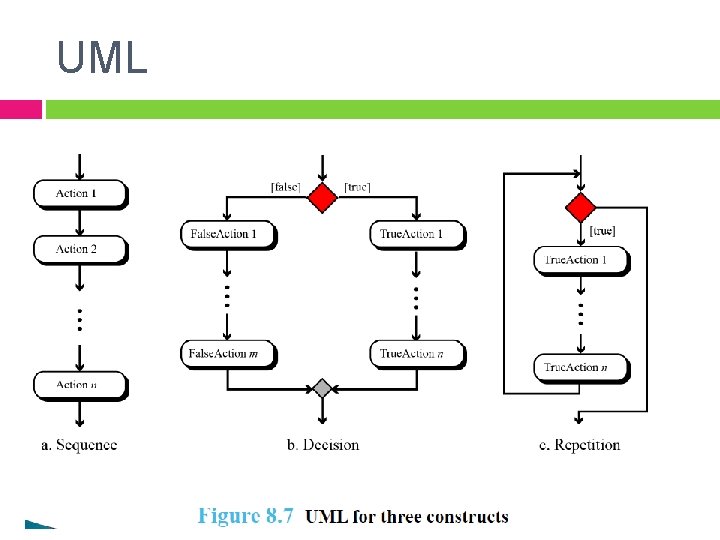
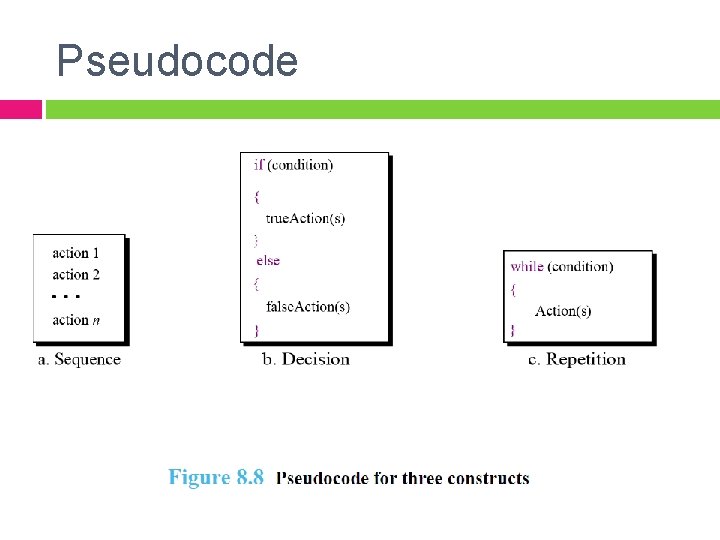
Three constructs Computer scientists have defined three constructs for a structured program or algorithm. The idea is that a program must be made of a combination of only these three constructs : sequence, decision (selection) and repetition. It has been proven there is no need for any other constructs. Using only these constructs make a program or an algorithm easy to understand, debug or change.
Three constructs
Three constructs Sequence: An algorithm, and eventually a program, is a sequence of instructions, which can be a simple instruction or either of the other two constructs. Decision (selection): Some problems cannot be solved with only a sequence of simple instructions. Sometimes we need to test a condition. If the result of testing is true, we follow a sequence of instructions. If it is false, we follow a different sequence of instrutions. This is called the decision (selection) construct.
Three constructs Repetition: In some problems, the same sequence of instructions must be repeated. We handle this with the repetition or loop construct. Finding the largest integer among a set of integers can use a construct of this kind.
8. 3 ALGORITHM REPRESENTATION
Algorithm Representation So far, we have used figures to convey the concept of an algorithm. During the last few decades, tools have been designed for this purpose. Two of these tools, UML and pseudocode, are presented here.

UML ( Unified Modeling Language ) Is a pictorial representation of an algorithm. It hides all the details of an algorithm in an attempt to give the “big picture” and to show the algorithm flows from beginning to end.
UML
Pseudocode is an English-language-like representation of an algorithm. There is no standard for Pseudocode—some people use a lot of detail, others use less. Some use a code that is close to English, while others use a syntax like the Pascal programming language.
Pseudocode
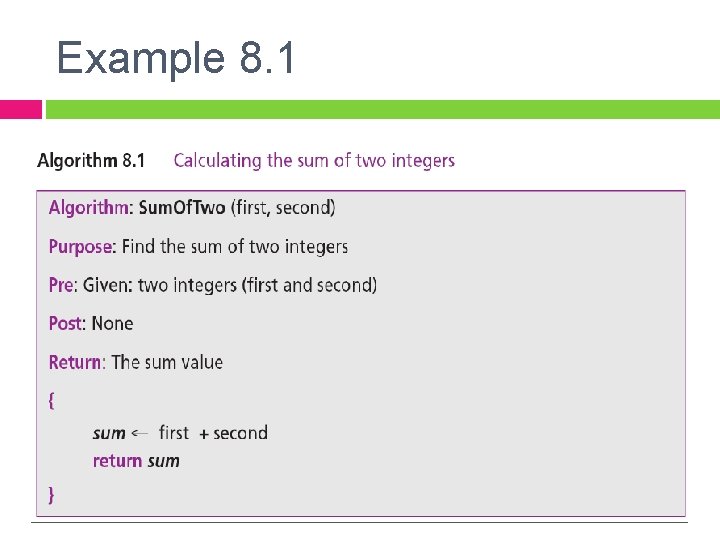
Example 8. 1 Write an algorithm in Pseudocode that finds the sum of two integers.
Example 8. 1
Example 8. 2 Write an algorithm to change a numeric grade to a pass/no pass grade.
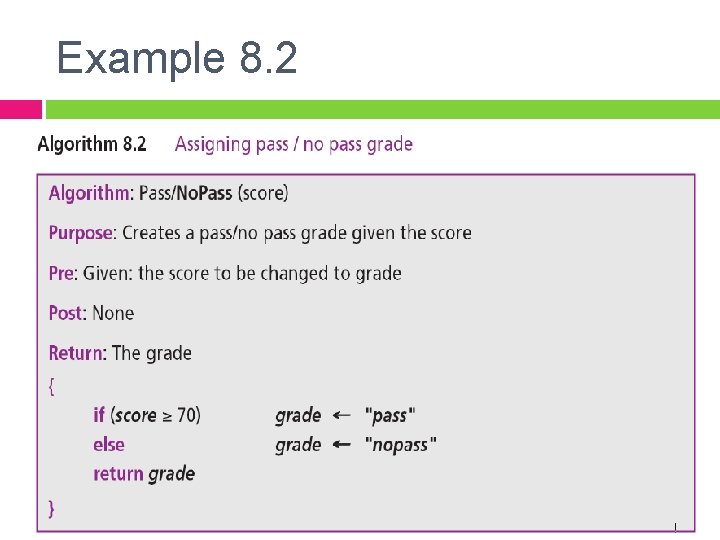
Example 8. 2

Example 8. 3 Write an algorithm to change a numeric grade (integer) to a letter grade.
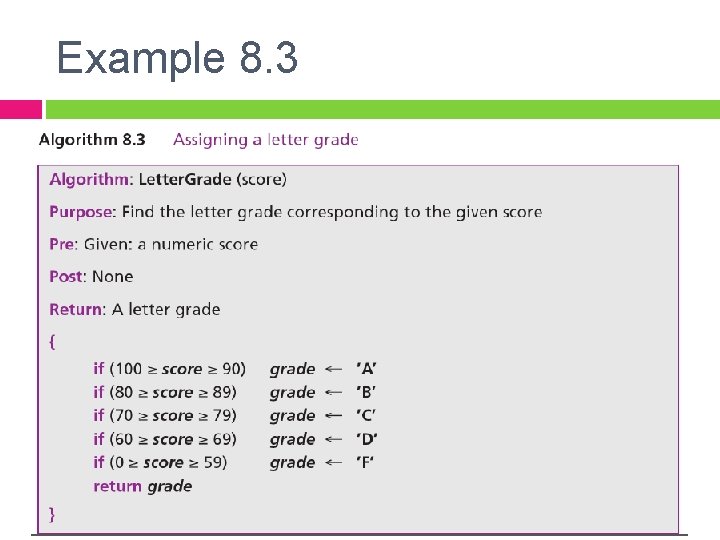
Example 8. 3

Example 8. 4 Write an algorithm to find the largest of a set of integers. We do not know the number of integers.
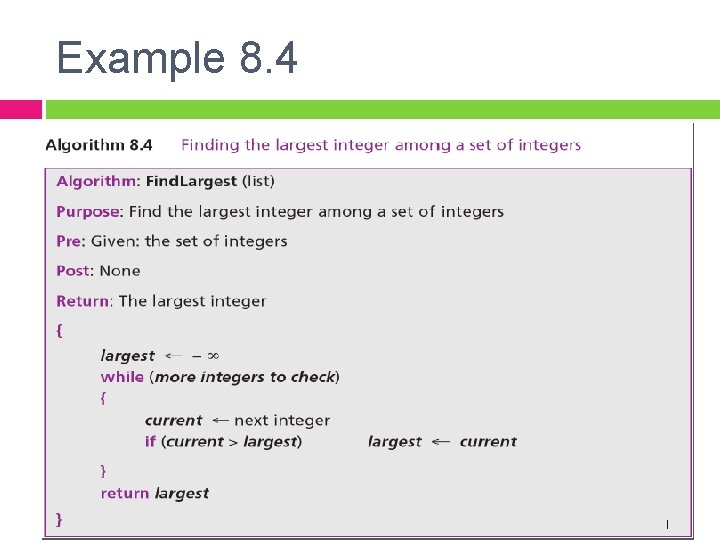
Example 8. 4
Example 8. 5 Write an algorithm to find the largest of the first 1000 integers in a set of integers.
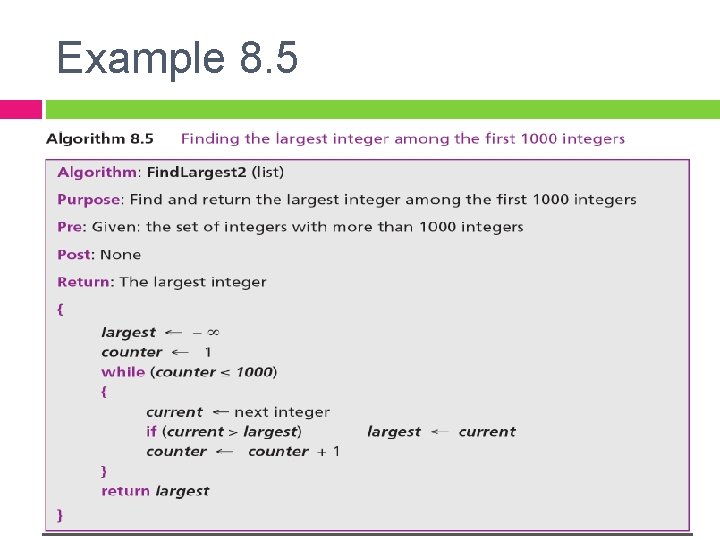
Example 8. 5
8. 4 A MORE FORMAL DEFIITION

Now that we have discussed the concept of an algorithm and shown its representation, here is a more formal definition.
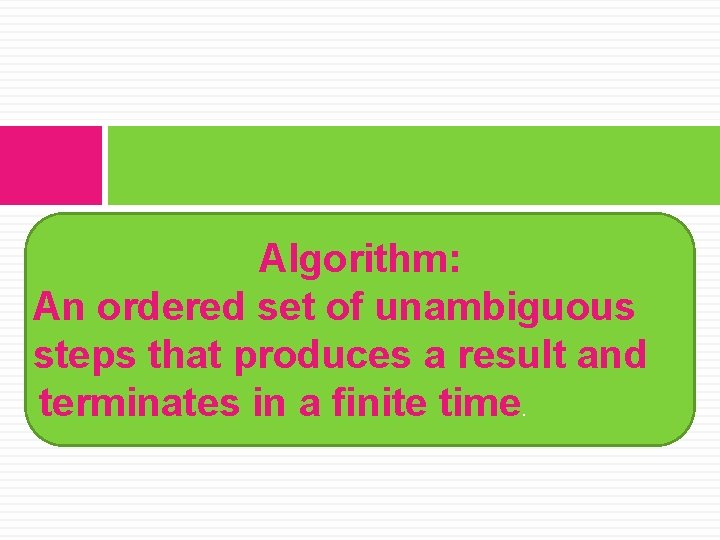
Algorithm: An ordered set of unambiguous steps that produces a result and terminates in a finite time.
- Ordered set: An algorithm must be a well-defined. - Unambiguous steps: Each step in an algorithm must be clearly and unambiguously defined. - Produce a result: An algorithm must produce a result, otherwise it is useless. The result can be data returned to the calling algorithm, or some other effect (for example, printing). - Terminate in a finite time: An algorithm must terminate (halt). If it does not (that is, it has
- Slides: 37