
Algebraic and Logical Query Languages Thomas Schwarz SJ
Algebraic and Logical Query Languages Thomas Schwarz, SJ
Bags, Lists, Sets • Bags are multi-sets • • They are not sets • • An element can appear more than once In a set, each element can appear at most once They are not lists • In a list, elements are indexed
Bags, Lists, Sets • Why bags: • Union, seletion and projection can create the same tuple many times • Removing duplicates is difficult: • Either use a hash table or use sorting • Both of which are expensive in different ways
Bags, Lists, Sets • Why bags: • For some temporary tables, bags are appropriate • Aggregation query like find the average salaries of all female employees hired in 2010, 2011, 2012 • • Form a temporary table with salary as only attribute You need to keep values separate
Union, Intersection, Differences of Bags • Union: • Just concatenate the two bags • If an element appears twice in one bag and thrice in the other, it will appear five times in the union
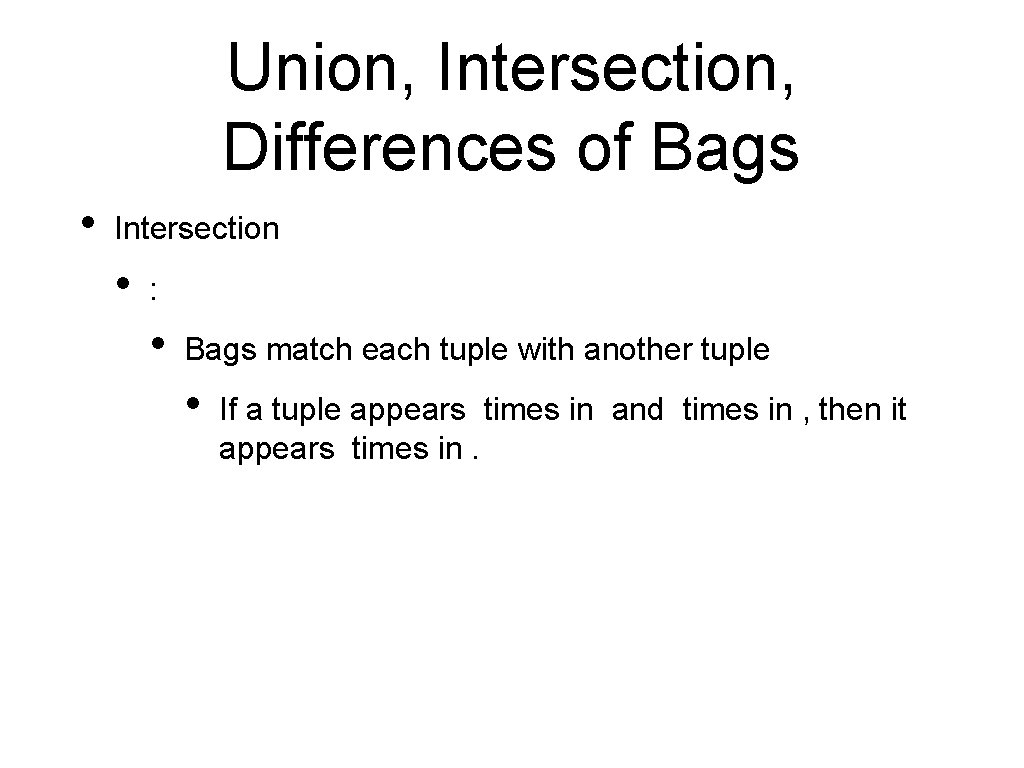
Union, Intersection, Differences of Bags • Intersection • : • Bags match each tuple with another tuple • If a tuple appears times in and times in , then it appears times in.
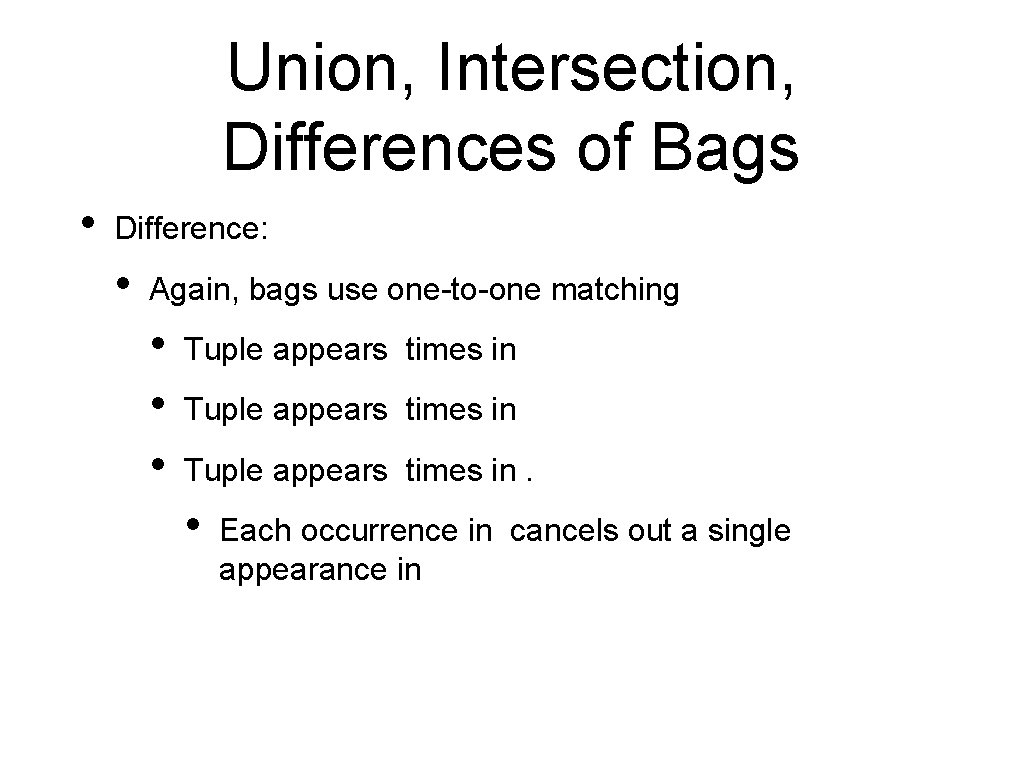
Union, Intersection, Differences of Bags • Difference: • Again, bags use one-to-one matching • • • Tuple appears times in. • Each occurrence in cancels out a single appearance in
Union, Intersection, Differences of Bags • In short: bags are different from sets
Projection of Bags • Projection of bags: • Each tuple in the mother relation gives rise to one tuple in the projection
Selection of Bags • • Again: selection condition is applied to each tuple There is no duplicate elimination
Products of Bags • • Recall: Product assumes that attribute sets are different Each tuple of is paired with each tuple of

Joins of Bags • Join tuple by tuple
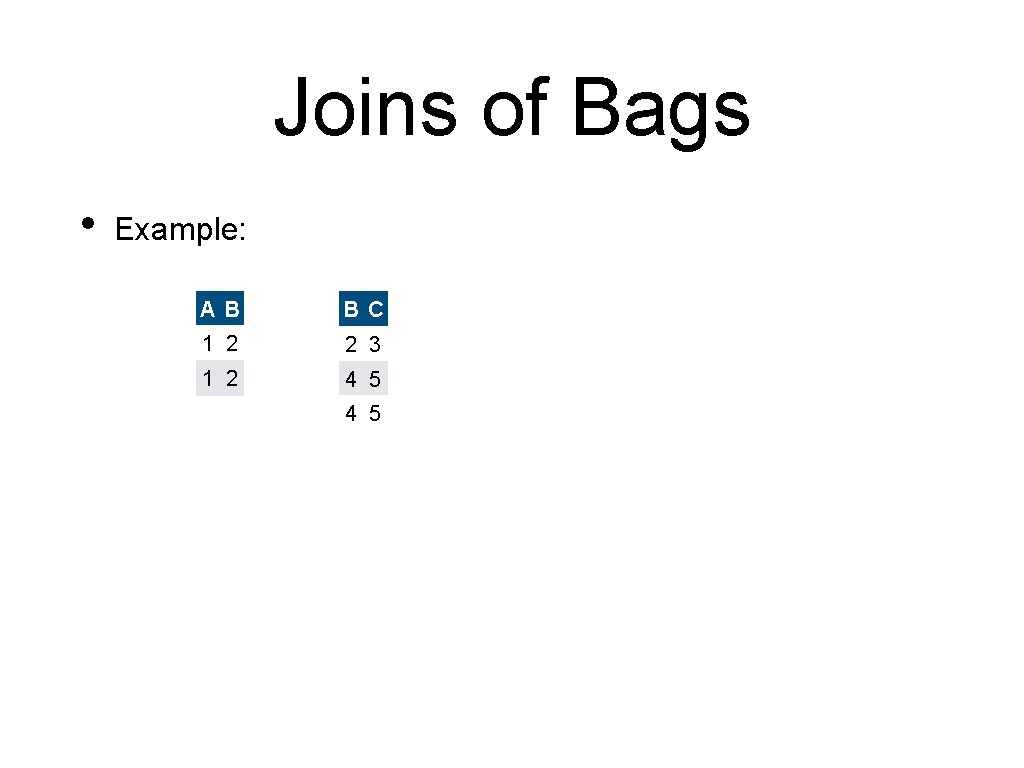
Joins of Bags • Example: AB BC 1 2 2 3 1 2 4 5
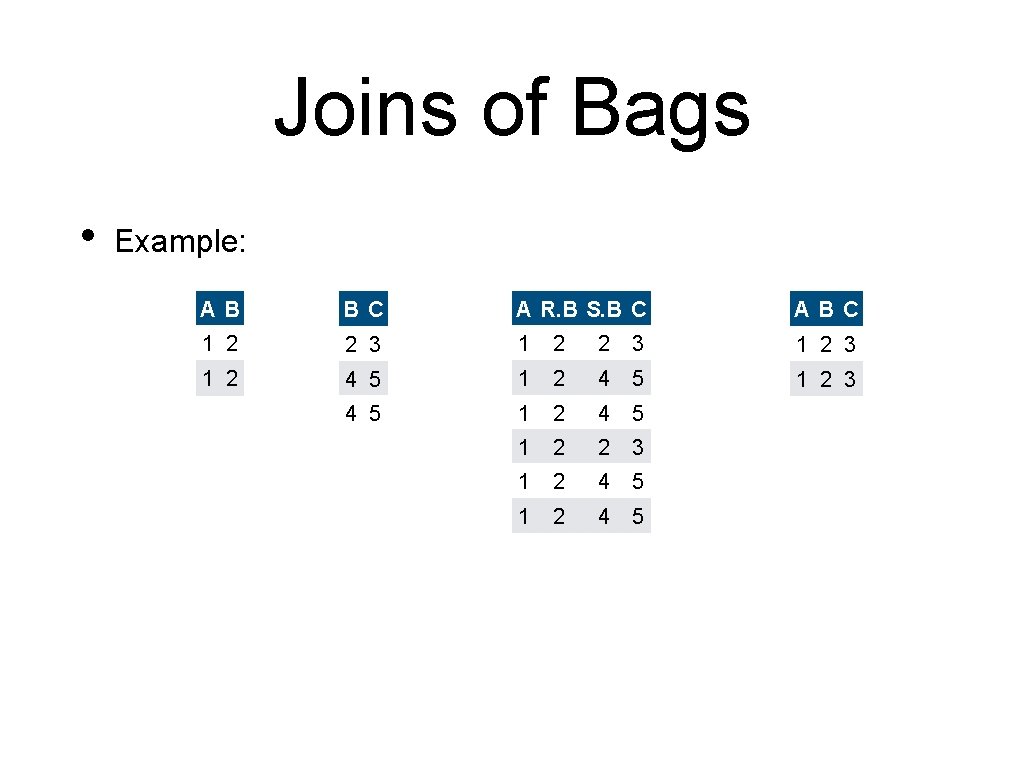
Joins of Bags • Example: AB BC A R. B S. B C ABC 1 2 2 3 1 2 4 5 1 2 3 4 5 1 2 2 3 1 2 4 5
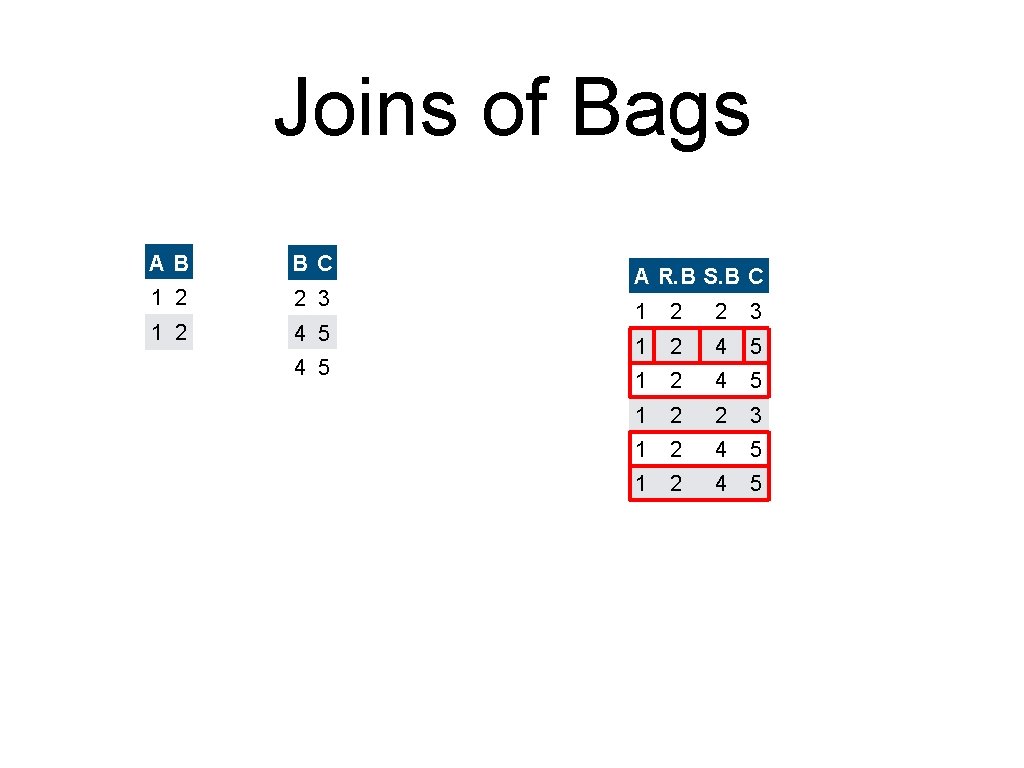
Joins of Bags AB BC 1 2 2 3 1 2 4 5 A R. B S. B C 1 2 2 3 1 2 4 5
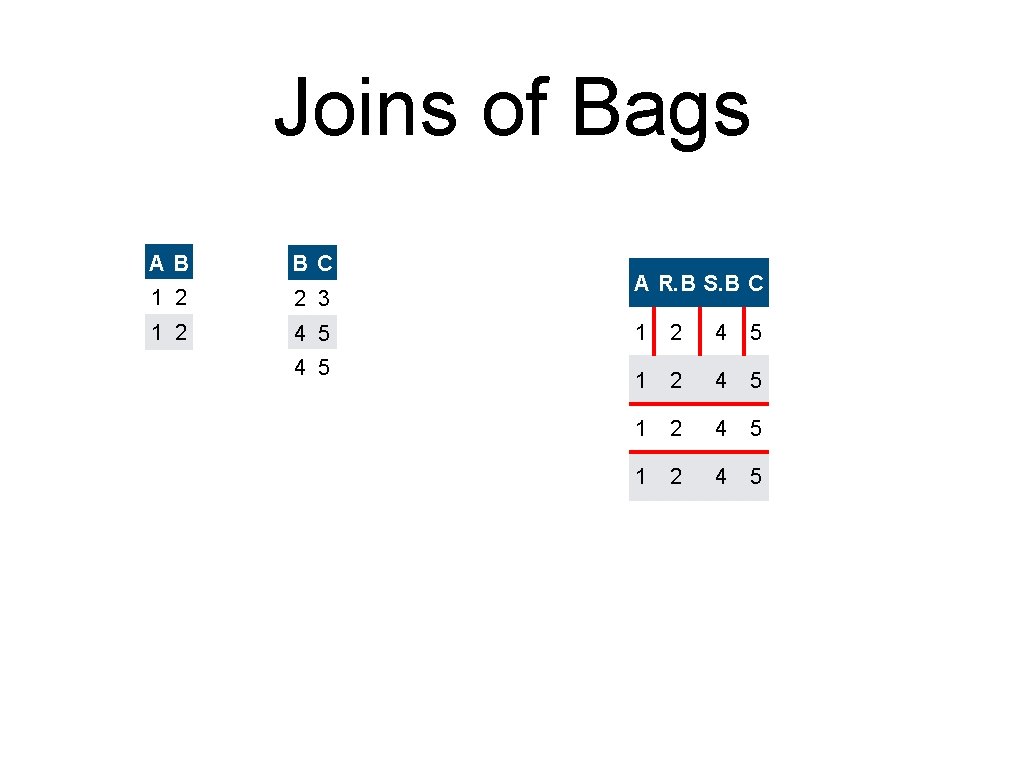
Joins of Bags AB BC 1 2 2 3 1 2 4 5 A R. B S. B C 1 2 4 5
Relational Algebra Operators • • Deduplication operator • Grouping: Partitions tuples into groups Aggregation operators such as sum, averages are used by grouping operators • • Extended projections • • • Usually, aggregation is then applied to each group Allow to create new attributes using arithmetic operations Sorting operator Outer join operator
Aggregations • • SUM AVG MIN, MAX COUNT • not necessarily distinct values in a column
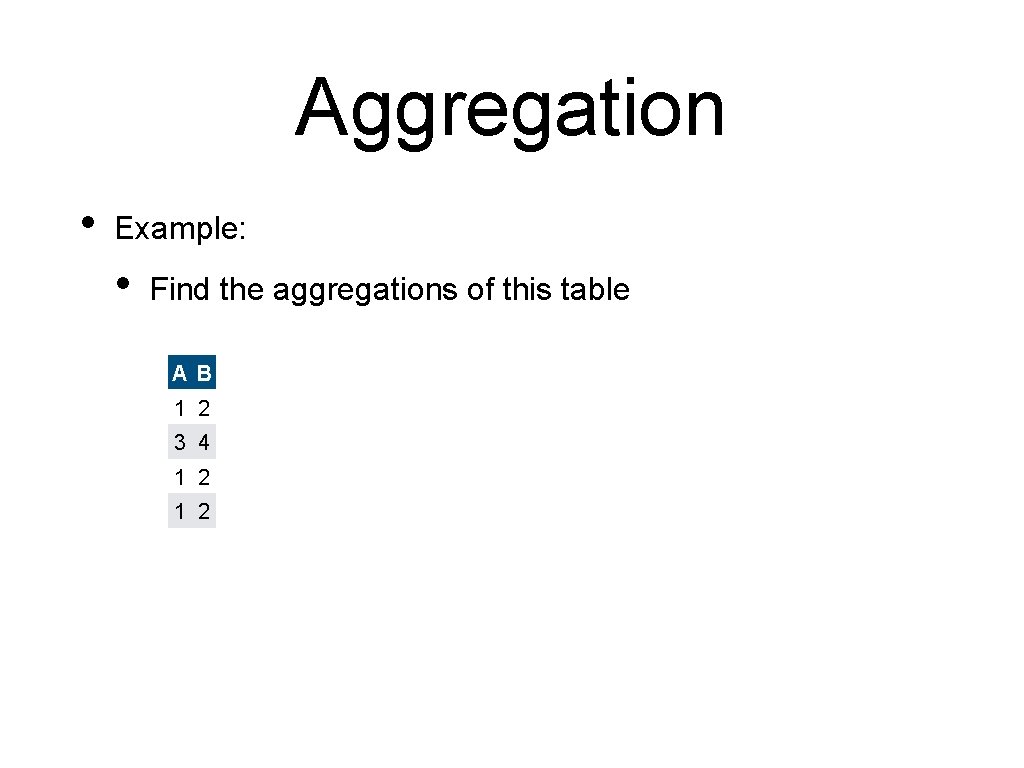
Aggregation • Example: • Find the aggregations of this table AB 1 2 3 4 1 2
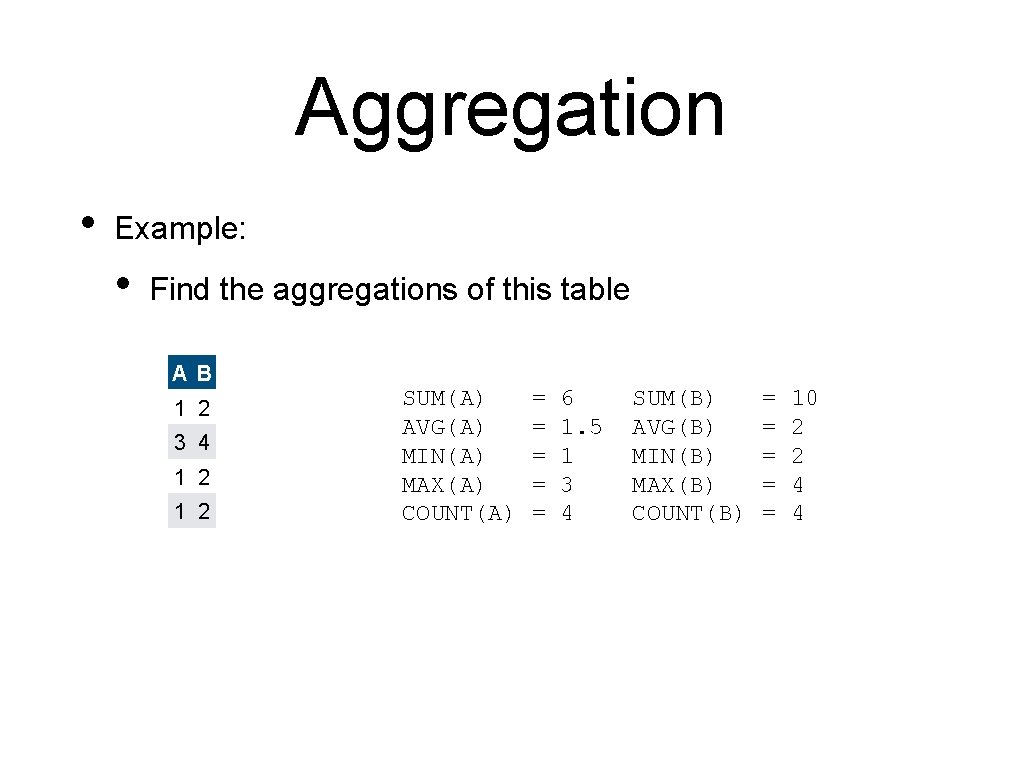
Aggregation • Example: • Find the aggregations of this table AB 1 2 3 4 1 2 SUM(A) AVG(A) MIN(A) MAX(A) COUNT(A) = = = 6 1. 5 1 3 4 SUM(B) AVG(B) MIN(B) MAX(B) COUNT(B) = = = 10 2 2 4 4
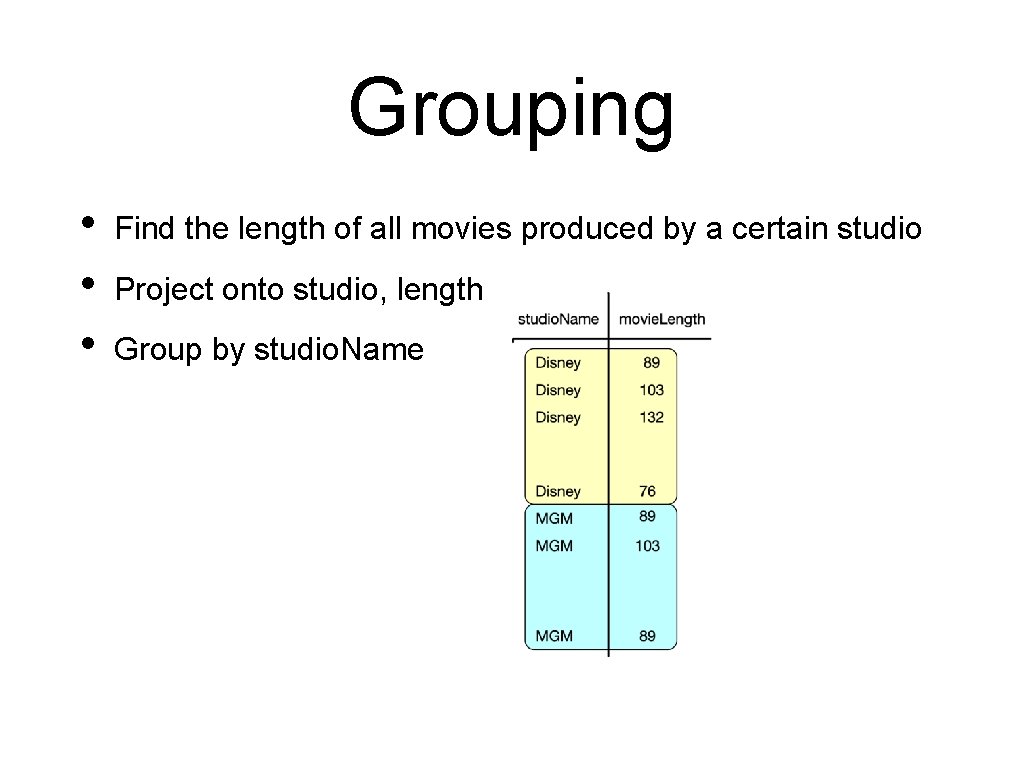
Grouping • • • Find the length of all movies produced by a certain studio Project onto studio, length Group by studio. Name
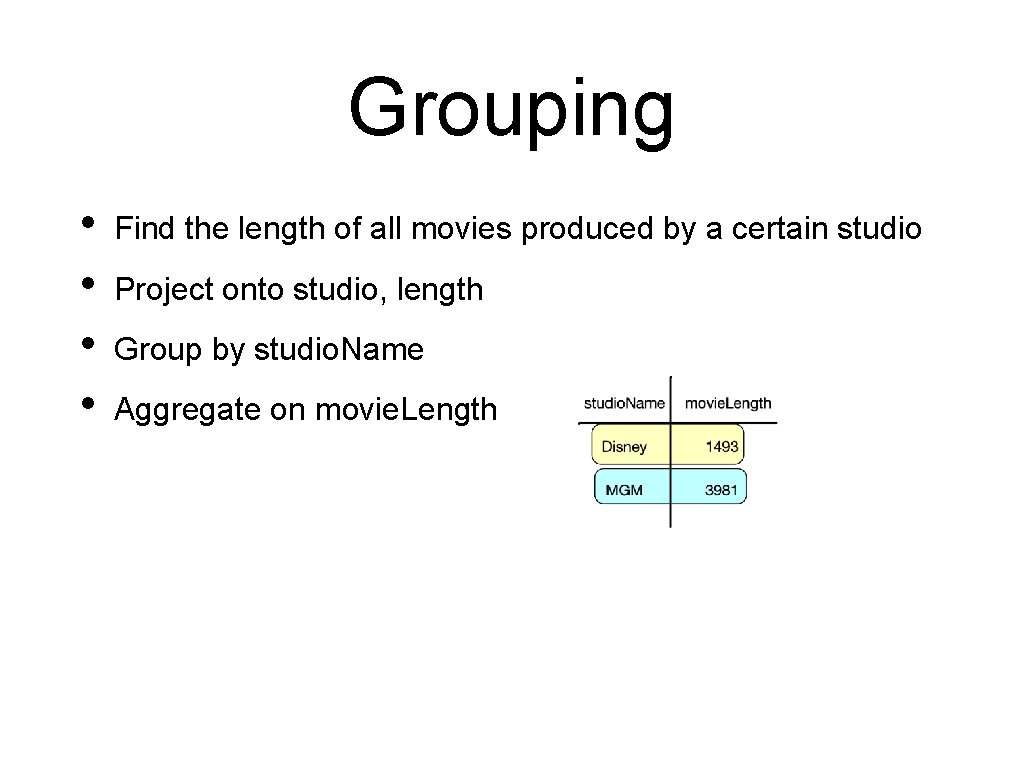
Grouping • • Find the length of all movies produced by a certain studio Project onto studio, length Group by studio. Name Aggregate on movie. Length
Grouping Operator • • • — the grouping attribute — the aggregation operator (e. g. AVG) — the relation
Grouping operator • Partition the tuples of into groups according to values of • For each group produce one tuple with • • • the grouping attributes’ values for that group the aggregation over all tuples of that group Generalize to several attributes
Grouping Operator • Find all stars that appeared in at least three movies and the earliest year in which they appeared • • • Result has star. Name, min. Year, and ct. Title attributes Then select based on the last attribute: ct. Title 3 Finally project onto star. Name and min. Year
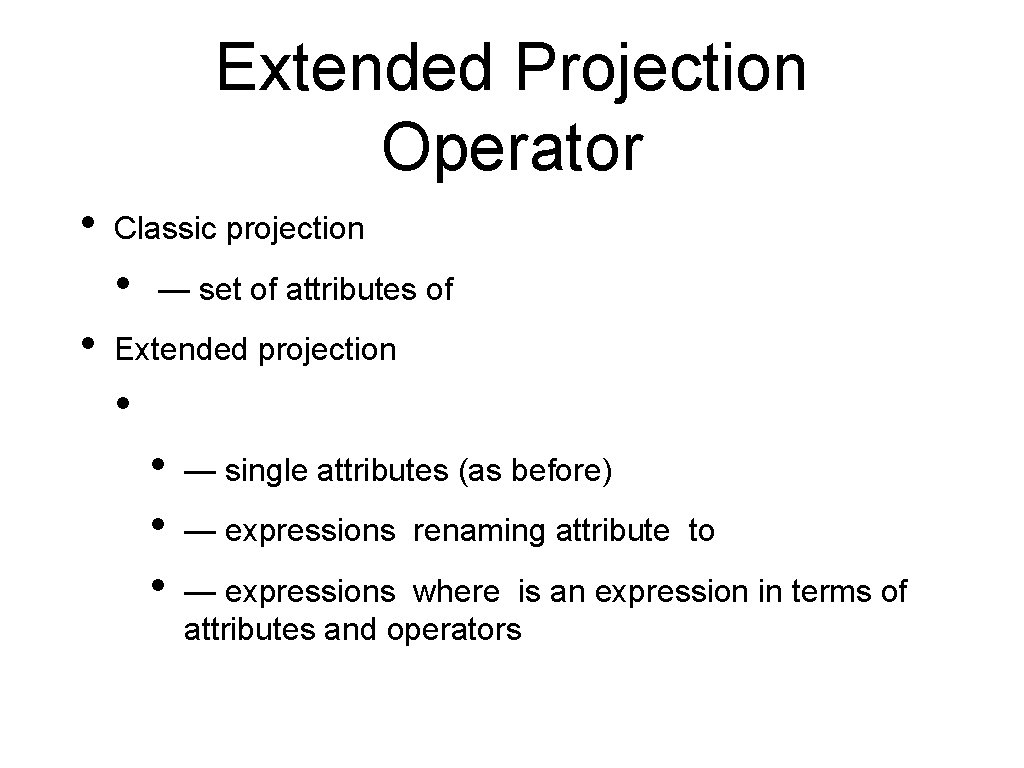
Extended Projection Operator • Classic projection • • — set of attributes of Extended projection • • — single attributes (as before) — expressions renaming attribute to — expressions where is an expression in terms of attributes and operators
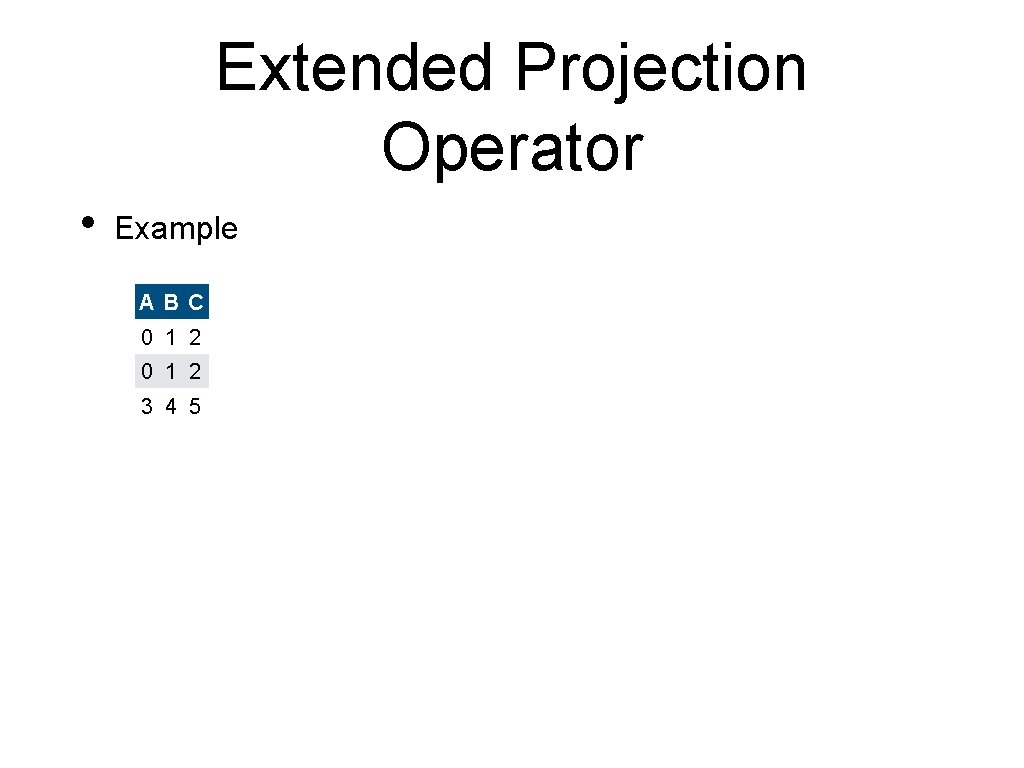
Extended Projection Operator • Example ABC 0 1 2 3 4 5
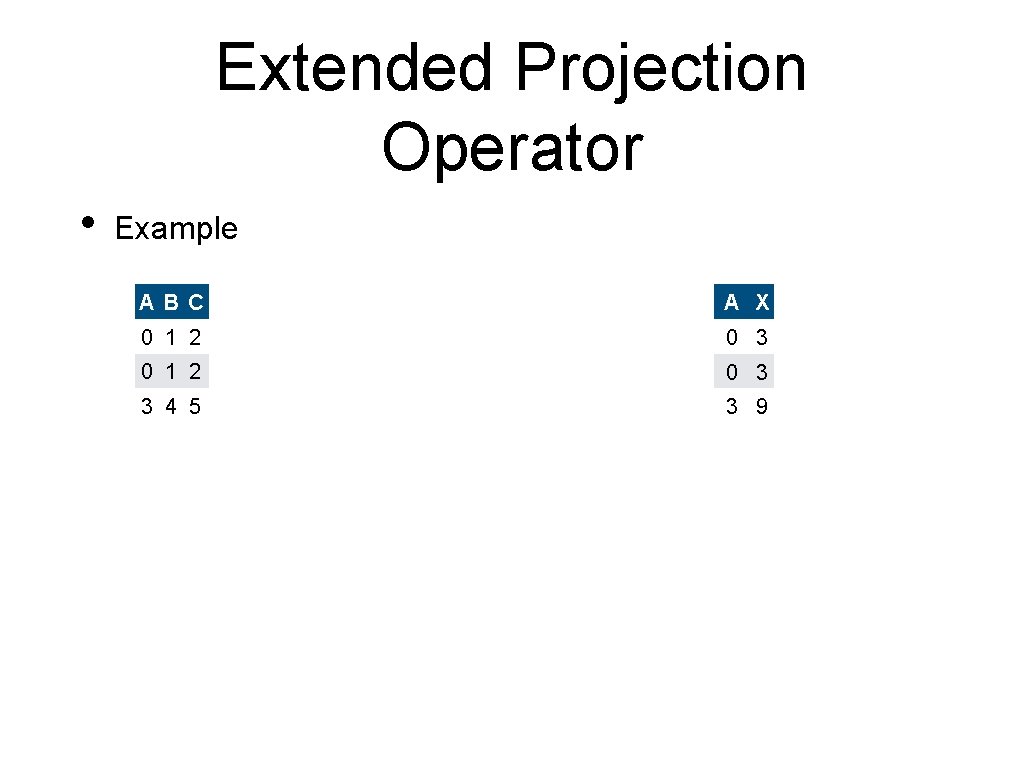
Extended Projection Operator • Example ABC A X 0 1 2 0 3 3 4 5 3 9
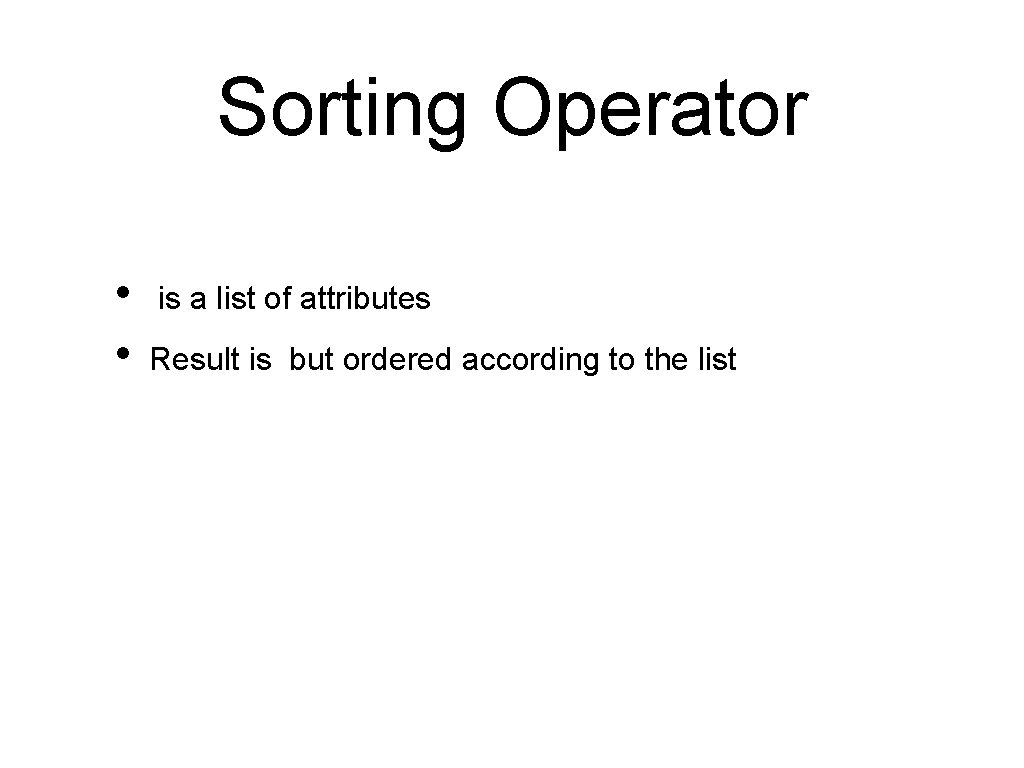
Sorting Operator • • is a list of attributes Result is but ordered according to the list
Outer Join Operator • • Inner join leaves out certain tuples Outer join includes them with null values added
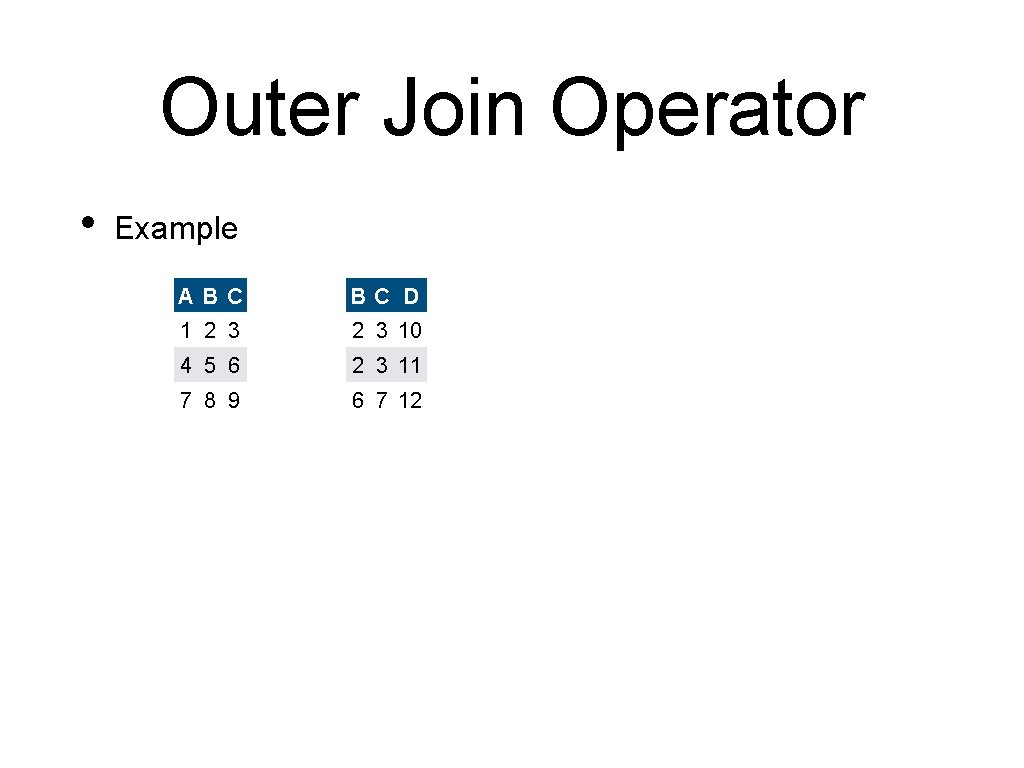
Outer Join Operator • Example ABC BC D 1 2 3 10 4 5 6 2 3 11 7 8 9 6 7 12
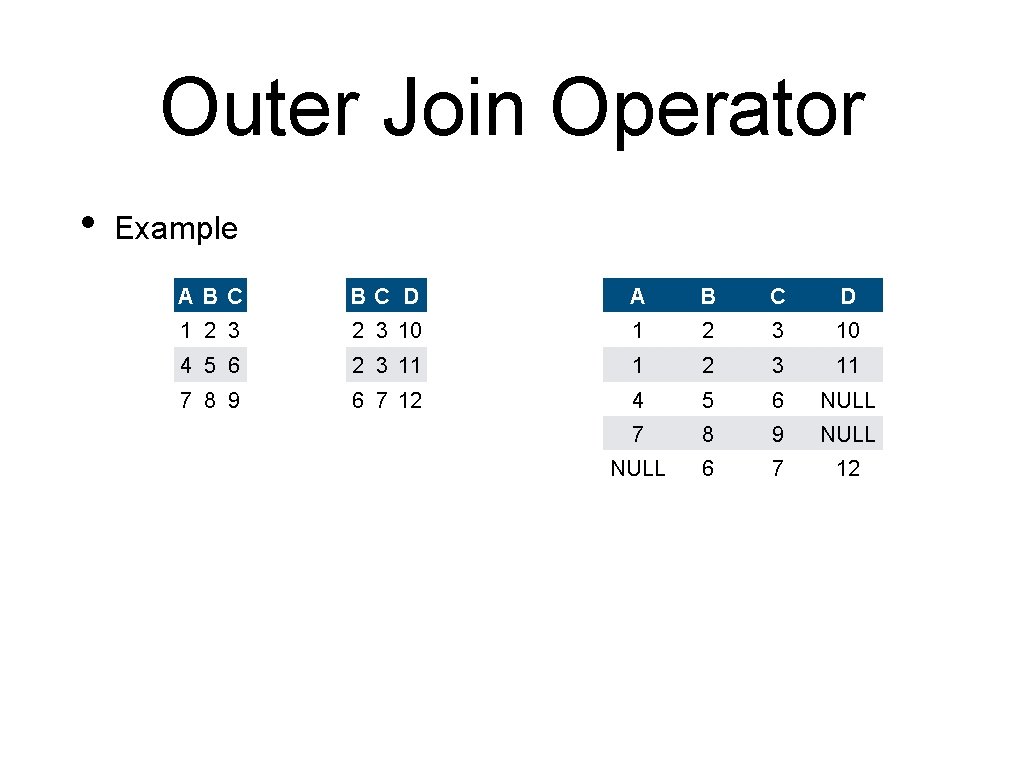
Outer Join Operator • Example ABC BC D A B C D 1 2 3 10 4 5 6 2 3 11 1 2 3 11 7 8 9 6 7 12 4 5 6 NULL 7 8 9 NULL 6 7 12
Outer Join Operator • Left outer join: • • Only dangling tuples in the left relation are padded with NULL and added to the relation Right outer join: • Only dangling tuples in the right relation are padded with NUMM and added to the relation
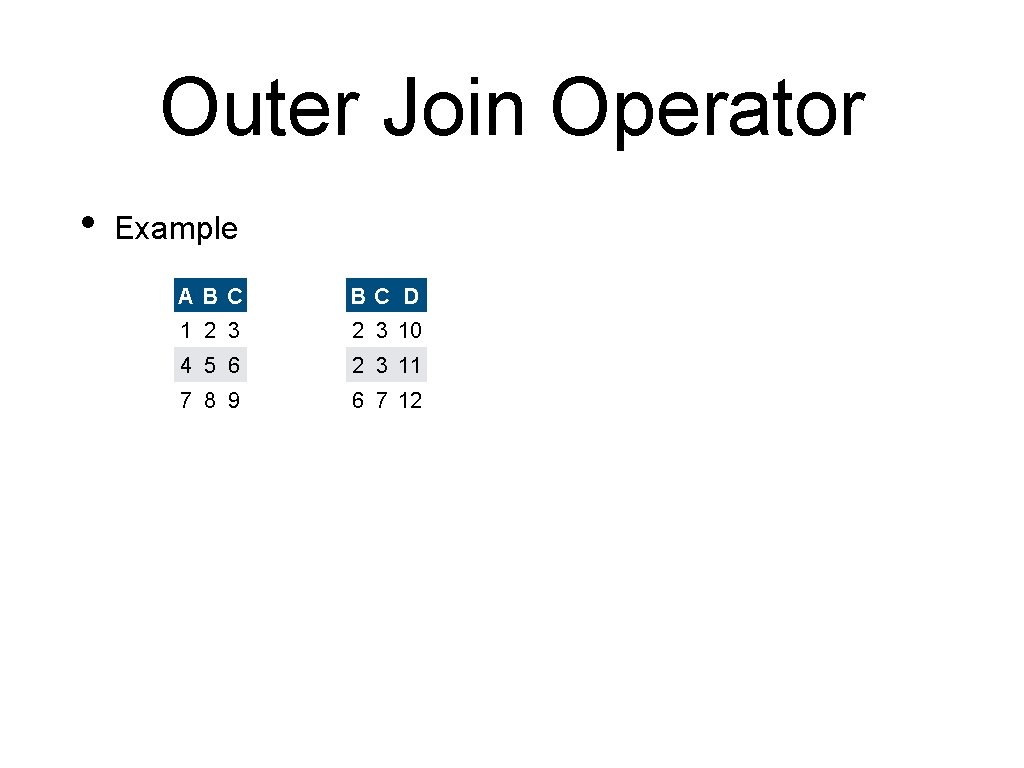
Outer Join Operator • Example ABC BC D 1 2 3 10 4 5 6 2 3 11 7 8 9 6 7 12
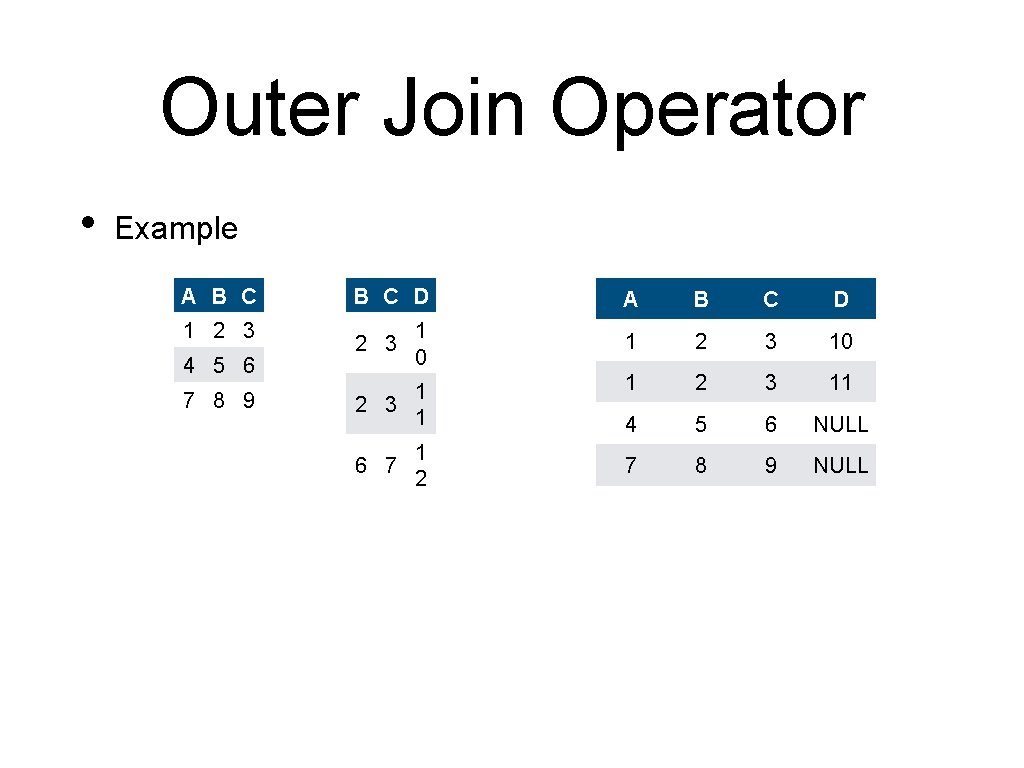
Outer Join Operator • Example A B C 1 2 3 4 5 6 7 8 9 B C D A B C D 1 0 1 2 3 11 4 5 6 NULL 7 8 9 NULL 2 3 1 6 7 2
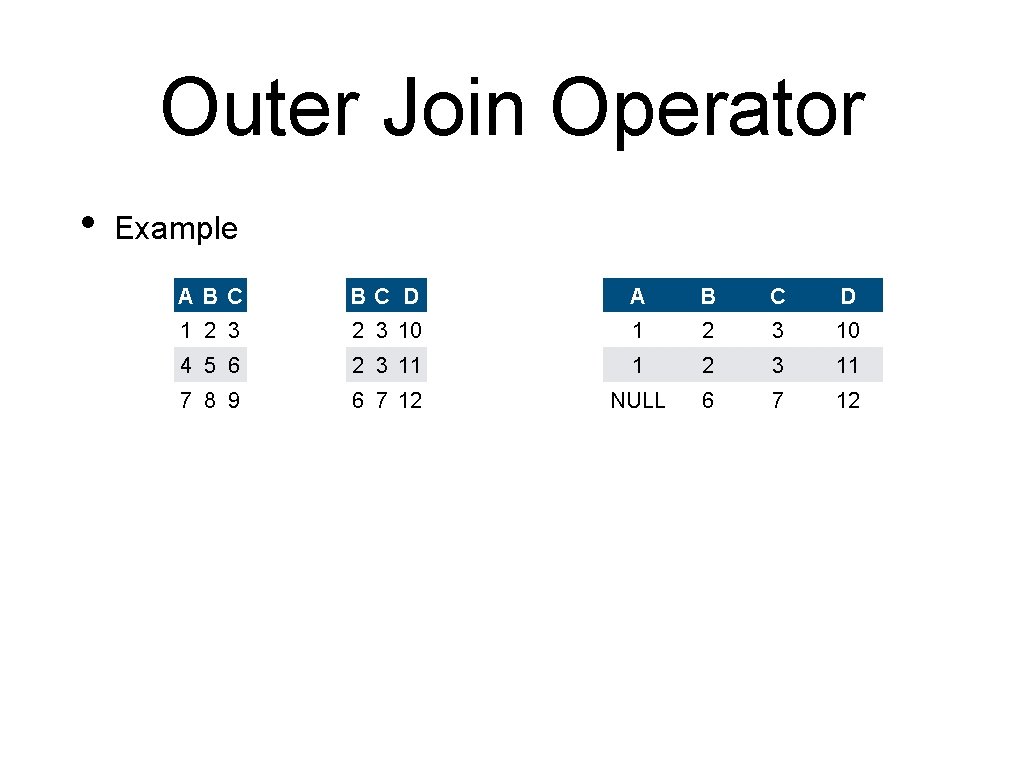
Outer Join Operator • Example ABC BC D A B C D 1 2 3 10 4 5 6 2 3 11 1 2 3 11 7 8 9 6 7 12 NULL 6 7 12
Outer Join Operator • Can also be extended to theta joins
- Slides: 37