
Algebra 1 Chapter 2 2 1 Writing Equations
Algebra 1 Chapter 2
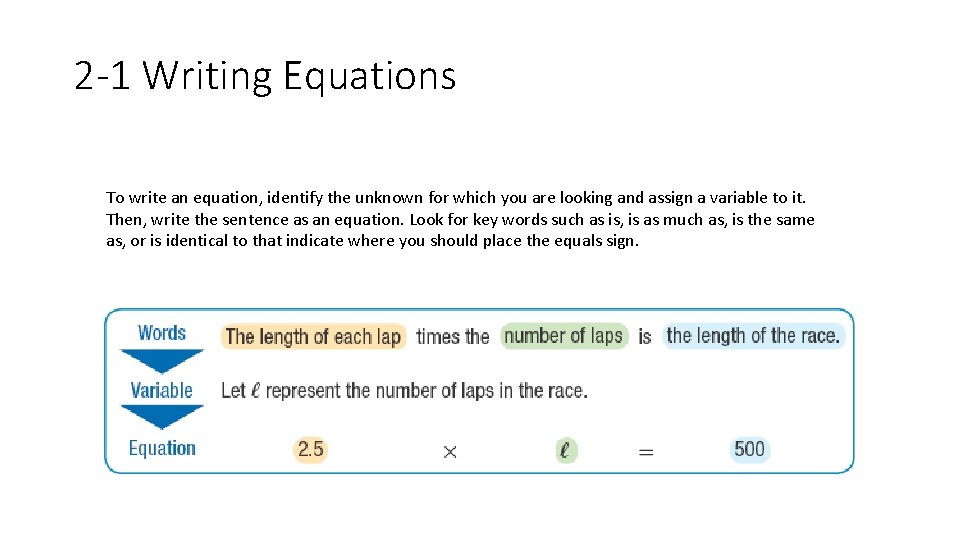
2 -1 Writing Equations To write an equation, identify the unknown for which you are looking and assign a variable to it. Then, write the sentence as an equation. Look for key words such as is, is as much as, is the same as, or is identical to that indicate where you should place the equals sign.
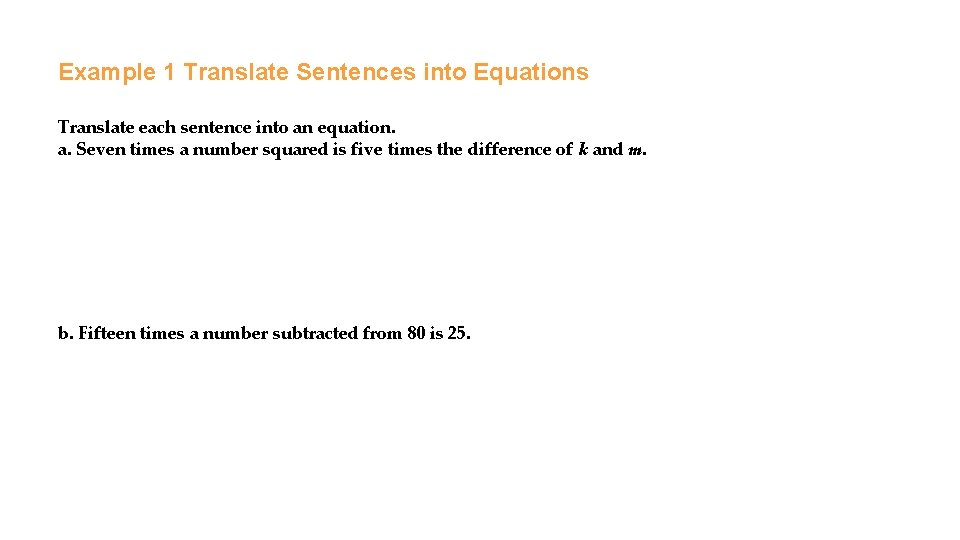
Example 1 Translate Sentences into Equations Translate each sentence into an equation. a. Seven times a number squared is five times the difference of k and m. b. Fifteen times a number subtracted from 80 is 25.
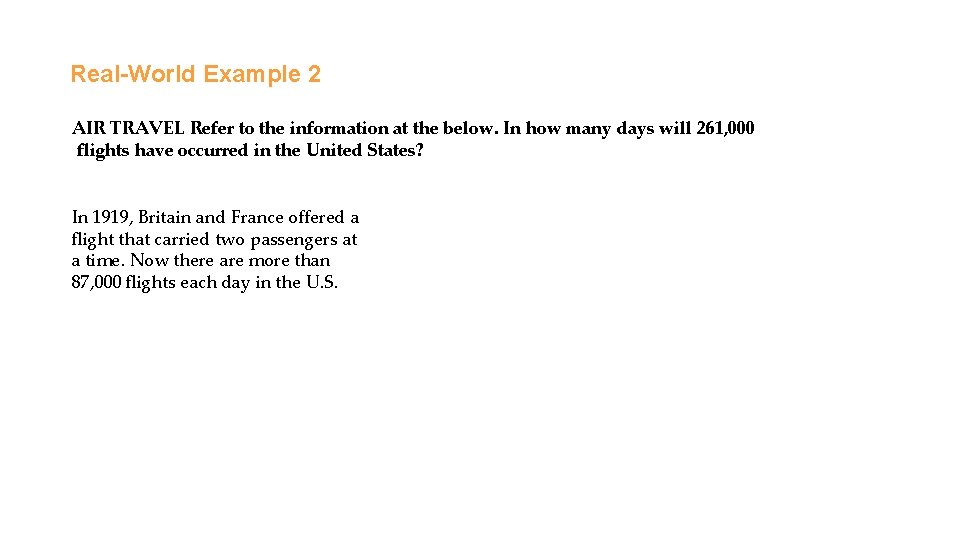
Real-World Example 2 AIR TRAVEL Refer to the information at the below. In how many days will 261, 000 flights have occurred in the United States? In 1919, Britain and France offered a flight that carried two passengers at a time. Now there are more than 87, 000 flights each day in the U. S.
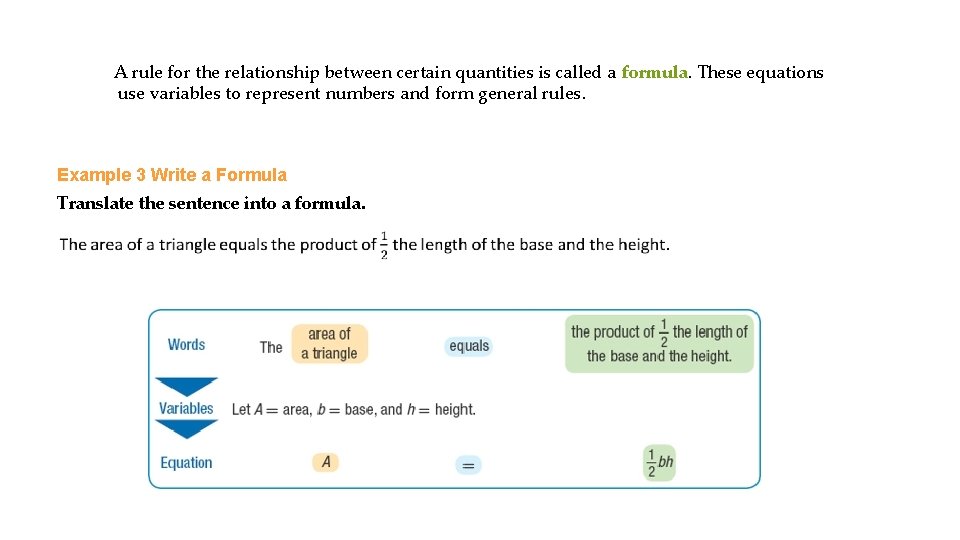
A rule for the relationship between certain quantities is called a formula. These equations use variables to represent numbers and form general rules. Example 3 Write a Formula Translate the sentence into a formula.
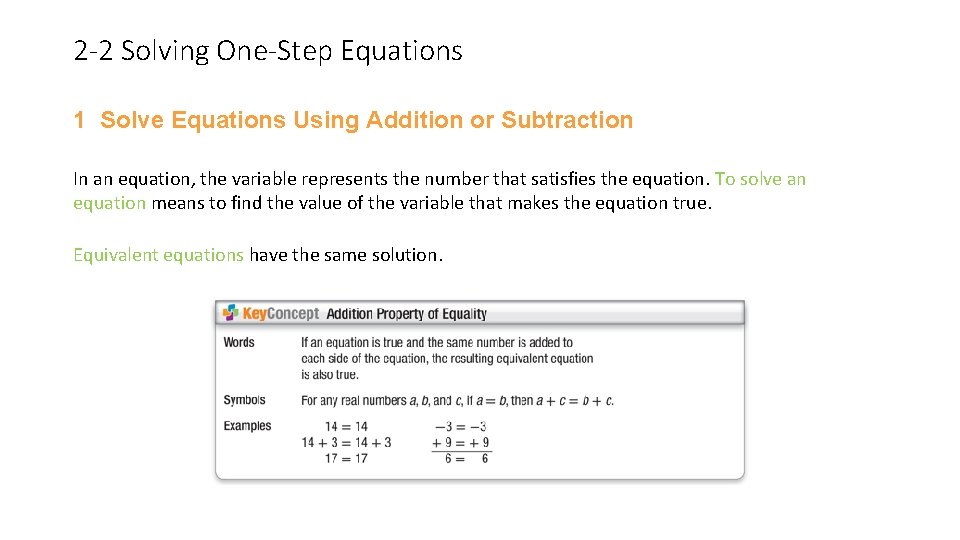
2 -2 Solving One-Step Equations 1 Solve Equations Using Addition or Subtraction In an equation, the variable represents the number that satisfies the equation. To solve an equation means to find the value of the variable that makes the equation true. Equivalent equations have the same solution.
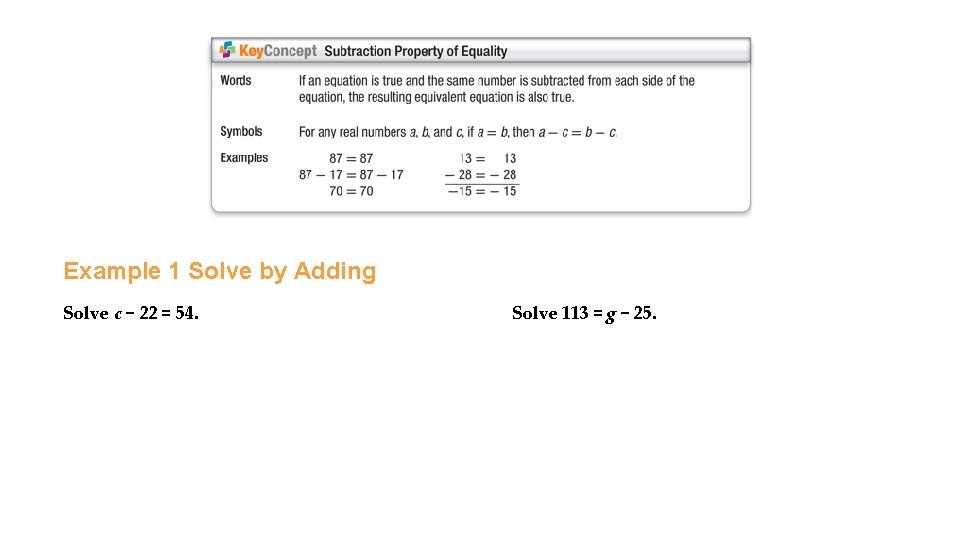
Example 1 Solve by Adding Solve c − 22 = 54. Solve 113 = g − 25.
Example 2 Solve by Subtracting Solve 63 + m = 79. Solve − 12 = p + 16. Solve 27 + k = 30.
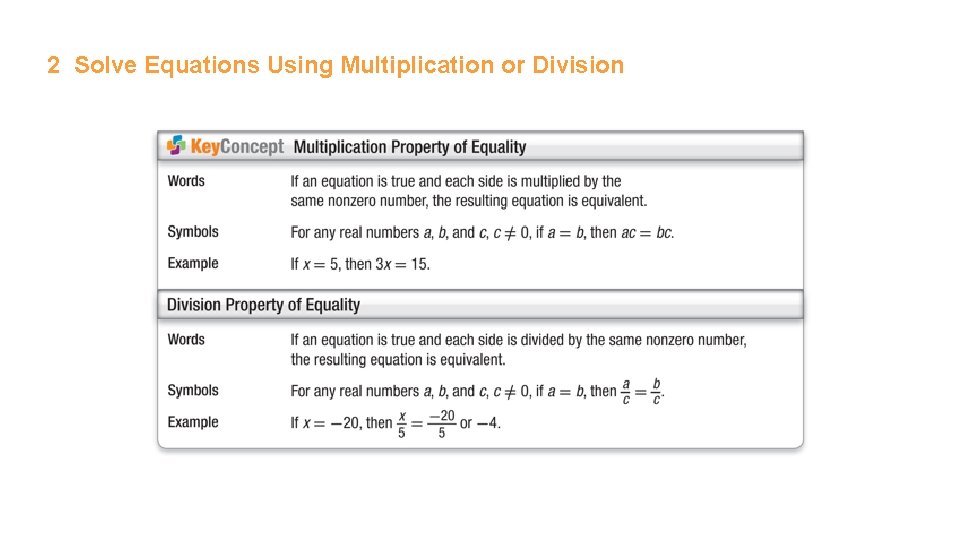
2 Solve Equations Using Multiplication or Division
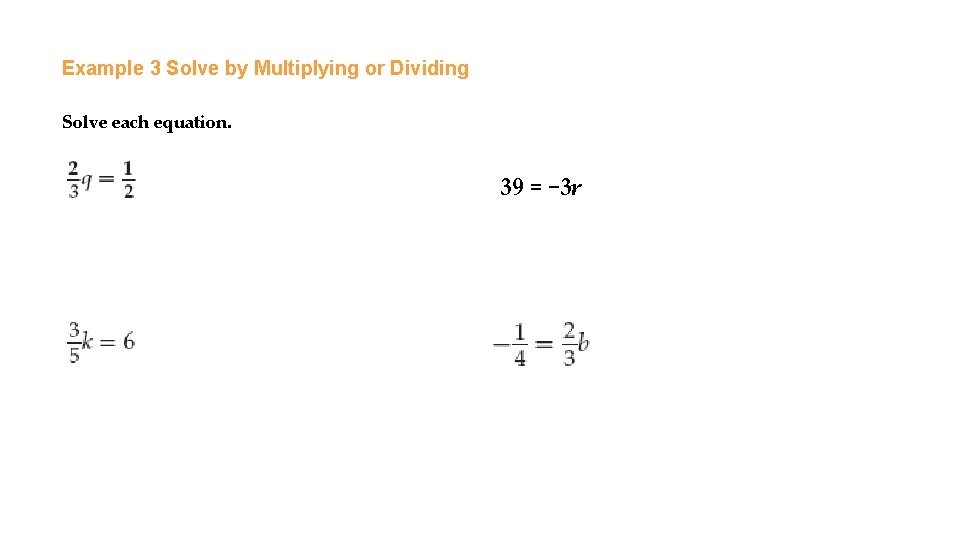
Example 3 Solve by Multiplying or Dividing Solve each equation. 39 = − 3 r
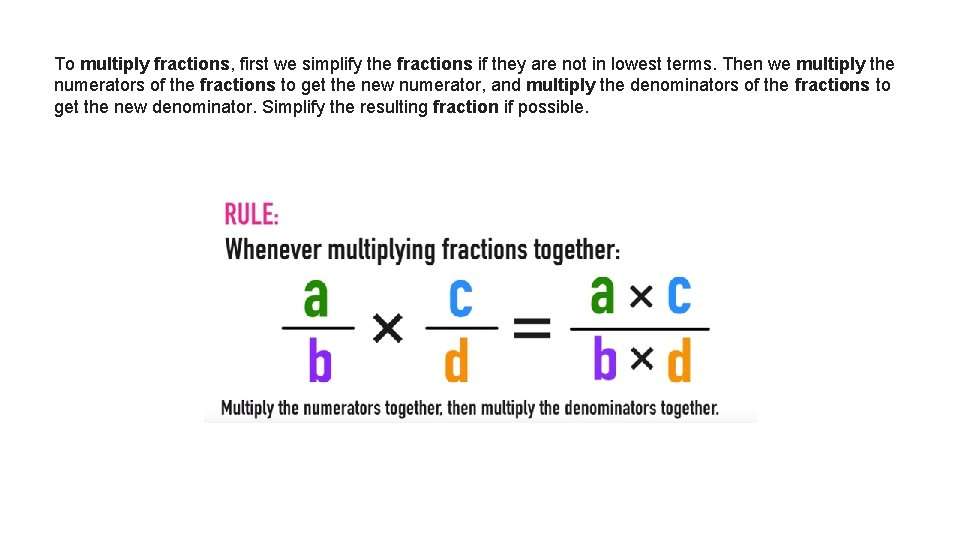
To multiply fractions, first we simplify the fractions if they are not in lowest terms. Then we multiply the numerators of the fractions to get the new numerator, and multiply the denominators of the fractions to get the new denominator. Simplify the resulting fraction if possible.

Dividing two fractions is the same as multiplying the first fraction by the reciprocal of the second fraction. The first step to dividing fractions is to find the reciprocal (reverse the numerator and denominator) of the second fraction. Next, multiply the two numerators.
CW 2. 2 • Log into Math. XL • Complete CW 2. 2
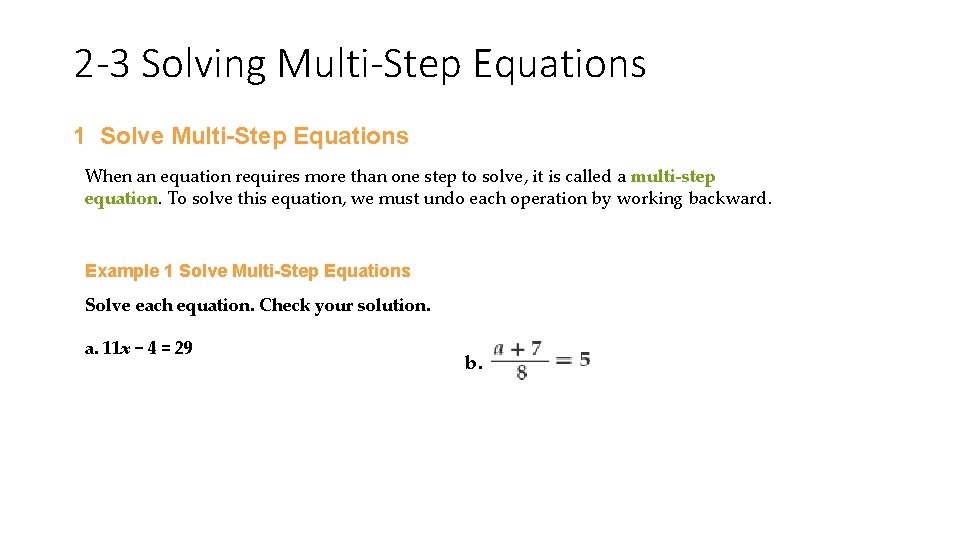
2 -3 Solving Multi-Step Equations 1 Solve Multi-Step Equations When an equation requires more than one step to solve, it is called a multi-step equation. To solve this equation, we must undo each operation by working backward. Example 1 Solve Multi-Step Equations Solve each equation. Check your solution. a. 11 x − 4 = 29 b.
Real-World Example 2 Write and Solve a Multi. Step Equation Hiroshi is buying a pair of water skis that are on sale for of the original price. After he uses a $25 gift certificate, the total cost before taxes is $115. What was the original price of the skis? Write an equation for the problem. Then solve the equation.
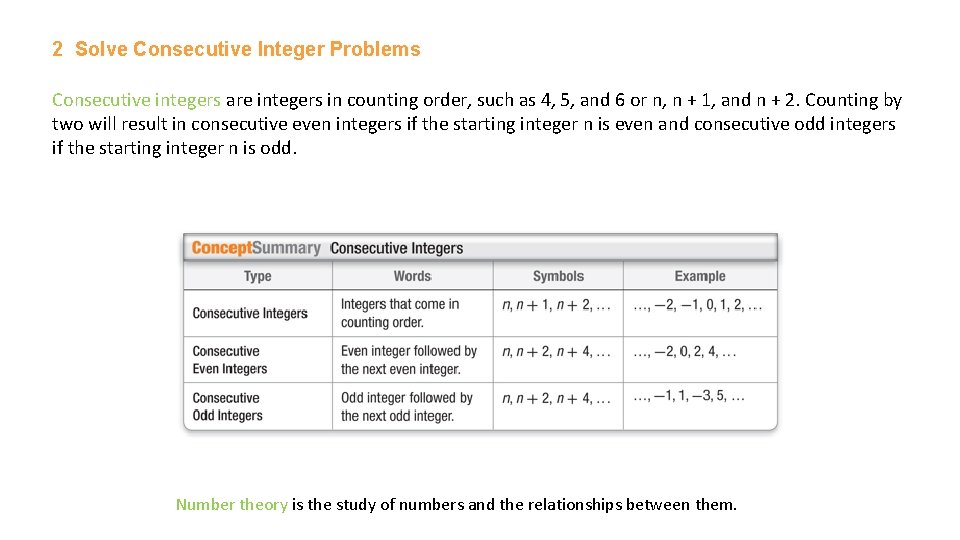
2 Solve Consecutive Integer Problems Consecutive integers are integers in counting order, such as 4, 5, and 6 or n, n + 1, and n + 2. Counting by two will result in consecutive even integers if the starting integer n is even and consecutive odd integers if the starting integer n is odd. Number theory is the study of numbers and the relationships between them.
Example 3 Solve a Consecutive Integer Problem Write an equation for the following problem. Then solve the equation and answer the problem. Find three consecutive odd integers with a sum of − 51.
CW 2. 3 • Log into Math. XL • Complete CW 2. 3
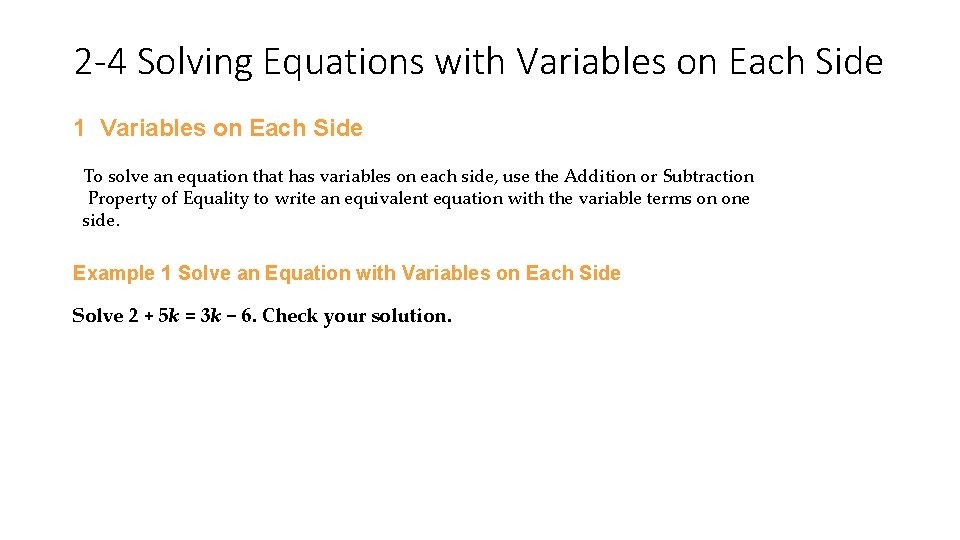
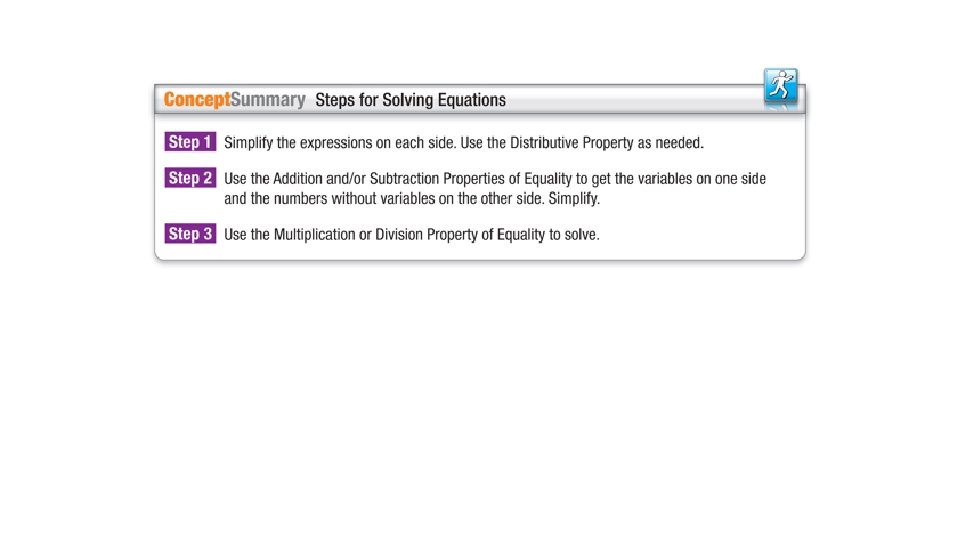
2 -4 Solving Equations with Variables on Each Side 1 Variables on Each Side To solve an equation that has variables on each side, use the Addition or Subtraction Property of Equality to write an equivalent equation with the variable terms on one side. Example 1 Solve an Equation with Variables on Each Side Solve 2 + 5 k = 3 k − 6. Check your solution.
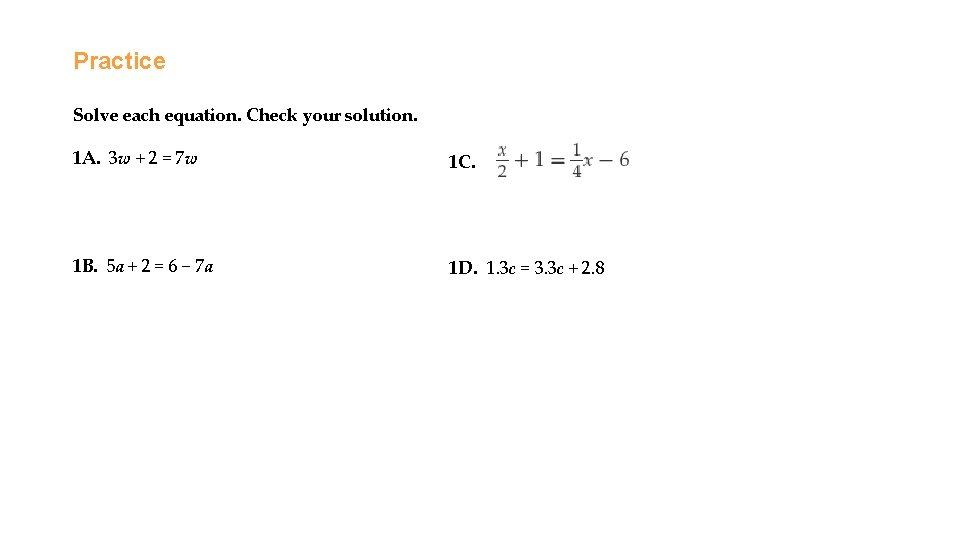
Practice Solve each equation. Check your solution. 1 A. 3 w + 2 = 7 w 1 C. 1 B. 5 a + 2 = 6 − 7 a 1 D. 1. 3 c = 3. 3 c + 2. 8
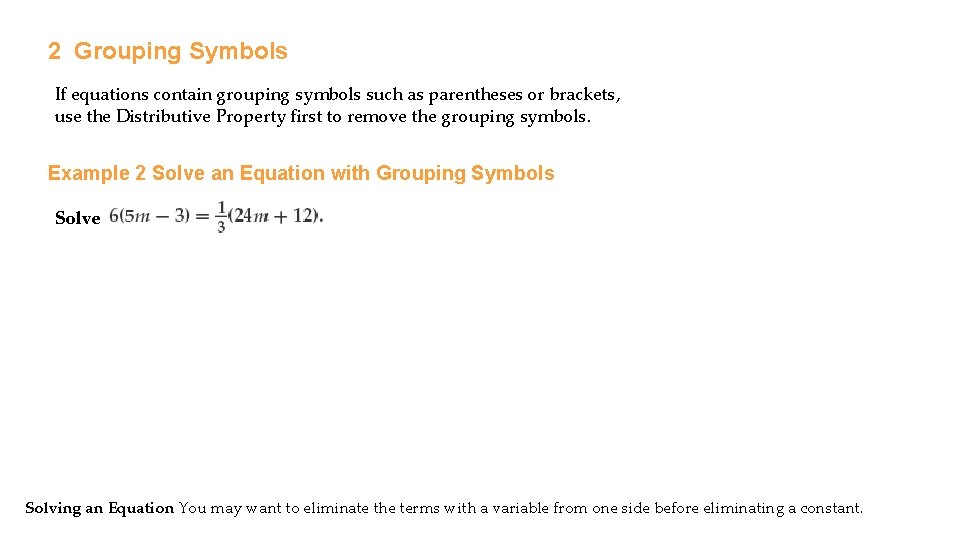
2 Grouping Symbols If equations contain grouping symbols such as parentheses or brackets, use the Distributive Property first to remove the grouping symbols. Example 2 Solve an Equation with Grouping Symbols Solve Solving an Equation You may want to eliminate the terms with a variable from one side before eliminating a constant.
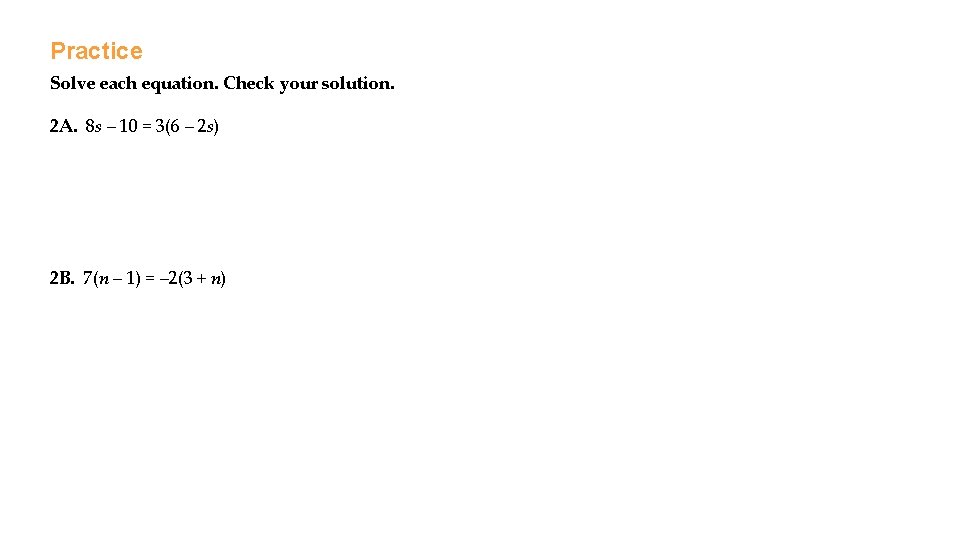
Practice Solve each equation. Check your solution. 2 A. 8 s – 10 = 3(6 – 2 s) 2 B. 7(n – 1) = – 2(3 + n)
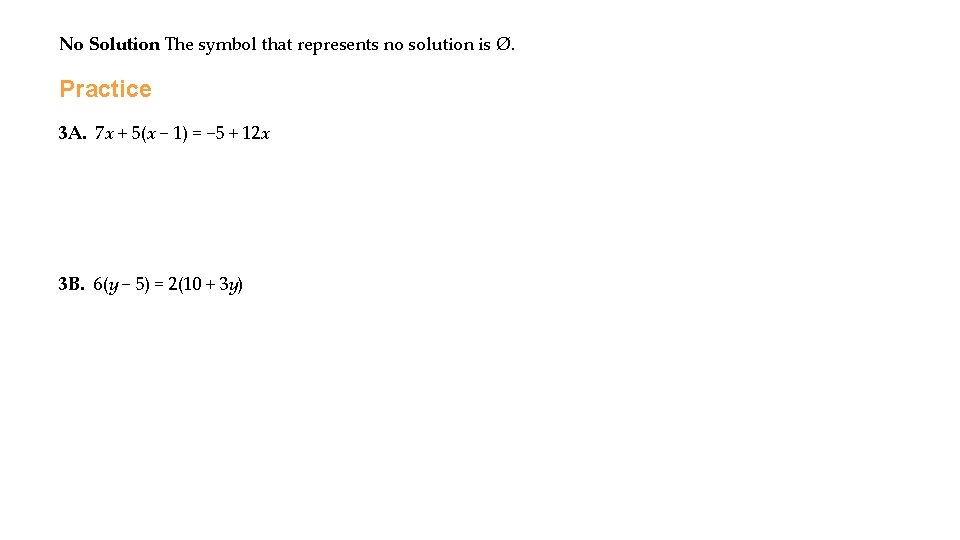
No Solution The symbol that represents no solution is Ø. Practice 3 A. 7 x + 5(x − 1) = − 5 + 12 x 3 B. 6(y − 5) = 2(10 + 3 y)
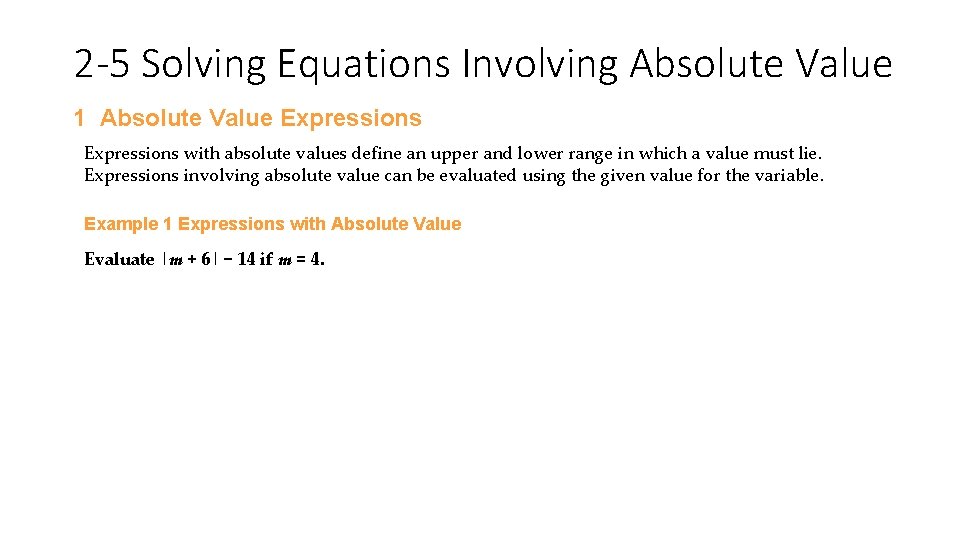
2 -5 Solving Equations Involving Absolute Value 1 Absolute Value Expressions with absolute values define an upper and lower range in which a value must lie. Expressions involving absolute value can be evaluated using the given value for the variable. Example 1 Expressions with Absolute Value Evaluate |m + 6| − 14 if m = 4.
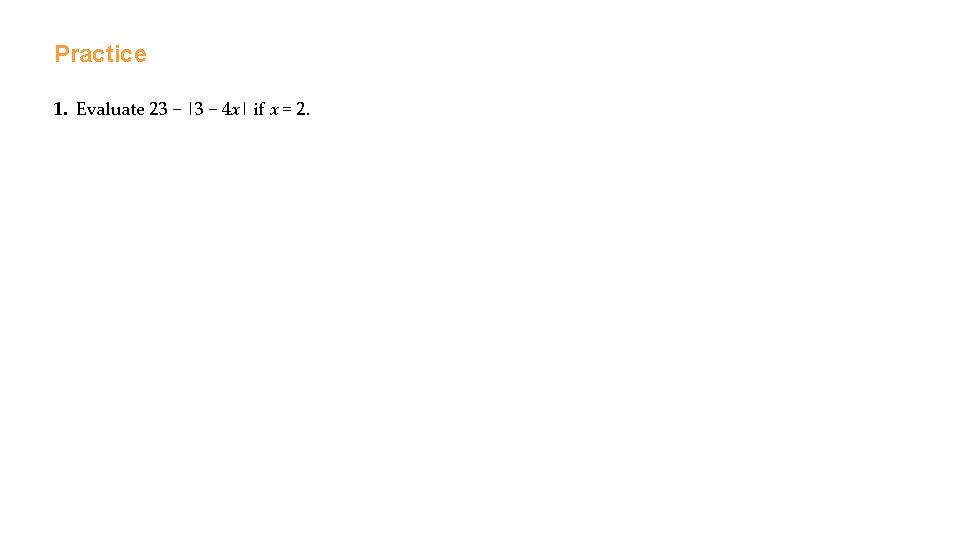
Practice 1. Evaluate 23 − |3 − 4 x| if x = 2.
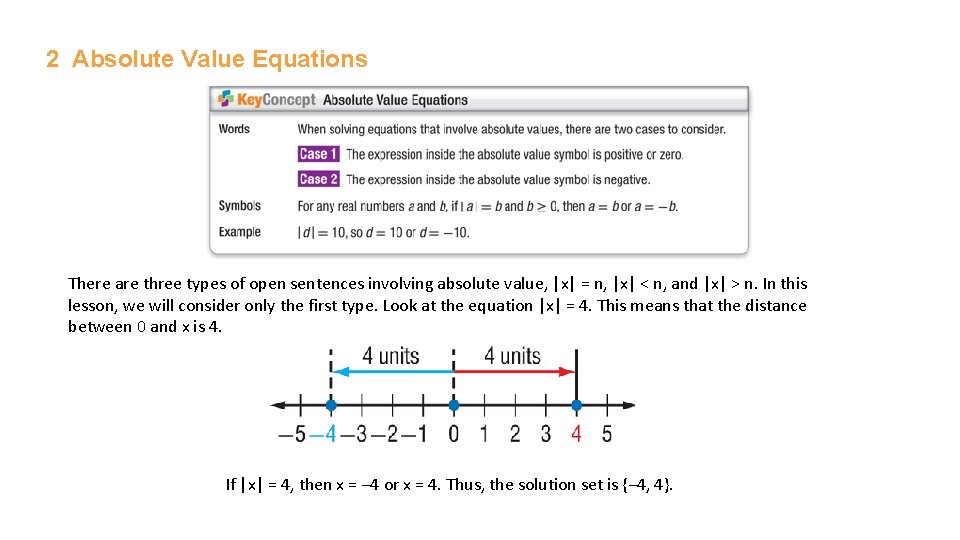
2 Absolute Value Equations There are three types of open sentences involving absolute value, |x| = n, |x| < n, and |x| > n. In this lesson, we will consider only the first type. Look at the equation |x| = 4. This means that the distance between 0 and x is 4. If |x| = 4, then x = − 4 or x = 4. Thus, the solution set is {− 4, 4}.
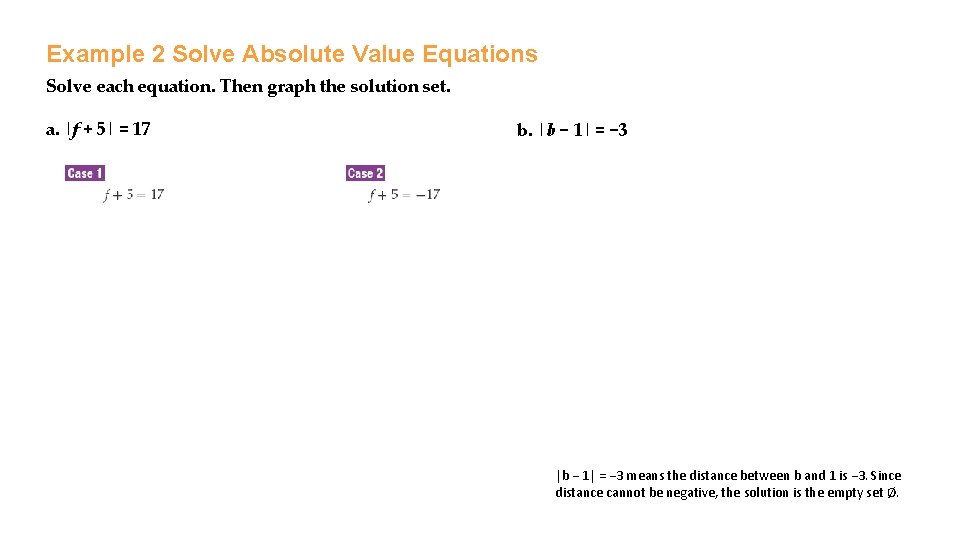
Example 2 Solve Absolute Value Equations Solve each equation. Then graph the solution set. a. |f + 5| = 17 b. |b − 1| = − 3 means the distance between b and 1 is − 3. Since distance cannot be negative, the solution is the empty set Ø.
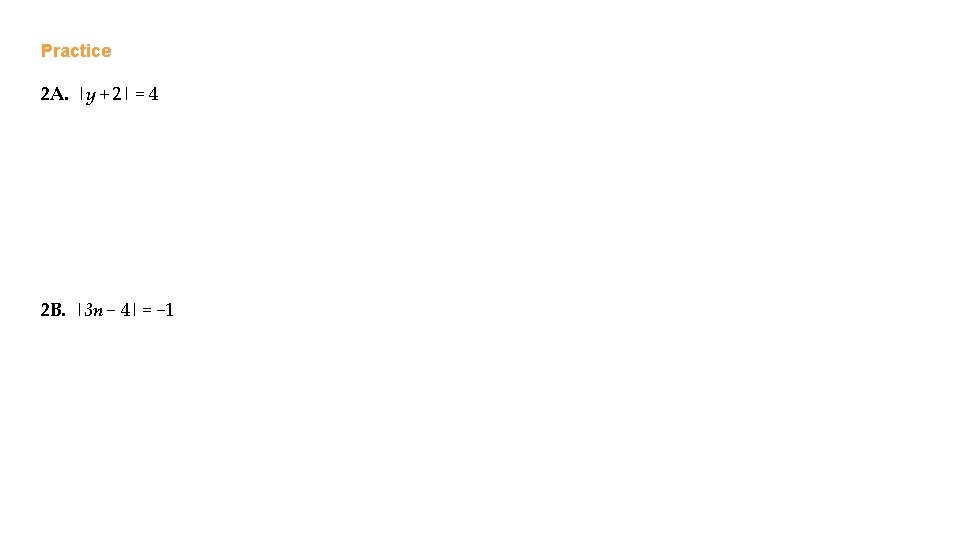
Practice 2 A. |y + 2| = 4 2 B. |3 n − 4| = − 1
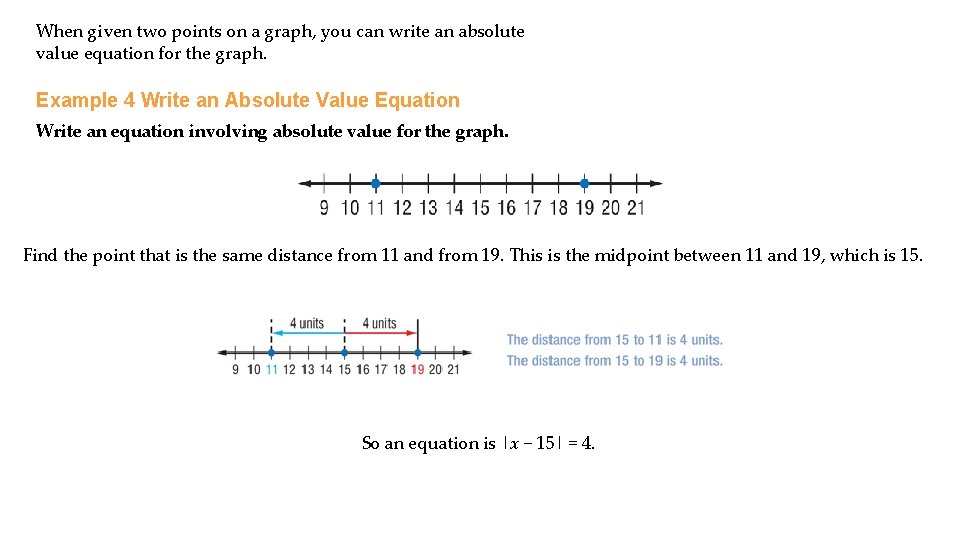
When given two points on a graph, you can write an absolute value equation for the graph. Example 4 Write an Absolute Value Equation Write an equation involving absolute value for the graph. Find the point that is the same distance from 11 and from 19. This is the midpoint between 11 and 19, which is 15. So an equation is |x − 15| = 4.
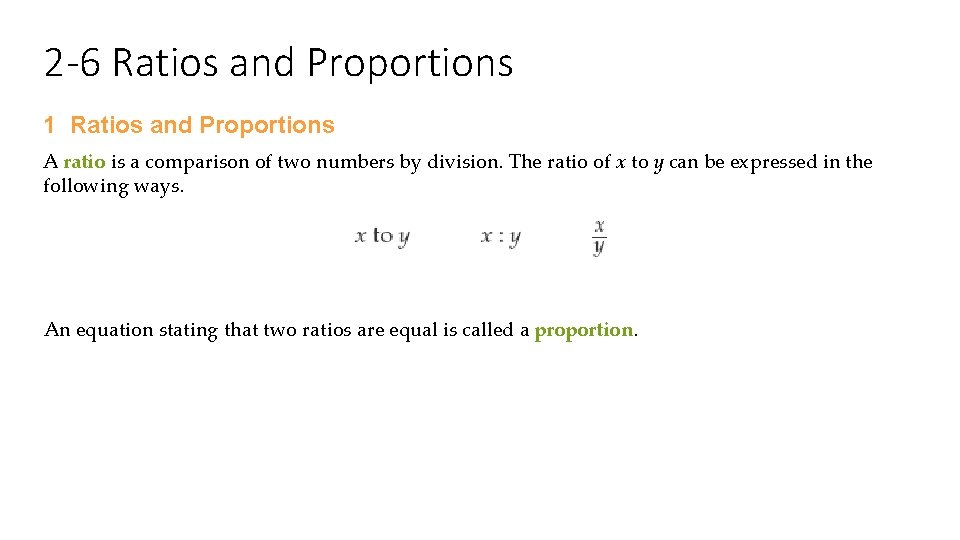
2 -6 Ratios and Proportions 1 Ratios and Proportions A ratio is a comparison of two numbers by division. The ratio of x to y can be expressed in the following ways. An equation stating that two ratios are equal is called a proportion.
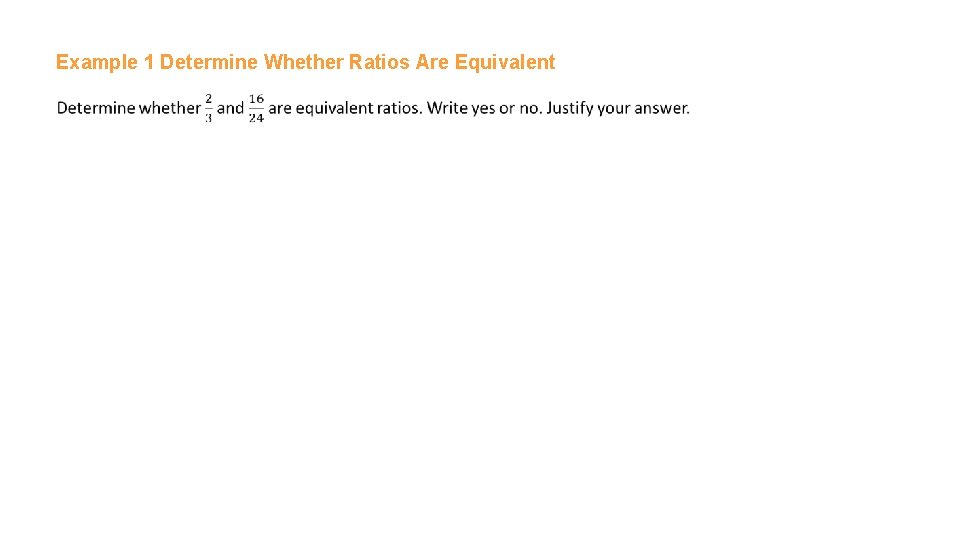
Example 1 Determine Whether Ratios Are Equivalent
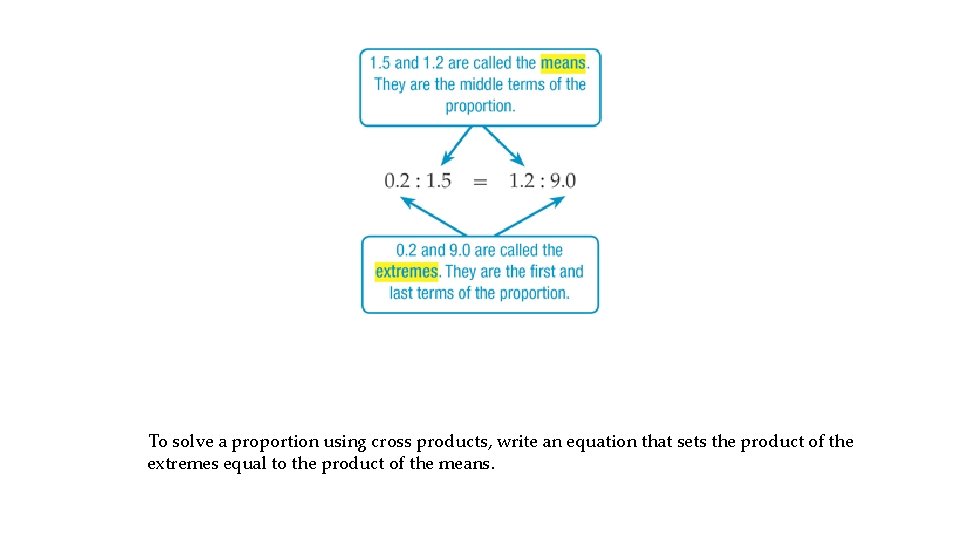
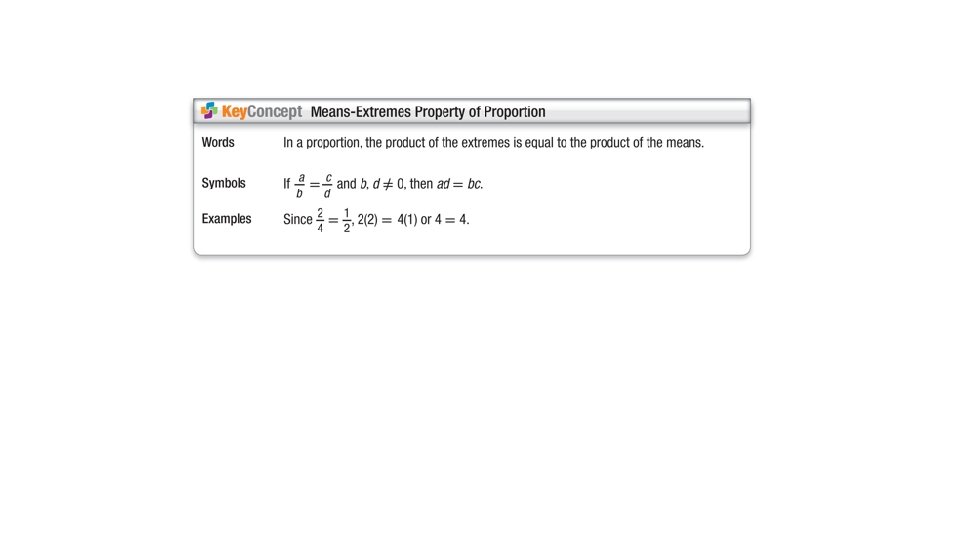
To solve a proportion using cross products, write an equation that sets the product of the extremes equal to the product of the means.
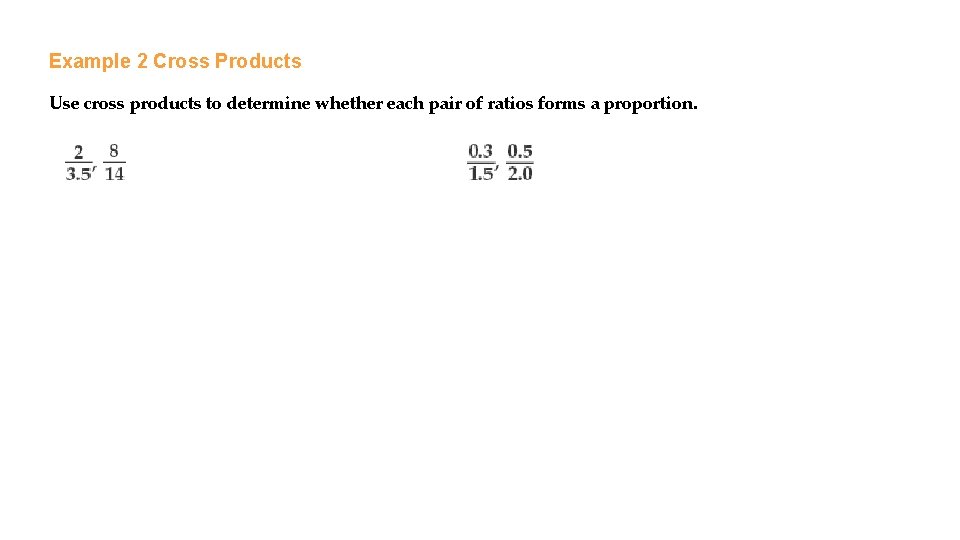
Example 2 Cross Products Use cross products to determine whether each pair of ratios forms a proportion.
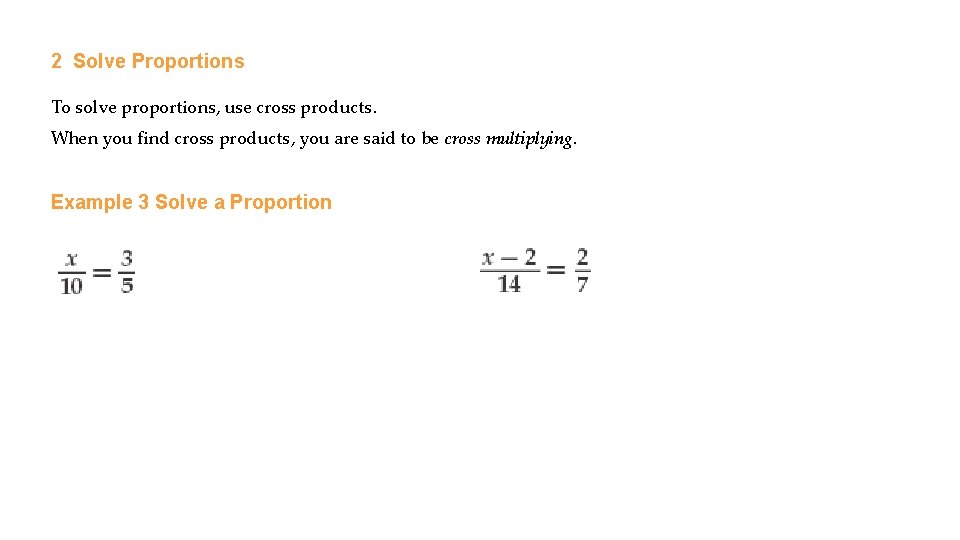
2 Solve Proportions To solve proportions, use cross products. When you find cross products, you are said to be cross multiplying. Example 3 Solve a Proportion
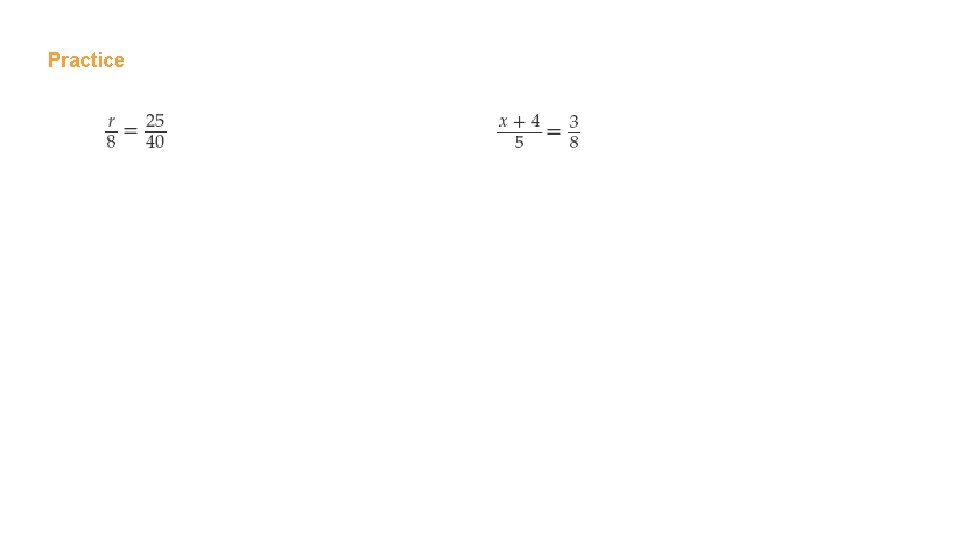
Practice
The ratio of two measurements having different units of measure is called a rate. For example, a price of $9. 99 per 1 0 songs is a rate. A rate that tells how many of one item is being compared to 1 of another item is called a unit rate. Example 4 Rate of Growth In the past two years, a retailer has opened 232 stores. If the rate of growth remains constant, how many stores will the retailer open in the next 3 years?
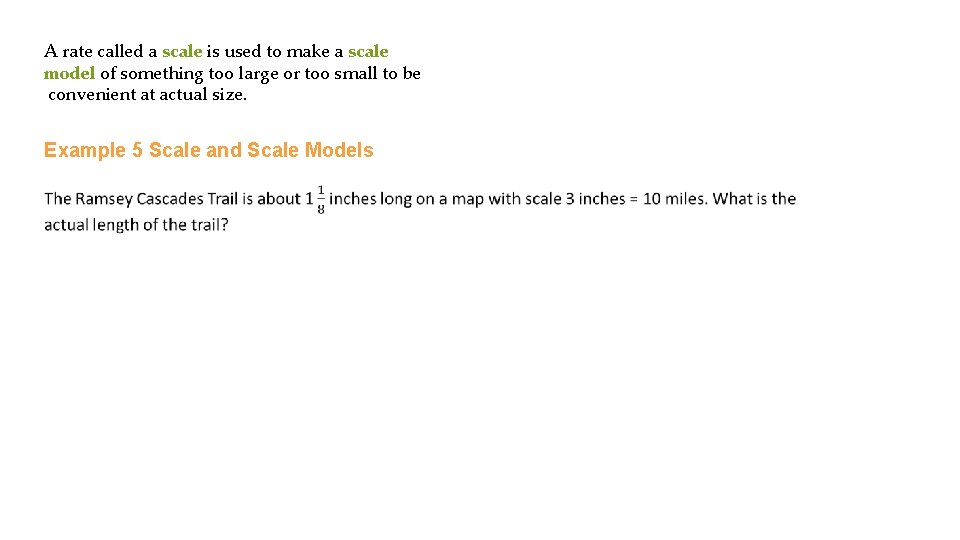
A rate called a scale is used to make a scale model of something too large or too small to be convenient at actual size. Example 5 Scale and Scale Models
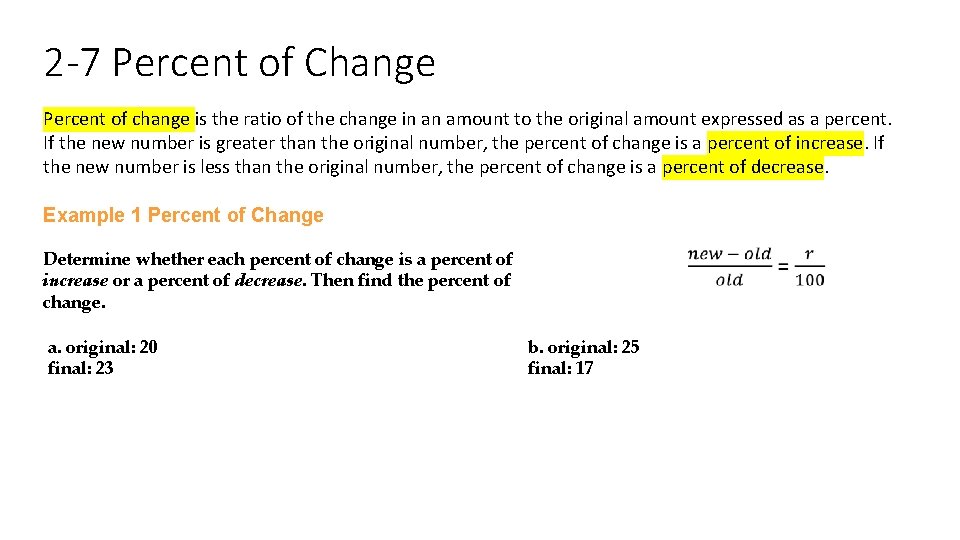
2 -7 Percent of Change Percent of change is the ratio of the change in an amount to the original amount expressed as a percent. If the new number is greater than the original number, the percent of change is a percent of increase. If the new number is less than the original number, the percent of change is a percent of decrease. Example 1 Percent of Change Determine whether each percent of change is a percent of increase or a percent of decrease. Then find the percent of change. a. original: 20 final: 23 b. original: 25 final: 17
Example 2 Percent of Change The total number of passengers on cruise ships increased 10% from 2007 to 2009. If there were 17. 22 million passengers in 2009, how many were there in 2007?
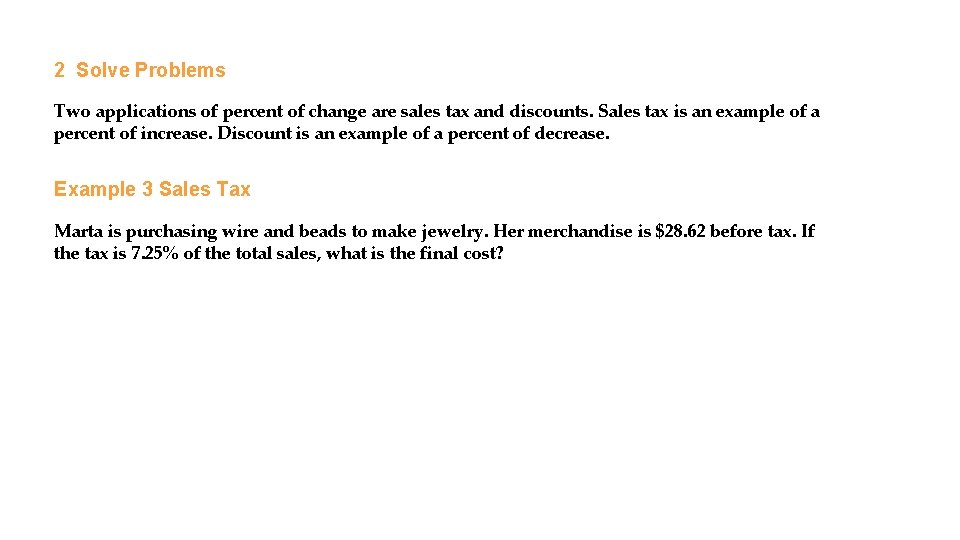
2 Solve Problems Two applications of percent of change are sales tax and discounts. Sales tax is an example of a percent of increase. Discount is an example of a percent of decrease. Example 3 Sales Tax Marta is purchasing wire and beads to make jewelry. Her merchandise is $28. 62 before tax. If the tax is 7. 25% of the total sales, what is the final cost?
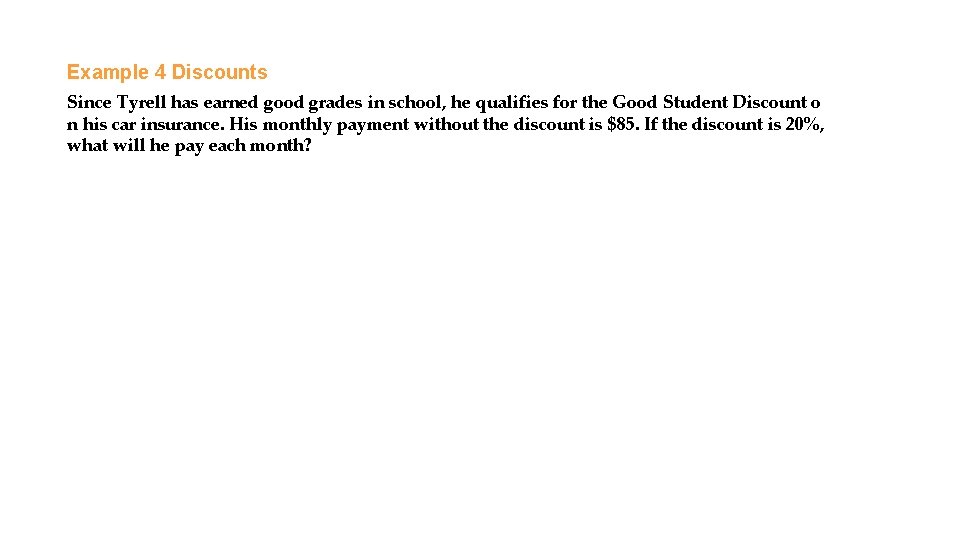
Example 4 Discounts Since Tyrell has earned good grades in school, he qualifies for the Good Student Discount o n his car insurance. His monthly payment without the discount is $85. If the discount is 20%, what will he pay each month?
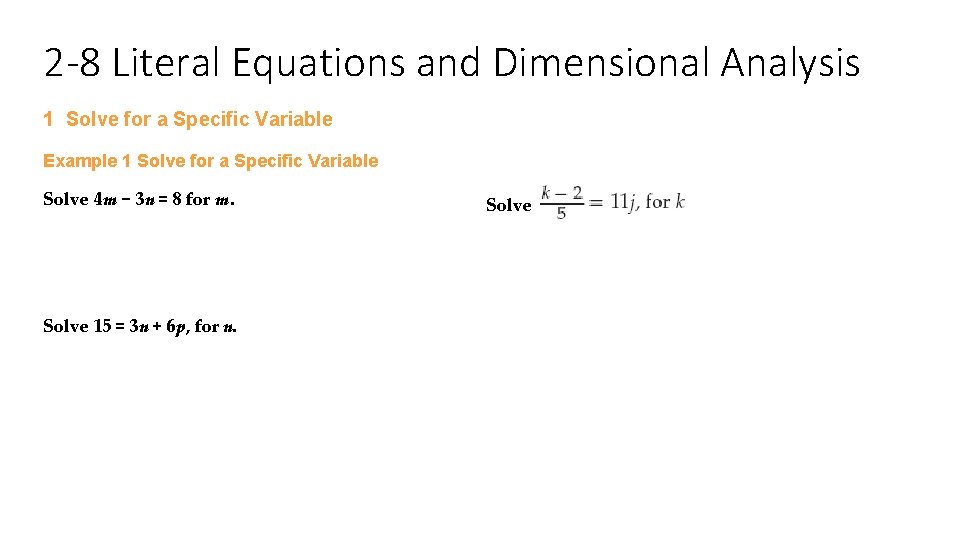
2 -8 Literal Equations and Dimensional Analysis 1 Solve for a Specific Variable Example 1 Solve for a Specific Variable Solve 4 m − 3 n = 8 for m. Solve 15 = 3 n + 6 p, for n. Solve
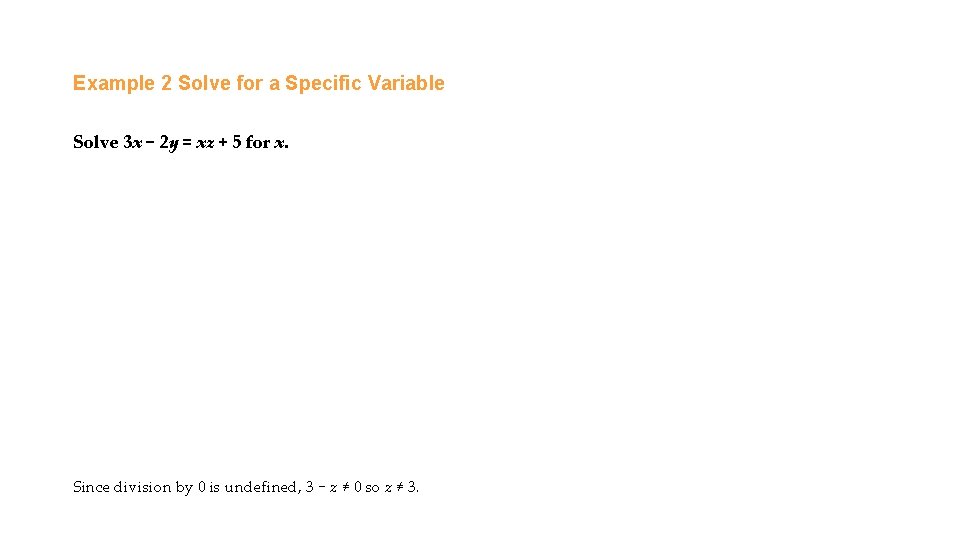
Example 2 Solve for a Specific Variable Solve 3 x − 2 y = xz + 5 for x. Since division by 0 is undefined, 3 − z ≠ 0 so z ≠ 3.
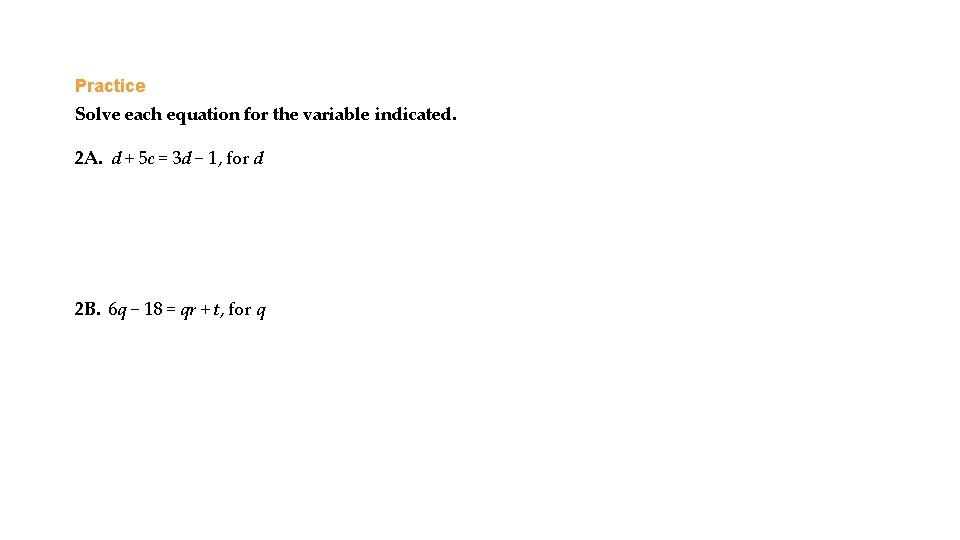
Practice Solve each equation for the variable indicated. 2 A. d + 5 c = 3 d − 1, for d 2 B. 6 q − 18 = qr + t, for q
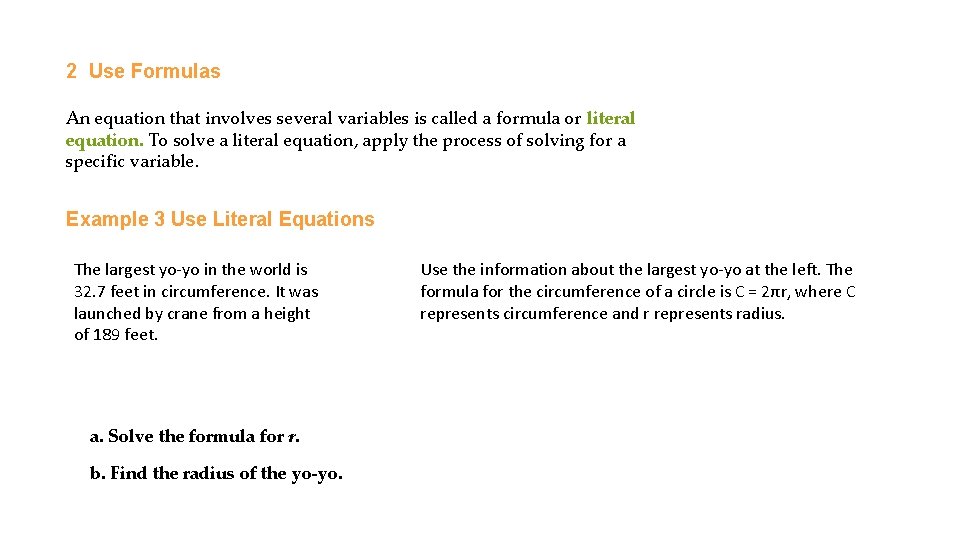
2 Use Formulas An equation that involves several variables is called a formula or literal equation. To solve a literal equation, apply the process of solving for a specific variable. Example 3 Use Literal Equations The largest yo-yo in the world is 32. 7 feet in circumference. It was launched by crane from a height of 189 feet. a. Solve the formula for r. b. Find the radius of the yo-yo. Use the information about the largest yo-yo at the left. The formula for the circumference of a circle is C = 2πr, where C represents circumference and r represents radius.
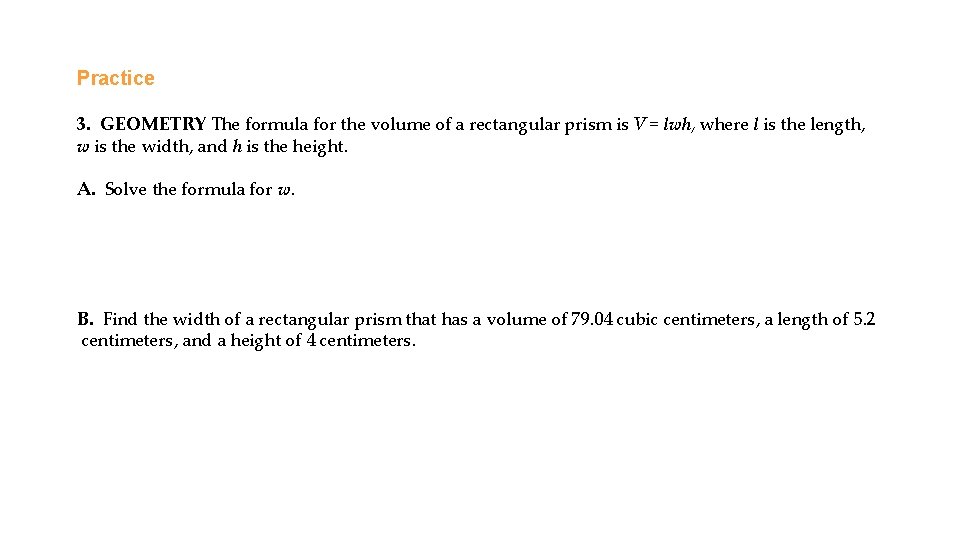
Practice 3. GEOMETRY The formula for the volume of a rectangular prism is V = lwh, where l is the length, w is the width, and h is the height. A. Solve the formula for w. B. Find the width of a rectangular prism that has a volume of 79. 04 cubic centimeters, a length of 5. 2 centimeters, and a height of 4 centimeters.
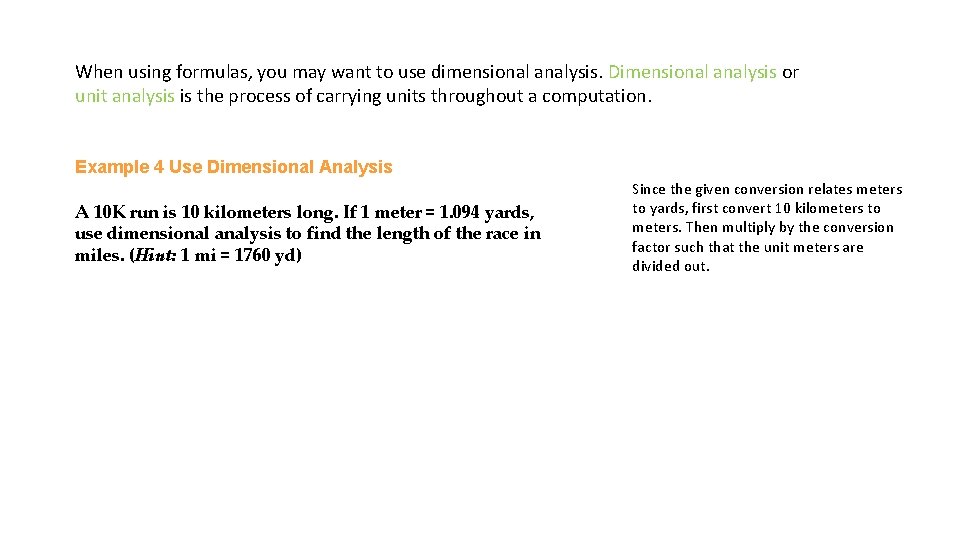
When using formulas, you may want to use dimensional analysis. Dimensional analysis or unit analysis is the process of carrying units throughout a computation. Example 4 Use Dimensional Analysis A 10 K run is 10 kilometers long. If 1 meter = 1. 094 yards, use dimensional analysis to find the length of the race in miles. (Hint: 1 mi = 1760 yd) Since the given conversion relates meters to yards, first convert 10 kilometers to meters. Then multiply by the conversion factor such that the unit meters are divided out.
2 -9 Weighted Averages The weighted average of a set of data is found by multiplying each data value by its weight and then finding the mean of the new data set. Mixture problems are problems in which two or more parts are combined into a whole. They are solved using weighted averages. In a mixture problem, the units are usually the number of gallons or pounds and the value is the cost, value, or concentration per unit.
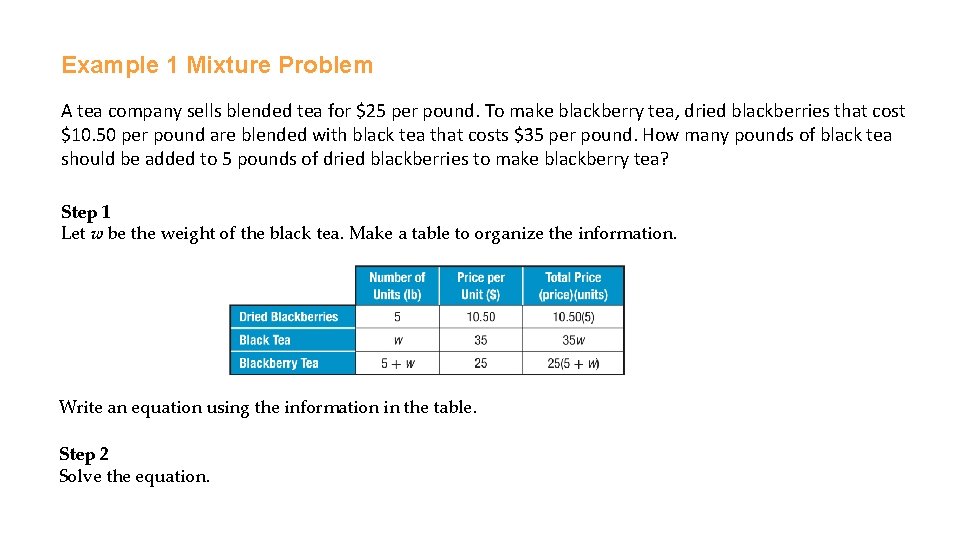
Example 1 Mixture Problem A tea company sells blended tea for $25 per pound. To make blackberry tea, dried blackberries that cost $10. 50 per pound are blended with black tea that costs $35 per pound. How many pounds of black tea should be added to 5 pounds of dried blackberries to make blackberry tea? Step 1 Let w be the weight of the black tea. Make a table to organize the information. Write an equation using the information in the table. Step 2 Solve the equation.
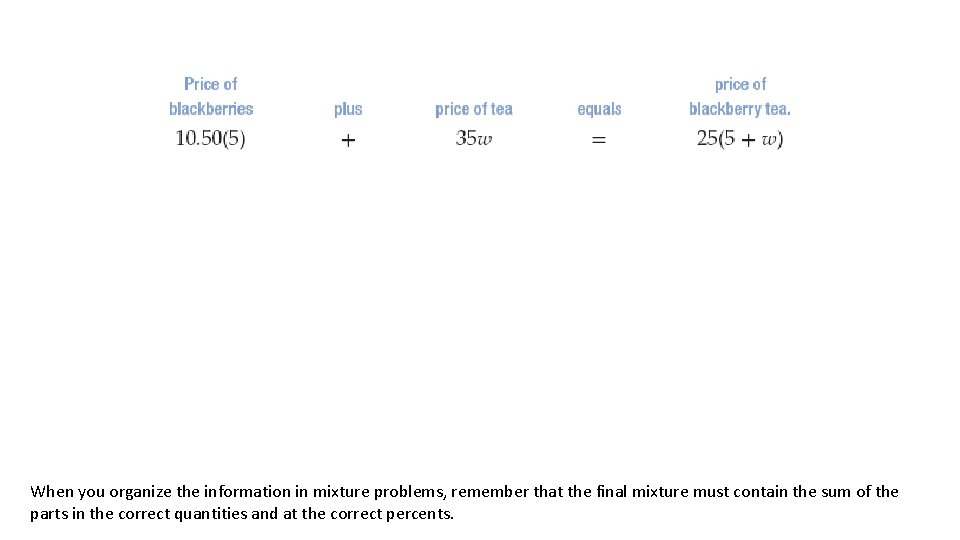
When you organize the information in mixture problems, remember that the final mixture must contain the sum of the parts in the correct quantities and at the correct percents.
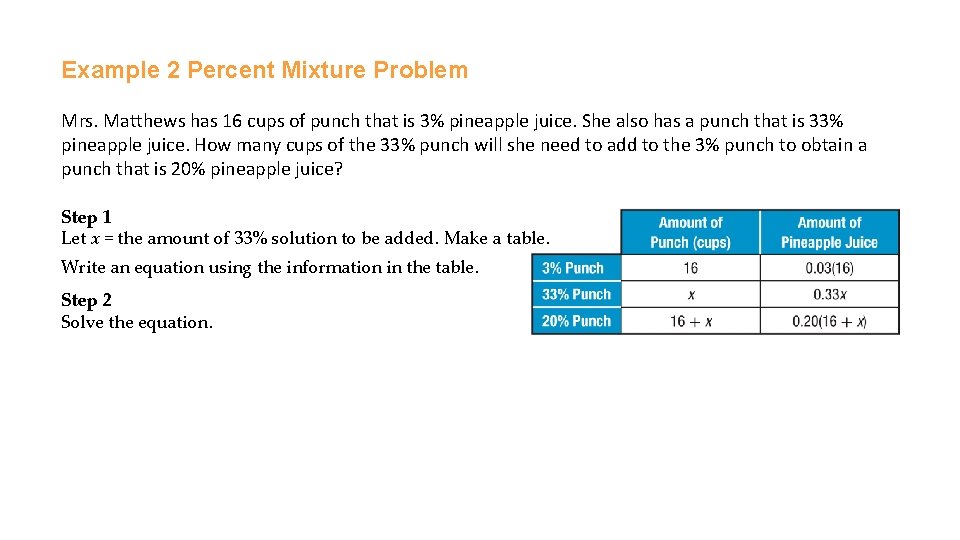
Example 2 Percent Mixture Problem Mrs. Matthews has 16 cups of punch that is 3% pineapple juice. She also has a punch that is 33% pineapple juice. How many cups of the 33% punch will she need to add to the 3% punch to obtain a punch that is 20% pineapple juice? Step 1 Let x = the amount of 33% solution to be added. Make a table. Write an equation using the information in the table. Step 2 Solve the equation.
Uniform Motion Problems Uniform motion problems or rate problems are problems in which an object moves at a certain speed or rate. The formula d = rt is used to solve these problems. In the formula, d represents distance, r represents rate, and t represents time.
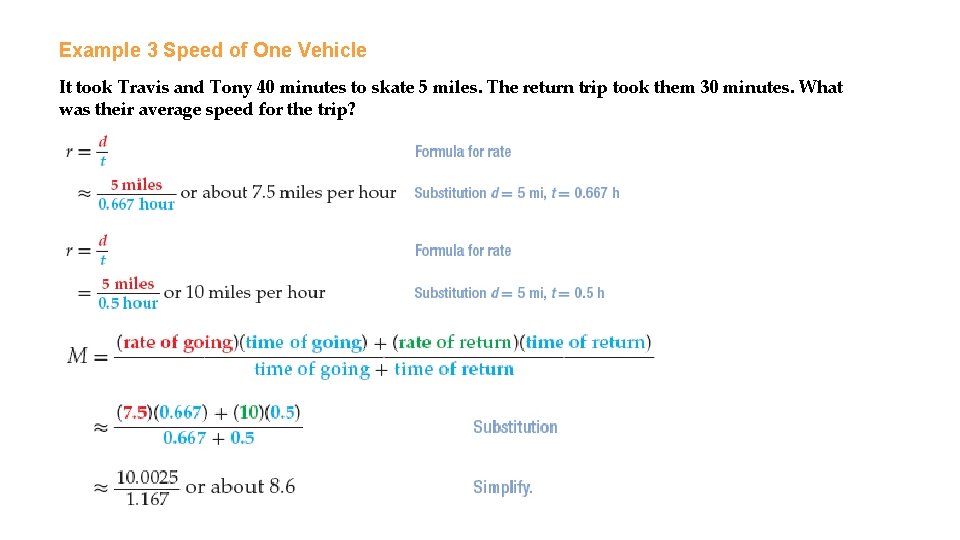
Example 3 Speed of One Vehicle It took Travis and Tony 40 minutes to skate 5 miles. The return trip took them 30 minutes. What was their average speed for the trip?
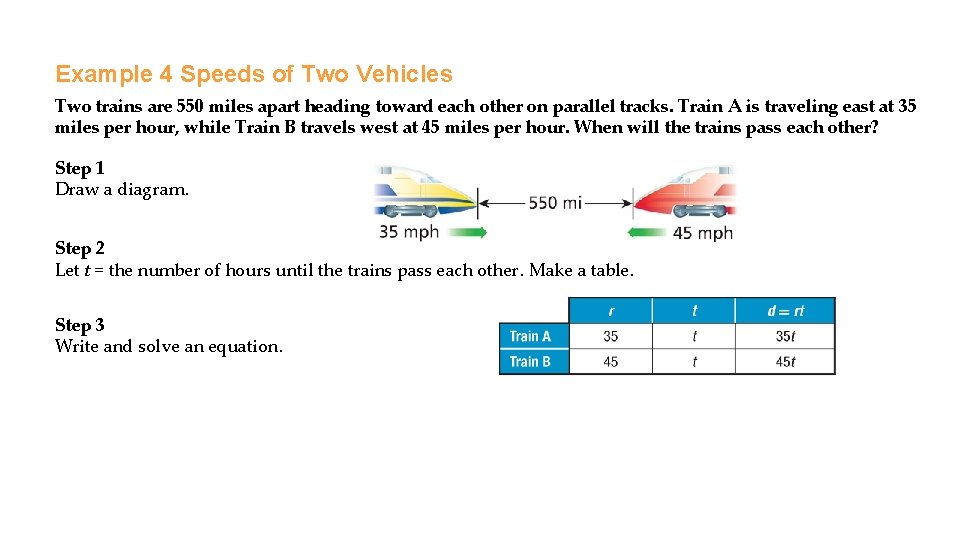
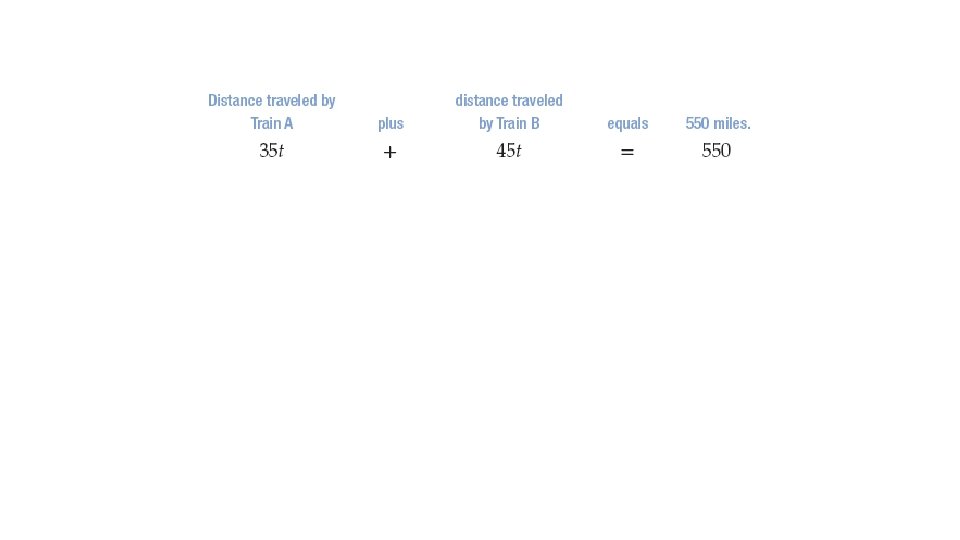
Example 4 Speeds of Two Vehicles Two trains are 550 miles apart heading toward each other on parallel tracks. Train A is traveling east at 35 miles per hour, while Train B travels west at 45 miles per hour. When will the trains pass each other? Step 1 Draw a diagram. Step 2 Let t = the number of hours until the trains pass each other. Make a table. Step 3 Write and solve an equation.
- Slides: 57