
Algae Nearly 75 of the worlds oxygen produced

- Slides: 23
Algae
• Nearly 75% of the world’s oxygen produced by algae • One of the major food source of marine ecosystems • Eukaryotic, photosynthetic (autotrophs)
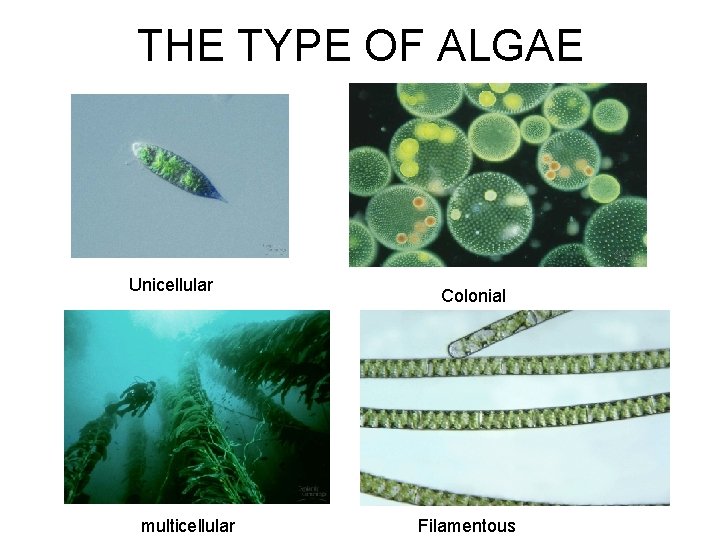
STRUCTURE • Four types of algae – Unicellular – Colonial – Filamentous – multicellular
THE TYPE OF ALGAE Unicellular multicellular Colonial Filamentous
CLASSIFICATION OF ALGAE • SEVEN PHYLUM BASED ON – COLOR – TYPE OF CHLOROPHYLL – FOOD-STORAGE SUBSTANCE – CELL WALL COMPOSITION
Algal groups • In today’s lab, we will look at algal groups:
Chlorophyta: Green Algae • • • “Green algae” • Mostly found in fresh water • Contain chlorophylls a and b • Store energy as starch (carbohydrate) • Cell walls made of cellulose
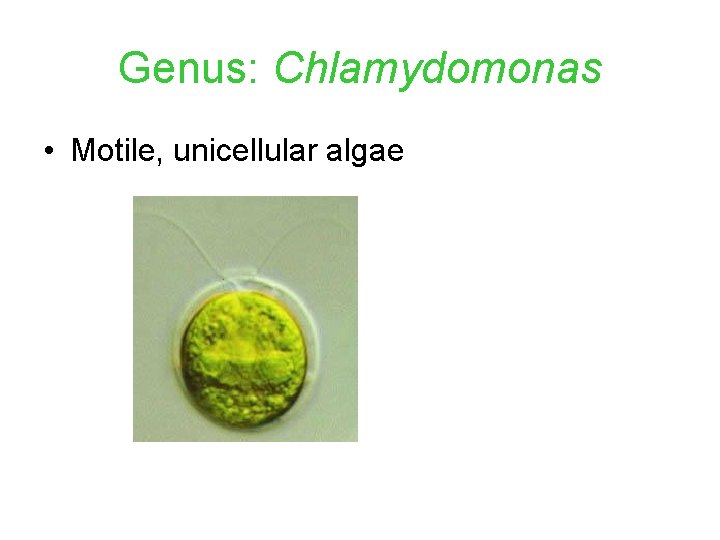
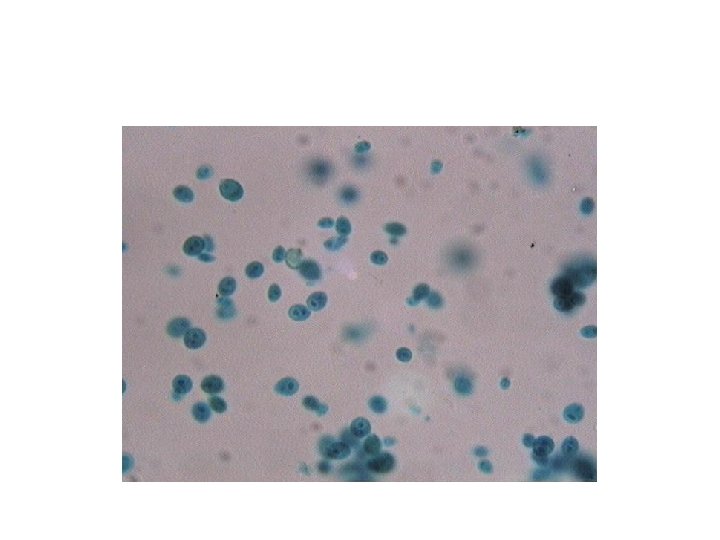
Genus: Chlamydomonas • Motile, unicellular algae
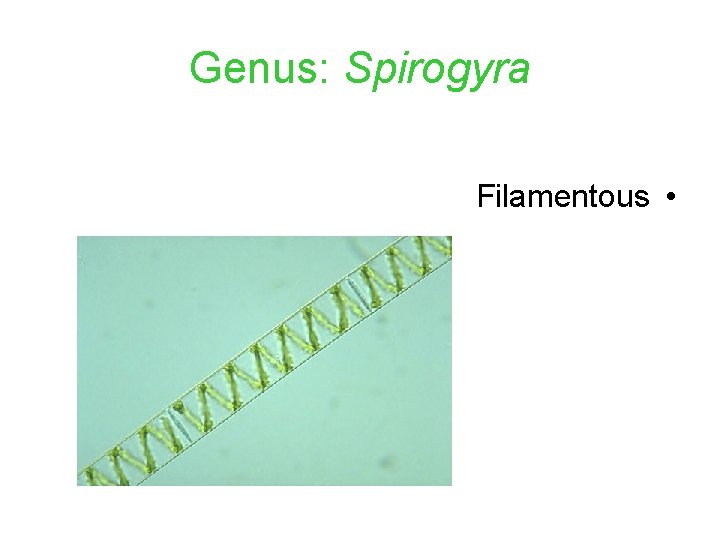
Genus: Spirogyra Filamentous •
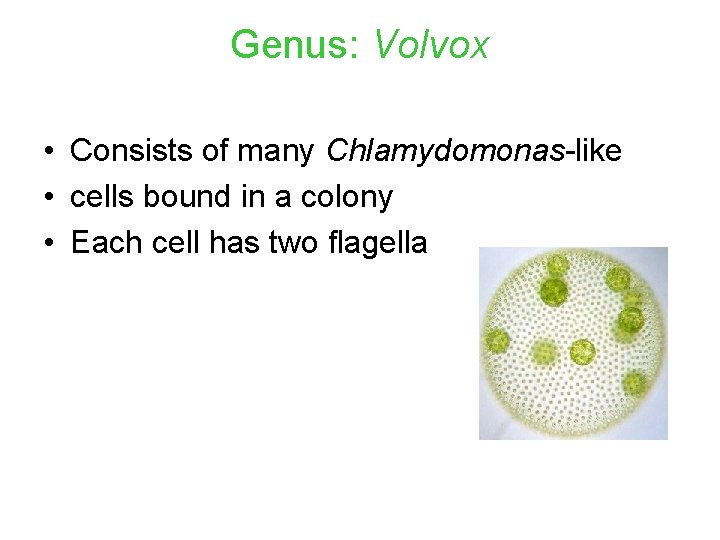
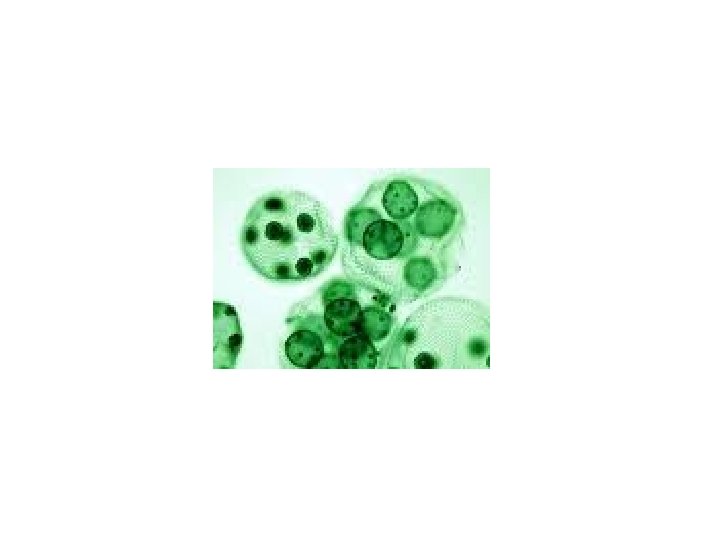
Genus: Volvox • Consists of many Chlamydomonas-like • cells bound in a colony • Each cell has two flagella
Phaeophyta: Brown Algae • • “Brown algae” • marine algae • No unicellular or colonial forms • Contain chlorophyll c and brown pigment fucoxanthin • Range in size from microscopic to over 50 meters long
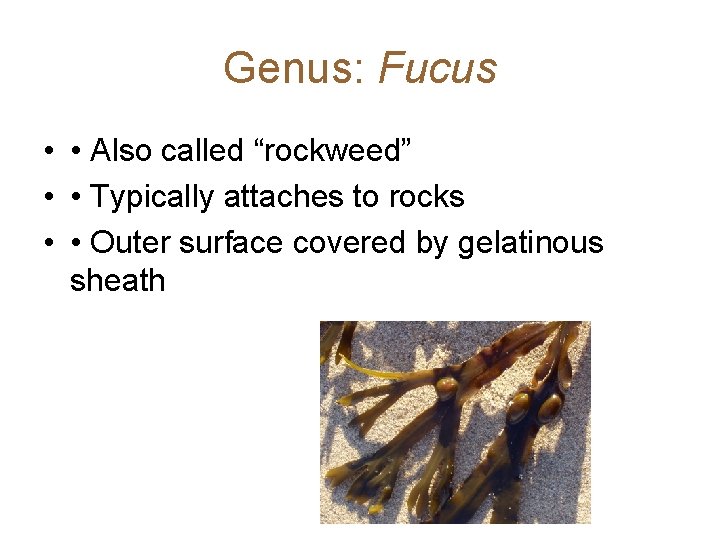
Genus: Fucus • • Also called “rockweed” • • Typically attaches to rocks • • Outer surface covered by gelatinous sheath
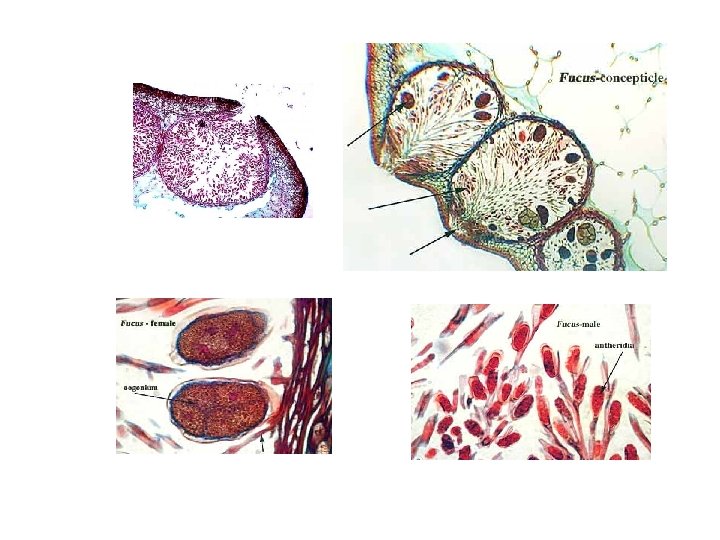
• • • Tips of branches (called conceptacles) may be swollen and contain reproductive structures – oogonia (female, produce eggs) and antheridia (male, produce sperm)
Rhodophyta: Red Algae • • “Red algae” • Contain chlorophyll d and red pigments (phycobilins) • Mainly multicellular • Typically in warm marine water • Can be attached, free-floating, filamentous, • or parenchymatous (fleshy)
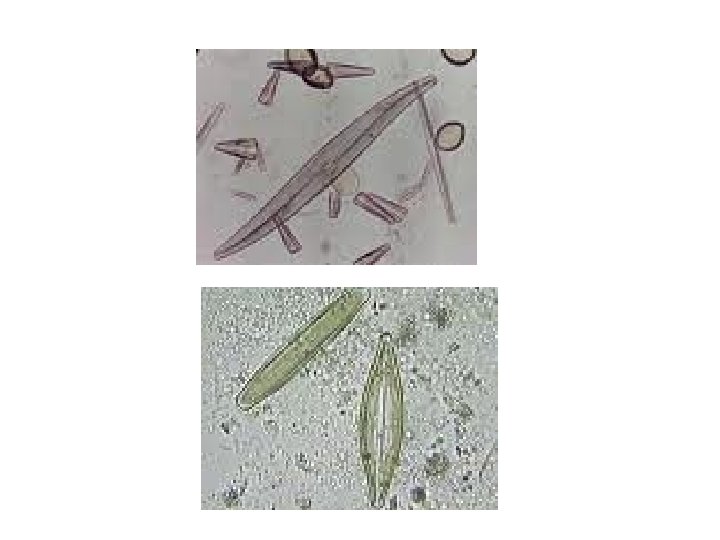
Chrysophyta • • • “Diatoms” • Unicellular • Contain chlorophylls a and c, as well as xanthophyll pigments (golden-brown) • Have hard cell wall made of silicon dioxide
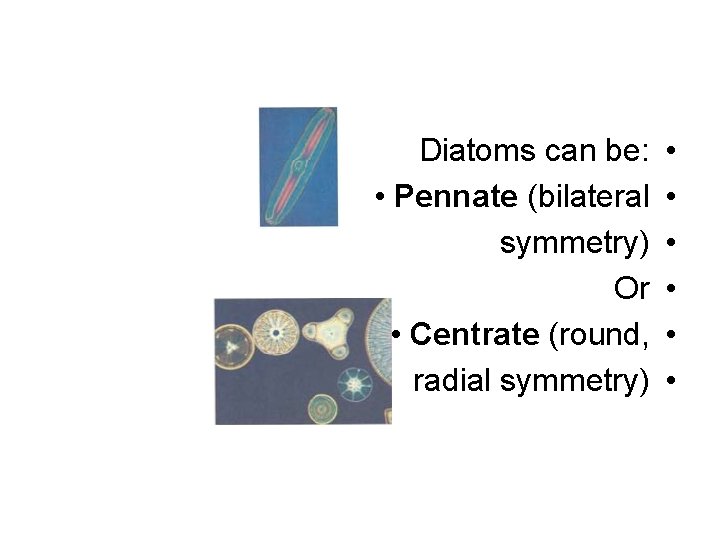
Diatoms can be: • Pennate (bilateral symmetry) Or • Centrate (round, radial symmetry) • • •
Euglenophyta • • • Unicellular • Motile (two flagella) • Contain chlorophylls a and b • Mainly freshwater algae • Main cell wall component: protein (flexible) • • Asexual reproduction
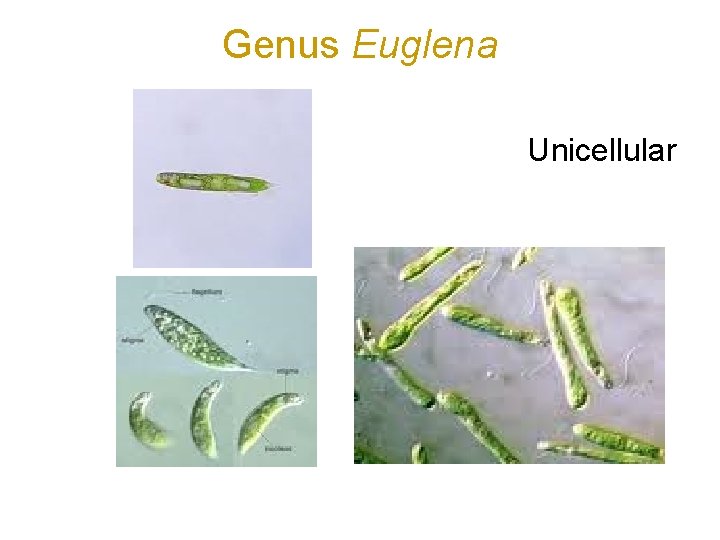
Genus Euglena Unicellular