
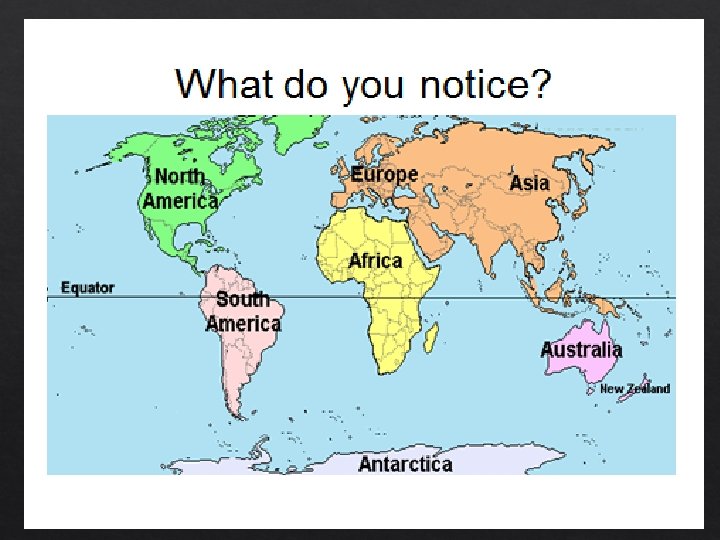
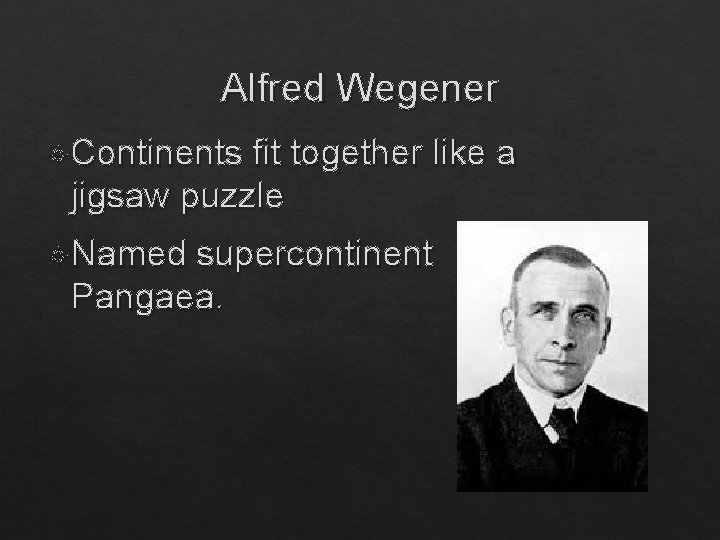
Alfred Wegener Continents fit together like a jigsaw










- Slides: 60
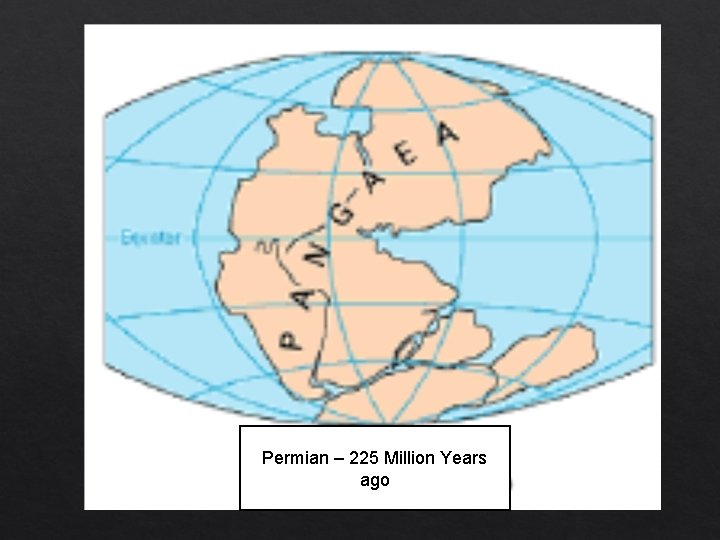
Alfred Wegener Continents fit together like a jigsaw puzzle Named supercontinent Pangaea.
Continental Drift Theory (Theory of Plate Tectonics) Theory that continents move slowly about earth’s surface, changing their positions relative to one another. Not He widely accepted didn’t know why plates move.
Supporting Evidence Continental shelf Geological Features Match Fossils Paleoclimatic data
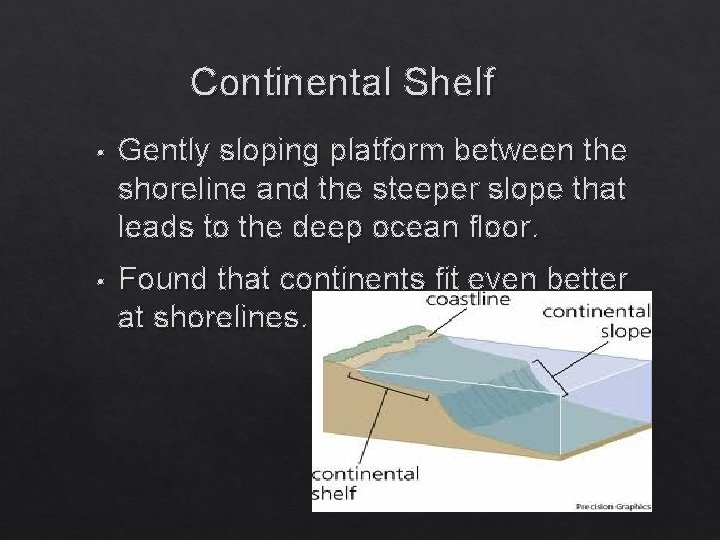
Continental Shelf • Gently sloping platform between the shoreline and the steeper slope that leads to the deep ocean floor. • Found that continents fit even better at shorelines.
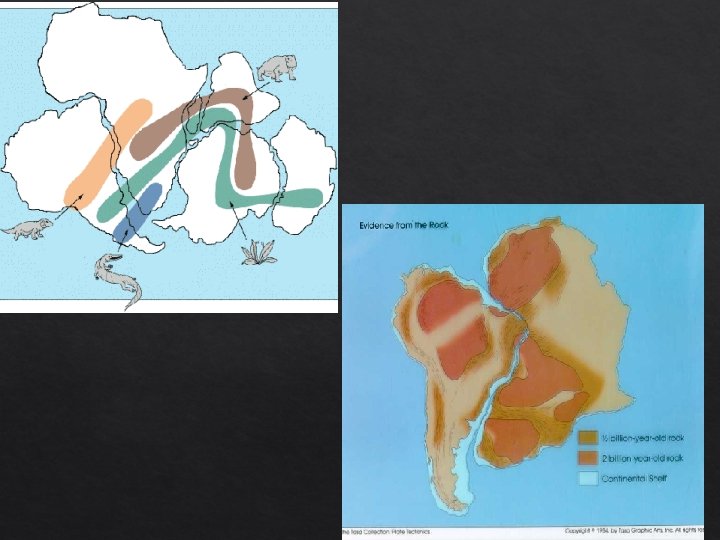
Geological Features and Fossils Rocks on different continents match up. Mountain systems in Africa and South America show strong evidence of previously being joined. Fossils of identical land-dwelling animals and identical trees are found in South America, India, Australia, and Antarctica.
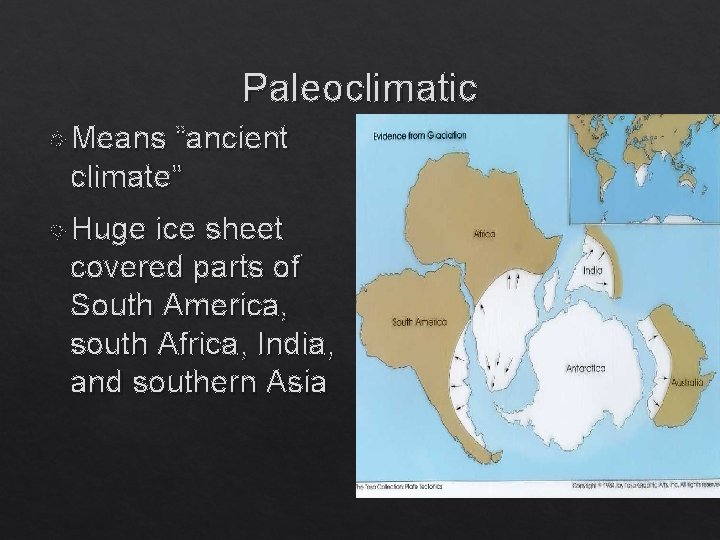
Paleoclimatic Means “ancient climate” Huge ice sheet covered parts of South America, south Africa, India, and southern Asia
Permian – 225 Million Years ago
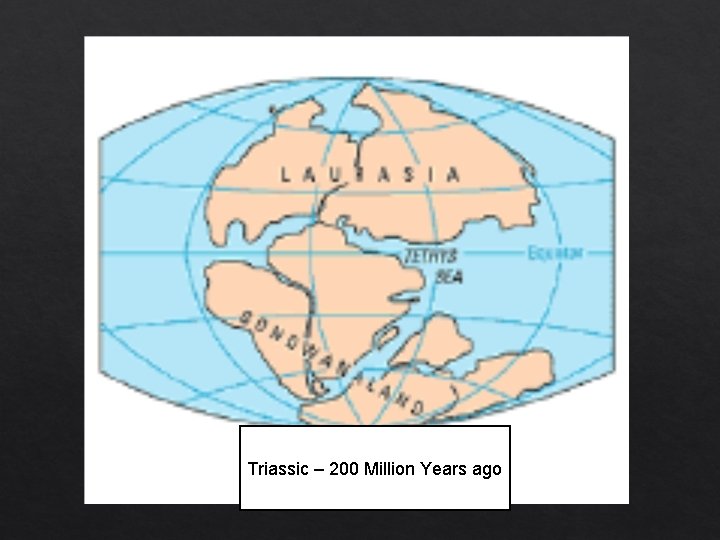
Triassic – 200 Million Years ago
Jurassic – 135 Million Years ago
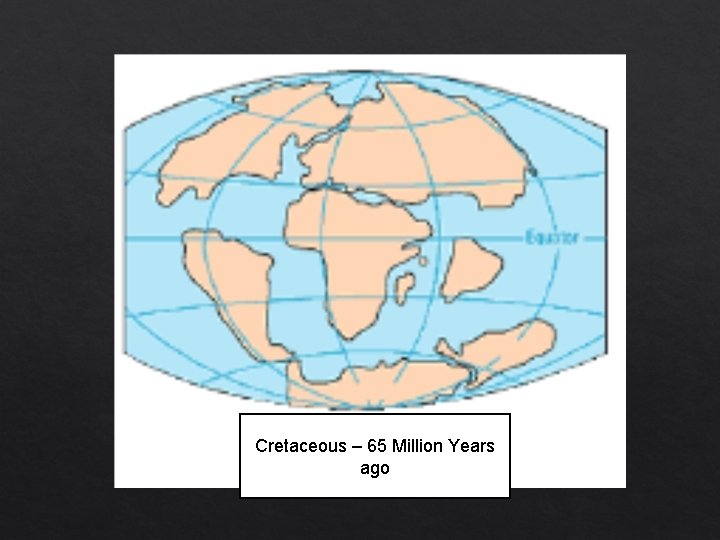
Cretaceous – 65 Million Years ago
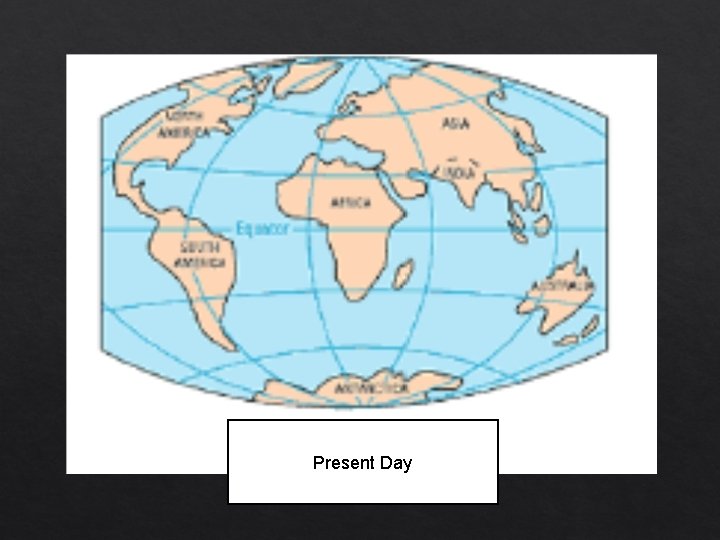
Present Day
WHAT WILL THE CONTINETS LOOK LIKE IN THE FUTURE?
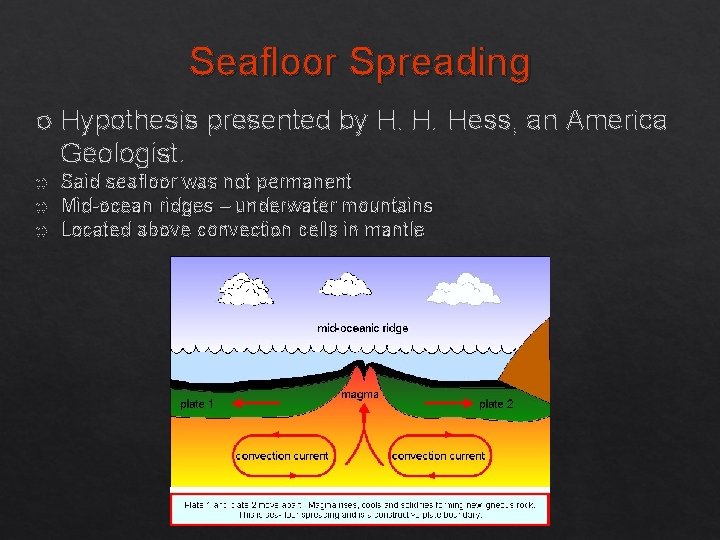
Seafloor Spreading Hypothesis presented by H. H. Hess, an America Geologist. Said seafloor was not permanent Mid-ocean ridges – underwater mountains Located above convection cells in mantle
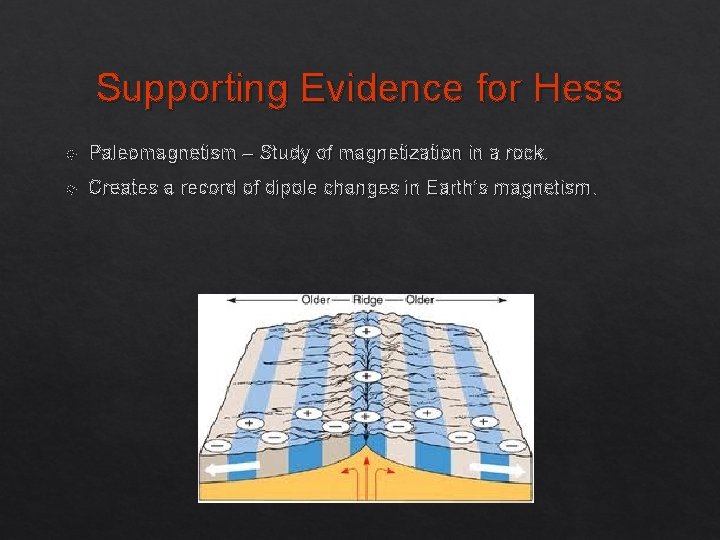
Supporting Evidence for Hess Paleomagnetism – Study of magnetization in a rock. Creates a record of dipole changes in Earth’s magnetism.
Provides evidence that poles have flipped overtime
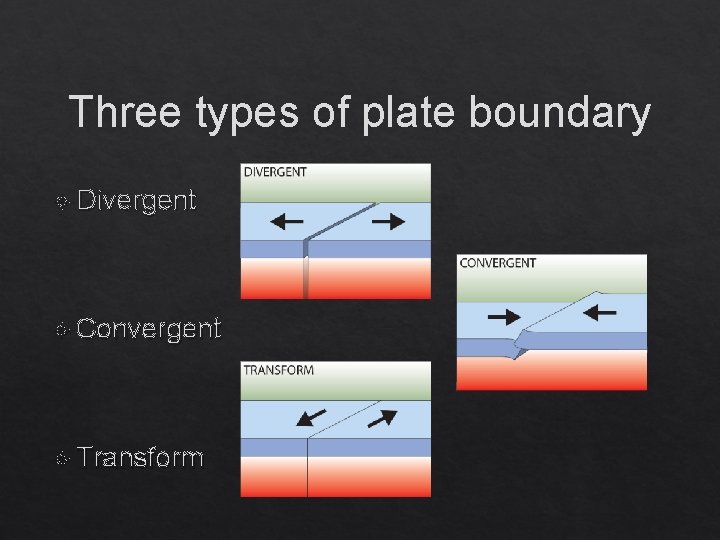
Three types of plate boundary Divergent Convergent Transform
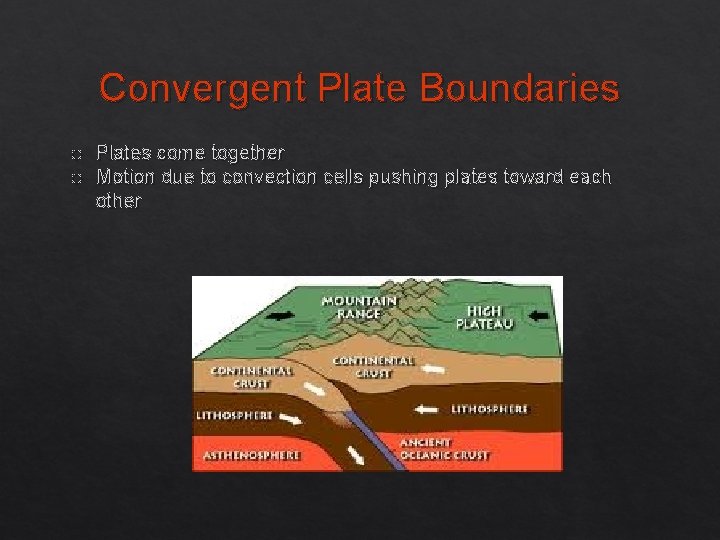
Convergent Plate Boundaries Plates come together Motion due to convection cells pushing plates toward each other
Convergent Boundaries There are three types of convergent plate boundaries Continent-continent collision Continent-oceanic crust collision Ocean-ocean collision
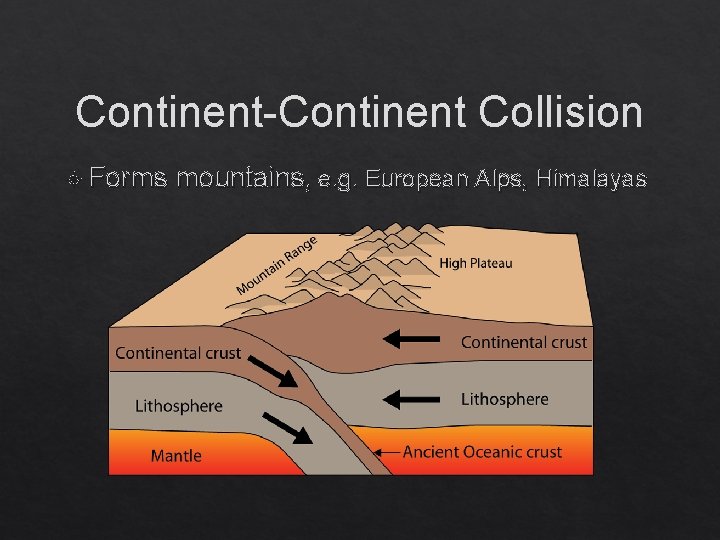
Continent-Continent Collision Forms mountains, e. g. European Alps, Himalayas
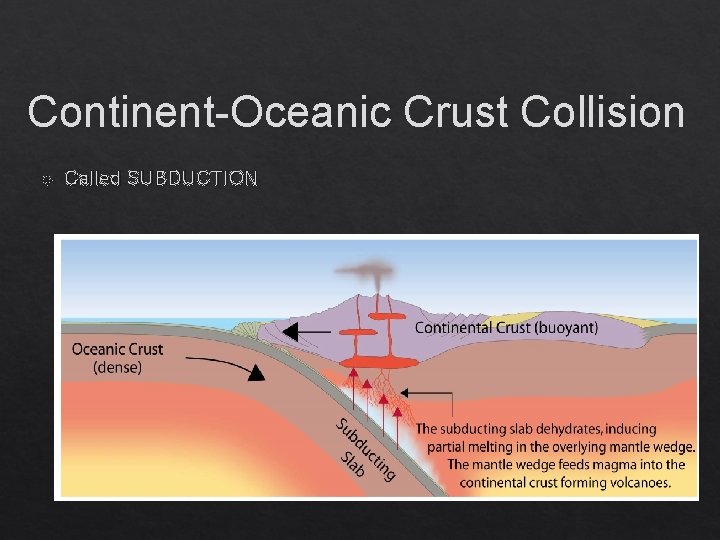
Continent-Oceanic Crust Collision Called SUBDUCTION
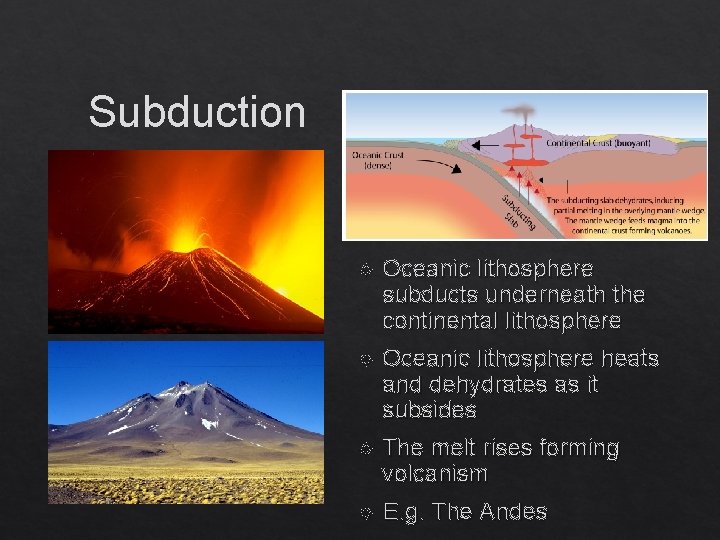
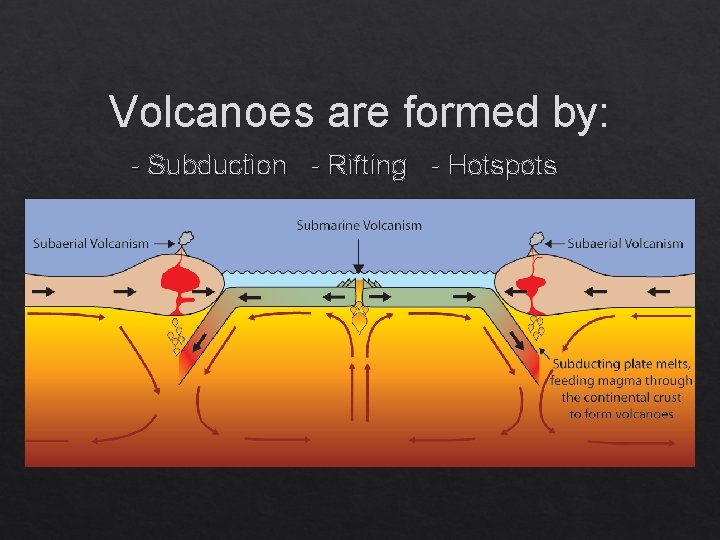
Subduction Oceanic lithosphere subducts underneath the continental lithosphere Oceanic lithosphere heats and dehydrates as it subsides The melt rises forming volcanism E. g. The Andes
Ocean-Ocean Plate Collision When two oceanic plates collide, one runs over the other which causes it to sink into the mantle forming a subduction zone. The subducting plate is bent downward to form a very deep depression in the ocean floor called a trench. The worlds deepest parts of the ocean are found along trenches. E. g. The Mariana Trench is 11 km deep!
Divergent Boundaries Spreading As ridges plates move apart new material is erupted to fill the gap
Divergent Boundary Mid-Atlantic Ridge
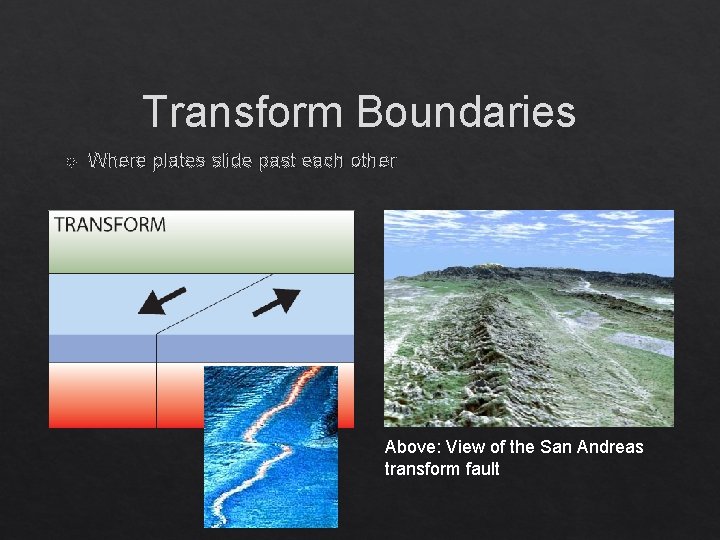
Transform Boundaries Where plates slide past each other Above: View of the San Andreas transform fault
Volcanoes and Plate Tectonics… …what’s the connection?
Volcanoes • Holes or vents where magma can rise to surface • Magma – below surface • Lava – above surface
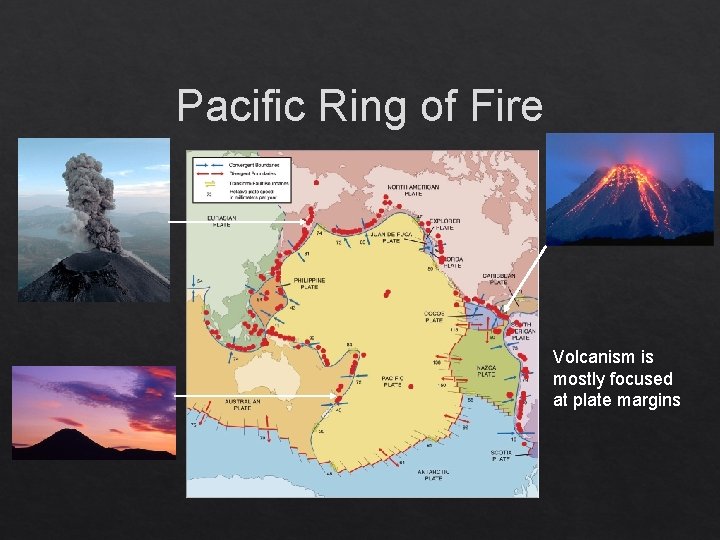
Pacific Ring of Fire Volcanism is mostly focused at plate margins
Volcanoes are formed by: - Subduction - Rifting - Hotspots
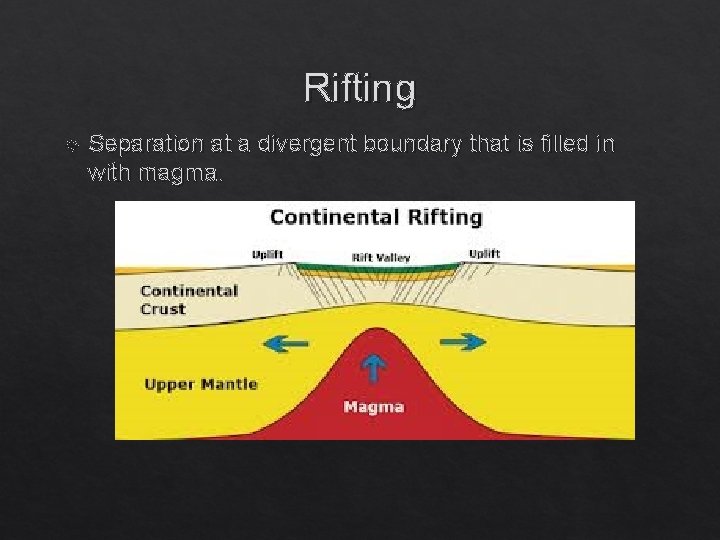
Rifting Separation at a divergent boundary that is filled in with magma.
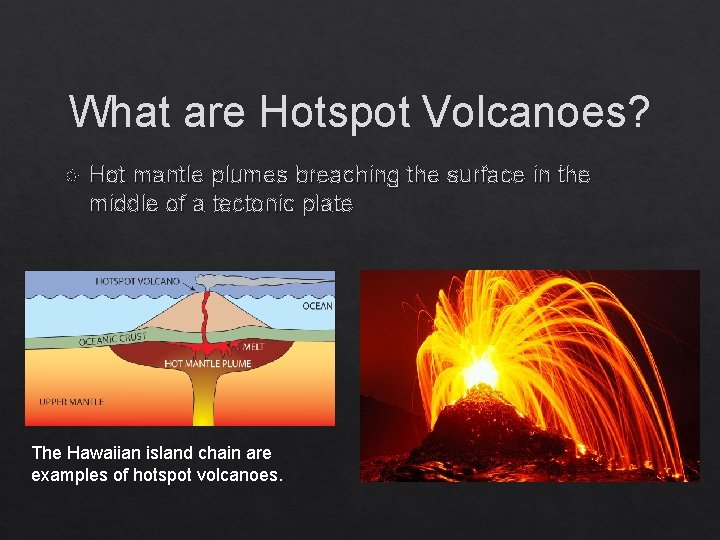
What are Hotspot Volcanoes? Hot mantle plumes breaching the surface in the middle of a tectonic plate The Hawaiian island chain are examples of hotspot volcanoes.
The tectonic plate moves over a fixed hotspot forming a chain of volcanoes. The volcanoes get younger from one end to the other.
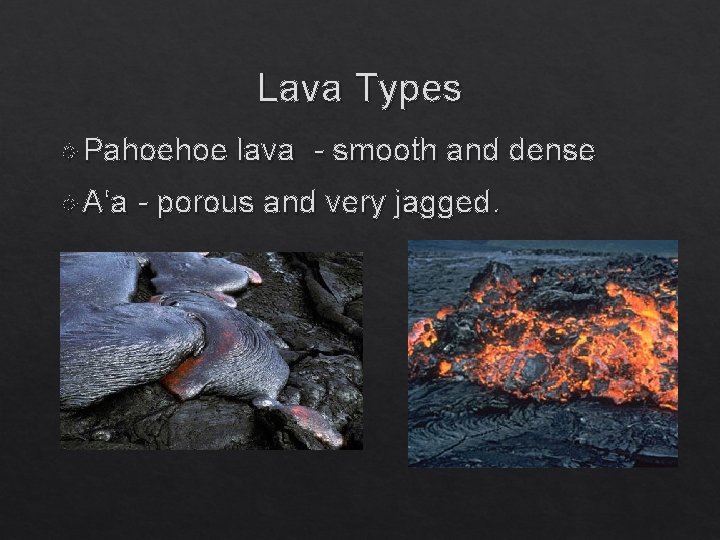
Lava Types Pahoehoe A‘a lava - smooth and dense - porous and very jagged.
Factors That affect eruption • • • Water Vapor • More water vapor = bigger explosion Trapped Gasses • Easy escape = quiet eruption • Difficult to escape = explosive eruption Magma Type • Basaltic Magma = quiet explosion • Granitic/Andesitic = violent eruptions
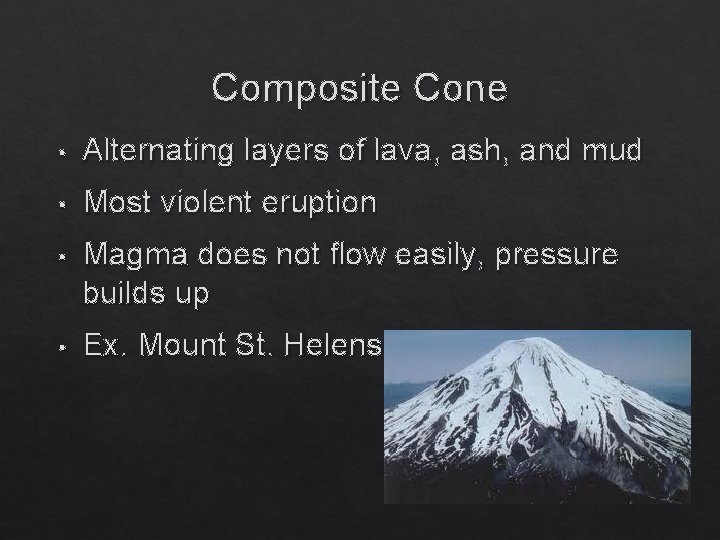
Composite Cone • Alternating layers of lava, ash, and mud • Most violent eruption • Magma does not flow easily, pressure builds up • Ex. Mount St. Helens
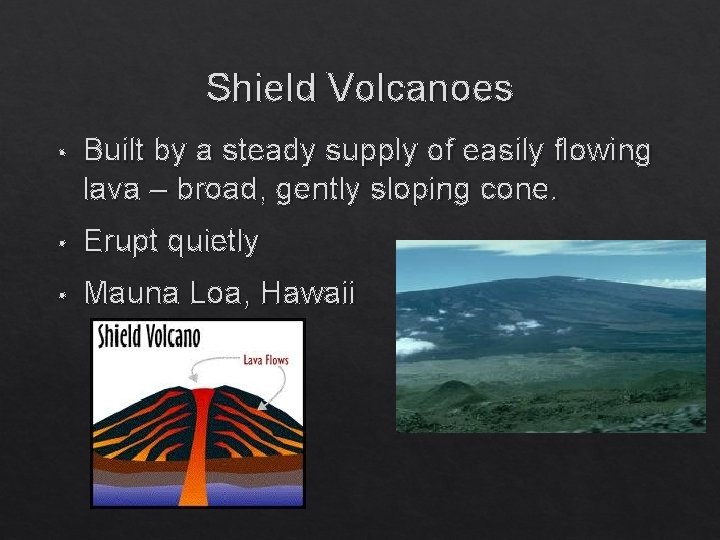
Shield Volcanoes • Built by a steady supply of easily flowing lava – broad, gently sloping cone. • Erupt quietly • Mauna Loa, Hawaii
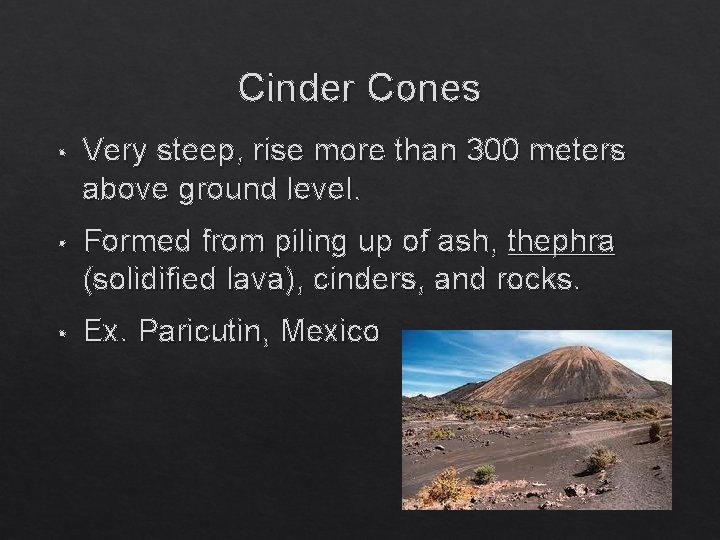
Cinder Cones • Very steep, rise more than 300 meters above ground level. • Formed from piling up of ash, thephra (solidified lava), cinders, and rocks. • Ex. Paricutin, Mexico
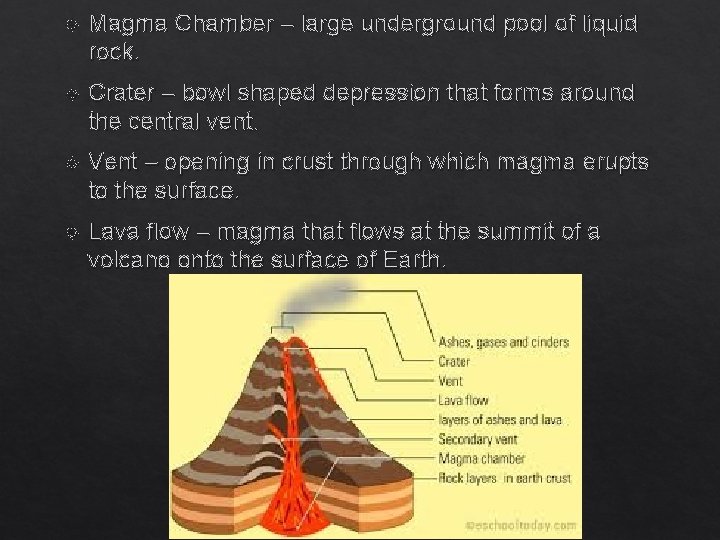
Magma Chamber – large underground pool of liquid rock. Crater – bowl shaped depression that forms around the central vent. Vent – opening in crust through which magma erupts to the surface. Lava flow – magma that flows at the summit of a volcano onto the surface of Earth.
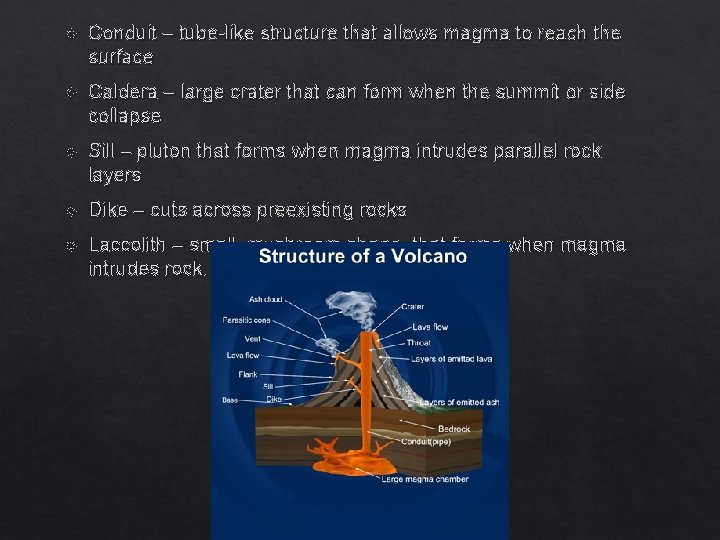
Conduit – tube-like structure that allows magma to reach the surface Caldera – large crater that can form when the summit or side collapse Sill – pluton that forms when magma intrudes parallel rock layers Dike – cuts across preexisting rocks Laccolith – small, mushroom shape, that forms when magma intrudes rock.
Earthquakes and Plate Tectonics… …what’s the connection?
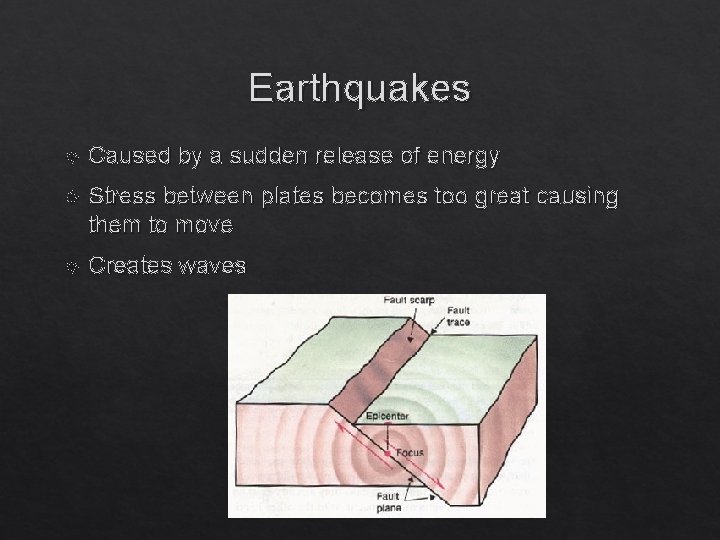
Earthquakes Caused by a sudden release of energy Stress between plates becomes too great causing them to move Creates waves
As with volcanoes, earthquakes are not randomly distributed over the globe At the boundaries between plates, friction causes them to stick together. When built up energy causes them to break, earthquakes occur.
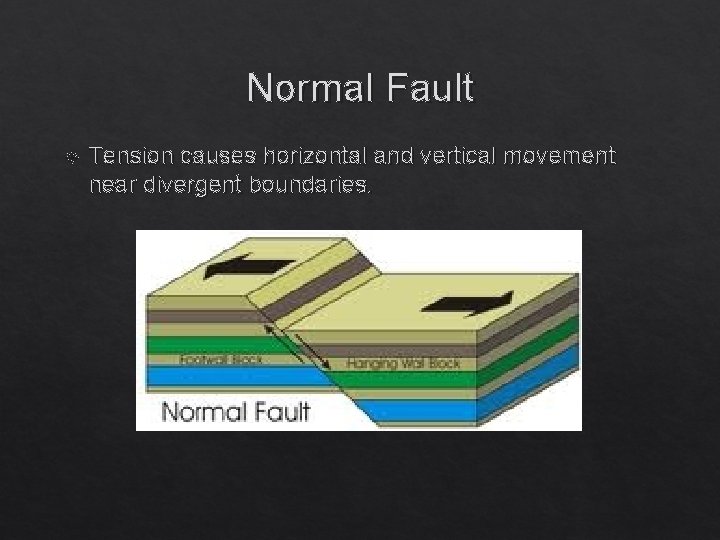
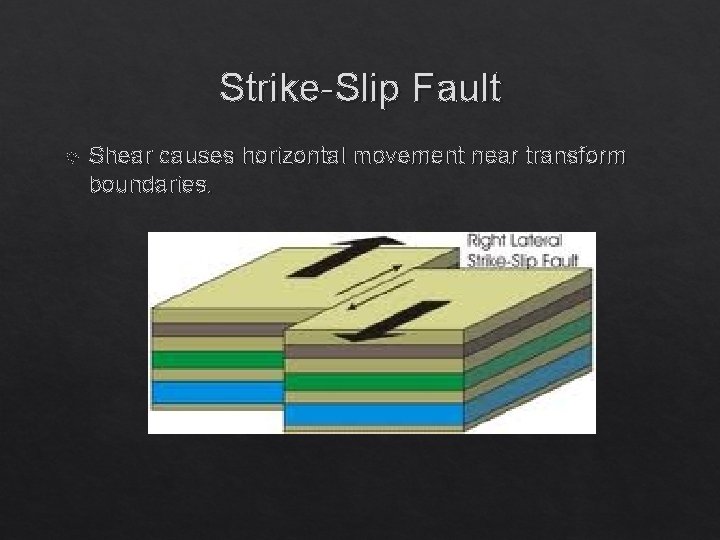
Earthquakes occur along plate boundaries and faults. 3 types of faults: Reverse Normal Strike-slip
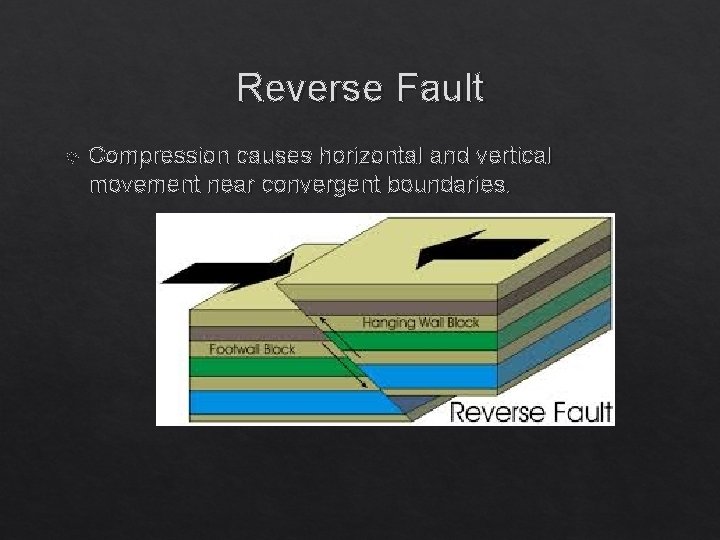
Reverse Fault Compression causes horizontal and vertical movement near convergent boundaries.
Normal Fault Tension causes horizontal and vertical movement near divergent boundaries.
Strike-Slip Fault Shear causes horizontal movement near transform boundaries.
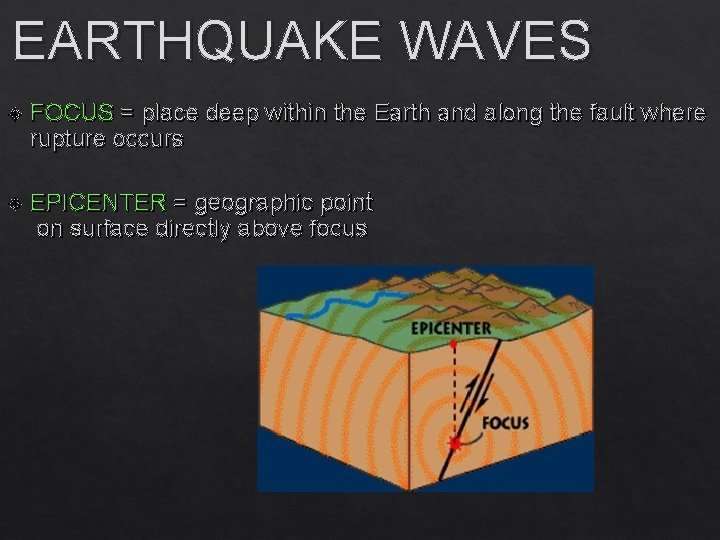
EARTHQUAKE WAVES FOCUS = place deep within the Earth and along the fault where rupture occurs EPICENTER = geographic point on surface directly above focus
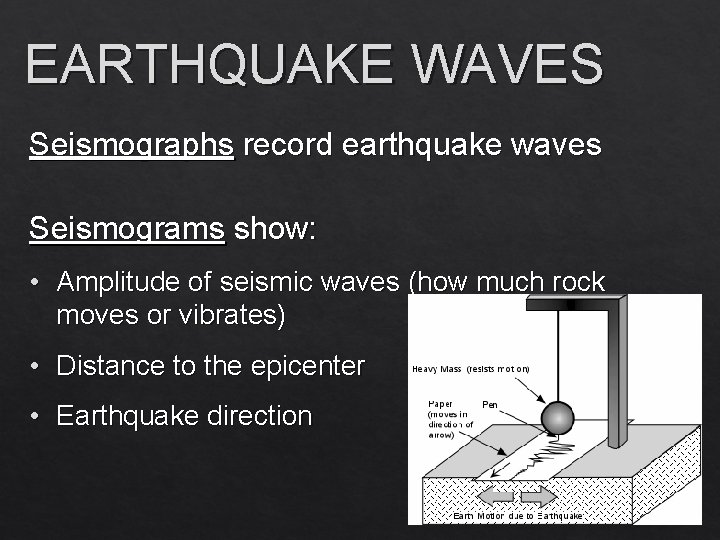
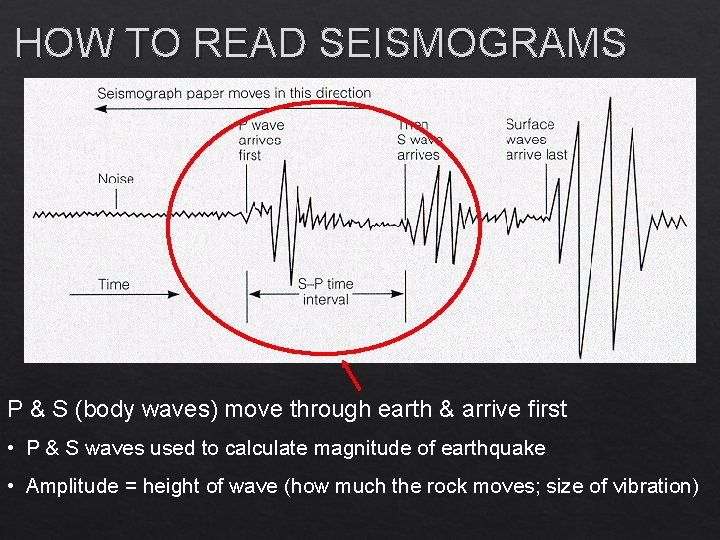
EARTHQUAKE WAVES Seismographs record earthquake waves Seismograms show: • Amplitude of seismic waves (how much rock moves or vibrates) • Distance to the epicenter • Earthquake direction
Seismic Waves Earthquake-generated waves that travel through Earth interior Wave speed depends on medium it travels through Used to learn about composition of Earth’s layered interior (ex. Ultrasound)
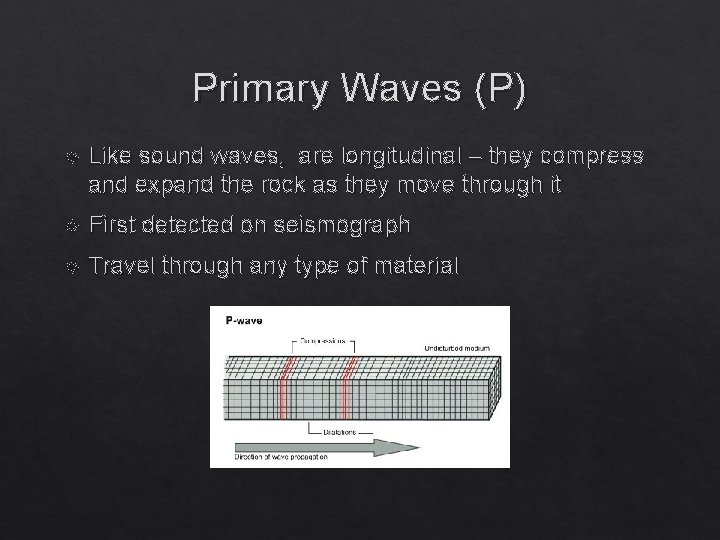
Primary Waves (P) Like sound waves, are longitudinal – they compress and expand the rock as they move through it First detected on seismograph Travel through any type of material
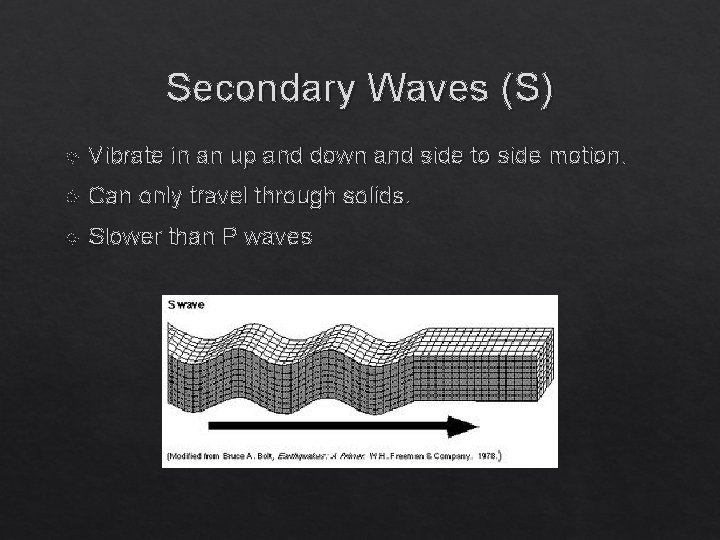
Secondary Waves (S) Vibrate in an up and down and side to side motion. Can only travel through solids. Slower than P waves
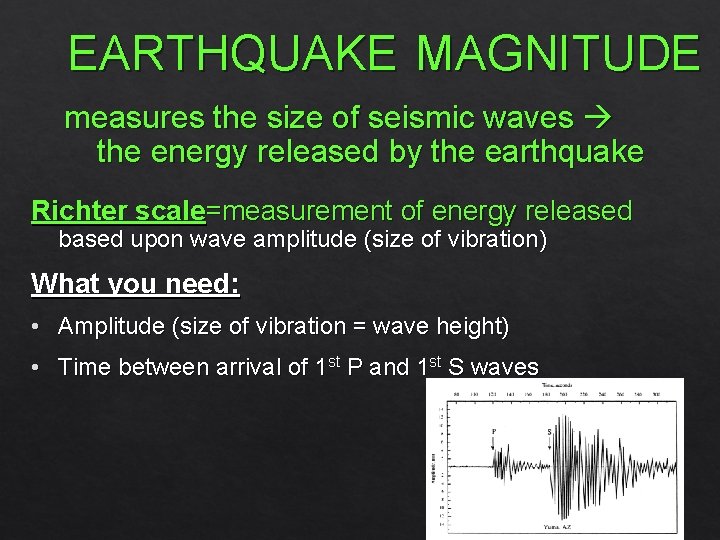
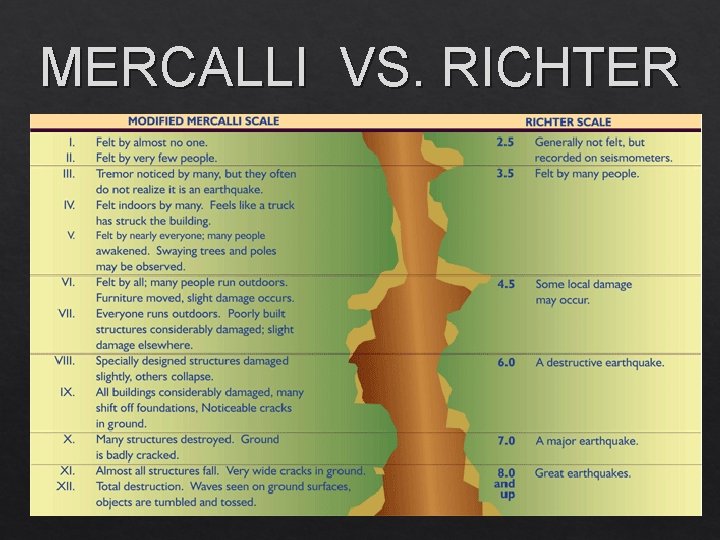
EARTHQUAKE MAGNITUDE measures the size of seismic waves the energy released by the earthquake Richter scale=measurement of energy released based upon wave amplitude (size of vibration) What you need: • Amplitude (size of vibration = wave height) • Time between arrival of 1 st P and 1 st S waves
HOW TO READ SEISMOGRAMS P & S (body waves) move through earth & arrive first • P & S waves used to calculate magnitude of earthquake • Amplitude = height of wave (how much the rock moves; size of vibration)
MERCALLI VS. RICHTER