
Alfred Wegener and the Continental Drift Hypothesis German
- Slides: 17
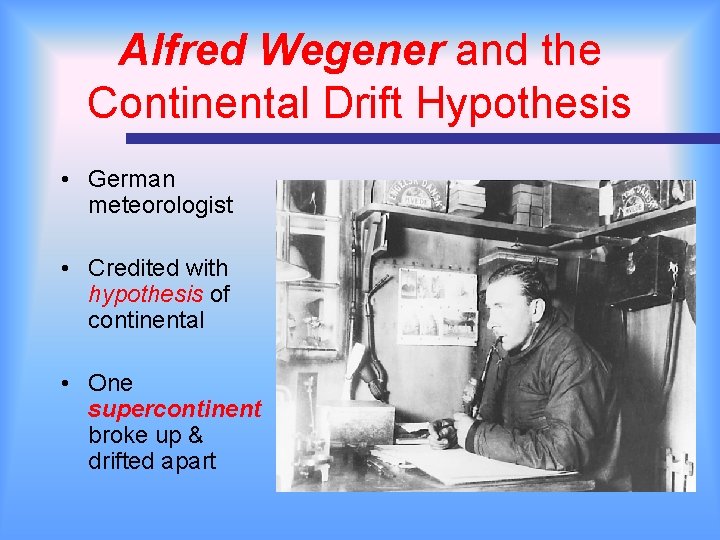
Alfred Wegener and the Continental Drift Hypothesis • German meteorologist • Credited with hypothesis of continental • One supercontinent broke up & drifted apart
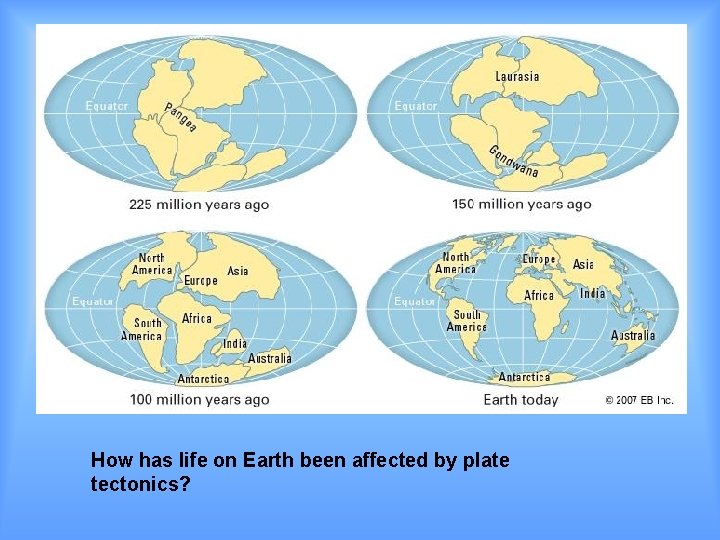
How has life on Earth been affected by plate tectonics?
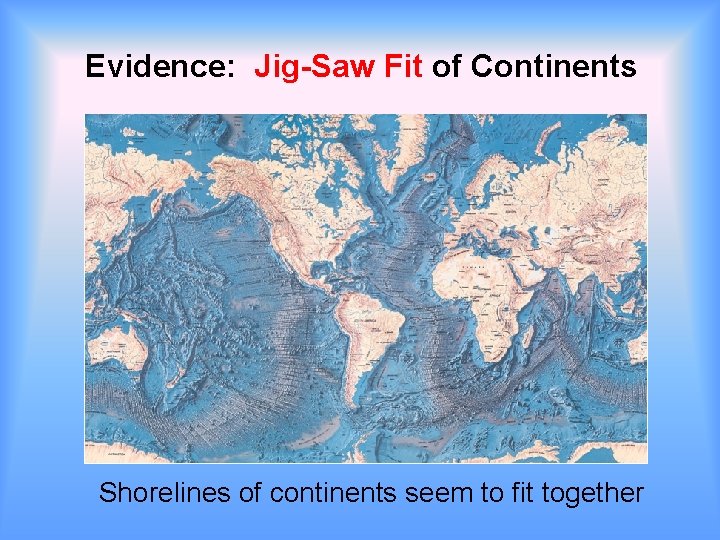
Evidence: Jig-Saw Fit of Continents Shorelines of continents seem to fit together
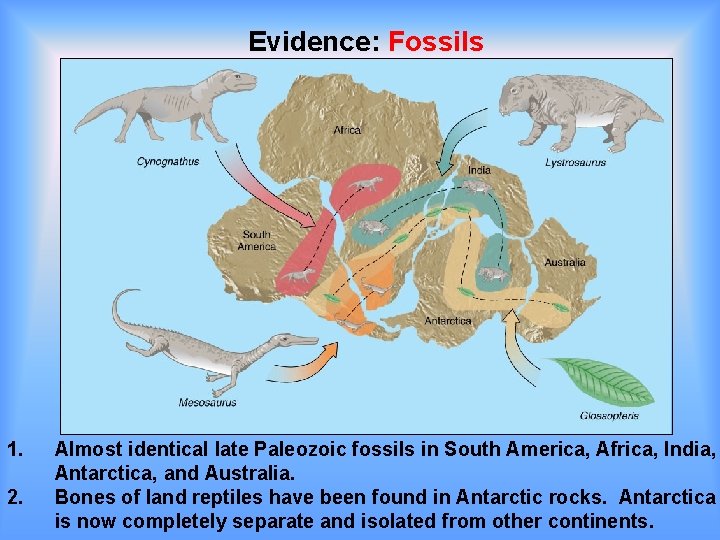
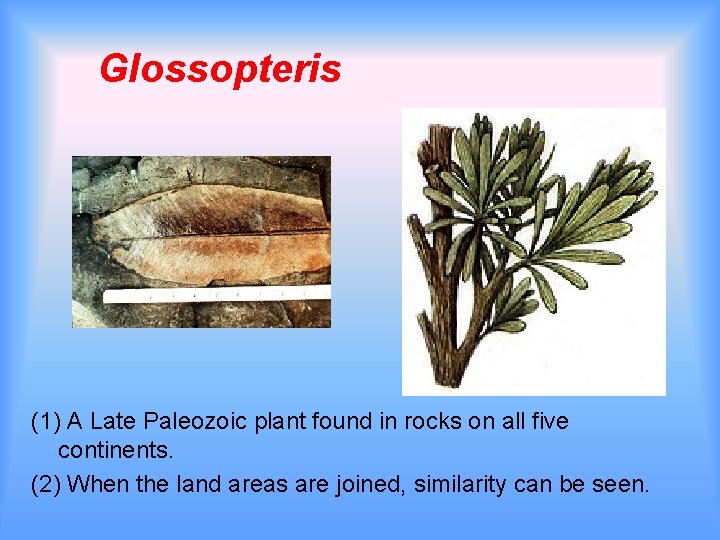
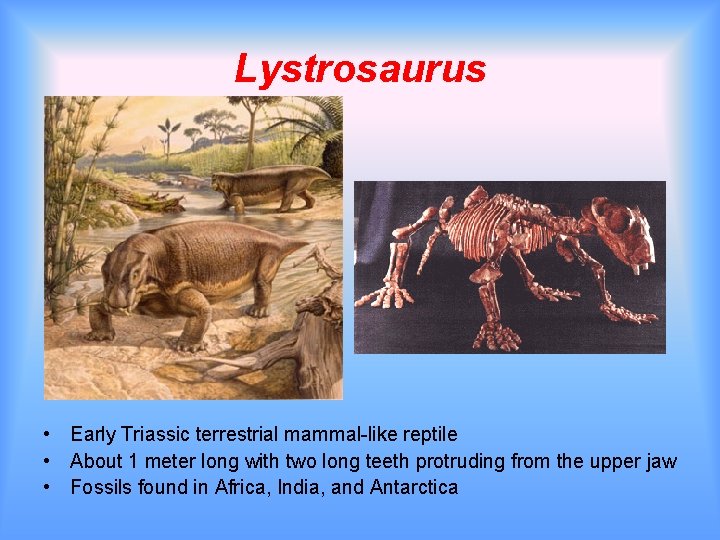
Evidence: Fossils 1. 2. Almost identical late Paleozoic fossils in South America, Africa, India, Antarctica, and Australia. Bones of land reptiles have been found in Antarctic rocks. Antarctica is now completely separate and isolated from other continents.
Glossopteris (1) A Late Paleozoic plant found in rocks on all five continents. (2) When the land areas are joined, similarity can be seen.
Lystrosaurus • Early Triassic terrestrial mammal-like reptile • About 1 meter long with two long teeth protruding from the upper jaw • Fossils found in Africa, India, and Antarctica
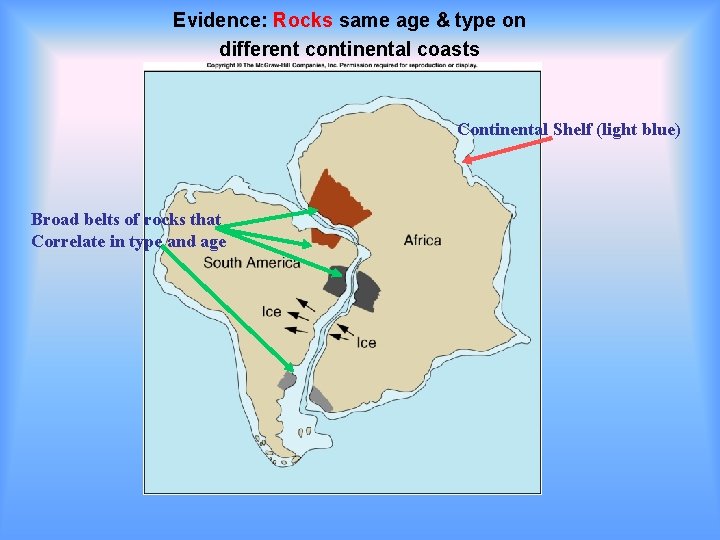
Evidence: Rocks same age & type on different continental coasts Continental Shelf (light blue) Broad belts of rocks that Correlate in type and age
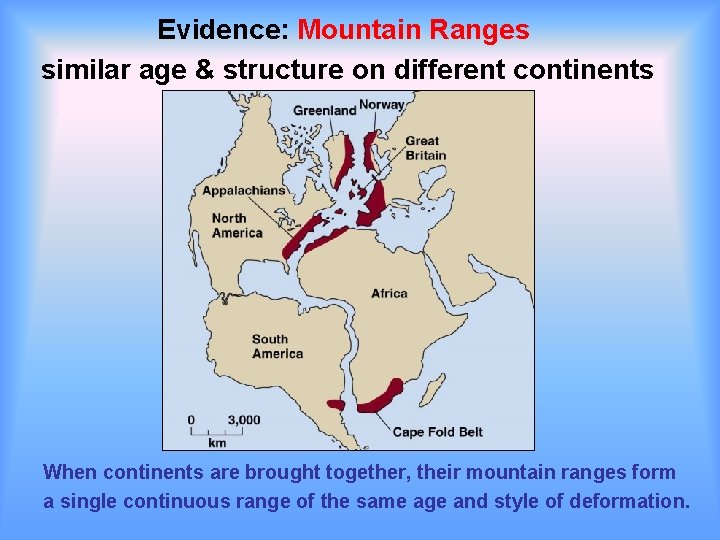
Evidence: Mountain Ranges similar age & structure on different continents When continents are brought together, their mountain ranges form a single continuous range of the same age and style of deformation.
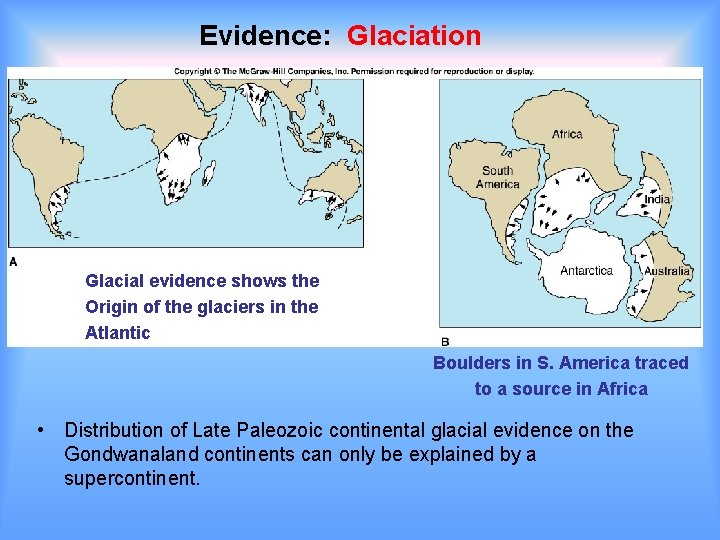
Evidence: Glaciation Glacial evidence shows the Origin of the glaciers in the Atlantic Boulders in S. America traced to a source in Africa • Distribution of Late Paleozoic continental glacial evidence on the Gondwanaland continents can only be explained by a supercontinent.
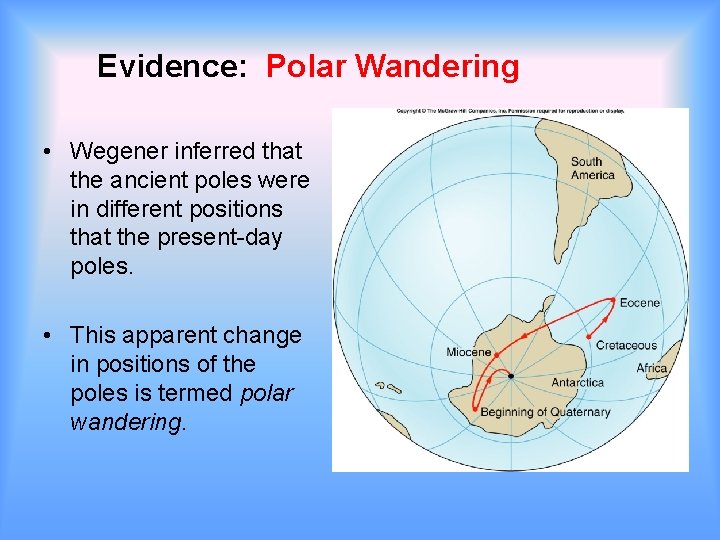
Evidence: Polar Wandering • Wegener inferred that the ancient poles were in different positions that the present-day poles. • This apparent change in positions of the poles is termed polar wandering.
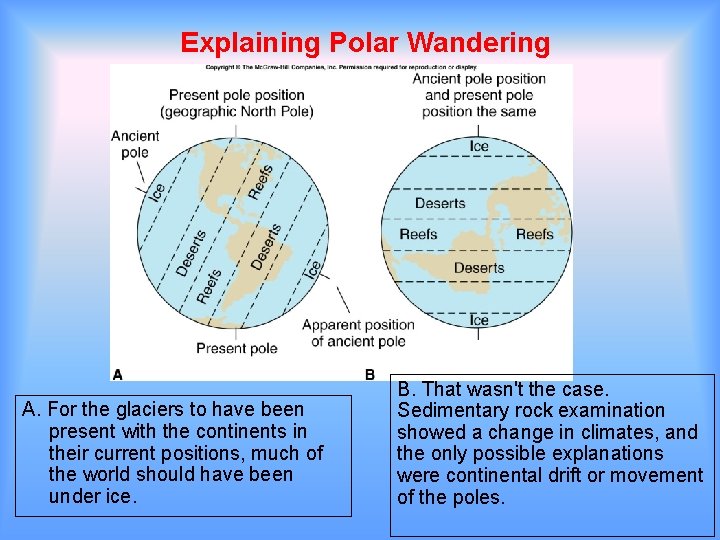
Explaining Polar Wandering A. For the glaciers to have been present with the continents in their current positions, much of the world should have been under ice. B. That wasn't the case. Sedimentary rock examination showed a change in climates, and the only possible explanations were continental drift or movement of the poles.
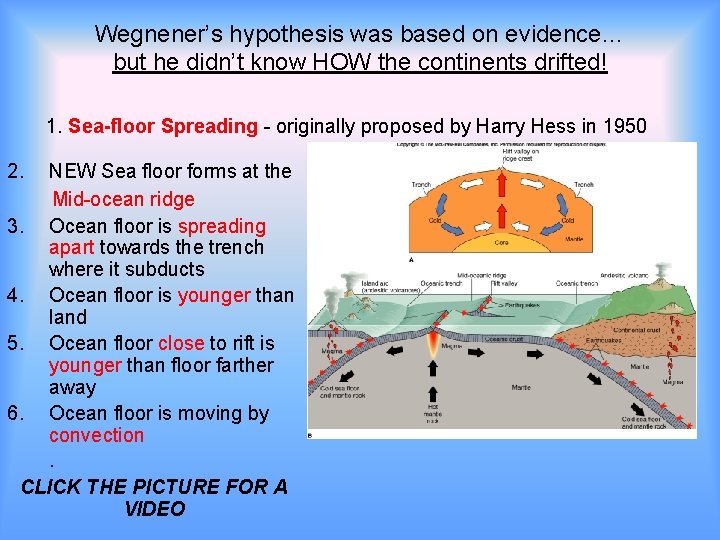
Wegnener’s hypothesis was based on evidence… but he didn’t know HOW the continents drifted! 1. Sea-floor Spreading - originally proposed by Harry Hess in 1950 2. NEW Sea floor forms at the Mid-ocean ridge 3. Ocean floor is spreading apart towards the trench where it subducts 4. Ocean floor is younger than land 5. Ocean floor close to rift is younger than floor farther away 6. Ocean floor is moving by convection. CLICK THE PICTURE FOR A VIDEO
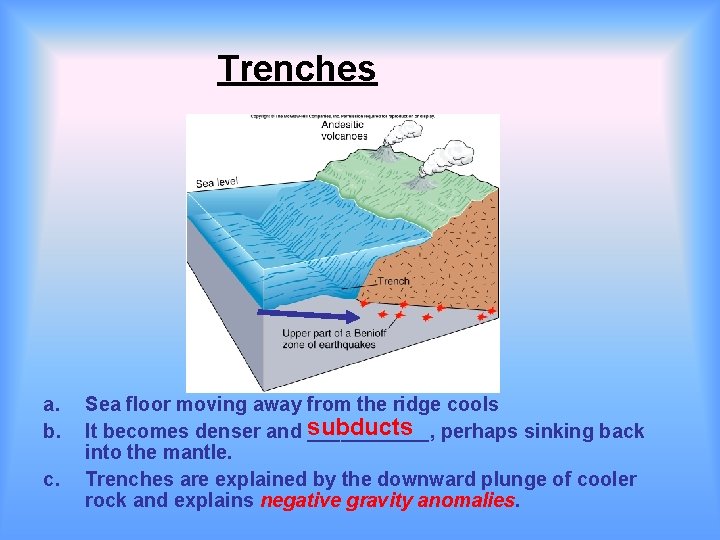
Trenches a. b. c. Sea floor moving away from the ridge cools It becomes denser and subducts ______, perhaps sinking back into the mantle. Trenches are explained by the downward plunge of cooler rock and explains negative gravity anomalies.
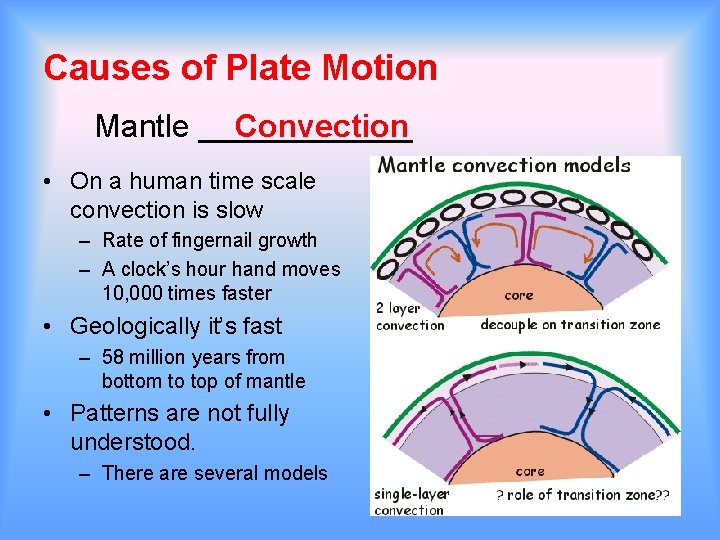
Causes of Plate Motion Mantle ______ Convection • On a human time scale convection is slow – Rate of fingernail growth – A clock’s hour hand moves 10, 000 times faster • Geologically it’s fast – 58 million years from bottom to top of mantle • Patterns are not fully understood. – There are several models
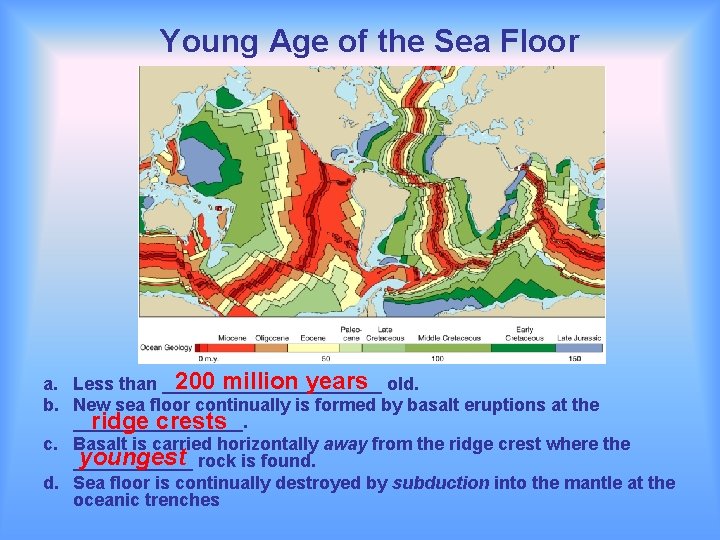
Young Age of the Sea Floor 200 million years old. a. Less than ___________ b. New sea floor continually is formed by basalt eruptions at the _________. ridge crests c. Basalt is carried horizontally away from the ridge crest where the youngest rock is found. ______ d. Sea floor is continually destroyed by subduction into the mantle at the oceanic trenches
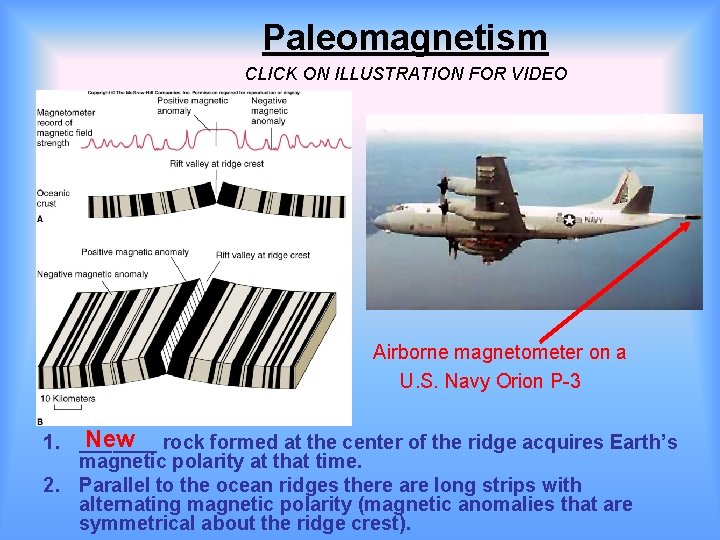
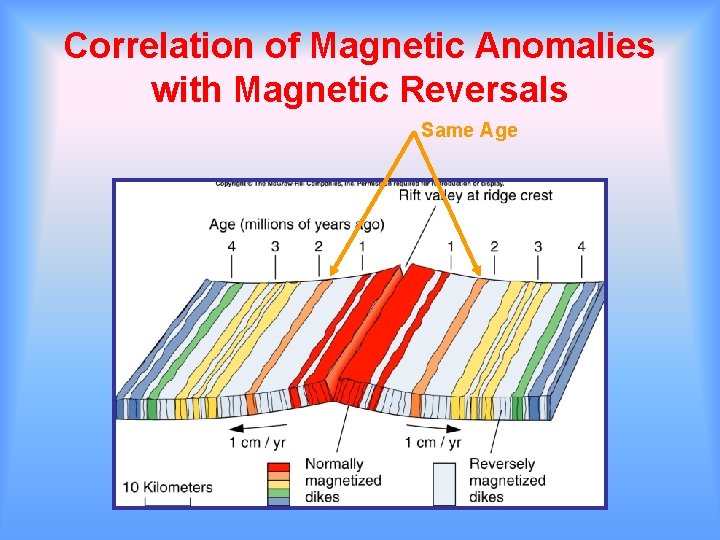
Paleomagnetism CLICK ON ILLUSTRATION FOR VIDEO Airborne magnetometer on a U. S. Navy Orion P-3 New rock formed at the center of the ridge acquires Earth’s 1. _______ magnetic polarity at that time. 2. Parallel to the ocean ridges there are long strips with alternating magnetic polarity (magnetic anomalies that are symmetrical about the ridge crest).
Correlation of Magnetic Anomalies with Magnetic Reversals Same Age