
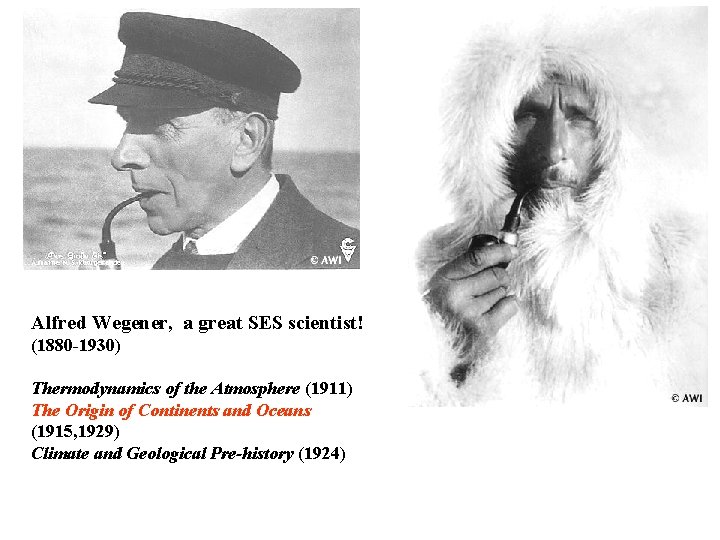
Alfred Wegener a great SES scientist 1880 1930
- Slides: 29
Alfred Wegener, a great SES scientist! (1880 -1930) Thermodynamics of the Atmosphere (1911) The Origin of Continents and Oceans (1915, 1929) Climate and Geological Pre-history (1924)
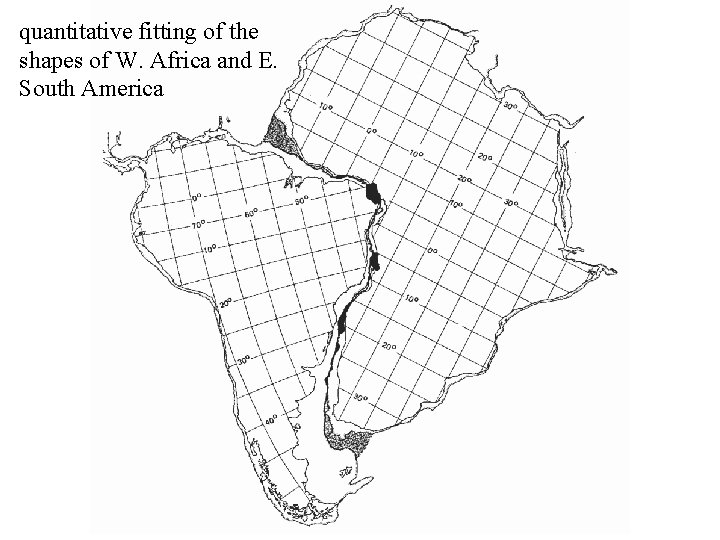
quantitative fitting of the shapes of W. Africa and E. South America
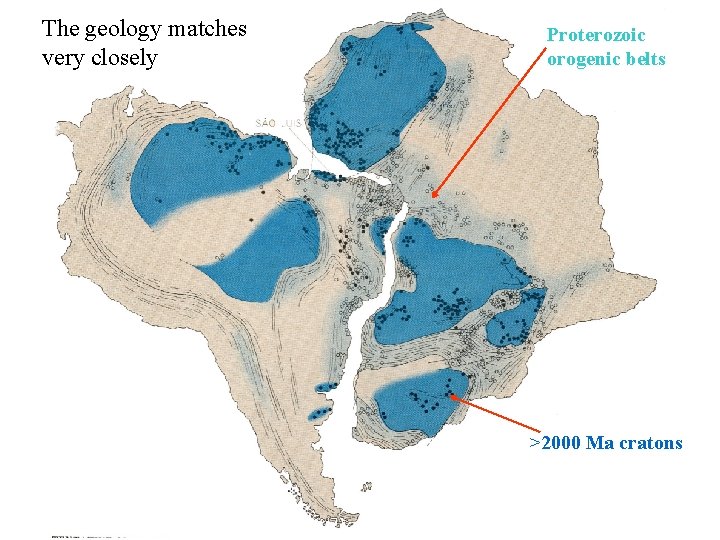
The geology matches very closely Proterozoic orogenic belts >2000 Ma cratons
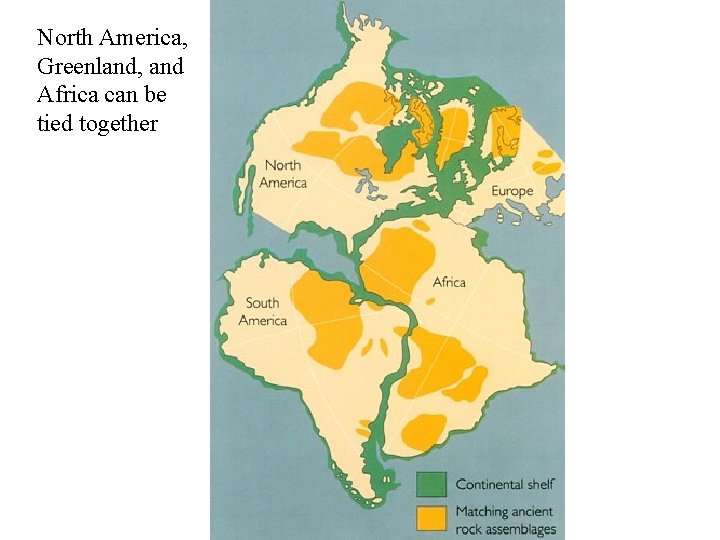
North America, Greenland, and Africa can be tied together
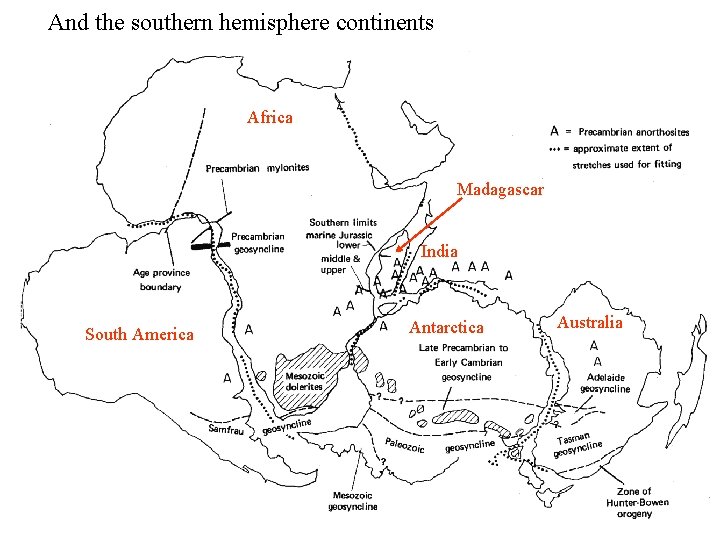
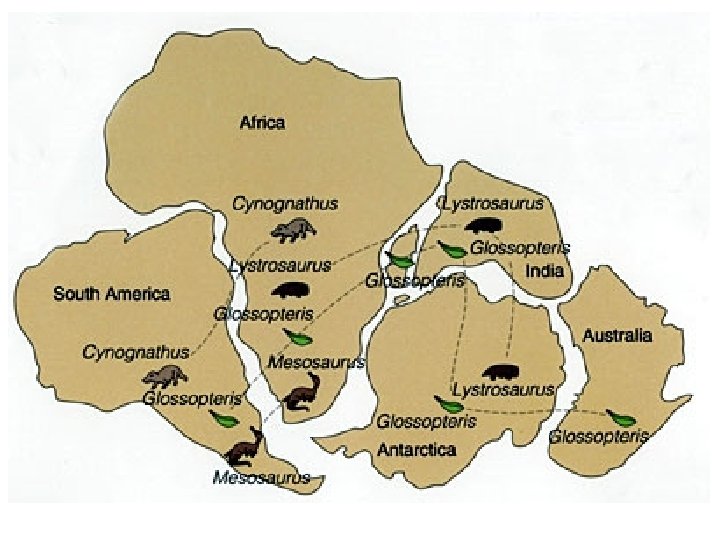
And the southern hemisphere continents Africa Madagascar India South America Antarctica Australia
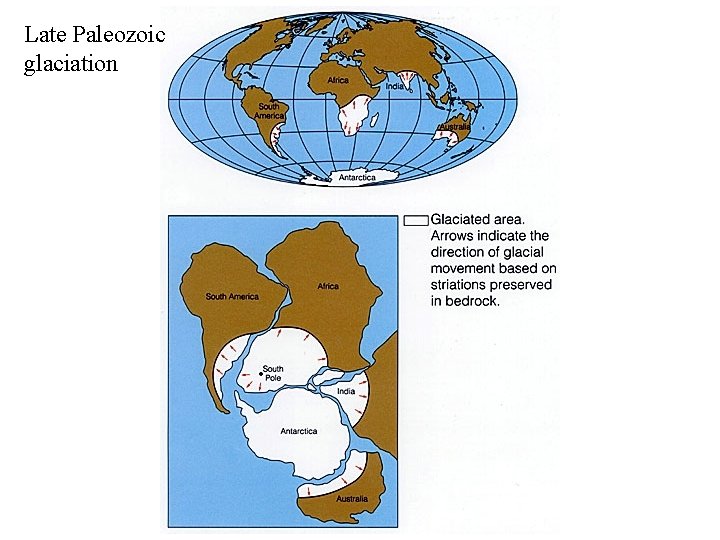
Late Paleozoic glaciation
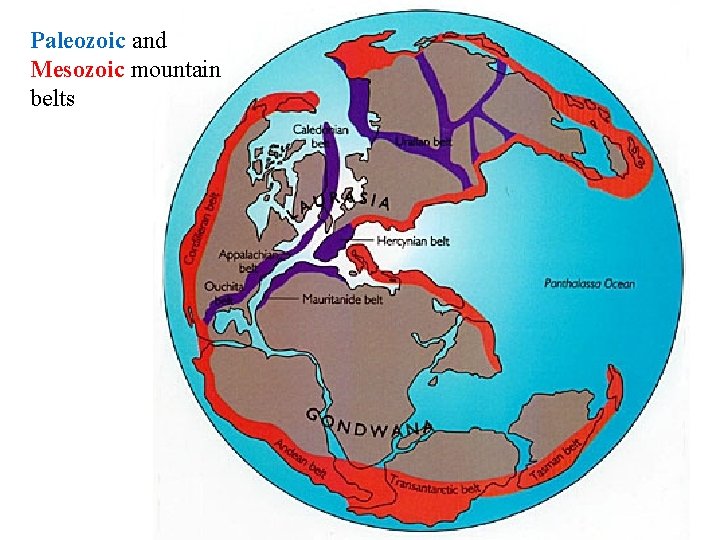
Paleozoic and Mesozoic mountain belts
The evidence for continental drift was compelling and well established during the first half of the 20 th Centurybut it was not accepted by many geologists (almost all U. S. geologists) until the advent of plate tectonics in the late 1960’searly 1970’s! Why? ?
Why? ? § Wegener was attacked because of his lack of geological credentials and some of his geophysical theories for the dynamics of continental drift. The dynamics were wrong, but the kinematics - “continental drift” - was right.
Why? ? § Wegener was attacked because of his lack of geological credentials and some of his erroneous geophysical theories for the causes of continental drift. The theories were wrong, but the basic idea was right. § The focus of geologists on complex continental geology at local to regional scales
Why? ? § Wegener was attacked because of his lack of geological credentials and some of his erroneous geophysical theories for the causes of continental drift. The theories were wrong, but the basic idea was right. § The focus of geologists on complex continental geology at local to regional scales § The obvious importance in continental geology of vertical motions, leading to the "fixest" (versus "mobilist") synthesis that was the reigning theory for much of the first half of the last century.
Why? ? § Wegener was attacked because of his lack of geological credentials and some of his erroneous geophysical theories for the causes of continental drift. The theories were wrong, but the basic idea was right. §The focus of geologists on complex continental geology at local to regional scales §The obvious importance in continental geology of vertical motions, leading to the "fixest" (versus "mobilist") synthesis that was the reigning theory for much of the first half of the last century. § the ocean basins: “terra incognita” before WWII
WWII-Cold War explosion of technology and observations § Marine exploration - opening the last geographic frontier (from naval warfare, especially submarine warfare) • mapping ocean bathymetry and crustal structure • ocean ridge system • ocean crust a very uniform in structure: • a single, well defined geological entity • contrasts with thickness, complexity, variability of continental crustal structure • very thin sedimentary cover: ocean floor is a relatively young geological feature • development of marine magnetometers: led to SEAFLOOR SPREADING
WWII-Cold War explosion of technology and observations § Isotope geochemistry (from development of atomic bomb)
WWII-Cold War explosion of technology and observations § Global seismological networks : global earthquake locations and focal mechanisms - (from nuclear test detection and verification for Cold War and post-Cold War test ban treaties)
WWII-Cold War explosion of technology and observations § Digital computers • enabled realistic modeling of processes and observations • ability to process, analyse and visualize dense, comprehensive spatial data sets
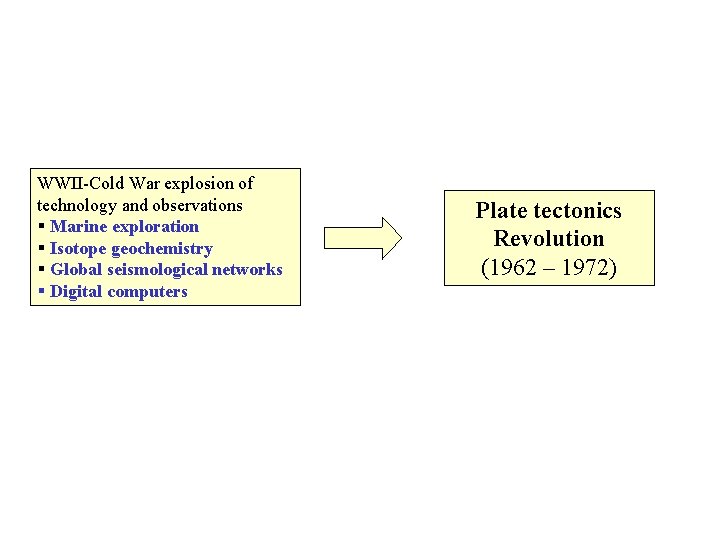
WWII-Cold War explosion of technology and observations § Marine exploration § Isotope geochemistry § Global seismological networks § Digital computers Plate tectonics Revolution (1962 – 1972)
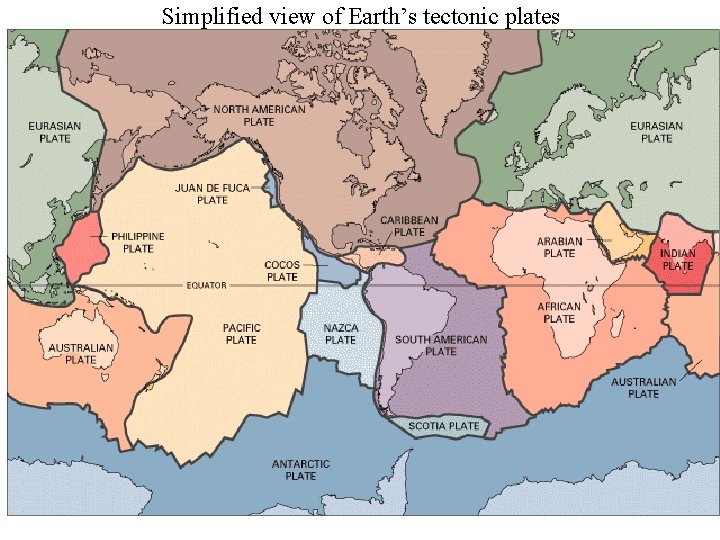
Simplified view of Earth’s tectonic plates
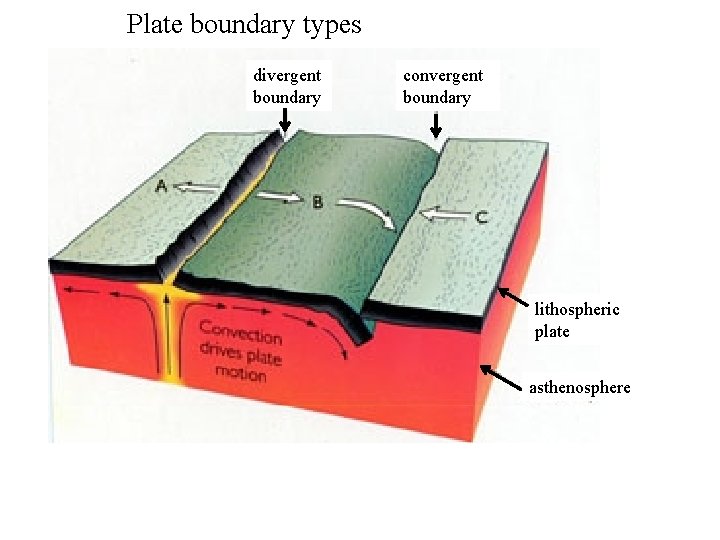
Plate boundary types divergent boundary convergent boundary lithospheric plate asthenosphere
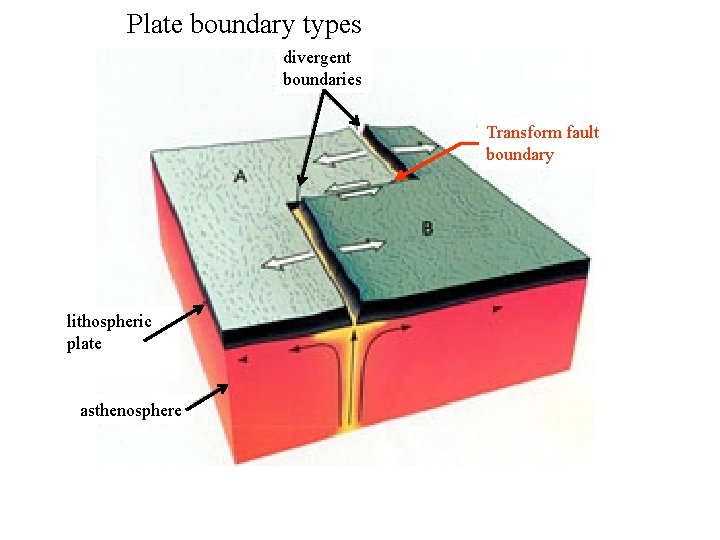
Plate boundary types divergent boundaries Transform fault boundary lithospheric plate asthenosphere
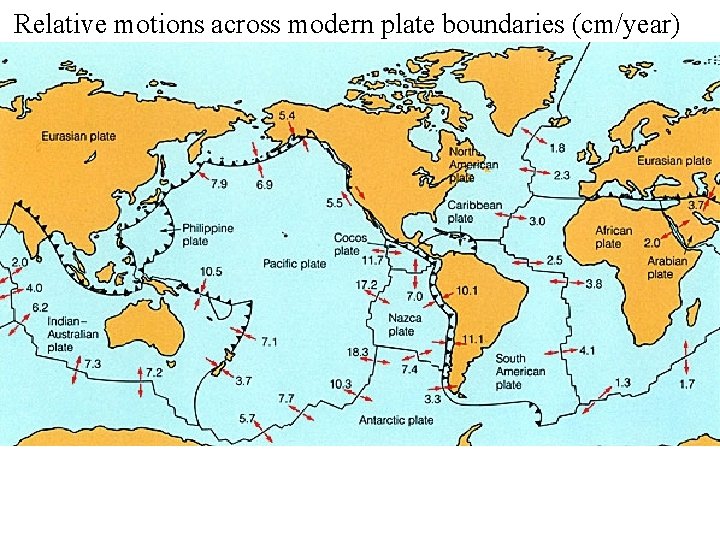
Relative motions across modern plate boundaries (cm/year)
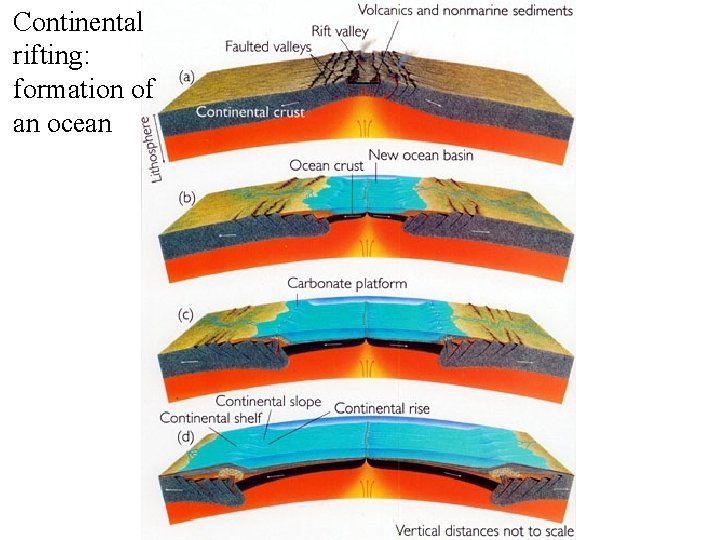
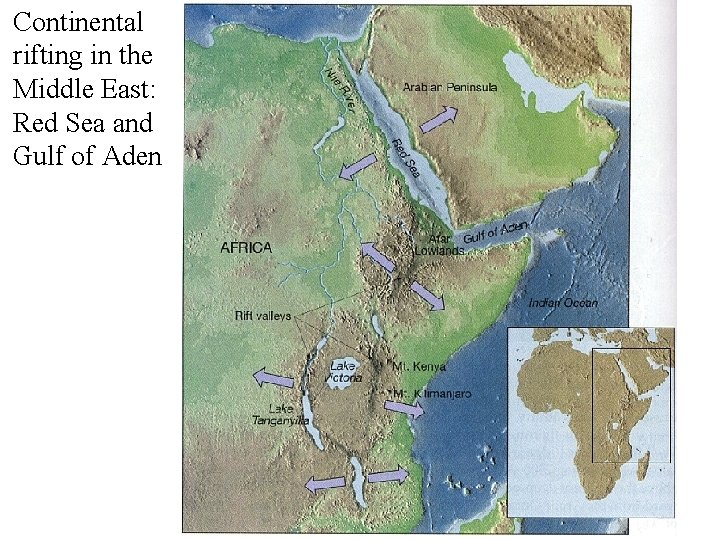
Continental rifting: formation of an ocean
Continental rifting in the Middle East: Red Sea and Gulf of Aden
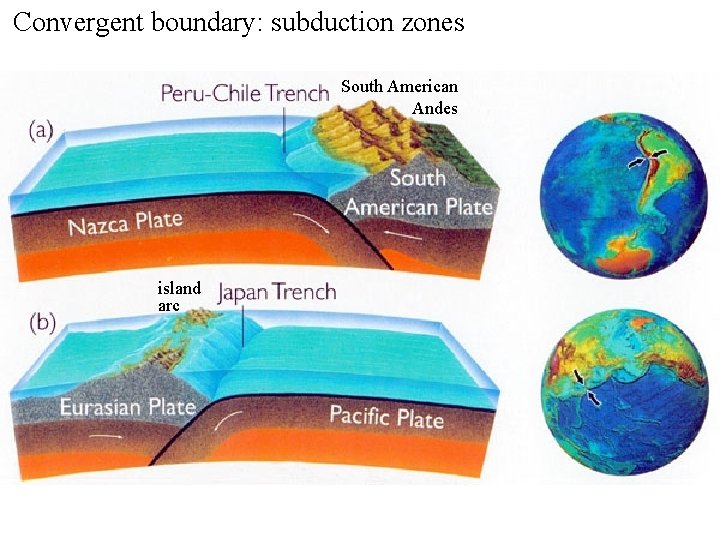
Convergent boundary: subduction zones South American Andes island arc
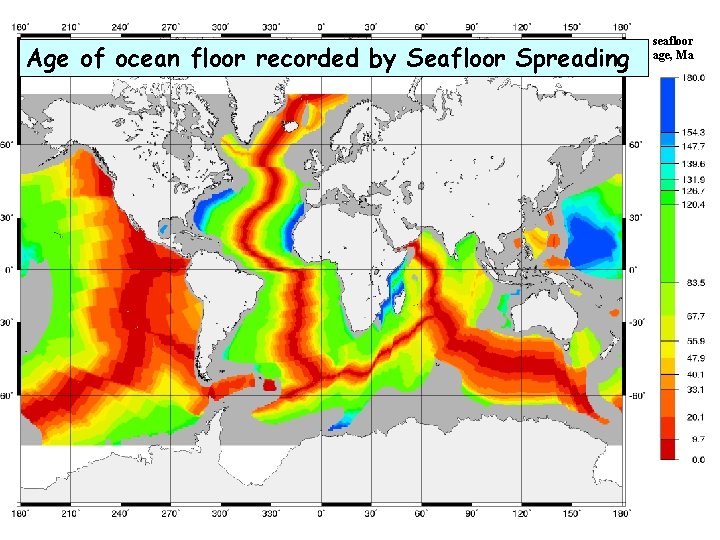
Age of ocean floor recorded by Seafloor Spreading seafloor age, Ma
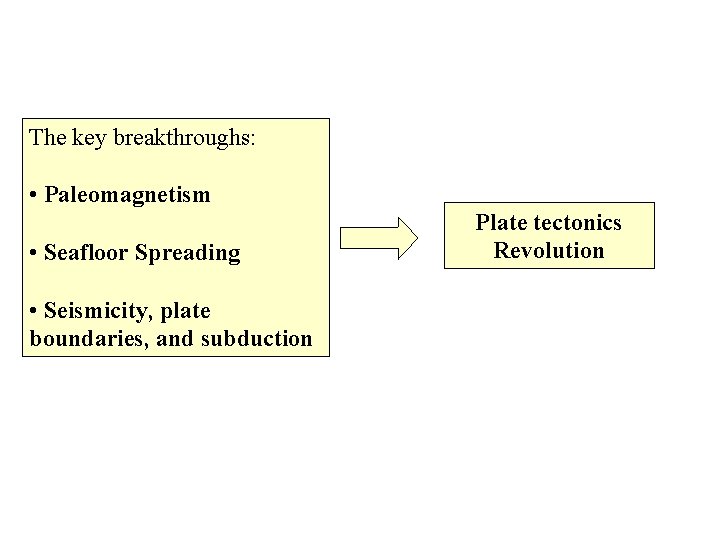
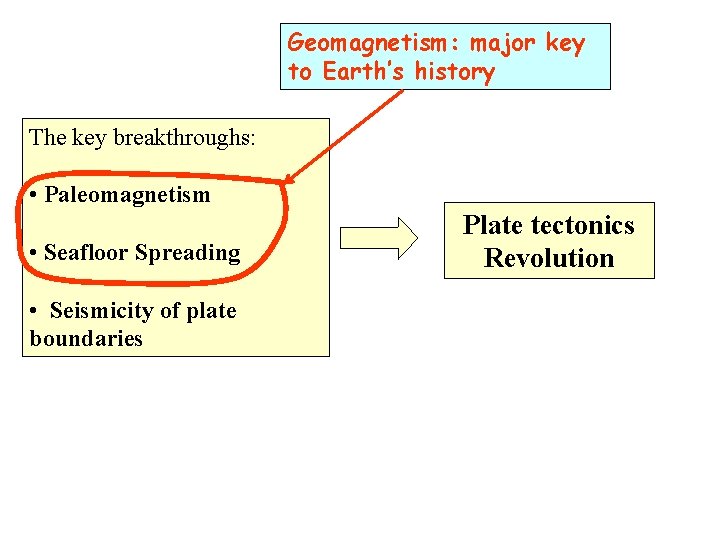
The key breakthroughs: • Paleomagnetism • Seafloor Spreading • Seismicity, plate boundaries, and subduction Plate tectonics Revolution
Geomagnetism: major key to Earth’s history The key breakthroughs: • Paleomagnetism • Seafloor Spreading • Seismicity of plate boundaries Plate tectonics Revolution