
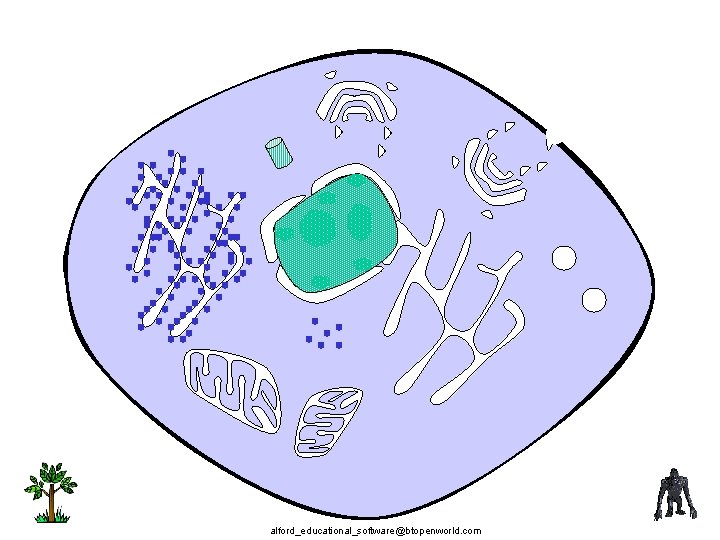
alfordeducationalsoftwarebtopenworld com the nucleus controls the cells activities
alford_educational_software@btopenworld. com
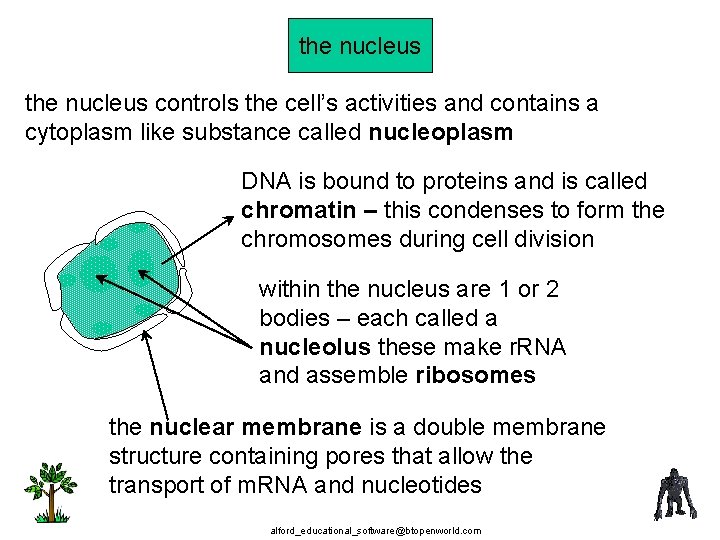
the nucleus controls the cell’s activities and contains a cytoplasm like substance called nucleoplasm DNA is bound to proteins and is called chromatin – this condenses to form the chromosomes during cell division within the nucleus are 1 or 2 bodies – each called a nucleolus these make r. RNA and assemble ribosomes the nuclear membrane is a double membrane structure containing pores that allow the transport of m. RNA and nucleotides alford_educational_software@btopenworld. com
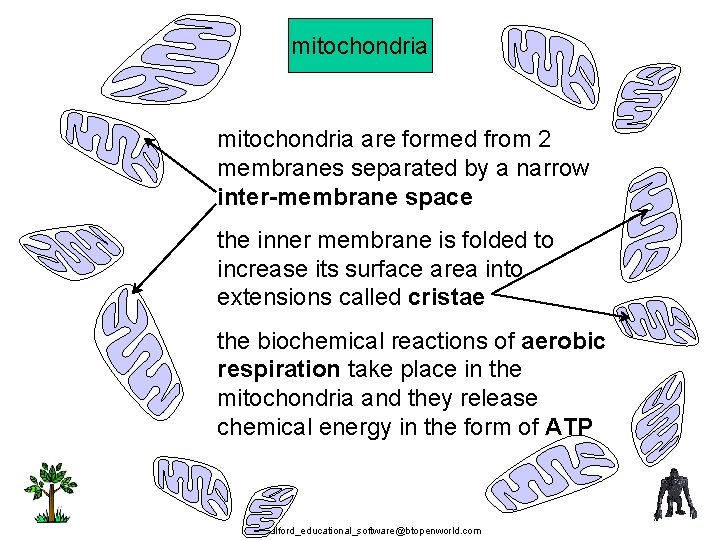
mitochondria are formed from 2 membranes separated by a narrow inter-membrane space the inner membrane is folded to increase its surface area into extensions called cristae the biochemical reactions of aerobic respiration take place in the mitochondria and they release chemical energy in the form of ATP alford_educational_software@btopenworld. com
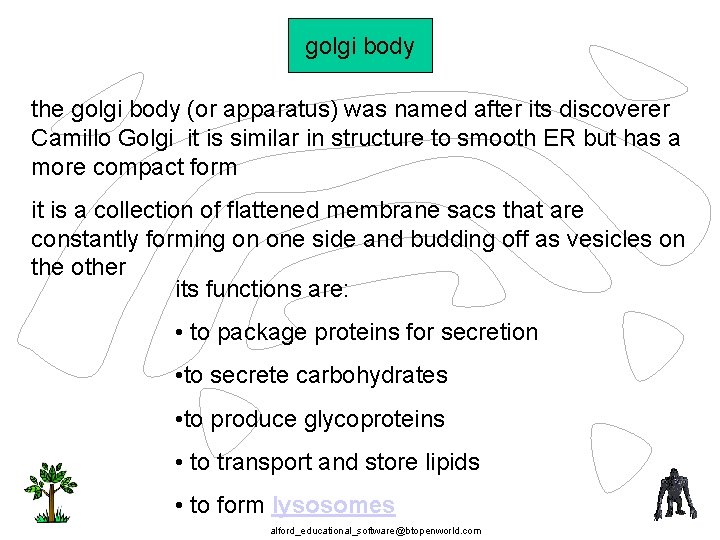
golgi body the golgi body (or apparatus) was named after its discoverer Camillo Golgi it is similar in structure to smooth ER but has a more compact form it is a collection of flattened membrane sacs that are constantly forming on one side and budding off as vesicles on the other its functions are: • to package proteins for secretion • to secrete carbohydrates • to produce glycoproteins • to transport and store lipids • to form lysosomes alford_educational_software@btopenworld. com
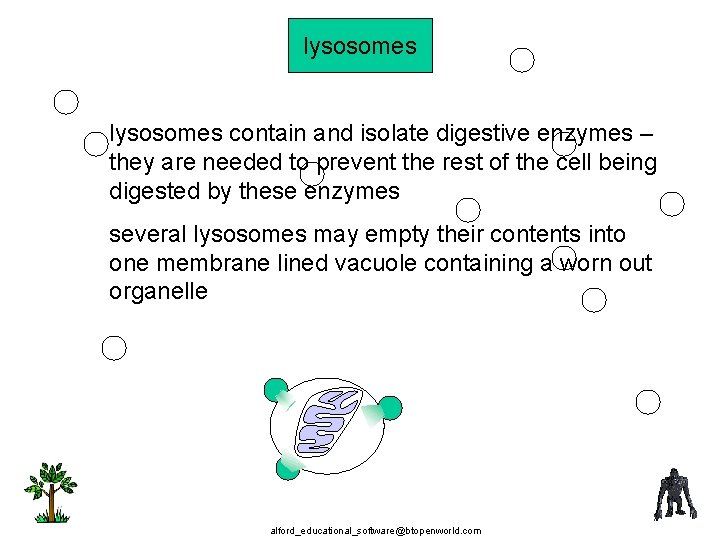
lysosomes contain and isolate digestive enzymes – they are needed to prevent the rest of the cell being digested by these enzymes several lysosomes may empty their contents into one membrane lined vacuole containing a worn out organelle alford_educational_software@btopenworld. com
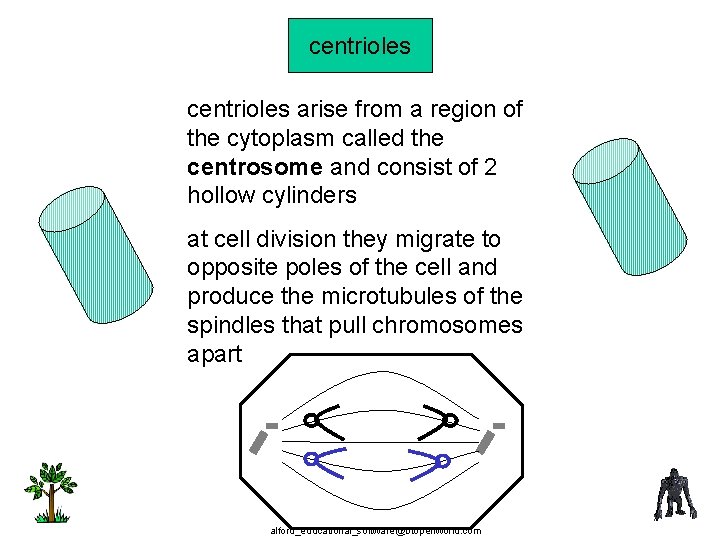
centrioles arise from a region of the cytoplasm called the centrosome and consist of 2 hollow cylinders at cell division they migrate to opposite poles of the cell and produce the microtubules of the spindles that pull chromosomes apart alford_educational_software@btopenworld. com
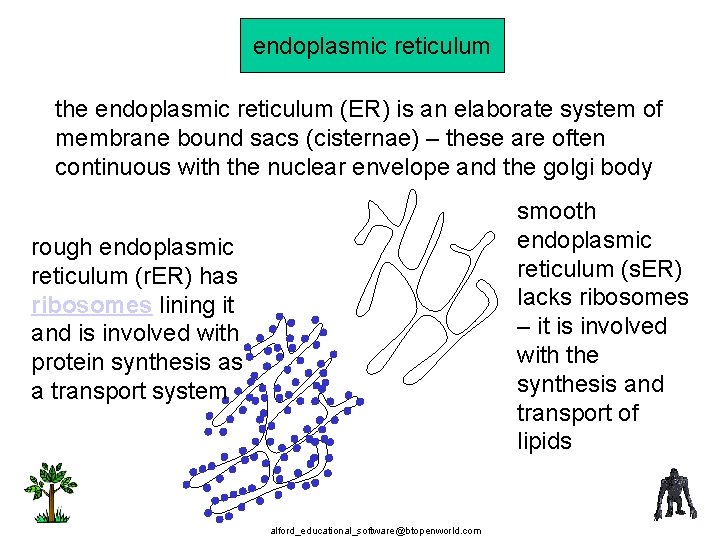
endoplasmic reticulum the endoplasmic reticulum (ER) is an elaborate system of membrane bound sacs (cisternae) – these are often continuous with the nuclear envelope and the golgi body smooth endoplasmic reticulum (s. ER) lacks ribosomes – it is involved with the synthesis and transport of lipids rough endoplasmic reticulum (r. ER) has ribosomes lining it and is involved with protein synthesis as a transport system alford_educational_software@btopenworld. com
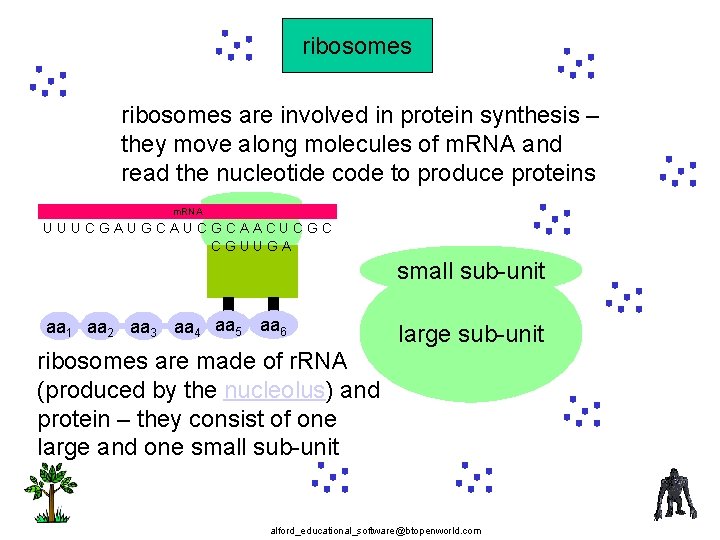
ribosomes are involved in protein synthesis – they move along molecules of m. RNA and read the nucleotide code to produce proteins m. RNA U U U C G A U G C A U C G C A A CU C G C CGUUGA small sub-unit aa 1 aa 2 aa 3 aa 4 aa 5 aa 6 large sub-unit ribosomes are made of r. RNA (produced by the nucleolus) and protein – they consist of one large and one small sub-unit alford_educational_software@btopenworld. com
cytoplasm the cytoplasm is the matrix that contains all of the different organelles it is an aqueous mixture of chemicals either in solution or as colloids including: • simple ions such as sodium (Na+) and chloride (Cl-) • organic molecules such as amino-acids, ATP and sugars • storage materials such as fat droplets it can be seen to be moving – this is called cytoplasmic streaming alford_educational_software@btopenworld. com
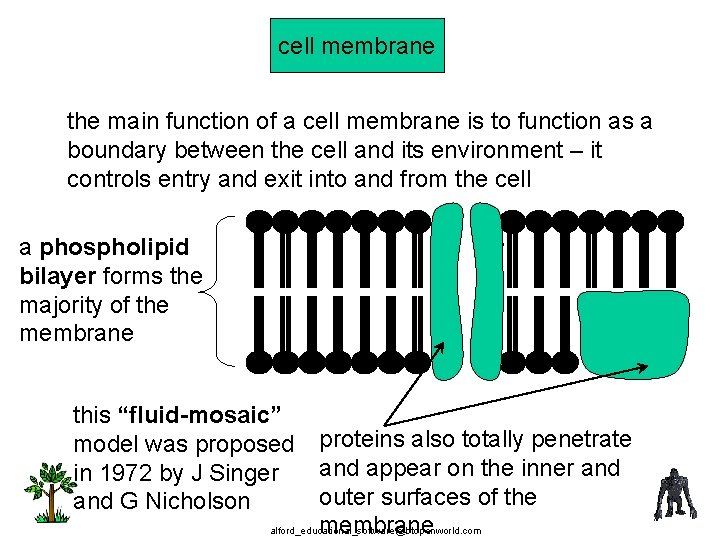
cell membrane the main function of a cell membrane is to function as a boundary between the cell and its environment – it controls entry and exit into and from the cell a phospholipid bilayer forms the majority of the membrane this “fluid-mosaic” model was proposed in 1972 by J Singer and G Nicholson proteins also totally penetrate and appear on the inner and outer surfaces of the membrane alford_educational_software@btopenworld. com
alford_educational_software@btopenworld. com
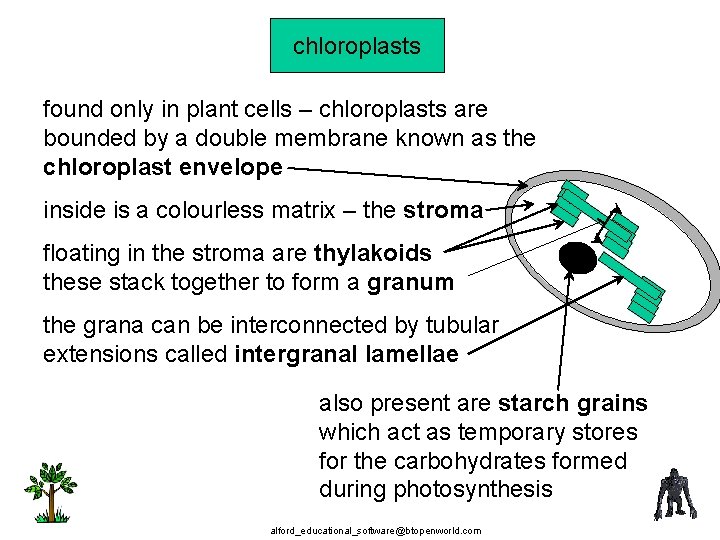
chloroplasts found only in plant cells – chloroplasts are bounded by a double membrane known as the chloroplast envelope inside is a colourless matrix – the stroma floating in the stroma are thylakoids these stack together to form a granum the grana can be interconnected by tubular extensions called intergranal lamellae also present are starch grains which act as temporary stores for the carbohydrates formed during photosynthesis alford_educational_software@btopenworld. com
vacuole the vacuole is a large fluid filled sac it is surrounded by a membrane called the tonoplast it functions as a storage site and provides support for plant cells by creating a pressure potential through osmosis alford_educational_software@btopenworld. com
cell wall the cell wall is made of cellulose microfibrils contained in a polysaccharide matrix the cell wall provides strength and support and provides a pathway for water to move through the plant – the apoplast pathway alford_educational_software@btopenworld. com
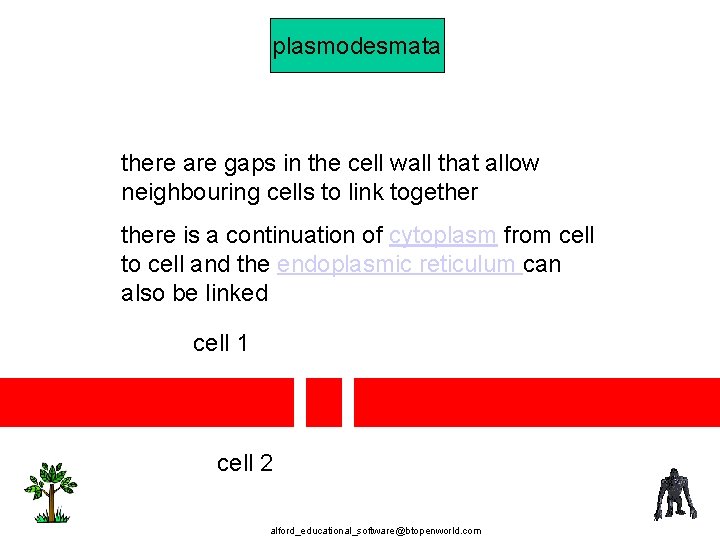
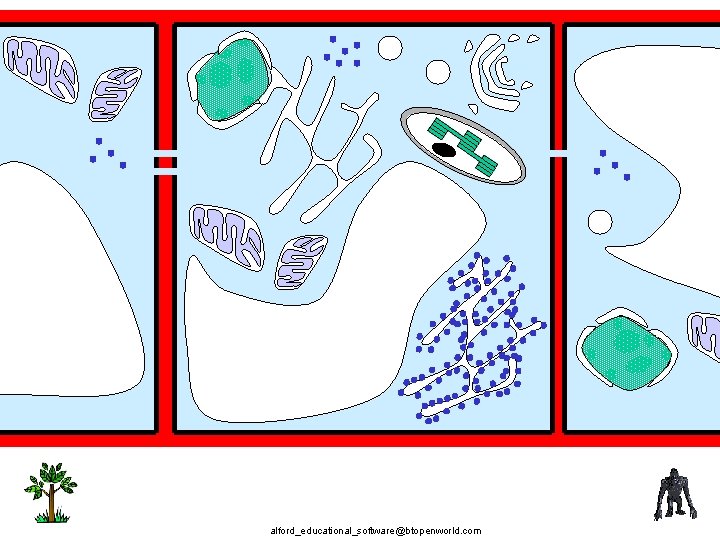
plasmodesmata there are gaps in the cell wall that allow neighbouring cells to link togethere is a continuation of cytoplasm from cell to cell and the endoplasmic reticulum can also be linked cell 1 cell 2 alford_educational_software@btopenworld. com

http: //www. stolaf. edu/people/gia nnini/biological%20 anamations. html alford_educational_software@btopenworld. com
- Slides: 16