
AlexanderSadiku Fundamentals of Electric Circuits Chapter 10 Sinusoidal
- Slides: 12
Alexander-Sadiku Fundamentals of Electric Circuits Chapter 10 Sinusoidal Steady-State Analysis Copyright © The Mc. Graw-Hill Companies, Inc. Permission required for reproduction or display. 1
Sinusoidal Steady-State Analysis Chapter 10 10. 1 10. 2 10. 3 10. 4 10. 5 10. 6 Basic Approach Nodal Analysis Mesh Analysis Superposition Theorem Source Transformation Thevenin and Norton Equivalent Circuits 2
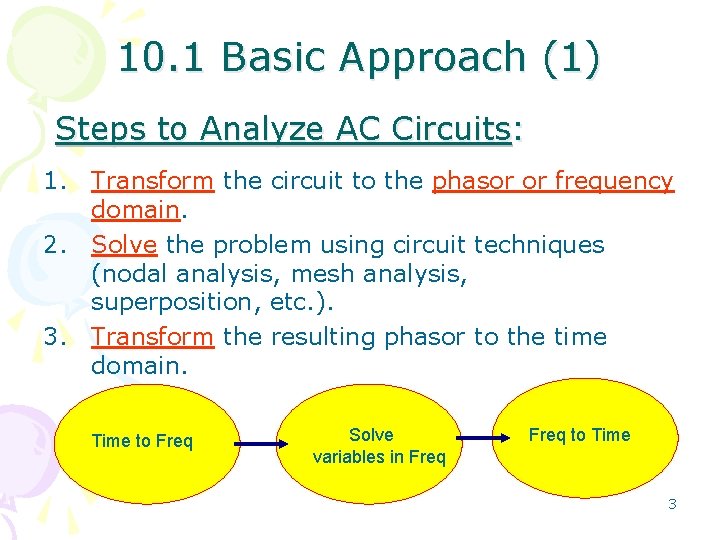
10. 1 Basic Approach (1) Steps to Analyze AC Circuits: 1. Transform the circuit to the phasor or frequency domain. 2. Solve the problem using circuit techniques (nodal analysis, mesh analysis, superposition, etc. ). 3. Transform the resulting phasor to the time domain. Time to Freq Solve variables in Freq to Time 3
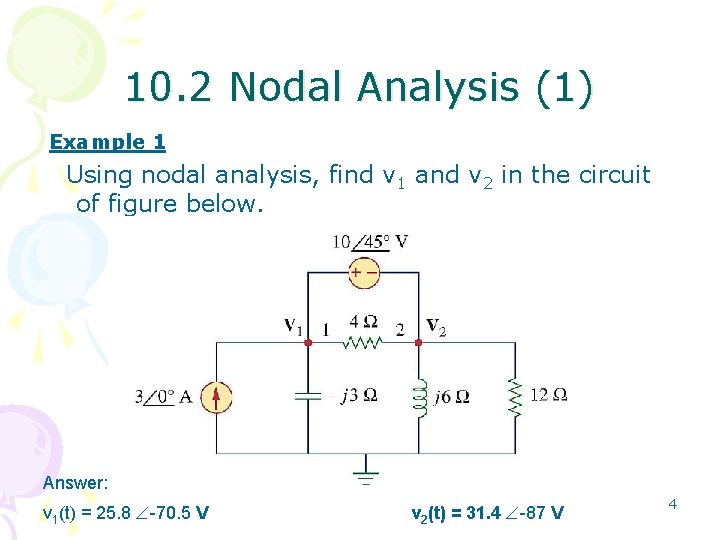
10. 2 Nodal Analysis (1) Example 1 Using nodal analysis, find v 1 and v 2 in the circuit of figure below. Answer: v 1(t) = 25. 8 -70. 5 V v 2(t) = 31. 4 -87 V 4
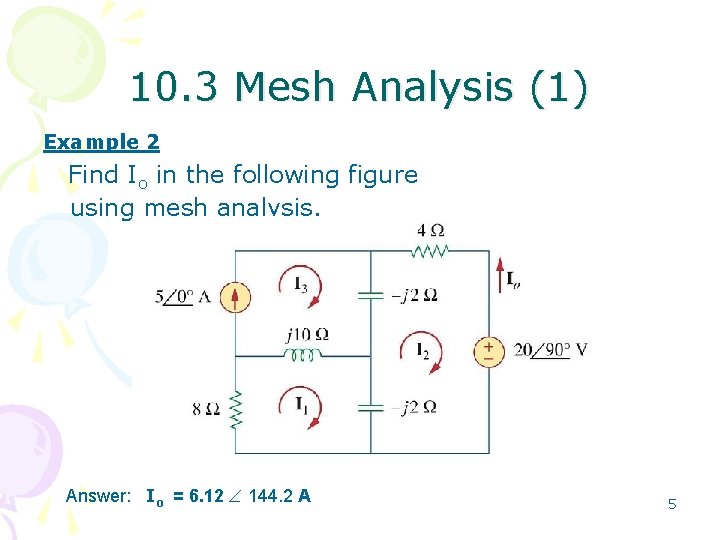
10. 3 Mesh Analysis (1) Example 2 Find Io in the following figure using mesh analysis. Answer: Io = 6. 12 144. 2 A 5
10. 4 Superposition Theorem (1) When a circuit has sources operating at different frequencies, • The separate phasor circuit for each frequency must be solved independently, and • The total response is the sum of timedomain responses of all the individual phasor circuits. 6
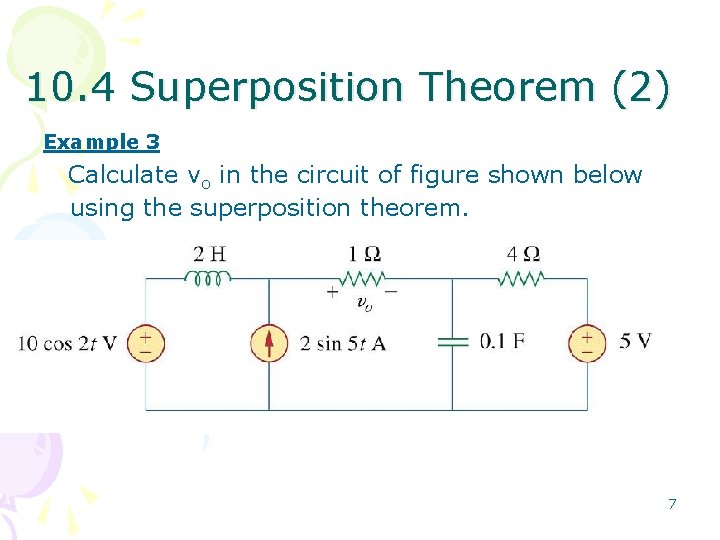
10. 4 Superposition Theorem (2) Example 3 Calculate vo in the circuit of figure shown below using the superposition theorem. 7
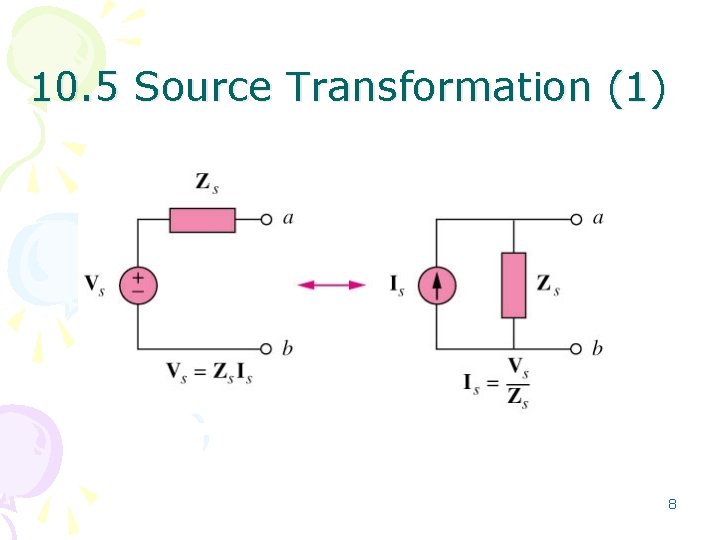
10. 5 Source Transformation (1) 8
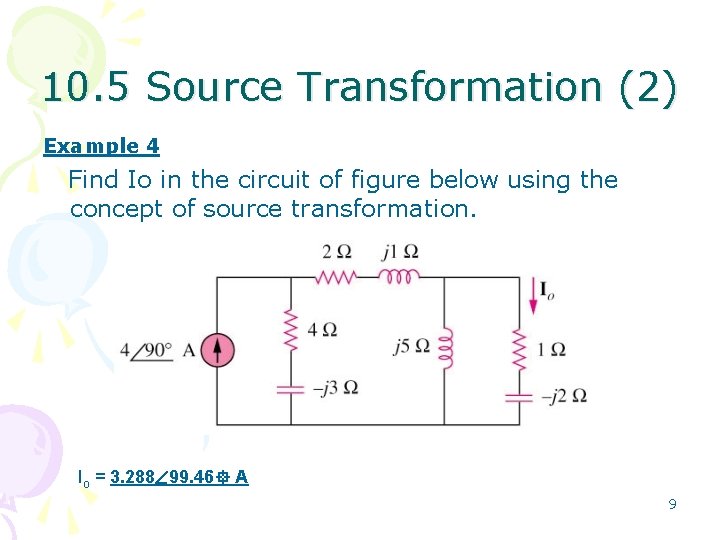
10. 5 Source Transformation (2) Example 4 Find Io in the circuit of figure below using the concept of source transformation. Io = 3. 288 99. 46 A 9
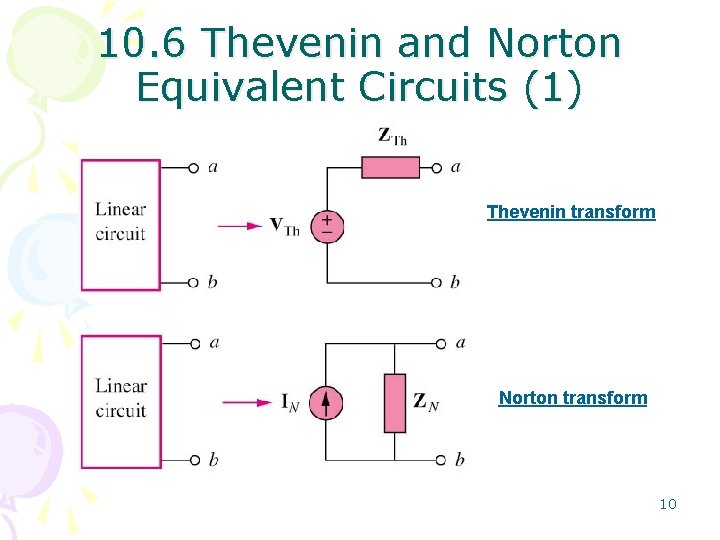
10. 6 Thevenin and Norton Equivalent Circuits (1) Thevenin transform Norton transform 10
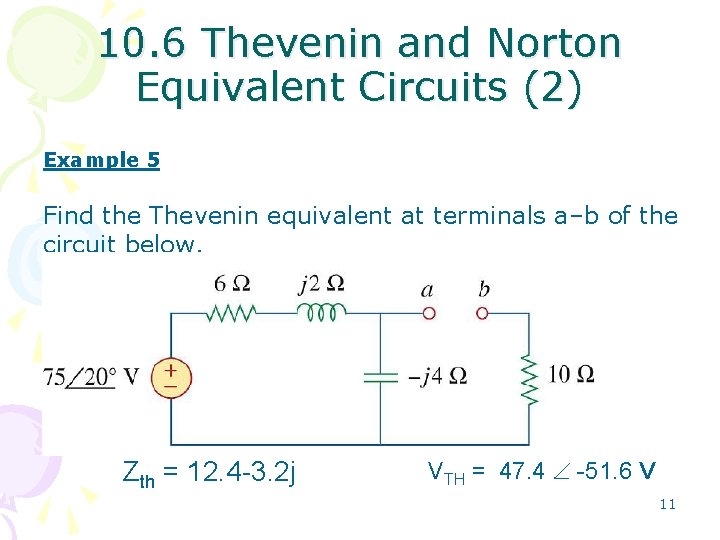
10. 6 Thevenin and Norton Equivalent Circuits (2) Example 5 Find the Thevenin equivalent at terminals a–b of the circuit below. Zth = 12. 4 -3. 2 j VTH = 47. 4 -51. 6 V 11
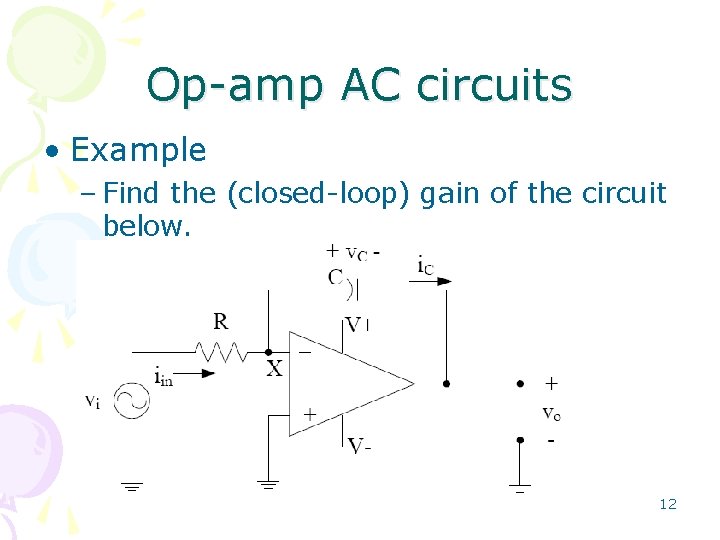
Op-amp AC circuits • Example – Find the (closed-loop) gain of the circuit below. 12