
Alexander Disease and GFAP By Austin Pier What
Alexander Disease and GFAP By Austin Pier
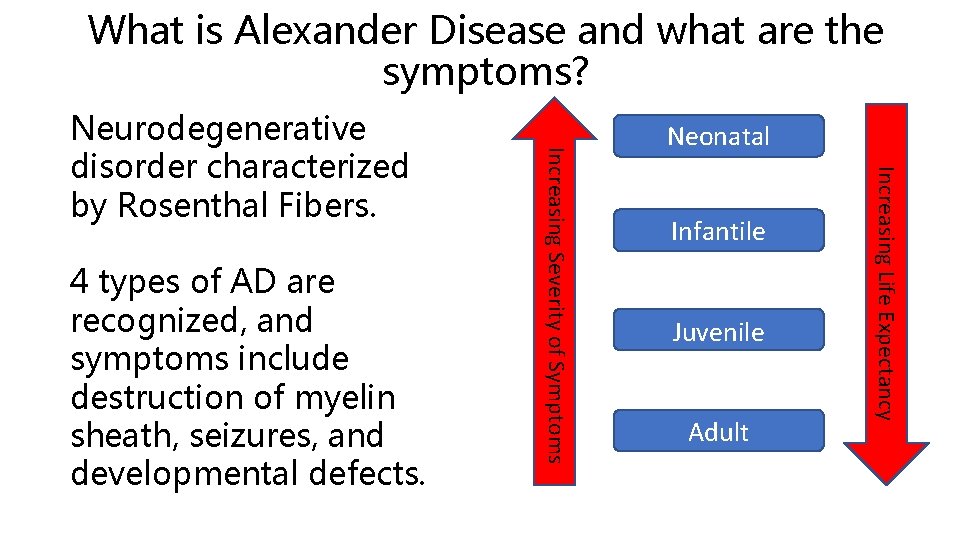
What is Alexander Disease and what are the symptoms? Neonatal Infantile Juvenile Adult Increasing Life Expectancy 4 types of AD are recognized, and symptoms include destruction of myelin sheath, seizures, and developmental defects. Increasing Severity of Symptoms Neurodegenerative disorder characterized by Rosenthal Fibers.
What mutation in GFAP causes Alexander Disease?
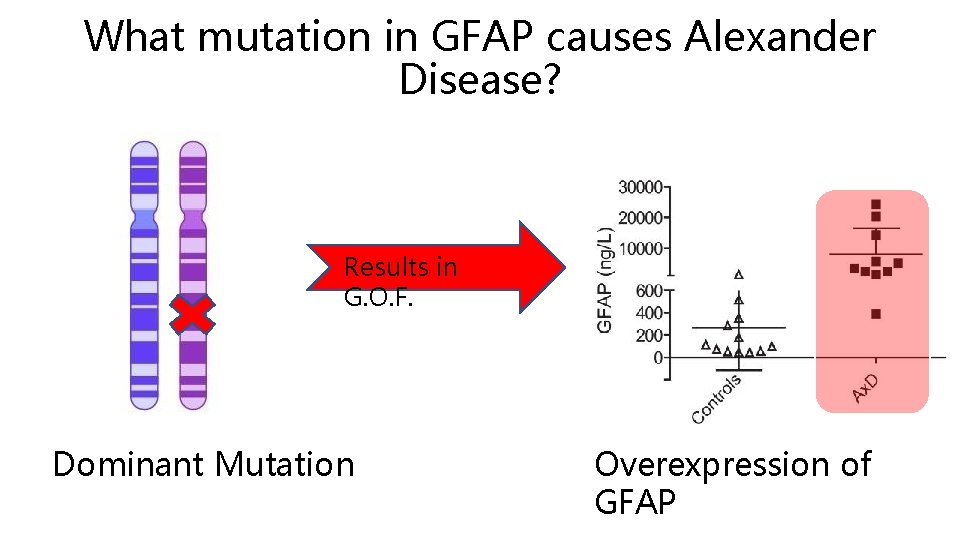
What mutation in GFAP causes Alexander Disease? Results in G. O. F. Dominant Mutation Overexpression of GFAP
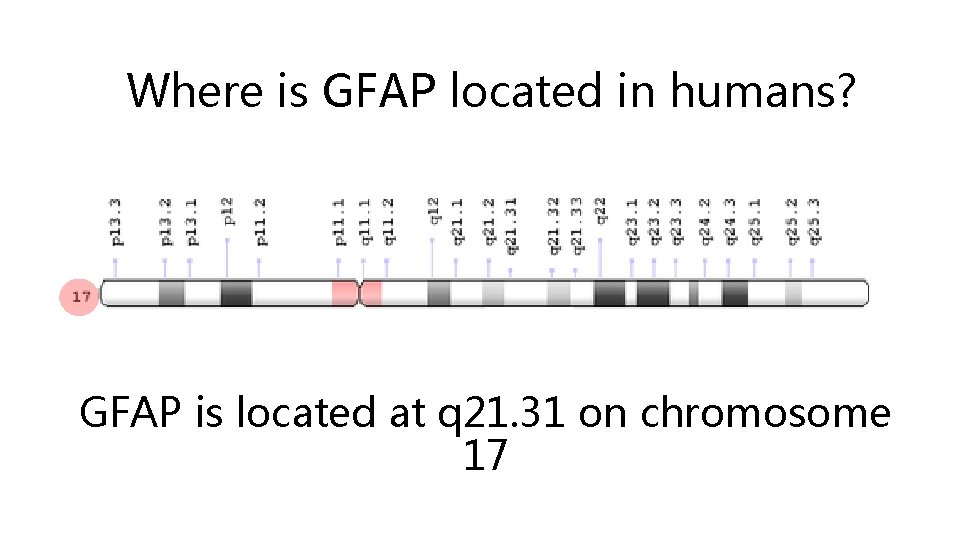
Where is GFAP located in humans? GFAP is located at q 21. 31 on chromosome 17

Where is GFAP expressed? GFAP is expressed primarily in the brain in cells called astrocytes
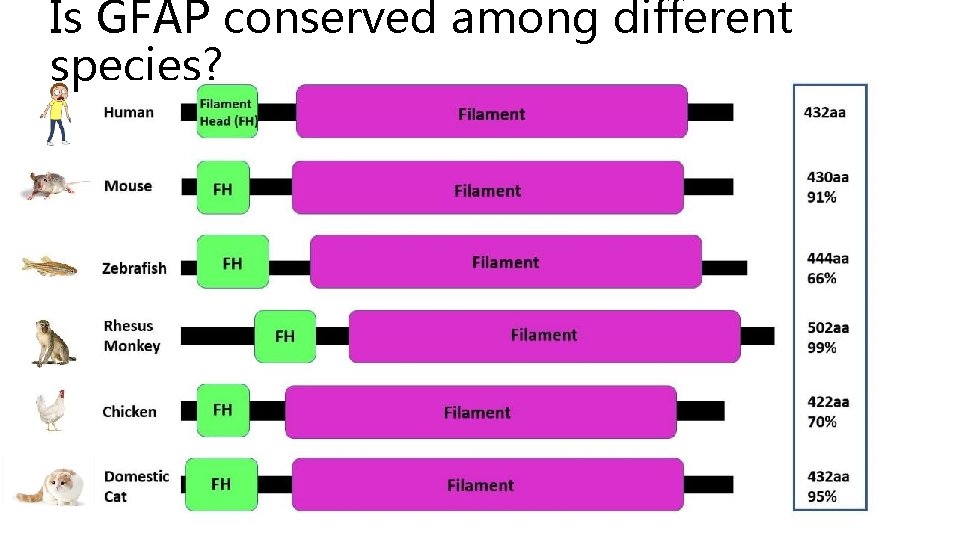
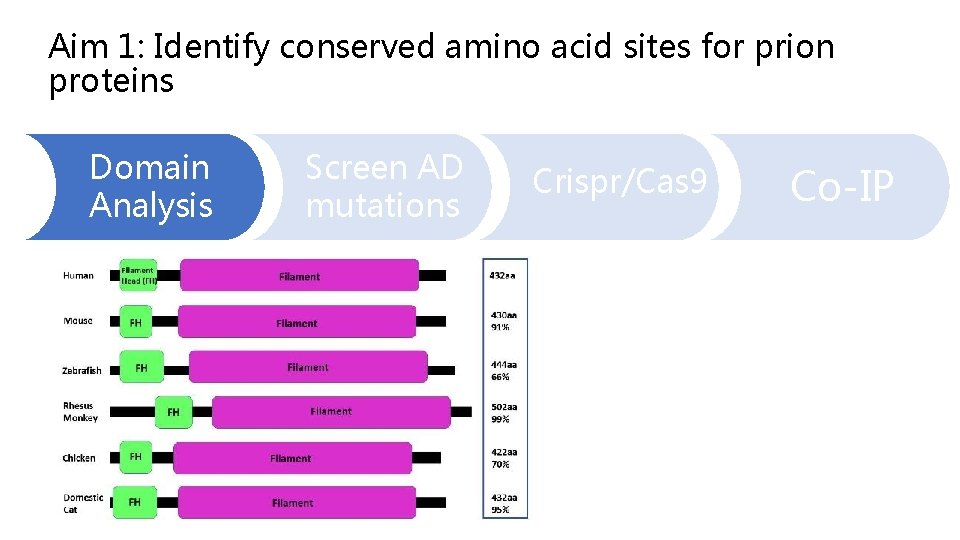
Is GFAP conserved among different species?
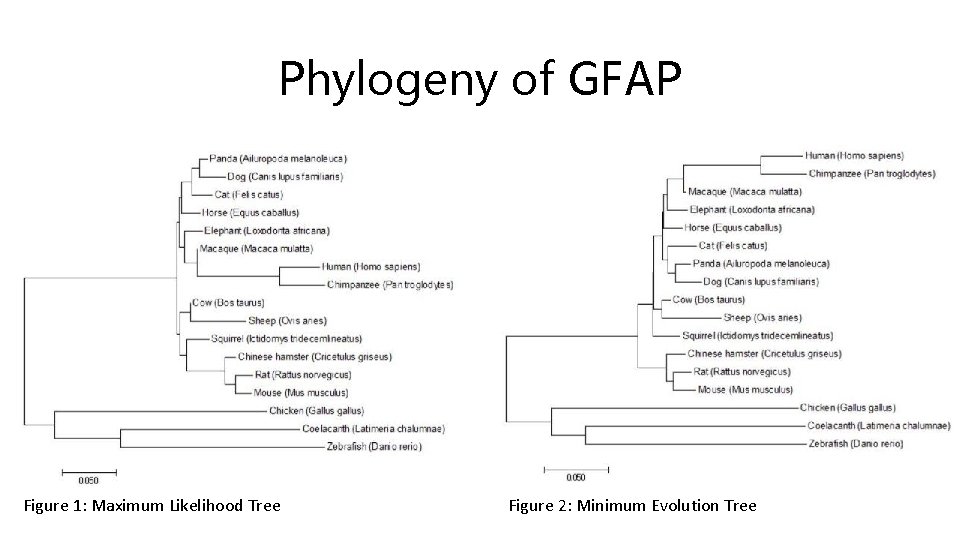
Phylogeny of GFAP Figure 1: Maximum Likelihood Tree Figure 2: Minimum Evolution Tree
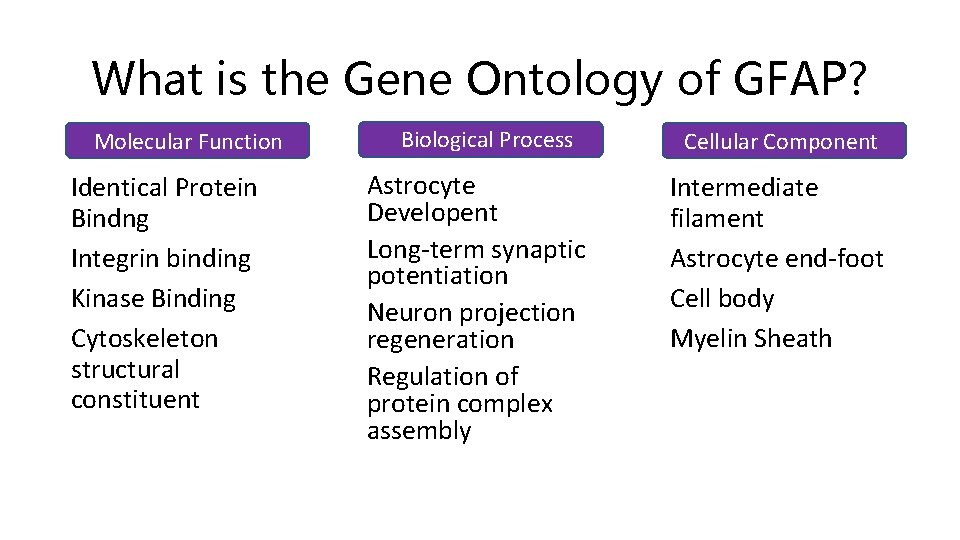
What is the Gene Ontology of GFAP? Molecular Function Identical Protein Bindng Integrin binding Kinase Binding Cytoskeleton structural constituent Biological Process Astrocyte Developent Long-term synaptic potentiation Neuron projection regeneration Regulation of protein complex assembly Cellular Component Intermediate filament Astrocyte end-foot Cell body Myelin Sheath
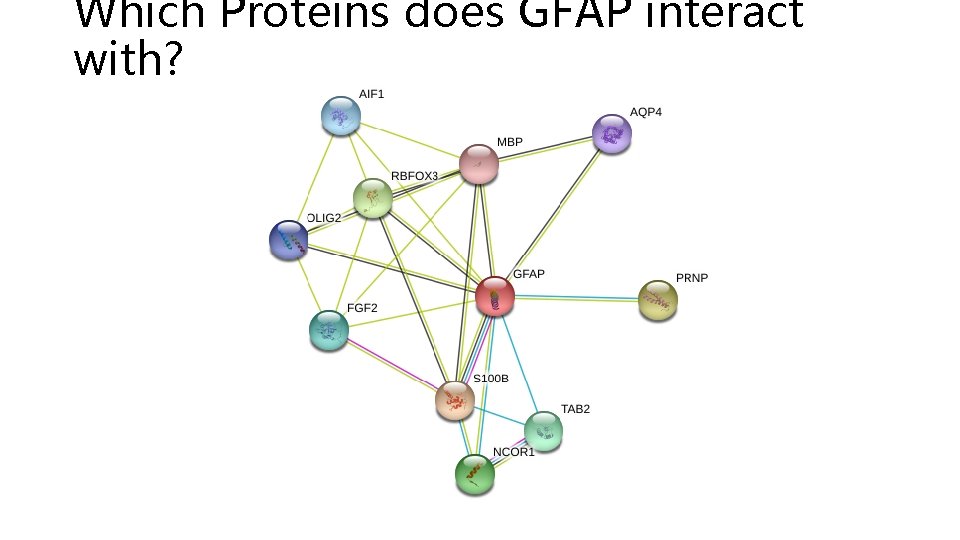
Which Proteins does GFAP interact with?
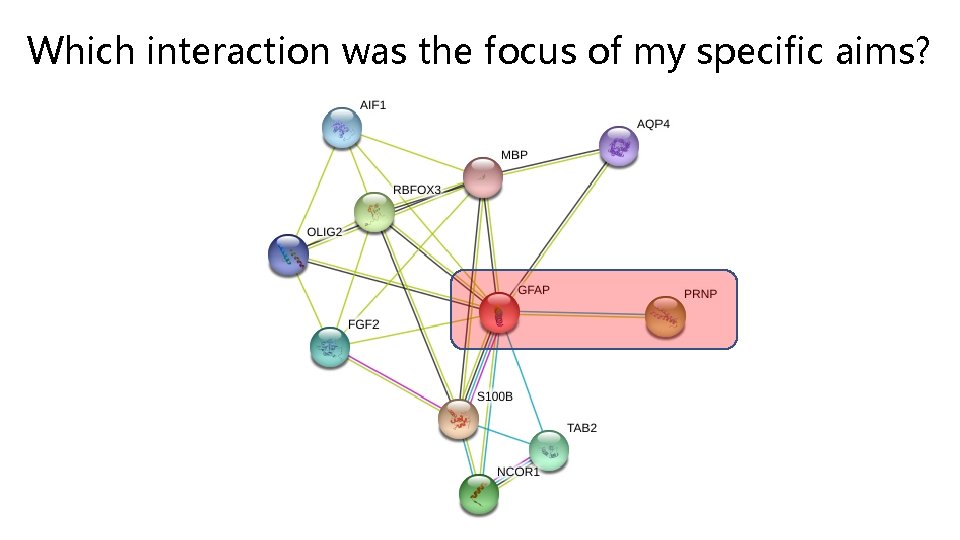
Which interaction was the focus of my specific aims?
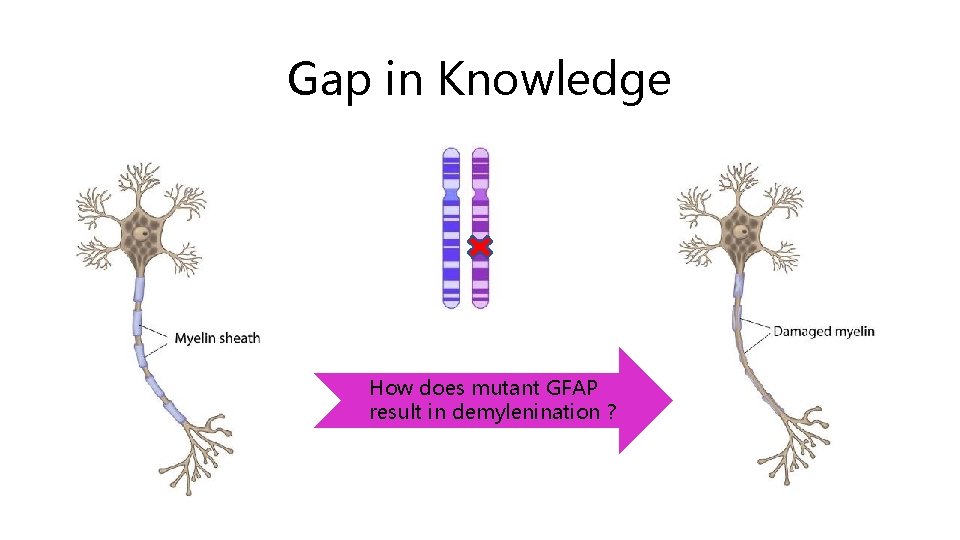
Gap in Knowledge How does mutant GFAP result in demylenination ?
What is the primary goal? To determine the role of GFAP in myelin sheath maintenance and myelination. Aim 1 Identify conserved amino acid binding sites for prion proteins.
Aim 1: Identify conserved amino acid sites for prion proteins Domain Analysis Screen AD mutations Crispr/Cas 9 Co-IP
Aim 1: Identify conserved amino acid sites for prion proteins Domain Analysis Screen AD mutations Crispr/Cas 9 Co-IP
Aim 1: Identify conserved amino acid sites for prion proteins Domain Analysis Screen AD mutations Crispr/Cas 9 Co-IP
Aim 1: Identify conserved amino acid sites for prion proteins Domain Analysis Screen AD mutations Crispr/Cas 9 Co-IP

Work Cited: • https: //www. google. com/search? safe=off&tbm=isch&q=neuron+background&chips=q: neuron+background, g_3: desktop&sa=X&ved=0 ah. UKEwix_amhoq. La. Ah. UJ 7 Z 8 KHYUWAqw. Q 4 l. YILCg. A&biw=1229&bih=587&dpr=1. 5 6#imgrc=96 n 9 i. Qnb. Wt 5 YJM • https: //ghr. nlm. nih. gov/gene/GFAP#location • https: //www. google. com/search? q=astrocytes+images&safe=off&tbm=isch&tbs=rimg: Cdz 171 Pk. BWNw. Iji 49 o 7 u. Ra 1 kc. GFp 7 vp-7 V_1 Dbob 9 j. YHi. K 4 lpy 12 Ax. S 5 wl 3 B 4 Tr. FOKbx. P 1 xwd. C_1 npxj. Sy. GZYIl. Lps. Co. SCbj 2 ju 5 Fr. WRw. EV 3_1 aqq. C 3 Y_1 c. Kh. IJYWnu-n 7 t. X 8 MRhoz. Y 9 ojgvssq. Egluhv 2 Nge. Iri. RGZYism. Mb. Hmjio. SCWn. LXYDFLn. CXEcx. HQgk. JCBz_1 Kh. IJc. Hh. Os. U 4 pv. E 8 Rsw 0 NE 3 euh. W 4 q. Egn. XHB 0 Len. GNBHrkv. Pa. Pe. WK 4 Co. SCb. IZlgi. X 4 umw. EYQgw. O-_1 HRa. Y&tbo=u&sa=X&ved=2 ah. UKEwjt 5 LGO 4 KPa. Ah. Xrv 1 QKHX 4 s. CMw. Q 9 C 96 BAg. AEBs&biw=616&bih=572&dpr=1. 56#imgrc=1 jo. Ptn. IOIe-Lb. M • https: //www. google. com/search? q=myelin+sheath+degeneration&safe=off&source=lnms&tbm=isch&sa=X&ved=0 ah. UKEwitqa. PNpq. Ta. Ah. UNCXw. KHfe. UBC 0 Q_AUICig. B&biw=614&bih=572#imgrc=qk. Esr. FYDau. G 7 DM:
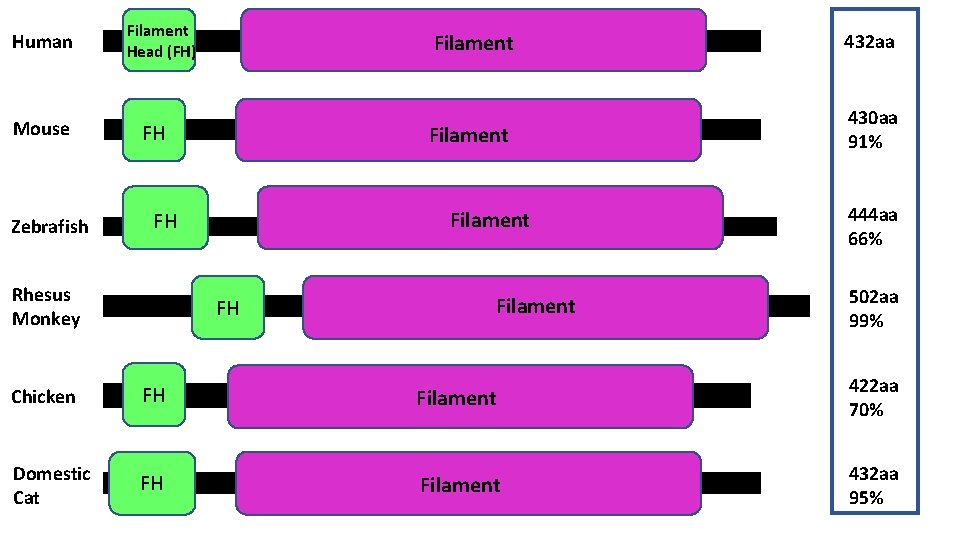
Human Mouse Zebrafish Filament Head (FH) FH 432 aa Filament 430 aa 91% Filament FH Rhesus Monkey Filament FH Filament 444 aa 66% 502 aa 99% Chicken FH Filament 422 aa 70% Domestic Cat FH Filament 432 aa 95%
- Slides: 19