
Alevel Classical Civilisation Component 32 Love and Relationships

- Slides: 13
A-level Classical Civilisation Component 32: Love and Relationships The philosophical bits: 1. 2: Plato on Love and Desire [1. 3: Seneca on Love and Desire] For Seneca, see above all https: //lizgloyn. wordpress. com/tag/ocr-seneca/
Plato on Love and Desire No formally prescribed texts, but Republic (and some Laws): erotic desire as a social/political issue – minimizing potential to disrupt social order, ensuring supply of new generations of citizens Symposium (and some Phaedrus): erotic desire as an aspect of personal experience, and in the construction of a good life-path
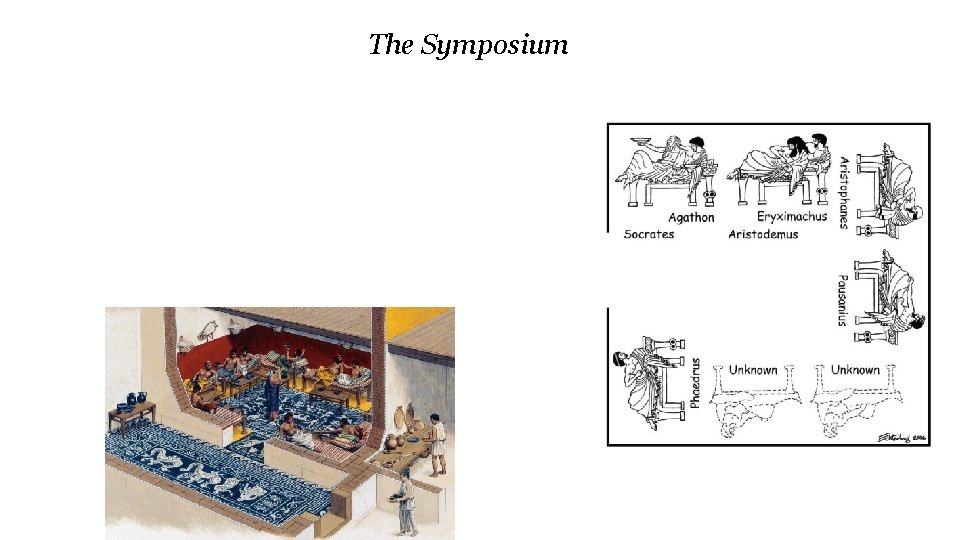
The Symposium
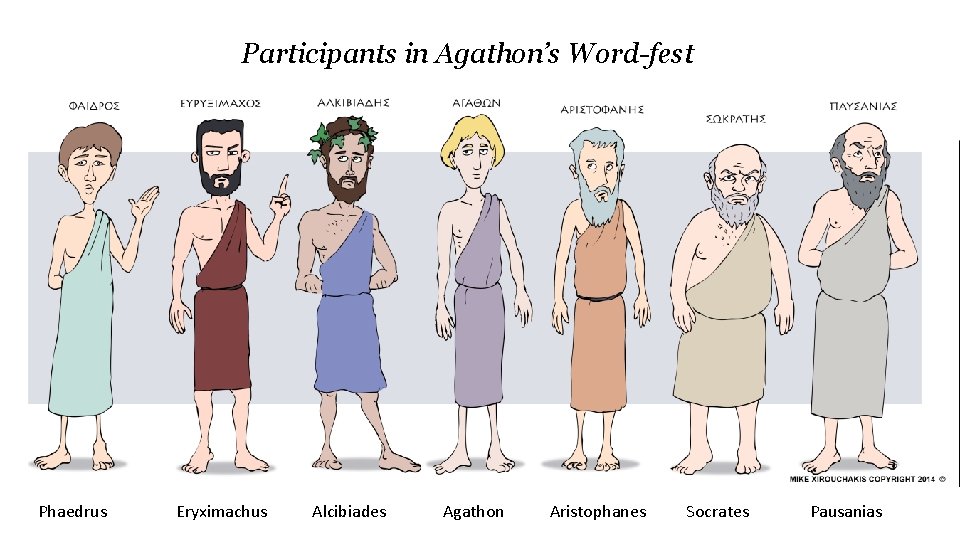
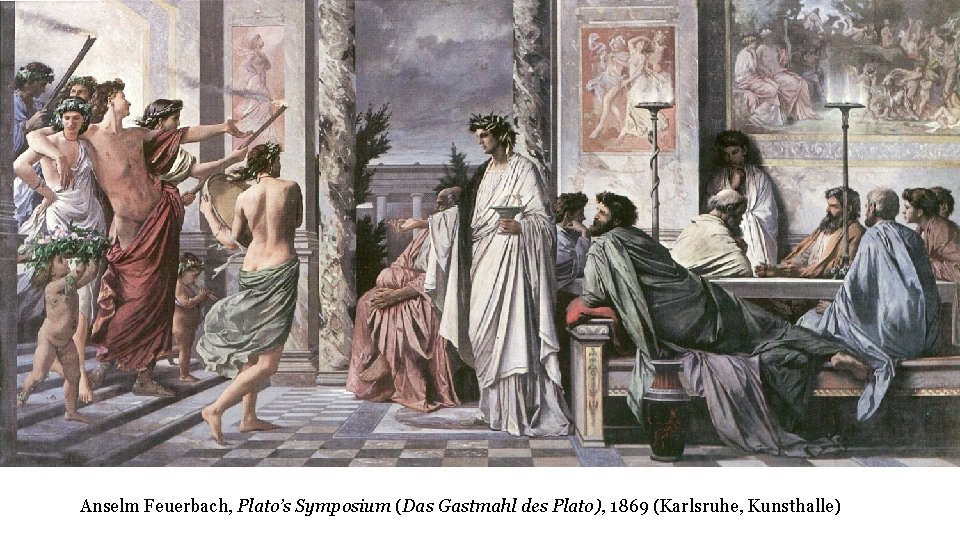
Participants in Agathon’s Word-fest Phaedrus Eryximachus Alcibiades Agathon Aristophanes Socrates Pausanias
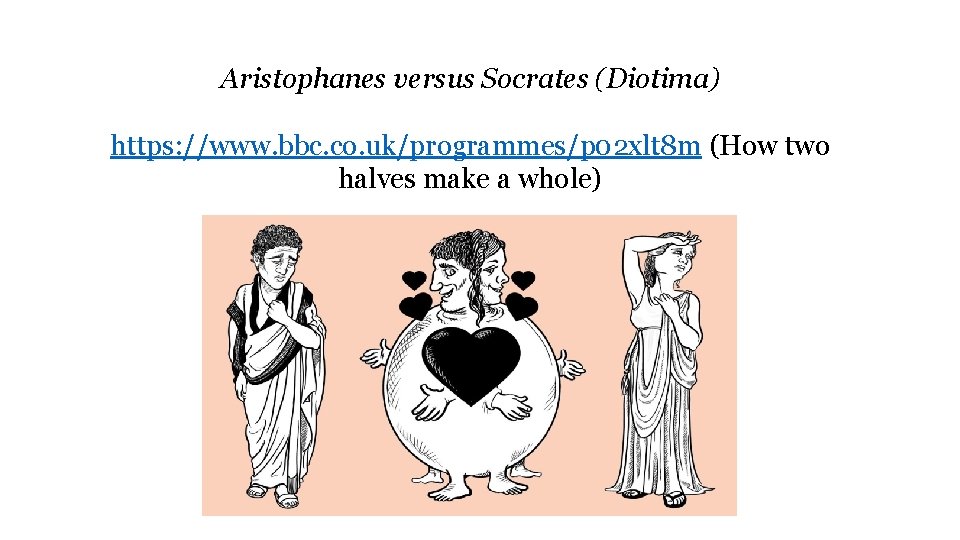
Aristophanes versus Socrates (Diotima) https: //www. bbc. co. uk/programmes/p 02 xlt 8 m (How two halves make a whole)
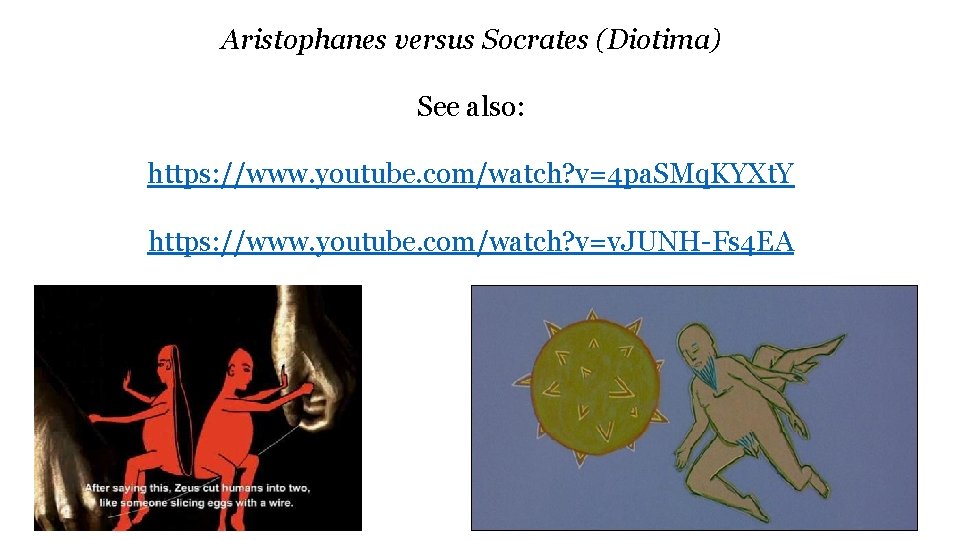
Aristophanes versus Socrates (Diotima) See also: https: //www. youtube. com/watch? v=4 pa. SMq. KYXt. Y https: //www. youtube. com/watch? v=v. JUNH-Fs 4 EA
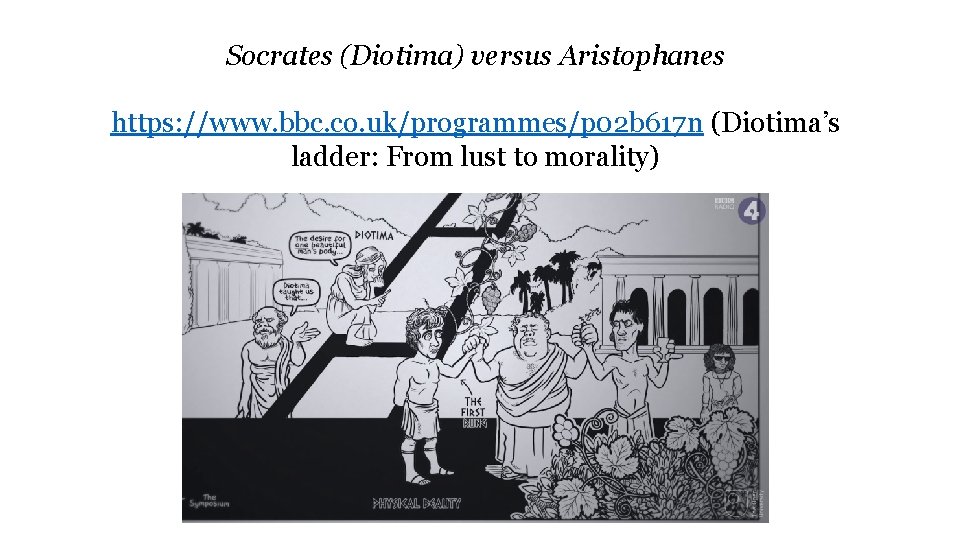
Socrates (Diotima) versus Aristophanes https: //www. bbc. co. uk/programmes/p 02 b 617 n (Diotima’s ladder: From lust to morality)
Problematising the personal If Diotima and Socrates are right, what becomes of commitment to a significant other person, or come to that any personal relationships, as we head on up Diotima’s ladder, each to their own solo encounter with perfect, transcendent, absolute Beauty?
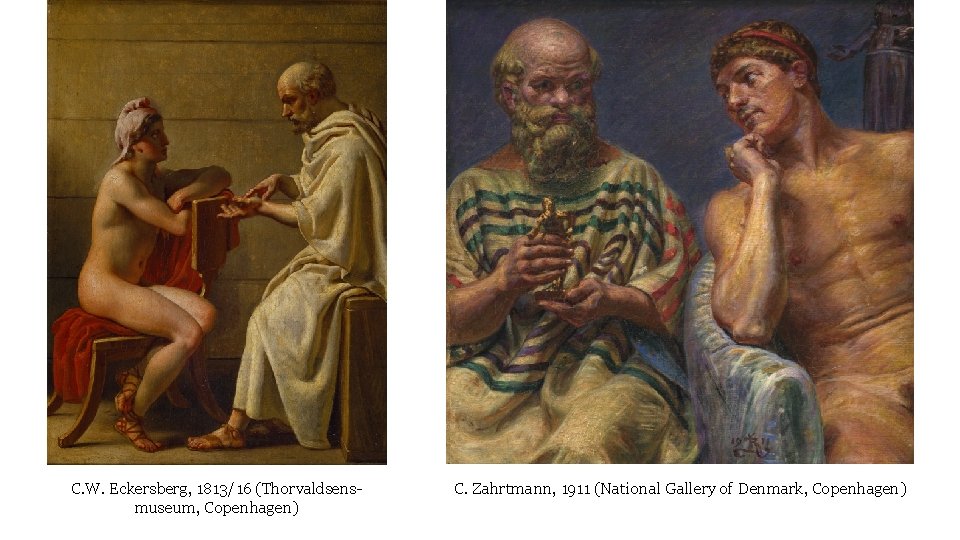
Problematising the personal: some possible answers Symposium - finding a (dialogue) partner; ‘begetting in beauty’ - Socrates and Alcibiades Phaedrus - watering the wings of the soul
Anselm Feuerbach, Plato’s Symposium (Das Gastmahl des Plato), 1869 (Karlsruhe, Kunsthalle)
C. W. Eckersberg, 1813/16 (Thorvaldsensmuseum, Copenhagen) C. Zahrtmann, 1911 (National Gallery of Denmark, Copenhagen)
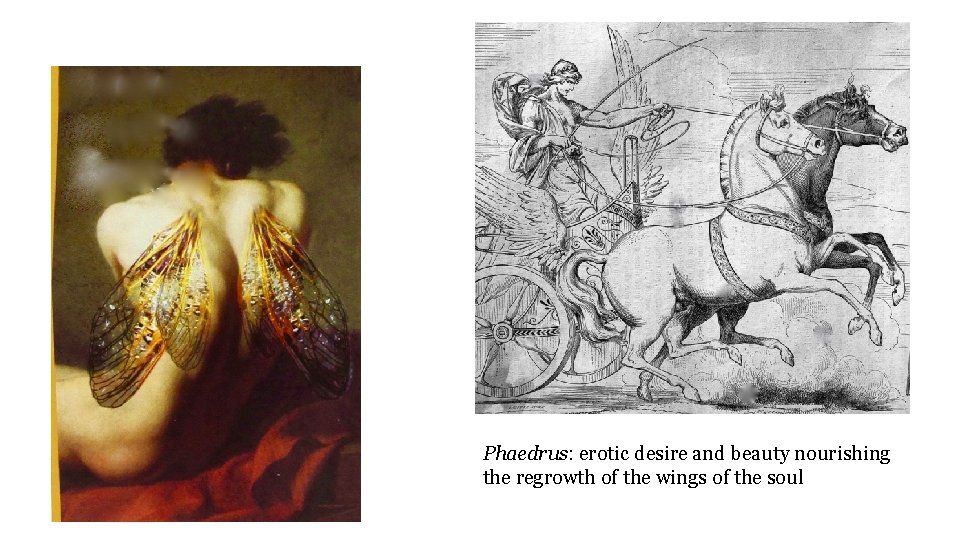
Phaedrus: erotic desire and beauty nourishing the regrowth of the wings of the soul