
Aleksander Sokurov b 1951 Aleksander Sokurov 1951 First
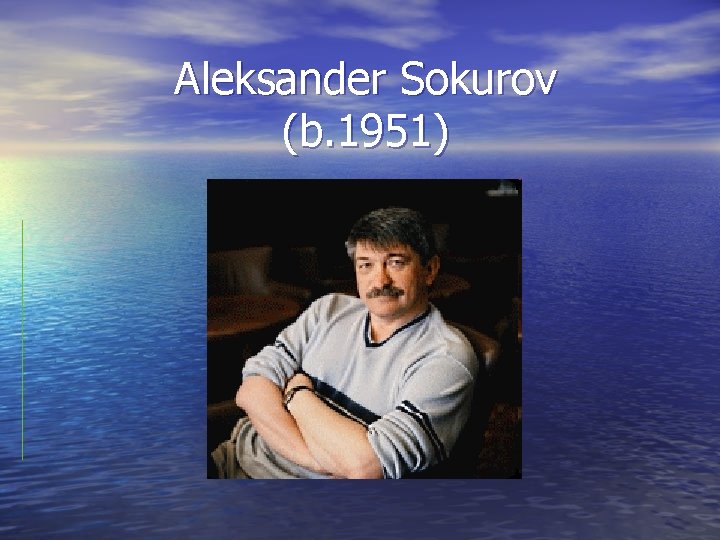
Aleksander Sokurov (b. 1951)
Aleksander Sokurov (1951) • First worked as TV program director • Educated as historian • Educated at the VGIK as film director • Produced numerous documentaries, “elegies”; first feature films were banned (in early 1980 s). Later films received numerous prizes (Cannes, Venice, Toronto, etc. )
Sokurov’s poetic • Friend of Tarkovsky, develops Tarkovsky’s line in cinema: dreams, reflections on the past, long takes • Indivisibility of time and space • Sound track as a separate, parallel experience
Selected filmography • • • • The Lonely Voice of a Man (1979 -1987) The Degraded (1980) Painful Indifference (1983– 1987) Days of Eclipse (1988) Save and Protect (1989) The Second Circle (1990) Stone (1992) Mother and Son (1996) Moloch (1999) Taurus (2000) Russian Ark (2002) Father and Son (2003) The Sun (2004) Alexandra (2007) Faust (2011)
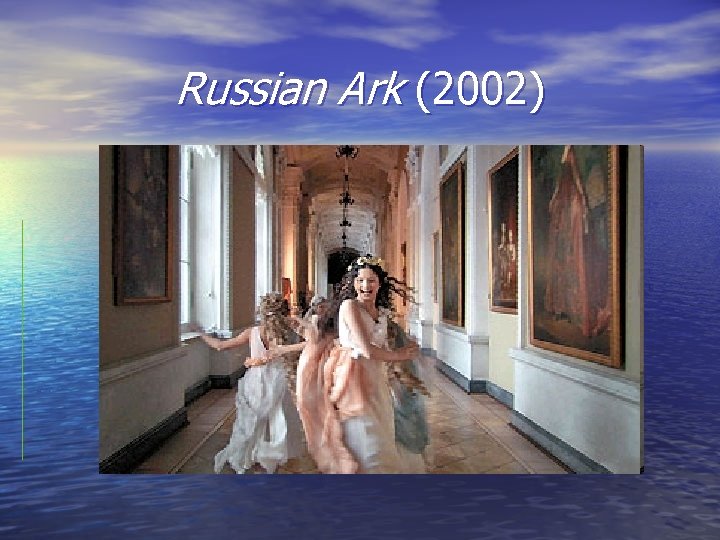
Russian Ark (2002)
Russian Ark Several genres combined: • sci-fi (time machine) • historical film • documentary (life of the museum) • poetic cinema (dream-like quality) • Film about film; ironically, no film – digital technology
Russian Ark • A passage through 300 years of history and culture represented by the Hermitage (its collection founded by Catherine the Great in 1764) • “History and life, history and art”; “simple things put in simple words” (Sokurov) • The meaning of the title: the biblical story of Noah; culture as the ark that keeps the nation afloat.
Russian Ark • An encounter of a European (presumably, • • Marquis de Custine, author of Russia in 1839) and a Russian (invisible, the voice behind the camera’s “eye”). The two wander throughout the halls and staircases of the Hermitage as well as through different epochs. Both have no idea how they got there (“accident” in case of the Russian). Unseen by most other people.
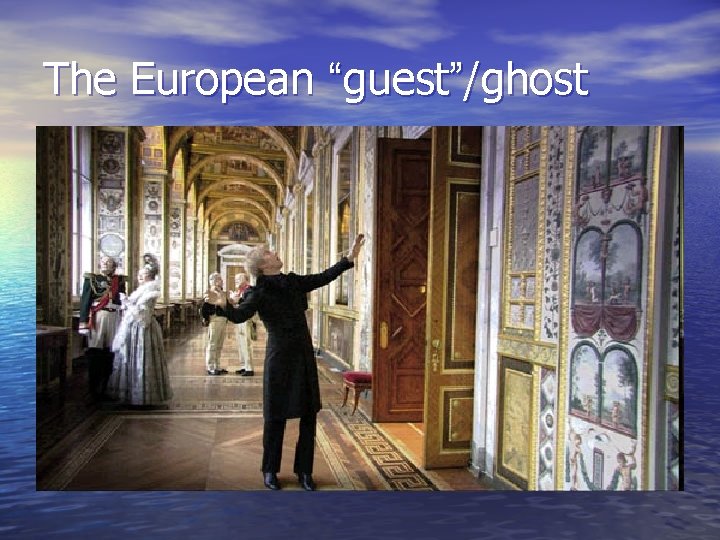
The European “guest”/ghost
Marquis Astolphe de Custine (17901857) • Son of a revolutionary general who was guillotined. • Catholic, monarchist. • Began as diplomat, entered politics, then after a scandal • • • became a novelist and finally travel writer. Immensely rich, art connoisseur. Went to Russia in 1839, wrote a book La Russie en 1839, banned in Russia. Translated into Russian only in 1996
Russian Ark • Celebration of a passing, never repeated moment (as in theatre: impossible to edit mistakes) • Tarkovsky’s principles taken to the extreme (long takes replaced by one-shot film) • Uninterrupted continuity of the film serves as metaphor for continuity of history
Sokurov against Eisenstein • Total opposite of the montage cinema (ironically, S. • • • received Eisenstein scholarship as a student) Dream in place of “documentary” Individuals vs depersonalized “masses” Beauty vs roughness High culture vs barbarism (sailors at the Hermitage – revolutionary sailors in October) The aristocratic crowd leaving the stage of history (the Hermitage) with dignity vs the revolutionary mob rushing into the palace
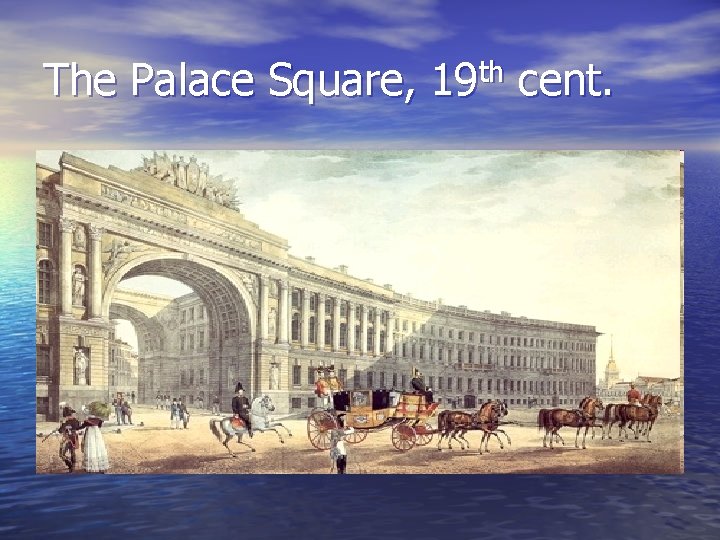
The Palace Square, 19 th cent.
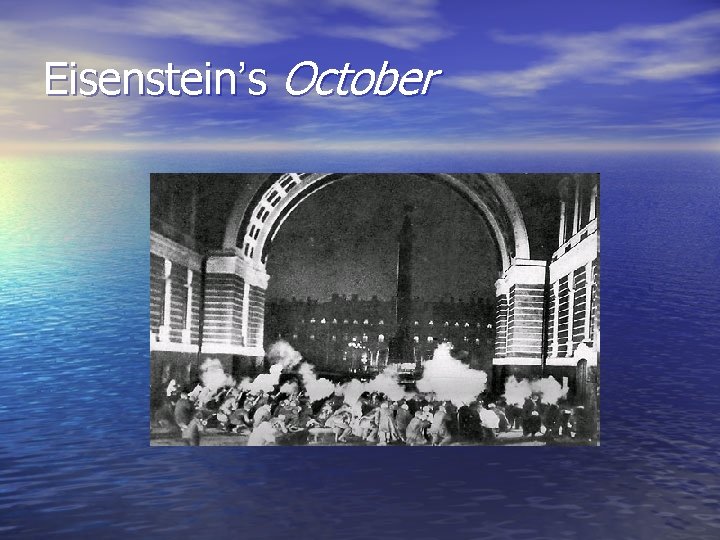
Eisenstein’s October
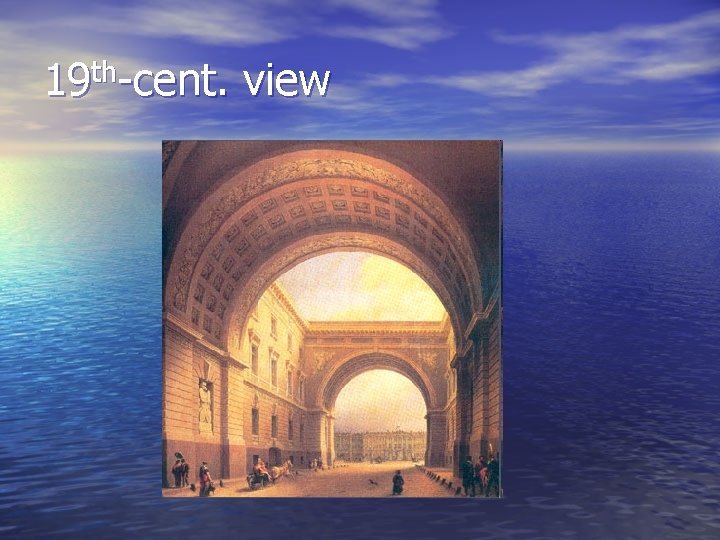
19 th-cent. view
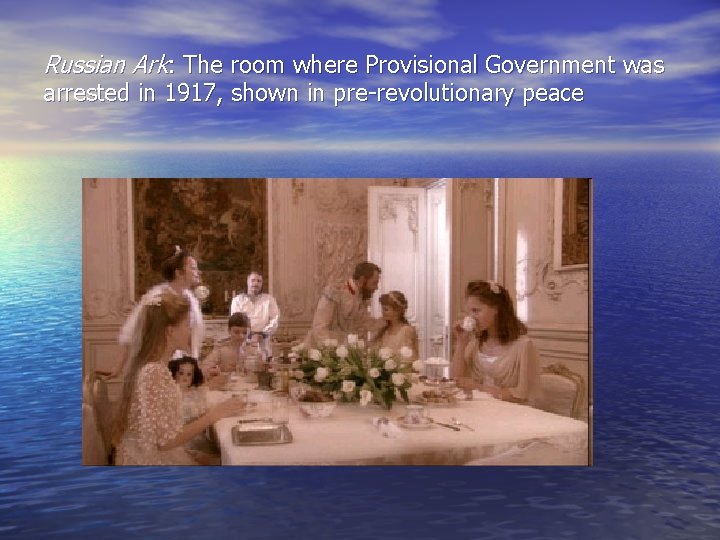
Russian Ark: The room where Provisional Government was arrested in 1917, shown in pre-revolutionary peace
Russian Ark: Quotes • “Russia is like a theatre” • “What kind of play is this? Let’s hope it’s not a • • tragedy” “In any case, it’s too late to interfere. Everything has already happened” “Russian music makes me break out in hives” “Everyone can see the future, but no one remembers the past” “Let’s go! – Where? – Forward!”
Making Russian Ark • Two years of work on the project. The route of • • • the camera carefully planned 36 hours to prepare the setting December 23, the shortest day of the year About 4 hours of rehearsals 90 minutes to shoot the 90 minute film in a single continuous take (“film made in one breath” - Sokurov) Digitally enhanced last image
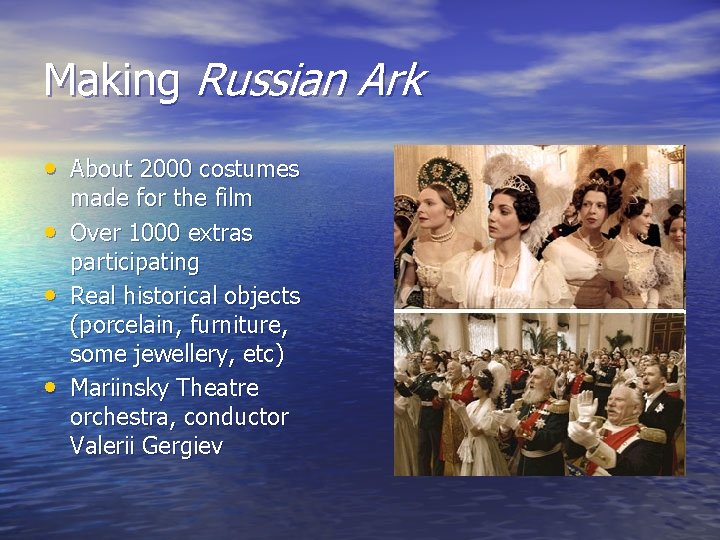
Making Russian Ark • About 2000 costumes • • • made for the film Over 1000 extras participating Real historical objects (porcelain, furniture, some jewellery, etc) Mariinsky Theatre orchestra, conductor Valerii Gergiev
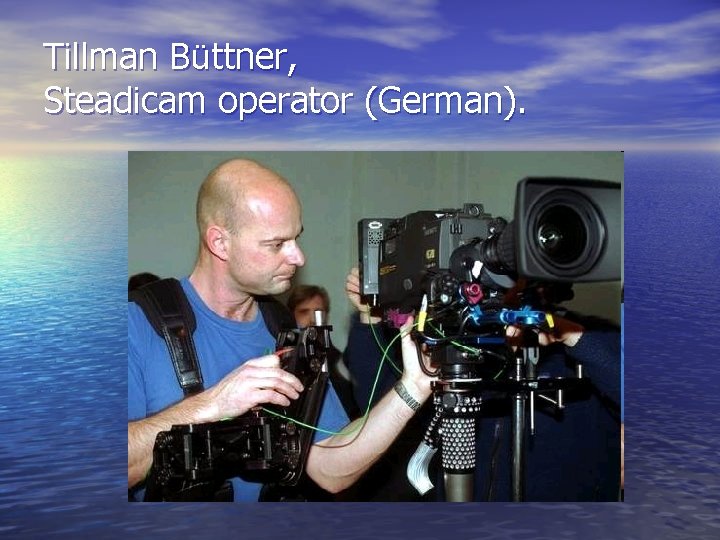
Tillman Büttner, Steadicam operator (German).
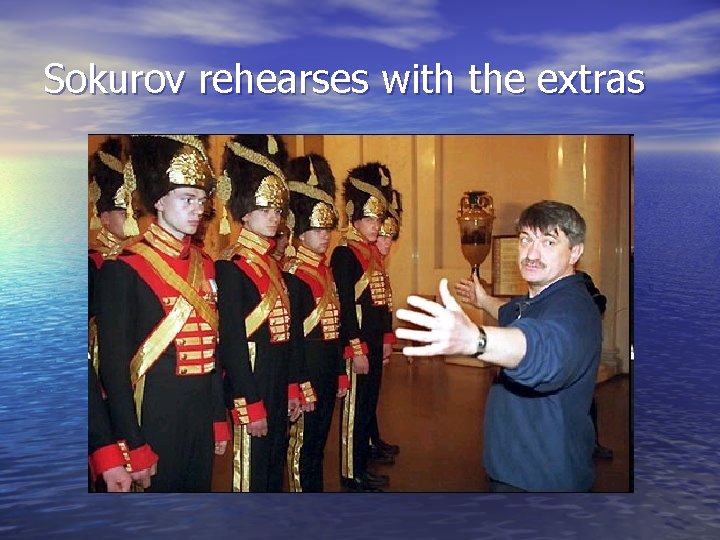
Sokurov rehearses with the extras
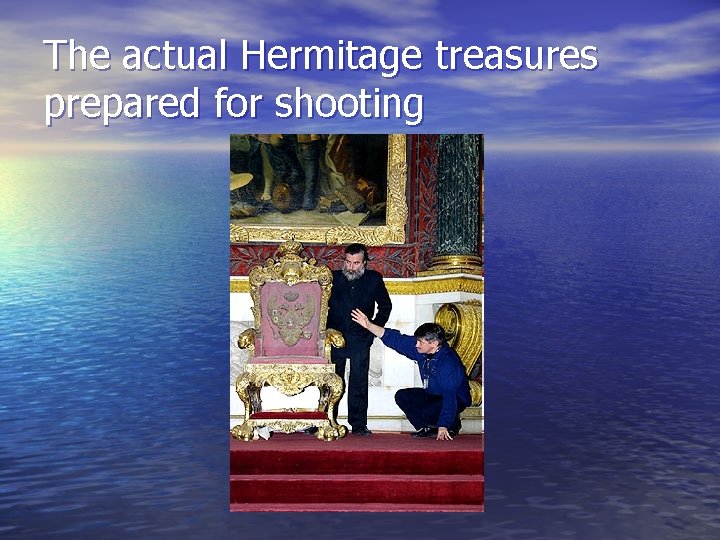
The actual Hermitage treasures prepared for shooting
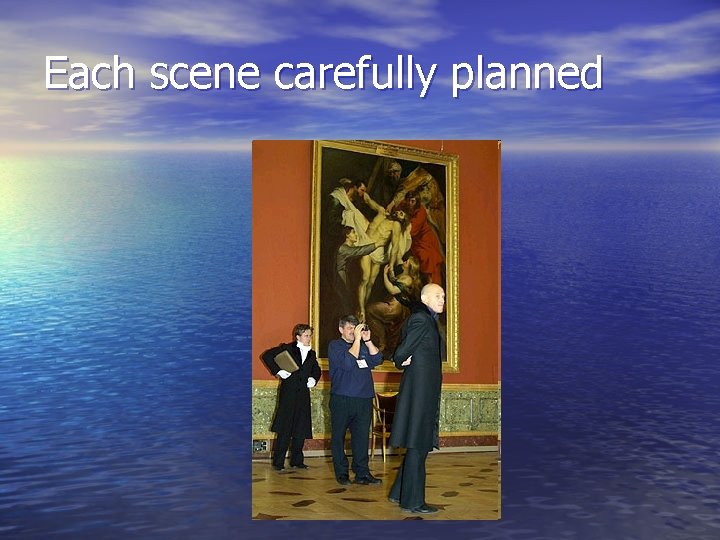
Each scene carefully planned
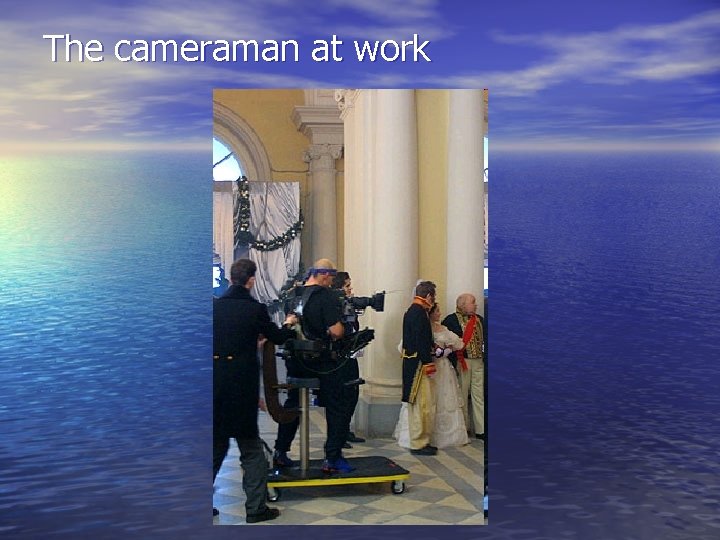
The cameraman at work
- Slides: 24