
ALDUS MANUTIUS PIONEER OF TYPE Introduction Aldus Pius
- Slides: 11
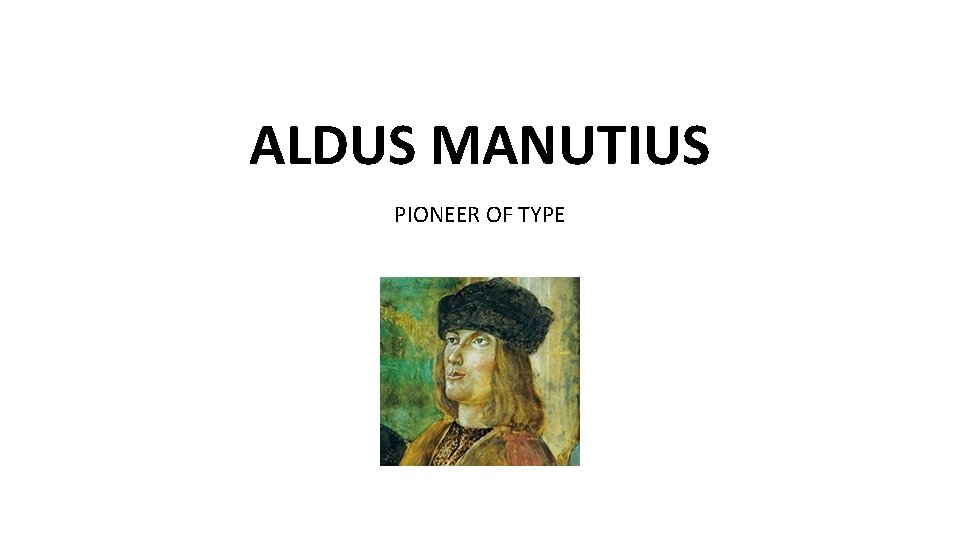
ALDUS MANUTIUS PIONEER OF TYPE
Introduction Aldus Pius Manutius was an Italian Renaissance humanist who became the most prolific publisher and printer when he founded the Aldine Press in Venice. He is sometimes called "the Elder" to distinguish him from his grandson Aldus Manutius the Younger.
Early Life • Manutius was born in Bassiano, Italy, some time between 1449 and 1451. • His family was well off and as a result Aldus received excellent education.
Education • Manutius was educated as a Renaissance humanistic scholar, studying Latin, at La Sapienza, the University of Rome, and Greek at Ferrara University in Venice. • In the early 1480 s he went to reside at the city of Mirandola with his old friend and fellow student, Giovanni Pico, a renaissance philosopher and nobleman. There he stayed two years, pursuing his studies in Greek literature. • Pico arranged for Aldus to become tutor to his two nephews, Alberto and Leonelli Pio, princes of Capri. Alberto actually supplied Aldus with land in Capri AND gave him funding for his printing press.
The Aldine Press It had been Aldus’ dream to start his own printing company, and in 1490 he moved to Venice in order to open his print shop. He named his company The Aldine Press
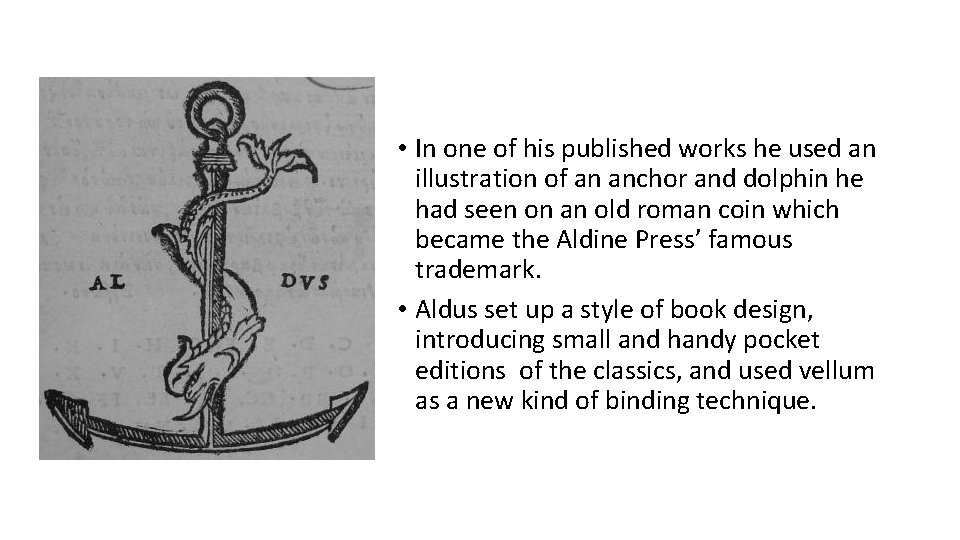
• In one of his published works he used an illustration of an anchor and dolphin he had seen on an old roman coin which became the Aldine Press’ famous trademark. • Aldus set up a style of book design, introducing small and handy pocket editions of the classics, and used vellum as a new kind of binding technique.
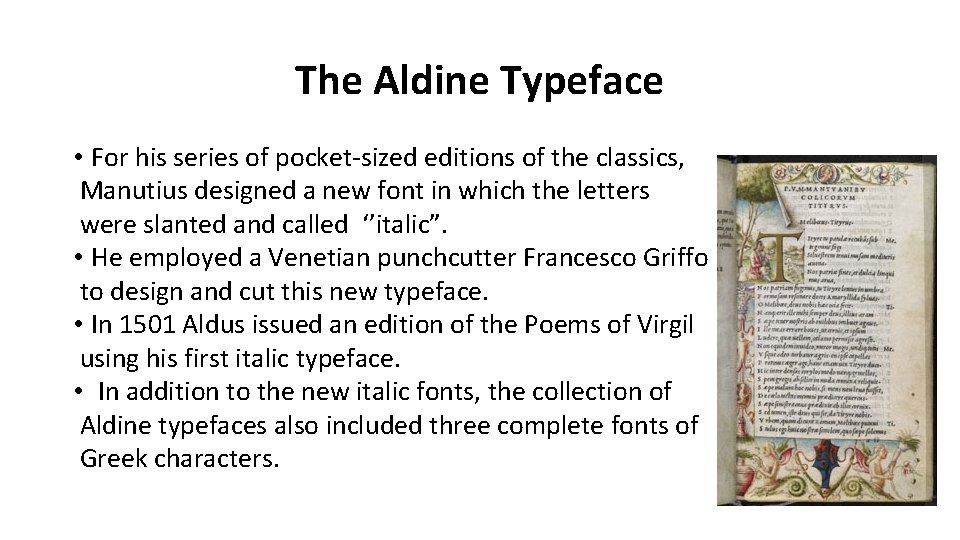
The Aldine Typeface • For his series of pocket-sized editions of the classics, Manutius designed a new font in which the letters were slanted and called ‘’italic”. • He employed a Venetian punchcutter Francesco Griffo to design and cut this new typeface. • In 1501 Aldus issued an edition of the Poems of Virgil using his first italic typeface. • In addition to the new italic fonts, the collection of Aldine typefaces also included three complete fonts of Greek characters.
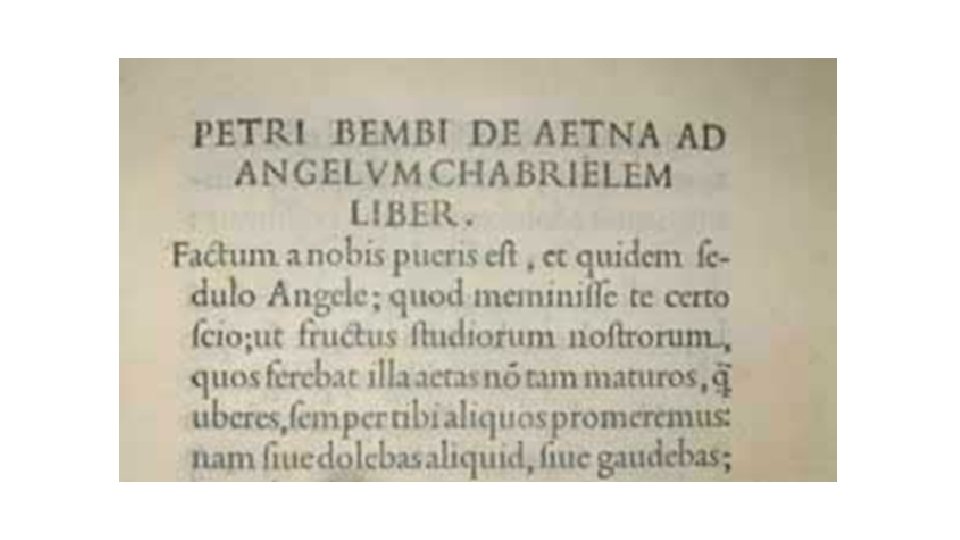
Influenced By • Two Italian Scribes Pomponio Leto and Bartolomeo Sanvito. • A Greek Scribe Immanuel Rhusotas. • Pietro Bembo, a fellow Renaissance humanist and nobleman and supplied Aldus with a manuscript of his book ‘’ De Aetna’’. • Aldus produced an Aldine Roman typeface, for this book, that was particularly elegant and innovative, characterised by sharply-contrasting upstrokes and down strokes, capitals that were shorter than the long letters, and a weight that was distributed across a more vertical axis. • The type used for this text became so famous it influenced typeface design for generations.
Influence in the Modern Era • Aldus created the use of pocket book format which we still use today. • He was the first typographer to use a semicolon and a comma and his typefaces have been improved by more modern typographers e. g. Claude Garamont and Stanley Morison. • Type designs based on work designed by Aldus Manutius and Francesco Griffo include Bembo, Poliphilus, and Garamond. • Aldus software company were influenced by Aldus’ layouts when they created Page. Maker for Apple Macintosh.
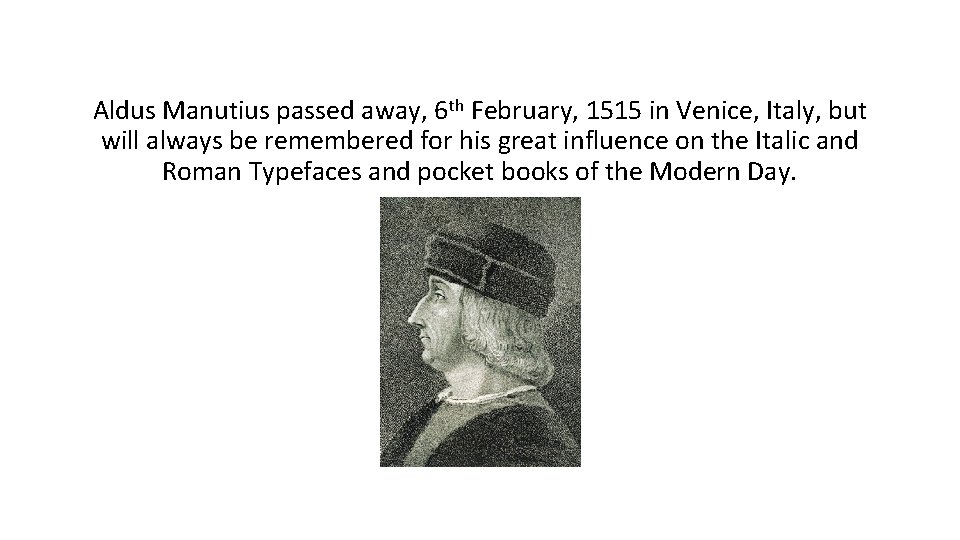
Aldus Manutius passed away, 6 th February, 1515 in Venice, Italy, but will always be remembered for his great influence on the Italic and Roman Typefaces and pocket books of the Modern Day.