
Aldoses and Ketoses n aldo and keto prefixes
- Slides: 17
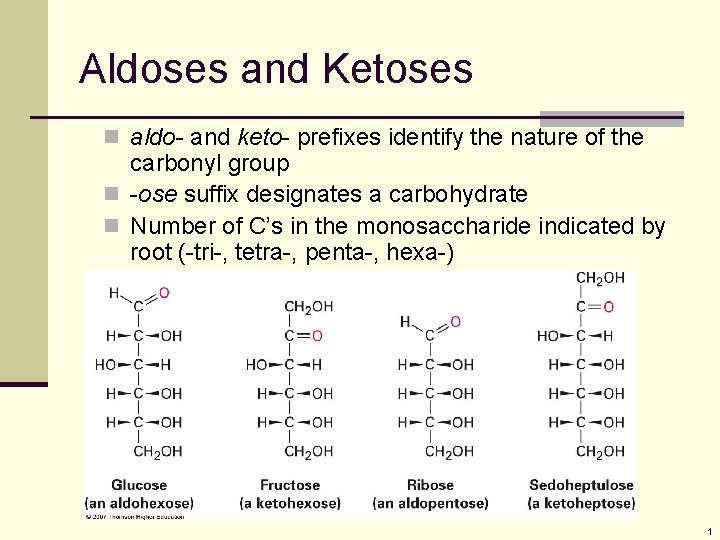
Aldoses and Ketoses n aldo- and keto- prefixes identify the nature of the carbonyl group n -ose suffix designates a carbohydrate n Number of C’s in the monosaccharide indicated by root (-tri-, tetra-, penta-, hexa-) 1
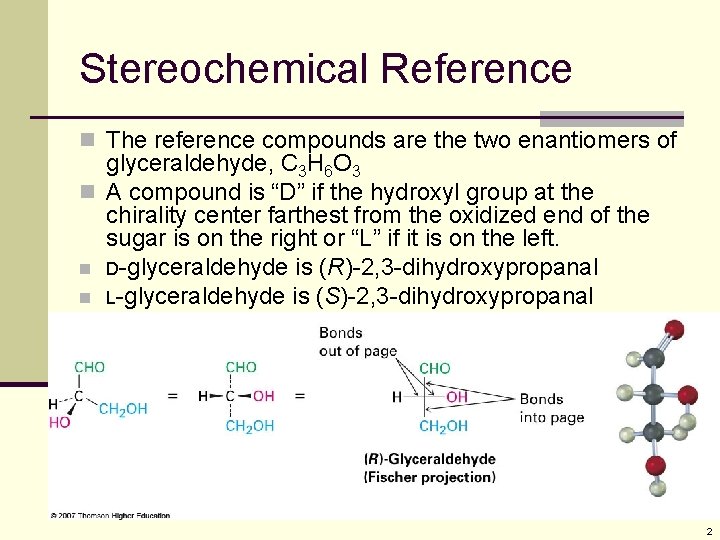
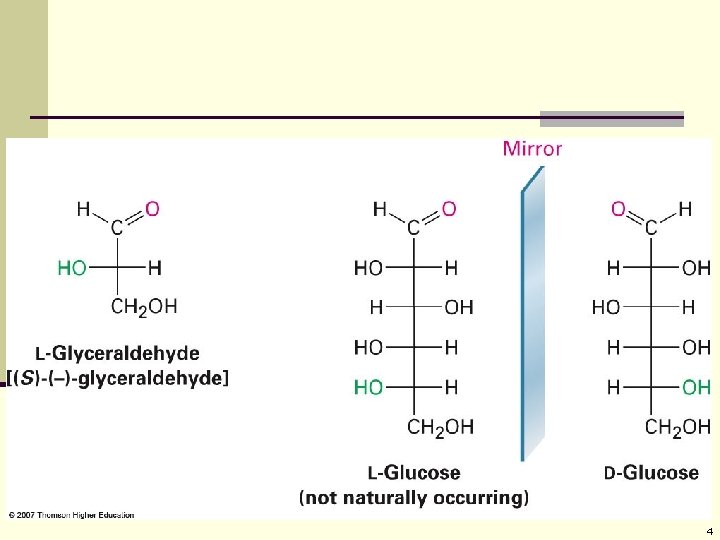
Stereochemical Reference n The reference compounds are the two enantiomers of glyceraldehyde, C 3 H 6 O 3 n A compound is “D” if the hydroxyl group at the chirality center farthest from the oxidized end of the sugar is on the right or “L” if it is on the left. n D-glyceraldehyde is (R)-2, 3 -dihydroxypropanal n L-glyceraldehyde is (S)-2, 3 -dihydroxypropanal 2
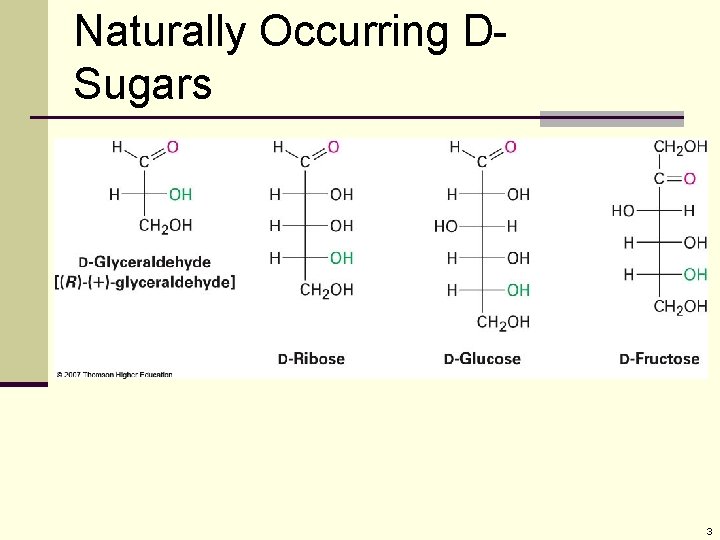
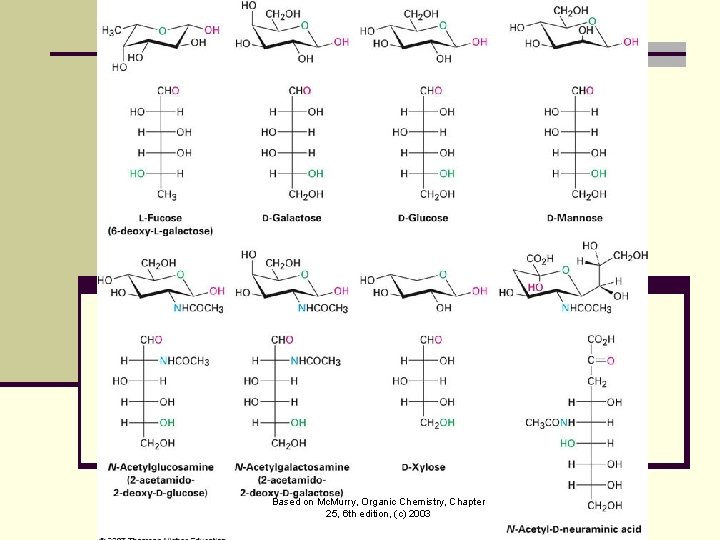
Naturally Occurring DSugars 3
4
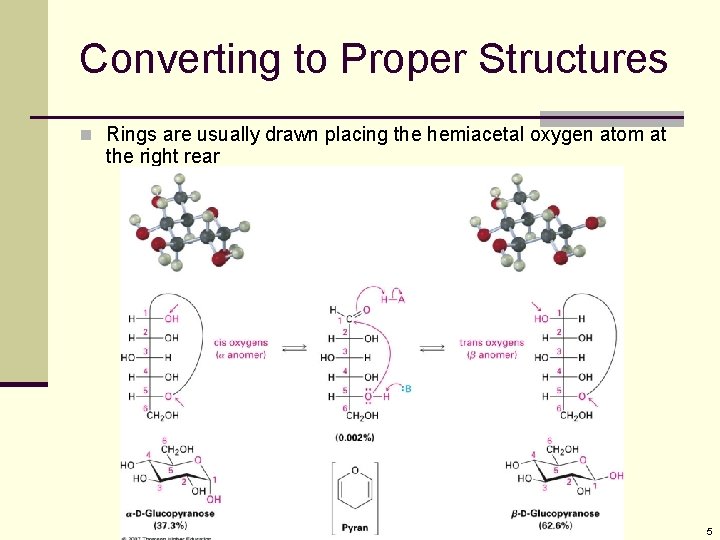
Converting to Proper Structures n Rings are usually drawn placing the hemiacetal oxygen atom at the right rear 5
Based on Mc. Murry, Organic Chemistry, Chapter 25, 6 th edition, (c) 2003
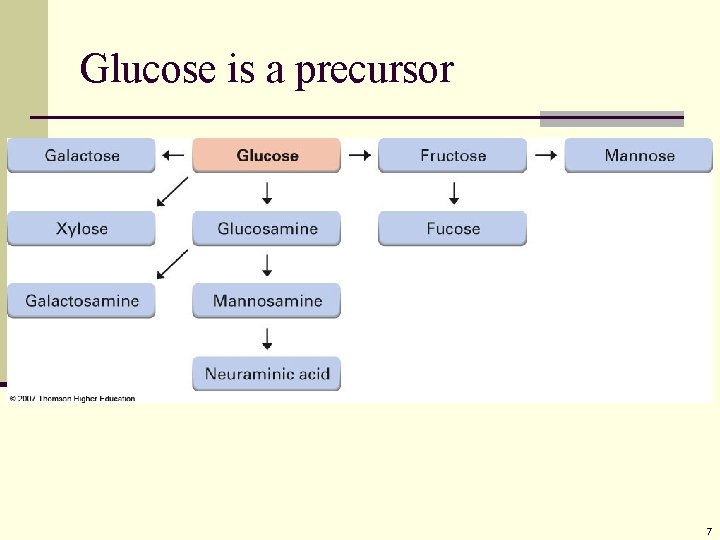
Glucose is a precursor 7
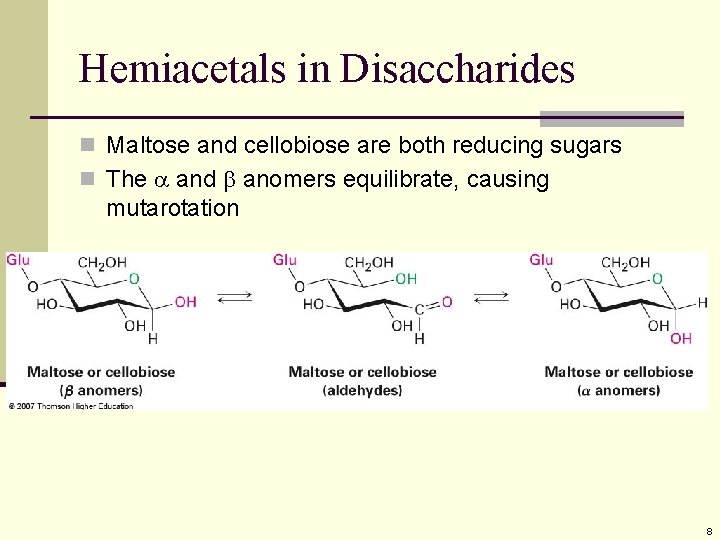
Hemiacetals in Disaccharides n Maltose and cellobiose are both reducing sugars n The and anomers equilibrate, causing mutarotation 8
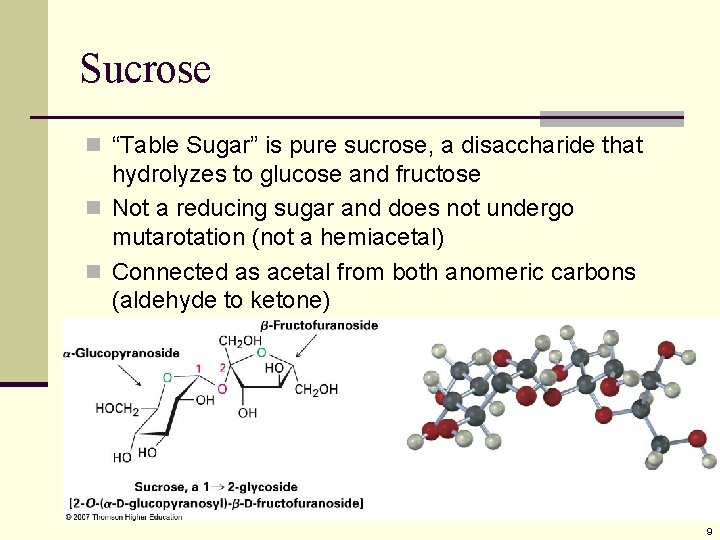
Sucrose n “Table Sugar” is pure sucrose, a disaccharide that hydrolyzes to glucose and fructose n Not a reducing sugar and does not undergo mutarotation (not a hemiacetal) n Connected as acetal from both anomeric carbons (aldehyde to ketone) 9
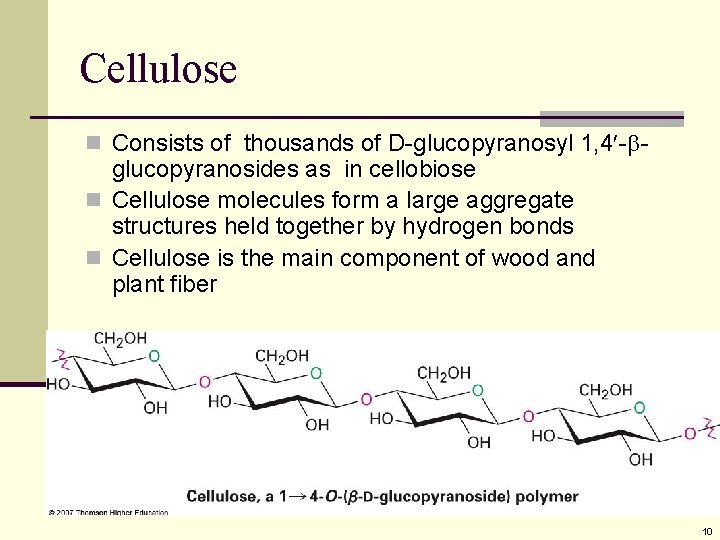
Cellulose n Consists of thousands of D-glucopyranosyl 1, 4 - - glucopyranosides as in cellobiose n Cellulose molecules form a large aggregate structures held together by hydrogen bonds n Cellulose is the main component of wood and plant fiber 10
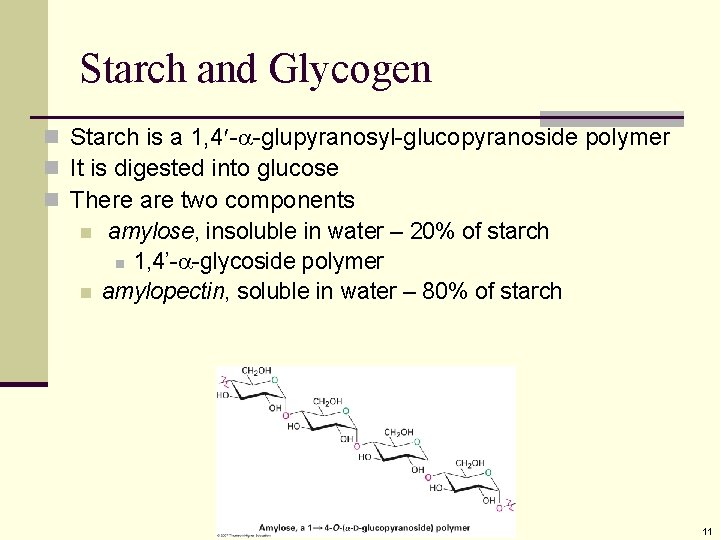
Starch and Glycogen n Starch is a 1, 4 - -glupyranosyl-glucopyranoside polymer n It is digested into glucose n There are two components n amylose, insoluble in water – 20% of starch n 1, 4’- -glycoside polymer n amylopectin, soluble in water – 80% of starch 11
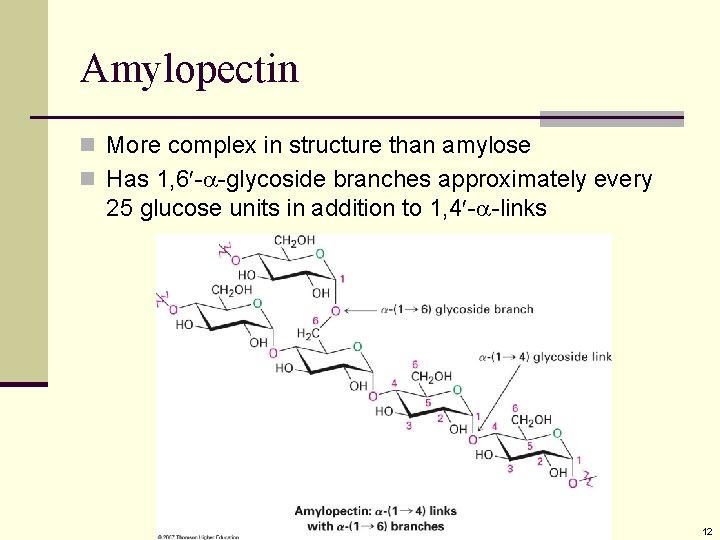
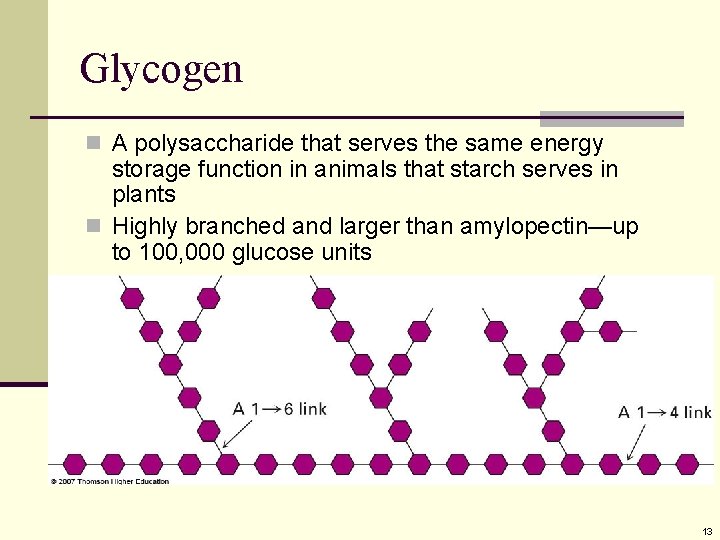
Amylopectin n More complex in structure than amylose n Has 1, 6 - -glycoside branches approximately every 25 glucose units in addition to 1, 4 - -links 12
Glycogen n A polysaccharide that serves the same energy storage function in animals that starch serves in plants n Highly branched and larger than amylopectin—up to 100, 000 glucose units 13
14
15
16
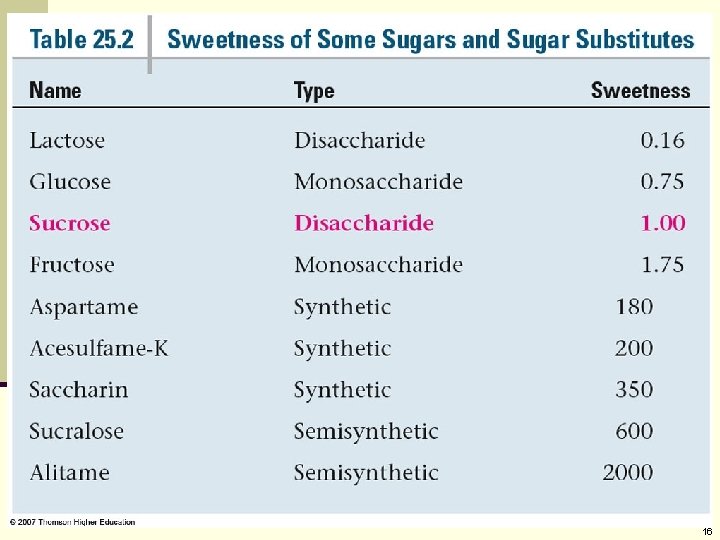
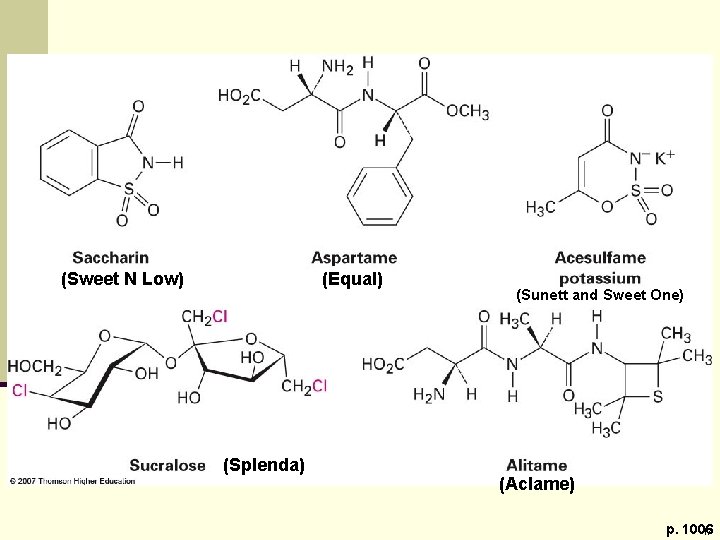
(Sweet N Low) (Equal) (Splenda) (Sunett and Sweet One) (Aclame) p. 1006 17