
Alcohols Hydrogen Bonding Three ethanol molecules Hydrogen Bonding
Alcohols
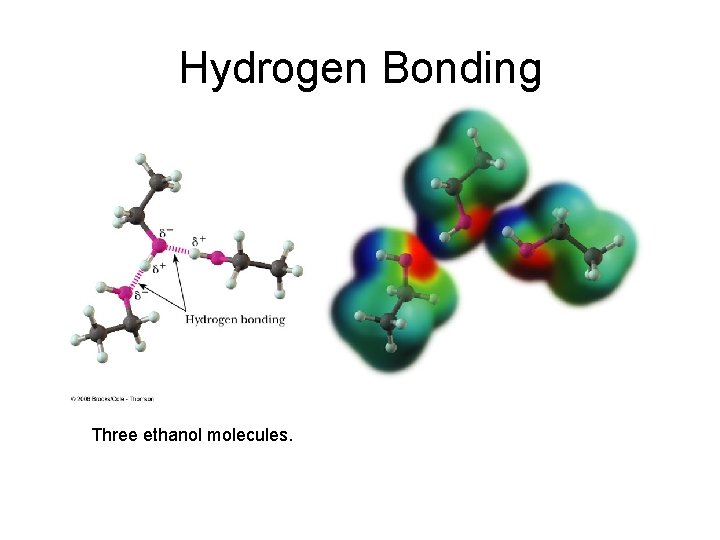
Hydrogen Bonding Three ethanol molecules.
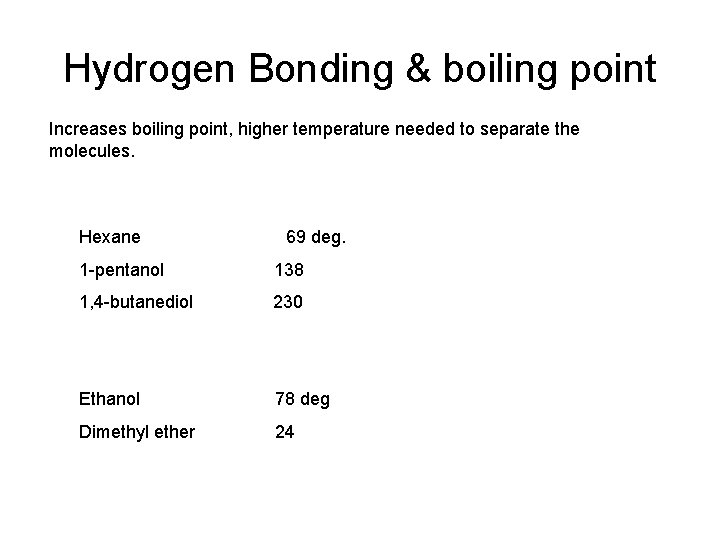
Hydrogen Bonding & boiling point Increases boiling point, higher temperature needed to separate the molecules. Hexane 69 deg. 1 -pentanol 138 1, 4 -butanediol 230 Ethanol 78 deg Dimethyl ether 24
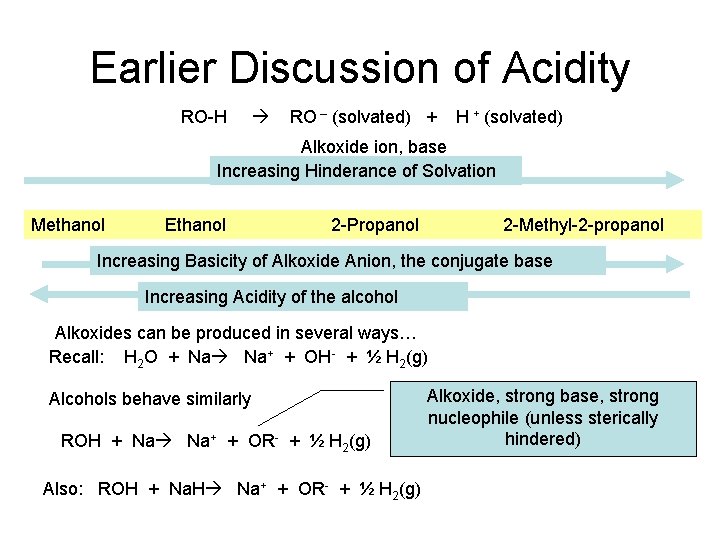
Earlier Discussion of Acidity RO-H RO – (solvated) + H + (solvated) Alkoxide ion, base Increasing Hinderance of Solvation Methanol Ethanol 2 -Propanol 2 -Methyl-2 -propanol Increasing Basicity of Alkoxide Anion, the conjugate base Increasing Acidity of the alcohol Alkoxides can be produced in several ways… Recall: H 2 O + Na Na+ + OH- + ½ H 2(g) Alcohols behave similarly ROH + Na Na+ + OR- + ½ H 2(g) Also: ROH + Na. H Na+ + OR- + ½ H 2(g) Alkoxide, strong base, strong nucleophile (unless sterically hindered)
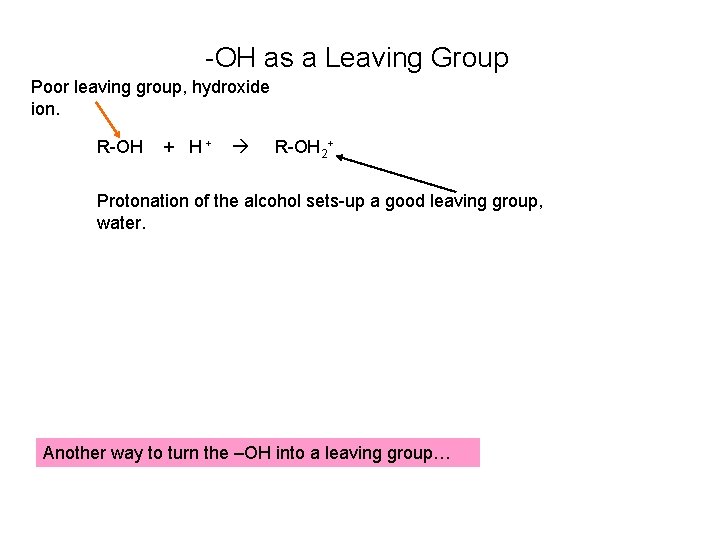
-OH as a Leaving Group Poor leaving group, hydroxide ion. R-OH + H+ R-OH 2+ Protonation of the alcohol sets-up a good leaving group, water. Another way to turn the –OH into a leaving group…
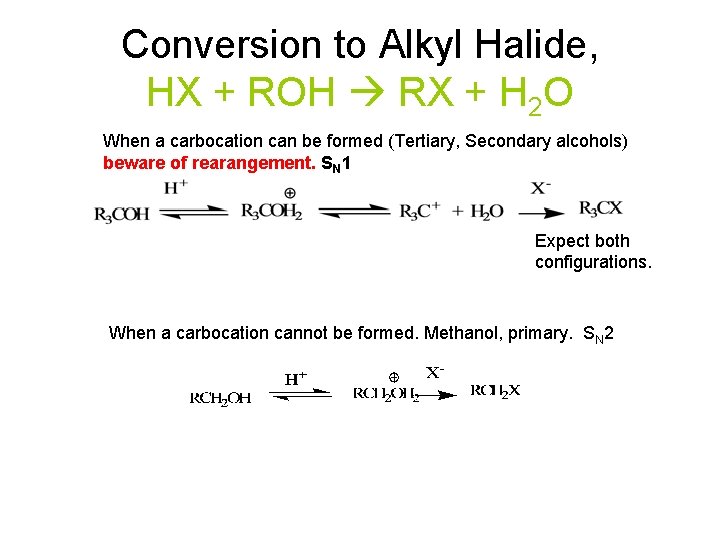
Conversion to Alkyl Halide, HX + ROH RX + H 2 O When a carbocation can be formed (Tertiary, Secondary alcohols) beware of rearangement. SN 1 Expect both configurations. When a carbocation cannot be formed. Methanol, primary. SN 2
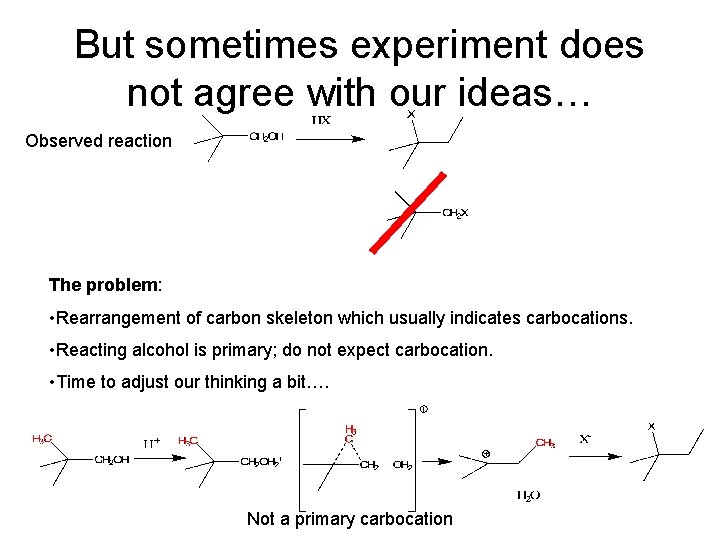
But sometimes experiment does not agree with our ideas… Observed reaction The problem: • Rearrangement of carbon skeleton which usually indicates carbocations. • Reacting alcohol is primary; do not expect carbocation. • Time to adjust our thinking a bit…. Not a primary carbocation
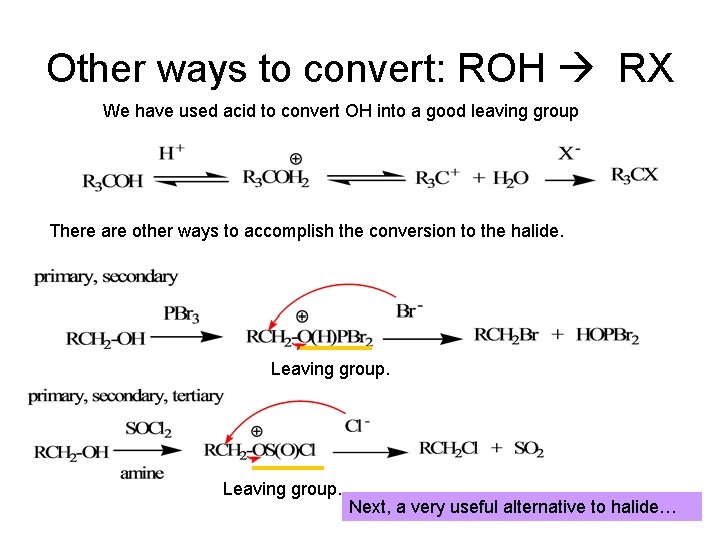
Other ways to convert: ROH RX We have used acid to convert OH into a good leaving group There are other ways to accomplish the conversion to the halide. Leaving group. Next, a very useful alternative to halide…
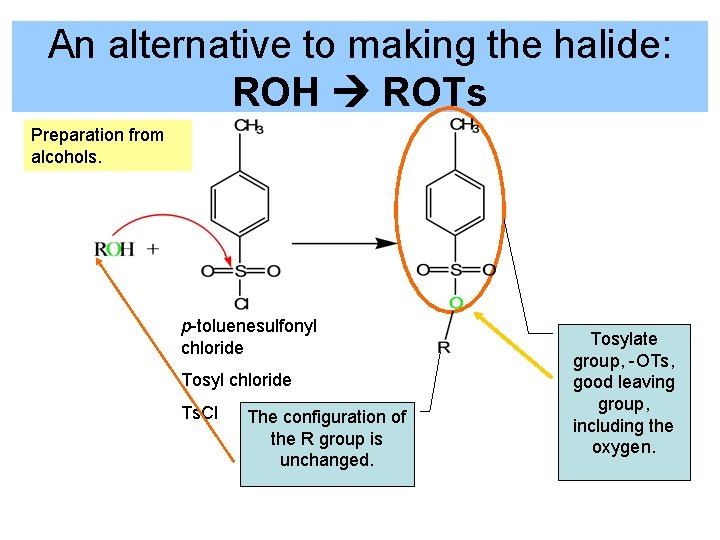
An alternative to making the halide: ROH ROTs Preparation from alcohols. p-toluenesulfonyl chloride Tosyl chloride Ts. Cl The configuration of the R group is unchanged. Tosylate group, -OTs, good leaving group, including the oxygen.
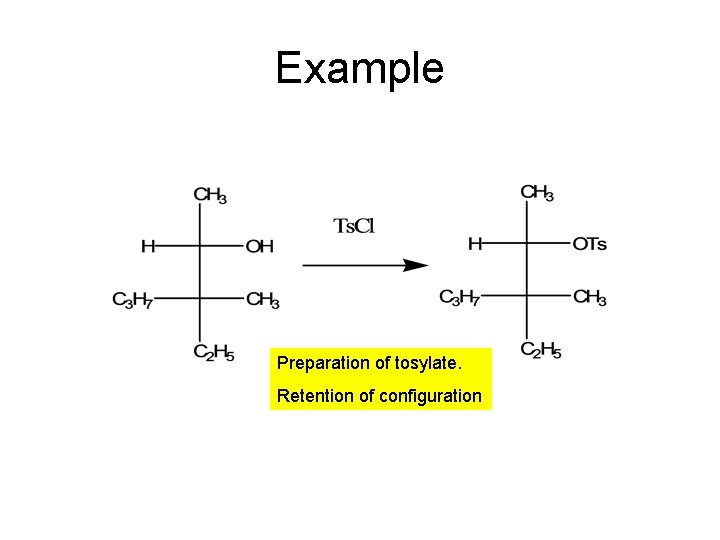
Example Preparation of tosylate. Retention of configuration
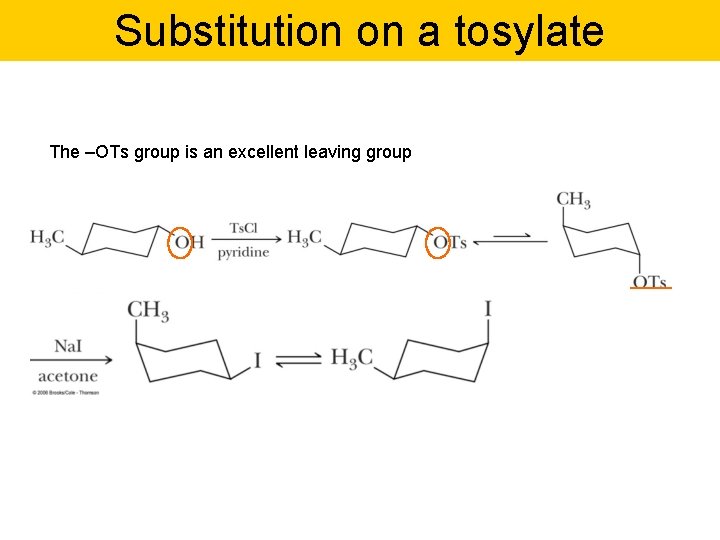
Substitution on a tosylate The –OTs group is an excellent leaving group
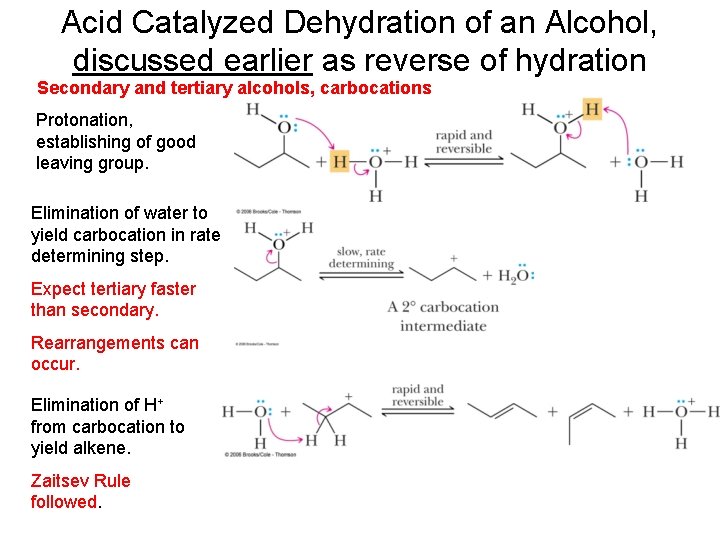
Acid Catalyzed Dehydration of an Alcohol, discussed earlier as reverse of hydration Secondary and tertiary alcohols, carbocations Protonation, establishing of good leaving group. Elimination of water to yield carbocation in rate determining step. Expect tertiary faster than secondary. Rearrangements can occur. Elimination of H+ from carbocation to yield alkene. Zaitsev Rule followed.
Primary alcohols Problem: primary carbocations are not observed. Need a modified, non-carbocation mechanism. Recall these concepts: 1. Nucleophilic substitution on tertiary halides invokes the carbocation but nucleophilic substitution on primary RX avoids the carbocation by requiring the nucleophile to become involved immediately. 2. The E 2 reaction requires the strong base to become involved immediately. Note that secondary and tertiary protonated alcohols eliminate the water to yield a carbocation because the carbocation is relatively stable. The carbocation then undergoes a second step: removal of the H+. The primary carbocation is too unstable for our liking so we combine the departure of the water with the removal of the H+. What would the mechanism be? ? ?
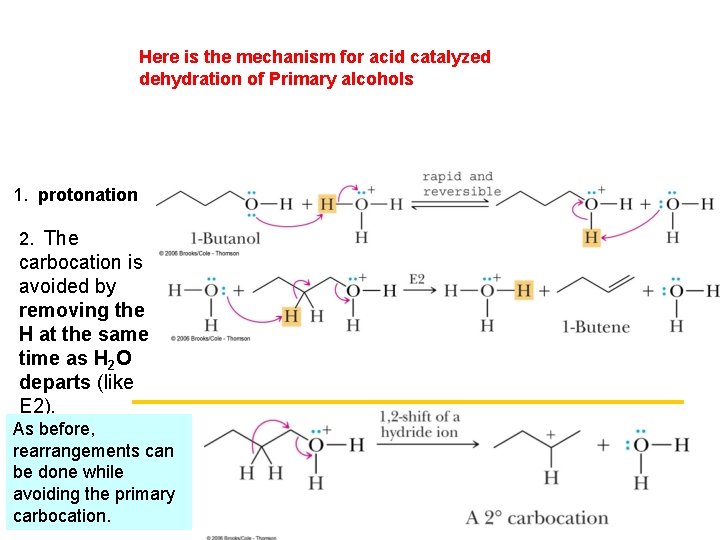
Here is the mechanism for acid catalyzed dehydration of Primary alcohols 1. protonation 2. The carbocation is avoided by removing the H at the same time as H 2 O departs (like E 2). As before, rearrangements can be done while avoiding the primary carbocation.
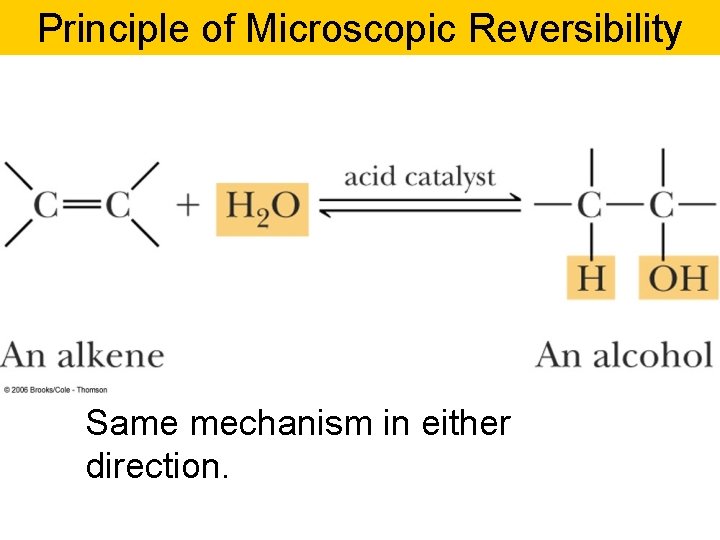
Principle of Microscopic Reversibility Same mechanism in either direction.
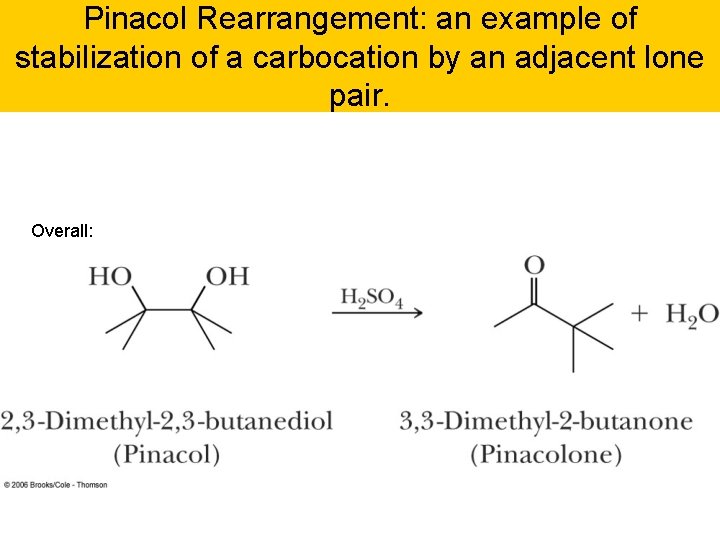
Pinacol Rearrangement: an example of stabilization of a carbocation by an adjacent lone pair. Overall:
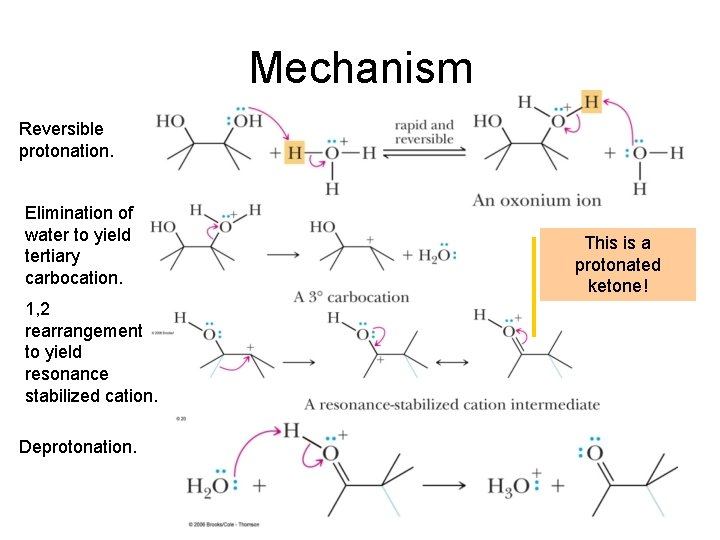
Mechanism Reversible protonation. Elimination of water to yield tertiary carbocation. 1, 2 rearrangement to yield resonance stabilized cation. Deprotonation. This is a protonated ketone!
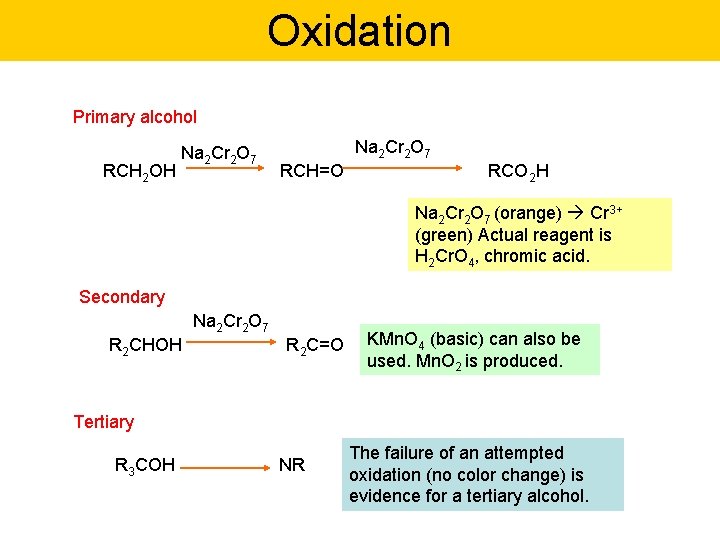
Oxidation Primary alcohol RCH 2 OH Na 2 Cr 2 O 7 RCH=O RCO 2 H Na 2 Cr 2 O 7 (orange) Cr 3+ (green) Actual reagent is H 2 Cr. O 4, chromic acid. Secondary Na 2 Cr 2 O 7 R 2 CHOH R 2 C=O KMn. O 4 (basic) can also be used. Mn. O 2 is produced. Tertiary R 3 COH NR The failure of an attempted oxidation (no color change) is evidence for a tertiary alcohol.
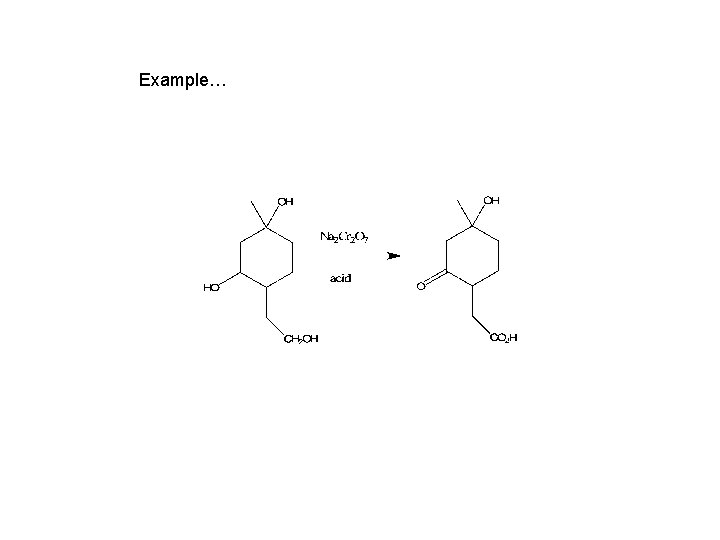
Example…
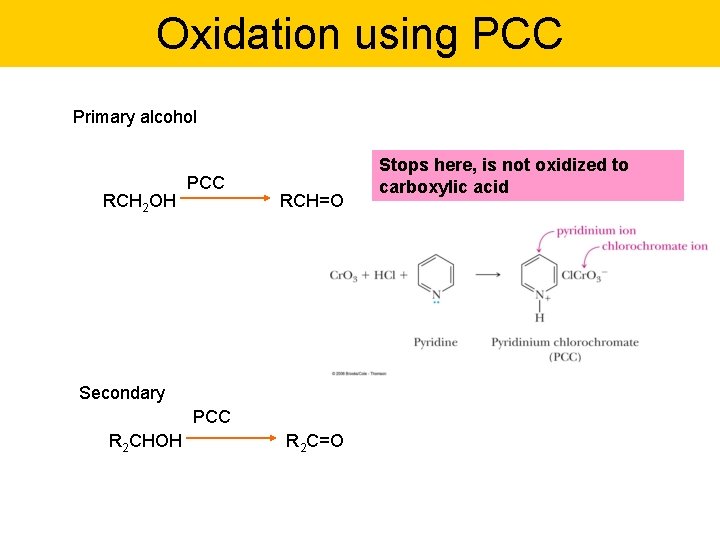
Oxidation using PCC Primary alcohol RCH 2 OH PCC RCH=O Secondary PCC R 2 CHOH R 2 C=O Stops here, is not oxidized to carboxylic acid
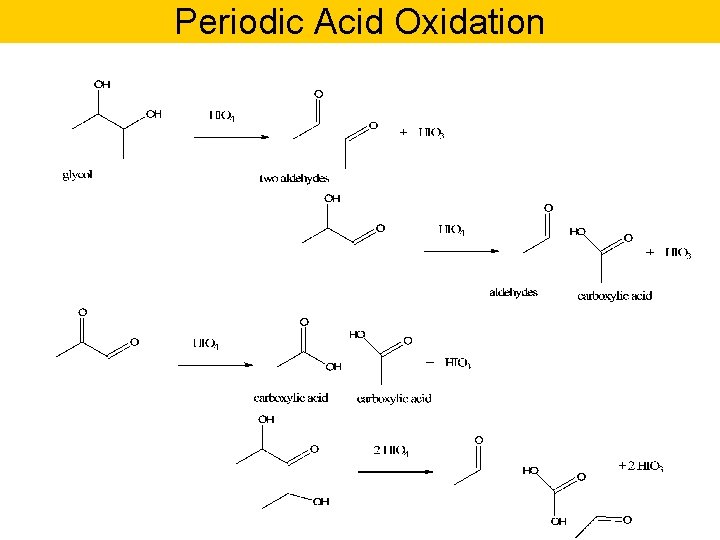
Periodic Acid Oxidation
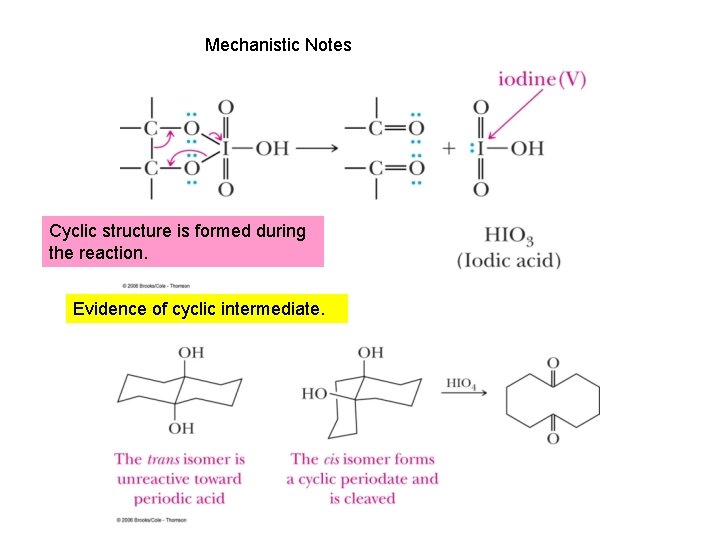
Mechanistic Notes Cyclic structure is formed during the reaction. Evidence of cyclic intermediate.
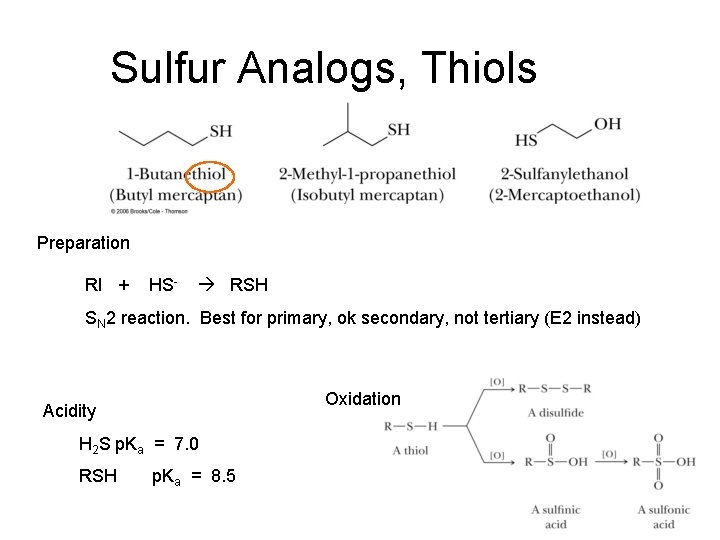
Sulfur Analogs, Thiols Preparation RI + HS- RSH SN 2 reaction. Best for primary, ok secondary, not tertiary (E 2 instead) Oxidation Acidity H 2 S p. Ka = 7. 0 RSH p. Ka = 8. 5
- Slides: 23