
Alcohols Fenol and Tiol Boiling Points Properties of
Alcohols, Fenol and Tiol

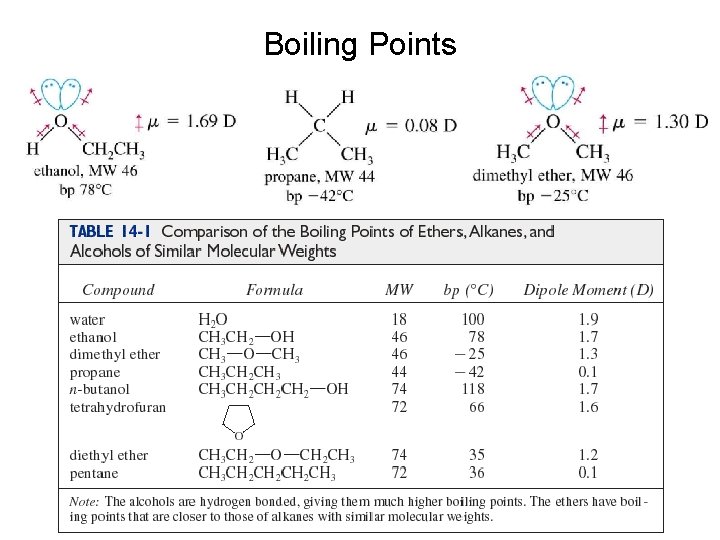
Boiling Points
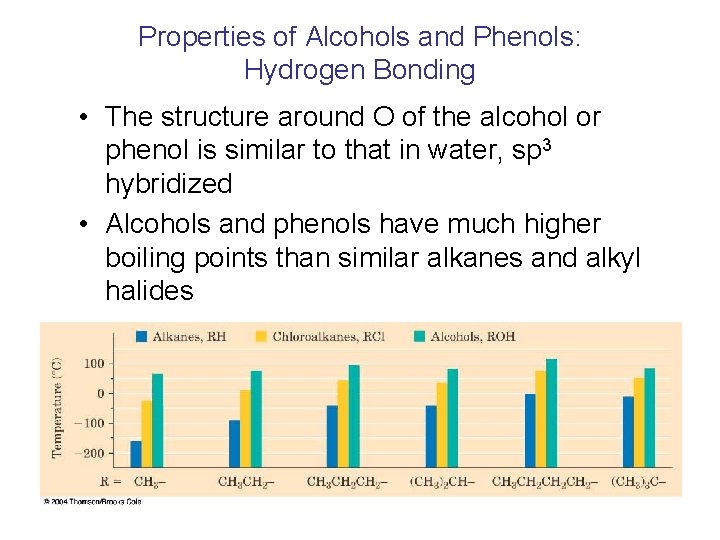
Properties of Alcohols and Phenols: Hydrogen Bonding • The structure around O of the alcohol or phenol is similar to that in water, sp 3 hybridized • Alcohols and phenols have much higher boiling points than similar alkanes and alkyl halides
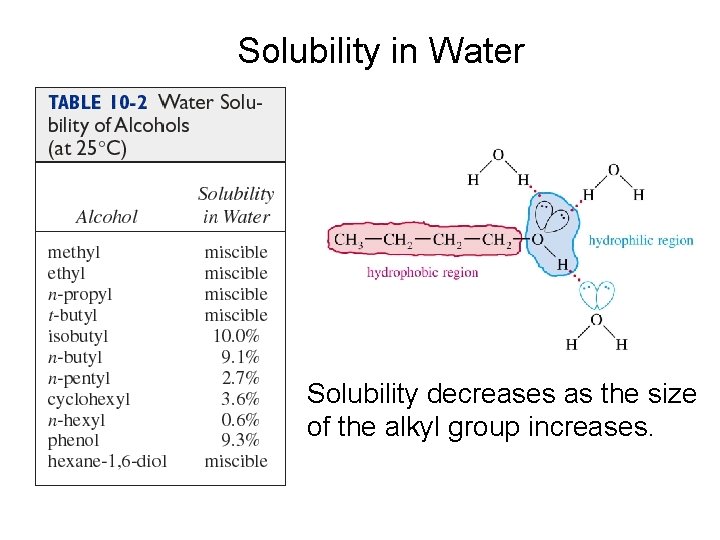
Solubility in Water Solubility decreases as the size of the alkyl group increases.
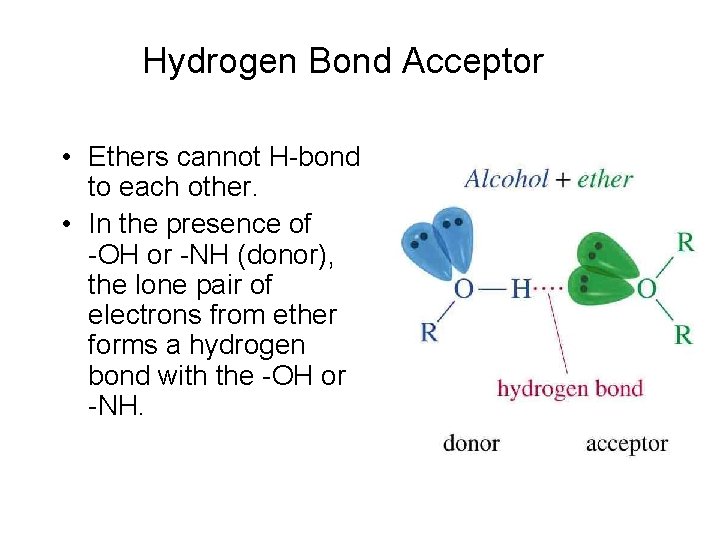
Hydrogen Bond Acceptor • Ethers cannot H-bond to each other. • In the presence of -OH or -NH (donor), the lone pair of electrons from ether forms a hydrogen bond with the -OH or -NH.
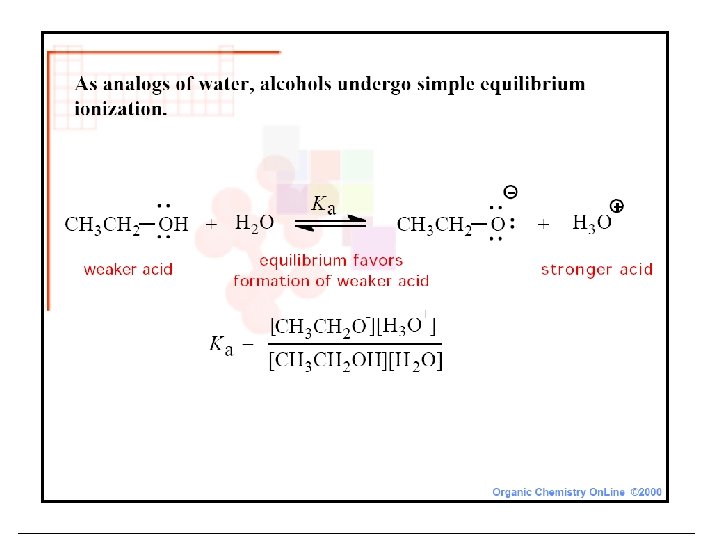
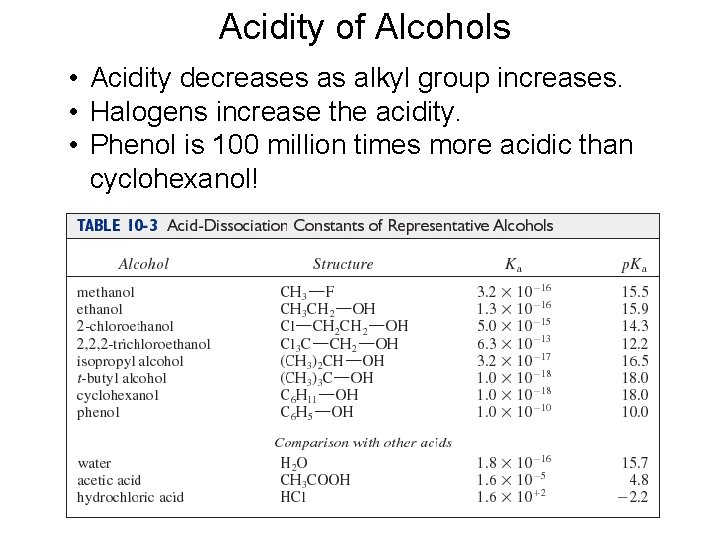
Acidity of Alcohols • Acidity decreases as alkyl group increases. • Halogens increase the acidity. • Phenol is 100 million times more acidic than cyclohexanol!
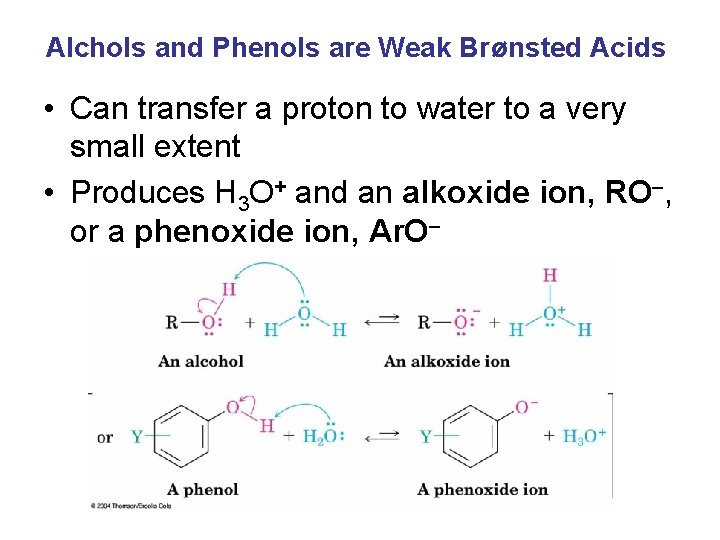
Alchols and Phenols are Weak Brønsted Acids • Can transfer a proton to water to a very small extent • Produces H 3 O+ and an alkoxide ion, RO , or a phenoxide ion, Ar. O
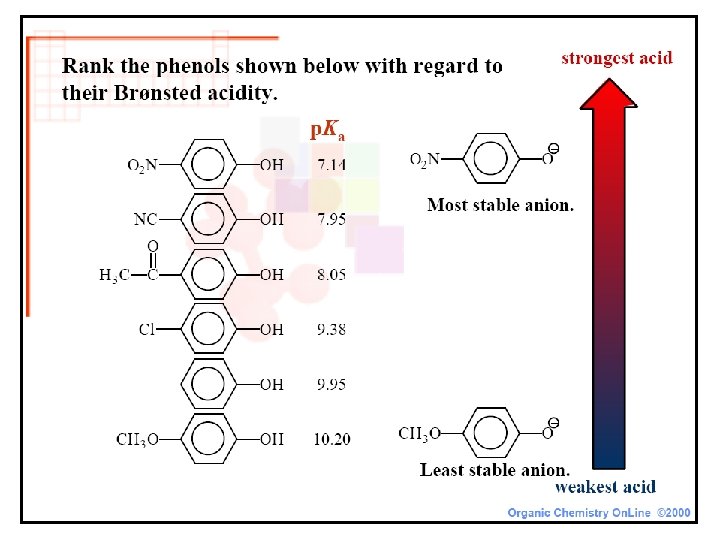
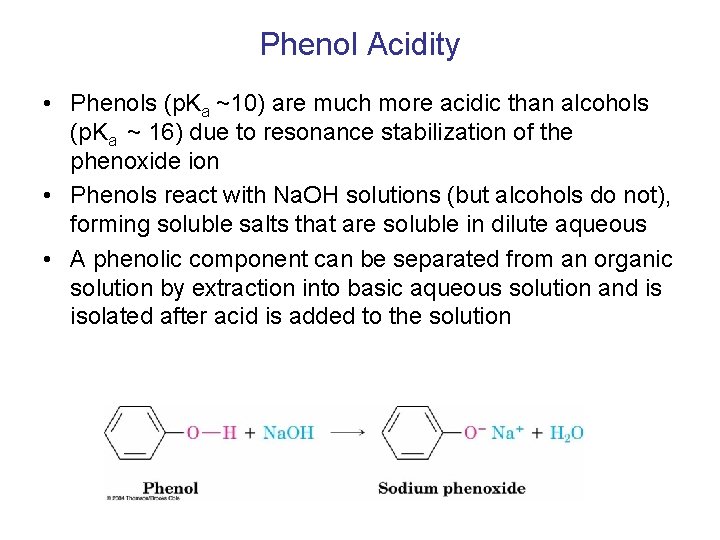
Phenol Acidity • Phenols (p. Ka ~10) are much more acidic than alcohols (p. Ka ~ 16) due to resonance stabilization of the phenoxide ion • Phenols react with Na. OH solutions (but alcohols do not), forming soluble salts that are soluble in dilute aqueous • A phenolic component can be separated from an organic solution by extraction into basic aqueous solution and is isolated after acid is added to the solution
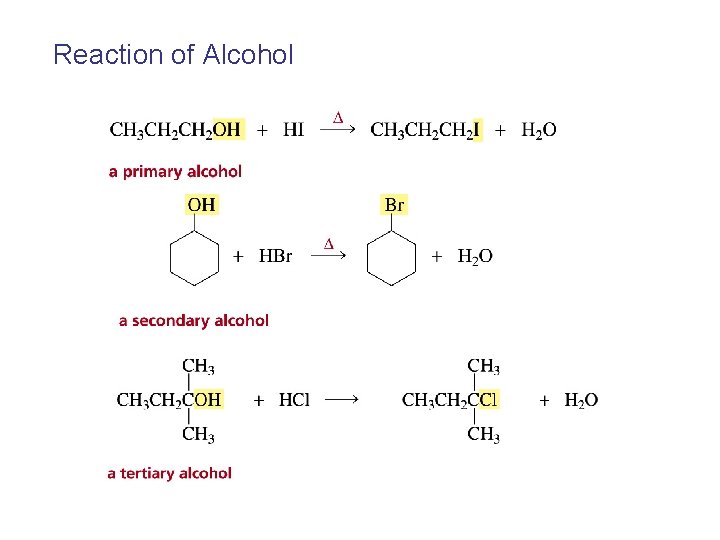
Reaction of Alcohol
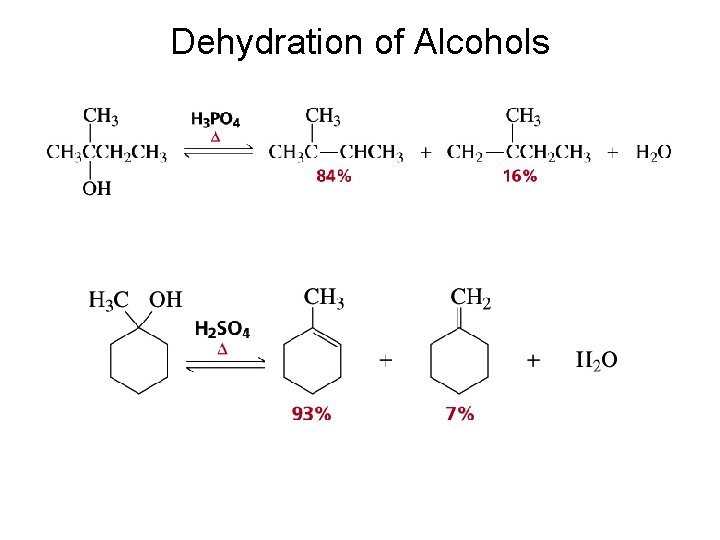
Dehydration of Alcohols
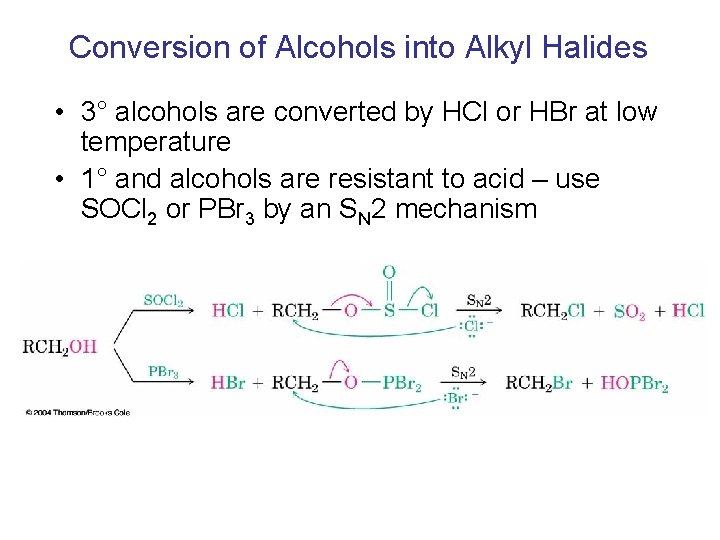
Conversion of Alcohols into Alkyl Halides • 3° alcohols are converted by HCl or HBr at low temperature • 1° and alcohols are resistant to acid – use SOCl 2 or PBr 3 by an SN 2 mechanism
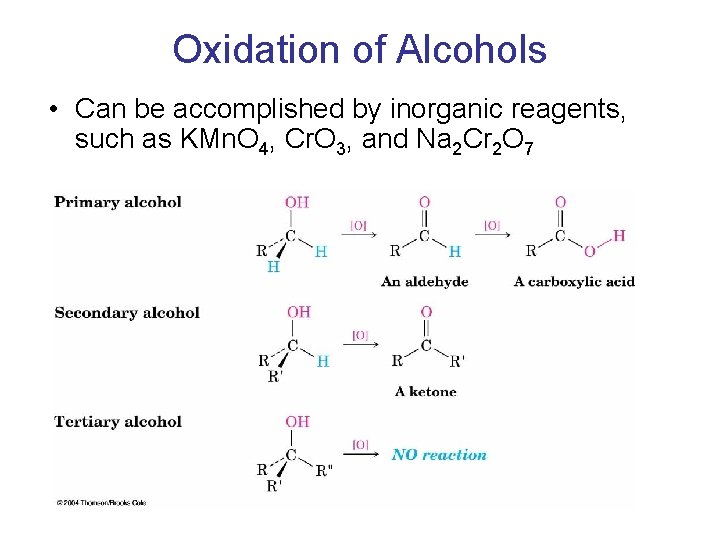
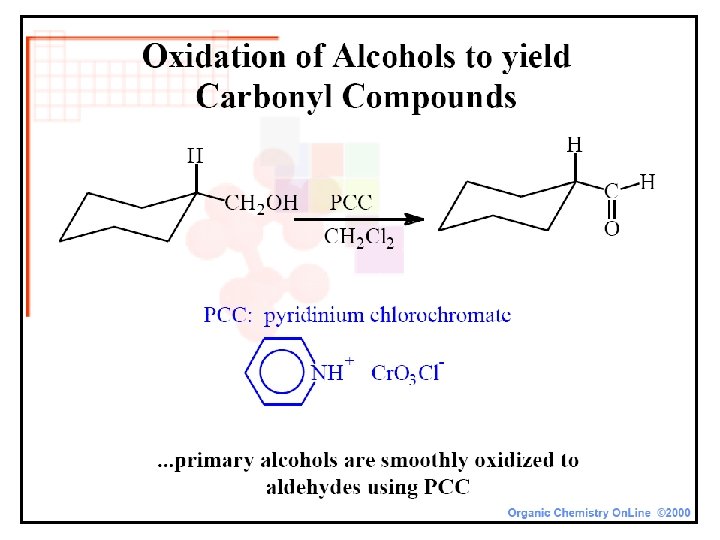
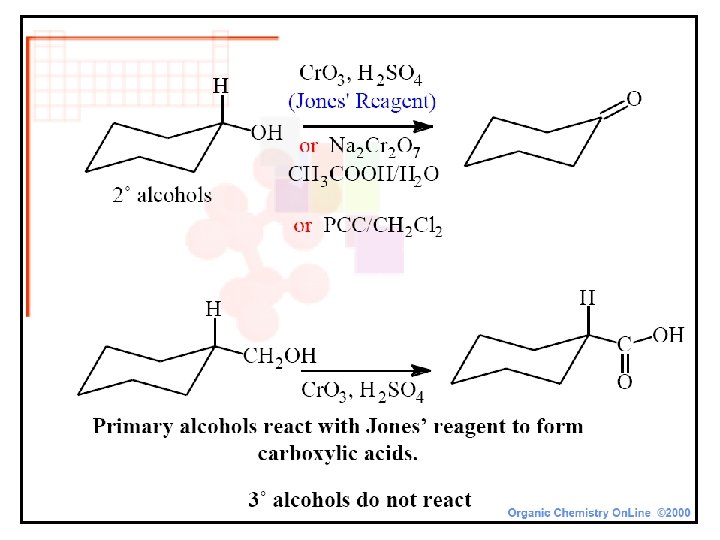
Oxidation of Alcohols • Can be accomplished by inorganic reagents, such as KMn. O 4, Cr. O 3, and Na 2 Cr 2 O 7
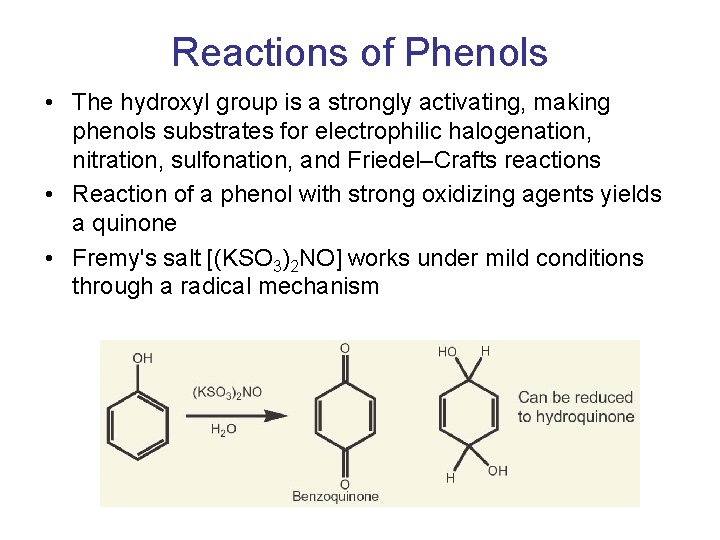
Reactions of Phenols • The hydroxyl group is a strongly activating, making phenols substrates for electrophilic halogenation, nitration, sulfonation, and Friedel–Crafts reactions • Reaction of a phenol with strong oxidizing agents yields a quinone • Fremy's salt [(KSO 3)2 NO] works under mild conditions through a radical mechanism
- Slides: 21