
Alcohol Withdrawal Management Samantha Allen Pharm D Candidate
- Slides: 22
Alcohol Withdrawal Management Samantha Allen Pharm. D Candidate 2012 Case Presentation April 19, 2012
Objectives: Define the pathophysiology of alcohol withdrawal Identify common symptoms List first line pharmacologic treatment options Identify appropriate adjunctive treatment agents
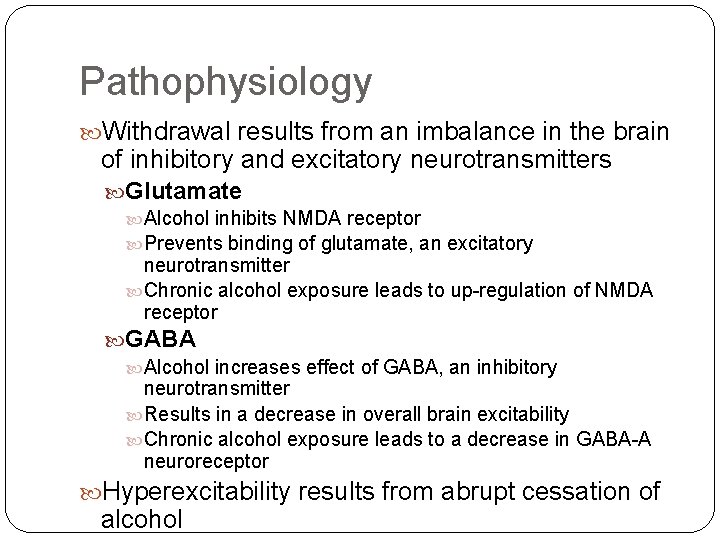
Pathophysiology Withdrawal results from an imbalance in the brain of inhibitory and excitatory neurotransmitters Glutamate Alcohol inhibits NMDA receptor Prevents binding of glutamate, an excitatory neurotransmitter Chronic alcohol exposure leads to up-regulation of NMDA receptor GABA Alcohol increases effect of GABA, an inhibitory neurotransmitter Results in a decrease in overall brain excitability Chronic alcohol exposure leads to a decrease in GABA-A neuroreceptor Hyperexcitability results from abrupt cessation of alcohol
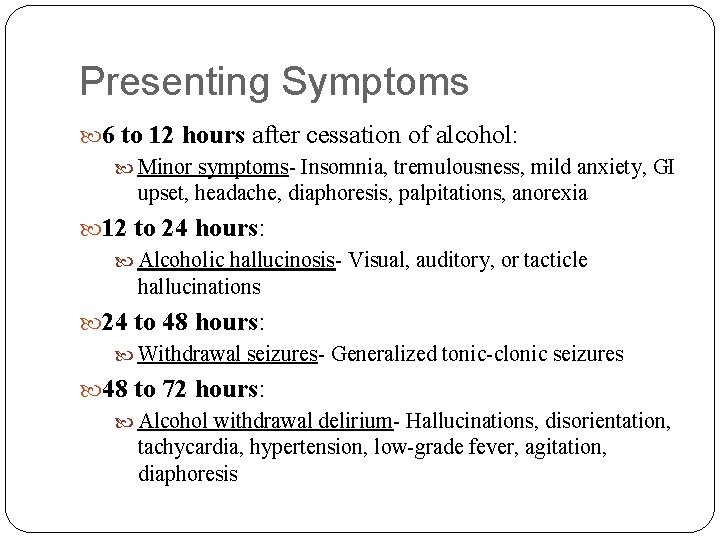
Presenting Symptoms 6 to 12 hours after cessation of alcohol: Minor symptoms- Insomnia, tremulousness, mild anxiety, GI upset, headache, diaphoresis, palpitations, anorexia 12 to 24 hours: Alcoholic hallucinosis- Visual, auditory, or tacticle hallucinations 24 to 48 hours: Withdrawal seizures- Generalized tonic-clonic seizures 48 to 72 hours: Alcohol withdrawal delirium- Hallucinations, disorientation, tachycardia, hypertension, low-grade fever, agitation, diaphoresis
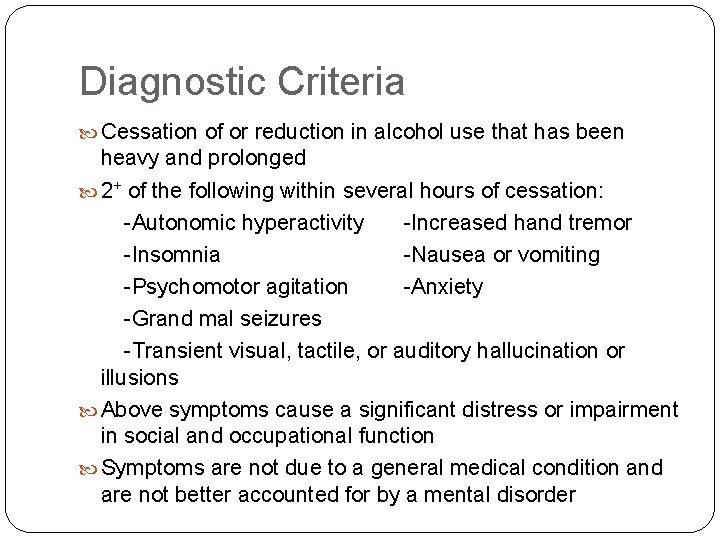
Diagnostic Criteria Cessation of or reduction in alcohol use that has been heavy and prolonged 2+ of the following within several hours of cessation: -Autonomic hyperactivity -Increased hand tremor -Insomnia -Nausea or vomiting -Psychomotor agitation -Anxiety -Grand mal seizures -Transient visual, tactile, or auditory hallucination or illusions Above symptoms cause a significant distress or impairment in social and occupational function Symptoms are not due to a general medical condition and are not better accounted for by a mental disorder
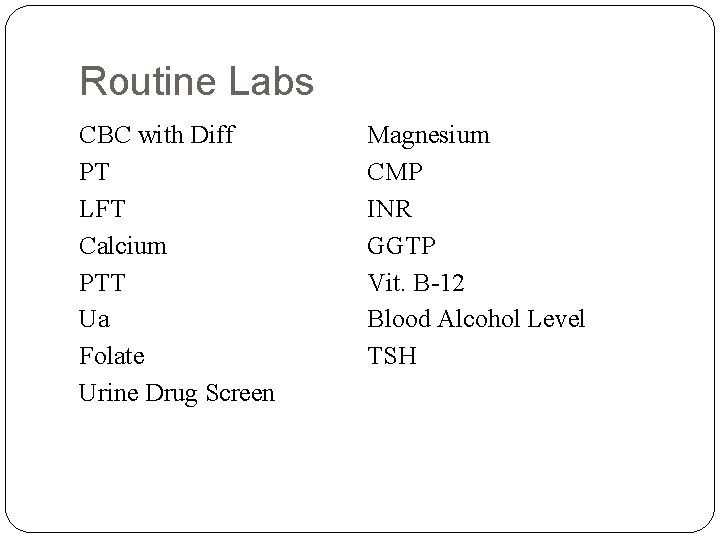
Routine Labs CBC with Diff PT LFT Calcium PTT Ua Folate Urine Drug Screen Magnesium CMP INR GGTP Vit. B-12 Blood Alcohol Level TSH
Alcohol Withdrawal Scale (AWS)
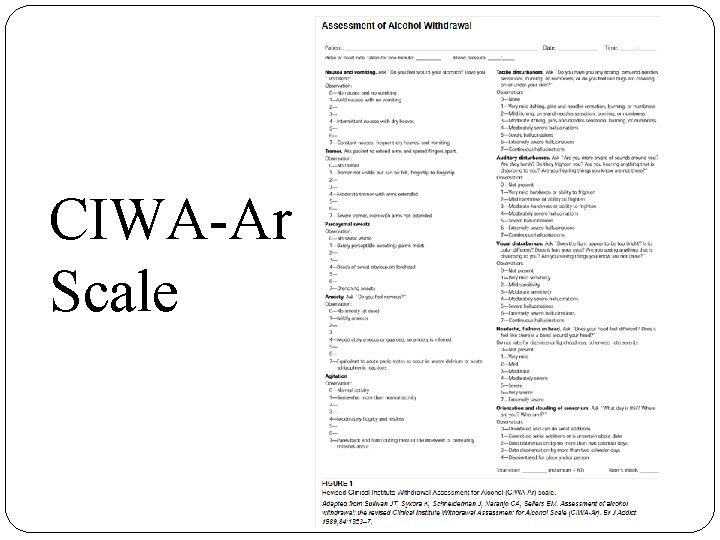
CIWA-Ar Scale
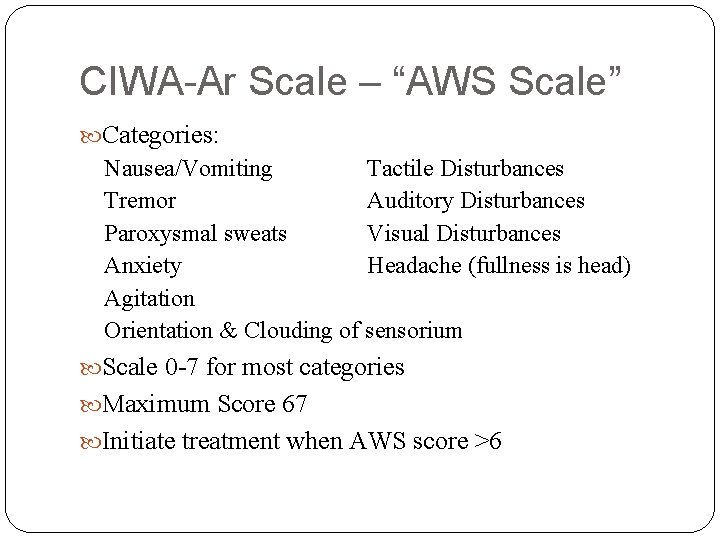
CIWA-Ar Scale – “AWS Scale” Categories: Nausea/Vomiting Tactile Disturbances Tremor Auditory Disturbances Paroxysmal sweats Visual Disturbances Anxiety Headache (fullness is head) Agitation Orientation & Clouding of sensorium Scale 0 -7 for most categories Maximum Score 67 Initiate treatment when AWS score >6
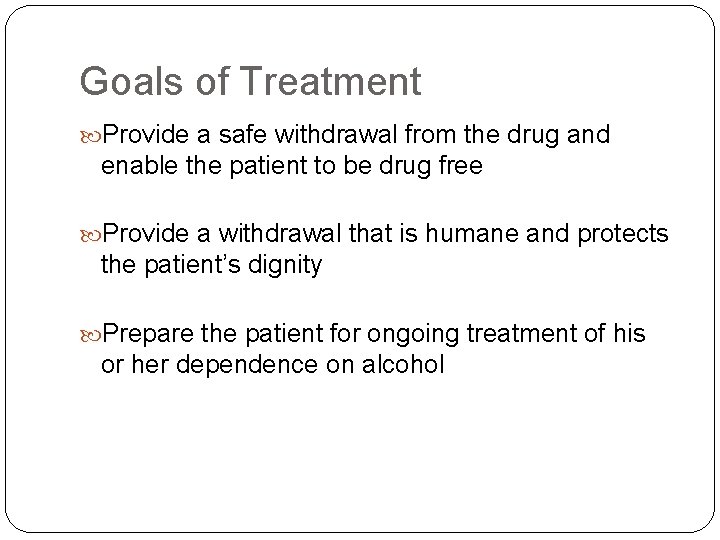
Goals of Treatment Provide a safe withdrawal from the drug and enable the patient to be drug free Provide a withdrawal that is humane and protects the patient’s dignity Prepare the patient for ongoing treatment of his or her dependence on alcohol
Guidelines for ETOH Withdrawal Prophylaxis Regimens
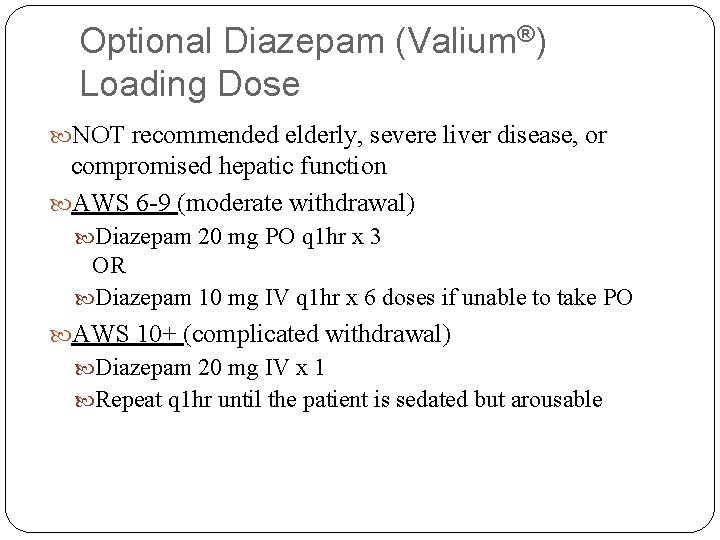
Optional Diazepam (Valium®) Loading Dose NOT recommended elderly, severe liver disease, or compromised hepatic function AWS 6 -9 (moderate withdrawal) Diazepam 20 mg PO q 1 hr x 3 OR Diazepam 10 mg IV q 1 hr x 6 doses if unable to take PO AWS 10+ (complicated withdrawal) Diazepam 20 mg IV x 1 Repeat q 1 hr until the patient is sedated but arousable
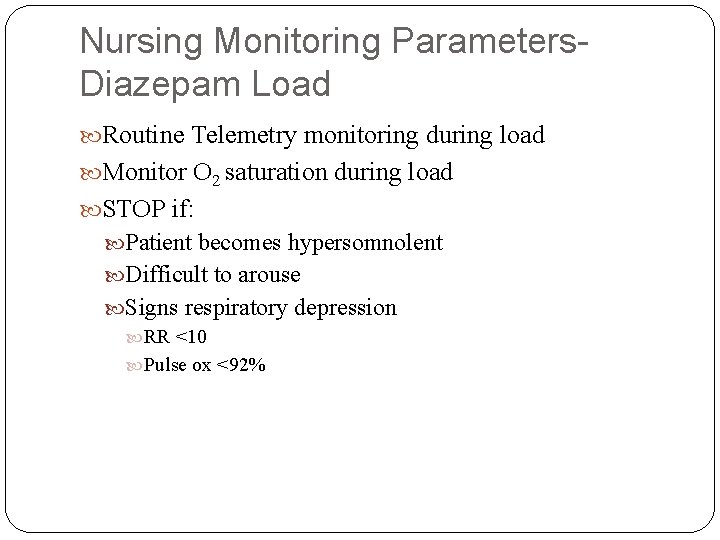
Nursing Monitoring Parameters. Diazepam Load Routine Telemetry monitoring during load Monitor O 2 saturation during load STOP if: Patient becomes hypersomnolent Difficult to arouse Signs respiratory depression RR <10 Pulse ox <92%
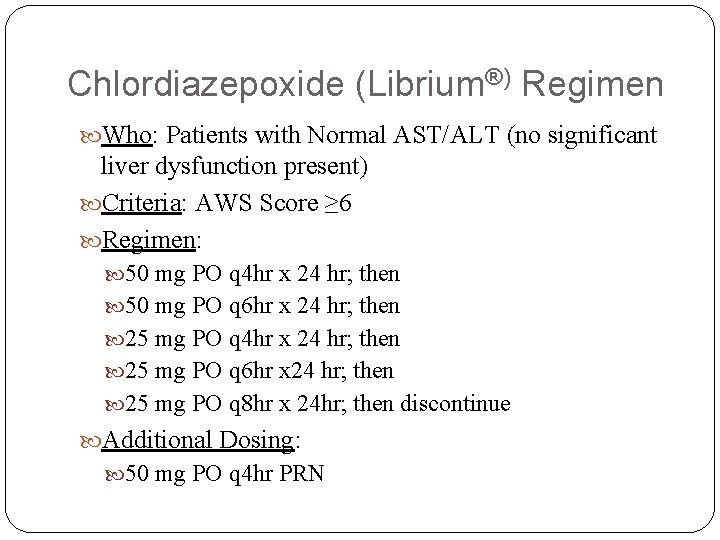
Chlordiazepoxide (Librium®) Regimen Who: Patients with Normal AST/ALT (no significant liver dysfunction present) Criteria: AWS Score ≥ 6 Regimen: 50 mg PO q 4 hr x 24 hr; then 50 mg PO q 6 hr x 24 hr; then 25 mg PO q 4 hr x 24 hr; then 25 mg PO q 6 hr x 24 hr; then 25 mg PO q 8 hr x 24 hr; then discontinue Additional Dosing: 50 mg PO q 4 hr PRN
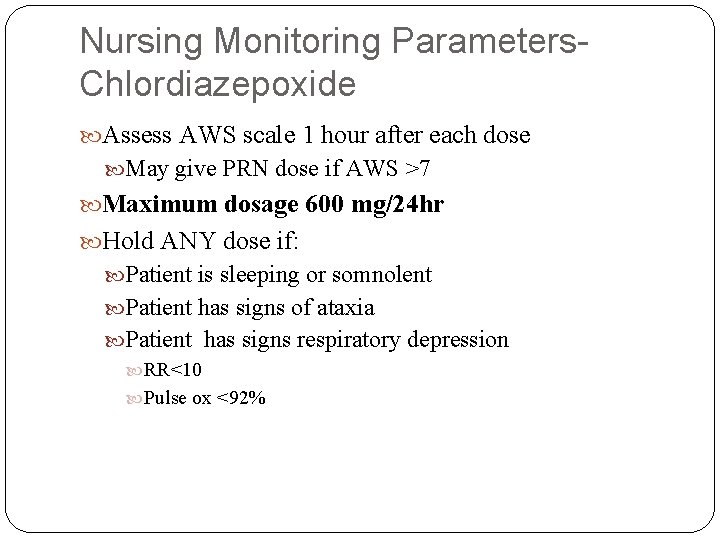
Nursing Monitoring Parameters. Chlordiazepoxide Assess AWS scale 1 hour after each dose May give PRN dose if AWS >7 Maximum dosage 600 mg/24 hr Hold ANY dose if: Patient is sleeping or somnolent Patient has signs of ataxia Patient has signs respiratory depression RR<10 Pulse ox <92%
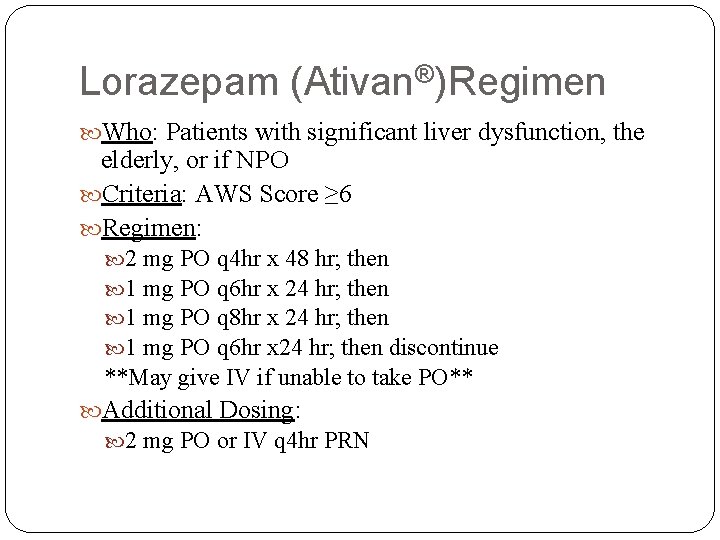
Lorazepam (Ativan®)Regimen Who: Patients with significant liver dysfunction, the elderly, or if NPO Criteria: AWS Score ≥ 6 Regimen: 2 mg PO q 4 hr x 48 hr; then 1 mg PO q 6 hr x 24 hr; then 1 mg PO q 8 hr x 24 hr; then 1 mg PO q 6 hr x 24 hr; then discontinue **May give IV if unable to take PO** Additional Dosing: 2 mg PO or IV q 4 hr PRN
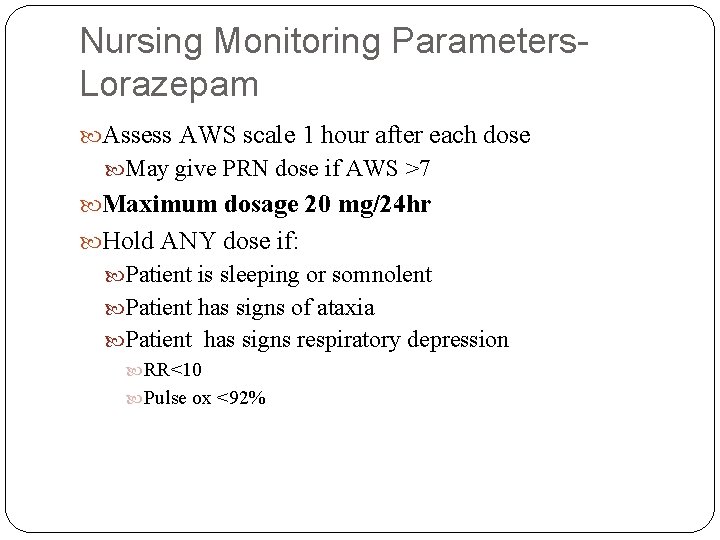
Nursing Monitoring Parameters. Lorazepam Assess AWS scale 1 hour after each dose May give PRN dose if AWS >7 Maximum dosage 20 mg/24 hr Hold ANY dose if: Patient is sleeping or somnolent Patient has signs of ataxia Patient has signs respiratory depression RR<10 Pulse ox <92%
Additional Routine Medications
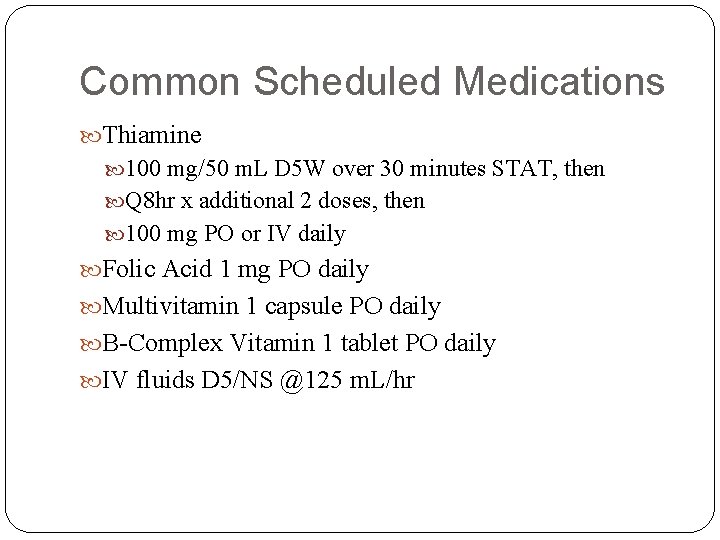
Common Scheduled Medications Thiamine 100 mg/50 m. L D 5 W over 30 minutes STAT, then Q 8 hr x additional 2 doses, then 100 mg PO or IV daily Folic Acid 1 mg PO daily Multivitamin 1 capsule PO daily B-Complex Vitamin 1 tablet PO daily IV fluids D 5/NS @125 m. L/hr
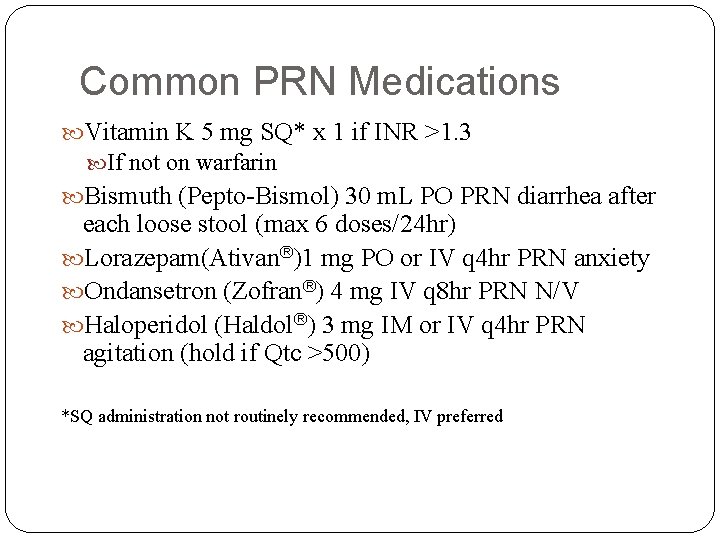
Common PRN Medications Vitamin K 5 mg SQ* x 1 if INR >1. 3 If not on warfarin Bismuth (Pepto-Bismol) 30 m. L PO PRN diarrhea after each loose stool (max 6 doses/24 hr) Lorazepam(Ativan®)1 mg PO or IV q 4 hr PRN anxiety Ondansetron (Zofran®) 4 mg IV q 8 hr PRN N/V Haloperidol (Haldol®) 3 mg IM or IV q 4 hr PRN agitation (hold if Qtc >500) *SQ administration not routinely recommended, IV preferred
QUESTIONS? ? ?
References: Grandview Hospital Physician’s Orders: Alcohol (ETOH) Withdrawal Management. 01/2010. Bayard M, Mcintyre J, Hill KR et al. Alcohol Withdrawal Syndrome. Am Fam Physician. 2004; 69(6): 1443 -1450.